
LAST UPDATE — 10-01-2025
The Health Insurance Portability and Accountability Act, also known as HIPAA, is crucial for patients because it safeguards their privacy and health information. In order to provide national standards for the security of specific health information, the US Congress passed HIPAA in 1996. Because it helps to protect patients’ private and sensitive health information, including their medical history, diagnosis, treatments, and prescriptions, HIPAA is crucial for patients. This is crucial for protecting their health information’s privacy and confidentiality and avoiding illegal access to, use of, or exposure of it.
By mandating healthcare providers, health plans, and other covered organizations to safeguard the privacy, accuracy, and accessibility of patient health information, the legislation offers people control over their data. Additionally, it gives patients the right to see and get copies of their health information, as well as the ability to ask for changes if required. HIPAA compliance in healthcare ensures that these organizations follow strict guidelines to protect patient data and maintain trust. For patients, knowing that healthcare providers comply with HIPAA provides assurance that their sensitive information is handled securely.
In this article, we will learn about HIPAA, its features, and how it is helpful for patients.

Tl; DR:
Concern: Patients’ sensitive health information, including medical records, billing data, and test results, is at risk of unauthorized access, misuse, or breaches if not properly protected. Healthcare organizations and their partners must adhere to strict standards to maintain trust and ensure data security.
Overview: The Health Insurance Portability and Accountability Act (HIPAA) establishes national standards for protecting patient health information (PHI). It mandates healthcare providers, health plans, and related entities to implement privacy and security safeguards, provide patients with access and correction rights, and notify them in case of data breaches. HIPAA includes the Privacy Rule, Security Rule, and Breach Notification Rule, which collectively govern how PHI is handled. Patients have rights to confidential communications, notice of privacy practices, and the ability to file complaints if their data is mishandled.
Solution: By complying with HIPAA, organizations protect patient privacy, reduce risks of breaches, and avoid legal penalties. CertPro supports industries with HIPAA compliance assessments, remediation, audits, and ongoing guidance to ensure secure handling of sensitive health data.
What is HIPAA?
HIPAA was created to preserve the privacy, accuracy, and accessibility of people’s personal health information, as well as to provide them with certain rights about such information. Health plans, healthcare clearinghouses, and healthcare providers who transfer medical data electronically are also subject to the regulation. The Privacy Rule and the Security Rule are the two primary HIPAA regulations that control the security and privacy of health information. While the Security Rule establishes criteria for securing electronic protected health information (ePHI), the Privacy Rule establishes national standards for preserving the privacy of certain personally identifiable health information.
In accordance with HIPAA’s breach notification requirements, covered companies must notify those impacted in the event that their unprotected health information is compromised. HIPAA also has procedures for upholding legal compliance, including civil and criminal fines for infractions. HIPAA benefits both patients and healthcare providers by establishing clear standards for protecting patient information, reducing the risk of data breaches, and ensuring accountability for those handling sensitive health data.
How can HIPAA be helpful to industries?
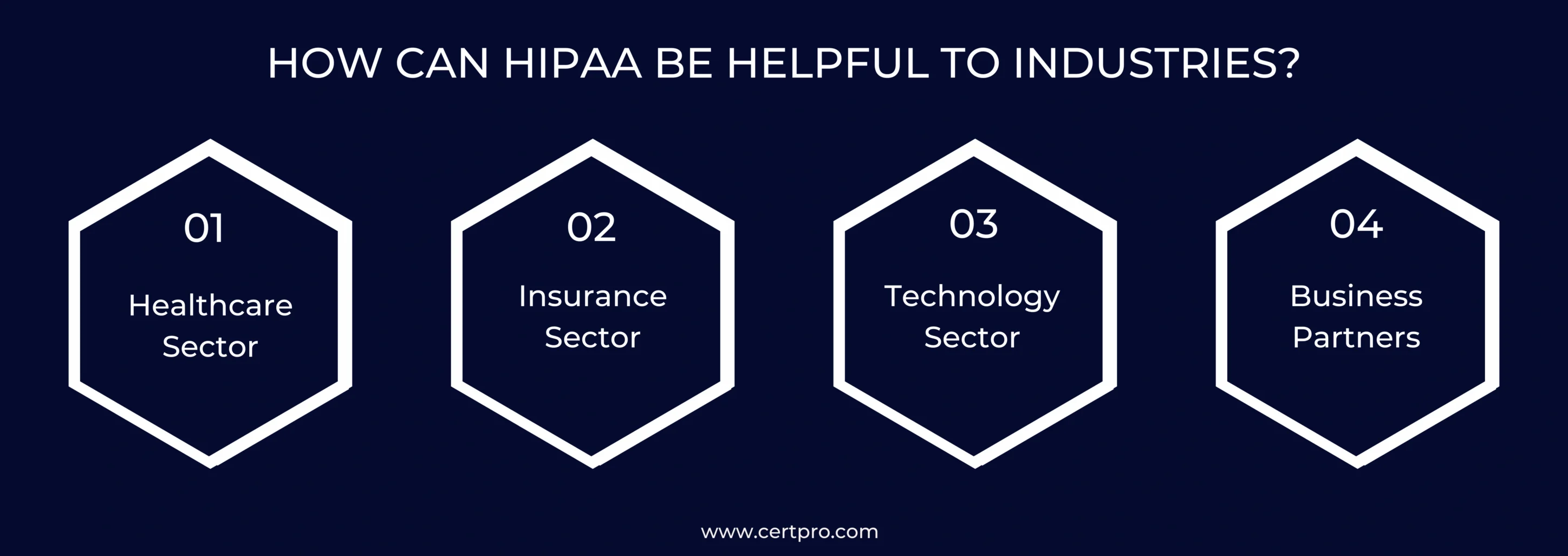
Industries may benefit from HIPAA, or the Health Insurance Portability and Accountability Act, in a variety of ways. Here are a few instances:
1. Healthcare sector: HIPAA rules include standards and recommendations for protecting patient information, including electronic protected health information (ePHI). This aids healthcare institutions in safeguarding the confidentiality and security of patient health information, which may make patients feel more trusted and lead to higher standards of treatment. Healthcare organizations that comply with HIPAA demonstrate transparency and responsibility, which can improve patient confidence.
2. Insurance sector: Health insurance plans are subject to HIPAA laws as well and are required to uphold the security and privacy requirements for patient data. When health plans and healthcare providers exchange patient health information, this helps to assure its security.
3. Technology sector: HIPAA’s ePHI security guidelines can serve as a guide for the development of technologies and systems for storing and transmitting health information. This might assist in strengthening the security of medical data and guarding against hacks and illegal access.
4. Business partners: HIPAA mandates that healthcare organizations enter into agreements with any business partners who handle the health information of their patients, such as billing firms or IT service providers. This makes it possible to guarantee that business partners are likewise held accountable for maintaining the confidentiality and security of medical data.
Complying with HIPAA ensures that all entities handling PHI, from providers to business partners, operate under strict guidelines, reducing risks of non-compliance and enhancing overall patient safety.
Why is HIPAA important to patients, and how is it helpful?
A number of HIPAA’s features are advantageous to patients, medical professionals, and health insurance. The Privacy Rule, which establishes national standards for the protection of PHI, is one of the most significant components. The covered entities, which include healthcare providers, health plans, and healthcare clearinghouses, are subject to the Privacy Rule. Covered organizations must put in place administrative, physical, and technological safeguards to protect the confidentiality, availability, and integrity of PHI. These security measures assist in limiting unauthorized access to, use of, and disclosure of PHI. Why is HIPAA needed? It is needed to provide patients with control over their personal health information, prevent misuse of sensitive data, and ensure accountability across all entities handling PHI.
Patients’ rights toward their medical information: HIPAA is significant from the patients’ point of view since it mandates that all covered organizations safeguard and maintain the privacy and confidentiality of all patient information. Patients have a wide range of rights under the HIPAA Privacy Rule, which covered businesses are required to uphold in order to achieve the framework standards. The four main facets of HIPAA—which are crucial for patients—are listed below.
Right to make corrections: Patients also have a number of rights under HIPAA regarding their PHI. Patients, for instance, are entitled to view their own health data, such as billing data, test results, and medical records. Patients have the right to seek the transmission of their health information to another healthcare provider or health plan, as well as the correction of any inaccuracies or omissions in their PHI. Patients also have the ability to request that specific people or organizations, such as family members or employers, not get access to their PHI.
Right to access PHI: Patients have the right to access their own personal health information (PHI), which includes their medical records, test findings, and billing data. Patients have the right to seek the transmission of their health information to another healthcare provider or health plan, as well as the correction of any inaccuracies or omissions in their PHI.
The right to get a notice of privacy practices: Patients have the right to obtain a notice of privacy practices from covered organizations, such as healthcare providers and health plans, outlining how their PHI will be used and shared as well as their rights with regard to their PHI.
The option to ask for limitations on how PHI is used and disclosed: Patients have the right to seek limitations on the use and sharing of their PHI. For example, they might ask that information not be disclosed to family members or employers. While covered companies are not compelled to accept these requests, they are expected to give them some thought and an answer.
Having the right to be informed about privacy practices: One of the patient rights outlined by the Health Insurance Portability and Accountability Act (HIPAA) is the right to obtain a notice of privacy practices. Patients must receive a written notice from covered organizations, such as healthcare providers and health plans, outlining how their protected health information (PHI) will be used and released. The patient’s rights regarding their PHI are also described in this notification, including the ability to view such information, ask for changes, and lodge grievances. Patients have the right to seek and receive this notification during their initial contact with a covered organization.
The right to seek confidential communications: Patients have the option to choose how they would like to receive their health information, for example, via email or through a specific address. Covered companies must grant all reasonable requests for confidential communications.
The ability to complain: Patients who think their PHI has been misused or exposed may do so by contacting the HHS Office for Civil Rights (OCR). After looking into complaints, the OCR upholds HIPAA privacy and security regulations.
The right to notification in the case of a PHI breach: Another crucial patient right under HIPAA is the right to notice in the event of a PHI breach. In the event that their protected health information (PHI) is compromised, covered entities are required to alert the patients. The notice must contain information about the breach, the kind of PHI implicated, the actions the covered organization is taking to investigate the breach and lessen any impact, and patient safety precautions that should be taken in the event of a breach.
HIPAA benefits patients by giving them control over their health information and ensuring that healthcare providers, insurers, and business partners comply with strict privacy and security measures. These patient rights are important because they give patients control over their medical information and help protect the privacy and security of their PHI. By calling their healthcare provider or health plan and asking for the relevant documents or information, patients can exercise their HIPAA rights. Under HIPAA, covered entities are required to abide by these demands; otherwise, they risk civil or criminal penalties.
Additionally, HIPAA mandates that covered organizations put in place administrative, physical, and technological security measures to protect the privacy, availability, and integrity of PHI. To reduce any threats to the privacy, security, or accessibility of PHI, covered organizations must undertake risk analyses and put in place proper risk management plans. Additionally, they must offer continuing monitoring and oversight of their compliance with the HIPAA privacy and security laws, as well as training for their staff members on these regulations.
How to protect yourself from breaking HIPAA rules?
To avoid infringing HIPAA regulations, it’s crucial to comprehend and adhere to them, whether you work in a hospital environment or for any other covered organization that manages protected health information (PHI). To protect yourself from violating HIPAA regulations, follow this advice:
- Get HIPAA training, and make sure you get the right HIPAA training, which should include the rules and norms. This will assist you in comprehending the regulations, the potential repercussions of breaching them, and how to follow them. HIPAA compliance training in healthcare is essential for employees handling PHI.
- Adhere to the “minimum necessary” approach and only access or disclose PHI that is required for the performance of your job duties. Refrain from accessing or sharing PHI if it is not necessary for healthcare activities such as payment or treatment.
- Take reasonable precautions to protect PHI from unauthorized access, use, and disclosure at all times. This could entail password-protecting data and computers, locking filing cabinets, and safely discarding PHI.
- Use secure communication channels to share PHI. Use secure communication channels like encrypted email or secure messaging services. Refrain from talking about PHI in public or leaving PHI-containing messages on voicemail or answering machines.
- Before releasing someone’s PHI for reasons other than treatment, payment, or healthcare operations, get that person’s written consent. Patients must be made aware of the reason for the disclosure and the recipients of their PHI.
- Reporting breaches, Inform your supervisor or the authorized privacy officer right away if you suspect or learn of a PHI breach. Delays in disclosing a breach may cause more harm to patients and subject the covered business to harsher sanctions.
- To guarantee compliance with HIPAA rules, HIPAA policies and procedures should be reviewed on a regular basis. This involves conducting recurring risk analyses to find possible threats to the privacy, security, and accessibility of PHI.
By understanding why HIPAA is important and actively working to comply with HIPAA regulations, employees and organizations ensure patient trust, reduce legal risks, and uphold the integrity of sensitive health information.
Through thorough HIPAA compliance assessments, remediation programs, on-site audits, and continuing assistance, CertPro assists industries in achieving HIPAA compliance and certification. For the purpose of locating holes and weaknesses in the sector’s HIPAA compliance program, CertPro assesses policies and procedures, security controls, risk management, and training programs. Comply with HIPAA today to secure patient trust, avoid fines, and demonstrate a commitment to responsible healthcare practices. Understanding HIPAA benefits not only patients but also the credibility and reliability of healthcare organizations.
CertPro offers a remediation plan and aids in its implementation based on the evaluation. Additionally, CertPro performs on-site audits to verify adherence to HIPAA standards and offers continuous support, such as recurring audits, training, and help with regulatory changes. Industries may get HIPAA certified, avoid potential HIPAA breaches and fines, and protect patient privacy by collaborating with CertPro.
FAQ
Why is HIPAA important for patients and healthcare providers?
HIPAA is important because it protects patient privacy, ensures the security of health information, and gives patients control over their data. Compliance improves trust, prevents data breaches, and helps healthcare providers avoid legal penalties.
What are the main purposes of HIPAA in healthcare?
HIPAA has four main purposes: protecting patient privacy, securing electronic health information, improving healthcare system efficiency, and giving patients rights to access, correct, and control their personal health data.
Who must comply with HIPAA rules?
Covered entities like healthcare providers, health plans, and healthcare clearinghouses, as well as their business partners handling protected health information (PHI), are legally required to comply with HIPAA regulations.
What happens if HIPAA is violated?
HIPAA violations can result in civil fines, criminal penalties, and reputational damage. Organizations may face corrective actions, mandatory audits, and potential lawsuits, depending on the severity and intent of the breach.
Is texting patient information HIPAA compliant?
Texting patient information can be HIPAA compliant only if secure, encrypted messaging platforms are used. Regular SMS is not secure and may violate HIPAA rules by exposing protected health information.

Healthcare Data Breaches Continue to Expose Millions in 2026
Excerpt from HIPAA Journal, Published on September 4, 2026 Healthcare data breaches continue at high levels in 2026, with HIPAA Journal reporting that 395 large breaches affecting 500 or more individuals had been reported to the U.S. Department of Health and Human...

HIPAA UPDATES 2026: KEY REGULATORY CHANGES, NEW RULES, AND COMPLIANCE IMPACT EXPLAINED
WHAT IS THE HIPAA OMNIBUS RULE
In the U.S. healthcare sector, sensitive medical records are often subjected to cyberattacks like data breaches and ransomware. For example, recently a misconfigured MongoDB database has led to the exposure of 2.7 million patient profiles. This incident is due to a...