
Audit evidence is the foundation of every credible compliance audit. It gives regulatory agencies, investors, and stakeholders reliable proof that an organization’s financial statements, internal controls, and compliance processes are accurate and trustworthy. Without it, auditors cannot form conclusions, and organizations cannot demonstrate adherence to the standards they are held to.
Audit evidence encompasses a wide range of information — documents, observations, system records, and corroborating data — each serving a specific purpose in the audit process. Together these sources give auditors a complete and verifiable picture of how an organization operates and whether its controls are functioning as intended. For technology companies and service organizations, this includes structured SOC 2 evidence collection covering everything from access logs and configuration records to policy documentation and vendor contracts.
The quality of audit evidence is evaluated against key characteristics — relevance, reliability, adequacy, and consistency. Auditors select the most persuasive information available based on these criteria, drawing from both internal records and external confirmations. This rigorous approach protects against fraud, errors, and misrepresentation — giving creditors, investors, and regulators confidence in the information being presented. For organizations pursuing SOC 2 Audit or ISO 27001 Certification, maintaining well-documented, audit-ready evidence throughout the year — not just at audit time — is one of the most critical factors in a successful engagement.

UNDERSTANDING AUDIT EVIDENCE
In any audit, the main goal is to determine whether the financial statements of the company comply with generally accepted accounting principles (GAAP), international financial reporting standards (IFRS), or other pertinent accounting standards that are applicable in the jurisdiction of the entity. For auditors and accountants to carry out their responsibilities, Publicly listed companies are often required to regularly provide their shareholders with fully audited financial statements. This requirement emphasizes how crucial it is to efficiently gather and arrange auditing evidence. For those new to the process, understanding what is audit evidence becomes essential in grasping how auditors reach their conclusions. To put it simply, audit proof is the basis upon which auditors base their conclusions on the integrity and correctness of financial accounts, making it easier to assess their faithfulness.
The importance of audit evidence becomes clear when auditors examine a wide range of inputs to confirm the accuracy of financial data. Audit evidence comprises a diverse array of information that auditors diligently gather to assess the accuracy and reliability of a company’s financial statements. This evidence encompasses tangible assets, written records, and analytical procedures, forming a comprehensive dataset that illuminates the intricacies of financial transactions and processes. Recognizing the importance of audit evidence also reinforces the need for consistency and transparency in every step of financial reporting. Through meticulous collection and analysis, auditors gain insight into the veracity of the presented financial information, enabling informed decisions regarding the company’s financial position and performance. With that having been said, let’s learn about the essential characteristics of audit evidence in the upcoming section.
CHARACTERISTICS OF AUDIT EVIDENCE
We can evaluate the quality of auditing evidence using the essential features listed below.
- Reliability: Reliable audit trail evidence comes from impartial, independent sources and is regarded as reliable and trustworthy. Accordingly, it must come from highly credible sources and be devoid of prejudice or significant inaccuracies.
- Nature: Nature has to do with the type or category of information that is being received. Furthermore, this category includes a range of media, including court records, PowerPoint presentations, staff member statements, and direct physical proof.
- Relevance: The audit evidence needs to have a clear connection to the financial statements’ testable claims. Additionally, the audit evidence must bear relevance to the specific accounts, transactions, or disclosures under examination.
- Adequacy: Enough data from the evidence of audit adds credibility to the auditor’s findings and assessments. The auditor must be able to reach reasonable conclusions based on sufficient results from auditing evidence, both in terms of quantity and quality.
- Consistency: Standardized techniques and methodologies are used to acquire a consistent audit trail, guaranteeing consistency and comparability throughout the audit process. Therefore, maintaining consistency makes it easier for auditors to assess changes and trends over time.
Through evaluation of the degree of these characteristics of audit evidence, auditors can augment the caliber and dependability of their audit conclusions, thus fortifying the legitimacy and reliability of financial reporting.
WHY IS AUDIT EVIDENCE IMPORTANT?
Audit evidence plays a key role in ensuring the trustworthiness of financial reports. It serves many vital purposes, including
- Supports Auditor’s Opinion: Auditors must give an opinion on whether financial statements are free from major errors. For this, evidence of audit is essential. It provides clear and trustworthy proof to support their opinion. By examining different types of evidence, auditors understand the financial data better. This helps them assure stakeholders and regulators that the reports are accurate. Thereby, stating the importance of audit evidence.
- Minimizes Risk of Errors and Fraud: By collecting strong evidence, auditors can lower the chances of mistakes or fraud in financial data. This makes the information more reliable for investors. As a result, this careful review protects investors and helps maintain market trust.
- Improves Accountability and Transparency: Audit evidence also confirms that financial reporting follows accounting rules and laws. It helps make financial actions more open and accountable. This builds trust in the organization’s financial reports and operations.
- Strengthens Internal Regulations: Reviewing audit trails helps organizations see how strong their internal controls are. This process also supports key compliance goals by providing reliable proof of actions taken. Management can spot weaknesses and fix them before they grow into serious risks. One reason this works well is that audit trails often reflect the key characteristics of audit evidence, such as accuracy, timeliness, and objectivity. This approach improves financial reporting and makes governance stronger, giving stakeholders more trust in the data.
- Financial Statement Verification: Audit trails help confirm that financial statements are complete and correct. By carefully checking documents, records, and transactions, auditors can prove whether the data in the financial reports is true and accurate.
TYPES OF AUDIT EVIDENCE
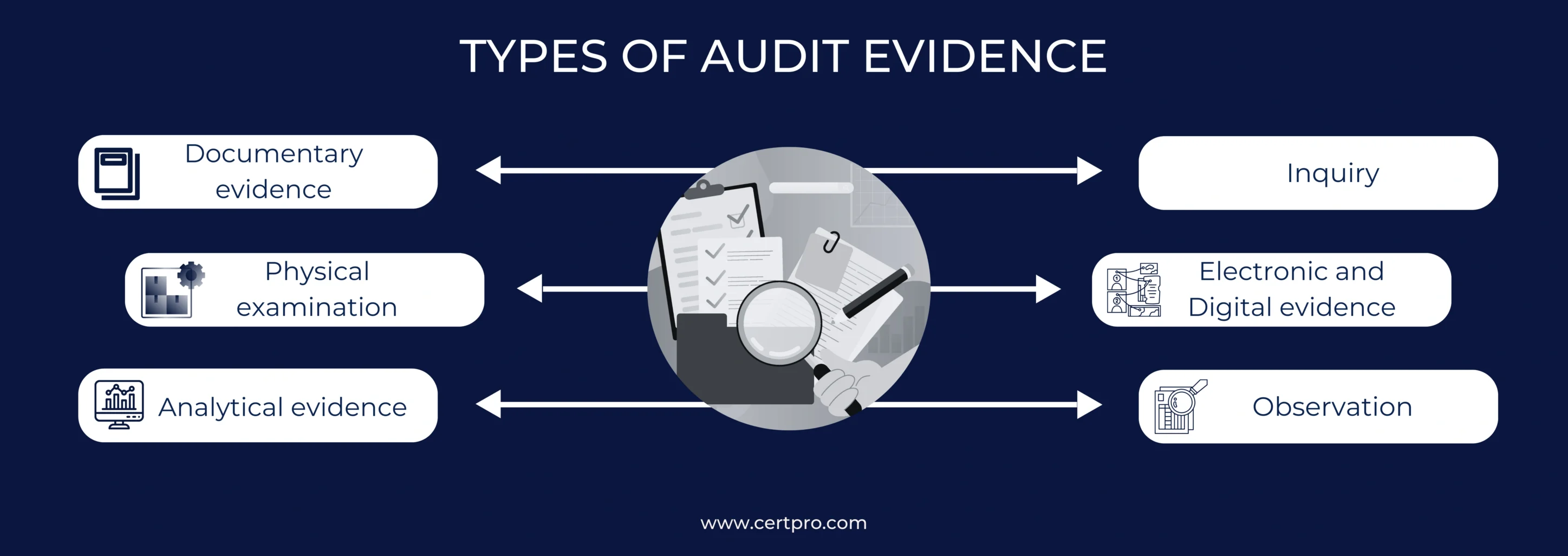
In auditing, using different types of audit evidence is essential to ensure financial data is accurate and trustworthy. Each type serves a specific purpose and helps auditors fully understand an organization’s financial health and internal controls. By combining these methods, auditors improve the characteristics of audit evidence.
- Documentary Evidence: This includes written records like bank statements, contracts, invoices, and receipts. These types of audit evidence offer clear and verifiable proof of financial transactions, obligations, and events, helping confirm the accuracy of records.
- Physical Examination: This involves inspecting physical items such as inventory, equipment, or paperwork. It assists in verifying the existence, ownership, and condition of assets. Auditors record their observations for use in audit reports.
- Analytical Evidence: This involves analyzing both financial and non-financial data. Techniques for this kind of auditing evidence include ratio analysis, trend analysis, and obtaining confirmations from third parties. These help spot patterns or problems that may need closer review.
- Inquiry: Auditors ask questions of people inside or outside the organization, such as managers or regulators. These discussions help clarify complex transactions, support accounting estimates, and uncover hidden risks or liabilities.
- Electronic and Digital Evidence: In today’s digital world, these types of audit evidence include emails, accounting software, databases, and ledgers. These sources provide digital proof of transactions, agreements, and balances.
- Observation: Auditors directly watch how processes and controls work inside the organization. This information helps assess how well internal controls are functioning and spot any weaknesses.
In conclusion, using a mix of these audit evidence types helps auditors give a complete and reliable evaluation. The result builds trust in financial reports and supports better decisions by stakeholders. Thereby, reinforcing the importance of audit evidence.
WHICH DOCUMENTS ARE ESSENTIAL FOR AN AUDIT?
The documents required for an audit can vary based on the nature of the audit and the industry involved. However, certain standard documents are typically requested to ensure a thorough examination of the financial records. These documents include:
- Financial Statements: These statements offer an in-depth assessment of the financial position, performance, and cash flows of the organization. They include the balance sheet, income statement, and cash flow statement.
- Purchase Orders, Invoices, and Supporting Documentations: These records offer proof of transactions, including sales and purchases. They support auditors in confirming the completeness and correctness of financial records.
- Reconciliations and Bank Statements: To validate transactions and cash balances, bank statements are necessary. Reconciliations assist in finding inconsistencies by ensuring that the organization’s records match those of the bank.
- Income Tax Returns: The organization’s taxable income, credits, and deductions are listed on tax returns. To evaluate tax compliance and balance tax provisions with financial statements, auditors review tax returns.
- Agreements and Contracts: These documents outline the organization’s rights and duties regarding specific transactions. Auditors scrutinize these contracts to verify compliance and evaluate their influence on the financial statements.
- Manuals of Policies and Procedures: These manuals record the company’s internal controls, accounting rules, and operational standards. To determine if internal controls are functioning effectively and whether accounting rules are being followed, auditors examine these manuals.
- Documentation on Information Technology: Technology documentation includes system setups, security guidelines, and data backup protocols. To reduce the risks associated with data integrity and confidentiality, auditors evaluate IT controls.
- Board Meeting Minutes: Minutes from board meetings record important choices and conversations made by the group that governs the company. Auditors examine these minutes to understand significant events and managerial choices.
PROCESS OF GATHERING AUDIT EVIDENCE
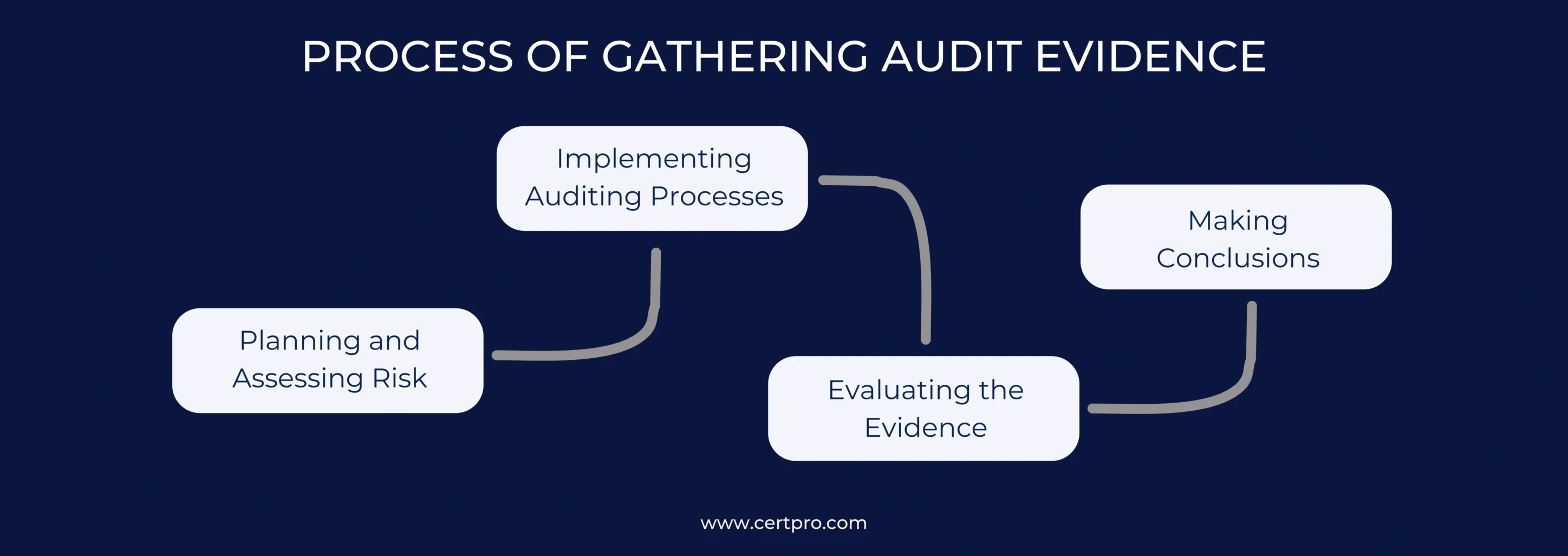
Collecting audit evidence is a key and continuous task that ensures a complete review of financial statements. This detailed process involves several important steps:
1. Planning and Assessing Risk: In this first stage, auditors explore the client’s business in depth to understand its key operations and environment. They look into areas such as regulations, industry trends, and internal controls. They also consider various risks like inherent, control, and fraud risks to find where serious errors might exist in the financial statements. This understanding helps auditors develop a detailed plan suited to the client’s specific risks and needs. At this point, the importance of audit evidence becomes clear, as it guides how risks are identified and addressed.
2. Implementing Auditing Processes: Based on the risks found earlier, auditors carry out selected audit procedures. These include tests of controls and substantive testing. The goal is to address all key risk areas and use various methods to gather strong and reliable evidence. This process helps assess whether the financial statements are accurate, complete, and trustworthy.
3. Evaluating the Evidence: Auditors examine the collected evidence carefully to check its quality and relevance. They look at where it came from, how it was gathered, and whether it clearly supports the financial statements. This step helps ensure the evidence is solid enough to form a sound judgment about the company’s financial position. Understanding the importance of audit evidence at this stage is essential, as it shapes the overall strength of the audit opinion.
4. Making Conclusions: In the final step, auditors combine all findings and judge the overall fairness of the financial statements. They consider laws, accounting rules, internal controls, and any unusual issues. They may also look at management’s explanations and external confirmations. These conclusions help assure stakeholders that the financial information is correct and dependable.
CONNECT WITH CERTPRO TO BUILD CREDIBILITY IN YOUR AUDIT EVIDENCE
We understand that the current business market is not easy. It is characterized by rapid evolution and strict compliance requirements. In this context, audit evidence is not just a requirement. Moreover, it is your defense against financial misstatements, non-compliance, and costly legal penalties. It is more important for startups and growing businesses. This is because weak or missing audit evidence can lead to failed funding rounds, broken investor confidence, or regulatory fines. That’s why investing in solid, well-documented audit practices that are backed by reliable audit evidence is important. And you don’t have to do it alone.
CertPro is here to guide you every step of the way. From gathering the right types of audit evidence to evaluating the quality and characteristics of each record, our experts ensure your audit readiness is solid and in line with your business goals and objectives. Connect with CertPro today to protect your business, win investor trust, and move forward with confidence.
FAQ
What is audit evidence?
Audit evidence in compliance refers to the documents, records, and data that support findings during an audit. It proves that policies, controls, and procedures are followed, helping auditors verify compliance with laws and standards.
What are some audit evidence examples?
Examples of audit evidence include financial statements, accounting records, and documented policies and procedures. Other common sources are system access logs, emails or communication records, training attendance sheets, and invoices or receipts.
What are the sources of audit evidence?
Sources of audit evidence include internal records, policies, system logs, and interviews. Additionally, external sources like vendor contracts, third-party confirmations, and regulatory filings also help auditors verify compliance with rules, procedures, and controls.
Which is the strongest form of audit evidence?
The strongest form of audit evidence in cybersecurity compliance is direct, system-generated evidence. This includes access logs, security configurations, and automated reports, as they offer real-time, tamper-proof proof of compliance with security controls and policies.
What are the 5 Cs in auditing?
Criteria, condition, cause, consequence, and corrective action are the 5Cs of auditing.

About the Author
SHREYAS SHASTHA DRUPADHA
Shreyas Shastha Drupadha, a Senior Business Consultant. Serving as an ISO 27001 Lead Auditor, Shreyas ensures the establishment of robust information security management systems. His expertise also encompasses GDPR, HIPAA, CCPA, and PIPEDA implementation.
WHAT IS CONTROL TESTING? A PRACTICAL GUIDE FOR COMPLIANCE AUDITS

AUDIT SAMPLING EXPLAINED: WHY AUDITORS TEST ONLY SELECTED EVIDENCE

How CertPro Conducts an Effective SOC 2 Type II Audit: A CPA-Led Playbook for SaaS
A SOC 2 Type 2 examination results in an independent CPA - issued attestation report on whether your controls are suitably designed and operated effectively over a period of time. It’s based on the AICPA Trust Services Criteria. This requirement is essential, as in...