

With more data comes more responsibility to safeguard it from security threats. No business in the modern world could run without handling some form of sensitive customer data. Additionally, from growth-stage startups to enterprise firms, all use data as a part of key business operations and service commitments. Therefore, businesses must adhere to a top-tier security framework such as SOC 2 (Service and Organization Controls 2) to safeguard these sensitive data. To demonstrate SOC 2 compliance, businesses must embrace one key practice called centralized logging. But what is this centralized logging all about? It is the process of collecting and storing your logs from multiple systems, applications, network devices, and services into one centralized location or platform.
It’s a very well-known fact that SOC 2 is a US-based auditing standard and security framework developed by the AICPA. The auditors use it to check how well you protect your sensitive customer data. Plus, they review how secure your systems are on the basis of five TSCs. The auditors specifically focus on the security, availability, and confidentiality factors. Having said that, most firms now follow a more complex IT setup than before. To clarify, new-age business models no longer run on a single server or store data in one system. Rather, they operate with an IT setup that uses multiple servers, cloud-native infrastructures, highly distributed and AI-based environments. In this context, an application or business service is used across multiple locations with different microservices and containers. As a result, data is stored across different locations, leaving it hard to manage.
In this scenario, a centralized logging and centralized monitoring system for SOC 2 is important. What is its importance and how does it contribute to SOC 2 compliance? Let’s discuss this topic in the following sections.

Tl; DR:
Concern: Modern businesses handle sensitive customer data across complex, distributed systems. Without a unified approach to logging and monitoring, they risk data breaches, compliance failures, and poor visibility into system behavior—especially during security incidents.
Overview: SOC 2 compliance demands strong security, availability, and confidentiality controls. A key practice to meet these requirements is centralized logging—collecting, storing, and managing logs from various systems in one place. Centralized Log Management (CLM) also enables real-time alerts, tamper-proof log storage, faster incident response, and simplified audit reporting.
Solution: Implement a centralized logging and monitoring system with best practices like log retention policies, access controls, real-time alerts, and proper documentation. This approach supports audit readiness, improves security operations, and turns SOC 2 compliance into a business advantage. Need help? CertPro provides expert guidance to build your SOC 2-ready logging system.
WHAT IS CENTRALIZED LOGGING AND CENTRALIZED LOG MANAGEMENT (CLM)
Let’s first understand what logs are. Logs are the digital footprints, or trails, left behind by your system, application, and network. In simple terms, they are notes and records maintained by your digital assets regarding activities performed in them. It shows who accessed what, when, and why. Traditionally these logs are saved across multiple locations. The security team uses it to catch problems quickly and understand what went wrong during security incidents. Furthermore, it helps to make sure that your system is safe and secure. Some of the common types of logs are database logs, system logs, application logs, security logs, audit logs, and network logs.
However, you may have noticed that maintaining these logs is always a struggle. This is to say that your team often finds it challenging to check the different kinds of logs stored in multiple locations and servers. This is where the process of centralized logging comes as an ultimate savior. It brings your system, application, network, and security logs into one location. This feature gives your team a single source of truth to analyze, monitor and search logs. To put it simply, instead of leaving a log to stay scattered across multiple locations, centralized logging collects and stores it in one single location.
Likewise, Centralized Log Management (CLM) represents a similar advanced system. In addition to collecting logs, it also classifies, indexes, filters, and stores them effectively. Furthermore, this centralized monitoring system also provides alerts and analytics features. But how? Such functionality is possible with the searching, correlation, and visualization services offered by the system.
UNDERSTANDING THE LOGGING AND CENTRALIZED MONITORING SYSTEM FOR SOC 2
We know that most of your team feels bored when they hear about the term “logs.” They think that these are just system trails that only the IT and security team need to care about. But in the world of SOC 2, logging and monitoring aren’t optional. They’re the proof that proves your company is committed to ensuring data security and privacy.
SOC 2 is a framework that works on the foundation of Trust Services Criteria (TSCs) like security, availability, processing integrity, confidentiality, and privacy. And each of these expects you to identify the process that is happening inside your systems in real-time, in a chronological manner. That’s where a centralized monitoring system for SOC 2 comes in.
External auditors don’t want your giant pile of logs. What they care about is this:
- Are you keeping logs long enough to trace back an incident (usually 1 year)?
- Are your logs tamper-proof?
- Does your log have information regarding who has access to it?
- Does it provide you with alerts during unusual behaviors and patterns?
Most startups and early-stage firms believe that they are audit-ready. But when a real audit happens, inconsistencies like failed admin logs and zero security alerts hit them. Why? Not because they didn’t log. But because they didn’t manage the logs like they mattered. This proves that they haven’t used a solid centralized log management system. And that’s what SOC 2 is about: accountability.
In real-world terms, logging is like having security cameras in your office. Monitoring? That’s someone watching the footage for any unusual incidents or security attacks. Centralized logging offers you complete visibility over your logs, helping you to prove that you truly care about providing safe, secure, and ethical business practices.
WHY CENTRALIZED LOGGING IS IMPORTANT FOR SOC 2 COMPLIANCE
Let’s explore the benefits of a solid centralized monitoring system for SOC 2 in this section.
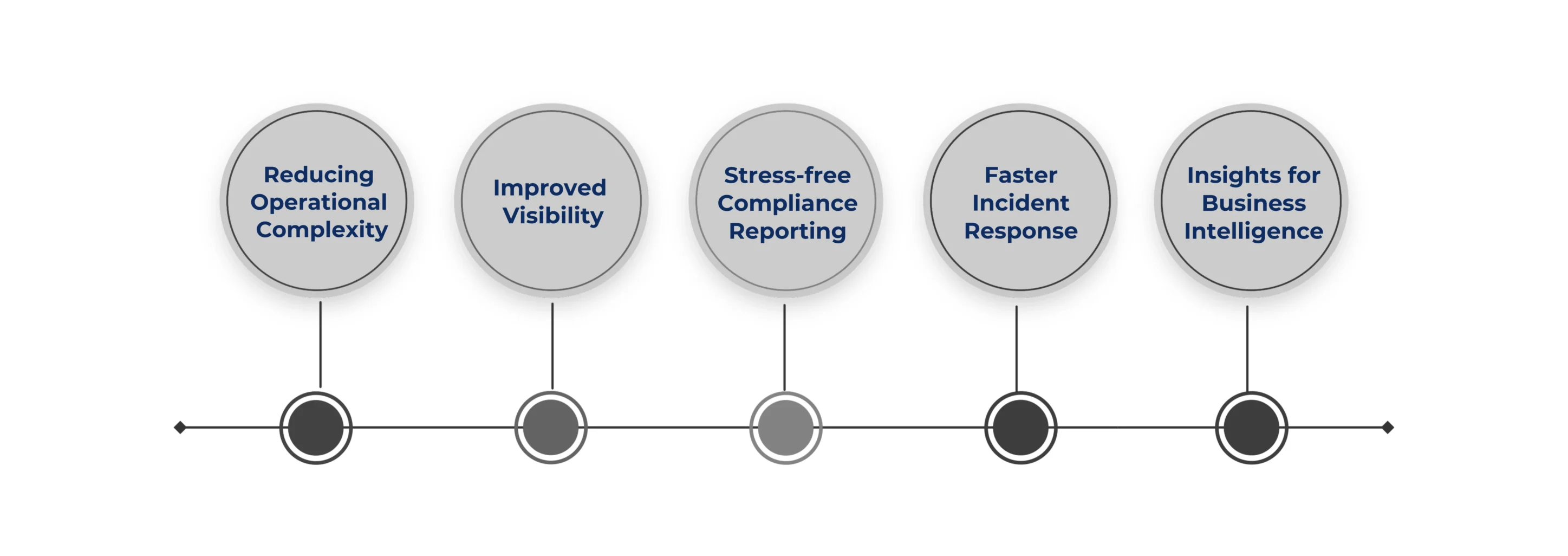
Reducing Operational Complexity: It reduces your operational mess of jumping between different tools, microservices, dashboards, and log trails. Instead, centralized logging offers you one single location to improve your internal control structure, which is a key SOC 2 requirement.
Improved Visibility: The task of managing logs in today’s business is getting more complex and technical. It is like listening to and processing 1000 different conversations happening at different places. Thus, this process offers you total visibility by collecting, simplifying, and correlating logs stored in isolated silos. Centralized log management aids in identifying unauthorized access, which is important for SOC 2’s system monitoring and risk mitigation requirement.
Stress-free Compliance Reporting: With centralized logging, your logs are clean, error-free, and saved with a timestamp. So, during audits, you don’t have to panic about showing your proof. These logs will serve the purpose of clear audit trails during SOC 2 compliance. To clarify, it delivers quick access to evidence of controls under each Trust Services Criteria.
Faster Incident Response: Centralized logging helps you detect, track, and respond to security incidents quickly. It supports SOC 2 requirements by helping document how and when incidents happen. Thus, reducing the time taken for repairing issues. This process shows that your incident response controls are effective and reliable.
Insights for Business Intelligence: Centralized logging helps you analyze patterns in system behavior and user activity. Plus, centralized log management also supports SOC 2’s ongoing risk assessment by helping you detect potential issues early and adjust your controls accordingly. This process makes your system more secure and resilient over time.
BEST PRACTICES FOR IMPLEMENTING A CENTRALIZED MONITORING SYSTEM FOR SOC 2
SOC 2 compliance demands your firm to prove that your systems are secure, reliable, and monitored carefully. A centralized monitoring system of logs plays an important role here. Therefore, you must use the following best practices to match your logging process in accordance with SOC 2 requirements.
Defining Clear Retention Periods: Establishing a clear understanding of the required log maintenance duration is the primary step. Have a clear log retention policy with defined timeframes based on your risk posture and compliance needs. Plus, store them in a secured storage using access controls and encryption.
Log Protection: Makes sure that your logs are safe and not everyone is allowed to alter or delete them. Use tamper-proofing and cryptographic validation to safeguard the authenticity and trustworthiness of your logs.
Access Controls: The next important step is to set strong access controls on the basis of the principle of least privilege. Set Role-Based Access Controls to control who can read and alter the logs.
Real-time Alerts: Have systems for real-time alerts that notify your team of suspicious activities. Thereby helping your team to catch threats early and fix them quickly before escalation.
Documentation: Document everything from your policies, procedures, and system setups. As a result, these documents could assist you during SOC 2 audits as proof of your well-managed and secured system.
CONCLUSION
To conclude, it is clear that managing logs across multiple locations is not just tedious but also risky. If your business lacks a centralized logging and monitoring system, it will always lag behind. Additionally, implementing a centralized logging system is a crucial process that can facilitate your SOC 2 compliance efforts. SOC 2 is not just a compliance framework; it’s a trust builder and a backbone for your security. It provides you with visibility when your system misbehaves, purpose and context behind security alerts, and proofs for compliance audits.
Now, you must have understood that centralized logging is essential for SOC 2 compliance efforts. It’s time to reconsider your current security and logging configuration to implement compliance-ready and scalable logging techniques. Feeling overwhelmed by the setup?. Don’t worry. CertPro is here to guide you. We offer expert guidance and tailored compliance solutions for your firm. Our audit team will guide you in each and every step of the SOC 2 compliance journey. At CertPro, we guide you step by step in building a strong logging and monitoring system. Our compliance experts help you implement the right controls, set clear log policies, and ensure full audit readiness. Contact us today and let CertPro’s audit expertise help you turn SOC 2 compliance into a competitive advantage.
FAQ
What is the logging and monitoring policy of SOC 2?
The SOC 2 log management and review policy defines the outline for collecting logs, capturing the specific log details, and monitoring/reviewing them.
What is a logging and monitoring policy?
An audit logging and monitoring policy is a framework of guidelines and procedures that govern audit logging and monitoring processes. This policy guides the collection, analysis, and storage of activity data within an organization.
What is the role of SIEM in logging?
SIEM tools enhance log management by allowing real-time analysis and correlation of security events. These tools collect log data from various sources and use security-focused analytics and correlation techniques to identify patterns, anomalies, and potential security incidents.
What is the difference between centralized and decentralized logging?
Centralized logging collects and stores all logs from various systems in one location for unified analysis, while decentralized logging keeps logs scattered across individual systems, making troubleshooting and correlation more complex and time-consuming.
What is a centralized log management tool?
A centralized log management tool in cybersecurity collects, stores, analyzes, and correlates logs from various sources in one place, helping detect threats, investigate incidents, ensure compliance, and improve an organization’s overall security posture efficiently.

About the Author
Abhijith Rajesh
Abhijith Rajesh is an Executive Team Lead at CertPro, specializing in ISO 27001, SOC2, GDPR, and other Information Security Compliance standards. He leads a dedicated team, ensuring the delivery of top-tier information security solutions. Abhijith excels in managing projects, optimizing security frameworks, and guiding clients through the complexities of the ever-evolving threat landscape.
GRC IN CYBERSECURITY: WHAT IT MEANS AND WHY IT MATTERS IN 2026
In 2026, the pressure on companies to manage cyber risk responsibly has never been greater. Regulators demand structured controls, boards want clear risk reporting, and threat actors are becoming more sophisticated. Against this backdrop, GRC in cybersecurity has...
HOW COMPLIANCE AUDIT SOFTWARE IMPROVES AUDIT READINESS
Today, most companies deal with a growing number of compliance regulations. From data privacy standards to security frameworks like SOC 2 and ISO 27001, the list of compliance obligations keeps expanding. At the same time, regulators and external auditors now expect...

Compliance Best Practices in 2026: How to stay ahead of regulatory changes
Why is the implementation of compliance best practices critical for 2026? Compliance in 2026 demands operational proof, not the documentation intent. Regulations change faster, audit scrutiny is higher, and reporting timelines are tighter across privacy,...