
Data is the foundation of organizational vitality in today’s corporate environment. Companies use data extensively to guide choices, stay competitive, and promote growth. However, they face complex issues from both the inside and the outside. These difficulties include insider threats, data breaches, and cyber threats. As a result, it presents serious risks to data confidentiality and integrity. As a result, the necessity of strong Data Loss Prevention (DLP) methods increases. Thus, by implementing efficient solutions, businesses may better protect their data. This entails protecting sensitive data and ensuring they can adapt to changes in the digital environment.
This article will mainly explore data loss prevention solutions. We’ll include how it works and its benefits. We’ll also discuss the causes of data leaks and the best seven prevention tips. Thus, understanding and implementing effective DLP measures is paramount in today’s digital landscape. It helps prevent risks and ensure constant business operations for your organization.

ABOUT DATA LOSS PREVENTION
Data Loss Prevention (DLP) is a technique for safeguarding private data. It uses tactics to prevent illegal access, leaks, and data breaches. As a result, DLP keeps a careful eye on essential data in your company’s digital infrastructure. As a result, it guards against corruption, loss, misuse, and illegal access. It also protects employee files, organizational data, financial records, and consumer information. Thus, implementing DLP controls can improve an organization’s data security posture. It eliminates the dangers of data loss and illegal access. DLP consists of both policy guidelines and technological tools. It lowers the possibility of data loss or leakage and safeguards critical information.
Now, the question that may arise is: What is DLP software? DLP software protects sensitive data and meets HIPAA, PCI-DSS, and GDPR. Thus, it recognizes the violations of the rules and takes the necessary action. In addition, the DLP alerts the organization and uses encryption to stop data leaks. Furthermore, DLP tools monitor activities, filter network data, and defend data in the cloud. Additionally, Data Loss Prevention (DLP) software generates compliance reports. It also helps detect weaknesses and anomalies for forensic analysis and incident response.
KEY BENEFITS OF DLP SYSTEM
Data protection holds significant importance across legal, ethical, and operational domains. It is essential for organizations to implement data loss prevention for various reasons, including:
1. Enhanced Data Visibility: Cloud computing and big data have become more prevalent in this business environment, making it challenging to monitor confidential information. Again, cloud DLP solutions, in particular, provide companies with improved insights. It clearly shows how data is handled, stored, accessed, and utilized throughout the organization.
2. Security in Remote and BYOD Settings: DLP software can implement security rules and access restrictions for remote and BYOD employees, ensuring that security practices are consistent across different teams, departments, and locations.
3. Intellectual Property Protection: Businesses depend on trade secrets, proprietary processes, technologies, and competitive data. Thus, it paves the way for organizations to stay innovative and ahead of their competitors. Consequently, implementing a DLP strategy can safeguard these crucial assets.
4. Upholding Brand Reputation: Data breaches result in immediate financial losses and damage to customer trust, creating ongoing difficulties in managing a brand’s reputation. Thus, they highlight the critical need for proactive data protection measures.
5. Ensuring Regulatory Compliance: Data privacy laws such as GDPR, CCPA, and HIPAA require organizations to protect data well. Hence, not following these rules can result in hefty fines and legal problems. DLP solutions offer comprehensive reporting functionalities. This makes it easier to show that regulations are observed and reduces the risk of breaking them. In simple terms, preventing data loss reduces security risks and strengthens a company’s ability to handle challenges. Thus, it allows organizations to generate innovative ideas and protect the brand’s reputation.
CAUSES OF DATA LEAKAGE
Various factors contribute to data leakage, each presenting unique challenges to organizational cybersecurity:
1. Accidental Disclosures: Data leaks often occur due to the unintentional actions of trusted individuals who inadvertently expose sensitive information. Examples include mistakenly sending emails containing confidential data to the wrong recipients, misplacing corporate devices, or failing to secure devices with passwords or biometric protection.
2. Insider Threats: Malicious insiders, such as employees or trusted outsiders, may exploit their access to company systems. Therefore, it can perform for their gain or to collaborate with external attackers. The actions could include moving sensitive documents outside the organization when files are saved on unauthorized USB devices or stored in unauthorized cloud storage.
3. Software Configuration Errors: Misconfigurations can lead to significant data leaks, especially in cloud environments. They happen when giving too many permissions and not having proper database or cloud storage security. They expose credentials or encryption keys and make mistakes when connecting with third-party services.
4. Social Engineering Attacks: Hackers use social engineering tricks to breach company systems and access sensitive data. They can also mislead employees into sharing passwords or sending critical information to the hacker. Sometimes, they introduce malware into company systems to gain unauthorized access, which allows them to access the organization’s sensitive data.
5. Software Vulnerabilities: Outdated software or zero-day exploits pose a significant cybersecurity risk. Attackers can use these weaknesses to create various security threats, which might allow them to acquire crucial data without authorization.
6. Legacy Data: As companies expand and staff changes occur, they might lose track of old data. Subsequently, updating systems and changing infrastructure can accidentally reveal old data, which could be a security risk that attackers could use. Understanding the reasons why data leaks happen helps companies better protect sensitive information. They can then strengthen cybersecurity defenses to prevent unauthorized access and exposure.
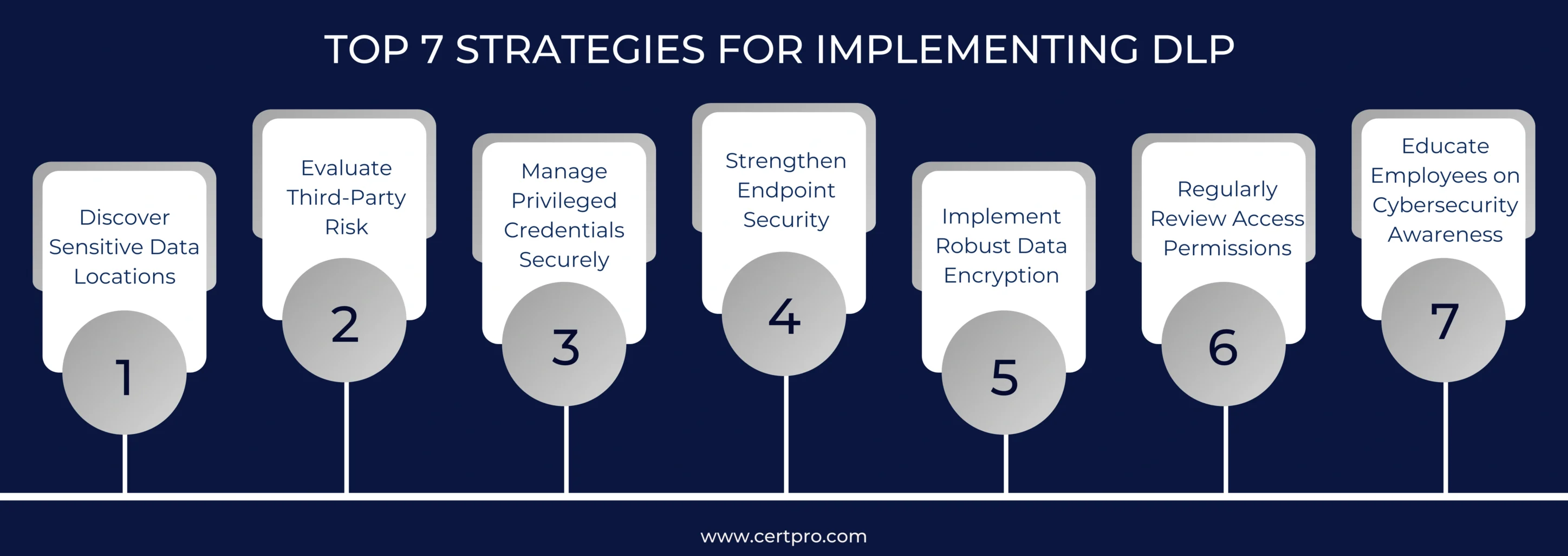
TOP 7 STRATEGIES FOR IMPLEMENTING DLP
In this digital environment, the number of data breaches is increasing daily. Data leakage prevention is a critical aspect of modern cybersecurity. In this section, we’ll discuss seven different strategies for doing this. These strategies focus on managing risks in cybersecurity.
1. Discover Sensitive Data Locations: The first step in data leakage prevention is to find out where sensitive data is in a company’s digital setup. It means doing thorough searches to find where the data is stored. Therefore, it comes under spots like databases, file servers, cloud storage, and even personal devices. Hence, the data should be categorized based on its sensitivity and importance. Then, protect it with encryption, access control, and DLP solutions.
2. Evaluate Third-Party Risk: External vendors and partners sometimes need to use a company’s systems and data. It can be risky if not handled carefully. Furthermore, companies need to evaluate the risk from third parties. Therefore, examining their security practices and potential weaknesses leads to data leaks. Hence, questionnaires, testing, and ongoing checks can help lower these risks. It can ensure compliance with strict security rules.
3. Manage Privileged Credentials Securely: Privileged credentials, such as administrator accounts and API keys, provide elevated access within a company’s network. Therefore, safeguarding these credentials is vital to prevent unauthorized access and potential data leaks. Security best practices involve implementing Multi-Factor Authentication (MFA). Additionally, regularly rotating credentials, monitoring for suspicious activity, and using secure password management solutions can help store privileged credentials securely.
4. Strengthen Endpoint Security: Endpoints like desktops, laptops, mobile devices, and IoT gadgets are targets for cyber threats and data breaches. As remote work and mobile computing increase, securing endpoints is crucial. To do this, organizations should use endpoint protection. Always ensure device encryption and have strict endpoint security policies. Additionally, it regularly checks for vulnerabilities and manages patches.
5. Implement Robust Data Encryption: Encryption is essential for keeping data safe, whether stored or sent. Hence, organizations should use symmetric-key encryption to store and send data. They should also use public-key encryption for secure communication and authentication. Managing and controlling data access is important, as it can help keep encrypted data safe and private.
6. Regularly Review Access Permissions: Access control is crucial for preventing data leaks and stopping unauthorized access to sensitive data. Companies should periodically check and adjust who has access based on job roles. Using fingerprints, tokens, and strong passwords makes access more secure.
7. Educate Employees on Cybersecurity Awareness: Employees can be a significant problem in cybersecurity. Therefore, giving them good cybersecurity training helps them spot and report suspicious things. It allows them to get more information on following security rules and being safer with data. Regular training, fake phishing tests, and awareness campaigns can reduce the risk of data leaks because of mistakes.
Preventing data leaks requires a mix of technology, risk management, and teaching employees. By using these seven strategies, companies can significantly lower the risk of data breaches. These strategies keep sensitive information safe and adhere to data privacy and security rules in today’s digital world.
DLP STRATEGY TO STRENGTHEN DATA SECURITY
In 2025, Even in this digital environment, cyber risks are getting worse every day. Companies must have robust rules and mechanisms for data loss prevention. Protecting credentials entails locating crucial information and assessing dangers from other businesses. It employs robust encryption, secures devices, and routinely verifies access. This also entails providing staff with appropriate cybersecurity training. These steps maintain trust, bolster defenses, reduce the danger of data loss, and adhere to regulations. Prompt action increases cybersecurity awareness and maintains business operations. For a business to be safe, it is essential to have the right cybersecurity technologies. As a result, DLP benefits any business, regardless of internal or external risks. Companies need to protect sensitive data, particularly finance and healthcare organizations.
FAQ
What is a DLP policy?
A DLP or data security policy, is a set of rules that control how users handle data. It can limit access to data for risky individuals and teach employees safe ways to use and share data.
Is DLP a firewall?
No, Data Loss Prevention (DLP) is not a firewall. A firewall controls network traffic based on security rules. Thus, Data Loss Prevention (DLP) focuses on monitoring and blocking sensitive data to prevent unauthorized access and transmission outside the organization.
What are the types of data loss prevention (DLP)?
Mainly, there are three different types of data loss prevention (DLP), which are:
- Endpoint DLP: manages servers, computers, laptops, and mobile devices and keeps the data stored on them safe.
- Cloud DLP focuses on checking and encrypting sensitive data before it is stored in the cloud.
- Network DLP: It reviews network traffic to prevent the unauthorized sending of sensitive data. Its goal is to prevent data breaches by catching and blocking any attempts to send sensitive information without permission.
What are the main components of DLP?
Data Loss Prevention (DLP) has four key components: data discovery, policy management, endpoint protection, and network protection. Additionally, it encompasses securing data while stored, in transit, and during use.
Is DLP a host-based application?
Yes, DLP is host-based software. Thus, host-based DLP monitors the device data. Therefore, it offers greater insight into handling sensitive data and prevents unauthorized access to data.

About the Author
SUBBAIAH KU
Subbaiah Ku is the Regional Director for CertPro in Oman, bringing a wealth of expertise in process and system auditing. As a seasoned lead assessor, Subbaiah is dedicated to ensuring the highest standards in compliance and security. His unique blend of technical acumen, rooted in Mechanical Engineering, is complemented by a diverse range of certifications and extensive training.
Why AI Risk Assessment Is Now a Board-Level Requirement
AI now sits at the center of business decisions. It shapes pricing, hiring, fraud detection, and customer experience. That shift brings speed and scale, but it also brings risk that many teams still struggle to control. As a result, organizations now depend on...
WHY RISK QUANTIFICATION MATTERS FOR SECURITY, COMPLIANCE, AND BOARD DECISIONS
Today, most companies deal with a complex security environment. Cloud tools, third-party vendors, and strict rules all add to their risk exposure. At the same time, boards and senior leaders need a clearer view of how those risks are being handled. Most traditional...
Data Breach Costs and Impact IN 2025: Global Insights for Business
A data breach can be defined as an incident where sensitive information is leaked or compromised by unauthorized users. In simple words, it happens when someone gets access to data they should not have. The data include customer records, employee files, payment...