

In the modern digital era, protecting data has evolved into a global necessity rather than a localized concern. The European Union (EU) developed the General Data Protection Regulation (GDPR), which establishes stringent guidelines for safeguarding personal information and guaranteeing its responsible use. At first, it appeared that only EU-based corporations were subject to GDPR for non-EU businesses. However, recent events have shown that its impact is global, affecting businesses far beyond Europe.
For instance, the Dutch Data Protection Authority (DPA) fined Uber 290 million euros (about US$324 million) on July 22, 2024, for sending sensitive personal information on European taxi drivers to the US without the proper safeguards. This case arose because Uber failed to implement the necessary measures following the EU’s 2020 ruling that a prior ruling regarding U.S. data protection rules was illegal. Uber received its third penalty for GDPR violations after the DPA determined that these transfers were occurring frequently and lacked the required safeguards. These incidents demonstrate the significance of GDPR for non-EU businesses that confront increasing difficulties with global data protection.
This article examines how GDPR penalties like this highlight the significance of GDPR adherence and why data protection must be a top priority for businesses everywhere.

Tl; DR:
Concern: GDPR requirements are becoming more and more applicable to non-EU companies that handle the data of EU individuals. Significant financial fines, business interruptions, and reputational harm may arise from noncompliance. These stringent data privacy regulations emphasize how crucial it is for companies doing business internationally to give GDPR compliance priority.
Overview: GDPR ensures data privacy, fosters trust, and mandates compliance for businesses offering products, monitoring EU residents, or transferring data across borders. Adhering to GDPR prevents disruptions, builds reputation, and facilitates global partnerships.
Solution: CertPro helps non-EU businesses navigate GDPR compliance, offering tailored strategies to meet requirements, secure operations, and build trust. Learn how GDPR compliance ensures growth and protection in today’s global market.
KEY ASPECTS OF GDPR FOR NON-EU BUSINESSES AND ITS IMPACT
The GDPR for non-EU businesses has a global impact, and its laws apply to organizations outside the European Union (EU) that handle personal data for EU citizens. Here are three primary ways GDPR impacts non-EU businesses:
Providing Products or Services to EU Residents: Non-EU businesses must comply with GDPR if they offer products or services to EU residents. For example, an Indian textile business selling internationally and allowing European customers to customize their currency selections is targeting EU data subjects. This commitment to serving European consumers requires the company to follow GDPR guidelines to ensure data privacy.
Monitoring EU Residents’ Behavior: GDPR applies to businesses that collect data on EU residents, including tracking their online activities to analyze and predict behavior and interests. Websites using tracking technologies like cookies must display cookie banners, giving users the option to consent. While not all cookies need consent, businesses must provide this option for those that do. Using a Consent Management Platform (CMP) like CookieYes helps businesses stay compliant without incurring high costs.
Cross-Border Data Transfer: When transmitting personal data from the EU to countries outside of the EU, adequate data protection is necessary. Standard Contractual Clauses (SCC) and Binding Corporate Rules (BCR) can assist you in achieving this aim. Furthermore, data transfers may occur without the need for additional security measures if the recipient country has acceptable data protection rules.
GDPR compliance is crucial for non-EU firms that handle data from EU people. Businesses that follow GDPR safeguard data privacy, build confidence, and avoid legal implications. As a result, understanding and applying these requirements is important to compliance and profitability.
WHY GDPR COMPLIANCE IS IMPORTANT FOR DUTCH BUSINESSES
The General Data Protection Regulation (GDPR) significantly impacts Dutch enterprises and is essential for protecting data privacy throughout the EU. Furthermore, GDPR’s impacts extend beyond the EU, impacting companies outside of it. To prosper in a worldwide market that is becoming more data-driven, Dutch companies and non-EU organizations must comprehend the significance of compliance to avoid GDPR penalties for GDPR violations and preserve confidence. These sections examine the importance of GDPR compliance for Dutch companies and its relationship to GDPR for non-EU businesses.
Preventing Fines: GDPR non-compliance fines come with severe data protection penalties. Businesses in the Netherlands and outside the EU may be subject to data protection fines of up to €20 million or 4% of their yearly sales, whichever is larger. The Netherlands’ recent GDPR penalties demonstrate the gravity of these regulations. In a similar vein, GDPR for non-EU corporations guarantees that enterprises outside the EU must abide by the regulations if they provide products or services to EU citizens or monitor their online activity. Both Dutch and non-EU companies may have significant financial effects from these data protection fines. Compliance is crucial for this reason.
Maintaining Operational Continuity: For Dutch businesses and non-EU companies, not following GDPR can cause disruptions. For instance, investigations could stop the flow of data, especially across borders. Non-EU businesses working with EU customers need to follow GDPR rules to avoid these problems. In the same way, Dutch businesses that rely on international partnerships will also find it easier to work smoothly by following GDPR.
Protecting Reputation and Trust: A data breach or failure to comply with GDPR can harm an organization’s reputation. Customers expect their personal information to be protected. By following GDPR, businesses in the Netherlands and non-EU organizations show their commitment to privacy. This builds trust and strengthens long-term customer relationships, which helps improve the business’s reputation over time.
Facilitating Global Partnerships: GDPR helps countries work together to make sure data protection rules apply everywhere. This aspect of GDPR for non-EU businesses emphasizes the global reach of the regulation. Therefore, non-EU businesses must follow these rules too, which helps them work with businesses in the EU. Similarly, Dutch companies can work better with non-EU partners when everyone follows GDPR. In turn, non-EU businesses can reach EU customers while staying safe from legal issues.
Competitive Advantage: Following GDPR is not just about avoiding data protection fines—it also helps businesses do better. For both Dutch and non-EU businesses, GDPR helps improve data management, makes operations more efficient, and gives them a competitive edge. Moreover, customers and partners prefer businesses that are clear and responsible. By following GDPR, businesses can show they are trustworthy leaders in their field.
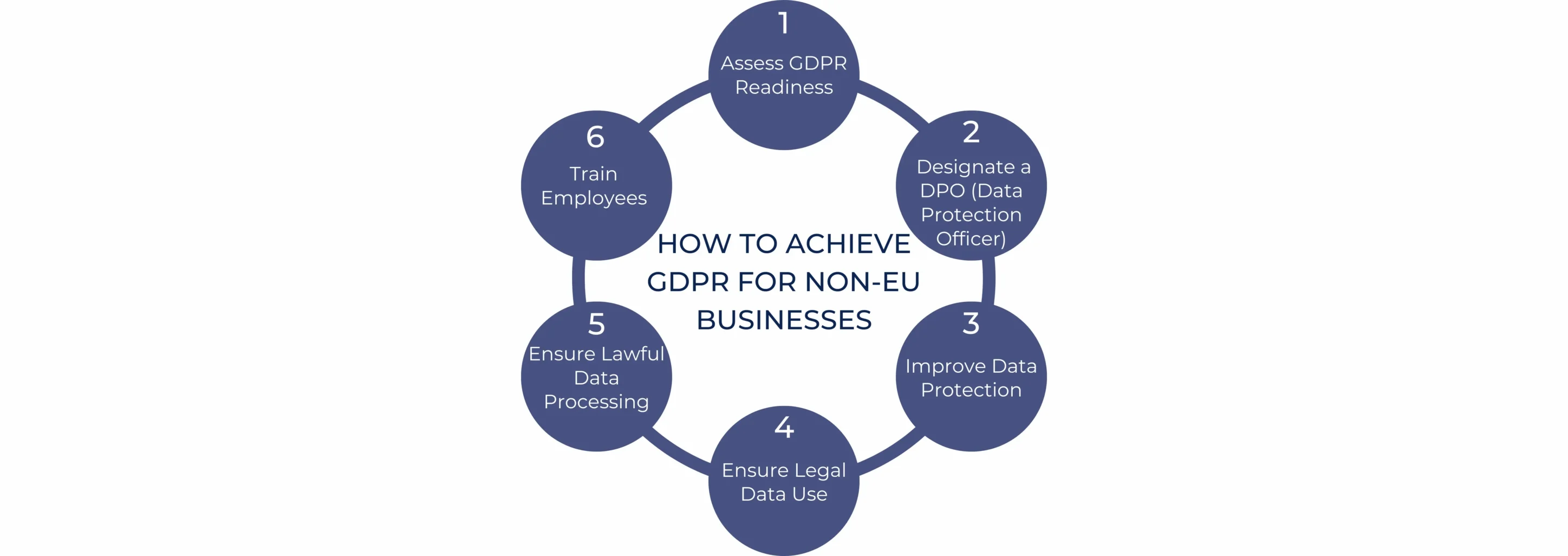
HOW TO ACHIEVE GDPR FOR NON-EU BUSINESSES
GDPR for non-EU businesses might be challenging at first because it has many regulations. However, by taking proper steps, compliance becomes easier and helps protect the organization’s reputation and daily operations. Here are the key steps to follow the GDPR for non-EU businesses:
- Assess GDPR Readiness: The first step is to look at data handling procedures. This will help identify areas that need improvement to comply with GDPR laws. It will be simpler to identify what needs to change when the evaluation is finished. This evaluation serves as the cornerstone for non-EU companies to comply with GDPR.
- Designate a DPO (Data Protection Officer): A DPO could be necessary when managing a sizable amount of EU individuals’ data. The DPO is responsible for ensuring data security and responding to inquiries from authorities.
- Improve Data Protection: Use comprehensive security measures, such as encryption, to ensure the protection of personal information. Implementing these technologies right now will reduce risks and is essential for GDPR compliance.
- Ensure Legal Data Use: Always ask for clear permission from people before using their data. It’s important to tell them how their data will be used and respect their rights, like letting them see or delete their data. This builds trust and shows the organization cares about privacy.
- Ensure Lawful Data Processing: Ensure compliance with the applicable regulations when transferring data outside the EU. This might mean using Standard Contractual Clauses (SCCs) or making sure the country receiving the data has strong protection rules in place.
- Train Employees: Regular training on GDPR for non-EU businesses and GDPR rules is important to make sure everyone understands how to follow them. This helps avoid mistakes and makes GDPR data protection part of the daily work routine.
By following these steps, businesses can make GDPR easier to follow and turn it into an advantage. These steps improve the company’s standing in the international market by lowering risks and fostering client trust. Ultimately, these actions foster development and achievement.
CERTPRO: YOUR RELIABLE GUIDE TO GDPR FOR NON-EU BUSINESSES
Understanding GDPR for non-EU businesses might be challenging. It contains several legal and technical details that may confuse businesses that are unfamiliar with these standards. However, CertPro makes it easier by offering simple solutions to help businesses comply with GDPR. Our process begins with a thorough review to identify areas that need improvement. Following this, clear steps are provided to address those gaps and ensure everything aligns with GDPR standards. Our objective is to help organizations succeed in today’s data-driven environment. By partnering with CertPro, organizations gain a trusted ally focused on protecting their reputation, operations, and customer trust. Contact CertPro today to explore how compliance can be achieved, helping to establish a secure, trustworthy global presence.
FAQ
How does the EU assess whether a non-EU country provides an adequate level of data protection?
The European Commission evaluates whether a non-EU country ensures an adequate level of data protection based on Article 45 of Regulation (EU) 2016/679. This determination allows the Commission to decide if the country’s data protection standards are in line with EU requirements.
When do the GDPR provisions apply to non-EU businesses?
The GDPR applies to non-EU businesses when they offer goods or services to individuals in the EU or monitor the behavior of EU residents, regardless of whether the business has a physical presence in the EU.
How does GDPR ensure the protection of children's data?
GDPR sets stricter conditions for processing children’s data, particularly for those under 16. Consent from a parent or guardian is required for services offered directly to children in the EU.
How does GDPR affect non-EU businesses when handling personal data for marketing?
Non-EU businesses engaging in marketing activities targeting EU residents must comply with GDPR rules, including obtaining consent for direct marketing, offering opt-out options, and respecting individuals’ data rights.
What are the obligations of non-EU businesses under GDPR for data transfers?
Non-EU businesses must ensure data transfers from the EU are secure by using approved mechanisms, such as Standard Contractual Clauses (SCCs) or binding corporate rules, to guarantee adequate protection of personal data.

About the Author
Anuja Patil
Anuja Patil, an Executive Team Lead at CertPro, excels in guiding her team to deliver premier information security solutions. With a strong background in ISO 27001, SOC2, GDPR, and various other compliance standards, she ensures that projects are managed efficiently and security frameworks are continually optimized.

DATA MAPPING FOR GDPR: BUILDING A COMPLIANCE-READY INVENTORY
Have you ever tried to answer a simple question like “Where’s our customer data stored?” Most probably, you would have found yourself hopping across five different tools and six spreadsheets. Despite all the research work, you might still get a negative signal from...

10-STEP GDPR CHECKLIST: A COMPLETE GUIDE
In the current global economy, businesses are heavily dependent on customer data. This helps them in enhancing business operations and providing customized services. However, this dependency also comes with the responsibility of protecting the data. One of the most...

GDPR ARTICLE 9: A PRACTICAL GUIDE TO HANDLING SENSITIVE DATA
The use of sensitive data is an essential part of modern business operations. Most businesses across various sectors store, handle, and process sensitive data as part of their business operations. In simple words, sensitive data is nothing but critical information...