

The General Data Protection Regulation (GDPR) establishes strict standards for protecting personal information in the face of growing concerns over data privacy and security. Since its introduction in 2018, the regulation has encouraged organizations worldwide to reevaluate their data handling practices. As a result, the protection of individuals’ data has become a top priority in many organizations’ operations.
The cost of GDPR certification can vary significantly due to several factors. Therefore, organizations need to understand the complexities involved. One way to demonstrate a strong commitment to GDPR compliance is by pursuing certification. Although not a mandatory requirement, obtaining certification can be a valuable tool for building trust, both with customers and regulatory bodies.
As 2025 approaches, this article will provide insights into the factors that influence GDPR certification costs. While seeking certification can be a strategic decision, understanding what affects these costs and the wider implications of certification is essential. This article will explore the main drivers of certification expenses, key considerations for organizations, and the long-term benefits that come with achieving certification and advancing data protection efforts.
OVERVIEW OF GDPR CERTIFICATION
The General Data Protection Regulation , enacted in 2018, has transformed the landscape of data protection and privacy. It not only imposes stringent requirements on how organizations handle personal data but also offers a mechanism for them to showcase their commitment to data privacy through this certification.
The certification, also known as conformity assessment, is a voluntary process that enables organizations to obtain third-party validation of their GDPR compliance efforts. This certification serves as tangible evidence that an organization is dedicated to adhering to the rigorous data protection standards outlined in the regulation. Certification also provides a competitive advantage in a business environment where data privacy concerns are paramount. It sets certified organizations apart from their competitors, making them more attractive to customers who value data protection.
Furthermore, the certification can serve as a form of legal protection. While it does not grant immunity from legal action, it can be a mitigating factor in the event of data breaches or regulatory investigations. Regulators often view certified organizations more favorably, which may lead to more lenient enforcement actions. Global recognition is another key benefit of certification. It is not restricted to European Union (EU) organizations; organizations worldwide can obtain the certification.
However, it’s essential to note that certification GDPR cost can vary widely depending on factors such as the organization’s size and complexity, the choice of certification body, the scope of the assessment, the current state of compliance, and the nature of data processing activities.
FACTORS AFFECTING THE COST OF GDPR CERTIFICATION
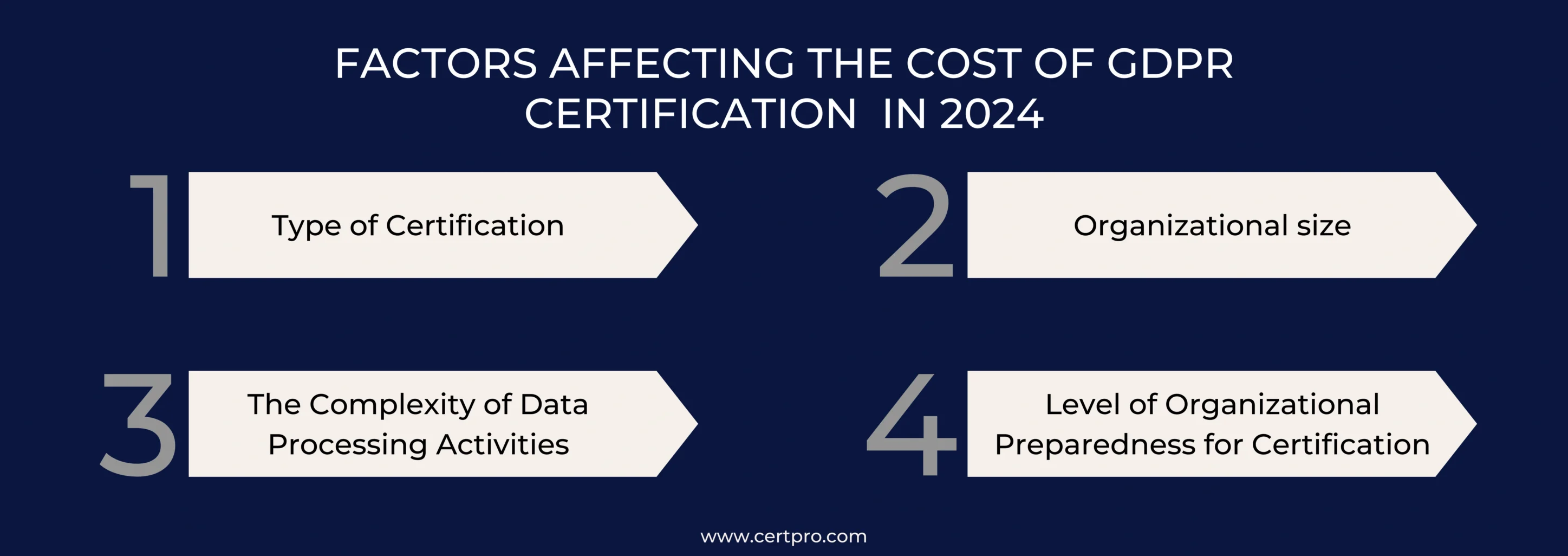
Several factors influence the cost of obtaining General Data Protection Regulation (GDPR) certification in 2025. Therefore, understanding these factors is essential for organizations planning to pursue certification and manage their budgets effectively.
1. Type of Certification: Depending on the type of Certification, GDPR certification costs can change. Some Certifications could cost extra to achieve since they require more effort and money. The cost of a GDPR Practitioner Certification may be higher than that of a GDPR Foundation Certification, for instance.
2. Organizational size: The cost of certification may vary depending on the size of the organization. The data processing processes of larger organizations could be more complicated, requiring more time and resources to monitor and evaluate. This can make Certification more expensive.
3. The Complexity of Data Processing Activities: The complexity of an organization’s data processing activities can also affect the cost of certification. Organizations that process large amounts of personal data or use more complex processing methods may require more extensive reviews and assessments, which can increase the GDPR cost of Certification.
4. Level of Organizational Preparedness for Certification: The price may vary depending on the organization’s level of preparedness for certification. Companies that have already put GDPR compliance cost procedures in place may need fewer time and resources to get certified, which can lower the cost. On the other side, organizations that haven’t yet put any GDPR Compliance measures in place might need to put in more effort to get certified, which would raise the cost.
In conclusion, the cost of obtaining certification in 2025 is influenced by a variety of factors. Organizations must carefully assess their unique circumstances, take these factors into account, and engage in thorough planning and budgeting. By doing so, they can navigate the certification process efficiently while enjoying the long-term benefits of compliance.
ESTIMATING GDPR CERTIFICATION COST
While it is difficult to provide precise figures for GDPR certification costs in 2025 due to the factors mentioned earlier, organizations can take specific steps to estimate their potential expenses more accurately.
1. Determine Scope: Begin by defining the scope of the certification assessment. Decide which aspects of your organization’s data processing activities you want to include in the certification process. A broader scope will generally result in higher costs.
2. Research Certification Bodies: Conduct thorough research and contact various certification bodies or auditors to obtain quotes and fee structures. Compare costs and consider the reputation and expertise of each body.
3. Assess Current Compliance: Conduct an internal assessment of your organization’s current GDPR compliance cost. Identify any gaps or deficiencies that may require remediation before pursuing certification.
4. Budget for Remediation: Allocate a budget for addressing compliance gaps and deficiencies that may be identified during the certification assessment. This budget should cover the necessary resources and measures to achieve compliance.
5. Consider Recertification: Remember that certification is an ongoing process. Budget for recertification costs, which typically occur every one to three years, depending on the chosen certification body’s requirements.
6. Leverage Internal Resources: Determine whether you have internal resources available for the compliance tasks. Utilizing internal expertise can reduce reliance on external consultants, potentially lowering costs.
7. Factors in Geographic Considerations: Consider the geographic location of your organization and the certification body. Costs may vary based on location, so factor this into your budget calculations.
By systematically considering these factors and conducting thorough research, organizations can create a comprehensive estimate of the costs involved in obtaining certification in 2025. This approach not only aids in accurate budgeting but also ensures that the certification process is well-planned and aligns with the organization’s specific needs and compliance objectives.
GDPR CERTIFICATION COST BREAKDOWN
Estimating and understanding the breakdown of General Data Protection Regulation (GDPR) certification costs in 2025 is essential for organizations aiming to improve their data protection and privacy practices. Although exact costs can vary significantly based on factors such as organization size, scope, and location, a general cost breakdown can provide valuable insights into the key components to consider.
1. Certification Body Fees (30–40%): The largest portion typically goes to the certification body or auditor.
2. Consulting and Training (15–25%): Many organizations require consulting services to prepare for the certification. This includes hiring external the experts or consultants to assist in compliance assessments and remediation efforts.
3. Internal Resources (10–15%): Allocating internal resources to compliance efforts is a significant factor. This includes the time and effort of employees dedicated to data protection activities and internal audits.
4. Remediation Costs (10–15%): If compliance gaps or deficiencies are identified during the certification assessment, organizations must budget for remediation efforts.
5. Technology Investments (5–10%): Some organizations may need to invest in new technologies or upgrade existing systems to meet the requirements.
6. Data Protection Impact Assessments (DPIAs) (5–10%): DPIAs assess the impact of data processing activities on individuals’ privacy. The complexity and number of required DPIAs can impact costs in this category.
7. Documentation and Compliance Tools (5–10%): This certification often requires thorough documentation of data protection practices. Expenses related to creating, updating, and maintaining compliance documentation, as well as the use of compliance tools, contribute to this cost category.
8. Recertification and Ongoing Compliance (5–10%): Organizations should budget for periodic recertification costs, which typically occur every one to three years.
It’s important to note that these percentages are general estimates, and the actual breakdown can vary widely based on an organization’s unique circumstances and choices.
HOW MUCH DOES GDPR COMPLIANCE COST?
The cost of complying with GDPR varies depending on the size and complexity of the company and might range from $20,500 to $102,500. But the cost analysis ought to go beyond financial factors. The implementation process’s efforts, which include modifying policies and procedures, must be taken into account. The distribution of resources’ time is equally important, since their participation in compliance measures requires both a lot of resources and time. As a result, the overall cost of GDPR compliance takes into account both the overt financial outlays and the covert expenses related to organizational work and time commitment. For enterprises trying to manage the challenges of GDPR compliance, a comprehensive grasp of these complicated expenses is essential.
WHAT ARE THE CONSEQUENCES OF FAILING TO COMPLY WITH GDPR?
When organizations fail to comply with GDPR requirements, they may face both internal and external consequences. Noncompliance has consequences that go beyond financial penalties, including a loss of customer trust, disruptions in corporate operations, and other negative outcomes. The commitment to protect data subjects’ rights becomes increasingly important as the value of personal data rises, perhaps leading to increased fines. GDPR noncompliance has substantial consequences, including:
1. Financial fines: A fine of 20 million euros or 4 percent of the company’s yearly worldwide turnover, whichever is bigger, may be imposed for non-compliance with the GDPR. One prominent example is the Cambridge Analytica case against Facebook, in which the company was fined £500,000 ($700,000) for mining EU users’ data without authorization; however, this was done before the implementation of GDPR. Should this violation have been covered under GDPR, Facebook might have been subject to fines of up to $1.5 billion. This emphasizes the much higher financial penalties that organizations may have to pay under GDPR laws if they violate the restrictions regarding improper handling of customer data.
2. Reputational damage: Although most businesses are primarily concerned about the financial ramifications of GDPR non-compliance, there are also serious threats to the reputation and trust of their customers. Customers and clients lose faith in businesses as a result of breaches involving personal data, which has a severe negative influence on earnings and future business opportunities. In the past, a lot of companies were reluctant to report data breaches; however, GDPR now requires users to be notified of breaches automatically. This move highlights the crucial connection between trust, reputation, and an organization’s overall capacity to carry out business successfully in the wake of data security breaches. It also indicates a greater emphasis on transparency.
3. High expenses associated with compliance for small firms: Due to their limited resources, small businesses find it difficult to comply with all GDPR rules. This is because they cannot afford the necessary security and legal advice. As a result, these businesses must modify their business plans and may have to stop some aspects of their operations. Small firms are actively participating in data minimization measures to eliminate unneeded data in an attempt to avoid the need to develop new infrastructure. The realistic steps small firms have taken to negotiate the complex world of GDPR compliance within the limitations of their financial resources are reflected in this strategic change.
INTERPRETATING 2024 GDPR CERTIFICATION COST WITH CERTPRO
The certification is a mandatory requirement that plays a crucial role in helping organizations navigate the complex landscape of data privacy and security. CertPro is a trusted partner in this process, offering support throughout the entire certification journey. As a leading certification body, CertPro provides expertise, credibility, and a strong commitment to maintaining the highest standards of data protection. Organizations can rely on CertPro for comprehensive certification services, ensuring successful GDPR compliance while strengthening data protection and privacy practices.
As the digital age continues to evolve and concerns about data privacy and security grow, this certification becomes even more vital. It helps organizations build trust, gain a competitive edge, and ensure that personal data is handled with the utmost care and integrity. In 2025 and beyond, obtaining this certification is not just a regulatory requirement. It also demonstrates a clear commitment to protecting the privacy and rights of individuals in an increasingly data-driven world.
FAQ
WHAT IS GENERAL DATA PROTECTION REGULATION CERTIFICATION, AND WHY IS IT RELEVANT IN 2024?
The certification confirms an organization’s compliance with the European Union’s General Data Protection Regulation. In 2024, it will remain relevant as data privacy concerns persist and compliance helps avoid hefty fines, build trust, and navigate the evolving landscape of data protection regulations.
HOW ARE THE COSTS OF GENERAL DATA PROTECTION REGULATION CERTIFICATION DETERMINED?
Various factors, including the organization’s size, complexity, location, scope of certification, existing compliance level, and the GDPR fees charged by the chosen certification body, collectively influence the overall cost of the certification process.
IS THIS CERTIFICATION MANDATORY AND HOW MUCH DOES GDPR COMPLIANCE COST?
The certification is not mandatory; it is a voluntary process. GDPR compliance costs vary based on organization size and complexity, ranging from $20,500 to $102,500. Additionally, consideration should be given to implementation efforts and resource time.
WHAT FACTORS INFLUENCE THE COST OF OBTAINING THE CERTIFICATION IN 2024?
Factors such as the organization’s size, complexity, geographic location, scope of certification, current compliance status, and the fees charged by the chosen certification body influence the cost of obtaining the certification in 2024.
WHAT ARE THE POTENTIAL BENEFITS OF GENERAL DATA PROTECTION REGULATION CERTIFICATION FOR ORGANIZATIONS?
The certification can offer several benefits to organizations, including enhanced data protection compliance, improved customer trust, competitive advantage, and reduced legal risks.

About the Author
BHOOMIKA JOIS
Bhoomika Jois is a creative content writer specializing in compliance, ISO 27001, GDPR, and SOC 2. As a Social Media Marketing Specialist, she amplifies her engaging content. Bhoomika’s knack for simplifying complex topics makes compliance and cybersecurity accessible to all.
DATA MAPPING FOR GDPR: BUILDING A COMPLIANCE-READY INVENTORY
Have you ever tried to answer a simple question like “Where’s our customer data stored?” Most probably, you would have found yourself hopping across five different tools and six spreadsheets. Despite all the research work, you might still get a negative signal from...
10-STEP GDPR CHECKLIST: A COMPLETE GUIDE
In the current global economy, businesses are heavily dependent on customer data. This helps them in enhancing business operations and providing customized services. However, this dependency also comes with the responsibility of protecting the data. One of the most...
GDPR ARTICLE 9: A PRACTICAL GUIDE TO HANDLING SENSITIVE DATA
The use of sensitive data is an essential part of modern business operations. Most businesses across various sectors store, handle, and process sensitive data as part of their business operations. In simple words, sensitive data is nothing but critical information...