

LAST UPDATE — 09-22-2025
Effective management is the foundation of efficient governance in any industry. Conducting management-level meetings at regular intervals ensures organizational alignment and operational efficiency. These meetings assist in aligning the organization’s business plans and policies with its objectives and goals. Further, these meetings are called management review meetings in the compliance landscape. Management review meetings are formal gatherings of key stakeholders. They are conducted to evaluate and enhance the organization’s compliance management systems by discussing the organization’s performance, objectives and processes. Further, they holistically review the company’s internal policies and functions while evaluating the insufficiencies. As a result, it delivers suitable plans and actions for continual improvement.
In the age of dynamic regulations, effective compliance management is inevitable for long-term success. But it is possible only through efficient and well-planned compliance management meetings. Therefore, it is essential to conduct periodic meetings to ensure an organization’s overall success and a powerful compliance management system.
This blog delves into the importance and challenges of compliance management meetings. Further elaborating on the best practices for effective management meetings in compliance-focused organizations.

Tl; DR:
Concern: With the regulatory compliance environment evolving into a complex puzzle, businesses find it hard to establish an effective compliance management program.
Overview: Conducting an effective management meeting will ensure an efficient compliance management process, thereby ensuring operational efficiency and regulatory adherence.
Solution: Businesses should follow the best practices, such as pre-planned agendas and utilizing project management tools to conduct efficient compliance management meetings.
THE NATURE AND SCOPE OF COMPLIANCE MANAGEMENT MEETINGS
Management review meetings are essential for ensuring governance and regulatory compliance in organizations. It’s a strategic platform for evaluating the efficiency of the compliance management systems.
Key Components of Management Meetings:
- Agenda: The management meetings of the compliance organizations always have a pre-planned agenda with specific goals and topics to be discussed. Most often, these topics include compliance updates, audit reports, assigning roles and actionable plans, and strategies for risk mitigation.
- Scheduling and Frequency: The frequency of the management meetings is often decided and finalised according to the specific needs of the organization. But, generally it is conducted annually, biannually or quarterly.
- Participation: These meetings are characterized by the participation of senior executives, compliance managers, cross-functional department heads, auditors and investors.
- Documentation: The minutes from the meetings are documented and communicated across the organization.
- Data-driven decisions: These meetings use all the necessary reports and evidence, both qualitative and quantitative, to arrive at strategic and effective complaint decisions
Scope of Discussion:
Now, let’s explore the scope of compliance management meetings. That encompasses crucial areas such as,
- Regulatory Compliance: Management meetings ensure the organization’s adherence to local and international regulations such as GDPR, SOC 2, ISO 27001, and CCPA. Further, they look for regulatory updates and make policy changes accordingly.
- Risk Management: Identify, assess, and mitigate operational, financial, and regulatory risks to protect the organization’s reputation.
- Allocation of Resources: Strategic decisions are taken for allocating resources that are required for the implementation of the compliance management framework. Such as budget allocation, technological upgrades and workforce training to ensuring technological competence.
- Performance Review: Evaluation and review of the implemented security control measures, policies and process updates.
IMPORTANCE OF COMPLIANCE MANAGEMENT MEETINGS
The primary goal of management meetings is to evaluate the effectiveness of the compliance management system. In turn, ensuring the system’s scalability and alignment with organizational goals and objectives.
Here are a few key factors demonstrating the significance of compliance management meetings.
1. Strengthening Organizational Performance: Regular reviews of internal processes, operations, and policies help identify inefficiencies. Additionally, management assesses internal audit reports and implements corrective measures to close compliance gaps. As a result, these reviews enable data-driven decisions and foster continuous improvement through actionable feedback.
2. Risk Mitigation and Prevention: A periodic evaluation of risk assessment strategies allows organizations to detect risks early. In turn, implement those preventive measures and controls and track them to avoid escalation. So, proactive risk management protects organizations from fines and reputational harm.
3. Enhancing Compliance Frameworks: Management meetings also emphasize the importance of compliance across all organizational levels. Furthermore, they show senior management’s commitment to fostering a compliance-focused culture. As a result, employees develop ethical responsibility and vigilance, thereby reducing non-compliance risks.
4. Ensuring Transparency: These compliance management meetings are platforms to share policy updates, audit reports, and compliance outcomes with key stakeholders. This approach not only fosters transparency but also ensures accountability. Additionally, these sessions enhance collaboration between compliance officers, auditors, and department heads.
By incorporating these practices effectively, organizations can build stronger compliance systems and ensure sustained regulatory adherence.
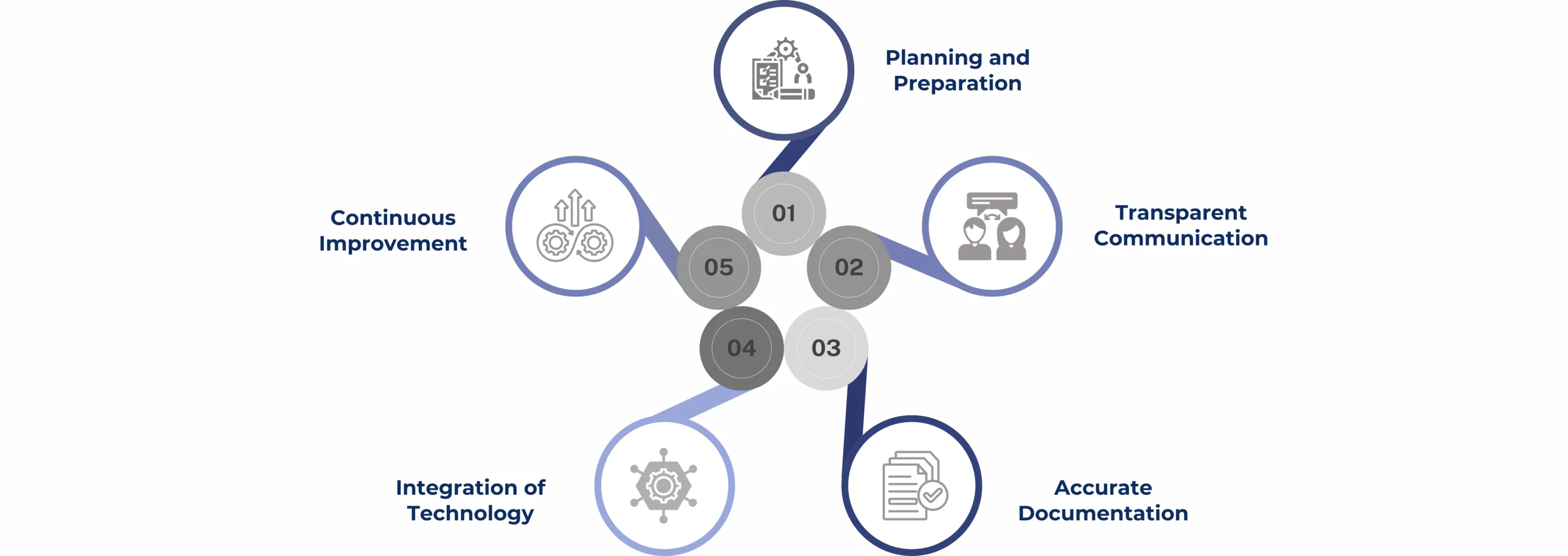
5 BEST PRACTICES FOR COMPLIANCE MANAGEMENT MEETINGS
In the compliance management process, the management meetings are of great importance. Now, let’s explore the five best practices for conducting effective compliance management meetings.
Planning and Preparation: Any successful activity starts with good planning. So, it is important to plan and structure the meeting beforehand. It typically involves deciding the time, date and agenda. Further, confirming the participation of important stakeholders and approval of pivotal discussion points. Finally, collecting and organizing the key documents required for discussion at the meeting. For example, audit reports, compliance findings and risk assessment reports.
Transparent Communication: There should be open and transparent communication in the compliance meetings. All the decisions and reports should be circulated and communicated effectively to end confusion. Moreover, a proper clarification of regulatory jargon and technical control measures should be encouraged in the meeting.
Accurate Documentation: Complete and concise documentation are important aspects of compliance management meetings. Therefore, it is crucial to document all the actionable items and policy updates arising out of the meeting. Moreover, assigning roles and responsibilities to implement those actions is also essential. Further, following such robust documentation also helps as a reference for future meetings.
Integration of Technology: Use the trending technologies to enhance the efficiency of the compliance meetings. Such as the usage of secured and collaborative platforms for sharing reports and documents across teams.
Continuous Improvement: Developing a culture of continuous improvement. Considering the team’s reviews and being open to feedback helps in achieving it. Investing in their compliance training programs. And conducting periodic reviews of the implemental control measures and policies.
Thus, a well-structured and effective management meeting makes compliance a natural process rather than a burden.
IMPORTANCE OF POST-MEETING FOLLOW-UPS AND ACTIONS
Post-meeting follow-ups and actions are important in ensuring implementation of decisions and converting them into real results. Now let’s discuss the important steps involved in post-meeting follow-ups.
Distribution of Meeting Notes: Documentation and sharing of the meeting notes with all the relevant stakeholders. In particular, these meeting notes consist of highlights from the discussion and actionable items. Eg., meeting notes should include compliance audit findings, risk assessment summaries, and assigned tasks with deadlines. Besides, they also cut confusion and help in holding all the attendees accountable. Some of the best practices to consider are:
- Sharing of the meeting notes before end of the day,
- Include all the key points and actionable items.
- Plus the details of assigned roles and responsibilities with timelines and upcoming meeting schedules.
- Sharing the meeting notes via common platforms used by all for easy access. Eg., Microsoft Teams and Slack.
Role Assigning: Each actionable item discussed during the meeting should be assigned to a specific individual along with a deadline. Unassigned tasks will ultimately lead to misunderstandings and a lack of responsibility. This includes,
- Use of project management tools like Trello,
- Making a clear identification of who handles the task.
- Setting deadlines based on the priority level of each actionable item.
Tracking Progress through Technology: Continuous monitoring of assigned tasks’ performance ensures accountability and swift task completion.
Evaluate and Rectify: After every meeting, take some time to test its effectiveness. Also identify the drawbacks and rectify them in future compliance meetings. Moreover, this ensures continuous improvements in meeting standards and leads to potential outcomes and reduced risks.
KEY INSIGHTS FOR EFFECTIVE COMPLIANCE MEETINGS
Effective management meetings are the foundation for an efficient compliance management program. With a proper plan, strategy and regular follow-up process, these meetings can be a booster for your compliance journey. Therefore, start implementing the tips and practices to stay ahead in the evolving regulatory space.
Key Takeaways: Actionable Checklist for Compliance Management Meetings
Before the Meeting:
- Set a clear agenda for the meeting
- Decide the time by scheduling it beforehand
- Share all the relevant documents with the participants
- Confirm the participation of all the key stakeholders. Begin meeting with potential updates and
During the Meeting:
- Start with discussing potential updates
- Assign roles for each actionable item with deadlines
- Be open to feedback and reviews from all the attendees
After the Meeting:
- Share the meeting notes effectively.
- Track the progress of actionable items through project management tools
- Schedule follow-up meetings to review the progress and updates
By following this checklist, an organization can successfully conduct a compliance management meeting. Remember, compliance meetings are not just about following the checklist. Moreover, it is a process of building a proactive security environment in the organization.
FAQ
What is a best practice for compliance?
A best practice for compliance is conducting regular management review meetings with clear agendas, assigned responsibilities, and documented outcomes. This ensures continuous monitoring, risk mitigation, and alignment with standards like ISO 27001 and SOC 2.
What is the agenda of a compliance meeting?
A compliance meeting agenda includes reviewing audit findings, regulatory updates, incident reports, and risk assessments. It also assigns action items with deadlines, ensuring accountability, transparency, and continuous improvement across all compliance functions.
What are the 4 phases of compliance?
The four phases of compliance are: identification of requirements, implementation of controls, monitoring and reporting, and continuous improvement. Together, these phases establish a structured framework for sustained adherence to laws, regulations, and industry standards.
What are the three main pillars of compliance?
The three main pillars of compliance are prevention, detection, and response. Prevention ensures proactive policies, detection identifies risks and violations, and response enables timely corrective actions, creating a strong, resilient compliance management system.
What happens in a compliance meeting?
In a compliance meeting, stakeholders review policies, discuss audit outcomes, assess risks, allocate resources, and assign follow-up actions. These meetings align compliance objectives with business goals and demonstrate commitment to regulatory adherence and accountability.

About the Author
Anuja Patil
Anuja Patil, an Executive Team Lead at CertPro, excels in guiding her team to deliver premier information security solutions. With a strong background in ISO 27001, SOC2, GDPR, and various other compliance standards, she ensures that projects are managed efficiently and security frameworks are continually optimized.
GRC IN CYBERSECURITY: WHAT IT MEANS AND WHY IT MATTERS IN 2026
In 2026, the pressure on companies to manage cyber risk responsibly has never been greater. Regulators demand structured controls, boards want clear risk reporting, and threat actors are becoming more sophisticated. Against this backdrop, GRC in cybersecurity has...
HOW COMPLIANCE AUDIT SOFTWARE IMPROVES AUDIT READINESS
Today, most companies deal with a growing number of compliance regulations. From data privacy standards to security frameworks like SOC 2 and ISO 27001, the list of compliance obligations keeps expanding. At the same time, regulators and external auditors now expect...

Compliance Best Practices in 2026: How to stay ahead of regulatory changes
Why is the implementation of compliance best practices critical for 2026? Compliance in 2026 demands operational proof, not the documentation intent. Regulations change faster, audit scrutiny is higher, and reporting timelines are tighter across privacy,...