
LAST UPDATE — 09-25-2025
Many companies and organizations encounter a plethora of issues in today’s complex and changing business market, which can have an influence on their performance, reputation, and long – term viability. Organizations use various ways to efficiently address these difficulties, one of which is the introduction of internal audits. These audits are important because they will play a crucial role in identifying and evaluating the risks faced by the companies or organizations. If you’re wondering what is internal audit, it is a structured process where a company checks its own operations to spot problems, reduce risks, and follow rules. In simple words, they help companies make continuous improvements based on the executive summary of internal audit report. Additionally, modern organizations link internal audits with ISO frameworks, meaning the contents of audit report in auditing often support compliance requirements under ISO 27001 or ISO 42001.
The internal audit report of company operations shows how well the internal controls and policies are working. An internal audit report is essential, as it offers details about your internal controls, compliance, and overall risk management strategies. These reports serve as a road map for improvement, allowing management to make informed decisions to increase operational efficiency and reduce risks. A well – prepared executive summary of an internal audit report offers a quick overview of the findings, helping leaders understand key risks and what actions to take. Furthermore, understanding internal audit meaning is important for leadership. It’s not just about spotting mistakes. It’s about making operations better and more secure. In many cases, the contents of audit report in auditing also include fraud prevention checkpoints, early – warning indicators, and quantified financial impacts such as cost savings or risk reduction.
To add on, internal audits and an associated internal audit report are key components of a company’s governance architecture. These activities contribute to transparency, accountability, and long – term growth by offering independent and objective evaluations to help manage risk and reach strategic goals. The upcoming sections of this blog will help you clarify what is internal audit? It also explains why the internal audit process is necessary for your business’s compliance goals and cybersecurity posture.

Tl; DR:
Concern: Many organizations face difficulty interpreting internal audit reports, leading to overlooked risks, compliance gaps, and operational inefficiencies.
Overview: Internal audits systematically assess operations, policies, and risks. Their reports uncover strengths, expose weaknesses, and provide actionable recommendations, making them essential for compliance, risk management, and performance improvement.
Solution: CertPro translates complex audit findings into practical, easy-to-implement actions, helping businesses minimize risks, enhance compliance, and achieve sustainable growth.
WHAT IS AN INTERNAL AUDIT AND ITS REPORT?
Before learning about internal audit report, let’s learn what an internal audit is and why it is important.
Internal Audit: An internal audit is a careful review of how an organization operates. It examines rules, processes, and risks to ensure everything functions effectively. Notably, a specialized audit team, independent from other departments, conducts this internal audit review. The main objective of an internal audit process is to identify issues, recommend solutions, and support continuous improvement. Internal auditors also follow structured techniques such as sampling, walkthroughs, and verification steps to validate the contents of the audit report in auditing to ensure accuracy.
Accordingly, internal audits play a crucial role in maintaining organizational efficiency. The audit team’s absence from daily operations provides a fresh perspective, enabling them to identify gaps that could otherwise go unnoticed. This process thoroughly assesses financial records, business operations, and compliance with both internal policies and legal requirements. As a result, we can address potential risks earlier before they escalate into larger problems.
Internal Audit Report: An internal audit report is a structured document that presents the audit team’s findings. Therefore, we share the completed audit report with management, the audit committee, and other key stakeholders to enable informed decision – making. Using a strong internal audit report format ensures the report is easy to read and act on. Plus, it helps teams understand what needs fixing and what is already working well. A standard internal audit report also aligns with industry best practices, and in organizations adopting ISO standards, the contents of the audit report in auditing must map to specific clauses of ISO 27001 or ISO 42001.
The report clearly outlines the areas reviewed, highlights strengths, and identifies areas needing improvement. The report highlights any detected errors, compliance issues, or control weaknesses. More importantly, it provides practical recommendations to resolve these challenges. Consequently, by implementing these suggestions, organizations can enhance their operations, maintain compliance, and mitigate future risks. Internal audit reporting gives clear and useful insights about what’s working and what’s not. These reports guide management to make better decisions and reduce risks across departments.
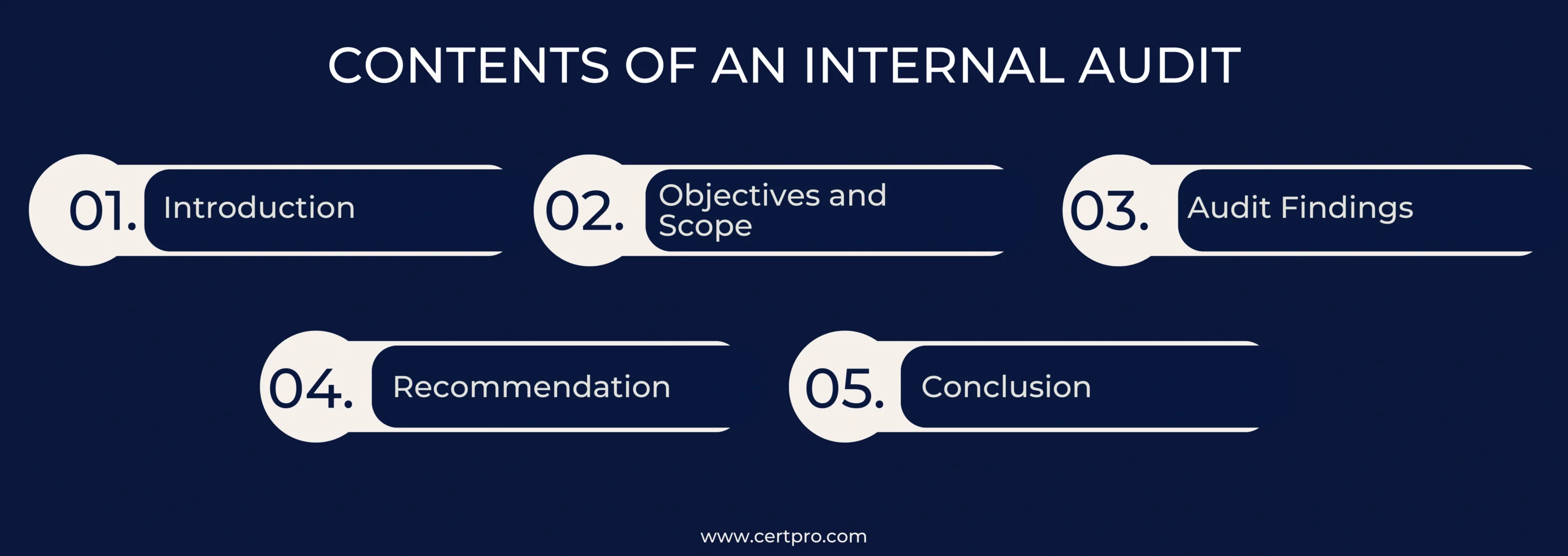
5 MUST-HAVE CONTENTS OF AN INTERNAL AUDIT REPORT
A typical internal audit report format comprises numerous important parts and content categories. The internal audit process begins with planning and ends with detailed reporting. Therefore, understanding the internal audit meaning helps teams see how audits support smarter decisions and stronger operations. The contents of audit report in auditing generally include findings, severity ratings, root – cause analysis, and control testing results.
The particular content and structure of an internal audit report format may differ based on the business, industry, and audit aim. Furthermore, the main goal of internal audit reporting is to give insight into business risks, internal controls, and improvement areas.
- Introduction: The introduction section offers background information regarding the audit, such as the objective, scope, and criteria used to conduct the audit. It may also provide an overview of the audit technique and any restrictions discovered.
- Objectives and Scope: This section clearly specifies the auditor’s objectives and explains the audited areas or procedures. It defines the timeline as well as any geographical or departmental boundaries. Advanced audits also include digital audit trails, system logs, and security configurations for IT environments.
- Audit Findings: This is an important component of the internal audit report that reveals the audit’s thorough findings. It highlights the audit’s findings, problems, or noncompliance, including any control flaws, operational inefficiencies, or compliance gaps.
- Recommendation: This section contains specific advice for dealing with the concerns discovered and improving the audited area or process. Recommendations should be actionable, realistic, and adapted to the circumstances of the company. For cyber audits, recommendations often include MFA implementation, log monitoring, access review frequency, and encryption improvements.
- Conclusion: The conclusion of an internal audit report summarizes the report’s essential points, reiterates the main conclusions, and underlines the necessity of addressing the highlighted difficulties. It may also offer a forecast for future audits or actions. A strong conclusion aligns improvement areas with long – term compliance goals under ISO 27001 and ISO 42001.
Each internal audit definition may vary slightly, but the focus stays on improving systems, not just pointing out faults. For example, an internal system audit helps ensure that digital tools and data controls meet company standards.
THE IMPORTANCE OF INTERNAL AUDITS
Internal audits may not seem as important as external audits, but they are crucial for improving business operations. Because they help ensure smooth operations, compliance with regulations, and continuous improvement. A key component within the contents of audit report in auditing is fraud detection indicators such as unusual transactions, access misuse, or policy violations. Here’s how internal audits contribute:
Better Focus on Operations: While external audits review big – picture aspects like finances and regulations, internal audits dive into smaller details, such as identifying issues like fraud or mistakes in cash handling. Therefore, they concentrate on identifying vulnerabilities and strengthening security measures.
Saving Money: A strong internal audit system ensures tasks are done correctly from the start and investing resources on unwanted tasks is avoided. This reduces errors, lowers the need for external audits, and cuts compliance costs.
Sticking to the Rules: Even without finding major problems, internal audits promote strict adherence to policies and regulations. This is because regular audits build a culture of accountability and ensure best practices are consistently followed.
Improving Efficiency: External audits mainly focus on compliance, often overlooking operational inefficiencies. Conversely, internal audits go further by identifying process gaps, removing unnecessary steps, and improving workflows, leading to better overall efficiency.
Proactive Risk Mitigation: The process of internal audit reporting provides valuable insights that allow potential risks to be addressed before they become major issues. By spotting weaknesses early, corrective actions can be implemented and tested, reducing the chances of compliance problems.
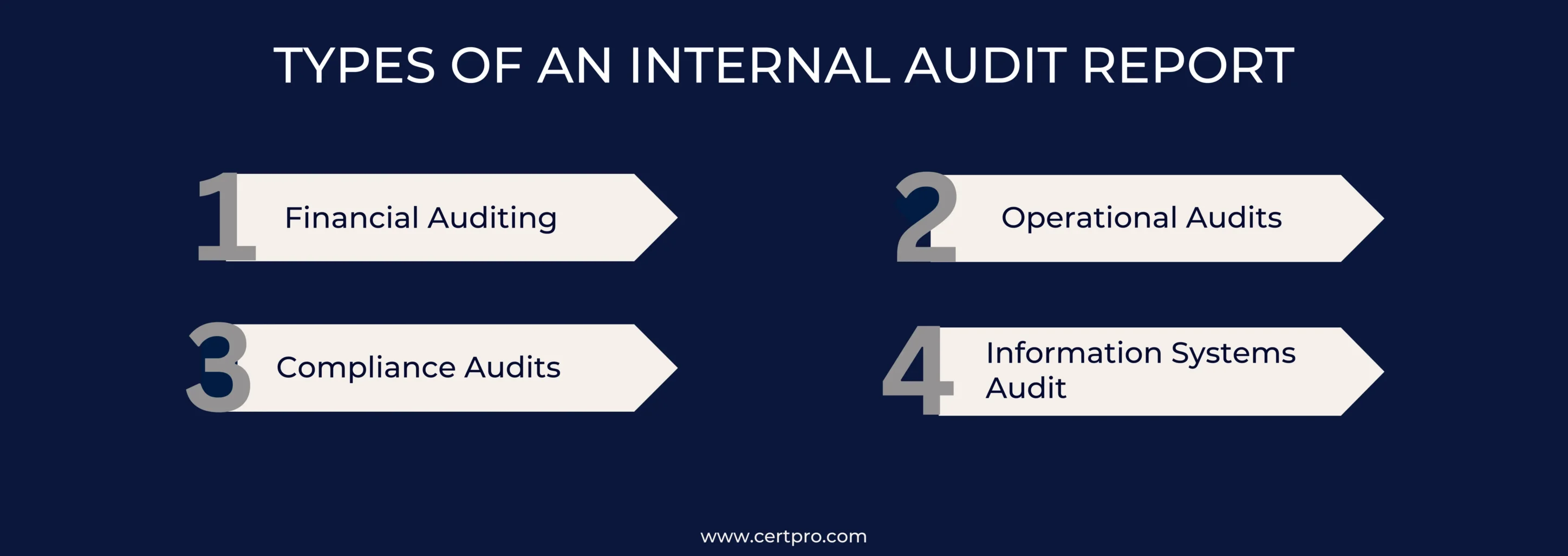
TYPES OF INTERNAL AUDIT REPORTS
Internal audits are essential for checking and improving how well a company is operating. They help ensure that everything is running smoothly, risks are being managed, and the company is following necessary rules and standards. Let’s look at the common types of internal audits that many businesses use:
Financial Audits: This type of internal audit process concentrates on scrutinizing a company’s financial documents, including transactions, balances, and reports. The goal here is to make sure everything is correct and follows the proper accounting rules. This helps catch any financial errors, potential fraud, or areas that could be improved.
Operational Audits: This kind of internal audit process looks at how the company’s day – to – day operations work. They examine things like how products are produced, how the supply chain is managed, how employees are handled, and the way customers are served. By doing this, businesses can find areas where they can save money, improve efficiency, and reduce risks.
Compliance Audits: Compliance audits make sure the company is following the rules, both legally and internally. These internal audit services ensure that the business is sticking to laws and regulations like data privacy, safety standards, and employee rights. They are important to avoid fines, legal issues, and potential damage to the company’s reputation.
Information Systems Audits: This internal system audit focuses on the company’s IT infrastructure. An information system audit checks whether the company’s data is safe, secure, and protected from cyberthreats. Additionally, this kind of internal audit helps to ensure that the IT systems are running efficiently and following best practices, like specific industry standards.
For each of these audit types, auditors rely on detailed checklists that form part of the contents of audit report in auditing for example, IT audits include access control testing, backup validation, and firewall rule reviews. In conclusion, the internal audit process helps companies find problems, improve performance, and reduce risks. By using audits like financial, IT, and compliance checks, businesses can make smart decisions, stay safe, and grow stronger over time.
ENHANCE YOUR BUSINESS WITH CERTPRO’S INTERNAL AUDIT INSIGHTS
Internal audits play a key role in helping businesses stay strong, follow rules, and improve continuously. If you’re wondering what is internal audit, it’s a process that checks how well a company runs. Unlike external audits, it focuses on specific areas, finding risks and fixing them before a new challenge arises. CertPro also guides businesses in interpreting the contents of audit report in auditing so that findings are translated into measurable improvements, such as reduced downtime or enhanced security posture. One major outcome is the internal audit report of company operations. This report highlights what’s working and what needs to be changed. It also helps make processes smoother and more efficient. But many businesses find it hard to read or use the report the right way.
That’s where CertPro comes in. We explain the executive summary of the internal audit report in simple terms and help turn audit findings into real – time actionable solutions. Our experts also show organizations how internal audits support ISO 27001 and ISO 42001 requirements, strengthening certification readiness and long – term governance. With expert knowledge and years of experience, CertPro helps businesses turn audit findings into real improvements. We do not simply provide a report filled with compliance jargon and then leave you to figure it out on your own. Instead, we partner with you to understand them and implement them for a strong compliance posture and business growth.
Are you confident in how your team handles internal audit findings? If not, CertPro is here to guide you. With real success stories such as a compliance – driven process audit that reduced operational risks by 18%, CertPro demonstrates how meaningful an audit report can be when applied effectively. CertPro’s internal audit services mean better control, lower risks, and stronger growth. By aligning the contents of audit report in auditing with strategic outcomes, organizations gain clarity, confidence, and long – term resilience. We help you not only understand the executive summary of the internal audit report but also prepare for future risks. With our help, you can build lasting resilience and scale with confidence. Take the next step with CertPro and make the internal audit process work for you! Connect with us today to turn your audit report into a business growth tool.
FAQ
What is an internal audit report and why is it important?
An internal audit report is a structured document summarizing findings, risks, and recommendations from an internal audit. It ensures transparency, highlights compliance gaps, and guides management in strengthening controls and business performance.
How do you write an effective internal audit report?
To write an effective internal audit report, include an executive summary, scope, methodology, findings, risk implications, and actionable recommendations. Keep the report clear, concise, and aligned with organizational objectives to support informed decision-making.
What are the 4 main types of audits?
The four main types of audits are internal audit, external audit, compliance audit, and forensic audit. Each serves different purposes, from improving internal processes to ensuring regulatory compliance and investigating potential fraud or misconduct.
What is the main purpose of an internal audit?
The main purpose of an internal audit is to assess risk management, internal controls, and compliance processes. It ensures business efficiency, regulatory adherence, and helps organizations proactively identify weaknesses before they escalate into major risks.
What are the 4 C’s of internal audit?
The 4 C’s of internal audit are Culture, Competence, Communication, and Collaboration. These principles emphasize building ethical practices, skilled teams, effective reporting, and strong partnerships to drive trust, value, and sustainable organizational improvement.

About the Author
ANUPAM SAHA
Anupam Saha, an accomplished Audit Team Leader, possesses expertise in implementing and managing standards across diverse domains. Serving as an ISO 27001 Lead Auditor, Anupam spearheads the establishment and optimization of robust information security frameworks.
WHAT IS CONTROL TESTING? A PRACTICAL GUIDE FOR COMPLIANCE AUDITS

AUDIT SAMPLING EXPLAINED: WHY AUDITORS TEST ONLY SELECTED EVIDENCE

How CertPro Conducts an Effective SOC 2 Type II Audit: A CPA-Led Playbook for SaaS
A SOC 2 Type 2 examination results in an independent CPA - issued attestation report on whether your controls are suitably designed and operated effectively over a period of time. It’s based on the AICPA Trust Services Criteria. This requirement is essential, as in...