
ISO 27001 Certification in Houston
CertPro is a Licensed CPA Firm conducting ISO 27001 certification audits for organizations operating in Houston, Texas. Audits evaluate Information Security Management Systems (ISMS) against ISO/IEC 27001:2022 requirements, encompassing scope definition, risk treatment, Annex A control evaluation, and certification decision. Industries served include energy, healthcare, oil and gas, technology, and government contracting sectors.
OUR CLIENTS










Introduction to ISO 27001 Certification in Houston
ISO 27001 certification is an internationally recognized credential that confirms an organization’s Information Security Management System (ISMS) meets the requirements defined in the ISO/IEC 27001:2022 standard. The standard was developed by the International Organization for Standardization (ISO) and the International Electrotechnical Commission (IEC) to provide organizations with a systematic framework for managing sensitive information and minimizing security risks. ISO 27001 certification requires organizations to demonstrate that their ISMS is designed, implemented, monitored, and continually improved in accordance with the standard’s clauses and Annex A controls.
In Houston, Texas, organizations across the energy, oil and gas, healthcare, technology, and government contracting sectors are increasingly pursuing ISO 27001 certification to address contractual requirements, regulatory expectations, and cybersecurity risk management obligations. Houston’s role as the energy capital of the world means that many organizations handle operationally critical and commercially sensitive information systems that must be protected against cyber threats, unauthorized access, and data breaches. ISO 27001 certification provides a structured, auditable framework for achieving that protection.
What Is ISO/IEC 27001:2022?
ISO/IEC 27001:2022 is the current version of the ISO 27001 standard, published in October 2022 as an update to the 2013 edition. The 2022 revision reduced the number of Annex A controls from 114 to 93 and reorganized them into four thematic domains: Organizational Controls (37 controls), People Controls (8 controls), Physical Controls (14 controls), and Technological Controls (34 controls). Organizations that were previously certified under the 2013 version are required to transition to the 2022 standard by October 31, 2025, as mandated by accredited certification bodies.
The 2022 update introduced 11 new controls addressing areas such as threat intelligence, cloud service information security, ICT readiness for business continuity, physical security monitoring, data masking, web filtering, and secure coding. These additions reflect the evolving threat landscape and the increasing reliance on cloud infrastructure, remote work environments, and third-party technology providers. Houston organizations operating in sectors that depend heavily on interconnected digital infrastructure—including offshore platforms, hospital networks, and SaaS providers—benefit directly from controls introduced in the 2022 revision.
Scope and Applicability of ISO 27001
ISO 27001 applies to organizations of all sizes and industries. The standard does not prescribe specific technical solutions but instead requires organizations to identify their information security risks and implement appropriate controls to address those risks. The organization’s leadership is responsible for defining the ISMS scope, which specifies which information assets, business processes, organizational units, physical locations, and technology systems are covered by the certification. The audit scope reflects this definition and determines which controls and processes are subject to evaluation during the certification audit.
For Houston-based organizations, the ISMS scope may encompass data centers, operational technology environments, enterprise resource planning (ERP) systems, customer data repositories, or specific business units with defined information security obligations. Energy companies may scope their certification to include SCADA system interfaces, pipeline management data, or financial trading systems. Healthcare organizations in the Texas Medical Center may define scope around electronic health record (EHR) platforms, patient billing systems, and third-party clinical data processors. Accurate scope definition is a prerequisite for an effective and credible ISO 27001 certification audit.
ISO 27001 and the Houston Business Environment
Houston is home to more than 5,000 energy-related firms, the Texas Medical Center—the world’s largest medical complex—and a rapidly expanding technology and cybersecurity sector. This concentration of industries that process sensitive operational, clinical, and commercial data creates a significant demand for ISO 27001 certification among Houston organizations. Energy companies operating in upstream, midstream, and downstream sectors handle proprietary geological data, financial models, and operational control systems that require rigorous information security governance. ISO 27001 provides the structured management system framework necessary to govern these risks across complex, multi-site operations.
Government contractors and defense-adjacent firms in Houston increasingly encounter ISO 27001 requirements within procurement frameworks and contractual security clauses. Technology companies providing SaaS platforms, managed services, or cloud infrastructure to regulated industries are frequently required by their clients to demonstrate ISO 27001 certification as a baseline security assurance. In this environment, ISO 27001 certification issued by an accredited, independent auditing firm carries significant weight as objective evidence of an organization’s information security posture.

Benefits of ISO 27001 Certification for Houston Organizations
ISO 27001 certification delivers measurable, verifiable benefits for organizations operating in Houston’s competitive and highly regulated business environment. Certification demonstrates that an organization has implemented a systematic, risk-based approach to protecting information assets and that this approach has been independently audited and verified against internationally accepted requirements. The benefits extend across operational, commercial, legal, and reputational dimensions, making ISO 27001 certification one of the most broadly valuable information security credentials available.
ISO 27001 certification provides Houston organizations with a demonstrable competitive advantage in procurement processes, vendor qualification programs, and enterprise sales cycles. Many large energy companies, healthcare systems, financial institutions, and government agencies require their vendors and technology providers to hold ISO 27001 certification as a prerequisite for contract award. Organizations without certification are frequently excluded from opportunities that require demonstrated information security governance. Certification removes this barrier and positions the certified organization as a credible, security-conscious partner.
For Houston technology companies competing for contracts with Gulf Coast energy operators, medical device manufacturers, or federal agencies at the NASA Johnson Space Center and Port of Houston, ISO 27001 certification signals institutional maturity. The certificate provides third-party validation that cannot be replicated by self-assessments or questionnaire-based compliance programs. This distinction is particularly significant in industries where data breaches and cyber incidents carry severe operational and financial consequences, and where procurement teams apply rigorous vendor security evaluation criteria.
ISO 27001 certification requires organizations to implement a structured risk assessment and risk treatment process that identifies, evaluates, and addresses information security risks. This systematic approach reduces the likelihood of security incidents, data breaches, and operational disruptions caused by inadequate or uncoordinated information security controls. Organizations are required to document their risk treatment decisions, implement selected controls from Annex A, and demonstrate that these controls are operating effectively through monitoring, measurement, and internal audit activities.
In Houston’s energy sector, where operational technology (OT) environments and information technology (IT) systems increasingly converge, the risk of cyber incidents affecting physical operations is a documented concern. ISO 27001’s controls address access management, network security, supplier relationships, incident management, and business continuity—all areas directly relevant to energy operators managing critical infrastructure. The certification audit process evaluates whether these controls are not only present but functioning as intended, providing objective assurance that risk treatment measures are effective.
ISO 27001 certification supports compliance with a range of legal and regulatory requirements applicable to Houston organizations. The standard explicitly requires organizations to identify applicable legal, regulatory, and contractual information security requirements and to ensure that these requirements are addressed within the ISMS. This mapping process creates documented traceability between the standard’s controls and external compliance obligations, which can be presented as evidence during regulatory examinations, audits, or legal proceedings.
Healthcare organizations in Houston that process protected health information (PHI) can use ISO 27001 controls to support HIPAA Security Rule compliance. Financial services organizations subject to the Gramm-Leach-Bliley Act (GLBA) or Texas Department of Banking cybersecurity requirements can leverage ISO 27001’s documented control framework as evidence of administrative, technical, and physical safeguards. Energy companies subject to NERC CIP requirements for critical infrastructure protection can align ISO 27001 controls with those obligations. The cross-mapping capability of ISO 27001 makes it an efficient framework for organizations managing multiple compliance obligations simultaneously.
ISO 27001 certification increases client confidence by providing independent, third-party verification that an organization’s information security management system meets internationally recognized requirements. Clients, partners, and regulators can rely on the certification as objective evidence of security governance maturity without conducting their own detailed security assessments. This reduces the burden of customer security questionnaires, vendor risk assessments, and due diligence reviews that organizations without certification must repeatedly address throughout their business relationships.
- ✓Competitive differentiation in procurement and vendor qualification processes
- ✓Demonstrable risk reduction through systematic risk assessment and treatment
- ✓Regulatory alignment with HIPAA, GLBA, NERC CIP, and Texas cybersecurity requirements
- ✓Increased client confidence through independent third-party certification
- ✓Reduction in customer security questionnaire burden
- ✓Documented traceability between security controls and compliance obligations
- ✓Improved internal governance and accountability for information security
- ✓Evidence-based security posture for contract negotiations and insurance underwriting
- ✓Protection of organizational reputation in the event of a security incident
- ✓Facilitation of cross-border data transfers and international business operations
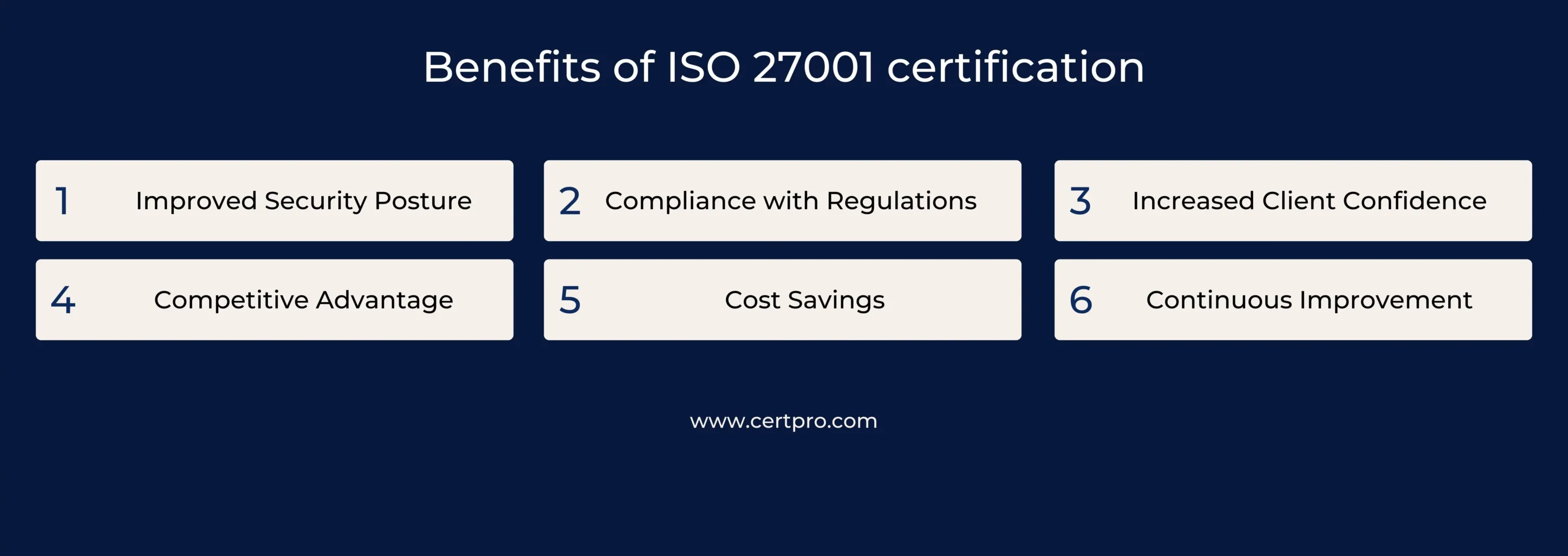
- ✓Competitive Advantage and Market Access
- ✓Risk Reduction and Incident Prevention
- ✓Regulatory Alignment and Legal Compliance
- ✓Client Confidence and Stakeholder Trust
ISO 27001 Certification Process for Houston Companies
The ISO 27001 certification process for Houston organizations follows a structured sequence of evaluation activities conducted by an accredited certification body. The process is designed to provide independent verification that an organization’s ISMS meets all applicable requirements of the ISO/IEC 27001:2022 standard. CertPro, as a Licensed CPA Firm, conducts these certification audits in accordance with established audit standards and accreditation requirements. The process encompasses scope definition, Stage 1 and Stage 2 audits, nonconformity review, certification decision, and ongoing surveillance activities.
The Stage 1 audit, also referred to as the documentation review or readiness review, evaluates whether the organization has established a clearly defined ISMS scope and developed the documentation required by the ISO 27001 standard. The auditor reviews the ISMS scope statement, information security policy, risk assessment methodology, Statement of Applicability (SoA), risk treatment plan, and evidence of management review and internal audit activities. The Stage 1 audit determines whether the organization is sufficiently prepared to proceed to the Stage 2 audit.
During Stage 1, the auditor assesses the completeness and appropriateness of the organization’s ISMS documentation against the requirements of ISO/IEC 27001:2022 Clauses 4 through 10. Significant deficiencies identified during Stage 1—such as an incomplete Statement of Applicability, an undocumented risk assessment process, or the absence of management review records—result in findings that must be addressed before Stage 2 can proceed. The Stage 1 audit is typically conducted on-site or remotely, depending on the organization’s size and the auditor’s program determination. For Houston organizations, Stage 1 audits frequently identify scope boundary issues related to cloud-hosted systems, third-party data processors, and remote workforce environments.
The Stage 2 audit is the primary certification audit, conducted on-site at the organization’s operational locations to verify that the ISMS is implemented, operating effectively, and achieving its intended outcomes. The auditor evaluates the implementation and effectiveness of the Annex A controls selected in the Statement of Applicability, interviews personnel responsible for information security processes, reviews operational records and evidence, and assesses whether the organization’s risk treatment measures are functioning as designed. The Stage 2 audit produces audit findings categorized as major nonconformities, minor nonconformities, or observations.
For Houston organizations, Stage 2 audits involve evaluation of controls relevant to the specific operating environment. Energy sector audits may examine access controls for operational technology systems, supplier security agreements with drilling contractors, and incident response procedures for operational disruptions. Healthcare organization audits evaluate controls governing electronic health record access, workforce security training, and physical access to server rooms and clinical data systems. Technology company audits assess software development security, cloud configuration management, and cryptographic key management practices. Each audit is tailored to the organization’s scope, industry context, and identified risk profile.
Nonconformities identified during the certification audit are classified as major or minor based on their significance. A major nonconformity represents a failure to implement a required element of the ISMS, a systematic breakdown in controls, or an absence of evidence that a required process exists and operates effectively. A minor nonconformity represents a partial implementation deficiency or an isolated lapse in an otherwise functioning process. Major nonconformities must be resolved and verified before certification can be issued. Minor nonconformities require a corrective action plan and are verified at the first surveillance audit.
The nonconformity review process requires the organization to analyze the root cause of each finding, implement corrective actions to address the underlying cause, and provide evidence of the corrective actions to the auditor for verification. This process is distinct from simply correcting the immediate finding—it requires demonstrating that the systemic cause has been addressed to prevent recurrence. CertPro’s audit process documents all findings with specific reference to the applicable ISO 27001 clause or Annex A control, enabling organizations to trace each nonconformity to its standard requirement and develop targeted corrective actions.
Following completion of the Stage 2 audit and satisfactory resolution of any major nonconformities, the certification decision is made by an independent reviewer who was not involved in the audit. This separation of audit and certification decision functions is a requirement of accredited certification bodies and ensures the integrity of the certification process. The certification decision is based on the complete audit record, including Stage 1 and Stage 2 findings, nonconformity resolution evidence, and the lead auditor’s recommendation.
ISO 27001 certificates are valid for a three-year certification cycle, subject to annual surveillance audits conducted in the first and second years following initial certification. The certificate specifies the organization’s name, registered address, ISMS scope, the standard version against which certification was issued, and the certificate validity dates. Houston organizations receiving ISO 27001 certification may list the certificate on procurement responses, website trust pages, client communications, and contractual documentation as evidence of certified ISMS compliance.
Surveillance audits are conducted annually during the three-year certification cycle to verify that the ISMS continues to meet ISO 27001 requirements and that corrective actions from the previous audit have been implemented effectively. Surveillance audits do not re-audit the complete ISMS but focus on selected areas of the ISMS, changes to the organization’s risk profile, the results of internal audits and management reviews, and the status of previously identified nonconformities. Organizations that fail a surveillance audit may have their certification suspended or withdrawn pending resolution of identified issues.
Recertification audits are conducted at the end of the three-year certification cycle and involve a comprehensive re-evaluation of the ISMS comparable in scope to the initial certification audit. Recertification confirms that the ISMS has been maintained and improved over the certification period and continues to meet all applicable requirements of ISO/IEC 27001:2022. Organizations that have undergone significant operational changes—such as mergers, acquisitions, major technology migrations, or scope expansions—should communicate these changes to the certification body promptly to determine whether an extraordinary audit is required between scheduled surveillance or recertification activities.
| Audit Stage | Purpose | Typical Duration | Key Outputs |
|---|---|---|---|
| Stage 1 Audit | Documentation and readiness review | 1–2 days | Stage 1 findings report, Stage 2 readiness determination |
| Stage 2 Audit | On-site control implementation and effectiveness evaluation | 2–5 days | Audit report, nonconformity list, certification recommendation |
| Surveillance Audit 1 | Annual ISMS continuity verification (Year 1) | 1–2 days | Surveillance findings report, certificate continuation decision |
| Surveillance Audit 2 | Annual ISMS continuity verification (Year 2) | 1–2 days | Surveillance findings report, certificate continuation decision |
| Recertification Audit | Full ISMS re-evaluation at end of 3-year cycle | 2–4 days | Recertification report, new certificate issuance |

- ✓Stage 1: Scope Definition and Documentation Review
- ✓Stage 2: On-Site Certification Audit and Control Evaluation
- ✓Nonconformity Review and Corrective Action
- ✓Certification Decision and Certificate Issuance
- ✓Surveillance Audits and Recertification
Steps for Achieving ISO 27001 Certification
Achieving ISO 27001 certification involves a defined sequence of activities that organizations must complete before and during the certification audit. The following steps represent the structured pathway from initial ISMS establishment through certificate issuance. Each step produces documented outputs that serve as audit evidence and support the certification decision.
- Define the ISMS scope, including information assets, organizational boundaries, and technology systems covered
- Obtain top management commitment and issue a formal information security policy
- Conduct a comprehensive risk assessment using a documented methodology to identify information security risks
- Develop and approve a risk treatment plan that maps identified risks to selected Annex A controls
- Complete the Statement of Applicability documenting all 93 Annex A controls with implementation status and justifications
- Implement selected Annex A controls and document operational procedures, work instructions, and records
- Conduct workforce security awareness training and ensure personnel understand their ISMS responsibilities
- Execute the internal audit program to verify ISMS conformance prior to the certification audit
- Hold a formal management review meeting to evaluate ISMS performance and approve continual improvement actions
- Engage an accredited certification body and schedule the Stage 1 documentation review audit
- Resolve Stage 1 findings and proceed to the Stage 2 on-site certification audit
- Address any nonconformities identified during Stage 2 and submit corrective action evidence for verification
- Receive the certification decision and, upon approval, obtain the ISO 27001 certificate
The risk assessment process is the technical foundation of the ISO 27001 ISMS. Organizations must identify information security risks associated with the loss of confidentiality, integrity, and availability of information assets within the ISMS scope. Each identified risk is analyzed by assessing the likelihood of occurrence and the potential impact if the risk materializes. The combination of likelihood and impact produces a risk rating that is compared against the organization’s defined risk acceptance criteria to determine whether treatment is required.
Risk treatment planning involves selecting appropriate controls from Annex A to address risks that exceed the acceptance threshold. The risk treatment plan documents each risk requiring treatment, the selected treatment option, the specific controls applied, the responsible risk owner, and the target implementation date. Risk treatment plans are living documents that must be updated as the organization’s risk profile evolves due to changes in technology, operations, regulatory requirements, or the threat landscape. For Houston energy and healthcare organizations, annual updates to the risk treatment plan are necessary to reflect changes in cybersecurity threats, regulatory guidance, and operational technology configurations.
- ✓Risk Assessment and Treatment Planning
ISO 27001 Certification Cost in Houston
The cost of ISO 27001 certification in Houston is determined by multiple factors specific to the organization seeking certification. There is no fixed price for ISO 27001 certification; costs vary based on the organization’s size, the complexity and scope of the ISMS, the number of physical locations included within the certification scope, the organization’s industry sector, the maturity of existing information security controls, and the certification body selected. Understanding the cost components allows Houston organizations to budget accurately and evaluate certification investment against the operational and commercial benefits that certification delivers.
Factors That Determine Certification Audit Costs
Certification audit costs are primarily driven by the number of audit days required to evaluate the organization’s ISMS. The number of audit days is determined by the certification body’s assessment of the organization’s size, scope complexity, and number of sites. ISO/IEC 27006 provides guidance to certification bodies on the calculation of audit time, taking into account the number of employees within scope, the complexity of information systems, and the number of ISMS processes requiring evaluation. Larger organizations with multiple Houston-area locations or complex technology environments require more audit time and therefore incur higher certification audit fees.
Additional cost factors include travel expenses for on-site audit activities, translation costs for documentation not in the auditor’s primary language, and fees for expedited audit scheduling. Organizations that require certification within compressed timelines due to contractual or procurement deadlines may incur premium scheduling fees. Annual surveillance audit costs are typically lower than the initial certification audit because surveillance audits cover a subset of the ISMS rather than the complete management system. Recertification audit costs at the end of the three-year cycle are comparable to, though sometimes slightly lower than, initial certification audit costs.
Cost Components for Houston Organizations
| Cost Component | Description | Typical Range (USD) |
|---|---|---|
| Stage 1 Audit Fee | Documentation review by accredited certification body | $2,000 – $8,000 |
| Stage 2 Audit Fee | On-site ISMS implementation and control effectiveness evaluation | $5,000 – $25,000 |
| Annual Surveillance Audit Fee | Year 1 and Year 2 ISMS continuity verification | $3,000 – $12,000 per year |
| Recertification Audit Fee | Full ISMS re-evaluation at end of 3-year cycle | $4,000 – $20,000 |
| Certificate Issuance Fee | Administrative fee for certificate generation and registry listing | $500 – $2,000 |
The ranges presented reflect market rates for accredited ISO 27001 certification audits and are not fixed prices. Actual costs depend on the specific scope, size, and complexity of each organization’s ISMS. Houston organizations should request detailed audit time calculations and itemized fee proposals from candidate certification bodies before making a selection. Comparing proposals from multiple accredited certification bodies allows organizations to evaluate cost, auditor expertise, scheduling flexibility, and sector-specific experience before committing to a certification engagement.
Return on Investment Considerations
The return on investment from ISO 27001 certification is realized through multiple pathways. Contract wins enabled by certification—particularly in energy, government contracting, healthcare, and technology sectors—frequently represent revenue that substantially exceeds the total cost of certification. Reductions in cyber insurance premiums, which many insurers offer to organizations with certified security management systems, provide ongoing cost savings throughout the certification period. Avoidance of data breach costs, which the IBM Cost of a Data Breach Report 2023 estimated at an average of $4.45 million per incident, represents a significant financial benefit attributable to the risk reduction achieved through ISO 27001 controls.
ISO 27001 Certification for Houston’s Key Industries
Houston’s diverse industrial base creates distinct ISO 27001 certification requirements and application contexts across its primary sectors. Each industry sector presents unique information security challenges, regulatory frameworks, and certification drivers that shape the ISMS design, control selection, and audit focus. Understanding these sector-specific considerations helps Houston organizations align their ISO 27001 certification programs with the specific risks and requirements of their operating environments.
Energy and Oil and Gas Sector
Houston’s energy and oil and gas sector represents the largest concentration of ISO 27001 certification activity in the region. Energy companies manage operationally critical information systems including SCADA (Supervisory Control and Data Acquisition) systems, pipeline management platforms, geological data repositories, trading systems, and enterprise financial platforms. The convergence of information technology (IT) and operational technology (OT) in modern energy operations creates complex information security requirements that span corporate networks, industrial control systems, and cloud-hosted analytical platforms.
ISO 27001 certification for energy companies in Houston typically encompasses controls related to network segmentation between IT and OT environments, access management for SCADA and distributed control systems (DCS), supplier security requirements for drilling contractors and technology vendors, incident response procedures for operational disruptions, and business continuity planning for critical infrastructure operations. NERC CIP compliance requirements applicable to electric utilities can be partially addressed through ISO 27001 Annex A controls, reducing the overall compliance burden for organizations subject to both frameworks. Energy companies seeking ISO 27001 certification should ensure that the ISMS scope clearly delineates the IT/OT boundary and that control assessments address both environments appropriately.
Healthcare and Life Sciences Sector
The Texas Medical Center in Houston, comprising more than 60 institutions and employing over 106,000 workers, represents one of the most concentrated healthcare environments in the world. Hospitals, research institutions, medical device manufacturers, clinical trial organizations, and healthcare technology companies in the Houston medical corridor handle large volumes of protected health information (PHI), clinical research data, and regulated pharmaceutical information. ISO 27001 certification provides these organizations with a structured framework for managing information security risks associated with EHR systems, medical device networks, and clinical data processors.
Healthcare organizations in Houston pursuing ISO 27001 certification can align their Annex A controls with HIPAA Security Rule requirements, creating a unified control framework that satisfies both the international standard and the U.S. federal regulatory obligation. ISO 27001 controls governing access management, audit logging, encryption, physical security, workforce training, and incident response directly correspond to HIPAA Security Rule administrative, technical, and physical safeguard categories. Documenting this alignment within the Statement of Applicability and risk treatment plan enables healthcare organizations to demonstrate both ISO 27001 conformance and HIPAA compliance from a single, integrated evidence base.
Technology and SaaS Providers
Houston’s technology sector, which includes SaaS providers, managed service providers (MSPs), cloud infrastructure companies, and software development firms, faces strong market pressure to obtain ISO 27001 certification as a condition of serving enterprise clients in regulated industries. Technology companies providing platforms to energy operators, healthcare organizations, financial institutions, or government agencies are frequently required to demonstrate ISO 27001 certification during vendor qualification processes. Without certification, technology companies are often excluded from enterprise procurement opportunities or required to undergo lengthy and resource-intensive security assessments by each prospective client.
ISO 27001 certification for Houston technology companies typically emphasizes controls related to software development security (secure coding, change management, vulnerability assessment), cloud service security (configuration management, data encryption, access controls), customer data segregation, third-party provider management, and business continuity. The 2022 revision’s introduction of Control 5.23 (Information security for use of cloud services) is particularly relevant for technology companies that rely on multi-cloud or hybrid cloud architectures to deliver their platforms. Certification audits for technology companies evaluate whether cloud security controls are documented, implemented, and operating effectively across all environments within the ISMS scope.
Government Contracting and Defense Sector
Houston hosts numerous government contractors serving federal agencies including NASA Johnson Space Center, the U.S. Army Corps of Engineers, the U.S. Coast Guard, and various Department of Energy facilities. Government contractors handling Controlled Unclassified Information (CUI), federal contract information, or sensitive research data face increasingly stringent information security requirements under frameworks including DFARS, NIST SP 800-171, and the Cybersecurity Maturity Model Certification (CMMC). ISO 27001 certification provides a recognized baseline of information security management system governance that supports compliance with these frameworks.
While ISO 27001 certification alone does not satisfy CMMC or NIST SP 800-171 requirements, the structured risk management approach and documented control framework established through ISO 27001 certification creates a foundation that simplifies alignment with these additional requirements. Government contractors in Houston that hold ISO 27001 certification demonstrate institutional information security maturity that strengthens their competitive position in defense and federal agency procurement competitions. The certification also provides objective evidence of security governance that can be referenced in proposal submissions and past performance documentation.
ISO 27001 and Related Compliance Frameworks in Houston
ISO 27001 certification operates alongside and intersects with multiple other compliance frameworks relevant to Houston organizations. Understanding the relationships between ISO 27001 and these frameworks enables organizations to develop integrated compliance programs that maximize efficiency and minimize redundant effort. ISO 27001’s control-based approach and documented management system structure make it a versatile foundation for addressing requirements from multiple regulatory and industry frameworks simultaneously.
ISO 27001 and SOC 2
SOC 2 (System and Organization Controls 2) is an attestation framework developed by the American Institute of Certified Public Accountants (AICPA) that evaluates service organizations’ controls relevant to security, availability, processing integrity, confidentiality, and privacy. SOC 2 is widely required by U.S. enterprise clients for technology service providers, while ISO 27001 is the preferred credential in international markets and among energy, government, and healthcare sector clients. Many Houston technology companies pursue both certifications to satisfy diverse client requirements across domestic and international markets.
ISO 27001 and SOC 2 share significant control overlap, particularly in areas of access management, change management, monitoring, incident response, and risk management. Organizations that establish a robust ISO 27001 ISMS find that many of the documented controls and evidence collections required for SOC 2 audits are already in place. The primary distinction is that ISO 27001 issues a certification against a defined standard, while SOC 2 produces an attestation report that describes the service organization’s controls and the results of the auditor’s testing. Both credentials are recognized by sophisticated enterprise procurement teams as evidence of security governance maturity.
ISO 27001 and HIPAA Security Rule Alignment
The HIPAA Security Rule requires covered entities and business associates to implement administrative, technical, and physical safeguards to protect electronic protected health information (ePHI). ISO 27001’s Annex A controls map directly to many of these safeguard requirements. Annex A controls covering access management (8.2, 8.3, 8.5), cryptography (8.24), physical security (7.1, 7.2, 7.3), workforce security (6.1, 6.3, 6.4), and incident management (5.24, 5.25, 5.26) correspond to HIPAA Security Rule provisions for technical, physical, and administrative safeguards respectively.
Houston healthcare organizations that align their ISO 27001 ISMS with HIPAA Security Rule requirements benefit from a single, integrated evidence framework that satisfies both obligations. This integration reduces the administrative burden of maintaining separate compliance documentation and enables more efficient response to regulatory inquiries, Office for Civil Rights (OCR) audits, and healthcare client security assessments. The Statement of Applicability can be annotated to cross-reference applicable HIPAA Security Rule provisions alongside ISO 27001 control requirements, creating a traceable compliance matrix accessible to both internal and external reviewers.
ISO 27001 and GDPR Data Protection Requirements
Houston organizations that process personal data belonging to European Union residents are subject to the General Data Protection Regulation (GDPR). GDPR Article 32 requires data controllers and processors to implement appropriate technical and organizational measures to ensure security appropriate to the risk, including encryption, confidentiality, integrity, availability, and resilience of processing systems. ISO 27001 certification provides documented evidence of these technical and organizational measures, directly supporting GDPR Article 32 compliance. ISO 27001’s risk assessment process aligns with GDPR’s requirement to assess risks to the rights and freedoms of data subjects.
Houston technology companies, energy sector firms with European operations, and multinational corporations with Houston headquarters that process EU personal data can use ISO 27001 certification as a component of their GDPR compliance evidence. Supervisory authorities in EU member states have recognized ISO 27001 certification as relevant evidence of GDPR Article 32 compliance, though certification alone does not constitute complete GDPR compliance. Houston organizations must also address GDPR requirements related to data subject rights, lawful processing bases, data protection by design, and data protection officer designation, which extend beyond the information security controls covered by ISO 27001.
Why Choose CertPro for ISO 27001 Certification and Auditing in Houston
CertPro is a Licensed CPA Firm that conducts ISO 27001 certification audits for organizations operating in Houston, Texas, and across the United States. As an accredited certification body, CertPro evaluates ISMS conformance against ISO/IEC 27001:2022 requirements using evidence-based audit methodologies aligned with ISO/IEC 17021-1 and ISO/IEC 27006. CertPro’s certification audits produce findings and certification decisions that are independent, objective, and traceable to specific standard requirements, providing organizations with credible, defensible ISO 27001 certificates recognized by clients, regulators, and procurement authorities.
Sector-Specific Audit Expertise
CertPro’s audit teams possess sector-specific expertise across the industries that constitute Houston’s economic base. Auditors with backgrounds in energy systems, healthcare information management, financial services, technology development, and government contracting bring domain knowledge to the assessment process that enables accurate evaluation of control applicability and effectiveness within each organization’s specific operating context. Sector-specific expertise is essential for distinguishing between controls that are genuinely not applicable to an organization’s environment and controls that have been incorrectly excluded to reduce implementation burden.
CertPro audit teams conducting ISO 27001 certification audits for Houston energy companies understand the operational technology environments, SCADA system architectures, and supply chain security considerations unique to oil and gas operations. Audit teams evaluating healthcare organizations understand HIPAA Security Rule cross-mapping requirements, EHR system access controls, and the clinical workflow contexts that influence control design. This domain depth enables more accurate, relevant audit findings and reduces the likelihood of findings based on misunderstanding of the organization’s operational environment.
Institutional Audit Methodology and Independence
CertPro maintains strict separation between audit and certification decision functions, ensuring that the auditors who conduct Stage 1 and Stage 2 assessments do not make the final certification decision. This structural independence is a fundamental requirement of ISO/IEC 17021-1 and protects the integrity of the certification process. CertPro’s certification decisions are made by qualified reviewers who evaluate the complete audit record—including findings, nonconformity resolution evidence, and auditor recommendations—before issuing or denying certification.
CertPro’s audit reports document findings with specific references to ISO/IEC 27001:2022 clause numbers and Annex A control identifiers, enabling organizations to trace each finding to its standard requirement and develop targeted corrective actions. Audit reports also document the evidence reviewed, interviews conducted, and sampling rationale used during the assessment, providing a transparent and auditable record of the certification evaluation process. This level of documentation supports organizations in demonstrating the rigor and credibility of their ISO 27001 certification to clients, regulators, and other stakeholders.
Transition Support for ISO 27001:2022 Migration
Organizations certified under ISO/IEC 27001:2013 must transition to the 2022 version by October 31, 2025. CertPro conducts transition audits for Houston organizations that hold current 2013 certifications and need to demonstrate conformance with the updated standard before the transition deadline. Transition audits evaluate the organization’s implementation of the 11 new controls introduced in the 2022 revision, the reorganization of the ISMS documentation to reflect the updated control structure, and the revision of the Statement of Applicability to align with the 93-control Annex A framework.
Houston organizations that fail to complete the transition to ISO/IEC 27001:2022 by October 31, 2025, will have their certifications withdrawn by accredited certification bodies, eliminating the certification’s validity for procurement, contractual, and regulatory purposes. CertPro’s transition audit program ensures that organizations receive timely evaluation of their 2022 transition progress, with findings documented in sufficient detail to enable targeted remediation of any conformance gaps identified before the deadline. Organizations should initiate transition planning and schedule transition audits well in advance of the October 2025 deadline to allow adequate time for addressing findings.
ISO 27001 Certification Requirements: What Houston Organizations Need to Know
ISO 27001 certification requires organizations to satisfy all normative requirements of ISO/IEC 27001:2022, implement and operate the ISMS over a sufficient period to generate evidence of effectiveness, complete at least one full internal audit cycle and management review before the certification audit, and demonstrate that identified nonconformities have been addressed through documented corrective actions. There are no industry-specific prerequisites for ISO 27001 certification; the standard is designed to be applicable to any organization regardless of sector, size, or geographic location.
Technical control requirements for ISO 27001 certification are determined by the organization’s risk assessment results and the Annex A controls selected in the Statement of Applicability. Common technical controls required for most organizations include access control systems that enforce least privilege and need-to-know principles, multi-factor authentication for privileged accounts and remote access, encryption of data at rest and in transit, network security controls including firewalls and intrusion detection systems, vulnerability management programs including regular scanning and patching, and security logging and monitoring capabilities that support incident detection and investigation.
Operational control requirements include documented procedures for information security processes, workforce security awareness training records, supplier security assessment results, change management process documentation, and business continuity test results. Organizations must demonstrate that these controls are not only documented in policies and procedures but that they are actually implemented and operating as described. The Stage 2 audit specifically tests the operating effectiveness of selected controls through observation, interviews, and review of operational evidence rather than relying solely on documentation review.
ISO 27001 requires organizations to ensure that personnel responsible for information security activities are competent, based on appropriate education, training, or experience. Competence requirements must be defined for all roles with ISMS responsibilities, and evidence of competence—such as training records, certifications, or documented experience—must be maintained. Organizations must also ensure that all personnel are aware of the information security policy, their contribution to ISMS effectiveness, and the implications of non-compliance with ISMS requirements.
Organizational requirements include the designation of information security roles and responsibilities within the management structure, the appointment of a management representative with authority for ISMS matters, and the establishment of internal communication channels for reporting information security events. For Houston organizations with complex organizational structures—such as joint ventures in the energy sector, multi-system hospital networks, or technology companies with distributed development teams—clearly defining ISMS roles and responsibilities across organizational boundaries is essential for demonstrating conformance with Clause 5 leadership and organizational requirements.
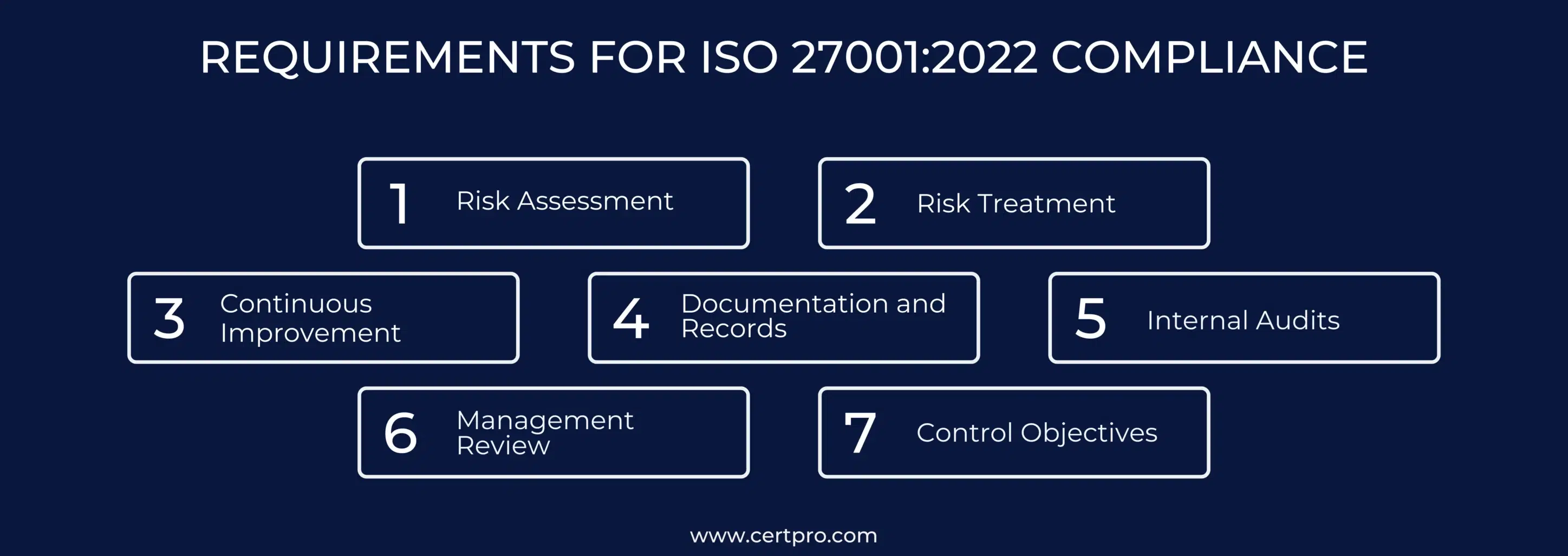
- ✓Technical and Operational Control Requirements
- ✓Personnel and Organizational Requirements
FAQ
▶
What is ISO 27001 certification and why is it relevant to Houston organizations?
▶
How long does ISO 27001 certification take for a Houston organization?
▶
What is the difference between Stage 1 and Stage 2 ISO 27001 audits?
▶
Is ISO 27001 certification required for Houston energy companies?
▶
How much does ISO 27001 certification cost in Houston?
▶
What is the transition deadline for ISO 27001:2022 in Houston?
▶
Can ISO 27001 certification support HIPAA compliance for Houston healthcare organizations?
▶
How many Annex A controls are in ISO/IEC 27001:2022?
HOW COMPLIANCE AUDIT SOFTWARE IMPROVES AUDIT READINESS
Today, most companies deal with a growing number of compliance regulations. From data privacy standards to security frameworks like SOC 2 and ISO 2700…

THE ROLE OF GRC IN ISO 27001, SOC 2, AND OTHER FRAMEWORKS
The term GRC stands for Governance Risk and Compliance. It’s a system of integrated and centralized approaches used by organizations. This system comb…
HOW TO PREPARE FOR A MULTI-STANDARD AUDIT (SOC 2, ISO 27001, HIPAA) WITHOUT OVERLAPPING EFFORTS
The current regulatory landscape is no less than a proving ground for global businesses. Organizations are struggling to comply with the complex regul…
Get In Touch
have a question? let us get back to you.