

CertPro is a Licensed CPA Firm providing structured GDPR certification audits and assessments for U.S.-based organizations that process EU personal data. GDPR Certification in USA encompasses third-party audit verification of data protection controls, processing activities, and regulatory obligations under EU Regulation 2016/679. Its geographic scope extends to all U.S. entities serving EU data subjects, making it an essential compliance credential for any American organization operating in EU markets.
Trusted by Leading Organizations in USA










What Is GDPR Certification and Why It Applies to U.S. Businesses
The General Data Protection Regulation (GDPR) is European Union Regulation 2016/679, governing the collection, processing, storage, and transfer of personal data belonging to EU data subjects. Enacted on April 14, 2016, and effective May 25, 2018, the General Data Protection Regulation establishes a comprehensive legal framework for data privacy that applies beyond EU borders. GDPR Certification in USA is a structured, third-party audit process that verifies an organization's data protection controls, processing activities, and compliance obligations under this regulation. For U.S.-based organizations, certification is not an optional business credential. It is a verifiable demonstration of legally required compliance obligations whenever EU personal data is involved. Understanding this distinction is the first step toward building a defensible GDPR compliance program.
GDPR compliance is anchored in Article 3 of the regulation, which establishes extraterritorial applicability. Specifically, Article 3(2) states that the GDPR applies to non-EU organizations that offer goods or services to EU data subjects — or monitor the behavior of individuals within the EU — regardless of whether payment is involved. This means a SaaS platform headquartered in San Francisco, an e-commerce retailer operating from New York, or a healthcare data processor based in Texas is legally subject to GDPR obligations the moment it processes the personal data of individuals located in the European Union or European Economic Area. GDPR Certification in USA provides the audit documentation that demonstrates these obligations are being met.
Enquire Now
Key GDPR Definitions U.S. Organizations Must Understand
Understanding the structural roles defined under GDPR is foundational to any GDPR audit or assessment. A Data Controller is an organization that determines the purposes and means of processing personal data. A Data Processor is an entity that processes personal data on behalf of a Data Controller. A signed Data Processing Agreement (DPA) between the two parties is a mandatory legal requirement under GDPR Article 28.
U.S. companies functioning as processors for EU-based controllers are fully subject to GDPR obligations and must demonstrate compliance through formal GDPR assessment and audit processes. Failing to meet these requirements exposes both parties to significant regulatory risk.
A Data Subject is any identified or identifiable natural person whose personal data is being processed. A Data Protection Impact Assessment (DPIA) is a structured process required under GDPR Article 35 when processing activities are likely to result in high risk to individuals — for example, large-scale profiling, systematic monitoring, or processing of sensitive data categories.
Records of Processing Activities (ROPA) are mandatory documentation maintained under GDPR Article 30 by both controllers and processors. They detail the categories of data processed, purposes, retention periods, and data transfer mechanisms. Standard Contractual Clauses (SCCs) are EU Commission-approved contractual mechanisms that enable the lawful transfer of personal data from the EU to third countries, including the United States.
| GDPR Term | Definition | Legal Basis |
|---|---|---|
| Data Controller | Organization that determines purposes and means of data processing | GDPR Article 4(7) |
| Data Processor | Entity processing data on behalf of a Controller under a signed DPA | GDPR Article 4(8) |
| DPIA | Structured risk assessment for high-risk processing activities | GDPR Article 35 |
| ROPA | Mandatory records of all processing activities maintained by controllers and processors | GDPR Article 30 |
| SCCs | EU Commission-approved clauses enabling lawful EU-to-USA data transfers | GDPR Article 46(2)(c) |
GDPR Certification as a Third-Party Audit Verification
GDPR certification is defined under GDPR Article 42 as a voluntary but formally structured mechanism through which organizations can demonstrate compliance with specific processing operations. While the EU has worked to establish accredited certification schemes under Articles 42 and 43, GDPR Certification in USA most commonly takes the form of a comprehensive third-party GDPR audit conducted by a qualified firm — such as a Licensed CPA Firm — that evaluates the organization's data protection program against the full scope of GDPR obligations.
The audit produces documented findings, identifies control gaps, and issues a certification report that can be presented to clients, regulators, and data subjects as evidence of compliance. This structured approach is the gold standard for demonstrating GDPR compliance in the U.S. market.
The distinction between self-assessed compliance and third-party certified compliance is significant. Self-assessment alone carries limited legal defensibility in the event of a supervisory authority investigation or data breach. A GDPR audit conducted by a Licensed CPA Firm produces structured, evidence-based documentation that reflects objective evaluation of controls — a standard of proof that holds substantially greater weight with EU supervisory authorities, enterprise clients, and legal counsel.
GDPR Certification in USA through CertPro's audit framework delivers this level of documented assurance, grounded in the institutional authority of a Licensed CPA Firm engagement.
The Legal Obligation Framework: Compliance Is Not Optional
A critical misconception among U.S. businesses is that GDPR compliance is an optional certification pursued purely for competitive advantage. This framing is legally incorrect. Any U.S. organization that processes the personal data of EU residents — whether through a website accessible to EU users, a cloud platform serving EU customers, or an employment record system covering EU-based employees — is legally obligated under EU Regulation 2016/679.
GDPR compliance in the USA is not merely a market differentiator. It is a legal requirement enforced by EU supervisory authorities, also known as Data Protection Authorities (DPAs), which carry the power to impose fines of up to €20 million or 4% of global annual turnover, whichever is higher.
Enforcement data confirms this reality. EU DPAs issued over €2.8 billion in fines between 2018 and 2023, with non-EU organizations — including major U.S. technology companies — among those penalized. The extraterritorial reach of Article 3(2) has been actively enforced, and U.S. companies without documented GDPR compliance programs face substantial legal and financial exposure.
Pursuing GDPR Certification in USA through a Licensed CPA Firm's audit process is the most defensible approach to establishing and documenting this compliance before enforcement action occurs.

Who Needs GDPR Compliance in the USA
GDPR compliance in the USA applies to a broad and diverse range of U.S.-based organizations. The regulation's extraterritorial scope under Article 3(2) creates compliance obligations for any entity that — regardless of physical location — offers goods or services to EU data subjects or monitors the behavior of individuals within the EU.
This scope encompasses not only large multinational corporations but also mid-sized SaaS providers, cloud infrastructure companies, digital marketing agencies, healthcare data processors, financial services firms, and e-commerce platforms. GDPR Certification in USA is relevant for any U.S. organization that falls within these categories.
U.S. Industry Sectors Subject to GDPR
The technology sector represents one of the highest concentrations of U.S. organizations subject to GDPR. SaaS companies offering software subscriptions to EU business customers, cloud service providers hosting EU client data, and platform operators with EU user bases all carry full GDPR controller or processor obligations. A SaaS platform that processes even one EU customer's personal data is subject to the full weight of GDPR requirements — including lawful basis for processing, data subject rights fulfillment, DPA execution, and ROPA maintenance.
GDPR certification for U.S. companies in the technology sector is increasingly becoming a contractual prerequisite demanded by EU enterprise clients, making proactive GDPR compliance a commercial necessity.
E-commerce and retail organizations with international customer bases face GDPR compliance obligations whenever EU residents complete purchases or create accounts on their platforms. Marketing technology firms that collect behavioral data from EU users through cookies, tracking pixels, or analytics platforms are subject to GDPR's consent requirements under Article 6 and the ePrivacy Directive.
Healthcare and life sciences organizations that process health data — which constitutes a special category under GDPR Article 9 — face the most stringent processing restrictions. These organizations must demonstrate explicit compliance through a formal GDPR assessment before handling such data from EU research participants or patients.
Multinational Corporations and Global Data Operations
U.S.-headquartered multinational corporations with European subsidiaries, branch offices, or partner networks face layered GDPR obligations. When a U.S. parent company receives employee data, customer records, or operational data from its EU affiliates, it functions as a data importer and must have lawful transfer mechanisms in place.
Additionally, group-level data processing activities — such as centralized HR platforms, unified CRM systems, or shared analytics environments — require documented GDPR compliance programs covering every entity in the corporate structure. A GDPR audit conducted at the enterprise level evaluates these cross-entity data flows and establishes compliance documentation across the entire processing ecosystem.
Financial services organizations — including U.S. banks, fintech platforms, and insurance companies operating internationally — are subject to GDPR when they process the financial data of EU residents. These organizations also face dual regulatory obligations under both GDPR and sector-specific EU financial regulations, creating a compliance environment where GDPR certification for U.S. companies in financial services must be integrated with broader regulatory frameworks.
CertPro's GDPR audit process accounts for these intersecting obligations, ensuring that certification documentation addresses all relevant compliance dimensions specific to the financial services sector.
GDPR's Extraterritorial Scope: Article 3 Explained
GDPR Article 3 defines the territorial scope of the regulation in explicit terms. Article 3(1) applies GDPR to processing activities conducted by an establishment in the EU, regardless of where the actual processing takes place. Article 3(2) — the extraterritorial provision — extends GDPR applicability to non-EU organizations that offer goods or services to EU data subjects (whether or not payment is required) or that monitor the behavior of EU data subjects where that behavior occurs within the Union.
This provision effectively makes the General Data Protection Regulation a global regulation for any organization with EU market exposure. GDPR compliance in the USA is therefore not a matter of voluntary participation but of statutory obligation under EU law — a reality that GDPR Certification in USA directly addresses through structured audit verification.
GDPR Certification Requirements for U.S. Organizations
GDPR certification requirements encompass a comprehensive set of organizational, technical, and legal obligations that U.S. organizations must satisfy across their data processing operations. A GDPR assessment conducted by a Licensed CPA Firm evaluates whether these requirements are met through documented controls, operational procedures, and governance structures. The following subsections detail the primary compliance dimensions evaluated during a GDPR audit in the USA.
Every processing activity involving EU personal data must have a documented lawful basis under GDPR Article 6. The six lawful bases are: consent, contract performance, legal obligation, vital interests, public task, and legitimate interests. U.S. organizations must identify and document the specific lawful basis for each category of processing they conduct. This documentation forms a core component of the GDPR audit evaluation. Reliance on consent requires that consent be freely given, specific, informed, and unambiguous — a standard that differs materially from the opt-out consent models prevalent in U.S. marketing practices. Organizations that conflate these standards risk significant nonconformities during their GDPR compliance assessment.
GDPR Articles 12 through 22 establish eight data subject rights that U.S. organizations must operationalize: the right to be informed, right of access, right to rectification, right to erasure (the 'right to be forgotten'), right to restriction of processing, right to data portability, right to object, and rights related to automated decision-making and profiling. Each right must be supported by a defined procedure for receipt, verification, and fulfillment within the regulatory timeframe — typically one month. GDPR compliance services provided by CertPro include evaluation of these procedural mechanisms as part of the formal GDPR audit scope.
Records of Processing Activities (ROPA) are mandatory for any organization that employs 250 or more people — or for any organization, regardless of size, whose processing activities are likely to result in risk to data subjects, involve special category data, or are not occasional. ROPA documentation must identify the data controller or processor, categories of data subjects and personal data, purposes of processing, recipients of personal data, retention schedules, and security measures in place. The ROPA is a foundational document reviewed in every GDPR audit, as it establishes the complete map of an organization's processing activities and serves as the primary reference point for evaluating GDPR compliance scope.
Privacy notices — also referred to as privacy policies — must be transparent, concise, and written in plain language. They must disclose the identity of the data controller, lawful basis for processing, data retention periods, data subject rights, and the right to lodge a complaint with a supervisory authority. For U.S. organizations with websites accessible to EU users, the privacy notice must meet GDPR standards regardless of whether a separate notice exists for U.S. legal requirements. A GDPR assessment evaluates privacy notices against the disclosure requirements of Articles 13 and 14, identifying gaps and documentation deficiencies that must be resolved before certification can be issued.
GDPR Article 25 mandates Privacy by Design and Privacy by Default — requiring that data protection principles be embedded into the design of systems, processes, and products from the outset, not added as an afterthought. For U.S. technology organizations, this means evaluating software architecture, data collection defaults, access controls, and retention configurations against GDPR principles during the GDPR audit. Systems must default to the most privacy-protective settings, collecting only the minimum data necessary for the specified purpose — the principle of data minimization under Article 5(1)(c).
Article 32 requires implementation of appropriate technical and organizational security measures commensurate with the risk of processing. These include pseudonymization and encryption of personal data, measures to ensure ongoing confidentiality, integrity, availability, and resilience of processing systems, and procedures for regularly testing and evaluating the effectiveness of security measures. A GDPR audit conducted by CertPro evaluates these controls against the risk profile of the organization's processing activities, producing findings that document control adequacy or identify areas requiring remediation before GDPR Certification in USA can be issued.
GDPR Article 37 requires appointment of a Data Protection Officer (DPO) for organizations that: are a public authority; carry out large-scale systematic monitoring of individuals as a core activity; or process special categories of data or criminal conviction data on a large scale. U.S. companies meeting these criteria must appoint a DPO, register the DPO's contact details with the relevant supervisory authority, and ensure the DPO has appropriate resources and organizational independence. A GDPR compliance program must document the DPO appointment and the DPO's active involvement in privacy governance decisions.
GDPR Article 33 requires notification to the supervisory authority within 72 hours of becoming aware of a personal data breach — one of the most operationally demanding requirements for U.S. organizations accustomed to longer breach notification windows under U.S. state laws. Where the breach is likely to result in high risk to data subjects, Article 34 additionally requires direct notification to affected individuals without undue delay. A GDPR audit evaluates the organization's incident response procedures, breach detection capabilities, and notification workflows to determine whether the 72-hour obligation can be operationally met.
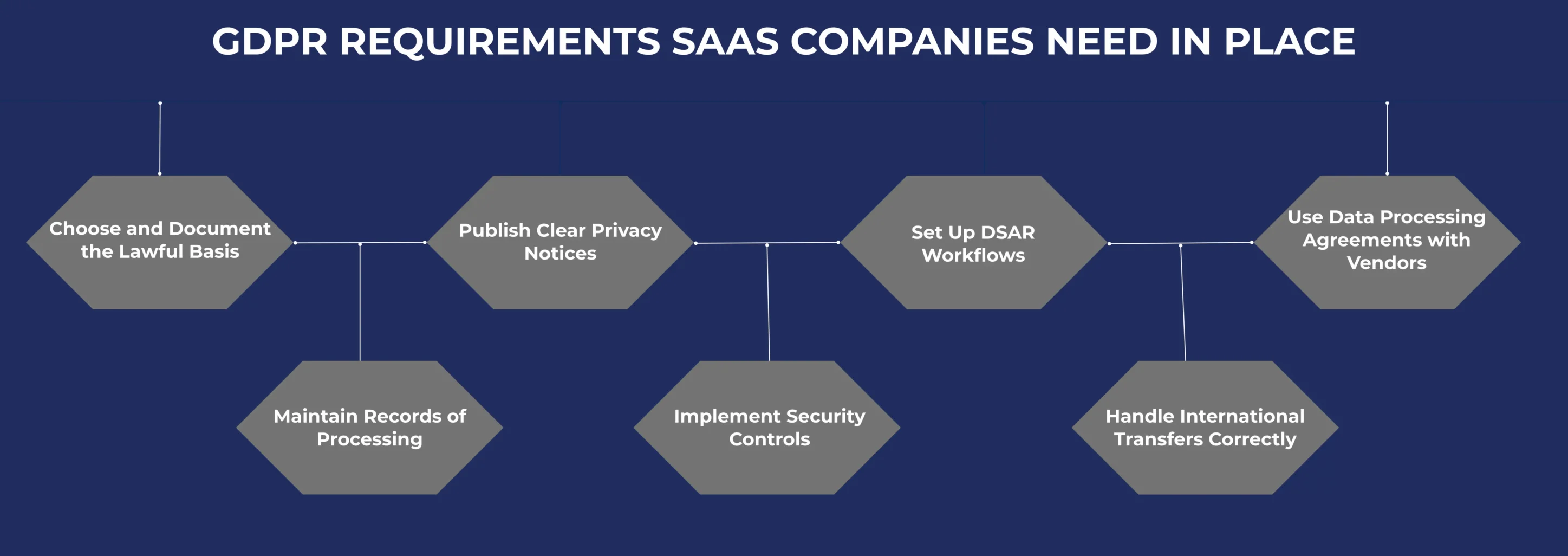
GDPR Audit Process: Step-by-Step Evaluation by CertPro
The GDPR audit process conducted by CertPro as a Licensed CPA Firm follows a structured, evidence-based methodology that evaluates an organization's data protection program against the full scope of GDPR requirements. The process is designed to produce documented, defensible findings that establish compliance status and provide the basis for certification issuance. Each stage of the GDPR audit is conducted by qualified professionals with expertise in EU data protection law and audit methodology — ensuring that GDPR Certification in USA reflects genuine, objective evaluation rather than supported self-assessment.
Data mapping is a foundational component of the GDPR audit process. It involves constructing a comprehensive inventory of all personal data processed by the organization — identifying what data is collected, from whom, for what purpose, where it is stored, how it flows through systems and to third parties, and how long it is retained.
This data flow map is cross-referenced against the ROPA maintained by the organization to identify discrepancies, unlawful processing activities, or undocumented transfers. For U.S. organizations with complex IT environments, data mapping frequently reveals previously unidentified personal data processing activities that require immediate remediation before GDPR compliance can be certified.
Third-party processor relationships receive close scrutiny during the data mapping phase. Every vendor, contractor, or technology provider that processes EU personal data on behalf of the organization must have a signed Data Processing Agreement (DPA) in place, as required by GDPR Article 28. The DPA must specify the subject matter, duration, nature and purpose of processing, type of personal data, categories of data subjects, and the obligations and rights of the controller.
The GDPR audit evaluates whether DPAs are executed with all relevant processors, whether DPA content meets Article 28 requirements, and whether sub-processor arrangements are properly managed and disclosed — all critical elements of a complete GDPR compliance assessment.
Control testing during the GDPR audit involves direct evaluation of the mechanisms an organization has implemented to fulfill GDPR obligations. This includes testing access control systems to verify personal data access is limited to authorized personnel, reviewing consent management platforms to confirm consent records are captured and stored in compliance with Article 7, evaluating data retention and deletion procedures to verify personal data is not held beyond documented retention periods, and assessing technical security controls including encryption, pseudonymization, and access logging. Evidence collected during control testing forms the factual basis for all audit findings and the ultimate GDPR certification determination.
Nonconformities identified during the GDPR audit are classified by severity. Major nonconformities represent significant failures in GDPR compliance that could result in substantial risk to data subjects or material regulatory exposure — these must be remediated before certification can be issued. Minor nonconformities indicate partial compliance or isolated control weaknesses that do not individually create high risk but require documented corrective action within a defined timeframe. CertPro's GDPR audit process provides clients with a detailed nonconformity register and corrective action guidance within the audit findings report — enabling efficient remediation and a clear path to GDPR Certification in USA.

GDPR Assessment Services: Scope and Methodologies
GDPR assessment services provide structured evaluations of specific data protection dimensions, conducted as standalone or integrated components of a broader GDPR compliance program. CertPro conducts GDPR assessments across multiple frameworks — including Data Protection Impact Assessments (DPIAs), vendor and third-party processor assessments, and transfer impact assessments. Each assessment produces documented findings that inform organizational decision-making and support regulatory defensibility. Together, these assessments form a comprehensive foundation for organizations pursuing GDPR Certification in USA.
Data Protection Impact Assessments (DPIAs)
A Data Protection Impact Assessment (DPIA) is mandatory under GDPR Article 35 when a processing activity is likely to result in high risk to the rights and freedoms of natural persons. GDPR Article 35(3) identifies three categories of processing that always require a DPIA: systematic and extensive evaluation of individuals based on automated processing (including profiling) used to make decisions with significant effects; large-scale processing of special categories of data under Article 9; and systematic monitoring of a publicly accessible area on a large scale.
U.S. organizations deploying AI-driven personalization, large-scale health data analytics, or behavioral tracking technologies are frequently required to conduct DPIAs before commencing these activities — making DPIA capability a core component of any GDPR compliance program.
A GDPR DPIA conducted by CertPro as part of a GDPR assessment follows the structured methodology prescribed by GDPR Article 35(7): a systematic description of the processing operations and purposes; an assessment of the necessity and proportionality of the processing; an assessment of the risks to data subjects; and the measures envisaged to address those risks.
The DPIA must be completed prior to commencing the processing activity. If residual risk remains high after proposed controls are applied, the organization must consult with the relevant supervisory authority under Article 36 before proceeding. CertPro's DPIA assessments produce formal reports that satisfy Article 35 documentation requirements and support GDPR audit readiness.
Vendor and Third-Party Processor Assessments
GDPR Article 28(1) requires that a data controller use only processors that provide sufficient guarantees to implement appropriate technical and organizational measures to meet GDPR requirements and protect data subject rights. This obligation creates a due diligence requirement — U.S. organizations must evaluate their third-party processors' data protection practices before engagement and on an ongoing basis.
A vendor GDPR assessment conducted by CertPro evaluates processor security controls, sub-processor disclosure practices, DPA compliance, breach notification capabilities, and data deletion procedures against the GDPR Article 28 standard of 'sufficient guarantees.' This structured assessment process is integral to comprehensive GDPR compliance for U.S. organizations.
Third-party processor assessments are particularly critical for U.S. organizations that rely on cloud infrastructure, payroll platforms, marketing automation tools, customer support systems, and analytics providers that may access or process EU personal data in the course of service delivery. Each of these relationships carries GDPR compliance implications for the controller organization.
The GDPR compliance program established through CertPro's assessment framework ensures that processor relationships are systematically evaluated, documented, and monitored throughout the engagement lifecycle — not merely at the point of initial vendor selection. This ongoing oversight is essential to maintaining GDPR Certification in USA over time.
Transfer Impact Assessments for Cross-Border Data Flows
Following the Court of Justice of the European Union's Schrems II ruling in July 2020 — which invalidated the EU-U.S. Privacy Shield — organizations relying on Standard Contractual Clauses (SCCs) for data transfers to the United States are required to conduct Transfer Impact Assessments (TIAs). A TIA evaluates whether the legal environment of the destination country provides adequate protection for EU personal data.
For transfers to the USA specifically, TIAs must assess U.S. surveillance laws (including FISA Section 702), government access rights, and available legal remedies for EU data subjects, then determine whether supplementary technical or contractual measures are needed to maintain lawful transfer compliance under the General Data Protection Regulation.
CertPro's GDPR assessment services include Transfer Impact Assessment documentation for organizations relying on SCCs or other transfer mechanisms for EU-U.S. data flows. The TIA produces a formal, documented risk assessment that satisfies the requirements established by the European Data Protection Board (EDPB) in its Guidelines 05/2021 on transfers of personal data pursuant to Article 46(2)(a) GDPR.
This documentation is essential for U.S. organizations seeking to demonstrate lawful data transfer compliance in the event of a supervisory authority inquiry, and forms a key component of comprehensive GDPR Certification in USA.
Cross-Border Data Transfer Compliance for U.S. Organizations
Cross-border data transfers from the EU to the United States are among the most legally complex dimensions of GDPR compliance for U.S. organizations. GDPR Chapter V (Articles 44–49) prohibits the transfer of EU personal data to third countries — including the USA — unless an adequate level of protection is ensured through one of the legally recognized transfer mechanisms. For U.S. organizations, the primary available mechanisms are Standard Contractual Clauses (SCCs), the EU-U.S. Data Privacy Framework (DPF), and Binding Corporate Rules (BCRs) for multinational group structures. GDPR Certification in USA includes verification that all international data transfers are supported by lawful and current transfer mechanisms.
Standard Contractual Clauses (SCCs) and Implementation
Standard Contractual Clauses (SCCs) are the most widely used transfer mechanism for EU-U.S. data transfers. The European Commission adopted updated SCCs in June 2021 (Commission Implementing Decision 2021/914), which replaced the previous SCC sets and introduced a modular structure covering four transfer scenarios: controller-to-controller, controller-to-processor, processor-to-controller, and processor-to-processor.
U.S. organizations must implement the applicable module based on their role in the data transfer relationship, execute the SCCs with their EU data exporter counterparts, and conduct a Transfer Impact Assessment to assess whether supplementary measures are required to maintain GDPR compliance.
The GDPR audit conducted by CertPro includes a systematic review of all SCC implementations within the organization's transfer portfolio. This evaluation confirms that SCCs are executed with the correct module, that Annex I and Annex II specifications are accurately completed, that governing law and jurisdiction clauses are properly designated, and that sub-processor inclusion in the SCC framework is correctly managed. Incomplete or incorrectly executed SCCs represent a common major nonconformity identified in GDPR audits of U.S. organizations — one that can result in unlawful transfer determinations by EU supervisory authorities and jeopardize GDPR Certification in USA.
EU-U.S. Data Privacy Framework
The EU-U.S. Data Privacy Framework (DPF), adopted by the European Commission on July 10, 2023, established a new adequacy decision for the transfer of EU personal data to U.S. organizations that self-certify compliance with DPF principles. U.S. organizations can participate by self-certifying with the U.S. Department of Commerce, committing to principles of notice, choice, accountability for onward transfer, security, data integrity and purpose limitation, access, and recourse, enforcement, and liability.
DPF certification provides a transfer mechanism that does not require SCCs for certified transfers, simplifying the legal basis for EU-U.S. data flows and reducing the administrative burden of maintaining individual SCC arrangements. However, DPF participation does not replace the full scope of GDPR compliance obligations. A U.S. organization certified under the DPF still must comply with all GDPR requirements applicable as a data controller or processor — the DPF addresses only the transfer mechanism dimension.
GDPR Certification in USA conducted by CertPro evaluates both the DPF certification status (for organizations using this transfer mechanism) and the broader GDPR compliance program, ensuring that transfer mechanism compliance is integrated within the complete compliance framework rather than treated as a standalone credential.
Binding Corporate Rules for Multinational Organizations
Binding Corporate Rules (BCRs) are legally binding data protection policies that allow multinational corporate groups to transfer personal data between group entities across international borders — including EU-to-USA transfers. BCRs must be approved by the lead supervisory authority in the EU and are applicable only to intra-group transfers.
For U.S. multinationals with significant EU operations, BCRs provide a comprehensive, group-wide transfer mechanism that covers all intra-organizational data flows under a single regulatory approval — eliminating the need for individual SCC executions between each entity pair. The BCR approval process is lengthy and technically complex, requiring detailed documentation of the group's data processing activities, governance structures, and enforcement mechanisms — all of which are evaluated within CertPro's GDPR audit framework for multinational organizations.
GDPR vs. U.S. Privacy Laws: Compliance Alignment
U.S. organizations operating under multiple privacy regulatory frameworks frequently seek to understand the relationship between GDPR and domestic U.S. privacy laws, including the California Consumer Privacy Act (CCPA) and other state privacy legislation. While GDPR and U.S. privacy laws share conceptual goals — protecting individual privacy and regulating organizational data practices — they differ substantially in scope, legal basis requirements, enforcement mechanisms, and individual rights.
Understanding these differences is essential for U.S. organizations building integrated GDPR compliance programs that also satisfy domestic legal obligations. A well-structured GDPR compliance program provides a strong foundation for meeting the requirements of both the General Data Protection Regulation and U.S. state privacy laws.
The California Consumer Privacy Act (CCPA), as amended by the California Privacy Rights Act (CPRA), provides California residents with rights over their personal information — including the right to know, right to delete, right to correct, right to opt-out of sale or sharing, and the right to limit use of sensitive personal information. While these rights parallel GDPR data subject rights in broad terms, critical operational differences exist. CCPA uses an opt-out model for most data sharing activities, while GDPR requires opt-in consent for most direct marketing and cookie-based tracking. GDPR's lawful basis framework requires organizations to identify a legal justification for every processing activity; CCPA does not impose an equivalent requirement. These distinctions have significant implications for how U.S. organizations design their GDPR compliance programs.
| Dimension | GDPR | CCPA / CPRA |
|---|---|---|
| Geographic Scope | EU/EEA data subjects globally | California residents |
| Consent Model | Opt-in required for most processing | Opt-out model for sale/sharing |
| Lawful Basis Requirement | Required for every processing activity | Not required; purpose limitations apply |
| Maximum Fines | €20M or 4% global turnover | Up to $7,500 per intentional violation |
| DPO Requirement | Required for qualifying organizations | No equivalent requirement |
Achieving Dual Compliance: GDPR and U.S. State Privacy Laws
U.S. organizations subject to both GDPR and state privacy laws — such as the CCPA, the Virginia Consumer Data Protection Act (VCDPA), the Colorado Privacy Act (CPA), or the Texas Data Privacy and Security Act (TDPSA) — can achieve meaningful operational alignment by building compliance programs around the most stringent standard. In most cases, that standard is GDPR.
An organization that satisfies GDPR's more demanding requirements for lawful basis, data subject rights, consent management, breach notification, and vendor management will typically meet or exceed the requirements of U.S. state privacy laws, with targeted adjustments for state-specific provisions such as CCPA's opt-out mechanisms. This approach reduces duplication and creates a more efficient, unified privacy governance program.
The GDPR compliance program developed through CertPro's audit framework is structured to identify alignment opportunities between GDPR requirements and applicable U.S. state privacy laws. This approach reduces compliance duplication, enables shared documentation across frameworks, and positions U.S. organizations to manage a unified privacy governance program rather than maintaining siloed compliance tracks. GDPR Certification in USA achieved through this integrated approach provides organizations with a compliance foundation that extends beyond the General Data Protection Regulation to support broader privacy program maturity and readiness for evolving U.S. state privacy legislation.
GDPR Alignment with ISO 27001 and SOC 2
U.S. organizations that have already achieved ISO 27001 Certification in the United States or SOC 2 attestation possess compliance infrastructure that substantially overlaps with GDPR's technical and organizational security requirements under Article 32. ISO 27001 information security controls address access management, incident response, cryptography, physical security, and supplier relationships — all relevant to GDPR compliance. SOC 2 Trust Services Criteria covering Security, Availability, and Confidentiality similarly align with GDPR's security obligation.
However, ISO 27001 and SOC 2 Certification in the United States do not address the full scope of GDPR requirements. Specifically, they do not evaluate lawful basis for processing, data subject rights fulfillment, DPO appointment, ROPA maintenance, or transfer mechanism compliance. GDPR Certification in USA through CertPro's specialized GDPR audit fills these critical gaps — providing the comprehensive coverage that security-focused certifications alone cannot deliver.
Benefits of GDPR Certification for U.S. Businesses
GDPR Certification in USA delivers measurable organizational benefits that extend beyond regulatory compliance. For U.S. businesses operating in competitive global markets, GDPR data protection certification provides a verifiable, third-party validated credential that communicates data protection commitment to EU clients, partners, and regulators. The benefits of GDPR certification encompass legal risk reduction, commercial advantage, operational improvement, and long-term organizational resilience — making it a strategic investment for any organization processing EU personal data.
The commercial value of GDPR Certification in USA is most immediately visible in enterprise sales cycles involving EU customers. EU-based enterprise procurement teams increasingly conduct privacy due diligence as a standard component of vendor selection, and organizations unable to provide evidence of GDPR compliance are disqualified from consideration. A formal GDPR audit report issued by a Licensed CPA Firm satisfies these due diligence requirements with documented, third-party validated evidence — a substantially stronger credential than a self-completed questionnaire or internally drafted compliance statement.
Public sector procurement in EU member states has formalized GDPR compliance requirements as a mandatory evaluation criterion for technology, data processing, and cloud service contracts. U.S. companies pursuing government contracts in the EU — or U.S.-based contractors to EU public sector organizations — face particularly stringent data protection scrutiny. GDPR certification for U.S. companies pursuing these markets provides the structured compliance evidence required to satisfy procurement requirements and advance through evaluation processes where unverified self-certification is insufficient.
The financial risk associated with GDPR non-compliance is concrete and quantifiable. Under GDPR Article 83, supervisory authorities can impose administrative fines in two tiers: up to €10 million or 2% of global annual turnover for violations of specific technical and organizational requirements; and up to €20 million or 4% of global annual turnover for violations of core principles including lawful basis, data subject rights, and international transfer rules. For large U.S. multinationals, 4% of global annual turnover represents a potential fine in the billions of dollars.
Beyond regulatory fines, the reputational and commercial costs of a significant GDPR violation — including data breach notifications to millions of EU data subjects, media coverage, and loss of client trust — can dwarf the direct financial penalties. Organizations with documented GDPR compliance programs and certified audit trails are better positioned to demonstrate good-faith compliance efforts to regulators, limit reputational damage following security incidents, and support cyber insurance claims with structured compliance documentation. GDPR compliance services provided through CertPro's audit framework deliver this protective documentation as a durable organizational asset.

GDPR Audit Readiness: What U.S. Organizations Must Prepare
Organizations pursuing GDPR Certification in USA must undertake systematic preparation across documentation, governance, technical controls, and operational procedures before the formal audit commences. Audit readiness is not a preliminary formality — it directly determines the scope of nonconformities identified during the GDPR audit and the timeline to certification issuance. U.S. organizations that enter the audit process without adequate preparation typically face extended certification timelines and higher remediation costs.
Documentation Readiness
Documentation readiness is the foundational layer of GDPR audit preparation. Organizations must have current, accurate ROPA documentation covering all processing activities within the audit scope. Privacy notices must be reviewed and updated to reflect actual processing activities and meet the disclosure requirements of GDPR Articles 13 and 14. Consent records must be systematically captured and stored in a retrievable format for the retention period applicable to each consent purpose. Data Processing Agreements must be executed with all third-party processors, and contract registers must be maintained to enable systematic DPA tracking and renewal management throughout the GDPR compliance lifecycle.
Transfer mechanism documentation must be organized and current. This includes executed SCCs with correct module selection, DPF self-certification records for organizations using the Data Privacy Framework, and Transfer Impact Assessment reports for SCC-based transfers. Data retention schedules must be formally documented and operationalized — not merely stated in a privacy policy but actually implemented through system configurations or procedural controls that enforce defined retention periods. Common documentation gaps identified in GDPR audits of U.S. organizations include outdated ROPA entries, missing or non-compliant DPAs, and undocumented transfer mechanisms for cloud service providers.
Governance and Organizational Readiness
Governance readiness requires that clear accountability structures for data protection are established and documented at the organizational level. For organizations required to appoint a DPO under Article 37, the DPO must be formally designated, registered with the supervisory authority, and operationally involved in privacy governance — not merely a nominal title assignment. Privacy governance policies must be adopted, approved at the appropriate organizational level, and made accessible to relevant personnel. Employee training on GDPR obligations must be documented, with training completion records maintained as evidence of organizational awareness.
Incident response procedures must be documented and tested, with specific attention to the 72-hour breach notification requirement under Article 33. U.S. organizations frequently underestimate the operational challenge of meeting a 72-hour regulatory notification window — compared to the 30, 45, or 60-day notification periods prevalent under U.S. state breach notification laws. Audit readiness in this area requires documented incident response workflows that specifically account for the GDPR notification timeline, with clear internal escalation paths, supervisory authority contact information, and template notification documentation pre-prepared for deployment.
Common Gaps Found in U.S. Organizations During GDPR Audits
GDPR Certification Cost in USA
GDPR certification cost in the USA varies according to the size and complexity of the organization, the scope of processing activities within the audit boundary, the number of third-party processors evaluated, the volume of international data transfers requiring review, and the completeness of existing documentation and controls at the time of engagement. CertPro operates on a fixed-pricing model that provides organizations with cost certainty and eliminates the open-ended fee arrangements common in conventional consulting engagements.
Factors Influencing GDPR Certification Cost
Organizational size is the primary cost determinant for GDPR certification. Small organizations with limited data processing activities, a small number of third-party processors, and straightforward data flows can complete a GDPR audit within a relatively contained scope and timeframe. Mid-sized organizations with multiple product lines, complex technology stacks, and regional operations face broader audit scopes and correspondingly higher certification costs. Large multinational enterprises with EU subsidiaries, extensive processor networks, multiple lawful transfer mechanisms, and cross-jurisdictional data flows require the most comprehensive audit programs and longest timelines to certification.
The maturity of the organization's existing data protection program also significantly influences GDPR certification cost. Organizations with established privacy governance structures, current ROPA documentation, executed DPAs, and tested incident response procedures require less remediation effort and shorter audit cycles than organizations beginning the GDPR compliance process from a low maturity baseline. CertPro's fixed-pricing approach ensures that organizations receive transparent cost commitments based on the specific scope of their GDPR audit — enabling accurate budget planning and eliminating uncertainty in the certification investment.
| Organization Type | Typical Audit Scope | Estimated Timeline |
|---|---|---|
| Small Organization (<250 employees) | Limited processing activities, 5–15 processors | 6–10 weeks |
| Mid-sized Organization (250–1,000 employees) | Multiple product lines, regional data flows, 15–50 processors | 10–16 weeks |
| Large Enterprise (1,000+ employees) | Complex multinationals, global data flows, 50+ processors | 16–24 weeks |
| Multinational Group | Group-level BCR, EU subsidiaries, cross-entity transfers | 24–36 weeks |
CertPro's GDPR Certification Services in the USA
CertPro is a Licensed CPA Firm providing structured GDPR certification audits, GDPR assessments, and GDPR compliance program evaluation services for U.S.-based organizations across all industries. GDPR Certification in USA conducted by CertPro is grounded in the institutional authority and methodological standards applicable to CPA-level audit work — producing documentation that carries the evidentiary weight of a Licensed CPA Firm's findings. CertPro's GDPR audit services are positioned specifically as certification and audit activities — not consulting or advisory services — ensuring that the certification credential reflects genuine third-party evaluation rather than supported self-assessment.
Industries Served by CertPro's GDPR Audit Practice
CertPro's GDPR certification for U.S. companies spans a broad range of industries, reflecting the cross-sectoral applicability of GDPR obligations. In the technology sector, CertPro conducts GDPR audits for SaaS platforms, cloud infrastructure providers, software development organizations, and data analytics companies. In financial services, CertPro evaluates GDPR compliance for fintech organizations, payment processors, investment management firms, and insurance companies processing EU customer data.
Healthcare and life sciences organizations benefit from CertPro's specialized capability in Article 9 special category data processing, DPIA methodology, and health data governance evaluation — areas where the General Data Protection Regulation imposes its most stringent requirements. E-commerce and retail organizations with EU customer bases, HR technology platforms processing EU employee records, digital media and advertising technology companies, and professional services firms with EU client relationships are among the additional industries regularly served through CertPro's GDPR compliance services.
Regardless of industry, the GDPR audit methodology applied by CertPro's Licensed CPA Firm team evaluates compliance against the full scope of GDPR obligations — producing findings that are defensible, documented, and aligned with the institutional standards expected of a CPA-level engagement.
Scope of CertPro's GDPR Audit and Certification Services
CertPro's GDPR audit services encompass the full certification lifecycle: initial scope definition, audit program development, Stage 1 and Stage 2 audit execution, control testing, nonconformity identification, audit findings report issuance, certification decision, and attestation documentation delivery. The audit program is tailored to the specific characteristics of each organization's processing environment — including industry sector, data categories processed, organizational structure, technology infrastructure, and international transfer profile.
Following certification issuance, CertPro's surveillance program provides periodic audit evaluations to confirm that the certified GDPR compliance program remains effective as the organization's processing activities evolve, new regulations emerge, or organizational changes occur. Given the dynamic nature of GDPR enforcement — with updated EDPB guidelines, supervisory authority decisions, and evolving SCC frameworks — ongoing surveillance audit coverage is essential to maintaining continuous GDPR certification validity.
Fixed Pricing and Engagement Transparency
CertPro's fixed-pricing model for GDPR certification cost provides organizations with complete cost transparency from the point of engagement. Unlike open-ended consulting arrangements that accumulate fees based on hours and unforeseen scope expansions, CertPro establishes a defined audit scope and corresponding fixed fee during the initial engagement agreement. This approach enables accurate budget planning for the GDPR certification investment and ensures that the certification deliverable — the formal audit findings report and attestation documentation — is produced within the agreed scope and timeline.
An Expert's Guide to GDPR Compliance in USA
GDPR Certification in USA demonstrates an organization's commitment to rigorous, documented data protection practices that satisfy EU regulatory standards. For U.S. businesses navigating the intersection of EU data protection law, domestic privacy legislation, and international data transfer requirements, the pathway to certification requires systematic engagement with every dimension of the General Data Protection Regulation — from lawful basis documentation to breach response operationalization.
CertPro's Licensed CPA Firm authority provides the institutional foundation for a GDPR audit that produces defensible, evidence-based certification documentation — the standard required to satisfy EU supervisory authorities, enterprise clients, and legal counsel.
The GDPR compliance program built through CertPro's audit framework is not a one-time exercise but a durable organizational capability. As the EU regulatory landscape evolves — with ongoing EDPB guidance updates, supervisory authority enforcement decisions, and potential legislative changes to GDPR itself — certified organizations benefit from structured surveillance audit coverage that maintains compliance documentation currency.
U.S. organizations that invest in GDPR Certification in USA through a Licensed CPA Firm's audit process position themselves as trusted, compliant partners in the global data economy — a designation that carries measurable commercial, legal, and reputational value in every market they serve.
GDPR data protection certification, achieved through CertPro's comprehensive audit and assessment methodology, provides U.S. organizations with the structured compliance evidence required to operate confidently in EU markets, respond effectively to supervisory authority inquiries, satisfy enterprise client due diligence requirements, and demonstrate organizational accountability for the personal data of every EU data subject they serve.
For organizations processing EU personal data, GDPR Certification in USA is not a destination — it is the foundation of a sustainable, defensible data protection program that evolves with the regulatory landscape and grows stronger with every audit cycle.
States We Serve & Related Compliance Services
CertPro provides GDPR certification audit services to U.S.-based organizations across all states. Organizations pursuing GDPR Certification in USA frequently require concurrent compliance across additional frameworks — CertPro's Licensed CPA Firm audit practice covers the full compliance portfolio, enabling integrated, multi-framework audit engagements.
Frequently Asked Questions
Related Articles
 April 08, 2026
GDPR Basics for SaaS: Requirements, Principles & Compliance Guide
April 08, 2026
GDPR Basics for SaaS: Requirements, Principles & Compliance Guide
GDPR basics for SaaS companies come down to a few clear questions. When does the law apply? What personal data does your product touch? What role do you play as a controller or processor?
Read More → April 22, 2026
Multi-Framework Compliance Guide: Best Practices and Strategies
April 22, 2026
Multi-Framework Compliance Guide: Best Practices and Strategies
Most compliance teams aren't managing one framework. They're managing three, four, sometimes five — simultaneously. A SaaS company selling to enterprise needs SOC 2, ISO 27001, and GDPR at minimum.
Read More → January 30, 2026
Reports of GDPR Violations Rise Sharply
January 30, 2026
Reports of GDPR Violations Rise Sharply
Excerpt from CSO Online Article, Published on January 29, 2026. The latest GDPR enforcement data shows that reports of GDPR violations have surged significantly across EU supervisory authorities.
Read More →