

Patient data privacy has become a complex subject in today’s modern world. The Canadian healthcare system necessitates specific laws to prevent the growing occurrences of data breaches. Moreover, data has suggested a sharp rise in cyberattacks in Canadian healthcare businesses since 2015. The nation also witnessed 14 significant cyber incidents that seriously disrupted healthcare operations. For example, five Ontario hospitals faced ransomware attacks that interfered with their functionality and postponed many surgeries and appointments. In May 2023, the province received massive cybersecurity breaches that affected data of 3.4 million patients.
Surprisingly, Canada ranked 10th in data breaches in healthcare sectors globally. In addition, the Canadian Centre for Cybersecurity suspects that Canada will face more cyber threats over the next two years. Here, the importance of HIPAA compliance in Canada has a major role to play. Understanding the HIPAA meaning is important for healthcare providers who handle sensitive patient data, especially when dealing with U.S. patients. It secures patient information and prevents the risk of data breaches. Canadian healthcare providers that handle American patient data must also follow HIPAA compliance in Canada to maintain cross-border trust and ensure lawful data handling.
The evolving landscape further underscores this need, as HIPAA updates require stricter cybersecurity controls, including mandatory encryption and multi-factor authentication, to address the surge in healthcare cyberattacks reflected in Canadian healthcare data breach statistics. To do this effectively, they must first understand the HIPAA meaning, its origins, and how it applies beyond U.S. borders. This article will provide a clear explanation for the question, “what is HIPAA in Canada?” Furthermore, it discusses why it’s important for healthcare businesses there. And find the differences between regional laws and HIPAA regulations in Canada.

Tl; DR:
Concern: The Canadian healthcare system faces escalating challenges with patient data privacy due to a significant rise in cyberattacks and data breaches. With Canada ranking 10th globally for healthcare data breaches, and recent incidents affecting millions of patients, there is growing urgency to strengthen protections, especially for organizations handling sensitive cross-border (US-Canada) healthcare data.
Overview: Canada enforces healthcare data privacy primarily through federal and provincial laws such as PIPEDA and PHIPA. However, these laws differ from the US HIPAA regulations that govern patient health information privacy. Canadian healthcare providers working with US patient data must comply with HIPAA to maintain trust and legal compliance. The evolving landscape introduces stricter HIPAA requirements around encryption, breach notification within 60 days, multi-factor authentication, and comprehensive risk management measures critical in addressing increasing cybersecurity threats. There is no direct HIPAA equivalent in Canada, creating complexities in cross-border healthcare data compliance.
Solution: Canadian healthcare organizations should adopt HIPAA compliance alongside adherence to Canadian privacy laws, supported by a robust HIPAA compliance checklist that ensures all updated requirements are met. These include enhanced cybersecurity controls, consistent patient consent management, rapid breach notification, and ongoing staff training. Partnering with compliance experts like CertPro can facilitate efficient implementation, help mitigate liability, and bolster patient trust through demonstrated commitment to data protection. Applying these combined frameworks provides a strong defense for cross-border healthcare data privacy and beyond.
CANADIAN APPROACHES TO SECURING PATIENT DATA IN THE MODERN AGE
Canada provides healthcare services similar to those in the United States and uses both federal and provincial laws to protect healthcare data. These laws regulate how patient data is collected, used, and shared. Key laws include PIPEDA and PHIPA, while the US uses HIPAA to protect patient information. All of these laws aim to prevent unauthorized access and ensure data security. However, there are important differences among them. Below is a summary of each:
Personal Information Protection and Electronic Documents Act (PIPEDA): PIPEDA is a Canadian federal law that controls how private organizations handle personal data, including some health data. Furthermore, it also applies to data in banking, communication, and other industries. The law ensures all personal data is protected and that organizations are responsible for keeping it safe. Additionally, PIPEDA gives individuals the right to access their data. People can ask questions about why their data is stored and how it is used. Organizations must clearly explain their reasons for collecting and using data. PIPEDA also allows provinces to add their own rules to support data protection. Notably, Canadian healthcare data privacy laws are continuously evolving to keep pace with technologies and cyber threats, with PIPEDA incorporating stricter breach notification timelines and accountability measures.
Personal Health Information Protection Act (PHIPA): PHIPA is a law specific to Ontario that works alongside PIPEDA. It gives clear rules for how healthcare data should be handled. To add on, it protects data about a person’s physical or mental health, medical history, treatment plans, and payment details.
Health Insurance Portability and Accountability Act (HIPAA): HIPAA is a US federal law that protects health information. It applies to healthcare providers, insurance companies, pharmacies, and billing services. Moreover, HIPAA sets rules for how to manage and protect personal health data. Some US states may also add more privacy laws. At the same time, HIPAA compliance in Canada is important for Canadian healthcare businesses that handle American patient information. The HIPAA compliance checklist details new requirements for robust risk assessments, encryption at rest and in transit, and ongoing employee training, which Canadian healthcare providers dealing with US patient data need to comply with to meet cross-border healthcare data compliance standards.
HIPAA vs PIPEDA vs PHIPA
HIPAA compliance in Canada helps protect patient information that can be spoken, written, or electronic. PHIPA requires healthcare staff and organizations to follow safety steps to keep data safe. Furthermore, PIPEDA only lets organizations collect and keep personal data with meaningful consent.
HIPAA vs PIPEDA: Similarities and Differences
Similarities:
- Both laws guide how to collect and store personal data.
- They explain the steps businesses must take to handle this information properly.
- Each law sets limits on how data can be collected and used.
- Both laws make organizations responsible for the personal data they collect and use.
- They also respect the customer’s rights before collecting or storing their data.
Differences:
- Each law is a national rule for its country, not meant for international companies.
- PIPEDA protects many types of personal data, while HIPAA compliance in Canada focuses only on patient health records.
- HIPAA regulations in Canada give healthcare companies clear steps to follow. In contrast, PIPEDA applies to many industries beyond healthcare.
- HIPAA breach notification rules mandate notification within 60 days of discovery, a more stringent timeline compared to PIPEDA’s requirement to notify when there is a real risk of significant harm.
HIPAA vs PHIPA: Key Similarities and Differences
Similarities:
- Both laws aim to protect sensitive health data.
- HIPAA Canada guidelines cover health information, demographic data, and treatment details. On the other hand, PHIPA covers data about physical and mental health.
- HIPAA needs written patient consent to share health information. In contrast, PHIPA allows for implied consent when using health information in healthcare settings.
- Both laws let patients access their health records.
- Breaking these rules can lead to heavy fines and loss of trust.
Differences:
- HIPAA applies to US entities and their partners, while PHIPA is for Ontario.
- On one hand, HIPAA requires data to be kept private unless the patient agrees; on the other hand, PHIPA allows more flexibility.
- Moreover, HIPAA requires breach notifications within 60 days, while PHIPA timelines may vary depending on the case.
HIPAA VS CANADIAN PRIVACY LAWS: A COMPARISON TABLE
Healthcare providers must possess a complete understanding of HIPAA and how it differs from the Canadian privacy laws. In particular, this comparative knowledge is crucial for healthcare firms handling cross-border data. Despite having similar goals, these laws differ in scope, enforcement, and patient rights.
| Properties | HIPAA (USA) | PIPEDA/PHIPA (Canada) |
|---|---|---|
| Scope | Covers US healthcare providers and insurers | PIPEDA covers Canadian private data, and PHIPA covers Ontario-based public sector data |
| Jurisdiction | Nationwide in USA | PIPEDA: federal / PHIPA: Ontario-specific |
| Type of Data Protected | Protected Health Information (PHI) | Personal Information / Personal health information |
| Enforcement Body | Office of Civil Rights (HHS) | Office of the Privacy Commissioner of Canada / Provincial Bodies |
| Breach Notification Rules | Notify breach within 60 days | Notification is required if real risk of harm exists |
| Penalties | Involves high fines with civil and criminal penalties | Only administrative penalties |
| Consent Requirements | Implied or explicit consent required depending on the context | Often requires a meaningful consent |
It is a well-know fact that there is no direct HIPAA Canada equivalent; learning the basic differences could ensure compliance while handling US patient data.
IMPORTANCE OF HIPAA COMPLIANCE IN CANADA
Canadian healthcare companies that work with US patients must understand the HIPAA meaning completely. Accordingly, achieving HIPAA compliance in Canada helps these businesses focus on their work while keeping patient data safe. Also, it builds trust and ensures privacy. HIPAA certification in Canada helps you to focus on your business with confidence.
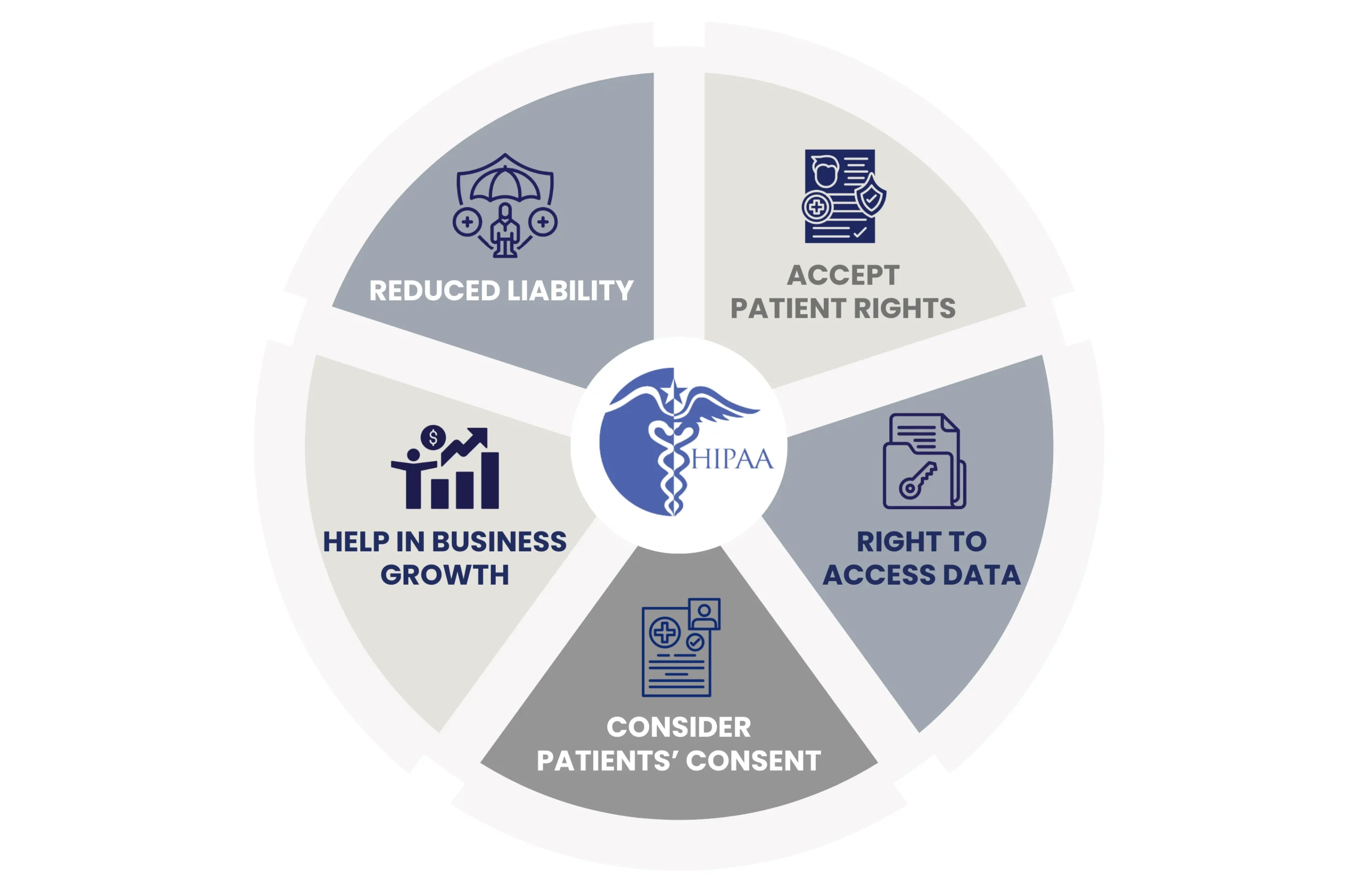
Accept Patient Rights: HIPAA compliance in Canada asks covered healthcare groups to protect sensitive patient data. The Privacy Rule of HIPAA Canada gives patients the right to view and correct their data. To clarify, patients can request changes if they find a mistake, and we must resolve it within 60 days. This approach makes the process more open and patient-friendly.
Right to Access Data: Canadian HIPAA allows patients to ask for their health data. This rule, known as the HIPAA Right of Access, lets people send their records to other healthcare providers. Under the Privacy Rule, patients can decide who can see their information, including family or caregivers. To add on, providers must respond to access requests within 30 days, as outlined by HIPAA Canada.
Consider Patients’ Consent: Under Canadian HIPAA, organizations cannot share a patient’s Protected Health Information without clear written permission. This information includes genetic data, insurance details, or therapy notes. Even though Canada has similar rules, HIPAA offers stronger healthcare data protections.
Helping Business Growth: Patient happiness is essential for any healthcare business. If privacy is weak, people may stop trusting the provider. Hence, HIPAA compliance in Canada lowers this risk and boosts trust. Knowing the rules improves patient care and team performance.
Reduced Liability: HIPAA regulations in Canada protect businesses, leaders, and patients. Additionally, learning and applying Canadian HIPAA rules helps stop data leaks. It also cuts the chance of costly penalties and protects both staff and the company.
The HIPAA updates bring additional emphasis on regular staff training, risk analysis, and vendor management, which are crucial for maintaining compliance and reducing liability in Canadian healthcare organizations handling US patient data.
HOW CAN CANADIAN BUSINESSES AVOID HIPAA VIOLATIONS WHEN HANDLING US PATIENT DATA?
To maintain the HIPAA rules, you need to know how to follow certain simple steps:
- Before sharing a patient’s information, ensure you have written permission from them, except in certain situations like treatment plans and payment methods.
- Recheck the permissions before informing employees, business partners, and other covered entities, according to HIPAA Canada.
- The patient details must be disclosed securely to lower the chance of HIPAA violations.
- Ensure that technology-based controls, such as access control, password managers, Multi-Factor Authentication (MFA), data protection, and antivirus software, are in place. This will help ensure compliance with HIPAA regulations in Canada and avoid violations.
- Following a comprehensive HIPAA compliance checklist is essential to address new requirements such as asset inventories, vulnerability scanning, and incident response plans.
GET HIPAA COMPLIANCE IN CANADA UNDER CERTPRO’S GUIDANCE
Canadian businesses must be able to answer the question, “what is HIPAA in Canada?” to secure and manage US patients’ health data. Furthermore, Canada has PIPEDA and PHIPA, but they are not the actual substitutes for the HIPAA Canada equivalent. These regional regulations can provide some security, but they require assistance to effectively mitigate risks. Thus, HIPAA compliance in Canada is the best option if you plan for specific data security in your healthcare sectors. For cross-border healthcare services, understanding HIPAA Canada is key to staying compliant. In particular, compliance implementation is tricky, so you can get expert help from CertPro. While Canadian laws like PIPEDA and PHIPA address data privacy, they are not designed to meet HIPAA standards. Yet, Canadian organizations working with US patients must meet HIPAA requirements. To cater to this need, CertPro helps organizations align with HIPAA requirements through standard audits and quality compliance support.
Furthermore, our auditors are profoundly skilled in implementing HIPAA and understand the basic differences between HIPAA, PIPEDA, and PHIPA. Thus, simplifying the operation process and reducing the time required will help you keep information safe and build trust in the healthcare business. Following Canadian HIPAA and PHIPA rules keeps health information safe, private, and easy to access for those who need it most, which ensures people get the best care possible. And while there’s no exact HIPAA Canada equivalent, aligning both US and Canadian standards ensures patients receive the best care possible.
FAQ
What is the Canadian equivalent of HIPAA for healthcare privacy?
The closest Canadian equivalents to HIPAA are PIPEDA, which covers personal data in the private sector broadly, and PHIPA, specific to Ontario’s healthcare information. Neither fully replaces HIPAA but together they govern Canadian healthcare data privacy.
Why is HIPAA compliance important for Canadian healthcare providers?
HIPAA compliance safeguards patient health information, builds cross-border trust, and prevents costly data breaches. For Canadian providers dealing with US patient data, complying with HIPAA ensures legal conformity and boosts cybersecurity resilience in a rising threat landscape.
What are the key differences between HIPAA, PIPEDA, and PHIPA?
HIPAA protects protected health information (PHI) in the US healthcare sector with strict breach notifications. PIPEDA governs broader personal data use in Canadian private sectors. PHIPA regulates health information privacy specifically in Ontario, with differences in consent and enforcement.
How can healthcare organizations ensure HIPAA compliance in Canada?
Organizations must follow the latest HIPAA compliance checklist, using strong encryption, multi-factor authentication, employee training, and timely breach notifications. Aligning HIPAA with Canadian laws like PIPEDA and PHIPA supports compliant and secure handling of cross-border health data.
What is HIPAA compliance in Canada and why is it important?
HIPAA compliance in Canada means healthcare organizations follow US rules to protect American patient data, ensuring privacy, building trust, and supporting secure cross-border healthcare relationships.

About the Author
Abhijith Rajesh
Abhijith Rajesh is an Executive Team Lead at CertPro, specializing in ISO 27001, SOC2, GDPR, and other Information Security Compliance standards. He leads a dedicated team, ensuring the delivery of top-tier information security solutions. Abhijith excels in managing projects, optimizing security frameworks, and guiding clients through the complexities of the ever-evolving threat landscape.

Healthcare Data Breaches Continue to Expose Millions in 2026
Excerpt from HIPAA Journal, Published on September 4, 2026 Healthcare data breaches continue at high levels in 2026, with HIPAA Journal reporting that 395 large breaches affecting 500 or more individuals had been reported to the U.S. Department of Health and Human...

HIPAA UPDATES 2026: KEY REGULATORY CHANGES, NEW RULES, AND COMPLIANCE IMPACT EXPLAINED

Why is HIPAA Important to Patients
LAST UPDATE -- 10-01-2025 The Health Insurance Portability and Accountability Act, also known as HIPAA, is crucial for patients because it safeguards their privacy and health information. In order to provide national standards for the security of specific health...