
ISO 42001 Certification in George Town
ISO 42001 Certification in George Town is evaluated and issued by CertPro, a Licensed CPA Firm conducting independent third-party audits of Artificial Intelligence Management Systems (AIMS) under ISO/IEC 42001:2023. CertPro’s ISO 42001 audit scope covers AI governance controls, risk management frameworks, lifecycle oversight, and accountability structures for organizations deploying or developing AI systems in George Town, Penang, Malaysia.
OUR CLIENTS



What Is ISO 42001 Certification and the AI Management System (AIMS) Framework
ISO 42001 Certification is the internationally recognized credential issued to organizations that demonstrate conformance with ISO/IEC 42001:2023, the world’s first published standard for Artificial Intelligence Management Systems (AIMS). Published by the International Organization for Standardization in December 2023, the standard establishes a structured framework for the responsible planning, development, deployment, monitoring, and governance of AI systems within an organizational context. ISO 42001 Certification in George Town confirms that an organization’s AIMS satisfies the standard’s requirements, as determined through an independent third-party ISO 42001 audit conducted by a Licensed CPA Firm.
Definition of an AI Management System Under ISO/IEC 42001:2023
An Artificial Intelligence Management System (AIMS), as defined by ISO/IEC 42001:2023, is a set of interrelated policies, processes, procedures, and organizational structures that govern the responsible use of AI throughout its lifecycle. The AIMS framework addresses how an organization identifies AI-related risks, assigns accountability for AI decisions, establishes controls to prevent harmful outcomes, and ensures continuous improvement of its AI governance posture. Under the standard, the AIMS must be documented, maintained, and subject to periodic internal and external review. ISO AIMS certification confirms that all these structural elements are in place and operating effectively within the audited organization.
ISO/IEC 42001:2023 is structured around the ISO High Level Structure (HLS), aligning its clause architecture with ISO 9001 (Quality Management), ISO 27001 (Information Security), and ISO 14001 (Environmental Management). The standard contains ten clauses: Context of the Organization, Leadership, Planning, Support, Operation, Performance Evaluation, and Improvement, preceded by clauses on Scope, Normative References, and Terms and Definitions. Organizations seeking ISO 42001 Certification must demonstrate conformance with all mandatory clauses, with particular emphasis on AI risk assessment, AI impact evaluation, and the management of AI-specific controls across the system lifecycle. This structural alignment allows organizations already certified to other ISO standards to integrate AIMS requirements into their existing management system architecture efficiently.
Scope and Applicability of ISO 42001
ISO 42001 applies to any organization, regardless of size, sector, or jurisdiction, that develops, provides, or uses AI-based products or services. The standard is explicitly designed to apply to both AI developers who build and train machine learning models and AI users who integrate commercially available AI tools into their business operations. For George Town enterprises, this means that financial services firms using AI-driven credit scoring, healthcare providers deploying diagnostic AI, logistics companies using route optimization algorithms, and technology companies building AI-powered software products are all within scope for ISO 42001 Certification in George Town. The standard does not require that AI be the organization’s primary business activity; even organizations that use AI as a supporting tool are eligible—and in many cases obligated—to seek ISO 42001 Certification.
The ISO 42001 assessment scope is determined during the initial audit planning phase and must accurately reflect all AI systems deployed within the defined organizational boundary. Scope definitions must identify which AI applications are included, which business units operate them, and which external AI service providers are relevant to the AIMS. Auditors evaluate whether the declared scope represents the organization’s actual AI footprint and whether any material AI systems have been inappropriately excluded. Accurate scope definition is a prerequisite for a valid ISO 42001 compliance determination and is reviewed at every surveillance cycle.
Governance and Accountability Requirements Under the AIMS Framework
ISO/IEC 42001:2023 mandates specific governance and leadership obligations that form the backbone of any compliant AIMS. Top management must demonstrate visible commitment to the AI management system, including the establishment of an explicit AI policy aligned with the organization’s strategic direction. The AI policy must articulate the organization’s commitments to responsible AI use, define the boundaries of acceptable AI development and deployment practices, and be communicated throughout the organization and to relevant external parties. Leadership accountability is non-delegable; the standard requires that senior executives take ownership of AI risk outcomes and ensure adequate resources are allocated to operate and maintain the AIMS effectively.
Beyond executive governance, ISO 42001 requires the designation of roles and responsibilities across the AIMS operational structure. Organizations must define who is responsible for AI risk assessment, who reviews AI outputs for bias and accuracy, who manages third-party AI vendor relationships, and who holds authority to suspend or modify an AI system when risks are identified. These role definitions must be documented and assessed by auditors during the ISO 42001 audit process. The AIMS framework treats accountability as a control mechanism—not merely an organizational formality—and audit findings related to unclear or unassigned responsibilities constitute nonconformities requiring corrective action.
AI Risk Assessment and Impact Evaluation
A central requirement of ISO 42001 compliance is the conduct of structured AI risk assessments and AI impact evaluations. The standard requires organizations to identify AI-specific risks, including those related to data quality, algorithmic bias, model drift, unintended automation outcomes, privacy violations, and security vulnerabilities. Risk assessments must be documented, reviewed at defined intervals, and updated whenever material changes occur in the AI system or its operating environment. The ISO 42001 assessment process conducted by CertPro auditors examines whether the organization’s risk assessment methodology is systematic, evidence-based, and aligned with risk acceptance criteria established by senior management.
AI impact evaluations under ISO/IEC 42001:2023 go beyond technical risk assessment to address the broader societal and human rights implications of AI deployment. Organizations must evaluate whether their AI systems could cause harm to individuals, groups, or communities—including through discriminatory outputs, privacy rights violations, or erosion of human agency in decision-making. These evaluations are particularly relevant for George Town organizations operating in regulated sectors such as financial services, healthcare, and human resource management, where AI decisions directly affect individuals’ rights and opportunities. Documented impact evaluations are subject to audit review and must demonstrate that identified harms have been addressed through specific control measures.
Why ISO 42001 Certification Matters for George Town Organizations
George Town, the capital of Penang state and a designated UNESCO World Heritage City, has emerged as one of Malaysia’s most dynamic commercial and technology centers. The city hosts a significant concentration of multinational corporations, financial services firms, healthcare institutions, and technology companies—many of which have integrated AI systems into core operational and decision-making processes. As AI adoption accelerates across George Town’s business ecosystem, the absence of structured governance frameworks creates material risks for organizations, their customers, and the communities they serve. ISO 42001 Certification in George Town provides the institutional mechanism through which organizations can demonstrate that their AI operations are governed responsibly and audited independently.
Malaysia’s Regulatory Landscape for AI Governance
Malaysia’s regulatory environment for digital governance and AI is evolving rapidly. The Personal Data Protection Act (PDPA) 2010, currently undergoing significant amendments, imposes obligations on organizations handling personal data—including data processed by AI systems. The Malaysia Digital Economy Corporation (MDEC) has issued AI guidelines encouraging responsible AI adoption aligned with international standards. Bank Negara Malaysia’s risk management frameworks increasingly reference technology governance obligations for financial institutions, many of which deploy AI for credit assessment, fraud detection, and customer service automation. ISO 42001 compliance gives George Town organizations a structured, internationally recognized approach to satisfying these overlapping regulatory expectations within a single management system framework.
The Securities Commission Malaysia and the Financial Services Act impose additional governance obligations on capital markets participants and financial institutions operating in George Town’s financial services sector. Organizations in this sector that deploy algorithmic trading systems, robo-advisory platforms, or AI-driven customer risk profiling tools face heightened scrutiny regarding the transparency, accountability, and auditability of these systems. ISO 42001 Certification in George Town reinforces compliance posture for financial services firms by establishing documented controls for AI model governance, audit trails for AI decisions, and evidence of periodic AI risk reviews that regulators can reference during supervisory examinations.
Competitive and Commercial Imperatives for AI Certification
Beyond regulatory compliance, ISO 42001 Certification in George Town creates measurable competitive advantages for certified organizations. Enterprise procurement processes increasingly require suppliers and technology vendors to demonstrate formal AI governance credentials as a condition of contract award or renewal. Multinational corporations headquartered in Europe, North America, and Asia-Pacific are extending AI governance requirements into their supply chain due diligence frameworks, and ISO 42001 Certification serves as documentary evidence of conformance with these requirements. George Town companies pursuing export-oriented business development or international technology partnerships are particularly well-positioned to leverage ISO 42001 Certification as a market access credential.
Customer trust represents an increasingly significant commercial asset for AI-driven organizations. Public awareness of AI risks—including algorithmic bias, data privacy violations, and opaque automated decision-making—is growing across consumer and enterprise markets. ISO AIMS certification allows George Town organizations to communicate to customers that their AI systems have been independently audited against the requirements of an international standard and found conformant. This certification-backed assurance is qualitatively different from self-declared compliance statements and carries the institutional weight of third-party audit verification conducted by a Licensed CPA Firm.
Sector-Specific Relevance in George Town
George Town’s economic structure spans manufacturing, financial services, healthcare, retail, logistics, and technology services. Each sector presents distinct AI governance challenges that ISO 42001 is designed to address. In manufacturing, AI systems controlling quality inspection, predictive maintenance, and supply chain optimization must be governed to prevent disruptions caused by model failures or adversarial data inputs. In financial services, AI credit models and fraud detection systems must be monitored for discriminatory bias and model drift. In healthcare, AI diagnostic tools must be governed to ensure clinical accountability and patient safety. ISO 42001 Certification for George Town companies provides a sector-agnostic governance framework that addresses these diverse AI risk profiles within a single, auditable management system.
| Sector | Common AI Applications | Key ISO 42001 Governance Focus |
|---|---|---|
| Financial Services | Credit scoring, fraud detection, robo-advisory | Model bias, audit trails, algorithmic accountability |
| Healthcare | Diagnostic AI, patient triage, clinical decision support | Patient safety, clinical oversight, data privacy |
| Manufacturing | Predictive maintenance, quality control, supply chain AI | Operational continuity, model reliability, safety controls |
| Technology Services | AI-powered SaaS products, automation platforms | Third-party AI governance, data lineage, explainability |
| Retail & Logistics | Demand forecasting, route optimization, customer analytics | Data accuracy, fairness in pricing, consumer protection |
ISO 42001 Certification Requirements for George Town Companies
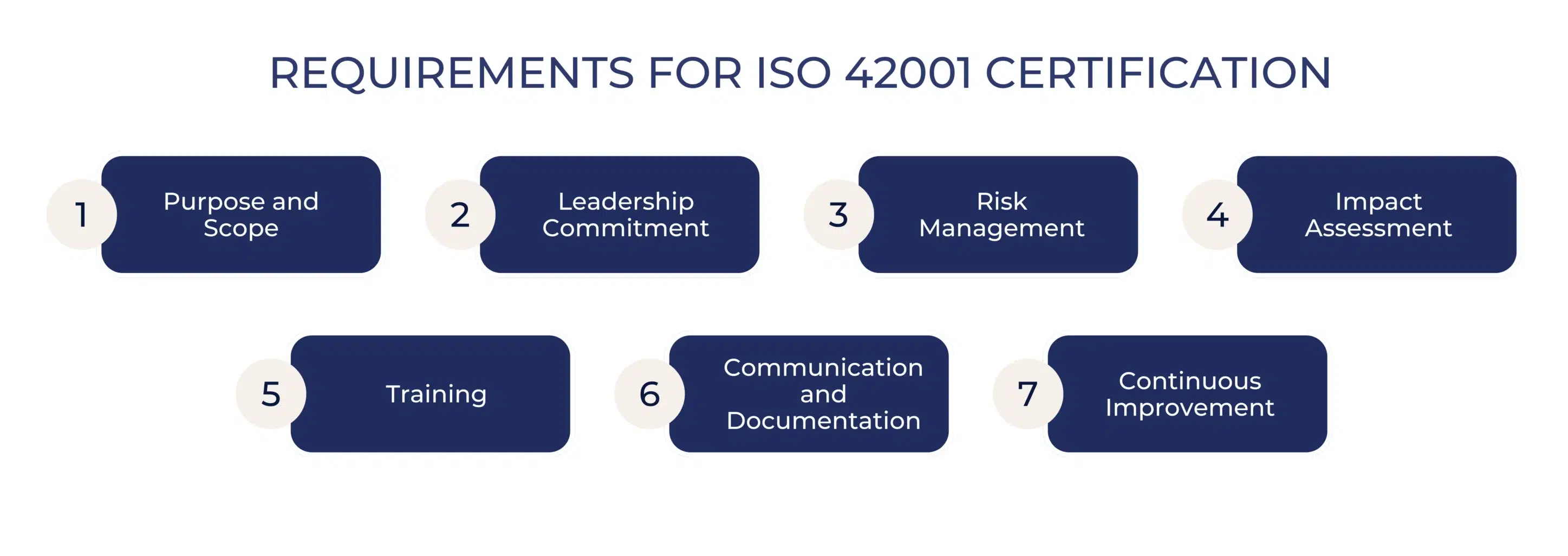
ISO 42001 compliance requires George Town organizations to establish, document, implement, and maintain an AI Management System that satisfies the normative requirements of ISO/IEC 42001:2023. These requirements are organized across multiple clauses of the standard and are evaluated in their totality during the certification audit. CertPro’s ISO 42001 audit methodology assesses each requirement cluster systematically, examining documented evidence, interviewing key personnel, and observing operational processes to determine whether declared controls are functioning as designed. Organizations that fail to satisfy mandatory requirements receive formal nonconformity findings that must be resolved before certification is issued.
ISO 42001 imposes explicit documentation requirements that form the evidentiary basis for audit assessment. Organizations must maintain a documented AI policy approved by top management, a defined scope statement for the AIMS, documented AI risk assessment results and treatment plans, AI impact evaluation reports, AI objectives and performance measurement records, competency and training records for personnel involved in AI operations, and records of internal AIMS audits and management reviews. All documented information must be controlled in accordance with the standard’s document control requirements—including version management, access controls, and retention schedules appropriate to the regulatory environment in which the organization operates.
Beyond mandatory documented information, organizations must also maintain operational documentation that supports audit traceability. This includes AI system inventories listing all in-scope AI applications, data governance records describing the datasets used to train and operate AI systems, vendor management documentation for third-party AI services, and records of AI system changes and the review processes applied before deployment. CertPro auditors examine this operational documentation during the ISO 42001 audit to verify that the organization’s actual AI operations are consistent with its documented policies and procedures. Gaps between documented intent and operational practice constitute nonconformities regardless of the quality of the documentation itself.
ISO/IEC 42001:2023 includes an Annex A that provides a reference set of AI-specific controls organized across eight control domains: Policies for AI, Internal Organization for AI, Resources for AI, Assessing AI Impacts, Life Cycle of AI Systems, Human Oversight of AI Systems, Third-Party AI Relationships, and AI-Related Incident Management. While Annex A controls are not all mandatory in their entirety, organizations must justify any exclusions in their Statement of Applicability (SoA) and demonstrate that excluded controls do not create unacceptable residual risks. CertPro’s ISO 42001 assessment examines the SoA for logical consistency and audits the implementation status of all included controls.
Human oversight controls are among the most critically evaluated requirements in the ISO 42001 audit process. The standard requires organizations to establish mechanisms ensuring meaningful human review of AI-generated decisions—particularly in high-stakes contexts where AI outputs affect individuals’ rights, health, safety, or financial status. These mechanisms must be operational and documented, not merely theoretical policies. For George Town organizations using AI in customer-facing applications or regulatory-sensitive processes, the adequacy of human oversight controls is a central audit concern. Auditors test whether override mechanisms are accessible, whether staff are trained to exercise oversight effectively, and whether human review records are maintained for audit trail purposes.
ISO 42001 requires that all personnel involved in AI development, deployment, oversight, and governance possess demonstrable competency appropriate to their roles. Organizations must define competency requirements for each AIMS-related role, assess current competency levels against those requirements, and address identified gaps through training, recruitment, or restructuring. Competency records must be documented and available for audit review. The standard’s competency requirements extend beyond technical AI skills to include understanding of ethical AI principles, awareness of applicable regulatory requirements, and the capability to apply the organization’s AI risk assessment methodology consistently.
- ✓Documented AI policy approved by top management and communicated organization-wide
- ✓Defined AIMS scope statement accurately reflecting the organization’s AI footprint
- ✓AI risk assessment methodology and documented risk treatment plans
- ✓AI impact evaluation reports addressing societal and individual harm considerations
- ✓Complete AI system inventory covering all in-scope AI applications
- ✓Statement of Applicability documenting control inclusion and exclusion justifications
- ✓Competency records and training documentation for all AIMS-relevant personnel
- ✓Internal AIMS audit program with documented findings and corrective actions
- ✓Management review records demonstrating leadership engagement with AIMS performance
- ✓AI-related incident management procedures and incident response records
- ✓Documentation Requirements
- ✓Technical and Operational Control Requirements
- ✓Competency and Training Requirements
The ISO 42001 Audit Process: Stage-by-Stage Overview
The ISO 42001 audit conducted by CertPro follows a defined, structured methodology consistent with ISO 19011 (Guidelines for Auditing Management Systems) and IAF (International Accreditation Forum) certification requirements. The audit process is divided into distinct stages, each with specific objectives, evidence requirements, and formal outputs. Understanding the structure of the ISO 42001 audit process enables George Town organizations to approach certification systematically and ensures that audit activities are conducted with full organizational cooperation and documentation availability. CertPro’s audit teams are composed of qualified lead auditors with subject matter expertise in AI governance, information technology risk, and management system certification.
The Stage 1 ISO 42001 audit is a documentation-focused review conducted to assess the organization’s readiness for the Stage 2 on-site audit. During Stage 1, CertPro auditors examine the organization’s AIMS documentation against the requirements of ISO/IEC 42001:2023 to determine whether the documented management system is sufficiently developed to proceed to full audit assessment. Stage 1 outputs include a formal audit report identifying documentation deficiencies, scope concerns, and areas requiring particular attention during Stage 2. Stage 1 does not result in a certification decision but establishes the audit program for Stage 2 and provides the organization with a structured map of its documentation status relative to the standard’s requirements.
The scope determination component of Stage 1 is a critical audit activity. Auditors verify that the declared AIMS scope accurately reflects the organization’s AI operations and that the scope boundaries are logically defensible. For George Town organizations with complex AI ecosystems spanning multiple business units, geographic locations, or technology platforms, scope determination requires careful examination of organizational structure, AI system inventories, and data flow diagrams. Auditors may require scope amendments where the declared scope appears to exclude material AI systems or to misrepresent the organizational boundary of the AIMS.
The Stage 2 audit is the primary conformance assessment in which CertPro auditors evaluate whether the organization’s AIMS operates in conformance with ISO/IEC 42001:2023 in practice—not merely in documentation. Stage 2 activities include structured interviews with personnel at all AIMS-relevant organizational levels, examination of operational records and evidence of control implementation, observation of AI system governance processes, testing of control effectiveness, and review of internal audit findings and management review records. Stage 2 audits are conducted on-site at the organization’s premises in George Town and may extend over one or more days depending on the complexity of the AIMS and the breadth of the certification scope.
During Stage 2, auditors issue formal findings classified as Major Nonconformities, Minor Nonconformities, or Opportunities for Improvement. Major nonconformities represent systematic failures to satisfy a mandatory ISO 42001 requirement and must be resolved through documented corrective action before certification can be issued. Minor nonconformities represent partial failures or isolated deficiencies that must be addressed within a defined timeframe following certification. Opportunities for improvement are audit observations that do not constitute nonconformities but indicate areas where the AIMS could be strengthened. The Stage 2 audit report, including all findings, is provided to the organization in written form and serves as the basis for the certification decision.
Following Stage 2 audit completion and resolution of any major nonconformities, CertPro’s certification committee conducts an independent review of the audit findings to determine whether the organization’s AIMS satisfies the requirements of ISO/IEC 42001:2023. The certification decision is made by personnel not involved in the audit to preserve impartiality. A positive certification decision results in the issuance of an ISO 42001 certificate valid for three years, subject to annual surveillance audits. The certificate identifies the organization’s name, the defined AIMS scope, the applicable standard (ISO/IEC 42001:2023), the certification date, and the expiry date. ISO 42001 Certification in George Town issued by CertPro is backed by accreditation recognized under international frameworks.
ISO 42001 Certification is maintained through annual surveillance audits conducted in the first and second years of the three-year certification cycle. Surveillance audits are narrower in scope than the initial certification audit but examine the continued effectiveness of key AIMS controls, the resolution of previously identified nonconformities, changes to the AI system landscape within the certification scope, and the organization’s management review and internal audit activities. Organizations must demonstrate ongoing commitment to the AIMS and evidence of continual improvement to maintain active certification status. In the third year, a full recertification audit is conducted, repeating the Stage 1 and Stage 2 methodology to renew the certificate for a further three-year cycle.
| Audit Stage | Primary Objective | Typical Duration | Outcome |
|---|---|---|---|
| Stage 1 Audit | Documentation review and scope determination | 1-2 days | Audit readiness report |
| Stage 2 Audit | On-site conformance assessment | 2-5 days | Nonconformity findings and audit report |
| Certification Decision | Independent review by certification committee | 1-2 weeks post-audit | Certificate issuance or corrective action request |
| Annual Surveillance | Continued conformance verification | 1-2 days annually | Surveillance audit report |
| Recertification Audit | Full AIMS reassessment at 3-year cycle | 2-4 days | Certificate renewal |
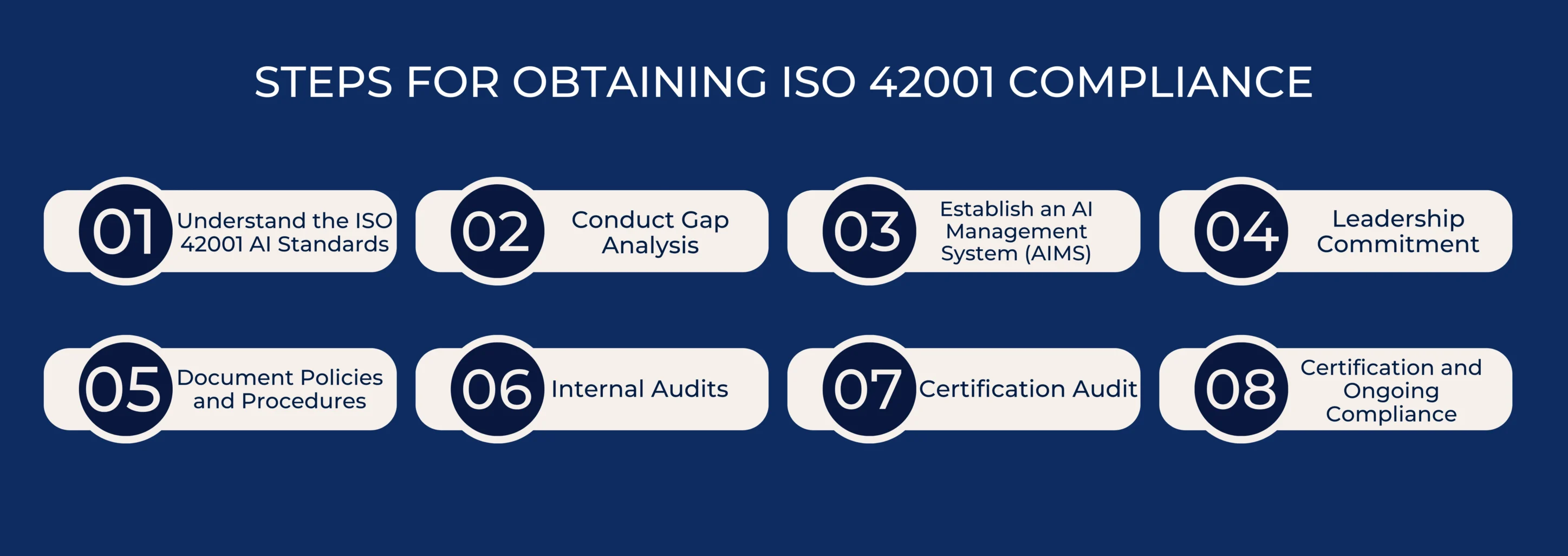
- ✓Stage 1: Documentation Review and Scope Determination
- ✓Stage 2: On-Site Conformance Audit
- ✓Certification Decision and Issuance
- ✓Surveillance Audits and Recertification
Steps to Achieve ISO 42001 Certification in George Town
Organizations pursuing ISO 42001 Certification in George Town must progress through a structured sequence of preparatory and audit activities before certification can be issued. Each step builds upon the preceding one, establishing the organizational foundations required for a credible and defensible AIMS. The following steps describe the certification pathway as structured by CertPro’s ISO 42001 audit program, from initial scope definition through certificate issuance and ongoing maintenance.
- Conduct a comprehensive inventory of all AI systems deployed within the organization, documenting their purpose, data inputs, decision outputs, and affected stakeholders to establish the factual basis for AIMS scope definition.
- Define the AIMS scope formally, identifying the organizational units, geographic locations, AI applications, and business processes included within the certification boundary.
- Establish the AI governance structure, including the AI policy, assigned roles and responsibilities, and the accountability framework required by ISO/IEC 42001:2023.
- Develop and execute the AI risk assessment process, identifying AI-specific risks across all in-scope systems and documenting risk treatment decisions with assigned ownership.
- Complete AI impact evaluations for high-risk AI applications, assessing potential harm to individuals, groups, and communities and documenting mitigation controls.
- Implement and document all applicable Annex A controls, preparing the Statement of Applicability with documented justifications for all inclusion and exclusion decisions.
- Establish the internal AIMS audit program and conduct at least one full internal audit cycle to identify conformance gaps before the external certification audit.
- Conduct management review of AIMS performance, ensuring top management has formally assessed the system’s effectiveness and approved any required improvement actions.
- Submit the certification application to CertPro and undergo Stage 1 documentation review to confirm audit readiness.
- Complete the Stage 2 on-site ISO 42001 audit, resolve any nonconformity findings, and receive the formal certification decision and certificate issuance.
The AI system inventory is the foundational document upon which all subsequent AIMS activities depend. A complete and accurate inventory lists every AI application operating within the certification scope—including internally developed AI systems, commercially licensed AI tools, AI features embedded in enterprise software platforms, and AI services accessed through application programming interfaces (APIs). For each AI system, the inventory must document the system’s intended purpose, the data categories it processes, the decisions or recommendations it generates, the business processes it supports, and the human roles involved in overseeing its operation. George Town organizations frequently discover during inventory compilation that their AI footprint is broader than initially anticipated, particularly where AI features are embedded in standard business software such as CRM platforms, financial systems, or HR management tools.
The AI policy is the highest-level governance document in the AIMS and must be approved by top management before any other AIMS elements can be formally established. A conformant AI policy under ISO/IEC 42001:2023 must articulate the organization’s commitments to responsible AI use, define the boundaries of acceptable AI applications, reference the organization’s obligations under applicable laws and regulations—including Malaysia’s PDPA and sector-specific frameworks—and provide a framework within which AI-specific objectives can be set. The policy must be sufficiently specific to guide operational decisions while remaining flexible enough to accommodate the organization’s evolving AI landscape over the three-year certification cycle.
The governance structure established in conjunction with the AI policy must assign clear responsibility for each AIMS function. Most organizations designate an AI governance committee or a named AI risk officer with defined authority over AI deployment decisions, risk acceptance, and incident escalation. These governance roles must be integrated with existing enterprise risk management and information security governance structures to avoid fragmentation of oversight responsibilities. CertPro auditors assess the effectiveness of the governance structure during the ISO 42001 audit by examining meeting records, decision documentation, and evidence that the governance committee actively reviews AI system performance rather than simply existing on paper.
- ✓Building the AI System Inventory
- ✓Establishing the AI Policy and Governance Structure
ISO 42001 Certification Cost in George Town
The cost of ISO 42001 Certification in George Town is determined by multiple factors that vary between organizations. CertPro applies a structured fee methodology that reflects the complexity of the certification audit program rather than applying uniform pricing across all engagements. Organizations with clearly defined AIMS scope, mature documentation, and limited AI system portfolios will typically incur lower audit fees than organizations with complex, multi-system AI environments, multiple business units within scope, or novel AI applications that require extended technical assessment time. The following factors are the primary determinants of ISO 42001 certification cost for George Town organizations.
Primary Cost Determinants
Organization size, measured by employee headcount within the AIMS scope, is a primary audit fee determinant. Larger organizations require more audit days to adequately sample evidence across business units, interview sufficient personnel, and test controls across a representative portion of the AI system portfolio. The number of distinct AI systems within the certification scope is an equally significant factor; each AI system requires dedicated audit attention to assess risk controls, data governance, and human oversight mechanisms. Organizations operating proprietary AI systems developed in-house typically require more extensive technical audit work than those using standard commercial AI tools, as proprietary systems present greater variability in their governance documentation and control structures.
Geographic distribution of AI operations within the certification scope also affects audit cost. George Town organizations whose AIMS scope includes AI operations at multiple locations—whether within Penang or across Malaysia—require additional audit days or supplementary remote audit procedures to assess control consistency across sites. Industry sector complexity is a further consideration; organizations in regulated sectors such as financial services, healthcare, or critical infrastructure typically require auditors with specific sector expertise, which may affect audit team composition and associated fees. CertPro provides formal fee proposals following an initial scope discussion, ensuring organizations have cost certainty before committing to the ISO 42001 Certification program.
Cost Components of the Certification Program
The total cost of ISO 42001 Certification for George Town companies encompasses several distinct components across the three-year certification cycle. The initial certification audit fee covers Stage 1 documentation review and Stage 2 on-site conformance assessment. Annual surveillance audit fees are charged in years one and two of the certification cycle and are generally lower than the initial certification audit fee due to their narrower scope. Recertification audit fees in year three are comparable to the initial certification audit. Organizations should also budget for internal resource allocation—including the time of personnel involved in audit preparation, evidence collection, and management review activities—which represents a significant indirect cost that varies with organizational readiness.
| Cost Component | Description | Frequency |
|---|---|---|
| Stage 1 Audit Fee | Documentation review and scope determination | Once at certification initiation |
| Stage 2 Audit Fee | On-site conformance assessment | Once at initial certification |
| Surveillance Audit Fee | Annual continued conformance review | Annually in years 1 and 2 |
| Recertification Audit Fee | Full reassessment at 3-year cycle renewal | Every 3 years |
| Internal Resource Cost | Personnel time for audit preparation and AIMS maintenance | Ongoing throughout certification cycle |
Benefits of ISO 42001 Certification for George Town Enterprises
ISO 42001 Certification in George Town delivers structured, measurable benefits across organizational risk management, regulatory compliance, market positioning, and operational governance. These benefits are not speculative outcomes—they are direct consequences of the governance disciplines that certification requires organizations to establish and maintain. The following sections describe the principal benefit categories that certified George Town organizations typically realize across the three-year certification cycle.
ISO 42001 Certification compels organizations to systematically identify and address AI-specific risks that might otherwise remain unrecognized until they manifest as operational failures, regulatory breaches, or customer harm events. The structured risk assessment methodology required by the standard produces a documented risk register that enables management to prioritize resource allocation toward the highest-consequence AI risk areas. Organizations that have completed ISO 42001 Certification typically report improved visibility into their AI risk exposure and greater confidence in the adequacy of their AI control environment. This improved risk posture directly reduces the probability of AI-related incidents that could disrupt operations, attract regulatory sanction, or damage customer relationships.
Operational resilience benefits from ISO 42001 Certification also include improved AI incident management capabilities. The standard requires organizations to establish and test incident management procedures specifically addressing AI system failures, unexpected AI outputs, and AI-related data breaches. Organizations with these procedures in place can respond to AI incidents more rapidly and more systematically than those relying on ad hoc responses—reducing the duration and severity of operational disruptions. The incident management requirements of the ISO 42001 assessment include testing these procedures through structured exercises, ensuring that response capabilities are validated rather than merely documented.
ISO 42001 compliance provides George Town organizations with a structured, internationally recognized framework for satisfying AI-related regulatory obligations. As Malaysia’s regulatory environment continues to evolve in response to AI adoption across the economy, organizations that have already established a conformant AIMS are better positioned to demonstrate compliance with new requirements as they emerge. The documentation and evidence management disciplines required by ISO 42001 also improve organizations’ ability to respond to regulatory inquiries and supervisory examinations with organized, audit-ready evidence packages rather than ad hoc document searches.
ISO AIMS certification creates tangible market access advantages for George Town organizations competing in domestic and international markets. Enterprise customers across regulated industries increasingly require their AI service providers and technology vendors to demonstrate formal AI governance credentials as a procurement prerequisite. ISO 42001 Certification in George Town satisfies these requirements by providing externally verifiable evidence of AIMS conformance that customers can reference in their own supplier due diligence documentation. This certification-backed assurance is particularly valuable in financial services, healthcare, and public sector procurement contexts where AI governance requirements are most stringent.
- ✓Documented AI risk register providing management visibility into AI-specific risk exposure
- ✓Improved AI incident detection, response, and recovery capabilities
- ✓Structured regulatory compliance framework aligned with Malaysia’s evolving AI governance requirements
- ✓Externally verifiable AI governance credentials supporting enterprise procurement qualification
- ✓Enhanced customer and investor confidence in the organization’s AI operations
- ✓Integration of AI governance with enterprise risk management and information security frameworks
- ✓Clear accountability structures for AI decisions with documented human oversight mechanisms
- ✓Evidence base for board-level reporting on AI risk management and governance effectiveness
- ✓Competitive differentiation in markets where AI governance credentials are emerging requirements
- ✓Foundation for ongoing AIMS improvement through structured performance measurement and management review
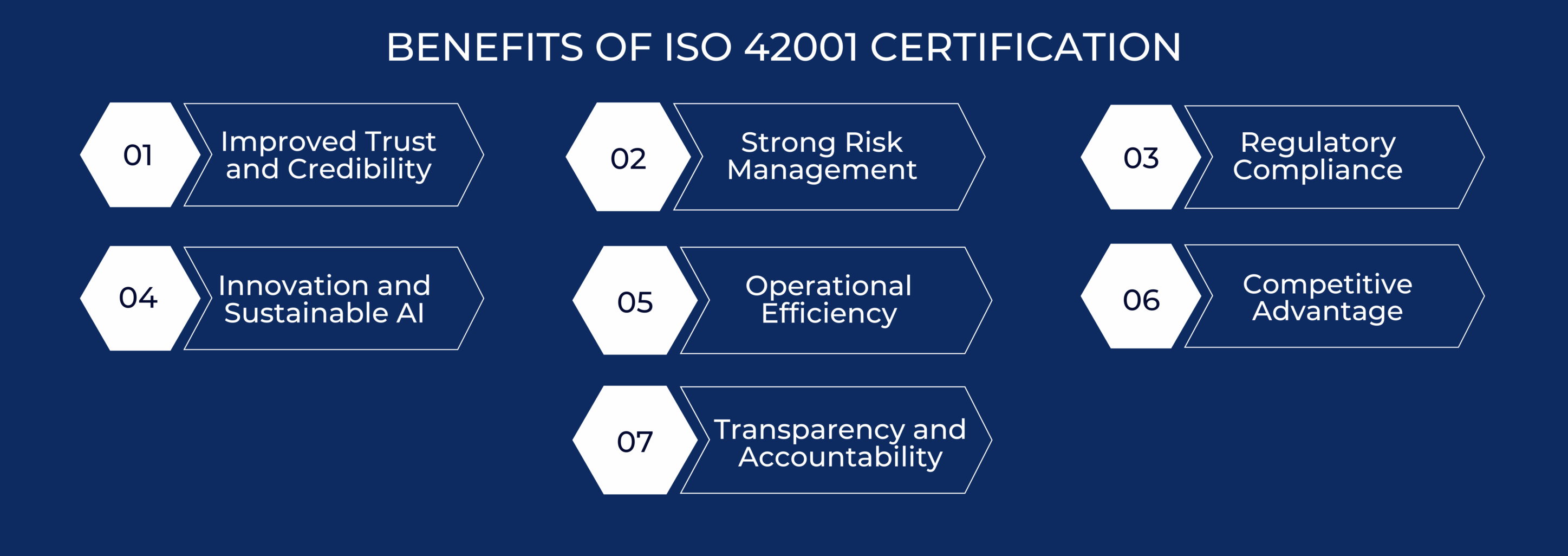
- ✓Risk Management and Operational Resilience
- ✓Regulatory Compliance and Audit Defensibility
- ✓Market Access and Stakeholder Confidence
ISO 42001 Assessment Methodology: How CertPro Evaluates AIMS Conformance
CertPro’s ISO 42001 assessment methodology is designed to evaluate AIMS conformance through rigorous, evidence-based audit procedures that satisfy the requirements of internationally recognized accreditation frameworks. The assessment approach combines document examination, personnel interviews, control testing, and process observation to build a comprehensive picture of the AIMS’s actual operational effectiveness. This multi-method approach ensures that certification decisions are based on substantiated evidence rather than documentary representations alone—providing meaningful assurance to all stakeholders who rely on ISO 42001 Certification as evidence of compliance.
Evidence-Based Audit Procedures
CertPro auditors apply evidence-based audit procedures that examine both the design adequacy and the operating effectiveness of AIMS controls. Design adequacy assessment determines whether the control, as documented and structured, is capable of achieving its intended objective if operated as designed. Operating effectiveness assessment determines whether the control is actually functioning as designed in practice over the audit period. For ISO 42001 audit purposes, operating effectiveness testing typically covers a sample of AI governance activities conducted during the twelve months preceding the audit—including AI risk assessments, management reviews, internal audits, and AI system change management events.
Sampling methodology in the ISO 42001 audit is designed to provide reasonable assurance across the certification scope without requiring exhaustive examination of all AIMS activities. Auditors determine sample sizes based on the population of each evidence category, the assessed risk of control failure, and the materiality of the control to overall AIMS conformance. Organizations with larger and more complex AI portfolios will have larger audit samples applied to high-risk control areas, ensuring that audit coverage is proportionate to the governance complexity of the AIMS. All sampling decisions are documented in the audit working papers and reviewed by the certification committee as part of the certification decision process.
Personnel Interviews and Process Observation
Personnel interviews are a critical component of the ISO 42001 audit process because they enable auditors to assess the depth of organizational understanding of AIMS requirements and the degree to which AI governance practices are embedded in day-to-day operations. CertPro auditors conduct structured interviews with personnel across multiple organizational levels—from senior executives accountable for the AI policy to operational staff who interact with AI systems in their daily work. Interview findings are correlated with documentary evidence to assess consistency and identify areas where documented procedures may not reflect actual practice. Discrepancies between documentary evidence and interview responses are investigated further and may result in nonconformity findings where systematic gaps are identified.
Nonconformity Classification and Corrective Action
The ISO 42001 audit process concludes with the formal classification of all audit findings into nonconformity categories with defined resolution requirements. Major nonconformities represent the absence of a required AIMS element or a systematic failure of a mandatory control that could cause the AI management system to fail to achieve its intended outcomes. Major nonconformities must be closed with documented evidence of root cause analysis and implemented corrective action before certification can be issued. Minor nonconformities represent isolated or partial failures that pose lower risk to overall AIMS effectiveness and may be resolved within a defined timeframe following certification issuance, with verification at the next surveillance audit.
ISO 42001 Certification for the George Town Financial Services Sector
ISO 42001 Certification for George Town financial services organizations represents one of the most significant application areas for the standard within the city’s commercial sector. George Town hosts a substantial financial services ecosystem—including commercial banks, insurance companies, investment firms, payment service providers, and fintech startups—many of which have deployed or are actively developing AI-powered products and services. The intersection of AI governance, financial regulation, and consumer protection creates a complex compliance environment that ISO 42001’s structured AIMS framework is specifically designed to navigate.
AI in Financial Services: Governance Challenges
Financial services organizations in George Town deploy AI across multiple high-stakes functions, including automated credit decisioning, anti-money laundering transaction monitoring, fraud detection, customer onboarding identity verification, investment portfolio optimization, and customer service automation through conversational AI. Each of these applications presents distinct governance challenges that the ISO 42001 AIMS framework addresses through its risk assessment, impact evaluation, and human oversight control requirements. Credit decisioning AI, for example, must be governed to prevent discriminatory lending outcomes, maintain explainability for regulatory and customer-facing purposes, and detect model drift that could systematically disadvantage borrower populations.
Bank Negara Malaysia’s Risk Management in Technology (RMiT) policy document imposes specific technology risk management obligations on licensed financial institutions—including requirements for algorithm and model governance that align closely with ISO 42001 requirements. Financial institutions pursuing ISO 42001 Certification in George Town can demonstrate to Bank Negara Malaysia that their AI governance practices have been independently audited and found conformant with international standards, strengthening their regulatory engagement posture. The documented AIMS evidence base produced during certification maintenance also supports financial institutions in responding to regulatory examination requests related to AI system governance.
Fintech and AI Innovation Under ISO 42001
George Town’s growing fintech sector presents particular ISO 42001 relevance because fintech companies frequently develop novel AI applications that operate at the frontier of regulatory definition. Fintech organizations that achieve ISO 42001 Certification in George Town demonstrate to potential partners, investors, and regulatory bodies that their AI governance frameworks meet internationally recognized standards—even where specific regulatory requirements have not yet been codified. This forward-looking governance positioning is increasingly recognized as a marker of institutional maturity by enterprise customers and capital providers who evaluate fintech partners on their governance and compliance infrastructure as well as their technical capabilities.
ISO 42001 Alignment with Global AI Regulations and Frameworks
ISO/IEC 42001:2023 was developed with explicit attention to the international regulatory landscape for AI governance and is designed to be compatible with major AI regulatory frameworks across jurisdictions. This regulatory alignment is particularly valuable for George Town organizations that operate across international markets or serve multinational enterprise customers subject to AI regulations in multiple jurisdictions. Understanding how ISO 42001 maps to key global regulatory frameworks enables organizations to leverage their AIMS investment across multiple compliance obligations efficiently.
Alignment with the EU AI Act
The European Union’s AI Act, which entered into force in August 2024 and is being implemented on a phased basis through 2027, establishes risk-based requirements for AI systems deployed in the EU market. High-risk AI systems under the EU AI Act must implement specific technical and governance measures—including risk management systems, data governance practices, transparency documentation, human oversight mechanisms, and post-market monitoring procedures. ISO/IEC 42001:2023’s AIMS framework addresses each of these requirement areas, and ISO 42001 Certification is widely recognized as a foundational governance framework for organizations seeking to demonstrate alignment with EU AI Act obligations. George Town organizations exporting AI-powered products or services to EU markets benefit directly from this regulatory alignment.
The EU AI Act also references harmonized standards as a basis for demonstrating conformity with its requirements, and ISO/IEC 42001:2023 is positioned as a candidate harmonized standard that may provide presumption of conformity for specific EU AI Act obligations. While formal harmonization designation is subject to ongoing EU legislative processes, organizations that achieve ISO 42001 Certification in George Town are well-positioned to leverage their certification documentation as evidence of EU AI Act alignment as the harmonization framework develops. This prospective regulatory value reinforces the strategic importance of early ISO 42001 Certification for export-oriented George Town organizations.
Alignment with NIST AI Risk Management Framework
The United States National Institute of Standards and Technology (NIST) AI Risk Management Framework (AI RMF), published in January 2023, provides a voluntary framework for managing AI risks organized around four core functions: Govern, Map, Measure, and Manage. The ISO 42001 AIMS framework maps closely to the NIST AI RMF’s structural architecture, with ISO 42001’s governance, risk assessment, control implementation, and performance evaluation requirements corresponding to the AI RMF’s four functions respectively. George Town organizations that serve North American enterprise customers or operate within multinational corporate structures subject to NIST AI RMF guidance can demonstrate alignment with both frameworks through their ISO 42001 Certification documentation.
Why Choose CertPro for ISO 42001 Certification in George Town
CertPro is a Licensed CPA Firm providing independent third-party ISO 42001 audit and certification services to organizations across George Town, Penang, and Malaysia. CertPro’s institutional positioning as a Licensed CPA Firm distinguishes its certification services from advisory, consulting, or implementation providers and ensures that the independence requirements of internationally recognized accreditation frameworks are maintained throughout the certification process. The following attributes characterize CertPro’s ISO 42001 Certification program for George Town organizations.
Independent Third-Party Audit Authority
CertPro’s certification services are conducted exclusively as independent third-party audits, maintaining complete separation between audit and advisory functions. This independence is a fundamental requirement for credible certification under ISO/IEC 42001:2023 and is enforced through CertPro’s internal impartiality management procedures, conflict of interest policies, and accreditation obligations. ISO 42001 certificates issued by CertPro carry institutional authority because they are the product of independent assessment by qualified audit professionals operating under structured quality management procedures—not self-declarations or advisory-led assessments.
CertPro’s audit teams for ISO 42001 Certification in George Town include lead auditors with expertise in AI governance, information technology risk management, management system auditing, and the regulatory environment applicable to Malaysian enterprises. Audit team composition is determined based on the organization’s sector, AIMS scope complexity, and the technical characteristics of the AI systems within the certification boundary. This expertise-matched approach to audit team formation ensures that technical assessments of AI governance controls are conducted by auditors with the competency to evaluate AI-specific risks and control measures accurately.
Structured Audit Methodology and Quality Assurance
CertPro applies a structured audit methodology governed by internal quality management procedures that specify audit planning requirements, evidence collection standards, nonconformity classification criteria, and certification decision protocols. All audit activities are documented in standardized working papers subject to internal quality review before audit reports are issued and certification decisions are made. This quality assurance framework ensures consistency of ISO 42001 assessment across all George Town certification engagements and provides the evidentiary basis for accreditation oversight activities. Organizations that receive ISO 42001 Certification from CertPro can be confident that the certification reflects a rigorous, documented assessment rather than a perfunctory review.
Local Knowledge and International Standards
CertPro combines deep knowledge of George Town’s business environment, Malaysia’s regulatory landscape, and Penang’s technology and manufacturing sector characteristics with adherence to internationally recognized certification standards and methodologies. This combination of local knowledge and international standards expertise ensures that ISO 42001 audit assessments are contextually relevant to the specific risk environment of George Town organizations while remaining fully aligned with the global requirements of ISO/IEC 42001:2023. CertPro’s familiarity with the regulatory frameworks applicable to George Town enterprises—including Bank Negara Malaysia guidelines, the PDPA, and MDEC’s digital governance frameworks—enables auditors to assess AIMS compliance with contextual awareness that purely international certification bodies may lack.
Secure ISO 42001 Certification in George Town with CertPro
ISO 42001 Certification in George Town is a strategic governance investment that positions organizations to operate AI systems responsibly, satisfy evolving regulatory requirements, and demonstrate to customers, partners, and regulators that their AI management practices have been independently verified against internationally recognized standards. CertPro, as a Licensed CPA Firm, conducts ISO 42001 audits with the institutional rigor, technical expertise, and methodological consistency required to issue certification credentials that carry genuine assurance value in both domestic and international markets.
George Town organizations across all sectors—from financial services and healthcare to technology and manufacturing—operate in an AI environment that is becoming increasingly complex, regulated, and scrutinized by enterprise customers and regulatory bodies alike. ISO 42001 Certification in George Town provides the structured governance framework and independently verified compliance evidence that these organizations need to navigate this environment with confidence. CertPro’s ISO 42001 audit program is designed to assess AIMS conformance comprehensively, communicate findings clearly, and issue certification decisions that reflect the actual state of the organization’s AI governance posture. Organizations seeking to establish or verify ISO 42001 compliance in George Town are encouraged to contact CertPro’s certification team to initiate a formal scope discussion and audit program determination.
FAQ
▶
What is ISO 42001 Certification?
▶
Who needs ISO 42001 Certification in George Town?
▶
How long does the ISO 42001 audit process take?
▶
What is the difference between ISO 42001 certification and ISO 42001 compliance?
▶
What does the ISO 42001 audit examine?
▶
How does ISO 42001 relate to ISO 27001 for George Town organizations?
▶
What is ISO AIMS certification?
▶
How often must ISO 42001 surveillance audits be conducted?
ISO 42001 CERTIFIED: WHY AI GOVERNANCE CERTIFICATION IS BECOMING A BOARD-LEVEL REQUIREMENT
AI is now an inevitable component of major business activities in the current corporate world. To elaborate, it is now part of product design, custome…

MindSec Launches AI Compliance for Law 25 & ISO 42001
Excerpt from Barchart Article, Published on December 3, 2025 Today, Canadian organizations face increasing pressure to comply with stringent privacy a…

UNDERSTANDING ISO 42001: A GUIDE FOR RESPONSIBLE AI MANAGEMENT SYSTEMS
The invention of artificial intelligence (AI) has changed the operational processes of many industries. However, the rapid growth of technology increa…
Get In Touch
have a question? let us get back to you.