
ISO 42001 Certification in Wellington
ISO 42001 Certification in Wellington is delivered by CertPro, a Licensed CPA firm and independent third-party audit and certification body. CertPro conducts structured ISO 42001 assessments against the ISO/IEC 42001:2023 standard, evaluating AI Management System (AIMS) conformance for organizations operating across Wellington’s government, technology, financial services, and research sectors. Whether your organization is pursuing initial ISO 42001 certification or maintaining an existing AIMS, CertPro provides authoritative, impartial evaluation tailored to Wellington’s unique regulatory and commercial environment.
OUR CLIENTS








What Is ISO 42001?
ISO 42001 is the international standard for Artificial Intelligence Management Systems (AIMS), published by the International Organization for Standardization (ISO) and the International Electrotechnical Commission (IEC) as ISO/IEC 42001:2023. It is the first internationally recognized standard dedicated exclusively to the governance of AI systems. The standard provides a structured framework through which organizations can establish, implement, maintain, and continually improve their approach to AI development, deployment, and procurement. ISO 42001 Certification formally recognizes that an organization’s AIMS conforms to the requirements set out in the standard — offering independent, third-party verified proof of responsible AI governance.
Definition and Origin of ISO 42001
ISO/IEC 42001:2023 was developed by ISO/IEC Joint Technical Committee 1, Subcommittee 42 (JTC 1/SC 42), which specializes in artificial intelligence. The standard was formally published in December 2023 and represents a global consensus on responsible AI governance. Its development drew on contributions from national standards bodies, industry experts, academic researchers, and government representatives across more than 50 countries. ISO 42001 adopts the High-Level Structure (HLS) common to all modern ISO management system standards, making it directly compatible with ISO 9001 (quality management), ISO 27001 (information security management), and ISO 14001 (environmental management) — a key advantage for organizations pursuing integrated governance.
The standard applies to any organization — regardless of size, sector, or geographic location — that develops, provides, or uses AI systems. This broad applicability means that a Wellington-based government agency deploying AI-driven policy tools, a fintech company using machine learning for credit scoring, or a healthcare organization utilizing AI diagnostics can all pursue ISO 42001 Certification in Wellington. The standard does not prescribe specific AI technologies or outcomes. Instead, it establishes governance requirements that organizations must demonstrate through documented evidence and independent audit — making ISO 42001 compliance both measurable and verifiable.
Key Definitions Within ISO 42001
Understanding ISO 42001 requires familiarity with several foundational terms. An AI Management System (AIMS) is the set of interrelated or interacting elements of an organization used to establish AI-related policies, objectives, and processes to achieve those objectives. An AI policy is a formal statement of an organization’s intentions and direction with respect to AI, as expressed by top management. AI risk refers to the effect of uncertainty on AI-related objectives, encompassing both the probability and consequence of adverse events arising from AI system behavior. AI objectives are measurable results that the organization aims to achieve through its AIMS, consistent with its AI policy. Continual improvement is the recurring activity to enhance AI management system performance — a foundational requirement that distinguishes certified organizations from those with static, undocumented AI governance practices.
The AIMS framework also introduces concepts such as AI system impact assessment, which requires organizations to evaluate the potential effects of their AI systems on individuals, groups, and society. Interested parties are persons or organizations that can affect, be affected by, or perceive themselves to be affected by AI-related decisions. In Wellington’s context, this category encompasses regulatory bodies such as the Office of the Privacy Commissioner, central government agencies, and end users of AI-powered public services. These definitions establish the vocabulary through which ISO 42001 compliance is evaluated during an independent ISO 42001 audit.
The AIMS Framework Concept
The AIMS framework established by ISO 42001 is built on the Plan-Do-Check-Act (PDCA) cycle — a systematic approach to management system operation that drives ongoing improvement. In the Plan phase, organizations define the scope of their AIMS, establish AI policies, assess risks, and set objectives. In the Do phase, organizations implement the processes and controls identified during planning. The Check phase involves monitoring, measurement, analysis, and evaluation of AI system performance against defined criteria. The Act phase addresses nonconformities and drives continual improvement based on audit findings and performance data. This cyclical structure ensures that ISO AIMS certification is not a one-time achievement but an ongoing demonstration of governance maturity.
Why ISO 42001 Certification Matters in Wellington
Wellington is New Zealand’s capital city and the national centre of government administration, public policy, and regulatory oversight. As New Zealand’s political and institutional hub, Wellington hosts the majority of central government agencies — including the Department of Internal Affairs, the Ministry of Business, Innovation and Employment, and Statistics New Zealand — all of which are actively integrating AI and data analytics into public service delivery. ISO 42001 Certification in Wellington is therefore directly relevant to the accountability expectations placed on public sector entities responsible for consequential AI-driven decisions affecting New Zealand citizens.
Wellington’s Regulatory and Policy Environment
New Zealand’s Privacy Act 2020 imposes binding obligations on organizations that collect, store, process, and use personal information — including data processed by AI systems. The Office of the Privacy Commissioner has issued guidance on automated decision-making and algorithmic tools, signaling increasing regulatory scrutiny of AI applications that affect privacy rights. ISO 42001 compliance directly supports conformance with the Privacy Act 2020 by requiring organizations to document AI system data flows, establish accountability structures, conduct impact assessments, and implement controls that protect individuals from harmful AI-driven outcomes.
The New Zealand government’s Algorithm Charter for Aotearoa New Zealand, which commits government agencies to transparent and accountable use of algorithms, further reinforces the value of ISO 42001 Certification for Wellington’s public sector organizations. Certification provides independent, third-party verification that an organization’s AI governance practices align with both the Algorithm Charter commitments and the Privacy Act’s requirements. This dual accountability demonstration carries significant weight in Wellington’s regulatory environment. Organizations that complete an ISO 42001 assessment in Wellington can reference their certified AIMS as evidence of compliance with applicable New Zealand governance expectations.
Wellington’s Technology and Innovation Ecosystem
Beyond government, Wellington hosts a growing ecosystem of technology companies, SaaS platforms, AI research institutions, and fintech organizations. Victoria University of Wellington’s AI research programs, Callaghan Innovation’s technology support activities, and a cluster of digital-native companies operating from the Wellington CBD collectively represent a significant concentration of AI development activity. For these organizations, ISO 42001 Certification in Wellington serves as a market differentiator — a formal, internationally recognized attestation that their AI systems are governed responsibly. This makes certified organizations more attractive to enterprise clients, international partners, and public sector procurement panels.
Wellington’s financial services sector — including insurance companies, investment managers, and an expanding fintech community — faces particular scrutiny over AI applications in credit assessment, fraud detection, and automated customer interactions. ISO 42001 compliance in Wellington serves as evidence of governance rigor for these organizations, supporting their relationships with the Financial Markets Authority (FMA) and the Reserve Bank of New Zealand (RBNZ). Both regulators have signaled interest in AI governance standards as part of their supervisory frameworks. Wellington-based financial services firms pursuing ISO 42001 Certification position themselves proactively ahead of anticipated formal AI-specific regulation.
Smart City and Digital Infrastructure Development
Wellington City Council’s smart city initiatives involve the deployment of AI-enabled infrastructure management, transport optimization, and citizen service tools. These public-facing AI applications operate in a context of heightened community expectations regarding transparency, fairness, and accountability. ISO 42001 audit processes evaluate whether organizations have established the governance structures necessary to meet these expectations — including AI system documentation, bias assessment procedures, human oversight mechanisms, and incident response protocols. For Wellington’s smart city programs, achieving ISO AIMS certification provides a credible, verifiable foundation for public trust in government AI deployments.
ISO 42001 AI Management System (AIMS) Framework
The ISO 42001 AI Management System framework provides a comprehensive structure for governing AI across an organization’s full lifecycle of AI activities. It consists of ten clauses, with Clauses 4 through 10 containing auditable requirements, and two normative annexes providing additional guidance on AI system impact assessment and organizational objectives, policies, and processes for responsible AI. Understanding the AIMS framework is essential for any Wellington organization preparing for an ISO 42001 assessment or pursuing initial ISO 42001 Certification.
Context of the Organization (Clause 4)
Clause 4 of ISO 42001 requires organizations to determine the internal and external factors relevant to their AI activities and that affect the AIMS’s ability to achieve its intended outcomes. For Wellington organizations, this includes understanding the regulatory landscape (Privacy Act 2020, Algorithm Charter), the competitive environment, stakeholder expectations, and the specific AI technologies deployed. Organizations must define the scope of their AIMS — specifying which AI systems, business units, processes, and geographic locations are covered — and maintain this scope as documented information. Scope definition is one of the first areas examined during an ISO 42001 audit.
Interested parties — including customers, regulators, employees, and affected communities — must be identified along with their relevant AI-related requirements. In Wellington’s government context, interested parties include Parliament, the Office of the Privacy Commissioner, service users, and civil society organizations. The organization must determine which of these requirements are addressed through the AIMS. This establishes clear boundaries for what the ISO AIMS certification covers and ensures that the AIMS scope reflects the actual risk profile of the organization’s AI activities.
Leadership and AI Policy (Clause 5)
Clause 5 establishes that top management must demonstrate leadership and commitment to the AIMS. This includes establishing an AI policy that is appropriate to the organization’s purpose, provides a framework for setting AI objectives, includes commitments to satisfying applicable requirements, and commits to continual improvement of the AIMS. The AI policy must be documented, communicated within the organization, and available to interested parties as appropriate. During an ISO 42001 audit, auditors evaluate whether the AI policy is substantive — not merely aspirational — and whether top management demonstrably supports its implementation across the organization.
Risk and Opportunity Management (Clause 6)
Clause 6 requires organizations to plan for the AIMS by addressing risks and opportunities associated with their AI systems. This involves conducting an AI system impact assessment — a systematic evaluation of the potential consequences of an AI system on individuals, groups, and society — as well as a risk treatment process that identifies appropriate controls. AI objectives must be established, documented, and measurable, with clear plans for how they will be achieved, by whom, and by when. This clause is particularly significant for Wellington’s financial services sector, where AI systems used in lending, insurance underwriting, or investment recommendations carry direct impacts on individuals’ financial wellbeing and must be assessed for bias, accuracy, and explainability.
Operations, Evaluation, and Improvement (Clauses 8–10)
Clauses 8, 9, and 10 govern the operational execution, performance evaluation, and improvement activities of the AIMS. Clause 8 requires organizations to plan, implement, and control the processes needed to meet AI governance requirements — including documented procedures for AI system development, testing, deployment, and decommissioning. Clause 9 mandates monitoring, measurement, analysis, and evaluation of the AIMS, including internal audits and management reviews, to confirm the system is operating effectively. Clause 10 addresses nonconformity and corrective action, requiring organizations to respond to identified failures, investigate root causes, and implement lasting corrections. These three clauses form the basis of much of the evidence reviewed during an ISO 42001 audit for Wellington engagements.
ISO 42001 Certification Requirements
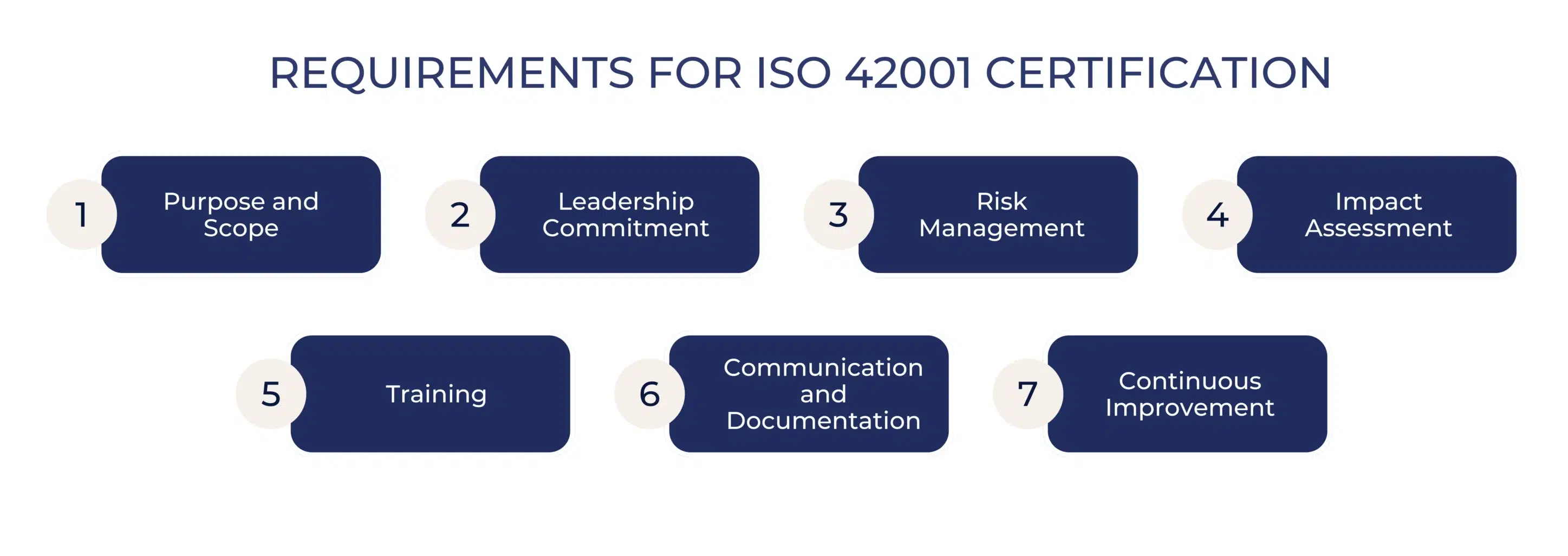
ISO 42001 certification requires organizations to demonstrate documented, operational conformance with the standard’s requirements across all clauses within the defined AIMS scope. The requirements are evidence-based: organizations must produce documented information showing that governance structures, processes, assessments, and controls are not only designed but actively implemented and maintained. The following requirements represent the core areas evaluated during an ISO 42001 assessment in Wellington.
ISO 42001 requires organizations to maintain a defined set of documented information. This includes the AIMS scope document, the AI policy, AI objectives and plans for achieving them, AI risk assessments and treatment plans, AI system impact assessments, internal audit results, management review records, and evidence of corrective actions. Documentation must be controlled — properly authorized, version-managed, distributed appropriately, and retained for defined periods. The completeness and quality of an organization’s documentation is one of the most direct indicators of AIMS maturity and is thoroughly reviewed during Stage 1 of the ISO 42001 certification audit.
For Wellington organizations operating across multiple departments or locations — such as a central government agency with offices in Wellington, Auckland, and Christchurch — documentation requirements extend to ensuring that the AIMS scope clearly delineates which AI systems and locations are covered. Documented procedures must also be accessible to all relevant personnel within scope. Where AI systems are provided by third-party vendors or cloud service providers, organizations must document how supplier AI governance is managed and what contractual or technical controls maintain ISO 42001 compliance within the supply chain.
Technical requirements under ISO 42001 focus on the governance of AI systems throughout their lifecycle. Organizations must establish processes for AI system design, development, testing, validation, deployment, monitoring, and decommissioning. Validation processes must confirm that AI systems perform as intended, with performance evaluated against defined criteria — including accuracy, fairness, robustness, and transparency metrics where applicable. Human oversight mechanisms must be documented and operational, ensuring that AI-driven decisions can be reviewed, challenged, and overridden by qualified personnel where required.
Organizations must also establish competence requirements for personnel involved in AI system development, deployment, and governance. This includes identifying the specific knowledge, skills, and experience required for each AI-related role, verifying that current personnel meet these requirements, and maintaining records of training and qualification. For Wellington organizations in healthcare or financial services — where AI system errors carry significant consequences — demonstrating documented competence management is a critical ISO 42001 audit requirement.
Annex A of ISO 42001 specifies requirements related to AI system impact assessment — a formal evaluation of the potential effects of an AI system on individuals, communities, and broader society. Organizations must conduct impact assessments before deploying AI systems and must document the methodology, findings, and decisions made in response to identified impacts. Where an AI system poses elevated risks — such as an AI tool used in government benefits eligibility determination or in clinical decision support — impact assessments must be more rigorous and must specifically address potential harms to vulnerable populations. This requirement is a central focus of ISO 42001 compliance for Wellington’s public sector and healthcare organizations.
- ✓Defined and documented AIMS scope covering all relevant AI systems and organizational units
- ✓Established AI policy signed and communicated by top management
- ✓Completed AI risk assessments with documented treatment plans and residual risk acceptance
- ✓AI system impact assessments for each system within scope, with documented findings
- ✓Measurable AI objectives with documented achievement plans, owners, and timelines
- ✓Operational procedures for AI system development, validation, deployment, and monitoring
- ✓Documented competence requirements and records for all AI-related personnel
- ✓Internal audit program with completed audits and documented nonconformities
- ✓Management review records demonstrating top management engagement with AIMS performance
- ✓Corrective action records addressing identified nonconformities with verified effectiveness
- ✓Documentation Requirements
- ✓Technical and Operational Requirements
- ✓AI System Impact Assessment Requirements
The ISO 42001 Certification Process at CertPro
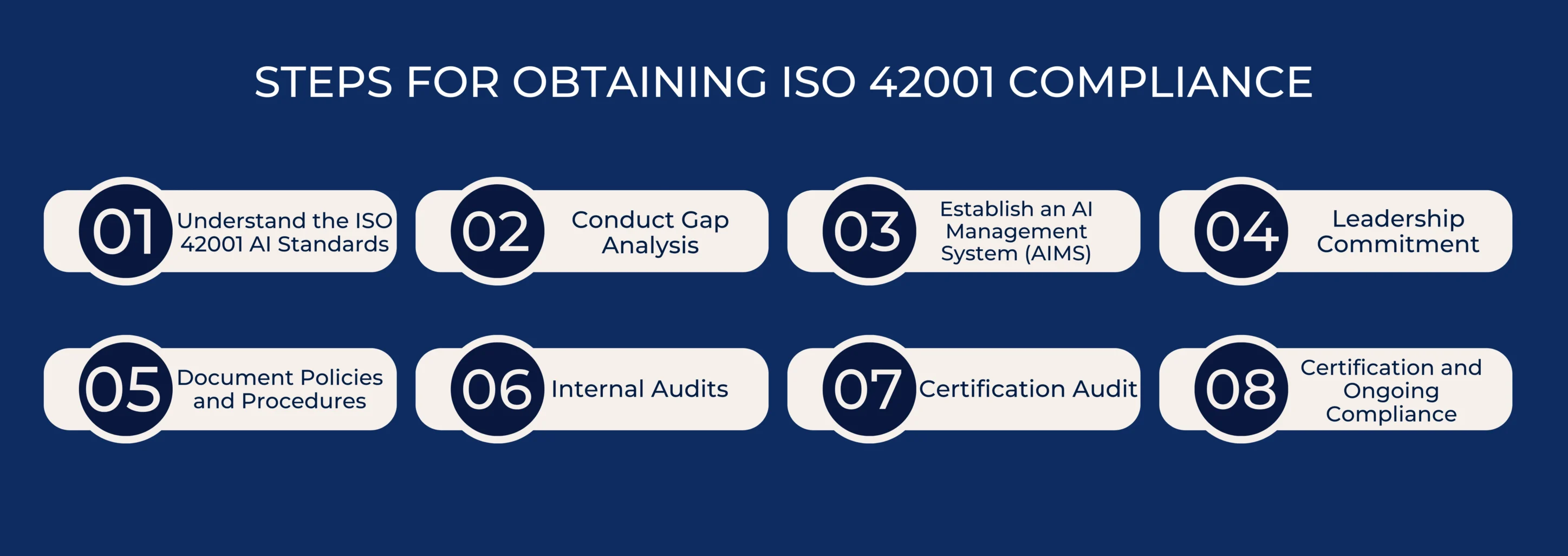
CertPro conducts ISO 42001 certification through a structured, multi-stage audit process that evaluates AIMS conformance against all applicable requirements of ISO/IEC 42001:2023. As a Licensed CPA firm and independent third-party certification body, CertPro’s ISO 42001 assessment process is designed to provide authoritative, impartial evaluation — not implementation support or consulting services. The following stages define the ISO 42001 certification process as conducted by CertPro for organizations seeking ISO 42001 Certification in Wellington.
The certification process begins with the organization submitting a formal application to CertPro, accompanied by documentation defining the proposed AIMS scope. During Stage 1, CertPro’s audit team reviews the organization’s AIMS documentation to assess its completeness and readiness for a full conformance audit. The Stage 1 ISO 42001 audit evaluates the documented AIMS scope, the AI policy, the AI risk assessment and impact assessment outputs, and the organization’s understanding of the ISO 42001 requirements. Stage 1 is conducted primarily as a documentation review, and findings are communicated in a formal Stage 1 report that identifies any significant gaps that would prevent a successful Stage 2 audit.
The Stage 1 audit also confirms that the proposed certification scope accurately reflects the AI systems and organizational boundaries for which certification is sought. Where the scope is found to be unclear, incomplete, or inconsistent with the actual AI activities of the organization, CertPro will document this as a finding requiring resolution before the Stage 2 audit proceeds. This stage typically takes two to four weeks for Wellington organizations, depending on the complexity of the AIMS and the volume of documented information under review.
The Stage 2 audit is the primary conformance evaluation, conducted at the organization’s Wellington premises and any additional locations within the certification scope. CertPro auditors evaluate the implementation and operational effectiveness of the AIMS against all auditable requirements of ISO/IEC 42001:2023. This involves reviewing documented information, interviewing personnel at multiple organizational levels — from top management to AI system operators — and observing AI governance processes in operation. Evidence is collected across all AIMS clauses, with particular attention to the linkage between documented procedures and actual operational practice.
During the Stage 2 ISO 42001 audit, CertPro evaluates the effectiveness of AI risk and impact assessment processes, the operational integrity of AI system controls, the functioning of the internal audit program, the outcomes of management reviews, and the organization’s corrective action history. Any nonconformities identified during Stage 2 — classified as either major (where a requirement is not met) or minor (where a requirement is partially met) — are documented in the audit report. Major nonconformities must be resolved and verified before ISO 42001 Certification can be issued; minor nonconformities require a corrective action plan with an agreed timeline.
Following the Stage 2 audit, CertPro’s certification committee conducts an independent review of the audit findings to make the certification decision. This review is performed by a qualified reviewer who was not part of the audit team, ensuring impartiality. Where the audit team’s findings support certification, the committee approves the issuance of the ISO 42001 certificate. The certificate documents the organization’s name, the certified AIMS scope, the applicable standard (ISO/IEC 42001:2023), the certification date, and the validity period. ISO 42001 certificates are valid for three years, subject to successful surveillance audits.
ISO 42001 certification requires annual surveillance audits during the three-year certification cycle to verify that the AIMS continues to conform to requirements and that the organization maintains continual improvement. Surveillance audits are lighter in scope than the initial certification audit but cover key AIMS elements — including corrective action follow-up, changes to the AI system landscape, and performance against AI objectives. At the end of the three-year cycle, a full recertification audit is conducted, re-evaluating the entire AIMS against ISO/IEC 42001:2023 requirements. Successful recertification extends the ISO AIMS certification for a further three-year period.
| Audit Stage | Description | Typical Duration |
|---|---|---|
| Stage 1 — Documentation Review | Review of AIMS documentation, scope, AI policy, and risk/impact assessment outputs | 2–4 weeks |
| Stage 2 — Conformance Audit | On-site evaluation of AIMS implementation, personnel interviews, and control testing | 1–5 audit days |
| Certification Decision | Independent committee review and issuance of ISO 42001 certificate | 1–2 weeks post-audit |
| Surveillance Audit (Year 1 & 2) | Annual verification of continued AIMS conformance and improvement | 0.5–2 audit days |
| Recertification Audit (Year 3) | Full reassessment of AIMS against ISO/IEC 42001:2023 requirements | 1–3 audit days |
- ✓Stage 1: Scope Definition and Application Review
- ✓Stage 2: On-Site Conformance Audit
- ✓Certification Decision and Issuance
- ✓Surveillance Audits and Recertification
Industries and Organizations in Wellington That Pursue ISO 42001 Certification
ISO 42001 Certification in Wellington is relevant to a wide range of organizations across public, private, and research sectors. Wellington’s unique position as New Zealand’s capital city creates a concentration of AI-active organizations that face both institutional accountability requirements and competitive pressures to demonstrate responsible AI governance. The following sectors represent the primary organizational categories pursuing ISO 42001 assessment and certification in Wellington.
Central Government and Public Sector Agencies
New Zealand’s central government agencies are among the most significant AI users in Wellington, deploying AI systems for welfare benefit assessment, tax compliance analytics, border security, health data analysis, and justice system tools. These agencies are subject to the Algorithm Charter for Aotearoa New Zealand and face direct oversight from the Office of the Privacy Commissioner and the Auditor-General. ISO 42001 Certification provides government agencies with a structured framework for meeting these accountability obligations. It also offers external, independent verification that their AI governance practices conform to internationally recognized standards — a credible response to parliamentary and public scrutiny.
Local government bodies — including Wellington City Council and Greater Wellington Regional Council — are also active in AI deployment for urban management, transportation, environmental monitoring, and citizen services. For these entities, ISO AIMS certification in Wellington provides a governance framework that aligns smart city AI initiatives with transparency and accountability obligations, supporting public trust in council AI programs. The certification demonstrates to Wellington residents that AI systems affecting public services have been independently audited against an established international standard.
Financial Services and Fintech
Wellington’s financial services sector includes banks, insurance companies, investment managers, and a growing cluster of fintech organizations deploying AI for credit risk modelling, fraud detection, customer service automation, and regulatory reporting. Wellington fintech organizations seek ISO 42001 Certification to demonstrate to regulators, institutional clients, and partner organizations that their AI governance meets international standards. The Financial Markets Authority and the Reserve Bank of New Zealand have both signaled expectations around responsible AI use, making ISO 42001 compliance a proactive regulatory positioning tool for Wellington-based financial services firms — particularly ahead of formal AI-specific regulation.
Technology Companies, SaaS Platforms, and AI Developers
Wellington’s technology sector includes established software companies, SaaS platform providers, and AI-native startups developing AI products and services for both domestic and international markets. For these organizations, ISO 42001 Certification in Wellington functions as a differentiator in procurement processes — particularly when competing for government contracts or enterprise deals where AI governance credentials are evaluated. International clients and partners increasingly expect AI vendors to demonstrate certified governance, making ISO 42001 Certification both a commercial requirement and a governance best practice.
Healthcare, Research, and Education Institutions
Wellington’s healthcare organizations — including Te Whatu Ora Wellington and affiliated research entities — deploy AI systems in clinical decision support, medical imaging analysis, patient flow management, and population health analytics. The high-stakes nature of healthcare AI, combined with the sensitivity of patient data, makes ISO 42001 compliance a particularly important governance commitment for these organizations. Research institutions such as Victoria University of Wellington, which conduct AI research and may commercialize AI tools, benefit from ISO AIMS certification as a framework for responsible innovation — demonstrating ethical AI governance to research funders, industry partners, and regulatory bodies.
Benefits of ISO 42001 Certification for Wellington Organizations
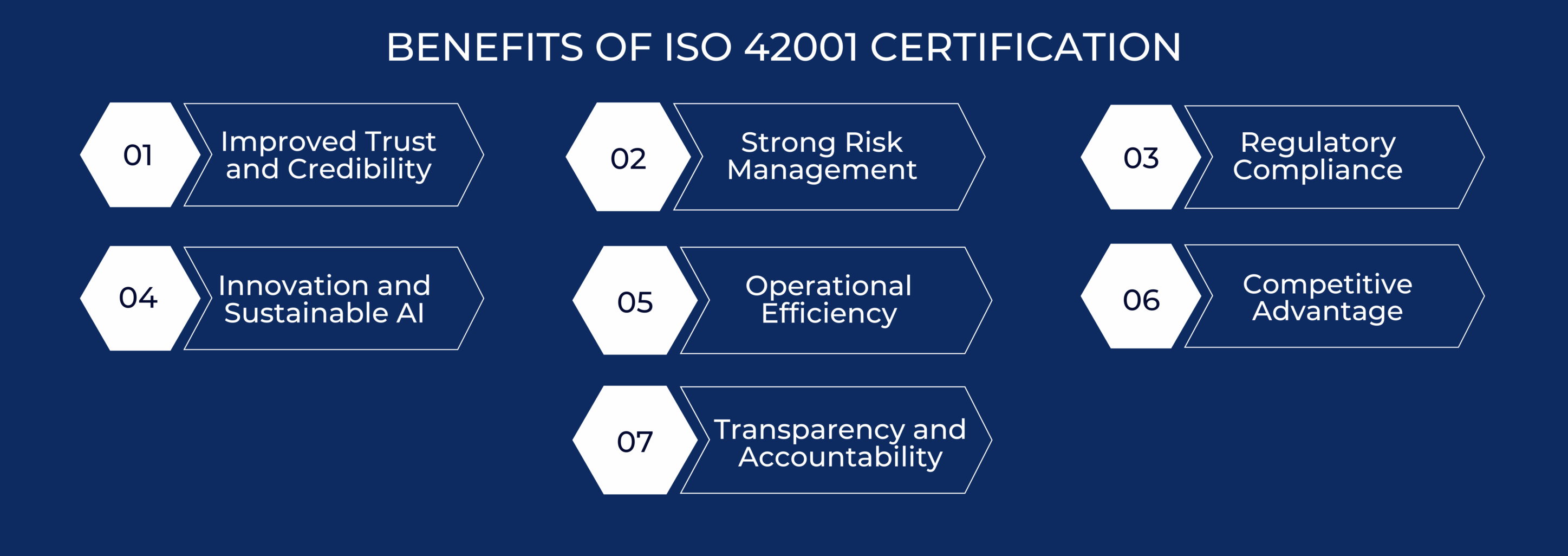
ISO 42001 assessment and certification in Wellington delivers measurable benefits across governance, commercial, regulatory, and operational dimensions. Unlike aspirational AI ethics statements or internal policy documents, ISO 42001 Certification provides third-party verified evidence of AIMS conformance — a credible, internationally recognized attestation that carries weight with regulators, clients, partners, and the public. Organizations that pursue ISO 42001 Certification in Wellington gain a durable competitive and governance advantage in an AI landscape that is becoming increasingly scrutinized.
ISO 42001 Certification provides Wellington organizations with documented evidence of AI governance conformance directly relevant to New Zealand’s Privacy Act 2020, the Algorithm Charter for Aotearoa New Zealand, and emerging AI-specific regulatory expectations. In regulatory investigations, enforcement actions, or audit processes conducted by the Office of the Privacy Commissioner or sector-specific regulators, ISO 42001 certification serves as substantive evidence of an organization’s proactive commitment to responsible AI governance — a factor that can influence regulatory outcomes. For organizations subject to overseas AI regulations — such as the EU AI Act, which applies to AI systems deployed in European markets — ISO 42001 Certification provides a recognized governance foundation that supports compliance with extraterritorial requirements.
Certified organizations gain a demonstrable competitive advantage in procurement processes where AI governance credentials are evaluated. Government procurement panels increasingly assess suppliers’ AI governance practices as part of due diligence, and ISO 42001 Certification provides the clearest possible evidence of conformance. For Wellington technology companies competing for enterprise or international contracts, the certification functions as a trust signal that accelerates procurement decisions and reduces the due diligence burden placed on prospective clients.
Reputational benefits extend beyond procurement to public trust, media reporting, and stakeholder relations. Organizations that hold ISO 42001 Certification in Wellington are better positioned to respond to public or media scrutiny of their AI practices, to attract ethically motivated employees and investors, and to build long-term trust with the communities their AI systems affect. In an environment where AI-related controversies attract significant public attention — particularly in Wellington’s politically engaged capital city context — the reputational value of independent certification is substantial.
The AIMS framework established through ISO 42001 compliance drives operational improvements in AI governance that reduce the risk of costly AI failures, regulatory breaches, and reputational incidents. By requiring systematic AI risk assessment, organizations identify and address AI system vulnerabilities before they result in adverse outcomes. Documented competence requirements reduce the risk of governance failures caused by skill gaps. Internal audit programs provide early warning of AIMS weaknesses, enabling corrective action before issues escalate. Management review processes ensure that senior leadership maintains situational awareness of AI governance performance — a prerequisite for responsible board-level oversight of AI.
- ✓Third-party verified evidence of AI governance conformance for regulatory and procurement purposes
- ✓Alignment with New Zealand’s Privacy Act 2020 obligations and Algorithm Charter commitments
- ✓Competitive advantage in government and enterprise procurement processes requiring AI governance credentials
- ✓Reduced risk of AI system failures through systematic risk assessment and control implementation
- ✓Enhanced public trust in AI-driven services, particularly for government and healthcare organizations
- ✓Foundation for international market access where AI governance certification is required
- ✓Board-level assurance through structured management review and internal audit requirements
- ✓Integration with existing ISO management systems (ISO 27001, ISO 9001) for unified governance efficiency
- ✓Demonstrated commitment to ethical, transparent, and accountable AI — a differentiator in talent attraction
- ✓Proactive positioning ahead of anticipated AI-specific regulatory requirements in New Zealand
- ✓Regulatory and Legal Benefits
- ✓Commercial and Reputational Benefits
- ✓Operational and Governance Benefits
ISO 42001 vs. Other AI and Information Security Standards
ISO 42001 is one of several frameworks and standards relevant to AI governance and information security. Wellington organizations considering an ISO 42001 assessment should understand how it differs from, complements, and integrates with other established standards. The key comparisons are with ISO 27001, the NIST AI Risk Management Framework (AI RMF), the EU AI Act, and sector-specific frameworks.
ISO 42001 vs. ISO 27001
ISO 27001 is the international standard for Information Security Management Systems (ISMS), governing the confidentiality, integrity, and availability of information assets. ISO 42001 is the international standard for AI Management Systems, governing the responsible development, deployment, and use of AI. While both standards address risks associated with digital systems, their scope and focus are distinct. ISO 27001 addresses information security risks across all information assets; ISO 42001 addresses the ethical, social, and operational risks specific to AI systems. Many Wellington organizations hold ISO 27001 certification and are now pursuing ISO 42001 Certification to address the AI-specific governance requirements that ISO 27001 does not cover — including AI system impact assessment, fairness, transparency, and accountability for AI-driven decisions.
Because ISO 42001 shares the High-Level Structure with ISO 27001, organizations that already hold ISO 27001 certification have a significant structural advantage when pursuing ISO 42001. Existing ISMS documentation, internal audit programs, management review processes, and corrective action procedures can be extended and adapted to meet AIMS requirements — reducing the incremental effort and cost of achieving dual certification. CertPro’s ISO 42001 audit process recognizes this integration opportunity and evaluates AIMS conformance in the context of existing management system maturity where applicable.
ISO 42001 vs. NIST AI RMF
The NIST AI Risk Management Framework (AI RMF), published by the U.S. National Institute of Standards and Technology in January 2023, is a voluntary framework for managing AI risks organized around four functions: Govern, Map, Measure, and Manage. Unlike ISO 42001, the NIST AI RMF is not an auditable standard and does not support third-party certification. It provides guidance and a conceptual structure but does not specify requirements against which organizations can be audited and certified. ISO 42001 differs fundamentally in that it establishes auditable requirements, supports independent third-party certification, and produces a recognized certificate that can be cited as evidence of conformance in regulatory, procurement, and contractual contexts. For Wellington organizations that require demonstrable, externally verified AI governance credentials, ISO 42001 Certification provides an authoritative basis that the NIST AI RMF framework alone cannot.
ISO 42001 and the EU AI Act
The EU AI Act, which entered into force in August 2024, establishes binding obligations for AI systems deployed in the European Union, categorized by risk level. While New Zealand organizations are not directly subject to the EU AI Act unless they deploy AI systems in EU markets, many Wellington technology and SaaS companies serve European clients and must consider EU AI Act compliance. ISO 42001 Certification is recognized as a relevant governance framework that supports EU AI Act conformance — particularly for high-risk AI system requirements related to risk management, data governance, transparency, and human oversight. Wellington organizations with EU market exposure benefit from ISO 42001 Certification as a governance foundation that addresses both international and EU AI Act requirements.
| Standard/Framework | Type | Certification Available | Primary Focus |
|---|---|---|---|
| ISO 42001 | International Standard (ISO/IEC) | Yes — third-party certification | AI Management System governance |
| ISO 27001 | International Standard (ISO/IEC) | Yes — third-party certification | Information security management |
| NIST AI RMF | U.S. Government Framework | No — voluntary guidance only | AI risk management guidance |
| EU AI Act | EU Regulation | Conformity assessment (not ISO) | AI system risk classification and compliance |
| NZ Algorithm Charter | NZ Government Commitment | No — self-declaration | Government AI transparency and accountability |
Pricing for ISO 42001 Certification in Wellington
CertPro offers fixed, transparent pricing for ISO 42001 Certification in Wellington, structured to provide cost certainty for organizations of all sizes. Unlike variable fee arrangements where costs escalate with scope changes or extended audit timelines, CertPro’s fixed-fee model ensures that Wellington organizations can budget accurately for the full certification process — from Stage 1 documentation review through to certificate issuance and annual surveillance audits. This pricing clarity is one of the key reasons organizations choose CertPro for their ISO 42001 assessment and certification needs.
Factors That Influence ISO 42001 Certification Cost
The cost of an ISO 42001 assessment and certification in Wellington is determined by several organizational and technical factors. Organization size — measured in terms of number of employees, number of AI systems within scope, and operational complexity — is the primary cost driver, as larger organizations require longer audit durations and more auditor resource. The complexity of the AI systems within the certification scope is also a significant factor. Organizations deploying high-risk or complex AI systems (such as deep learning models in healthcare diagnostics or automated decision-making tools in financial services) require more thorough technical evaluation than those using lower-complexity AI tools.
The maturity of the organization’s existing management systems is another relevant factor. Organizations that hold ISO 27001 or ISO 9001 certification already have functioning internal audit programs, documented management review processes, and corrective action systems — all of which are also required by ISO 42001. These organizations typically require less audit time because the underlying governance infrastructure already exists and only AI-specific requirements need to be assessed incrementally. Conversely, organizations with no prior ISO management system certification may require more comprehensive audit coverage and a longer overall ISO 42001 certification timeline.
CertPro’s Fixed-Fee Pricing Structure
CertPro’s pricing for ISO 42001 Certification in Wellington is structured as a fixed fee covering the complete certification process. This includes Stage 1 documentation review, Stage 2 on-site conformance audit, certification committee review, certificate issuance, and first-year surveillance audit scheduling. There are no hidden fees, no variable billing for extended audit activities within scope, and no additional charges for standard audit reporting. Wellington organizations receive a complete, itemized quote before any audit activity commences — ensuring full cost transparency from the outset of the ISO 42001 assessment process.
To receive a tailored quote for ISO 42001 Certification in Wellington, organizations are invited to contact CertPro directly. The quoting process requires basic information about the organization’s size, the number and type of AI systems within the proposed certification scope, and any existing ISO management system certifications. CertPro’s certification team will provide a fixed-fee proposal within a defined response timeframe, with no obligation to proceed. Organizations seeking an ISO 42001 assessment in Wellington are encouraged to initiate the quoting process as early as possible to allow adequate time for documentation preparation and audit scheduling.
Assessment and Certification Services by CertPro for ISO 42001 in Wellington
CertPro delivers ISO 42001 assessment and certification services in Wellington as a Licensed CPA firm and independent third-party audit body. CertPro’s certification activities are strictly limited to evaluation, audit, and certification — not consulting, advisory services, or AIMS development. Wellington organizations engage CertPro to conduct impartial, evidence-based assessment of their AIMS conformance against ISO/IEC 42001:2023 and to receive a formal certification decision from an independent certification committee. This clear separation between audit and advisory roles ensures the integrity and credibility of every ISO 42001 Certification issued.
CertPro’s Audit Competency in AI Management Systems
CertPro’s ISO 42001 audit team comprises qualified lead auditors with demonstrated competence in artificial intelligence systems, AI risk assessment methodologies, data governance, and ISO management system auditing. Auditors assigned to Wellington engagements maintain current knowledge of New Zealand’s regulatory environment — including the Privacy Act 2020, the Algorithm Charter, and sector-specific AI governance expectations from the FMA and RBNZ — ensuring that the ISO 42001 audit process is contextually informed and locally relevant. Auditor competence is verified and maintained through ongoing professional development, reflecting the evolving state of AI governance requirements.
CertPro’s audit methodology for ISO 42001 assessment engagements in Wellington follows a structured, risk-based approach that prioritizes the most significant AI governance risks within each organization’s specific context. For a Wellington government agency with high-stakes public-facing AI systems, the audit emphasis may be on impact assessment quality, human oversight mechanisms, and accountability structures. For a Wellington fintech deploying AI in credit decisioning, the audit focus may be on fairness, explainability, and model validation processes. This risk-based, context-sensitive approach ensures that each ISO 42001 audit engagement produces findings that are both technically rigorous and practically relevant to the certified organization.
Why Choose CertPro for ISO 42001 Certification in Wellington
Wellington organizations choosing CertPro for ISO 42001 Certification benefit from a certification body that combines Licensed CPA firm accountability with deep technical competence in AI governance and management system auditing. CertPro’s fixed-fee pricing eliminates cost uncertainty, its structured audit process provides a clear roadmap from application to certificate issuance, and its locally knowledgeable audit team ensures that ISO 42001 assessments are conducted with full awareness of Wellington’s unique regulatory, institutional, and commercial context. CertPro issues internationally recognized ISO 42001 certificates accepted by government procurement panels, international clients, and regulatory bodies as evidence of independently verified AI governance conformance.
ISO 42001 Certification in Wellington through CertPro represents more than a certificate — it is independent, third-party verification that an organization’s AI systems are governed responsibly, transparently, and in conformance with the world’s leading international standard for AI management. As AI continues to reshape Wellington’s government, technology, financial services, and research sectors, ISO 42001 Certification provides the governance foundation that distinguishes organizations committed to accountable AI from those operating without independently verified standards. Wellington organizations seeking to initiate the ISO 42001 assessment process are invited to contact CertPro to request a fixed-fee quote and discuss their certification requirements with a qualified ISO 42001 audit specialist.
FAQ
▶
What is ISO 42001 Certification, and why is it relevant to Wellington organizations?
▶
How long does the ISO 42001 certification process take for a Wellington organization?
▶
What is the difference between an ISO 42001 audit and an ISO 42001 assessment?
▶
Does ISO 42001 certification require organizations to have specific AI technologies in place?
▶
Can small and medium-sized Wellington organizations achieve ISO 42001 certification?
▶
How does ISO 42001 certification relate to New Zealand’s Privacy Act 2020?
▶
What ongoing obligations does ISO 42001 certification create after initial certification?
▶
Is CertPro accredited to issue ISO 42001 certificates in Wellington?
ISO 42001 CERTIFIED: WHY AI GOVERNANCE CERTIFICATION IS BECOMING A BOARD-LEVEL REQUIREMENT
AI is now an inevitable component of major business activities in the current corporate world. To elaborate, it is now part of product design, custome…

MindSec Launches AI Compliance for Law 25 & ISO 42001
Excerpt from Barchart Article, Published on December 3, 2025 Today, Canadian organizations face increasing pressure to comply with stringent privacy a…

UNDERSTANDING ISO 42001: A GUIDE FOR RESPONSIBLE AI MANAGEMENT SYSTEMS
The invention of artificial intelligence (AI) has changed the operational processes of many industries. However, the rapid growth of technology increa…
Get In Touch
have a question? let us get back to you.