SOC 2 TRUST SERVICES CRITERIA EXPLAINED WITH SAMPLE CONTROLS

The SOC 2 Trust Services Criteria define how a company protects data and maintains its systems as safe and reliable as possible. The AICPA issues these criteria, which form the core of a SOC 2 report. In simple terms, these criteria explain what constitutes excellent security, system reliability, data handling practices, and privacy practices.
Customers ask for SOC 2 reports because they need proof of security. Procurement teams want confidence in your control setup before signing contracts. Security teams want to see how risks are managed. Regulators and partners want evidence that controls exist and function as intended. A SOC 2 report answers those questions in a structured and globally accepted manner.
Many teams struggle during SOC 2 compliance journey due to vague controls and unclear ownership. Additionally, last – minute evidence collection from emails, screenshots, and inconsistent policies is a major contributing factor. As a result, your audits become complex, teams struggle, business slows down, and confidence drops. These problems usually stem from a weak understanding of the Trust Services Criteria and their relevance to your daily operations.
This guide is written to close that gap. Each SOC 2 Trust Services Criterion is explained in clear language. Real examples show how controls look in practice. Furthermore, sample controls help teams understand auditor expectations and prepare steady evidence.
The highest value goes to SaaS companies, cloud providers, data processors, and B2B service firms. As these businesses handle customer data every day, trust is a key factor in their growth. When SOC 2 Trust Services Criteria are understood and applied well, audits feel effective, sales cycles move faster, and teams regain focus on building the product instead of chasing proof.
Tl; DR:
Concern: Businesses often struggle with SOC 2 compliance because the Trust Services Criteria feel abstract and unclear to them. This leads to ambiguous controls, unclear ownership, and delayed evidence collection. As a result, audits drag on, sales slow down, and teams lose confidence during security reviews.
Overview: This guide explains the SOC 2 Trust Services Criteria in clear, practical terms. It breaks down Security, Availability, Processing Integrity, Confidentiality, and Privacy with real examples and sample controls. It also explains SOC 2 report types, how auditors use the criteria, and how these requirements fit into daily operations for SaaS and B2B companies.
Solution: SOC 2 becomes manageable when teams understand which criteria apply, map controls to real systems, reuse evidence across audits, and assign clear ownership. Starting with Security, scoping only what matters, and aligning criteria with customer and data risks creates steady audits. With the right independent CPA firm like CertPro CPA LLC, businesses gain trusted SOC 2 reports, smoother sales cycles, and lasting customer trust.
WHAT ARE SOC 2 TRUST SERVICES CRITERIA?
As a business owner, you may already be familiar with SOC 2. But the actual value lies in understanding the relevant Trust Services Criteria. Everyone is aware of the importance of SOC 2. Yet only a few could explain its fundamentals.
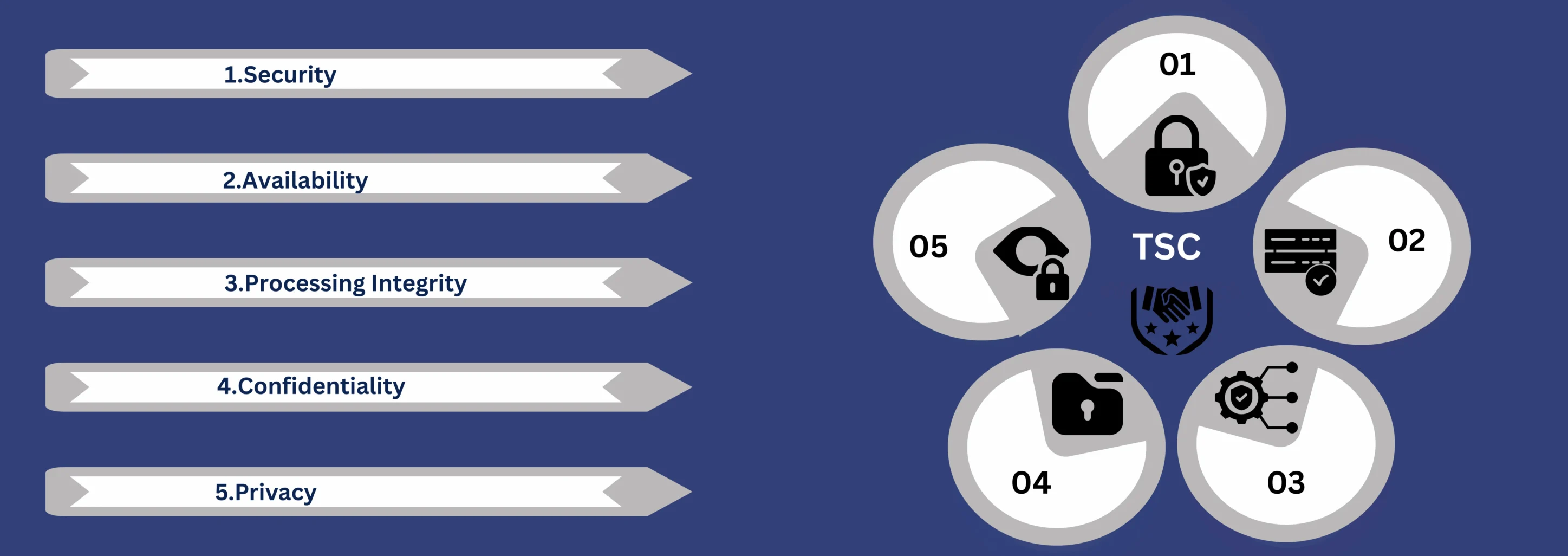
The SOC 2 Trust Services Criteria are standards published by the American Institute of Certified Public Accountants (AICPA). They define the control requirements for Security, Availability, Processing Integrity, Confidentiality, and Privacy. Auditors use them as the rulebook when they check how a company protects data and runs systems.
These criteria exist to help readers trust what they see in a SOC 2 report. To elaborate, sales teams share reports with buyers during deals. Likewise, the procurement teams use them to reduce vendor risk. In many B2B deals, a SOC 2 report becomes the deciding document.
The criteria also sit within a broader SOC reporting landscape. To clarify,
- SOC 1 focuses on financial controls.
- SOC 2 focuses on system and data controls.
- SOC 3 provides a public summary for marketing and trust pages.
SOC 2 reports come in two formats.
- Type I shows whether controls are designed correctly at a specific point in time.
- Type II shows whether those controls operated consistently over a defined period.
The Trust Services Criteria support both formats by guiding control design for Type I and evidence testing for Type II.
SOC 2 TRUST SERVICES CRITERIA: AN OVERVIEW
The SOC 2 Trust Services Criteria describe how a company protects data and keeps its systems safe and reliable. In this section, let’s learn about each element of SOC 2 trust services criteria in detail.
- Security: This criterion sits at the center of every SOC 2 report. It addresses access control, system monitoring, and incident response. When a former employee still has active credentials or alerts go unchecked, then it’s a clear sign of security gaps. Sample controls include Role-Based Access Controls (RBAC), Multi – Factor Authentication (MFA), and documented incident response plans for security issues.
- Availability: This criterion focuses on whether systems stay up when customers need them. SaaS teams feel this pressure during outages or peak traffic. In this context, even a minor downtime leads to angry support tickets and contract questions. Common controls include uptime monitoring, tested backups, and recovery plans that teams actually rehearse.
- Processing Integrity: This part of SOC 2 trust services criteria looks at how systems handle data. It matters when invoices miscalculate or transactions fail silently. Input validation, automated error checks, and review logs, which demonstrate problem detection and resolution, are common controls in this area.
- Confidentiality: This criterion protects sensitive business data such as contracts, designs, and internal reports. Any minor data breach here will ultimately damage trust and reputation. Encryption, data classification, and controlled sharing serve as typical controls.
- Privacy: This applies when personal data enters the picture. User profiles, employee records, and support logs fall under this criterion. Teams rely on consent records, data access procedures, and clear data retention policies.
Only Security is a mandatory criterion for SOC 2 compliance. The other criteria depend on how the business operates and what data it handles.
WHAT ARE THE SAMPLE CONTROLS FOR SOC 2 TRUST SERVICES CRITERIA?
The sample controls of SOC 2 trust services criteria transform abstract criteria into actions that teams can follow and auditors can verify. Below is a clear view of how each criterion shows up in real work.
Security
Security controls manage who gets access, how changes happen, and how teams react to threats. Most issues here result from unclear ownership or rushed access requests. Strong teams keep their access tied to roles. One practical control is reviewing user access every quarter. Using MFA for privileged accounts. Additionally, it is important to store access logs in a central system and to review alerts according to a predetermined schedule. Teams also maintain a structured incident response plan here.
Availability
Availability controls keep systems running and recoverable. Any downtime hurts customers and business revenue. Therefore, teams track uptime through monitoring tools. Additionally, backups run on a defined schedule, and recovery plans are tested. A common control here is running disaster recovery tests twice per year and recording results. This procedure builds confidence before a real outage hits.
Processing Integrity
Processing integrity controls protect data accuracy. Billing errors and broken workflows create customer complaints fast. Hence, teams use input validation to catch inconsistent data early. Here, systems log errors clearly and reconciliation checks confirm that data outputs are consistent with inputs. A simple control is automated data validation rules inside key systems.
Confidentiality
Confidentiality controls protect sensitive business data. Teams classify data by sensitivity. In this context, encryption protects both data at rest and in transit. In addition, this criterion also ensures that data is disposed of securely. A standard control is encryption at rest and in transit for confidential systems.
Privacy
Privacy controls manage personal data. Teams limit collection to business needs, and consent gets tracked. Any data access requests from individuals follow a clear process. A common control is a documented DSAR workflow with response timelines.
Each SOC 2 Trust Services Criterion focuses on a specific risk area and uses defined controls to manage that risk.
HOW TO MAP SOC 2 TRUST SERVICES CRITERIA TO REAL WORLD COMPLIANCE PROGRAMS
Mapping SOC 2 Trust Services Mapping SOC 2 Trust Services Criteria into daily operations feels challenging when teams view it solely as an audit task. However, it becomes manageable when teams treat it as part of their business operations. The goal is to build controls once and let them support multiple security needs.
Selecting the Right Criteria
Start with understanding business operations and service commitments. Security always applies, and others depend on the nature of the business and its risk posture. For example, a SaaS platform that makes uptime promises prioritizes Availability, while a billing platform prioritizes Processing Integrity. This decision works best when product, security, and legal teams talk early.
Mapping Controls Across Frameworks
Most controls for SOC 2 trust services criteria already align with ISO 27001, GDPR, and HIPAA. For example, access controls support ISO and SOC 2. Incident response plans support all three. In a similar way, data access logs support GDPR and SOC 2. Therefore, mapping controls across frameworks reduces duplicate work.
Re – Using Evidence Across Audits
Teams often collect the same screenshots again and again. But a solid SOC program re – use evidence. Access reviews, log reports, and policy approvals support multiple audits. Hence, store evidence in one place and label it by control. This feature saves weeks during audit season.
Control Ownership and Accountability
Controls fail when no one owns them. Therefore, each control needs a clear owner who understands the process. IT owns access, engineering owns product deployments, and security owns monitoring.
Common SOC 2 Readiness Mistakes
Teams rush scoping and over – document policies. To add on, they collect evidence too late and depend on one person to manage everything. These mistakes create stress and missed deadlines.
WHAT DO SOC 2 TRUST SERVICES CRITERIA APPLY TO
SOC 2 trust services criteria define how auditors evaluate the systems that support your service delivery. For most teams, the real challenge is understanding where those criteria actually apply in day – to – day operations. The answer is simple. They apply across infrastructure, software, people, procedures, and data.
Start with infrastructure. This includes cloud platforms, networks, servers, and backup systems. Auditors check the restrictions on access, the management of outages, and the effectiveness of recovery plans during actual security incidents. For example, if your AWS account goes down, they want to see clear response steps and tested recovery processes.
Next comes software. This covers your product, internal tools, and third – party applications. SOC 2 trust services criteria assess how code changes are approved, how vulnerabilities are tracked, and how access is controlled. A simple example is requiring peer review before production releases.
People matter just as much. Employees and contractors interact with systems every day. Therefore, auditors review onboarding, offboarding, training, and role – based access. If a developer leaves, access should be removed the same day.
Procedures connect everything. These are the documented steps teams follow during incidents, access reviews, risk assessments, and audits. Clear policies and procedures help teams act consistently under pressure.
Finally, data sits at the center. Customer records, logs, and internal files must be protected throughout their lifecycle. Encryption, retention rules, and secure deletion all fall under SOC 2 trust services criteria.
Taken together, these areas show how controls operate as a system. That system – level view is what makes a SOC 2 report meaningful for customers and auditors alike.
STEPS FOR CHOOSING THE RIGHT TRUST SERVICE CRITERIA FOR YOUR BUSINESS
Choosing the right SOC 2 Trust Services Criteria shapes the entire audit experience. Therefore, having clear choices early keeps the audit in line with real business needs.
- Clarify Audit Objective: Start with the reason for the audit. To clarify, some teams need customer trust to close deals, while others need support for contracts or internal risk work. Document it, as this clarity guides every decision that follows.
- Identify Systems and Services: List the products and platforms that touch customer data. Include cloud apps, internal tools, and third – party services. This step avoids confusion when auditors ask where data lives and how it moves.
- Start with Security: Security applies to every SOC 2 report. It covers access control, monitoring, and incident response. Hence, treat security as the foundation.
- Assess Business Relevance: Availability is relevant for services with uptime promises. Choose what matches your customer expectations and service commitments.
- Align Criteria Business Needs: Review security questionnaires, RFPs (Request for Proposals), and contracts. Patterns appear fast. If customers ask about uptime or data privacy, reflect that in your criteria selection.
- Consider Data Types and Regulatory Exposure: Your firm’s personal data points to Privacy and its regulated data points to Confidentiality. This link helps teams justify scope choices with confidence.
The above – discussed points could help a firm to choose the right SOC 2 trust services for their business.
CONCLUSION
SOC 2 could feel daunting when teams chase evidence late, answer the same security questions again, and worry whether the audit will slow growth. You need clear criteria and steady controls to remove that pressure. The right examiner makes the difference between an unstructured painful audit and a standardized, predictable one.
CertPro CPA LLC steps in as an independent SOC 2 audit firm built for modern businesses. As a registered CPA firm, CertPro issues SOC 2 reports that buyers, regulators, and partners trust. Independence matters here. Your report carries weight because it comes from an impartial examiner who follows AICPA standards and tests controls as they operate in real life.
CertPro works with fast – growing startups and established B2B teams that face tight sales timelines, renewals, and customer scrutiny. Our quality and standard workflow help audits stay focused, evidence requests stay clear, and timelines stay realistic. The result is a report that supports deals instead of delaying them.
Beyond SOC 2, CertPro also delivers certifications for ISO frameworks and conducts privacy assessments for GDPR, CCPA, and HIPAA. This breadth helps businesses reduce vendor risk reviews and repeat requests across customers.
If customers are asking harder questions and sales cycles feel heavier, a credible audit report restores confidence. Connect with CertPro CPA LLC to move forward with an independent SOC 2 examination that supports growth, trust, and long – term credibility.
FAQ
What are the trust principles of SOC 2?
The five trust principles of SOC 2 are security, availability, processing integrity, confidentiality, and privacy. They translate abstract compliance requirements into measurable, evidence – backed controls that safeguard systems and data.
What is SOC 2 compliance checklist?
A SOC 2 compliance checklist is a roadmap that helps your team prepare for the audit by explaining exactly what needs to be done, from implementing access controls to collecting evidence and documenting processes.
What is AICPA?
The AICPA is the American Institute of Certified Public Accountants. It creates audit and assurance standards in the United States, including the SOC 2 Trust Services Criteria. Independent CPA firms follow AICPA rules when issuing SOC reports.
What are the types of SOC 2 reports?
SOC 2 reports come in two types. Type I reviews control design at a specific date. Type II reviews how those controls operate over a defined period, usually six to twelve months.
Why is SOC 2 important for SaaS startups?
SOC 2 helps SaaS startups build customer trust, pass security reviews, and close enterprise deals. It shows that systems protect data properly, reduce sales delays, and support long – term growth in competitive B2B markets.
WHAT ARE SOC 2 TRUST SERVICES CRITERIA?
SOC 2 TRUST SERVICES CRITERIA: AN OVERVIEW
WHAT ARE THE SAMPLE CONTROLS FOR SOC 2 TRUST SERVICES CRITERIA?
HOW TO MAP SOC 2 TRUST SERVICES CRITERIA TO REAL WORLD COMPLIANCE PROGRAMS
WHAT DO SOC 2 TRUST SERVICES CRITERIA APPLY TO
STEPS FOR CHOOSING THE RIGHT TRUST SERVICE CRITERIA FOR YOUR BUSINESS