
PHILIPPINES
HIPAA CERTIFICATION IN PHILIPPINES
The Health Insurance Portability and Accountability Act, also known as HIPAA, was a significant piece of legislation adopted in the US in 1996 to protect the confidentiality and security of patient health information. Despite the fact that HIPAA certification in Philippines is unique to the United States, its guiding principles have had a significant influence on healthcare data privacy everywhere.
Healthcare organizations and professionals in the Philippines are aware of how crucial data security and privacy are to the healthcare industry. Despite the fact that HIPAA certification is not officially required in the Philippines, some healthcare organizations and specialists have embraced its concepts and practices to improve their Data Privacy procedures. The Data Privacy Act of 2012 in the Philippines, which emphasizes the significance of data protection across numerous industries, including healthcare, also has some similarities to HIPAA.
Although HIPAA certification in Philippines is not mandatory, its principles have been instrumental in advancing data privacy and security within the healthcare industry and bringing the nation into compliance with global standards and best practices for safeguarding patients’ sensitive health information.
CERTIFICATION AND AUDITING SERVICES BY CERTPRO FOR HIPAA IN PHILIPPINES
The most modern data security regulations can be understood and complied with with the help of CertPro, a knowledgeable HIPAA consultant in Philippines. In the Philippines, CertPro can help you get HIPAA certified. We offer certification and monitoring services to make sure companies fulfill the strict requirements for services and build trust in a cutthroat industry. The correctness, availability, security, and privacy policies are examined by our qualified inspectors. Our efforts will also enhance your reputation and show that you are dedicated to data protection.
WHY CHOOSE CERTPRO FOR HIPAA CERTIFICATION AND AUDITING?
CertPro, a well-established HIPAA consulting firm, is firmly committed to aiding organizations in establishing a robust Information Protection Management System (ISMS) with a significant emphasis on data protection. Our team comprises knowledgeable professionals who possess years of expertise in navigating the complexities of HIPAA. Our adaptable consulting services cater to organizations of varying sizes and operating across diverse sectors, offering tailored solutions to address their specific organizational challenges while providing comprehensive HIPAA compliance services.
WHAT IS HIPAA?
HIPAA, known as the Health Insurance Portability and Accountability Act, is a significant federal law established in 1996 in the United States. Its primary mission is to ensure the privacy and security of individuals’ healthcare information. HIPAA comprises various crucial elements. The Privacy Rule imposes rigorous regulations to safeguard patients’ medical records and personal health data, guaranteeing that healthcare organizations cannot disclose this information without patient consent or awareness. Meanwhile, the Security Rule outlines directives for the protection of electronic protected health information (ePHI), requiring the adoption of security measures and controls to safeguard this sensitive data.
HIPAA also requires the utilization of standardized codes and electronic transactions for healthcare billing and claims, as established by the Transaction and Code Sets Standards. It introduces the National Provider Identifier (NPI) as a means to allocate a distinctive identification number to healthcare providers, streamlining tracking and verification processes in electronic transactions. Moreover, the Enforcement Rule delineates penalties and protocols for the enforcement of HIPAA regulations, emphasizing the significance of compliance in upholding the confidentiality and security of healthcare information.
WHY DO WE NEED HIPAA CERTIFICATION?
HIPAA certification helps prevent data breaches in healthcare facilities in the Philippines. But, it doesn’t always make sure that rule updates are shared quickly, which could mean fewer patient complaints are looked at by the Office for Civil Rights (OCR). Getting HIPAA certified shows your business cares about following the rules and protecting patient data before any problems arise. In the end, certification makes companies that handle health data look good and shows the public that they are serious about following the rules. Also, business relationships become easier and more efficient because of certification.
To sum up, getting HIPAA certification in the Philippines makes data safer and builds trust in your business.
HOW TO GET HIPAA CERTIFICATION IN PHILIPPINES?
Obtaining HIPAA certification is a demanding process that entails meticulous planning, thorough investigation, and unwavering dedication. To streamline this certification journey, businesses may consider utilizing HIPAA consulting services in Philippines. Collaborating with a qualified external auditor offers the advantage of an impartial evaluation of your compliance efforts.
Engaging HIPAA consulting services in Philippines significantly expedites the certification process. These services bring specialized expertise, quicker implementation, and a higher probability of achieving certification successfully, thanks to their deep understanding of local regulations and business practices. As a result, your organization enhances its information security management system, earning recognition from the Philippine business community for its reliability and commitment to security. Relying on the proficiency of HIPAA experts can simplify this challenging process and ensure a positive certification outcome in the dynamic healthcare landscape of the Philippines.
ENQUIRE NOW
Related Links
SOC 2 in Philippines
ISO 27701 in Philippines
GDPR in Philippines
ISO 27018 in Philippines
HIPAA in Philippines
CCPA in Philippines
PIPEDA in Philippines
ISO 17025 in Philippines
ISO 13485 in Philippines
CE Mark in Philippines
GDP in Philippines
GLP in Philippines
ISO 9001 in Philippines
ISO 14001 in Philippines
ISO 45001 in Philippines
ISO 22000 in Philippines
HACCP in Philippines
ISO 22301 in Philippines
ISO 21001 in Philippines
ISO 41001 in Philippines
ISO 20000-1 in Philippines

STEPS FOR OBTAINING HIPAA CERTIFICATION
This guide will help you get HIPAA compliance certification in the Philippines.
Step 1: Recognize HIPAA requirements: Make sure all staff know the HIPAA rules and their responsibility to protect personal health information (PHI). Next, check privacy and security policies and any extra requirements.
Step 2: Conduct a HIPAA Risk Assessment: Review your PHI management practices to find any gaps. Use this information to fix problems and improve your data security.
Step 3: Construct HIPAA policies and practices: Develop rules and practices for handling PHI that meet HIPAA standards. Tailor these policies to fit the way your business works.
Step 4: Implementing physical and technical safeguards: Install the right security tools, like encryption, to keep PHI safe from unauthorized access. This is an important step for securing data.
Step 5: Regular monitoring: Keep track of your compliance efforts to make sure that are working. Additionally, update procedures as rules change and improve risk management practices.
Step 6: Maintain HIPAA documents: Keep detailed records of your compliance actions. This includes training sessions and risk assessments. Be sure to update your incident response plan to stay prepared for new threats.
Step 7: Appoint a HIPAA compliance officer: Choose a compliance officer to oversee data protection and privacy. They will make sure all rules are followed and teach staff about their responsibilities. Moreover, they will also organize training and promote best practices.
Every business in the Philippines faces different challenges, depending on size and structure. By following these steps, your company will show it is serious about HIPAA compliance. For more help, visit CertPro.com for details on technical issues.
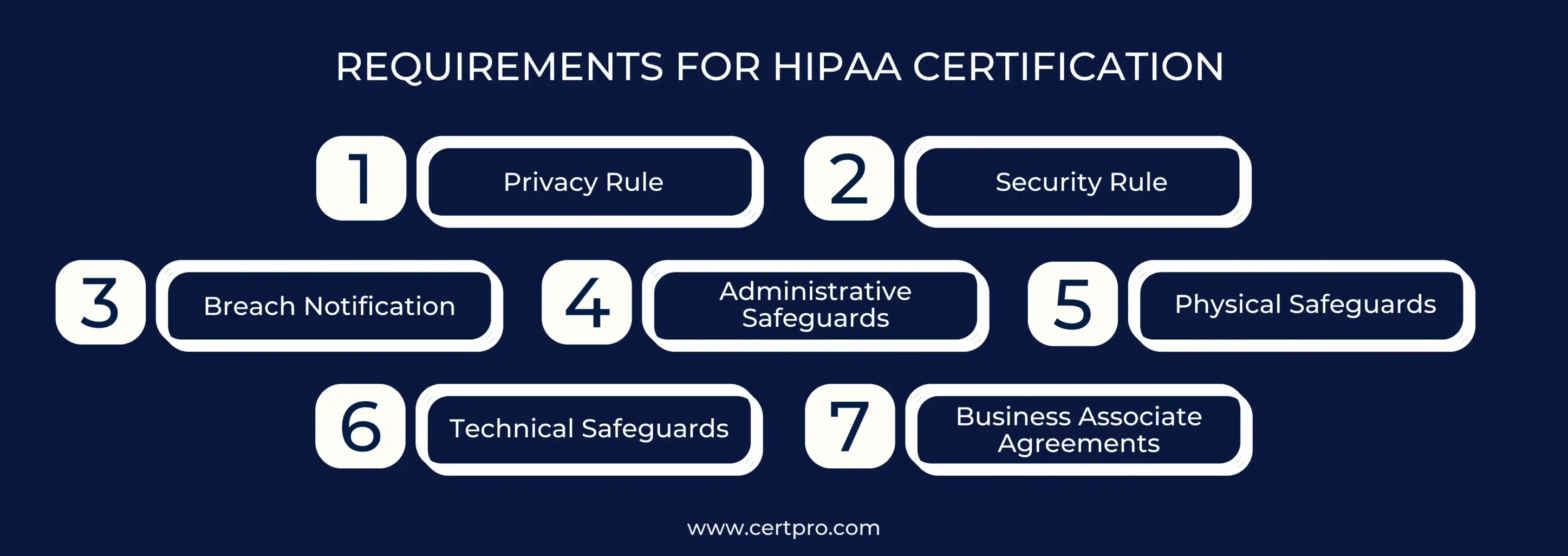
REQUIREMENTS FOR HIPAA CERTIFICATION
Firms in the Philippines must meet certain requirements to get HIPAA certification.
Privacy Rule: The main goal is to make sure personal health information (PHI) is used properly. Therefore, everyone involved must agree to follow safety rules. In addition, people should be able to see and correct their medical records.
Security Rule: To follow the rule, there need to be strict processes. Moreover, strong security measures must protect electronic health information from unauthorized access or misuse.
Breach Notification: If there’s a breach, you must notify the authorities right away and follow the rules. Specifically, inform the Department of Human Services and anyone else involved as soon as possible.
Administrative Safeguards: These are policies and rules that must be written down. Furthermore, privacy and security experts will check if the rules are being followed. Employees must be trained to understand and follow HIPAA rules. Additionally, it’s important to do regular risk checks.
Physical Safeguards: Only authorized people should be allowed into areas where PHI is stored. For example, use security cameras to watch entrances. Also, properly dispose of any devices or media with PHI to protect the information.
Technical Safeguards: Use passwords and unique IDs to control access to information. Additionally, encrypt data when sending and storing it. To keep data safe, regularly update security systems and monitor for any unwanted access.
Business Associate Agreements: Create agreements with business associates to ensure that HIPAA laws are followed correctly and consistently.
Note: This guide gives an overview of the required technology. For more details, visit CertPro.com or contact us.
HIPAA CERTIFICATION COST IN PHILIPPINES
The cost of HIPAA certification in the Philippines can vary based on a few things. These include the size and complexity of your business, how much work is needed for certification, how well your company already follows the rules, and which provider or consultant you choose.
The costs for HIPAA compliance usually include fees for consultants, time spent by your team, technology upgrades, and changes to your business processes.
Consulting fees can range from a few thousand dollars to tens of thousands, depending on the support you need. Also, your team will need to spend time managing compliance tasks. However, this investment is important because it ensures you follow the law, improves data security, and builds trust with patients in healthcare.
BENEFITS OF HIPAA CERTIFICATION
HIPAA certification in Philippines has many advantages that greatly improve healthcare quality.
Data Security: HIPAA certification helps prevent cyberattacks and stops unwanted people from accessing patient data. As a result, healthcare facilities with strong security see fewer data breaches and build a good reputation for keeping patient information safe.
Legal Compliance: HIPAA helps healthcare facilities in the Philippines follow the law. This ensures they avoid legal problems and expensive fines, creating a trustworthy healthcare environment.
Better Data Management: HIPAA helps healthcare facilities better manage patient data. Facilities can keep accurate and efficient records by conducting regular checks, risk assessments, and improving data practices.
Avoiding Breach Notification Costs: With HIPAA certification, healthcare facilities in the Philippines can avoid the high costs of telling the public about data breaches. Therefore, this saves money and helps solve problems faster when breaches happen.
Better Healthcare Results: HIPAA rules make sharing patient information easier and safer for healthcare workers. This, in turn, improves decision-making, treatment plans, and patient health, leading to better health outcomes.

HIPAA COMPLIANCE SERVICES IN PHILIPPINES : AN EXPERT’S GUIDE
CertPro helps businesses in the Philippines follow HIPAA rules to protect data. We check how your company handles data, then find any problems and fix them. It’s important to focus on keeping data safe rather than just following the rules. We provide clear advice, implement necessary changes, and monitor your business to ensure compliance with HIPAA regulations. Additionally, we offer affordable solutions, especially for small businesses, because we understand the challenges they face.
By working with CertPro, your company can build trust with customers and partners. As a result, getting HIPAA certification means your business is using the best methods for managing data, setting you up for success in today’s data-driven world.
FAQ
WHY IS HIPAA COMPLIANCE SIGNIFICANT IN THE PHILIPPINES?
WHAT FACTORS INFLUENCE THE COST OF HIPAA CERTIFICATION?
WHAT STEPS ARE NECESSARY TO ATTAIN HIPAA COMPLIANCE?
WHAT IS THE TIMELINE FOR ACHIEVING HIPAA COMPLIANCE?
HOW SHOULD I INITIATE THE HIPAA COMPLIANCE PROCESS IN THE PHILIPPINES?
HIPAA UPDATES 2026: KEY REGULATORY CHANGES, NEW RULES, AND COMPLIANCE IMPACT EXPLAINED
Healthcare data breaches continue to rise, and the pattern is clear. Attackers target patient records because they carry long-term value. At the same time, many organizations still rely on outdated controls, scattered data systems, and weak vendor oversight. That gap...
Why is HIPAA Important to Patients
LAST UPDATE -- 10-01-2025 The Health Insurance Portability and Accountability Act, also known as HIPAA, is crucial for patients because it safeguards their privacy and health information. In order to provide national standards for the security of specific health...
WHAT IS THE HIPAA OMNIBUS RULE
In the U.S. healthcare sector, sensitive medical records are often subjected to cyberattacks like data breaches and ransomware. For example, recently a misconfigured MongoDB database has led to the exposure of 2.7 million patient profiles. This incident is due to a...