
ISO 27001 Certification in Milan
Executive Summary: ISO 27001 Certification in Milan is conducted by CertPro, a Licensed CPA Firm delivering independent, third-party certification audits against the ISO/IEC 27001:2022 standard. CertPro evaluates Information Security Management Systems (ISMS) for Milan-based organizations across financial services, technology, manufacturing, and healthcare sectors. Certificates issued are recognized internationally and fully aligned with Italian and EU regulatory requirements — including GDPR and NIS2 — making CertPro the trusted partner for ISO 27001 Certification in Milan.
OUR CLIENTS









What Is ISO 27001 Certification
ISO 27001 Certification is the formal recognition issued by an independent, accredited certification body confirming that an organization’s Information Security Management System (ISMS) conforms to the requirements of the ISO/IEC 27001 standard. Certification is not a self-declaration and cannot be issued by the organization itself — it requires a structured third-party audit conducted by a qualified external body.
The ISO/IEC 27001:2022 standard, published by the International Organization for Standardization (ISO) and the International Electrotechnical Commission (IEC), establishes the international benchmark for establishing, implementing, maintaining, and continually improving an ISMS. The standard specifies how organizations must identify, assess, and treat information security risks in a documented and systematic manner, and mandates a defined set of controls derived from Annex A of the standard.
ISO/IEC 27001:2022 Standard Overview
| Attribute | Detail |
|---|---|
| Standard Body | ISO/IEC (International Organization for Standardization / International Electrotechnical Commission) |
| Latest Edition | ISO/IEC 27001:2022 |
| Mandatory Clauses | Clauses 4 through 10 (seven mandatory clauses) |
| Annex A Controls | 93 controls across 4 themes (Organizational, People, Physical, Technological) |
| Certification Validity | 3 years, with annual surveillance audits and triennial recertification |
The 2022 revision of ISO 27001 reduced the total number of Annex A controls from 114 (in the 2013 version) to 93, organized across four thematic domains: Organizational Controls (37 controls), People Controls (8 controls), Physical Controls (14 controls), and Technological Controls (34 controls). This restructuring reflects the evolution of information security threats and consolidates overlapping controls from the prior edition.
Organizations certified to the 2013 version must transition to ISO/IEC 27001:2022 by October 31, 2025, as mandated by international accreditation bodies. Organizations pursuing ISO 27001 Certification in Milan that have not yet initiated the transition should prioritize scheduling a certification audit against the current standard to avoid a lapse in certification validity.
Mandatory Clauses and the PDCA Framework
ISO 27001 is structured around seven mandatory clauses — Clauses 4 through 10 — which form the non-negotiable core of any compliant ISMS. Clause 4 (Context of the Organization) requires organizations to define internal and external factors relevant to information security and to identify interested parties and their requirements. Clause 5 (Leadership) mandates demonstrated commitment from top management, including an explicit information security policy.
Clause 6 (Planning) requires organizations to conduct risk assessments, define risk treatment plans, and establish measurable security objectives. Clauses 7 and 8 address the operational resources and processes required to implement and manage the ISMS effectively. Clause 9 (Performance Evaluation) mandates internal audit programs and management reviews, while Clause 10 (Improvement) requires documented processes for addressing nonconformities and driving continual improvement.
ISO 27001 adopts the Plan-Do-Check-Act (PDCA) cycle as its operational model. The Plan phase covers risk identification and the definition of ISMS objectives and controls. The Do phase addresses implementation of the ISMS, including control deployment and staff awareness programs. The Check phase encompasses internal audits, performance monitoring, and management review of ISMS effectiveness. The Act phase drives corrective actions, nonconformity resolution, and continual improvement cycles.
This iterative framework ensures that ISO 27001 Certification is not a one-time compliance event but an ongoing commitment to information security governance — a distinction that is critical for organizations in Milan operating under GDPR, NIS2, and Italian data protection obligations.
Scope of ISO 27001 Certification
The scope of ISO 27001 Certification defines the boundaries of the ISMS subject to third-party evaluation. An organization may seek certification for its entire operations or for a defined subset — such as a specific business unit, geographic location, product line, or data processing environment. Scope definition is a critical step because it determines which assets, processes, people, and technologies fall within the audit boundary.
For organizations pursuing ISO 27001 Certification in Milan, scope decisions often center on data center operations, cloud service delivery, financial transaction processing systems, or customer data management environments. A clearly defined and accurately documented scope is a prerequisite for Stage 1 audit approval by the certification body.

ISO 27001 Certification in Milan — Local Relevance and Regulatory Context
ISO 27001 Certification in Milan holds particular significance given the city’s position as Italy’s primary financial, commercial, and technology hub. Milan is home to the headquarters of leading Italian banks, insurance groups, and asset management firms, as well as a growing concentration of fintech companies, multinational technology subsidiaries, and SaaS providers serving European enterprise clients.
The city hosts the Italian Stock Exchange (Borsa Italiana), numerous FTSE MIB-listed companies, and a substantial cluster of professional services organizations that routinely handle sensitive financial and personal data. For these entities, ISO 27001 Certification in Milan is not merely a voluntary quality measure — it is frequently a procurement prerequisite, a regulatory alignment mechanism, and a risk management imperative.
Milan’s Financial and Technology Ecosystem
Milan’s financial services sector encompasses retail banking, investment management, insurance underwriting, and payment processing — all of which involve the collection, storage, and transmission of sensitive customer data subject to GDPR enforcement. ISO 27001 Certification for Milan companies in financial services demonstrates to regulators, enterprise clients, and institutional counterparties that information security controls have been independently validated against an internationally recognized standard.
The Bank of Italy (Banca d’Italia) and the Italian Insurance Supervisory Authority (IVASS) increasingly reference ISO 27001 compliance as a relevant indicator of operational resilience for regulated entities, further reinforcing the strategic value of ISO 27001 Certification in Milan’s financial sector.
ISO 27001 Certification for Milan technology companies — including cloud service providers, software vendors, managed security service providers (MSSPs), and data center operators — is increasingly pursued to satisfy enterprise vendor security review requirements. Milan’s technology district, particularly around the Porta Nuova and Symbiosis innovation zones, hosts a growing number of scale-up companies serving regulated industries across Europe.
For these organizations, ISO 27001 compliance in Milan’s fintech sector represents a critical threshold for accessing enterprise procurement pipelines and cross-border market expansion opportunities. Third-party ISO 27001 Certification from a Licensed CPA Firm such as CertPro provides the independent validation that procurement officers and security teams require before approving vendor relationships.
Italian Regulatory Drivers for ISO 27001 Certification
The Italian Data Protection Authority — the Garante per la protezione dei dati personali (Garante) — enforces the General Data Protection Regulation (GDPR) within Italy and has issued significant administrative fines against organizations that failed to implement adequate technical and organizational security measures under GDPR Article 32. ISO 27001 Certification provides documented, independently verified evidence that an organization has implemented a systematic approach to information security risk management, directly addressing the Article 32 requirement for appropriate technical measures.
While ISO 27001 Certification does not guarantee full GDPR compliance, it constitutes a recognized and substantive demonstration of security governance maturity. Italian DPA enforcement decisions have explicitly acknowledged this, making ISO 27001 compliance a strategically valuable asset for Milan-based organizations subject to Garante oversight.
The NIS2 Directive (EU 2022/2555), which entered into force across EU member states including Italy in October 2024, extends cybersecurity obligations to a significantly broader range of organizations than its predecessor. Entities classified as Essential or Important under NIS2 — including digital infrastructure providers, financial market infrastructure operators, and healthcare organizations in Milan — are required to implement risk management measures that align closely with the ISO 27001 framework.
ISO 27001 compliance in Milan, as evidenced through third-party certification, provides a structured and auditable pathway toward demonstrating NIS2 conformance to Italian national competent authorities, making ISO 27001 Certification in Milan an essential step for affected entities.
Industries in Milan Seeking ISO 27001 Certification
- ✓Financial services: banks, insurance companies, asset managers, and payment processors headquartered or operating in Milan
- ✓Fintech companies: digital lending platforms, payment technology firms, and regtech providers in Milan’s growing fintech cluster
- ✓Technology and SaaS companies: software vendors, cloud service providers, and managed IT service providers serving enterprise clients
- ✓Manufacturing and industrial organizations: multinational manufacturers in Lombardy handling intellectual property and supply chain data
- ✓Healthcare organizations: private hospitals, health data processors, and pharmaceutical companies managing sensitive patient information
- ✓Fashion and retail: luxury brands and e-commerce platforms handling payment card data and customer personal information
- ✓Professional services: law firms, accounting firms, and consulting organizations managing confidential client data
- ✓Public sector and government contractors: organizations handling public sector data or bidding for government contracts requiring ISO 27001 Certification
ISO 27001 Certification Requirements
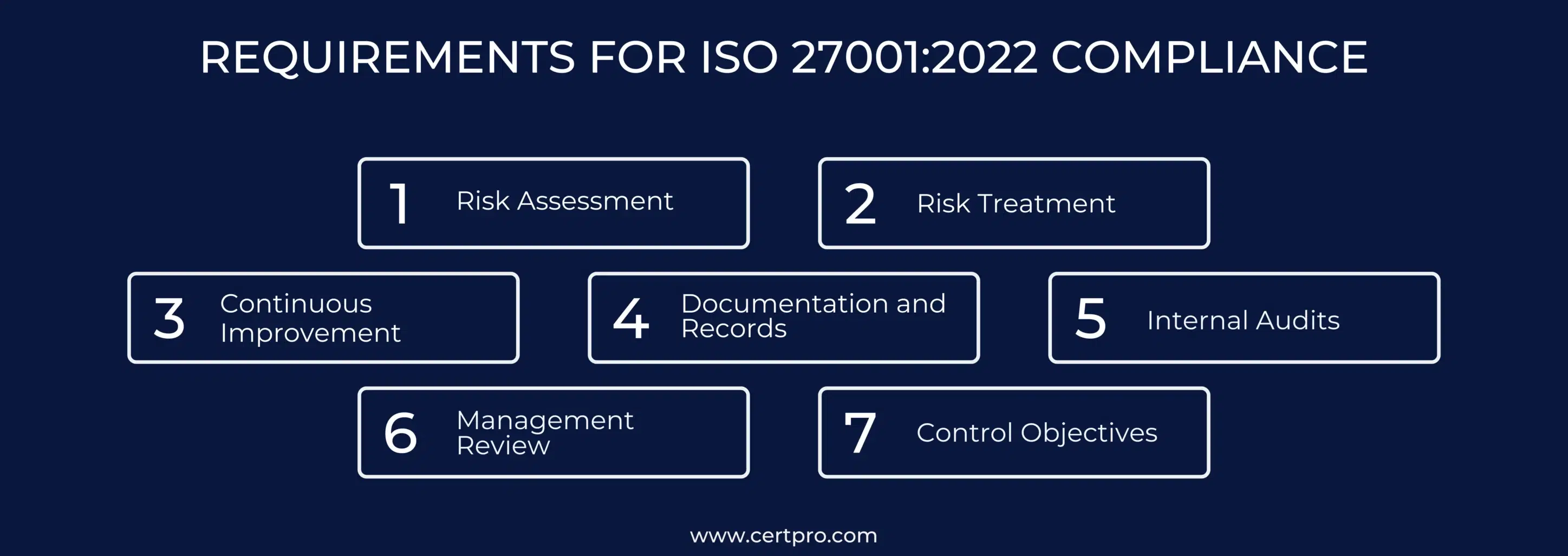
ISO 27001 Certification requires organizations to demonstrate conformance with all mandatory clauses of the standard (Clauses 4–10) and to implement applicable controls from Annex A, as determined by the organization’s risk assessment and documented in a Statement of Applicability (SoA). The certification body evaluates whether the ISMS has been properly designed, implemented, and operationalized — assessing both the design adequacy and the operating effectiveness of documented controls.
The following requirements represent the core evidential and operational conditions that must be satisfied before a certification audit can proceed and before ISO 27001 Certification can be issued.
ISO 27001 mandates a defined set of documented information as a non-negotiable requirement for certification. These mandatory documents provide the evidentiary basis for the ISO 27001 audit and must be maintained, controlled, and accessible for review throughout the audit process.
Core mandatory documents include: the ISMS scope statement, information security policy, risk assessment methodology, risk treatment plan, Statement of Applicability (SoA), measurable information security objectives, evidence of competence and awareness training, documented internal audit results, management review outputs, and records of nonconformities and corrective actions. The SoA is particularly critical — it lists all 93 Annex A controls, indicates whether each has been included or excluded, and provides justification for all exclusions. Auditors scrutinize the SoA closely to verify that control exclusions are rationally justified by the risk assessment and that no applicable control has been arbitrarily omitted.
Beyond documentation, ISO 27001 Certification requires that the controls specified in the risk treatment plan and SoA are operationally implemented and demonstrably effective. Annex A controls span four domains: Organizational Controls (including policies, roles, threat intelligence, and supplier security), People Controls (screening, training, and disciplinary processes), Physical Controls (physical security perimeters, equipment protection, and clear desk policies), and Technological Controls (access management, cryptography, secure configuration, network security, and logging).
For organizations seeking ISO 27001 Certification in Milan with significant cloud infrastructure or digital service delivery, technological controls — particularly those governing cloud security (A.5.23), data masking (A.8.11), and data leakage prevention (A.8.12) — receive heightened scrutiny during the ISO 27001 audit.
- ✓Defined and documented ISMS scope statement covering all relevant assets and processes
- ✓Formal information security policy approved and communicated by top management
- ✓Completed and documented information security risk assessment using a repeatable methodology
- ✓Risk treatment plan addressing all identified risks above the organization’s defined risk tolerance
- ✓Statement of Applicability (SoA) covering all 93 Annex A controls with justifications for exclusions
- ✓Measurable information security objectives aligned with the organization’s risk treatment decisions
- ✓Evidence of internal audit program execution and documented audit results
- ✓Management review records demonstrating top management engagement with ISMS performance
- ✓Documented corrective action procedures and records of nonconformity resolution
- ✓Operational evidence of implemented controls (access logs, training records, incident registers)
The risk assessment process is the engine of any compliant ISMS and is subject to rigorous examination during the ISO 27001 audit. ISO 27001 requires organizations to define and apply a consistent, repeatable risk assessment methodology that identifies information assets, associated threats and vulnerabilities, existing controls, and residual risk levels. Risk owners must be assigned for each identified risk, and treatment decisions — accept, mitigate, transfer, or avoid — must be documented and traceable to specific Annex A controls or other treatment measures.
The risk assessment must be reviewed and updated at planned intervals and whenever significant organizational or environmental changes occur. For Milan-based financial institutions and technology companies, risk assessments must explicitly address cyber threat scenarios relevant to the Italian and European threat landscape — including ransomware targeting critical infrastructure, supply chain compromise, and insider threat vectors.
- ✓Documentation Requirements
- ✓Technical and Operational Control Requirements
- ✓Risk Assessment and Treatment Requirements
ISO 27001 Certification Process
The ISO 27001 Certification process follows a structured, multi-stage sequence governed by ISO/IEC 17021-1 — the international requirements standard for certification bodies providing audit and certification of management systems. Each stage serves a distinct evaluative purpose, and progression from one stage to the next is conditional on satisfactory completion of the preceding stage. The following numbered process describes the standard certification pathway from initial application through certificate issuance and ongoing maintenance.
- Application Review: The organization submits a formal certification application including the proposed ISMS scope, organization size, industry sector, and technology environment. The certification body reviews the application to determine audit program requirements, assign qualified auditors, and confirm there are no conflicts of interest.
- Audit Program Determination: Based on the application, the certification body determines the audit duration, audit team composition, and the specific clauses and controls that will receive primary focus during the certification audit. Organizations with complex IT environments or multi-site operations require extended audit programs.
- Stage 1 Audit (Documentation Review): The Stage 1 audit is a desk-based review of the organization’s ISMS documentation. Auditors evaluate the ISMS scope statement, information security policy, risk assessment outputs, Statement of Applicability, and management review records to determine whether the ISMS is sufficiently mature to proceed to Stage 2. Identified documentation gaps are communicated to the organization before Stage 2 scheduling.
- Stage 2 Audit (On-Site Certification Audit): The Stage 2 audit is the primary ISO 27001 audit, conducted on-site (or remotely for defined scope environments) to evaluate the implementation and operational effectiveness of the ISMS. Auditors interview personnel, review operational records, inspect physical controls, test technical controls, and assess whether the ISMS conforms to all applicable ISO 27001 requirements.
- Nonconformity Review: Findings identified during the Stage 2 audit are classified as Major Nonconformities (critical failures requiring resolution before certification can be issued), Minor Nonconformities (isolated gaps requiring corrective action within a defined timeframe), or Observations (recommended improvements without certification impact). Major nonconformities must be resolved and verified before the certification decision proceeds.
- Certification Committee Decision: An independent certification committee — separate from the audit team — reviews the complete audit file, including all findings and the auditor’s recommendations, and makes the formal certification decision. This independence between auditing and certification decision-making is a structural requirement under ISO/IEC 17021-1.
- Certificate Issuance: Upon approval by the certification committee, the ISO 27001 certificate is issued. The certificate specifies the certified organization, ISMS scope, certification standard (ISO/IEC 27001:2022), certificate number, and validity period (three years from the date of issue).
- Annual Surveillance Audits: Surveillance audits are conducted annually during the three-year certification cycle to verify that the ISMS remains operational and that any previously identified minor nonconformities have been addressed. Surveillance audits typically cover a subset of ISMS clauses and controls rather than the full audit scope.
- Recertification Audit: Prior to expiry of the three-year certificate, a full recertification audit is conducted to assess continued conformance and to renew the ISO 27001 Certification for a further three-year period.
For organizations pursuing ISO 27001 Certification in Milan for the first time, the typical elapsed time from initial application to certificate issuance ranges from three to six months. This timeline depends on the maturity of the existing ISMS, the complexity of the organizational scope, and the time required to resolve any nonconformities identified during Stage 1 or Stage 2 audits.
Organizations with well-documented ISMS frameworks and operational controls already in place tend to progress through the ISO 27001 Certification process more efficiently than those beginning ISMS implementation from a lower baseline of documentation maturity.

ISO 27001 Audit — Stages, Scope, and Evaluation Methodology
The ISO 27001 audit is the formal evaluation mechanism through which a certification body determines whether an organization’s ISMS conforms to the requirements of ISO/IEC 27001:2022. The audit is conducted by qualified, independent auditors who are free from conflicts of interest with the audited organization. The ISO 27001 audit in Milan encompasses both document examination and operational testing, and its findings directly determine whether certification can be granted, maintained, or suspended.
Stage 1 Audit — Documentation and Readiness Evaluation
The Stage 1 audit — also referred to as the documentation review or preliminary audit — is designed to evaluate whether the organization has established an ISMS that is sufficiently documented and structured to support a full certification audit at Stage 2. During Stage 1, auditors examine the ISMS scope, information security policy, risk assessment methodology and outputs, risk treatment plan, Statement of Applicability, internal audit records, and management review documentation.
The auditor assesses whether mandatory documentation is present, logically consistent, and aligned with the organization’s declared scope. Stage 1 is typically conducted remotely or at the organization’s primary site. The outcome is a formal report identifying any areas of concern that must be addressed before Stage 2 can proceed, along with a recommended Stage 2 audit date.
Stage 2 Audit — On-Site Certification Evaluation
The Stage 2 audit constitutes the primary ISO 27001 audit and is the most rigorous phase of the certification process. Auditors conduct detailed evaluation of the ISMS’s operational effectiveness through interviews with process owners and technical personnel, review of operational records and control evidence, physical inspection of relevant facilities (server rooms, access control points, workstation environments), and technical testing of selected controls such as access management configurations, patch management records, and incident response procedures.
The audit team assesses conformance against all applicable mandatory clauses and the controls included in the organization’s Statement of Applicability. For ISO 27001 Certification in Milan, Stage 2 audits frequently focus on cloud security controls (particularly for SaaS and technology organizations), supplier security management (given Milan’s position in international supply chains), and data protection controls directly relevant to GDPR obligations.
Surveillance Audits and Recertification
Following initial certification, the ISO 27001 certificate is valid for three years subject to satisfactory annual surveillance audits. Surveillance audits — conducted in years one and two of the certification cycle — verify that the ISMS continues to operate effectively, that corrective actions for previously identified minor nonconformities have been completed, and that the organization has maintained its internal audit and management review programs.
Surveillance audits are scoped to cover a representative subset of ISMS elements rather than the full certification scope. If a surveillance audit identifies a Major Nonconformity, the certification body may suspend the certificate pending resolution. Persistent failure to resolve major nonconformities within the stipulated timeframe results in certificate withdrawal. Recertification audits, conducted in the third year, represent a full reassessment equivalent in scope to the original Stage 2 audit and determine whether ISO 27001 Certification will be renewed for a further three-year cycle.
| Audit Stage | Timing | Primary Focus | Outcome |
|---|---|---|---|
| Stage 1 Audit | Pre-certification | ISMS documentation and scope review | Stage 2 readiness determination |
| Stage 2 Audit | Pre-certification | Operational effectiveness of ISMS controls | Certification recommendation |
| Surveillance Audit 1 | Year 1 post-certification | Continued ISMS operation and nonconformity closure | Certificate maintenance confirmation |
| Surveillance Audit 2 | Year 2 post-certification | ISMS performance, improvements, and risk management | Certificate maintenance confirmation |
| Recertification Audit | Year 3 (before expiry) | Full ISMS reassessment against ISO/IEC 27001:2022 | Certificate renewal for three-year cycle |
ISO 27001 Compliance — Regulatory Alignment for Milan Organizations
ISO 27001 compliance represents the state in which an organization’s ISMS conforms to the requirements of ISO/IEC 27001:2022 and operates effectively across all mandatory clauses and applicable controls. For Milan-based organizations, ISO 27001 compliance intersects directly with a matrix of EU and Italian regulatory obligations that independently require demonstrable information security controls.
Understanding these intersections is essential for organizations managing multiple regulatory obligations simultaneously and seeking to maximize the compliance value of their ISO 27001 Certification investment.
ISO 27001 and GDPR Alignment
ISO 27001 Certification directly supports GDPR compliance by providing independently verified evidence of the technical and organizational measures required under GDPR Article 32. Article 32 mandates that data controllers and processors implement appropriate technical and organizational measures to ensure a level of security appropriate to the risk — including pseudonymization, encryption, systems resilience, backup and recovery capabilities, and regular testing of security measures.
The ISO 27001 framework addresses all of these requirements through its mandatory clauses and Annex A controls, and the ISO 27001 audit provides documented, third-party confirmation that these measures have been implemented and verified. The Italian Garante has referenced ISO 27001 Certification as a relevant factor in assessing the adequacy of security measures in enforcement proceedings, making ISO 27001 compliance in Milan a strategically significant investment for organizations subject to Italian DPA oversight.
ISO 27001 compliance satisfies GDPR Article 32 technical measure requirements by establishing a documented, risk-based approach to information security that maps directly to the regulation’s expectations. Specifically, ISO 27001 Annex A controls address encryption (A.8.24), access control (A.8.2–A.8.5), logging and monitoring (A.8.15–A.8.16), physical security (A.7.1–A.7.14), incident management (A.5.24–A.5.28), and business continuity (A.5.29–A.5.30) — all of which are relevant to GDPR security obligations.
Organizations that achieve ISO 27001 Certification in Milan and maintain ongoing ISO 27001 compliance are better positioned to demonstrate due diligence in GDPR enforcement scenarios than those relying solely on self-assessed security programs.
ISO 27001 and the NIS2 Directive
The NIS2 Directive (EU 2022/2555) imposes cybersecurity risk management and incident reporting obligations on a broad range of Essential and Important Entities across EU member states, including Italy. Article 21 of NIS2 specifies risk management measures that include policies on risk analysis, incident handling, business continuity, supply chain security, network security, access control, and cryptography — all of which map directly to ISO 27001 mandatory clauses and Annex A controls.
Organizations subject to NIS2 in Italy — including digital infrastructure providers, financial market participants, healthcare organizations, and manufacturing companies in Milan — can leverage ISO 27001 compliance as a primary mechanism for satisfying NIS2 obligations and demonstrating adherence to the Italian national competent authority (Agency for National Cybersecurity — ACN). ISO 27001 Certification in Milan therefore delivers dual regulatory value across both GDPR and NIS2 frameworks.
ISO 27001 Compliance and Contractual Obligations
Beyond regulatory alignment, ISO 27001 compliance is increasingly embedded as a contractual requirement in enterprise procurement frameworks across Milan’s financial services, technology, and public sector markets. FTSE MIB-listed companies, major Italian banks, and multinational corporations headquartered in Milan routinely require ISO 27001 Certification as a condition of vendor approval in information technology, data processing, and cloud service procurement processes.
Technology vendors and SaaS providers without ISO 27001 Certification may be disqualified from supplier panels or required to accept onerous contractual security audit rights as an alternative to demonstrating certified compliance. ISO 27001 audit evidence — in the form of a current, valid certificate issued by an accredited certification body — satisfies these contractual requirements in a standardized and internationally recognized format.
ISO 27001 Cost in Milan
ISO 27001 cost in Milan is determined by multiple factors specific to the organization being audited, including the scope of the ISMS, organizational size, industry sector, number of sites, complexity of the technology environment, and the maturity of existing security controls and documentation. CertPro applies a structured, fixed-fee pricing model for ISO 27001 Certification audits, based on a transparent assessment of audit program requirements at the time of application.
The ISO 27001 cost that Milan organizations incur reflects the actual audit resources required for a thorough and credible certification evaluation — not an arbitrary or promotional price point. Understanding these cost drivers helps organizations budget accurately for their ISO 27001 Certification journey.
Factors Affecting ISO 27001 Certification Cost
The primary factors that determine ISO 27001 cost for Milan organizations are: organizational size (measured by number of employees and complexity of information processing activities), scope of certification (number of business processes, systems, and locations included within the ISMS boundary), the number of distinct technology environments and cloud platforms in scope, the degree of outsourcing and third-party dependency within the ISMS scope, and the number of audit days required to complete Stage 1 and Stage 2 evaluations in accordance with ISO/IEC 27006.
Organizations with a narrowly defined ISMS scope — for example, a single data center operation or a specific SaaS platform — will incur lower ISO 27001 certification costs than organizations seeking enterprise-wide or multi-site certification.
| Cost Factor | Impact on Audit Duration and Cost |
|---|---|
| Organization Size (employees) | Larger organizations require more audit days to cover a representative sample of personnel and processes |
| ISMS Scope Complexity | Multi-process or multi-system scopes require extended Stage 2 audit programs |
| Number of Sites | Each additional site within scope may require a site visit or remote audit session |
| Technology Environment | Complex cloud or hybrid environments require specialist technical auditors |
| Existing Documentation Maturity | Well-documented ISMS reduces Stage 1 review time and Stage 2 clarification requirements |
Investment Value of ISO 27001 Certification
The ISO 27001 cost that Milan organizations invest in certification must be evaluated against the tangible and verifiable returns it delivers. Organizations that obtain ISO 27001 Certification in Milan gain access to enterprise procurement pipelines that require certified suppliers, reduce the burden of security questionnaires by providing a current certificate as standardized proof of security posture, and lower the likelihood of regulatory enforcement actions through documented security governance.
For ISO 27001 certification in Milan’s financial services sector, the reputational and commercial value of independent certification frequently outweighs the direct audit cost within a single annual procurement cycle. Data breach costs — including regulatory fines under GDPR (up to 4% of global annual turnover or €20 million), operational remediation, and reputational damage — substantially exceed the cost of maintaining ISO 27001 Certification over a three-year cycle.
Benefits of ISO 27001 Certification for Milan Businesses
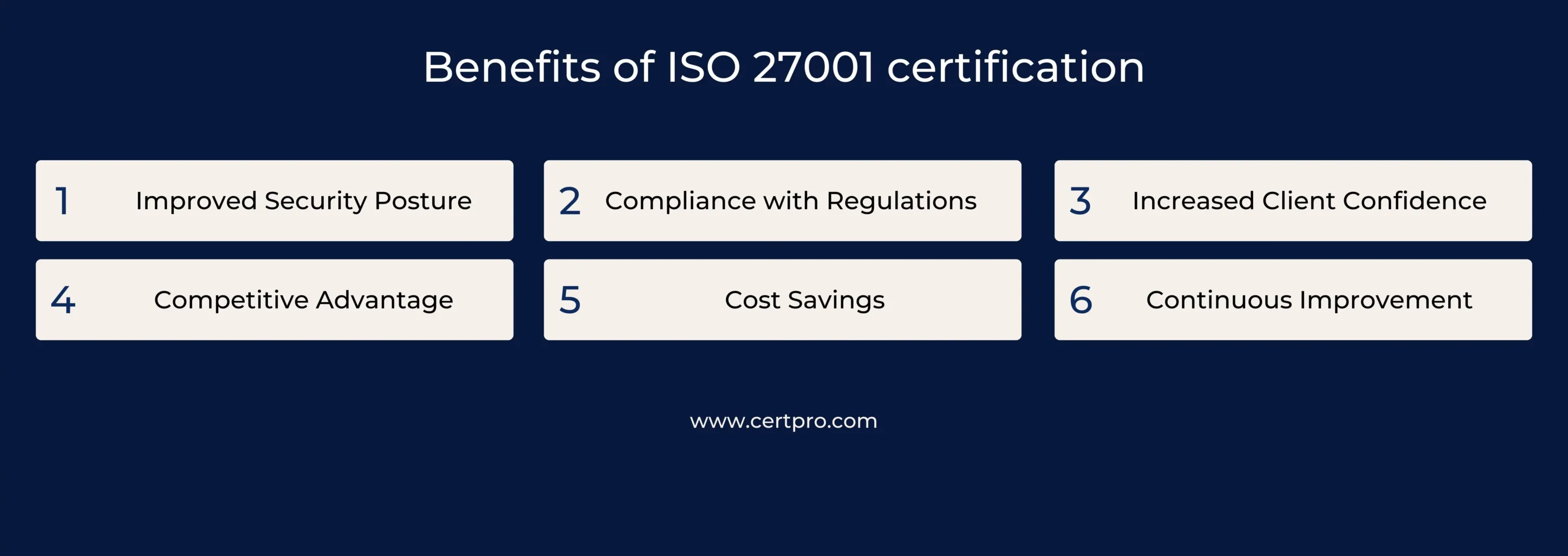
ISO 27001 Certification delivers a defined set of independently verifiable benefits to organizations operating in Milan’s competitive and regulated business environment. These benefits span regulatory positioning, commercial procurement, operational risk management, and organizational security culture — each addressed through the systematic framework requirements of ISO/IEC 27001:2022.
ISO 27001 Certification provides documented, third-party verified evidence of technical and organizational security measures that satisfies requirements under GDPR Article 32, NIS2 Article 21, and Italian national cybersecurity regulations. This evidentiary value is particularly significant in Italian DPA enforcement proceedings, where the Garante has the authority to impose administrative fines of up to €20 million or 4% of global annual turnover for GDPR violations.
Organizations holding a valid ISO 27001 certificate can present their certification as substantive evidence of a systematic and independently audited approach to data security, which may positively influence regulatory outcomes during investigation or enforcement scenarios. ISO 27001 compliance in Milan also supports GDPR Chapter V requirements by demonstrating to international data transfer partners that adequate safeguards are in place for cross-border data flows.
ISO 27001 Certification for Milan companies operating as suppliers to financial institutions, multinational corporations, or public sector entities removes a significant barrier to commercial engagement. Enterprise procurement frameworks in Milan’s financial services sector — including those operated by major Italian banks and insurance groups — routinely require ISO 27001 Certification as a threshold qualification for vendor registration.
SaaS providers and technology companies holding ISO 27001 Certification in Milan are able to respond to vendor security questionnaires with certificate documentation in lieu of time-intensive self-assessment responses, reducing sales cycle friction and accelerating vendor approval timelines. For companies expanding into European markets, ISO 27001 Certification issued by an accredited body is recognized across all EU jurisdictions, providing a single certification that satisfies security requirements in multiple national markets simultaneously.
- ✓Independent, third-party validation of information security control design and operating effectiveness
- ✓Documented evidence satisfying GDPR Article 32 technical and organizational measure requirements
- ✓Alignment with NIS2 Directive cybersecurity risk management obligations for Essential and Important Entities
- ✓Qualification for enterprise and public sector procurement processes requiring ISO 27001 Certification
- ✓Reduction in vendor security questionnaire burden through certificate-based responses
- ✓Structured framework for identifying, assessing, and treating information security risks systematically
- ✓Demonstrated security governance maturity to institutional counterparties, regulators, and clients
- ✓Support for international market expansion requiring recognized ISO 27001 Certification
- ✓Annual surveillance audit cycle providing ongoing assurance of control effectiveness and continuous improvement
- ✓Competitive differentiation in Milan’s financial services, technology, and professional services markets
The ISO 27001 framework delivers operational risk management benefits that extend well beyond the certificate itself. The mandatory risk assessment and treatment process — conducted as part of ISMS implementation and maintained through annual review cycles — provides organizations with a structured and documented understanding of their information security risk profile.
This risk visibility supports business continuity planning, incident response preparedness, and supplier security management, all of which directly reduce the likelihood and impact of information security incidents. Organizations that have undergone ISO 27001 audit scrutiny typically maintain more mature security governance practices, better-documented incident response procedures, and more clearly defined security roles and responsibilities than those operating without a certified ISMS framework.
- ✓Regulatory and Legal Benefits
- ✓Commercial and Procurement Benefits
- ✓Operational and Risk Management Benefits
Why CertPro for ISO 27001 Certification in Milan
CertPro is a Licensed CPA Firm delivering independent, accredited ISO 27001 Certification audits to organizations across Milan and the broader Italian market. As a certification body — not a consulting or advisory firm — CertPro operates exclusively within the domain of third-party audit and certification, maintaining strict independence between its audit functions and the organizations it certifies.
This independence is a structural requirement of ISO/IEC 17021-1 and is essential to the credibility and international recognition of the ISO 27001 certificates CertPro issues to Milan-based organizations.
Licensed CPA Firm and Certification Body Authority
CertPro’s status as a Licensed CPA Firm distinguishes its ISO 27001 Certification from certifications issued by non-accredited or commercially motivated bodies. The Licensed CPA Firm designation reflects adherence to professional standards governing independence, audit quality, and ethical conduct — standards that are directly aligned with the requirements of ISO/IEC 17021-1 for management system certification bodies.
Organizations that receive ISO 27001 Certification from CertPro obtain a certificate that is defensible to regulators, recognized in enterprise procurement processes, and backed by the professional accountability standards applicable to Licensed CPA Firms. This is particularly important for ISO 27001 Certification in Milan’s financial services sector, where certificates may be scrutinized by the Banca d’Italia, IVASS, or the Italian Garante in the context of regulatory oversight or enforcement.
ISO 27001 Consultant Milan vs. Certification Body
Organizations in Milan should clearly distinguish between the role of an ISO 27001 consultant in Milan — who may provide ISMS implementation services — and the role of CertPro as an independent ISO 27001 certification body. ISO 27001 implementation involves designing and deploying the ISMS controls required to meet the standard’s requirements, and this work is appropriately performed by an organization’s internal team or an external consultant engaged for that purpose.
CertPro’s role is strictly evaluative: to independently assess whether the implemented ISMS conforms to ISO/IEC 27001:2022 and to issue or withhold certification based on ISO 27001 audit findings. Organizations should not engage a single firm for both ISMS implementation and ISO 27001 Certification, as this arrangement creates a conflict of interest incompatible with ISO/IEC 17021-1 independence requirements.
ISO 27001 Implementation Milan — Understanding the Certification Body’s Role
ISO 27001 implementation that Milan organizations undertake as a prerequisite to certification involves establishing all mandatory ISMS components — documentation, risk assessments, controls, training, internal audits, and management reviews — required to satisfy the standard’s clauses. Once implementation is complete and the ISMS has been operational for a sufficient period to generate meaningful audit evidence (typically a minimum of three months of operational records), the organization is eligible to apply for ISO 27001 Certification with CertPro.
The certification body’s role commences at the point of formal application and encompasses the full ISO 27001 audit cycle from Stage 1 through surveillance and recertification. CertPro does not provide ISMS implementation services and maintains complete independence from any party that has provided implementation support to the audited organization.
FAQ
▶
What is ISO 27001 Certification and why is it important for Milan organizations?
▶
How long does ISO 27001 Certification take for a Milan-based organization?
▶
What is the ISO 27001 cost for organizations in Milan?
▶
How does ISO 27001 Certification support GDPR compliance for Milan businesses?
▶
What is the difference between the ISO 27001 Stage 1 and Stage 2 audit?
▶
How often must ISO 27001 Certification be renewed in Milan?
▶
Can a Milan organization certify only part of its business under ISO 27001?
▶
What happens if nonconformities are identified during the ISO 27001 audit in Milan?
Multi-Framework Compliance Guide: Best Practices and Strategies
Most compliance teams aren’t managing one framework. They’re managing three, four, sometimes five — simultaneously. A SaaS company selling to enterpri…
HOW COMPLIANCE AUDIT SOFTWARE IMPROVES AUDIT READINESS
Today, most companies deal with a growing number of compliance regulations. From data privacy standards to security frameworks like SOC 2 and ISO 2700…

THE IMPORTANCE OF ISO 27001 COMPLIANCE FOR FINTECH STARTUPS IN CANADA
ISO 27001 is a global standard for managing organizations’ information security and sensitive information. In simple words, fintech companies use tech…
Get In Touch
have a question? let us get back to you.