
ISO 27018 Certification in UK
CertPro is a Licensed CPA Firm conducting ISO 27018 certification audits for cloud service providers and PII processors operating across the United Kingdom. Audit engagements evaluate PII protection controls within public cloud environments against ISO 27018 requirements, aligned with ISO 27001 Trust Services Criteria, UK GDPR obligations, and ICO oversight expectations applicable to UK-based organisations.
OUR CLIENTS










Introduction to ISO 27018 Certification in the UK
ISO 27018 is an international standard published by the International Organization for Standardization (ISO) that establishes a code of practice for the protection of personally identifiable information (PII) in public cloud computing environments. Formally designated as ISO/IEC 27018:2019, the standard extends the control framework of ISO/IEC 27001 and ISO/IEC 27002 to specifically address the unique privacy risks arising when cloud service providers act as processors of PII on behalf of their customers. In the United Kingdom, ISO 27018 certification has become a critical compliance benchmark for organisations subject to the UK General Data Protection Regulation (UK GDPR) and the Data Protection Act 2018.
The standard defines clear obligations for public cloud PII processors, distinguishing them from PII controllers who determine the purposes and means of processing. UK-based cloud service providers — including SaaS platforms, infrastructure-as-a-service providers, and data hosting companies — that process PII on behalf of enterprise clients are the primary audience for ISO 27018 certification. The standard draws a precise boundary around the processor role, establishing controls that govern how PII is collected, stored, used, disclosed, transferred, and deleted within cloud environments.
What ISO 27018 Defines for Public Cloud Environments
ISO 27018 defines a comprehensive set of controls that public cloud PII processors must implement to protect personal data. The standard addresses fourteen categories of privacy controls, covering areas including consent and choice, purpose legitimacy, data minimisation, use, retention and disclosure limitation, openness and transparency, individual participation, accountability, information security, privacy compliance, and PII transfer management. Each category contains specific control objectives and implementation guidance that auditors evaluate during ISO 27018 certification assessments.
A defining characteristic of ISO 27018 is its requirement that cloud service providers refrain from using PII for advertising or marketing purposes without the explicit consent of the PII principal — the individual whose data is being processed. This provision directly addresses one of the most significant concerns of enterprise customers who rely on cloud services for sensitive business operations. ISO 27018 certification provides independently verified assurance that a cloud provider’s processing activities are confined to the purposes specified by the PII controller, making it a critical trust signal in commercial and regulatory contexts throughout the UK.
ISO 27018 in the Context of UK GDPR and the Data Protection Act 2018
Following the United Kingdom’s departure from the European Union, the EU GDPR was incorporated into UK domestic law as the UK GDPR, supplemented by the Data Protection Act 2018. These legislative instruments impose stringent obligations on both data controllers and data processors operating within or processing data relating to UK data subjects. The Information Commissioner’s Office (ICO) serves as the supervisory authority responsible for enforcing these obligations and has published guidance indicating that internationally recognised privacy standards — including ISO 27018 — can serve as credible evidence of compliance with Article 28 processor requirements.
ISO 27018 certification directly supports compliance with UK GDPR Article 28, which requires that controllers only engage processors that provide sufficient guarantees to implement appropriate technical and organisational measures to meet GDPR requirements. A cloud service provider holding ISO 27018 certification has undergone independent third-party audit validation of its PII protection controls, providing controllers with documented, independently verified evidence of processor compliance. This evidence is increasingly requested by enterprise procurement teams, data protection officers, and regulators as part of vendor due diligence processes across UK financial services, healthcare, professional services, and public sector organisations.
ISO 27018 and Its Relationship to ISO 27001
ISO 27018 is designed to be implemented as an extension of ISO/IEC 27001, the international standard for Information Security Management Systems (ISMS). Organisations seeking ISO 27018 certification are typically required to hold or be simultaneously pursuing ISO 27001 certification, as the privacy controls in ISO 27018 build directly upon the security control framework established by ISO 27001 and its companion guidance standard, ISO 27002. ISO 27001 provides the management system foundation — including risk assessment, control selection, Statement of Applicability, and continual improvement — while ISO 27018 adds a specialised layer of PII-specific controls applicable to public cloud processing.
The 2022 update to ISO 27001 reduced the number of controls from 114 across the original domains to 93 controls across four main domains: Organisational, People, Physical, and Technological. ISO 27018 controls are mapped against this updated framework, ensuring that organisations maintain alignment between their ISMS and their cloud privacy obligations. For UK organisations already certified to ISO 27001:2022 — with a transition deadline of 31 October 2025 established by certification bodies — extending certification scope to include ISO 27018 represents a logical and structurally coherent compliance progression that strengthens overall data protection posture.

Why ISO 27018 Certification Matters for UK Cloud Service Providers
UK cloud service providers operating in competitive B2B markets face increasing pressure from enterprise customers to demonstrate verifiable compliance with data protection standards. ISO 27018 certification serves as an independently audited attestation that a cloud provider’s PII processing activities conform to internationally recognised privacy controls. This certification is particularly significant for providers serving regulated industries — including financial services firms subject to FCA oversight, NHS-contracted technology suppliers, legal services platforms, and HR technology companies — where data protection compliance is a contractual prerequisite rather than a voluntary commitment.
Applicability for UK SaaS and Cloud-Native Organisations
Software-as-a-Service (SaaS) companies headquartered or operating within the UK that process personal data on behalf of their customers are among the most directly affected organisations under ISO 27018. When a SaaS provider processes employee data, customer records, health information, or financial data within a cloud platform on behalf of a business customer, the SaaS provider acts as a PII processor in the ISO 27018 framework. ISO 27018 certification confirms that the provider has implemented controls governing data access, encryption, retention, deletion, transfer, and breach notification that meet the standard’s requirements.
UK-based cloud-native organisations — including those that have built their entire product and infrastructure on public cloud platforms such as AWS, Microsoft Azure, or Google Cloud — must evaluate how their own data processing activities relate to ISO 27018 obligations. Where these organisations act as sub-processors, their ISO 27018 certification provides an additional layer of assurance to the controller at the top of the processing chain. ISO 27018 certification audit scope typically includes a review of sub-processing arrangements, data flow documentation, and contractual controls governing downstream processors.
ISO 27018 Certification in UK Financial Services and Fintech
The UK financial services sector and its rapidly expanding fintech ecosystem represent a high-demand environment for ISO 27018 certification. Financial institutions regulated by the Financial Conduct Authority (FCA) and the Prudential Regulation Authority (PRA) are required to maintain robust third-party risk management programmes that include technology and data vendors. Cloud service providers supplying platforms to banks, insurers, payment processors, and investment management firms are routinely required to demonstrate ISO 27018 certification as part of the vendor assurance process. The FCA’s guidance on operational resilience and outsourcing explicitly references the need for documented evidence of supplier data protection controls.
UK fintech companies — which frequently process substantial volumes of personal financial data including transaction histories, credit information, and biometric authentication data — face a dual obligation. As both users of third-party cloud infrastructure and as cloud-based service providers to their own customers, fintech organisations must navigate ISO 27018 compliance from both the controller and processor perspectives. ISO 27018 certification audit engagements for fintech organisations evaluate the full spectrum of PII processing activities, including the controls applied to sensitive financial personal data categories that attract heightened protection requirements under UK GDPR.
ISO 27018 and International Data Transfers from the UK
UK organisations that transfer personal data to cloud service providers located outside the United Kingdom must satisfy the international transfer requirements of the UK GDPR. The UK adequacy framework — maintained by the ICO — recognises certain countries as providing adequate levels of data protection, while transfers to other destinations require appropriate safeguards such as the UK International Data Transfer Agreement (IDTA) or the UK Addendum to EU Standard Contractual Clauses. ISO 27018 certification supports the technical and organisational measures component of these transfer mechanisms, providing evidence that the receiving processor maintains PII protection controls of equivalent standard regardless of processing location.
Requirements for ISO 27018 Certification
ISO 27018 certification requires organisations to satisfy a defined set of technical, organisational, and documentary requirements that demonstrate effective PII protection controls within public cloud environments. The certification assessment evaluates these requirements against the controls specified in ISO/IEC 27018:2019 and the corresponding clauses of the organisation’s ISO 27001 ISMS. Meeting ISO 27018 certification requirements involves implementing controls across the full lifecycle of PII processing — from initial collection and lawful basis determination through to secure deletion and post-processing accountability.
Documentation requirements for ISO 27018 certification are extensive and must demonstrate that the organisation has systematically identified, assessed, and addressed the privacy risks associated with its cloud PII processing activities. The core documentation set required for ISO 27018 certification includes a Privacy Information Management Policy, a PII Processing Register that catalogues all categories of personal data processed, the lawful basis for each processing activity, data retention schedules, data deletion procedures, and records of PII-related incidents and their resolution. This documentation must be maintained in a current, accessible state and made available to auditors during the certification assessment.
The Statement of Applicability (SoA) — a mandatory artefact of ISO 27001 certification — must be extended to include ISO 27018-specific controls, with clear justification for the inclusion or exclusion of each control based on the organisation’s risk assessment and processing activities. Organisations must also maintain documented procedures for responding to PII principal requests — including rights of access, erasure, rectification, and portability — within the timeframes prescribed by UK GDPR. The contractual documentation governing relationships with both PII controllers (upstream customers) and sub-processors (downstream suppliers) must be reviewed and verified as part of the certification audit.
Technical control requirements for ISO 27018 certification span the security architecture, access management, encryption, and monitoring capabilities of the cloud platform. Organisations must demonstrate the implementation of encryption for PII both in transit and at rest, using cryptographic standards appropriate to the sensitivity of the data processed. Access controls must enforce the principle of least privilege, ensuring that only authorised personnel with a documented need can access PII. Multi-factor authentication requirements apply to administrative access to systems and environments where PII is stored or processed.
Logging and monitoring controls must capture access to PII, administrative actions within the cloud environment, and security events relevant to PII protection. These audit logs must be protected from tampering and retained for periods defined in the organisation’s retention policy. Vulnerability management programmes must address the cloud infrastructure components that process PII, with documented patch management procedures and penetration testing activities that verify the security of PII-containing systems. The technical architecture must support data segregation, ensuring that PII from different customers is maintained in logically or physically separated environments.
Organisational requirements for ISO 27018 certification include the establishment of defined roles and responsibilities for privacy and data protection, including the appointment of a Data Protection Officer (DPO) where required under UK GDPR Article 37. The organisation must demonstrate that privacy responsibilities are assigned to specific individuals, that privacy training is delivered to all personnel with access to PII, and that accountability mechanisms are in place to verify ongoing compliance with ISO 27018 controls. Staff onboarding and offboarding procedures must address the revocation of access to PII systems as a mandatory step in personnel transitions.
Process requirements include documented incident response procedures specific to PII breaches, with notification timelines that meet the 72-hour reporting requirement of UK GDPR Article 33. Business continuity and disaster recovery plans must address the recovery of PII-containing systems within defined recovery time objectives. The organisation must maintain a programme of internal audits that evaluates the effectiveness of ISO 27018 controls, with management reviews that consider audit findings and drive continual improvement of the privacy management framework.
| Requirement Category | Key ISO 27018 Controls | UK GDPR Alignment |
|---|---|---|
| PII Consent and Purpose | Consent management, use limitation, purpose specification | Article 6 lawful basis, Article 7 consent conditions |
| Data Subject Rights | Access, erasure, portability, rectification procedures | Articles 15–20 data subject rights |
| Security Controls | Encryption, access control, audit logging, vulnerability management | Article 32 security of processing |
| Breach Notification | Incident detection, 72-hour notification procedure, documentation | Article 33 notification to supervisory authority |
| Sub-processor Management | Sub-processor contracts, oversight, transfer controls | Article 28 processor obligations |

- ✓Documentation Requirements
- ✓Technical Control Requirements
- ✓Organisational and Process Requirements
ISO 27018 Certification Process
The ISO 27018 certification process follows a structured audit programme that evaluates an organisation’s PII protection controls against the requirements of ISO/IEC 27018:2019. As a Licensed CPA Firm, CertPro conducts ISO 27018 certification audit engagements through a defined sequence of stages that progress from scope definition through to certification decision and ongoing surveillance. Each stage of the audit process produces documented findings that inform the certification determination and provide the organisation with an accurate picture of its current control effectiveness.
Scope definition is the foundational stage of the ISO 27018 certification audit process. The audit scope precisely identifies the cloud services, systems, infrastructure components, personnel, and processing activities that fall within the boundary of the certification assessment. For UK cloud service providers, scope definition must address all public cloud environments where PII is processed, including production systems, development and test environments where live PII is used, and third-party sub-processing arrangements. The scope document must clearly identify the categories of PII processed, the customer segments served, and the geographic locations of processing infrastructure.
Audit programme determination follows scope definition and establishes the methodology, sampling approach, evidence collection procedures, and timeline for the certification assessment. The audit programme identifies the specific ISO 27018 controls that will be evaluated based on the defined scope and the organisation’s Statement of Applicability. For organisations pursuing a combined ISO 27001 and ISO 27018 certification, the audit programme coordinates the evaluation of both standards’ requirements to avoid duplication and ensure comprehensive coverage. The programme is agreed between the auditor and the organisation prior to commencement of fieldwork.
The documentation review stage evaluates the completeness, accuracy, and currency of the organisation’s privacy management documentation against ISO 27018 requirements. Auditors examine the Privacy Information Management Policy, PII Processing Register, data protection impact assessments (DPIAs), processor agreements, retention schedules, and training records. Document review findings identify any gaps between the organisation’s documented procedures and the control requirements of ISO 27018, which are recorded as observations or nonconformities depending on their severity and regulatory significance.
Control evaluation involves testing the operating effectiveness of the technical and organisational controls implemented by the organisation. Auditors examine system configurations, access control logs, encryption settings, incident response records, and training completion evidence to verify that controls are functioning as documented. Control testing methodology for ISO 27018 audits includes examination, enquiry, inspection, and re-performance procedures, applied to a sample of evidence selected to provide a reasonable basis for the auditor’s conclusions. The depth and breadth of control testing is calibrated to the risk profile of the organisation’s PII processing activities.
Nonconformities identified during the ISO 27018 certification audit are classified according to their severity: major nonconformities represent failures to satisfy a fundamental ISO 27018 control requirement or a systemic breakdown in the privacy management framework; minor nonconformities represent isolated or limited control deficiencies that do not constitute a systemic failure but require remediation. The organisation must respond to each nonconformity with a documented root cause analysis and a corrective action plan that addresses both the immediate deficiency and its underlying cause.
Major nonconformities must be resolved before a certification decision can be made. Minor nonconformities may be accepted for resolution within a defined post-certification period, subject to auditor discretion and the overall risk profile of the findings. The corrective action process for ISO 27018 nonconformities must be documented, with evidence of implementation provided to the auditor for verification. Where corrective actions involve changes to technical systems or organisational processes, the auditor may require follow-up testing to confirm the effectiveness of the remediation measures taken.
The certification decision is made by the Licensed CPA Firm following the satisfactory resolution of all major nonconformities and the acceptance of a corrective action plan for any minor nonconformities. The certification decision is based on the totality of audit evidence collected during the engagement and represents an independent professional judgement regarding the organisation’s conformance with ISO 27018 requirements. Upon a positive certification decision, the attestation of conformance is issued, specifying the certification scope, the period of validity, and any conditions attached to the certification.
ISO 27018 certification is typically valid for a three-year period, subject to annual surveillance audits that verify the continued effectiveness of PII protection controls. Surveillance audits evaluate a subset of ISO 27018 controls, with particular focus on areas where nonconformities were identified during the initial certification assessment and areas where the organisation’s processing activities, technology infrastructure, or risk environment have changed. Recertification audits — conducted at the end of the three-year certification cycle — provide a comprehensive re-evaluation of the full ISO 27018 control set and renew the organisation’s certification for a further three-year period.
- Scope Definition: Identify cloud services, PII categories, processing activities, and organisational boundaries within the certification scope
- Audit Programme Determination: Establish methodology, evidence collection procedures, sampling approach, and assessment timeline
- Documentation Review: Evaluate privacy policies, PII Processing Register, DPIAs, processor agreements, and retention schedules
- Control Testing: Examine technical configurations, access logs, encryption settings, incident records, and training evidence
- Nonconformity Identification: Classify findings as major or minor nonconformities and document root cause analysis requirements
- Corrective Action Review: Verify implementation and effectiveness of corrective actions for identified nonconformities
- Certification Decision: Independent professional determination of conformance based on audit evidence
- Attestation Issuance: Issue ISO 27018 certificate specifying scope, validity period, and certification conditions
- Annual Surveillance Audit: Verify continued control effectiveness and address changes in processing activities or risk profile
- Recertification Audit: Comprehensive three-yearly re-evaluation of full ISO 27018 control set
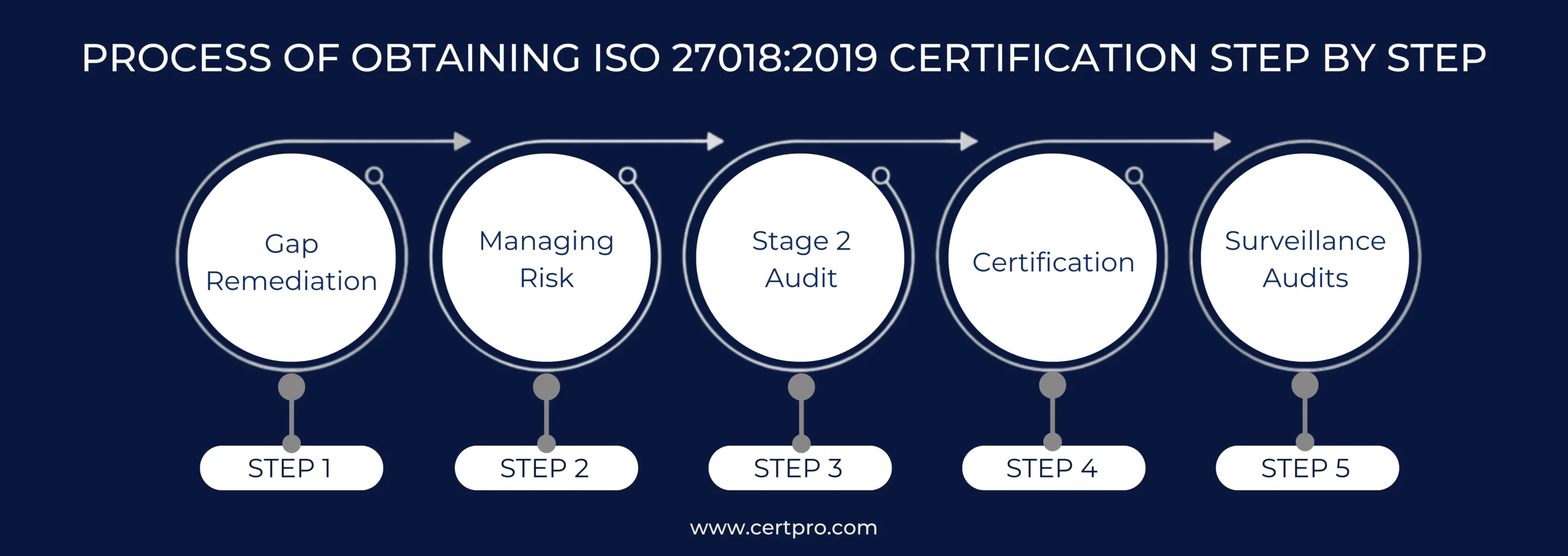
- ✓Stage 1: Scope Definition and Audit Programme Determination
- ✓Stage 2: Documentation Review and Control Evaluation
- ✓Stage 3: Nonconformity Review and Corrective Action
- ✓Stage 4: Certification Decision, Issuance, and Surveillance
ISO 27018 Certification Cost in the UK
The cost of ISO 27018 certification in the United Kingdom varies based on a combination of organisational and technical factors that influence the scope, complexity, and duration of the certification audit. UK organisations seeking ISO 27018 certification should evaluate the cost components that contribute to the total investment, including audit fees, internal resource requirements, and any system or process changes needed to achieve conformance with ISO 27018 controls. Understanding the cost structure of ISO 27018 certification enables organisations to plan their compliance investments effectively and avoid unexpected cost escalation during the certification process.
Factors That Influence ISO 27018 Certification Cost
The primary factors that influence ISO 27018 certification cost in the UK are: organisational size measured by employee count and number of systems within scope; the volume and categories of PII processed within the cloud environment; the number of distinct cloud services included in the certification scope; the geographic distribution of processing infrastructure and personnel; the maturity of the organisation’s existing ISO 27001 ISMS and privacy management framework; and the number and severity of nonconformities identified during the audit that require corrective action and follow-up verification.
Organisations that hold current ISO 27001 certification typically incur lower ISO 27018 certification costs than those pursuing both standards simultaneously, as the existing ISMS documentation, risk assessment, and control framework reduce the volume of foundational work required to prepare for the ISO 27018 assessment. Conversely, organisations with complex multi-cloud environments, extensive sub-processor networks, or high volumes of sensitive PII categories — such as health data, financial records, or biometric data — can expect higher audit fees reflecting the extended scope and depth of evaluation required.
Cost Components of ISO 27018 Certification
| Cost Component | Description | Typical Influencing Factors |
|---|---|---|
| Audit Fees | Licensed CPA Firm fees for Stage 1 and Stage 2 certification audit | Scope size, number of systems, PII volume, audit duration |
| Internal Resource Costs | Staff time for documentation preparation, evidence collection, and audit facilitation | Existing documentation maturity, internal expertise levels |
| Surveillance Audit Fees | Annual audit fees for surveillance assessments during the 3-year certification period | Changes to processing activities, number of sites reviewed |
| Recertification Audit Fees | Comprehensive re-evaluation at the end of the 3-year certification cycle | Scope changes, control framework evolution since initial certification |
| System Enhancement Costs | Technology investments to address identified control gaps prior to audit | Current technical infrastructure maturity, encryption and access control readiness |
UK organisations should approach ISO 27018 certification cost estimation with a total cost of ownership perspective that encompasses not only the initial certification audit fees but also the ongoing investment in surveillance audits, control maintenance, and staff training over the three-year certification period. Organisations that maintain their ISO 27018 controls to a consistently high standard between surveillance audits typically incur lower total certification costs, as they avoid the additional time and resource expenditure associated with significant nonconformity remediation during surveillance assessments. Investment in robust privacy management processes and technology controls prior to the initial certification audit reduces the risk of costly post-audit corrective action programmes.
ISO 27018 Controls and PII Protection Framework
The ISO 27018 controls framework provides a structured set of requirements for protecting PII within public cloud environments. The controls are organised across privacy principles that address the full lifecycle of personal data processing, from the initial determination of lawful basis through to secure deletion and post-processing accountability. ISO 27018 certification audit engagements evaluate the design and operating effectiveness of controls across each of these privacy principles, producing findings that reflect the organisation’s actual control posture rather than its documented intentions.
Consent, Purpose, and Use Limitation Controls
Consent and purpose limitation controls under ISO 27018 require that cloud service providers process PII only for the purposes specified by the PII controller and that these purposes are clearly documented in the processor agreement. The standard explicitly prohibits the use of PII processed on behalf of a controller for the provider’s own commercial purposes — including targeted advertising, market research, or product development — without the explicit written consent of the PII controller. This prohibition applies even where the PII is derived from usage analytics or system logs generated during the provision of the cloud service.
Use limitation controls require the cloud service provider to implement technical and procedural measures that prevent the unauthorised use of PII outside the defined processing scope. These measures include role-based access controls that restrict employee access to PII to those whose job functions require it, audit logging that records all access to PII-containing systems, and periodic access reviews that verify the continued appropriateness of access rights. ISO 27018 certification audits evaluate these controls through examination of access control configurations, log samples, and access review records.
Transparency and Openness Controls
Transparency controls under ISO 27018 require that cloud service providers make available to PII controllers accurate and current information about their data processing practices, sub-processing arrangements, and the security measures applied to PII. This information must be disclosed through the provider’s privacy policy, service agreements, and security documentation in a manner that enables PII controllers to accurately represent the provider’s processing activities to their own data subjects. The standard requires that providers notify controllers of any material changes to their processing activities, sub-processor arrangements, or security controls that may affect the controller’s ability to meet their own GDPR obligations.
ISO 27018 transparency requirements also mandate that cloud service providers disclose to PII controllers all instances where law enforcement or other governmental authorities have requested access to PII processed on behalf of the controller, subject to legal constraints on such disclosure. This requirement reflects the concerns of enterprise customers about the risk of state-sponsored access to their data and aligns with the provisions of the UK GDPR regarding the lawfulness of PII disclosure to public authorities. ISO 27018 certification audits evaluate the provider’s disclosure practices, notification procedures, and legal review processes for government access requests.
Data Retention, Return, and Deletion Controls
Data retention, return, and deletion controls represent one of the most operationally complex areas of ISO 27018 compliance for cloud service providers. The standard requires that providers implement processes that enable the return of PII to the controller upon request and the secure deletion of PII from all systems — including backup and archive media — upon termination of the service agreement or upon the controller’s instruction. Secure deletion must be verified and documented, with evidence of deletion available to the controller upon request. The standard prohibits indefinite retention of PII following service termination and requires that retention periods be specified in the processor agreement.
ISO 27018 Audit Scope for UK Cloud Providers
The scope of an ISO 27018 certification audit for UK cloud service providers is determined by the nature of the organisation’s cloud services, the categories of PII processed, and the boundaries of the Information Security Management System established under ISO 27001. Audit scope definition for UK cloud providers must address the specific characteristics of the public cloud environment — including multi-tenancy, shared infrastructure, API-based service delivery, and continuous deployment practices — that distinguish cloud PII processing from traditional on-premise data management. Accurately defining audit scope is critical to ensuring that the certification attestation reflects the full range of the organisation’s cloud PII processing activities.
Multi-Cloud and Hybrid Environment Audit Considerations
UK cloud service providers that operate across multiple public cloud platforms — or that combine public cloud with private cloud or on-premise infrastructure in a hybrid architecture — face specific audit scope challenges. The ISO 27018 audit must address the controls applied to PII in each component of the environment, including the interfaces and data flows between different infrastructure components. Where the organisation relies on underlying infrastructure providers such as AWS, Microsoft Azure, or Google Cloud, the audit must evaluate the division of responsibility for PII protection controls between the cloud service provider and its infrastructure provider, and verify that the organisation has appropriate contractual and technical controls over the aspects of PII protection within its operational responsibility.
The shared responsibility model that governs security and privacy in public cloud environments requires particular attention during ISO 27018 audit scope definition. ISO 27018 controls that address physical security, hardware disposal, and network infrastructure security may be implemented entirely by the underlying infrastructure provider, while controls addressing application-layer access management, data encryption key management, and privacy policy implementation are typically the responsibility of the cloud service provider being certified. The audit scope documentation must clearly delineate these responsibilities and provide evidence that the organisation has verified the relevant controls implemented by its infrastructure providers through their own certifications, audit reports, or contractual commitments.
Sub-Processor Oversight in the Audit Scope
Sub-processor oversight is a critical element of ISO 27018 audit scope for UK cloud service providers. The standard requires that providers maintain a current register of all sub-processors engaged in processing PII on behalf of their customers, and that appropriate contractual controls are in place with each sub-processor to ensure compliance with ISO 27018 requirements. The ISO 27018 certification audit evaluates the organisation’s sub-processor management programme, including the process for selecting sub-processors, the contractual provisions governing their processing activities, the monitoring of sub-processor compliance, and the notification process for informing PII controllers of sub-processor changes.
For UK cloud providers with extensive sub-processor networks — common in SaaS platforms that integrate third-party components for functionality such as email delivery, payment processing, analytics, or customer support — the sub-processor audit programme is a substantial undertaking. Auditors evaluate not only the contractual documentation governing sub-processing arrangements but also the organisation’s ongoing monitoring activities, including review of sub-processor security certifications, audit rights exercised under sub-processor agreements, and records of sub-processor performance evaluations. ISO 27018 certification requires that the organisation demonstrates effective oversight of its sub-processors rather than merely documenting contractual obligations.
CertPro’s ISO 27018 Audit Services in the UK
CertPro is a Licensed CPA Firm that conducts ISO 27018 certification audit engagements for cloud service providers and PII processors operating throughout the United Kingdom. CertPro’s ISO 27018 audit services are delivered by qualified auditors with specialist expertise in cloud privacy controls, UK GDPR obligations, and the ICO’s oversight expectations for personal data processors. Audit engagements are conducted in accordance with professional auditing standards, applying structured evidence evaluation procedures and independent professional judgement to the assessment of ISO 27018 conformance.
CertPro’s Audit Methodology for ISO 27018
CertPro’s ISO 27018 audit methodology applies a risk-based approach to the evaluation of PII protection controls that prioritises the assessment of controls governing the highest-risk processing activities within the certification scope. The methodology incorporates examination of documentary evidence, technical testing of system configurations and security controls, interviews with personnel responsible for privacy and information security functions, and observation of operational procedures. Audit findings are documented in working papers that provide a transparent record of the evidence examined, the procedures applied, and the conclusions reached, supporting the integrity and reproducibility of the audit process.
CertPro’s audit engagements for ISO 27018 in the UK are structured to evaluate both the design adequacy and the operating effectiveness of PII protection controls. Design adequacy assessment determines whether the controls implemented are capable, in principle, of achieving their stated privacy protection objectives. Operating effectiveness assessment determines whether the controls are functioning as designed in practice, based on examination of evidence from the period under review. This dual-assessment approach provides PII controllers and regulatory authorities with a more reliable and meaningful picture of the organisation’s actual privacy control environment than documentation review alone.
Sector Expertise Across UK Industries
CertPro conducts ISO 27018 certification audits across a broad range of UK industry sectors, including financial services, fintech, healthcare technology, legal services, human resources technology, retail and e-commerce, and public sector technology providers. Each sector presents distinct PII processing characteristics, regulatory overlay, and control environment requirements that influence the audit approach. Financial services cloud providers are evaluated against the additional data protection expectations of FCA-regulated institutions; healthcare technology providers are assessed in the context of NHS Data Security and Protection Toolkit requirements; and public sector cloud providers are evaluated against Crown Commercial Service framework expectations for data processor certification.
Combined ISO 27001 and ISO 27018 Audit Engagements
CertPro offers combined ISO 27001 and ISO 27018 certification audit engagements for UK organisations seeking to achieve both standards simultaneously or to extend an existing ISO 27001 certification to include ISO 27018 scope. Combined audit engagements provide efficiency benefits by coordinating the evidence collection, control testing, and reporting activities for both standards within a single integrated programme. The combined audit approach ensures that the shared control framework elements — including access management, encryption, incident response, and vendor management — are evaluated once and applied to both certification determinations, reducing the total audit duration and resource requirements for the organisation.
CertPro’s combined audit engagements produce integrated audit reports that clearly distinguish between ISO 27001 ISMS conformance findings and ISO 27018 PII-specific control findings, supporting the issuance of separate certification attestations for each standard. This approach is particularly suited to UK SaaS companies and cloud-native organisations that are pursuing comprehensive privacy and security certification programmes to support enterprise sales, regulatory compliance, and international market expansion objectives. The integrated methodology ensures that no gaps exist between the ISMS and privacy management frameworks and that control interactions between the two standards are fully addressed in the audit findings.
ISO 27018 Certification vs. Other Cloud Privacy Standards in the UK
UK organisations evaluating their cloud privacy compliance options must understand how ISO 27018 relates to and differs from other privacy and security standards applicable in the UK market. The landscape of cloud privacy standards includes ISO 27018, SOC 2 (Service Organization Control 2), CSA STAR (Cloud Security Alliance Security Trust Assurance and Risk), and the UK Cyber Essentials programme. Each of these standards addresses overlapping but distinct aspects of cloud security and privacy, and the choice of certification framework should be informed by the specific regulatory, commercial, and customer requirements of the organisation’s target market.
ISO 27018 vs. SOC 2 for UK Cloud Providers
ISO 27018 and SOC 2 are both widely recognised cloud assurance frameworks, but they differ in several important respects. SOC 2 is a US-origin attestation standard developed by the American Institute of Certified Public Accountants (AICPA) that evaluates service organisation controls against five Trust Services Criteria: Security, Availability, Processing Integrity, Confidentiality, and Privacy. ISO 27018, by contrast, is an international standard specifically focused on PII protection controls in public cloud environments, aligned with the ISO 27000 series of information security management standards. For UK organisations, ISO 27018 has stronger explicit alignment with UK GDPR and ICO expectations, while SOC 2 Type II reports are more commonly required by US-based enterprise customers.
UK cloud service providers serving both domestic and US enterprise markets frequently pursue both ISO 27018 and SOC 2 certifications, as the two standards complement rather than duplicate each other. SOC 2 provides a controls-based attestation across the Trust Services Criteria relevant to the organisation’s service commitments, while ISO 27018 provides specific PII-focused control validation aligned with European and UK privacy law requirements. CertPro conducts both ISO 27018 certification audits and SOC 2 examination engagements, enabling UK organisations to pursue a coordinated dual-certification approach that maximises coverage of enterprise customer requirements across international markets.
ISO 27018 and CSA STAR Certification
The Cloud Security Alliance (CSA) STAR programme provides a cloud-specific assurance framework based on the CSA Cloud Controls Matrix (CCM), which maps to ISO 27001, SOC 2, and other security standards. CSA STAR Level 1 involves self-assessment, while CSA STAR Level 2 involves third-party certification based on ISO 27001 or SOC 2 criteria supplemented by CCM controls. ISO 27018 controls are incorporated into the CSA CCM, meaning that organisations pursuing CSA STAR certification can simultaneously address ISO 27018 requirements within the same control evaluation programme. For UK cloud providers targeting cloud-savvy enterprise buyers who conduct detailed technical due diligence, CSA STAR combined with ISO 27018 provides comprehensive evidence of cloud-specific security and privacy control effectiveness.
FAQ
▶
What is ISO 27018 certification and who needs it in the UK?
▶
How long does the ISO 27018 certification audit take in the UK?
▶
Is ISO 27001 certification required before obtaining ISO 27018 certification?
▶
How does ISO 27018 certification support UK GDPR compliance?
▶
What is the validity period of ISO 27018 certification in the UK?
▶
Can ISO 27018 certification cover multiple cloud services or products?
▶
What documentation must a UK organisation prepare for an ISO 27018 audit?
▶
How does the surveillance audit process work for ISO 27018 in the UK?


More articles about ISO 27018 are coming soon. Check back for updates!
More articles about ISO 27018 are coming soon. Check back for updates!
Get In Touch
have a question? let us get back to you.