
SOC 2 Certification in UK
CertPro is a Licensed CPA Firm conducting SOC 2 audits for organisations operating across the United Kingdom. Assessments are performed against the AICPA Trust Services Criteria, covering Security, Availability, Confidentiality, Processing Integrity, and Privacy. SOC 2 Type I and Type II attestation reports are issued upon successful evaluation of an organisation’s control environment. Whether you are pursuing SOC2 Certification for the first time or renewing an existing attestation, CertPro delivers rigorous, standards-compliant audit engagements tailored to the UK market.
OUR CLIENTS










Introduction to SOC 2 Certification in UK
SOC 2, or Service Organization Control 2, is a formal audit framework established by the American Institute of Certified Public Accountants (AICPA) to evaluate the security, availability, processing integrity, confidentiality, and privacy controls of service organisations. SOC 2 Certification in UK has become a standard expectation for technology companies, SaaS providers, cloud service organisations, and data processors that serve enterprise and government clients. The framework applies the AICPA Trust Services Criteria as the basis for evaluating whether an organisation’s controls are suitably designed and operating effectively. Achieving SOC2 Certification demonstrates a commitment to security governance that resonates with clients, investors, and regulators alike.
In the United Kingdom, SOC 2 compliance has gained significant traction among organisations in financial services, fintech, healthtech, and managed IT services. As UK enterprises increasingly rely on cloud infrastructure hosted domestically or internationally, procurement teams and enterprise buyers routinely request a SOC 2 attestation report as part of vendor due diligence. This requirement is particularly prominent for organisations serving FTSE 100 and FTSE 250 companies, financial institutions regulated by the Financial Conduct Authority (FCA), and public sector bodies subject to Cabinet Office security standards. Maintaining SOC 2 compliance positions UK organisations as credible, security-conscious vendors in competitive procurement environments.
What SOC 2 Certification Covers
SOC 2 Certification in UK is structured around five Trust Services Criteria (TSC), each addressing a distinct dimension of operational control. The Security criterion — the only mandatory category — evaluates whether systems are protected against unauthorised access, disclosure, and damage. Organisations pursuing SOC 2 Certification in UK define their applicable criteria based on the nature of their services, contractual commitments to clients, and the sensitivity of data they process. For most UK technology service providers, Security and Availability form the core scope, while Confidentiality and Privacy are added when handling personally identifiable information or commercially sensitive data.
The five Trust Services Criteria are distinct in scope and purpose. Security addresses logical and physical access controls, encryption, and incident response. Availability focuses on system uptime commitments and disaster recovery capabilities. Processing Integrity evaluates whether systems process data completely, accurately, and on time. Confidentiality covers controls for protecting information designated as confidential. Privacy governs how personal information is collected, used, retained, disclosed, and disposed of in line with the organisation’s privacy notice and applicable regulations such as UK GDPR. Each criterion requires documented policies, implemented technical controls, and evidence of ongoing operation throughout the audit period.
SOC 2 Type I vs Type II: Understanding the Distinction
SOC 2 audits are conducted in two forms: Type I and Type II. A SOC 2 Type I audit UK evaluates the design of controls at a specific point in time, confirming that an organisation has controls in place that are suitably designed to meet the applicable Trust Services Criteria. A SOC 2 Type II certification UK is more rigorous — it assesses both the design and the operating effectiveness of controls over a defined audit period, typically six to twelve months. Enterprise clients and regulated organisations in the UK almost universally require a Type II report. It provides evidence of consistent, sustained control performance rather than a point-in-time snapshot, making it the preferred standard for vendor due diligence in regulated and enterprise markets.
| Feature | SOC 2 Type I | SOC 2 Type II |
|---|---|---|
| Evaluation Focus | Design of controls at a point in time | Design and operating effectiveness over a period |
| Audit Period | Single date | Typically 6–12 months |
| Evidence Required | Policy and design documentation | Operational evidence over the audit window |
| Client Preference | Acceptable for early-stage vendors | Required by most enterprise and regulated buyers |
| Issuance Output | Type I Attestation Report | Type II Attestation Report |
SOC 2 in the UK Regulatory and Commercial Landscape
The United Kingdom operates within a distinct regulatory environment that makes SOC 2 compliance particularly relevant. UK GDPR, enforced by the Information Commissioner’s Office (ICO), imposes strict obligations on organisations that process personal data — including requirements for appropriate technical and organisational measures. While SOC 2 is not a UK statutory requirement, a SOC 2 attestation provides substantive evidence of the controls an organisation maintains to protect personal data. This directly supports UK GDPR accountability obligations. Organisations that hold a SOC 2 Type II report can reference it during ICO investigations or client audits as documented proof of their security posture.
London’s position as a global financial centre means that SOC 2 audit services in London are in strong demand. Financial technology companies, asset management platforms, payment processors, and insurtech organisations headquartered in the City of London or Canary Wharf frequently operate alongside US-based counterparts or serve US institutional investors. These commercial relationships create a direct requirement for SOC 2 Certification in UK, as US-based clients apply AICPA-based due diligence standards. SOC 2 compliance that UK fintech organisations maintain also satisfies FCA operational resilience expectations by demonstrating structured, independently tested security controls.

Why Organisations Pursue SOC 2 Certification in UK
The decision to pursue SOC 2 Certification in UK is typically driven by client demand, regulatory expectations, and competitive positioning. Enterprise procurement teams and risk departments in the UK and United States increasingly include SOC 2 attestation requirements in vendor contracts. An organisation without a current SOC 2 report may be disqualified from procurement processes regardless of the quality of its actual security controls. The report itself — issued by a Licensed CPA Firm following a formal SOC 2 audit — provides independent, third-party verification that controls are in place and operating effectively, making it one of the most credible security credentials available to UK service organisations.
Market Access and Enterprise Sales Enablement
For UK technology companies seeking to enter or expand within the US market, SOC 2 Certification in UK is effectively a prerequisite. American enterprise buyers — particularly in financial services, healthcare, and government contracting — routinely require a SOC 2 Type II report before executing vendor agreements. UK SaaS providers, cloud infrastructure operators, and data analytics firms that complete the SOC 2 audit process gain a direct commercial advantage by satisfying this requirement proactively rather than reactively. SOC2 Certification for UK companies serves as a recognised trust signal that accelerates procurement timelines and reduces friction in enterprise sales cycles.
Beyond individual deal cycles, holding a current SOC 2 Type II certification UK positions an organisation within a procurement tier that excludes competitors without the attestation. Organisations in managed services, outsourced HR platforms, payroll processing, and cloud hosting that maintain SOC 2 compliance find that the report functions as a standing qualification document rather than a reactive response to any single client request. This significantly reduces the administrative overhead of responding to security questionnaires, as clients can review the SOC 2 attestation report directly instead of issuing bespoke information requests.
Regulatory Alignment and ICO Accountability
SOC 2 compliance in the UK supports accountability obligations under UK GDPR — particularly Article 5(2), which requires controllers and processors to demonstrate that data processing activities comply with the regulation’s principles. A SOC 2 attestation covering the Privacy Trust Services Criterion provides structured documentation of an organisation’s privacy controls, data retention practices, and data subject rights management. For UK data processors handling personal data on behalf of controllers, this documentation strengthens the demonstrability of compliance without requiring a separate privacy audit framework.
The ICO’s enforcement activity has increased substantially since the UK’s departure from the EU, with significant penalties issued to organisations that failed to implement appropriate security measures following data breaches. Organisations that maintain SOC 2 Type II certification are better positioned to demonstrate that they implemented and tested security controls proactively — a relevant mitigating factor in ICO enforcement proceedings. SOC 2 audit evaluations for UK organisations specifically test incident response procedures, access control effectiveness, and vulnerability management, which are all areas the ICO examines when investigating security incidents.
Competitive Differentiation in the UK Technology Sector
The United Kingdom hosts one of Europe’s largest technology ecosystems, with clusters in London, Manchester, Edinburgh, Cambridge, and Bristol. Within this competitive landscape, SOC 2 Certification in UK functions as a verifiable differentiator for financial services and technology companies. When two competing vendors offer comparable capabilities, the one holding a current SOC 2 Type II attestation report presents a measurably lower risk profile to procurement committees. This differentiation is particularly pronounced in regulated sectors where security documentation is a contractual requirement rather than a preference.
SOC 2 attestation that UK organisations maintain also signals operational maturity to investors, acquirers, and board-level stakeholders. During due diligence processes for mergers, acquisitions, or funding rounds, a current SOC 2 report provides evidence that the organisation has implemented structured, independently verified security controls. This reduces risk assessments during financial due diligence and can positively influence valuations for technology companies where data security is a core component of the business model.
Benefits of SOC 2 Certification in UK
SOC 2 Certification in UK delivers measurable operational, commercial, and reputational benefits. Organisations that complete a formal SOC 2 audit demonstrate that their security controls have been independently evaluated, tested, and confirmed to operate effectively. The following benefits apply specifically within the UK commercial and regulatory context, reflecting the value that SOC2 Certification brings across financial services, technology, and data-driven sectors.
- ✓Independent verification of security controls through a Licensed CPA Firm audit, providing credibility beyond internal self-assessments or questionnaire responses
- ✓Accelerated enterprise procurement cycles by satisfying vendor security requirements with a single, recognised SOC 2 attestation document
- ✓Stronger positioning in UK financial services and fintech markets where FCA-regulated clients require third-party security assurance
- ✓Substantive evidence of technical and organisational measures under UK GDPR, supporting ICO accountability obligations
- ✓Reduced client audit fatigue by replacing repetitive security questionnaires with a standardised SOC 2 report shared across accounts
- ✓Improved internal control environments through the structured SOC 2 audit process, which identifies gaps in documentation, access management, and incident response
- ✓Enhanced investor and board-level confidence through independently verified security governance documentation
- ✓Competitive advantage in cross-border transactions with US-based clients, partners, and investors who require SOC 2 attestation as standard
- ✓Demonstrated operational resilience alignment with FCA PS21/3 requirements for financial services organisations
- ✓Foundation for pursuing complementary frameworks such as ISO 27001 or Cyber Essentials Plus, as SOC 2 control implementation overlaps significantly with both standards
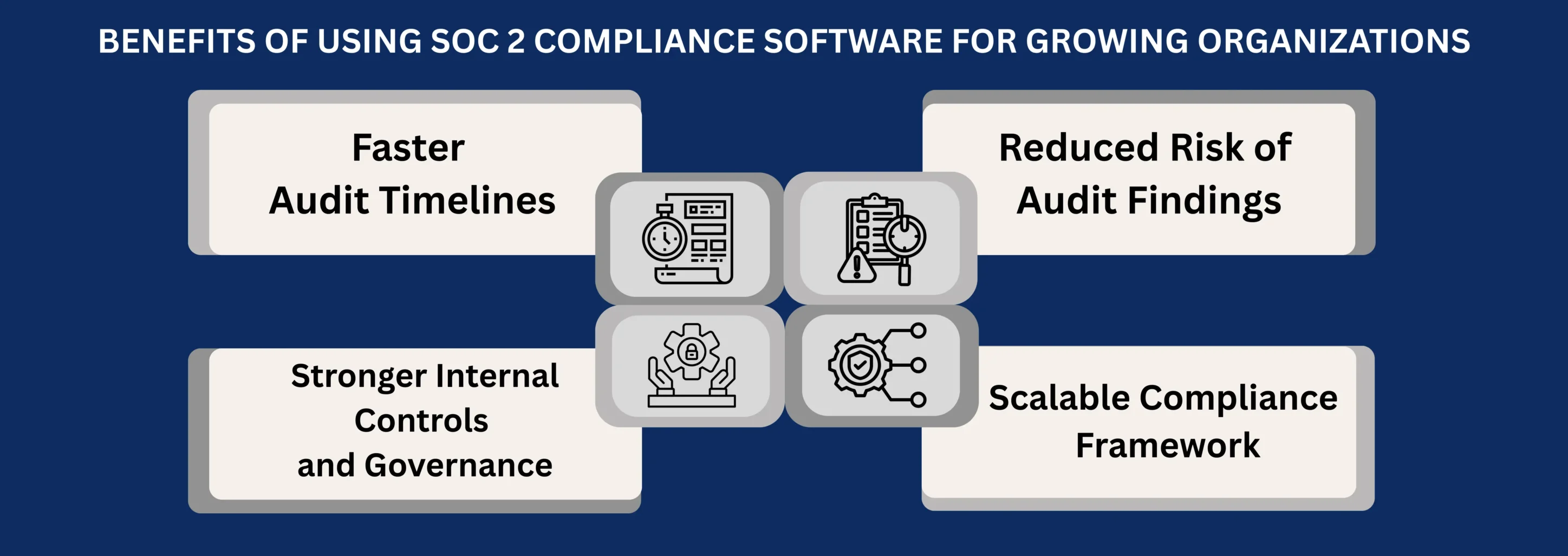
Client trust is a quantifiable commercial asset for UK service organisations. When an organisation holds a current SOC 2 Type II attestation report, it provides clients with documented assurance that controls protecting their data have been independently tested over a sustained period. This assurance directly influences contract renewals — particularly for managed service providers, cloud hosting companies, and SaaS platforms where data security is central to the service delivery model. Clients who receive a SOC 2 report as part of annual vendor reviews are significantly less likely to initiate their own on-site audits or impose additional contractual security amendments.
SOC 2 compliance also supports organisations in the UK public sector supply chain, where frameworks such as the UK Government’s Cyber Essentials scheme and the National Cyber Security Centre (NCSC) guidance establish baseline security expectations. While SOC 2 is not a formal government requirement, the control depth it evaluates substantially exceeds Cyber Essentials requirements. This positions SOC 2-certified organisations as higher-trust suppliers in competitive public sector procurement rounds, often providing a meaningful advantage over uncertified competitors.
A SOC 2 audit is not solely a certification exercise — the evaluation process itself drives substantive improvements in an organisation’s control environment. Preparing for a SOC 2 audit requires organisations to document their security policies, define access control procedures, establish change management processes, and implement monitoring and alerting mechanisms. These activities improve operational discipline and reduce the likelihood of security incidents, regardless of the audit outcome. Organisations that have completed a SOC 2 Type II certification in the UK often report fewer unplanned outages, faster incident response times, and clearer accountability for security responsibilities across teams.
- ✓Trust and Client Retention in UK Markets
- ✓Operational Improvements Through the Audit Process
SOC 2 Certification Requirements in UK
SOC 2 Certification in UK requires organisations to satisfy a defined set of documentation, technical, and procedural requirements aligned with the AICPA Trust Services Criteria. These requirements are not prescriptive rules but criteria-based expectations — meaning the specific controls implemented may vary by organisation, but they must demonstrably meet the intent of each criterion. A Licensed CPA Firm evaluates whether the controls in place are suitably designed and, for Type II reports, whether they operated effectively over the audit period. Understanding these requirements in advance helps organisations prepare efficiently and avoid common findings during fieldwork.
Documentation forms the foundation of a SOC 2 audit. Organisations must maintain written policies and procedures covering all applicable Trust Services Criteria. At a minimum, the Security criterion requires documented information security policies, access control procedures, change management processes, incident response plans, and vendor management policies. For UK organisations, these documents should also reflect UK GDPR obligations and any sector-specific requirements imposed by the FCA, NHS Digital, or other relevant regulators. Auditors review these documents to confirm that the described controls are suitably designed to meet the applicable criteria.
Documentation must be current, approved by appropriate personnel, and communicated to relevant staff. Outdated or unapproved policies represent a finding in a SOC 2 audit, as they indicate that the organisation’s stated control environment does not reflect actual operations. For Type II audits, documentation must have been in place throughout the entire audit period — not created in anticipation of the audit. Auditors specifically evaluate whether policy review cycles are established and whether the most recent review dates fall within required intervals.
Technical controls are evaluated against the applicable Trust Services Criteria through evidence collection and testing. For the Security criterion, technical requirements include multi-factor authentication for administrative access, encryption of data at rest and in transit, network segmentation, intrusion detection or prevention systems, vulnerability scanning, and penetration testing. For UK organisations operating data centres or cloud environments, evidence must demonstrate that these controls are implemented at the system level — not merely described in policy documents. This distinction is central to what makes a SOC 2 audit a rigorous, evidence-based evaluation.
Availability criterion requirements focus on system monitoring, uptime measurement, disaster recovery capabilities, and backup integrity. UK organisations with service level agreements governing uptime must demonstrate that their technical infrastructure supports the commitments made to clients. Processing Integrity requirements address input validation, error handling, and output verification. For fintech and payment processing organisations, these controls are particularly scrutinised, as they relate directly to the accuracy of financial transactions processed on behalf of clients — a key consideration in any SOC 2 audit for UK financial services firms.
SOC 2 compliance requires that an organisation’s people and structures actively support the control environment. This includes background screening for personnel with access to sensitive systems, security awareness training delivered at defined intervals, role-based access management with periodic access reviews, and clear accountability for information security governance. For UK organisations, employment practices must also align with UK employment law, which governs background check scope and the retention of screening records. These people-centred requirements are evaluated alongside technical and documentation controls during fieldwork.
Vendor and third-party management is a significant requirement within the SOC 2 framework. Organisations must demonstrate that they evaluate the security posture of vendors who have access to their systems or data, maintain vendor contracts that include security obligations, and conduct periodic reviews of vendor compliance. For UK organisations using cloud service providers such as AWS, Microsoft Azure, or Google Cloud, the organisation must clearly understand which controls are managed by the cloud provider and which remain the organisation’s responsibility under the shared responsibility model — a distinction that SOC 2 auditors examine closely.
- ✓Written information security policy reviewed and approved annually
- ✓Access control procedures with documented approval workflows for provisioning and deprovisioning
- ✓Multi-factor authentication for all administrative and privileged access
- ✓Encryption standards documented and implemented for data at rest and in transit
- ✓Incident response plan tested at defined intervals with documented results
- ✓Vulnerability scanning conducted quarterly with remediation tracking
- ✓Penetration testing performed annually by a qualified third party
- ✓Business continuity and disaster recovery plans with defined recovery time and recovery point objectives
- ✓Security awareness training delivered to all personnel at hire and annually thereafter
- ✓Vendor risk assessments conducted for all third parties with access to systems or data
- ✓Change management process with documented approval, testing, and rollback procedures
- ✓Audit logging enabled for all critical systems with defined retention periods

- ✓Documentation Requirements
- ✓Technical Control Requirements
- ✓Organisational and People Requirements
The SOC 2 Audit Process: How CertPro Conducts SOC 2 Evaluations in UK
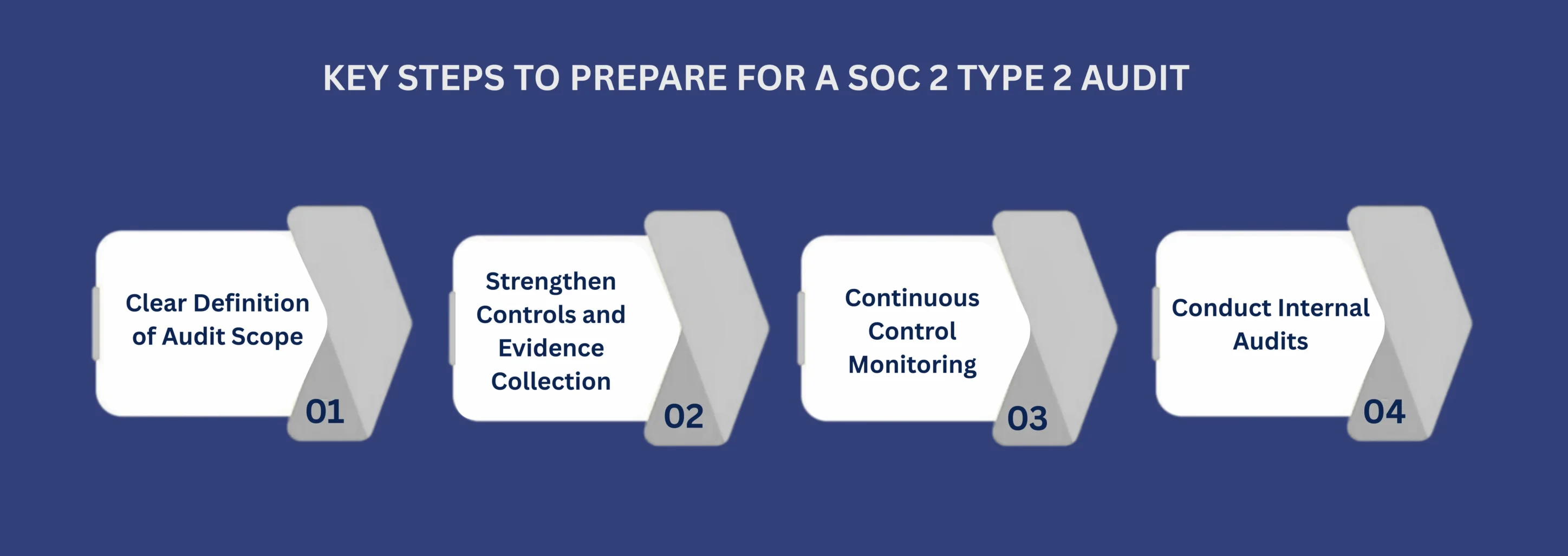
The SOC 2 audit process conducted by CertPro as a Licensed CPA Firm follows a structured sequence of evaluation activities aligned with AICPA attestation standards. Each stage is audit-framed and evidence-based, ensuring that the resulting SOC 2 attestation report reflects a thorough, independent assessment of the organisation’s control environment. The following describes the stages of a SOC 2 audit that UK organisations undergo — from initial scoping through attestation issuance.
The first stage of the SOC 2 audit involves defining the scope of the evaluation. Scope definition determines which systems, services, and data flows fall within the audit boundary, which Trust Services Criteria apply based on the organisation’s service commitments and contractual obligations, and whether the engagement will produce a Type I or Type II report. For UK organisations, scope definition also considers whether systems are hosted in UK data centres, EU jurisdictions, or US-based cloud environments — as data residency affects which controls must be evaluated and documented within the SOC 2 attestation.
During audit program determination, the Licensed CPA Firm establishes the specific control objectives, testing procedures, and evidence requirements that will govern the engagement. The audit program is tailored to the organisation’s environment — a SaaS company with a cloud-native architecture will have a different program from a managed services provider operating hybrid infrastructure. CertPro’s audit programs reference the AICPA’s Trust Services Criteria in full and align testing activities to the specific controls the organisation has implemented, ensuring the SOC 2 audit is proportionate, focused, and defensible.
The fieldwork stage of the SOC 2 audit involves the systematic collection and evaluation of evidence. For a Type I audit, auditors evaluate design documentation: policies, system descriptions, control narratives, and configuration settings. For a Type II audit, auditors evaluate evidence of operating effectiveness across the full audit period. This includes reviewing access logs, change management records, security training completion reports, vulnerability scan outputs, penetration test results, incident response records, and backup verification logs — all of which must demonstrate that controls operated consistently throughout the period under review.
Evidence collection follows a sampling methodology defined in the audit program. Auditors do not review every transaction or event — they select representative samples across the audit period and evaluate whether each sampled item demonstrates that the control operated as described. For UK organisations with high transaction volumes, particularly those in payments, logistics, or data analytics, sampling coverage is calibrated to provide sufficient assurance without requiring exhaustive review of every system record. Auditors also conduct interviews with key personnel to understand how controls are operated in practice, not just how they are described in documentation.
Following fieldwork, CertPro’s audit team presents identified exceptions and nonconformities to the organisation’s management. Exceptions are instances where evidence did not demonstrate that a control operated as described during the audit period. Management reviews each finding, provides factual clarifications where evidence was miscategorised, and documents formal responses to confirmed exceptions. This stage is a standard part of the SOC 2 attestation process — the presence of exceptions does not automatically result in an adverse opinion, but exceptions that are pervasive or relate to fundamental controls will affect the attestation outcome and should be addressed promptly.
The final stage of the SOC 2 audit produces the attestation report. CertPro, as a Licensed CPA Firm registered with the AICPA, issues a formally structured SOC 2 report containing the auditor’s opinion, a description of the system under review, management’s assertion regarding control effectiveness, and detailed descriptions of each control tested along with the auditor’s conclusions. For Type II reports, the report also includes the results of control testing across the full audit period — including any exceptions identified and management’s responses — providing a comprehensive, independently verified record of the organisation’s security posture.
SOC 2 reports issued by CertPro are restricted-use documents, meaning they are intended for distribution to specific user groups — typically the organisation’s existing clients, prospective clients under NDA, and regulators. The report is valid for the period it covers and must be renewed through subsequent audits. For Type II reports, most enterprise clients and regulated buyers expect annual recertification to maintain current status. UK organisations that maintain SOC 2 attestation on an annual basis provide continuous, independently verified assurance to their client base — reinforcing trust and supporting long-term commercial relationships.
- ✓Stage 1: Scope Definition and Audit Program Determination
- ✓Stage 2: Fieldwork — Control Evaluation and Evidence Collection
- ✓Stage 3: Nonconformity Review and Management Response
- ✓Stage 4: Attestation Report Issuance
Steps to Obtain SOC 2 Certification in UK
SOC 2 Certification in UK follows a defined sequence of steps from initial determination through report issuance. The following steps describe the process applicable to UK organisations pursuing either a SOC 2 Type I audit UK or a SOC 2 Type II certification UK engagement. Understanding this process in full helps organisations plan timelines, allocate resources, and engage with their Licensed CPA Firm effectively.
- Determine applicable Trust Services Criteria based on the organisation’s services, contractual commitments to clients, and the sensitivity of data processed — Security is mandatory; Availability, Confidentiality, Processing Integrity, and Privacy are selected based on relevance
- Define the audit boundary by identifying which systems, applications, data flows, personnel, and third-party service providers fall within the scope of the SOC 2 evaluation
- Select the report type — Type I for point-in-time design evaluation, or Type II for evaluation of operating effectiveness over a six-to-twelve-month period — based on client requirements and organisational maturity
- Engage a Licensed CPA Firm such as CertPro to conduct the formal SOC 2 audit, as attestation can only be issued by a CPA firm registered with the AICPA
- Develop and document all required policies, procedures, and control descriptions aligned with the applicable Trust Services Criteria
- Implement technical controls including access management, encryption, monitoring, vulnerability management, and incident response capabilities
- Collect and organise operating evidence for the audit period — including access logs, training records, change management documentation, and scan results — for Type II engagements
- Undergo formal fieldwork conducted by the Licensed CPA Firm, including document review, system configuration inspection, personnel interviews, and control testing
- Review audit findings and nonconformities with the audit team, provide management responses, and implement any required corrections within the audit window
- Receive the issued SOC 2 attestation report from the Licensed CPA Firm and distribute to applicable user groups including clients, prospects, and regulators
- Maintain certified status through annual audit cycles, updating controls and evidence collection processes to reflect changes in the organisation’s environment
UK organisations preparing for their first SOC 2 audit should begin by inventorying all systems, data flows, and third-party integrations that fall within the potential audit scope. Many organisations underestimate the extent of their system boundaries, which can result in scope creep during the audit or findings related to controls that were not initially considered. A comprehensive system description — documenting infrastructure, applications, data classification, and the flow of client data through the environment — is foundational to the SOC 2 audit process and is included in the final attestation report. Starting this inventory early saves time and reduces disruption during fieldwork.
Organisations should also evaluate their existing documentation against the applicable Trust Services Criteria before the audit commences. Policies that reference generic frameworks without detailing specific implementation procedures, or that have not been reviewed within the past twelve months, are likely to require revision before fieldwork begins. For UK organisations, documentation should reflect the organisation’s actual operating environment — including UK GDPR data subject rights procedures, ICO notification obligations, and any sector-specific regulatory requirements relevant to the business. Aligning documentation with both SOC 2 and UK regulatory expectations reduces audit effort and strengthens the overall control narrative.
- ✓Preparing for a SOC 2 Audit: Key Considerations for UK Organisations
SOC 2 Certification Cost in UK
SOC 2 certification cost in the UK varies significantly based on the scope of the engagement, the complexity of the organisation’s environment, the number of Trust Services Criteria included, the report type selected, and the maturity of existing controls. There is no fixed price for a SOC 2 audit — each engagement is scoped individually based on the specific characteristics of the organisation under review. CertPro does not publish fixed pricing for SOC 2 Certification in UK, as doing so would misrepresent the variable nature of individual audit engagements. A scoped cost estimate is provided following an initial assessment of the organisation’s environment.
Factors That Influence SOC 2 Audit Cost
The primary cost drivers for a SOC 2 audit include the number of in-scope systems, the complexity of data flows across the environment, the number of Trust Services Criteria selected, and the audit period length for Type II engagements. Organisations with large, distributed infrastructure — including multiple cloud providers, on-premises data centres, and complex third-party integrations — require more extensive fieldwork and a larger evidence sample, which increases audit cost. Conversely, cloud-native organisations with a single primary infrastructure provider and a well-documented control environment typically incur lower audit costs.
The maturity of existing documentation and controls also significantly affects the time required for fieldwork. Organisations that have previously implemented structured security programmes, maintain current policy documentation, and have operational evidence readily available can complete SOC 2 audit fieldwork more efficiently than those starting from minimal documentation. The report type also affects cost: a SOC 2 Type I audit UK is generally less expensive than a Type II engagement, as it does not require longitudinal evidence collection or testing of control operation over time. However, most UK enterprise clients require Type II reports, making the additional investment necessary for commercial viability.
| Cost Factor | Lower Cost Scenario | Higher Cost Scenario |
|---|---|---|
| Number of in-scope systems | Single application, one cloud provider | Multiple applications, hybrid infrastructure |
| Trust Services Criteria | Security only | Security plus three or four additional TSC |
| Report type | SOC 2 Type I | SOC 2 Type II (12-month period) |
| Documentation maturity | Current, comprehensive policies in place | Policies require significant development |
| Organisation size | Small team, limited data flows | Large enterprise with multiple departments |
Ongoing Certification Investment
SOC 2 certification is not a one-time expenditure. Organisations must complete annual audit cycles to maintain a current attestation report, as the previous year’s report expires and becomes outdated for client due diligence purposes. Annual recertification costs are typically lower than the initial SOC 2 audit, as the control environment is already documented and the scope is well-defined. However, significant changes to the organisation’s infrastructure, services, or applicable Trust Services Criteria may increase the scope and cost of subsequent audits. UK organisations should budget for annual SOC 2 audit engagements as a standard operational cost of maintaining SOC 2 compliance and ongoing client assurance.
SOC 2 Certification for UK Financial Services and Fintech Organisations
SOC 2 Certification in UK that financial services organisations pursue is shaped by the intersection of AICPA Trust Services Criteria and UK-specific regulatory obligations. Financial services companies regulated by the FCA operate under stringent operational resilience requirements, including obligations set out in PS21/3 on operational resilience, SYSC sourcebook provisions on systems and controls, and CASS rules governing client asset protection. A SOC 2 audit provides a structured, independently evaluated mechanism for assessing the security and availability controls that underpin these regulatory requirements.
Fintech and Payments: SOC 2 Compliance UK Fintech Requirements
SOC 2 compliance that UK fintech organisations maintain is directly relevant to the security of payment processing systems, client data management, and API-based financial service delivery. Fintech companies that process payments under the Payment Services Regulations 2017 (PSR 2017) or operate as e-money institutions must implement security measures proportionate to the risks they manage. A SOC 2 Type II report covering Security and Processing Integrity criteria demonstrates that the organisation’s transaction processing controls have been tested and confirmed to operate effectively — providing evidence directly relevant to PSR 2017 security obligations and strengthening the organisation’s regulatory standing.
UK fintech companies that serve US-based clients, investors, or partner institutions are subject to dual-jurisdiction expectations. US counterparties apply AICPA-based due diligence standards and require SOC 2 attestation as a condition of commercial engagement. UK GDPR simultaneously governs the personal data processed through financial services platforms. The Privacy Trust Services Criterion within a SOC 2 audit addresses data collection, use, retention, and disclosure controls — creating alignment between the SOC 2 framework and UK GDPR accountability requirements that financial services organisations must satisfy concurrently. This dual alignment makes SOC2 Certification particularly valuable for UK fintech firms operating across borders.
Asset Managers, Custodians, and Outsourced Service Providers
UK asset managers, fund administrators, and custodian banks that outsource technology operations to third-party service providers increasingly require those providers to hold a current SOC 2 Type II report. Under FCA SYSC sourcebook provisions, regulated firms must maintain oversight of outsourced functions and ensure that third-party arrangements do not impair operational resilience. A SOC 2 attestation from a technology service provider gives the regulated firm independent evidence — issued by a Licensed CPA Firm — that the outsourced function’s security and availability controls have been formally evaluated and confirmed effective.
For outsourced service providers to UK financial services firms, holding a SOC 2 Type II certification UK is increasingly a commercial prerequisite. Providers without a current SOC 2 report face extended procurement timelines, client-initiated security questionnaire requirements, and potential exclusion from preferred supplier lists. The SOC 2 audit services delivered to financial institutions in London must meet AICPA attestation standards while also addressing the UK regulatory context within the system description and control narratives included in the final report. CertPro’s audit teams are experienced in both dimensions, ensuring that reports are credible to US-standard reviewers and contextually relevant to UK-regulated buyers.
SOC 2 Compliance and UK GDPR: The Relationship Between Frameworks
SOC 2 compliance and UK GDPR operate as complementary but distinct frameworks. UK GDPR, retained and modified from EU GDPR following Brexit, governs the lawful processing of personal data within the United Kingdom. The regulation requires controllers and processors to implement appropriate technical and organisational measures to protect personal data. SOC 2, by contrast, is a voluntary attestation framework established by the AICPA for service organisations and evaluated by a Licensed CPA Firm against Trust Services Criteria. The two frameworks address overlapping concerns — particularly around security and privacy — but through different mechanisms and with different legal standing. Understanding this relationship helps UK organisations leverage SOC 2 attestation effectively within their broader compliance strategy.
How SOC 2 Supports UK GDPR Article 32 Obligations
UK GDPR Article 32 requires controllers and processors to implement appropriate technical and organisational security measures, taking into account the state of the art, implementation costs, and the nature, scope, context, and purposes of processing. A SOC 2 audit directly evaluates many of the controls relevant to Article 32 compliance — including encryption, access control, incident response, and vulnerability management. An organisation that holds a current SOC 2 Type II attestation report covering the Security criterion has documented evidence, reviewed and confirmed by a Licensed CPA Firm, that these controls were implemented and operating effectively during the audit period. This is a credible, independently verified demonstration of Article 32 measures.
For UK data processors acting on behalf of controllers, the ability to provide a SOC 2 attestation report strengthens the processor’s position in demonstrating compliance with Article 28 obligations. Article 28 requires that processors provide sufficient guarantees to implement appropriate technical and organisational measures. A SOC 2 Type II report issued by a Licensed CPA Firm constitutes a credible, independently verified statement of those guarantees — far more substantive than contractual assertions alone. This makes SOC 2 compliance a practical and commercially useful mechanism for UK data processors operating across multiple controller relationships.
Privacy TSC and UK GDPR Data Subject Rights
The Privacy Trust Services Criterion within the SOC 2 framework evaluates controls governing the collection, use, retention, disclosure, and disposal of personal information in accordance with the organisation’s privacy notice and applicable legal requirements. For UK organisations, this includes evaluating controls that support UK GDPR data subject rights: the right of access, the right to rectification, the right to erasure, and the right to data portability. A SOC 2 audit covering the Privacy criterion examines whether the organisation has implemented procedures for responding to data subject requests within required timeframes — and whether those procedures operated effectively throughout the audit period. This makes the Privacy TSC a valuable addition to any SOC 2 scope for UK organisations processing personal data at scale.
SOC 2 vs ISO 27001: Choosing the Right Framework for UK Organisations
UK organisations frequently evaluate whether to pursue SOC 2 Certification in UK, ISO 27001 certification, or both. The two frameworks address information security through different methodologies, audience expectations, and geographic acceptance profiles. Understanding the distinctions between them enables organisations to prioritise based on client requirements, target markets, and strategic objectives — and to plan a certification roadmap that delivers maximum commercial return on compliance investment.
Framework Structure and Methodology Differences
SOC 2 is an attestation framework: a Licensed CPA Firm evaluates and reports on whether specific controls meet defined criteria. The output is a restricted-use report describing the control environment and the auditor’s conclusions. ISO 27001 is a management system standard: an accredited certification body evaluates whether an organisation has implemented an Information Security Management System (ISMS) that meets the requirements of the standard. The output is a publicly shareable certificate confirming conformance. SOC 2 is US-centric and AICPA-governed; ISO 27001 is globally recognised and published by the International Organization for Standardization. Both are rigorous, but they serve different audiences and serve different commercial purposes for UK organisations.
| Dimension | SOC 2 | ISO 27001 |
|---|---|---|
| Governing Body | AICPA (American Institute of CPAs) | ISO/IEC (International Organization for Standardization) |
| Geographic Acceptance | Primarily US; increasingly global for tech sectors | Global recognition across all industries |
| Evaluation Output | Restricted-use attestation report | Publicly shareable certificate |
| Primary Audience | US-based enterprise clients and regulated buyers | International clients, regulators, and partners |
| Renewal Cycle | Annual attestation through new audit | 3-year certification cycle with annual surveillance audits |
When SOC 2 Is the Right Choice for UK Companies
SOC2 Certification is the appropriate choice for UK companies when the primary client base includes US-based enterprise buyers, financial services organisations applying AICPA-based vendor due diligence standards, or technology sector procurement teams that specifically request a SOC 2 report. UK SaaS companies, cloud service providers, data analytics firms, and managed IT service providers that serve or intend to serve the US market should prioritise SOC 2 over ISO 27001 if forced to choose — as US clients will not accept an ISO 27001 certificate as a substitute for a formal SOC 2 attestation report.
Many UK technology organisations ultimately pursue both frameworks: SOC 2 to satisfy US client requirements and ISO 27001 to support European and government procurement requirements. The two frameworks share significant control overlap — particularly in areas such as access management, vulnerability management, incident response, and business continuity — meaning that organisations that have implemented controls for one framework are substantially prepared for the other. Pursuing both certifications simultaneously or sequentially is a common and commercially effective strategy for UK organisations with international client bases and diverse regulatory obligations.
CertPro: Licensed CPA Firm Conducting SOC 2 Audits in UK
CertPro is a Licensed CPA Firm registered with the AICPA, authorised to conduct SOC 2 audits and issue SOC 2 attestation reports. SOC 2 Certification in UK can only be issued by a CPA firm that holds active AICPA membership and operates in accordance with AICPA attestation standards. CertPro’s audit team conducts SOC 2 evaluations for organisations across the United Kingdom — including those in London, Manchester, Edinburgh, Birmingham, and Bristol — as well as remote-first and cloud-native organisations with operations distributed across UK regions. Every engagement is conducted with the independence, rigour, and technical depth required for a credible, standards-compliant SOC 2 attestation.
Why a Licensed CPA Firm Matters for SOC 2 Attestation
The AICPA requires that SOC 2 reports be issued exclusively by licensed CPA firms. This requirement exists because SOC 2 is a formal attestation engagement — a professional opinion issued under established auditing standards. Organisations that engage non-CPA firms or security consultants to conduct a SOC 2 review do not receive a valid SOC 2 attestation report, regardless of the quality of the review conducted. Enterprise clients and regulated buyers specifically request the name of the issuing CPA firm as part of their evaluation of SOC 2 reports, as the credibility of the attestation depends on the independence and licensure of the issuing firm. Engaging a properly credentialed firm is therefore not optional — it is fundamental to the value of the report.
CertPro conducts SOC 2 audits with teams that combine CPA credentials with deep technical expertise in cloud infrastructure, enterprise security architecture, and UK regulatory requirements. This combination enables audit teams to evaluate technical controls — such as cloud configuration, encryption implementation, and network segmentation — with the same rigour applied to governance, policy, and operational procedures. The resulting SOC 2 attestation report reflects a comprehensive evaluation of both technical and organisational control dimensions, giving clients and regulators a complete, trustworthy picture of the organisation’s security posture.
CertPro’s Approach to SOC 2 Audit UK Engagements
CertPro’s SOC 2 audit UK engagements are structured to deliver rigorous, standards-compliant attestation reports within defined timelines. Audit engagements begin with a formal scope determination meeting, proceed through structured fieldwork phases, and conclude with a management review of findings before report issuance. Throughout the engagement, CertPro’s auditors operate with independence from the organisation’s operational and management functions — maintaining the objectivity required for a valid SOC 2 attestation. All communications during the audit are documented and form part of the audit workpapers maintained in accordance with AICPA standards.
CertPro issues both SOC 2 Type I and Type II reports for UK organisations. For organisations pursuing SOC 2 Certification in UK for the first time, a Type I report provides an initial validated baseline of the control environment. Subsequent annual engagements produce Type II reports demonstrating sustained operating effectiveness over the full audit period. CertPro also conducts SOC 2 audit UK engagements for organisations that have previously been certified by other firms — providing continuity of attestation coverage while delivering an independent evaluation perspective that clients and regulators value.
FAQ
▶
What is SOC 2 certification and why is it relevant for UK organisations?
▶
How long does it take to obtain SOC 2 certification in the UK?
▶
What is the difference between SOC 2 Type I and Type II?
▶
Who can issue a SOC 2 report in the UK?
▶
Is SOC 2 certification required by UK law?
▶
What does SOC 2 compliance mean versus SOC 2 certification?
▶
How much does SOC 2 certification cost in the UK?
▶
How often must SOC 2 certification be renewed in the UK?

SOC 1 VS SOC 2: WHICH REPORT YOUR CUSTOMERS ACTUALLY ASK FOR
If you sell SaaS or provide outsourced services, you have likely been asked for a SOC report. However, the follow-up question is rarely easy to answer…
SOC 2 Certified: What Does It Mean for Your Business
For companies that handle sensitive data or run cloud-based services, the question “Can you provide your SOC 2 report?” carries enormous weight. Yet, …

Secure Email Platform Exclaimer Renews ISO, SOC 2
Excerpt from The Manila Times Article, Published on February 26, 2026 Secure email solutions provider Exclaimer has renewed its ISO and SOC 2 certific…
Get In Touch
have a question? let us get back to you.