
SOC 2 Certification in Christchurch
CertPro is a Licensed CPA Firm delivering SOC 2 Certification in Christchurch under AICPA Trust Services Criteria. CertPro conducts independent evaluations of security, availability, confidentiality, processing integrity, and privacy controls for technology and service organizations operating across Christchurch and the broader New Zealand market.
OUR CLIENTS










Introduction to SOC 2 Certification in Christchurch
SOC 2 Certification in Christchurch is one of the most recognized and sought-after attestation frameworks for service organizations that store, process, or transmit customer data. Developed by the American Institute of Certified Public Accountants (AICPA), SOC 2 — formally known as Service Organization Control 2 — establishes a rigorous set of standards called the Trust Services Criteria (TSC). These criteria govern how organizations design, implement, and operate controls related to security, availability, confidentiality, processing integrity, and privacy. For Christchurch-based businesses in sectors such as SaaS, fintech, healthcare IT, managed services, and cloud infrastructure, SOC2 Certification functions as a formal declaration of data governance maturity.
Christchurch has emerged as a significant technology and financial services hub within New Zealand’s South Island economy. As the city’s digital ecosystem expands — encompassing cloud service providers, software development firms, data analytics companies, and managed IT service organizations — demand for internationally recognized data security attestations has grown substantially. SOC 2 Certification in Christchurch addresses this demand by providing a standardized, auditor-verified record of an organization’s security posture. Unlike self-assessment frameworks, SOC 2 attestation is issued exclusively by licensed CPA firms conducting independent third-party audits, ensuring objectivity and institutional credibility.
The AICPA Trust Services Criteria framework underpinning SOC 2 compliance was designed to be flexible yet rigorous. Organizations select the criteria most relevant to their service commitments and then demonstrate — through documented evidence, system descriptions, and control testing — that those criteria are met consistently. For Christchurch companies seeking to serve enterprise clients in the United States, United Kingdom, Australia, and other markets where SOC 2 attestation is a standard vendor procurement requirement, achieving SOC 2 Certification is no longer optional. It is a baseline expectation that determines whether a service organization can participate in competitive procurement processes.
What SOC 2 Certification Covers
SOC 2 certification covers the design and operating effectiveness of controls that a service organization places around its systems and data. The scope of a SOC 2 audit is defined by the organization’s system description — a formal document that outlines the boundaries of the system being evaluated, the nature of services provided, the infrastructure components involved, and the key personnel responsible for control operation. This system description forms the foundation of the audit and is subject to auditor scrutiny for completeness and accuracy. Any significant omission or inaccuracy in the system description can result in qualified audit findings.
The Trust Services Criteria are organized around the Common Criteria — which address security controls applicable to all SOC 2 engagements — and additional criteria for availability, confidentiality, processing integrity, and privacy, added based on organizational scope. Each criterion contains specific points of focus that auditors use to evaluate whether relevant controls exist and function as intended. For Christchurch technology companies, the security criterion is universally required, while additional criteria are selected based on service commitments made to customers and the nature of data processed within the system under review.
SOC 2 vs Other Certification Frameworks
SOC 2 certification differs from other information security frameworks in several important ways. Unlike ISO 27001 — a globally recognized certification issued by accredited certification bodies against a prescriptive standard — SOC 2 is an attestation report issued by a licensed CPA firm based on AICPA auditing standards. SOC 2 tests specific controls against the Trust Services Criteria, service commitments, and contractual requirements, making it highly tailored to the actual service environment under review. ISO 27001, by contrast, assesses the existence and management of an Information Security Management System (ISMS) at an organizational level.
For Christchurch companies serving North American enterprise clients, SOC 2 attestation is typically the primary requirement, as it aligns directly with AICPA auditing standards that US-based procurement teams recognize and trust. ISO 27001 carries stronger recognition in European and Asia-Pacific markets. Organizations with multinational customer bases frequently pursue both certifications. However, SOC 2 Certification in Christchurch remains the starting point for most New Zealand technology firms seeking entry into US and Canadian enterprise markets, where SOC 2 compliance is embedded in standard vendor security questionnaires and data processing agreements.
| Framework | Issuing Body | Scope | Primary Market | Report Type |
|---|---|---|---|---|
| SOC 2 | Licensed CPA Firm (AICPA) | Trust Services Criteria — Controls-based | US, Canada, Global | Attestation Report |
| ISO 27001 | Accredited Certification Body | ISMS — Organization-wide | Europe, Asia-Pacific, Global | Certificate |
| SOC 1 | Licensed CPA Firm (AICPA) | Internal Controls over Financial Reporting | US, Canada | Attestation Report |
| PCI DSS | Qualified Security Assessor | Payment Card Data Controls | Global | Compliance Report |
| HIPAA | N/A — Self-attestation or OCR | Healthcare Data Privacy and Security | US | Compliance Agreement |

SOC 2 Type 1 vs SOC 2 Type 2 in Christchurch
SOC 2 audits in Christchurch are conducted under two distinct report types: Type 1 and Type 2. Understanding the difference between these two report types is essential for organizations determining which audit engagement aligns with their current maturity level, timeline constraints, and customer requirements. Both report types are issued by licensed CPA firms following AICPA auditing standards and both result in formal attestation reports. However, they differ fundamentally in what they evaluate and the period of time covered by the examination.
SOC 2 Type 1 Audit — Point-in-Time Assessment
A SOC 2 Type 1 audit evaluates the design of an organization’s controls at a specific point in time. The auditor assesses whether the controls described in the system description are suitably designed to meet the selected Trust Services Criteria as of a stated date. A Type 1 audit does not evaluate whether those controls have operated effectively over a period of time — it is a design-level assessment only. For Christchurch organizations that have recently implemented security controls and need to demonstrate SOC 2 compliance quickly, a Type 1 audit provides an initial attestation that can be shared with prospective clients or procurement teams while the organization builds its control operating history toward a Type 2 engagement.
SOC 2 Type 1 audit engagements in Christchurch are typically completed in a shorter timeframe than Type 2 audits, as the evidence collection process focuses on a single point in time rather than a longitudinal observation period. Organizations undergoing a Type 1 audit must produce system descriptions, control documentation, and evidence of control design. The resulting attestation report includes the auditor’s opinion on whether controls are suitably designed — not whether they have operated as intended over time. Type 1 reports are appropriate for early-stage attestation needs but are generally not accepted as a substitute for Type 2 reports by enterprise procurement teams with mature vendor risk programs.
SOC 2 Type 2 Audit — Operating Effectiveness Over Time
A SOC 2 Type 2 audit evaluates both the design and the operating effectiveness of controls over a defined observation period, typically six to twelve months. The auditor collects and examines evidence demonstrating that controls functioned as designed throughout the observation period — not merely that they existed at a single point in time. This longitudinal evaluation provides significantly greater assurance to relying parties, as it demonstrates sustained control operation rather than a snapshot of control design. SOC 2 Type 2 reports are the standard expectation in most enterprise vendor security programs globally.
For Christchurch fintech companies, SaaS providers, and managed service organizations serving multinational clients, a SOC 2 Type 2 attestation is the primary credential that satisfies procurement-level security diligence. The observation period for a Type 2 audit must be at least six months, with twelve-month periods being most common for annual renewal cycles. Evidence collected during the observation period includes access control logs, security monitoring records, change management tickets, vendor assessment documentation, and incident response records. CertPro conducts SOC 2 Type 2 audits in Christchurch under AICPA AT-C Section 205 attestation standards, issuing independent attestation reports upon completion of the audit program.
Choosing Between Type 1 and Type 2
The decision between a SOC 2 Type 1 and Type 2 engagement depends on three primary factors: the organization’s current control maturity, the requirements of existing or prospective clients, and the time available before an attestation report is needed. Organizations that have only recently formalized their security controls and lack a documented operating history may begin with a Type 1 engagement to demonstrate design-level compliance while accumulating evidence for a subsequent Type 2 audit. Organizations with established control environments and at least six months of documented control operation are well-positioned to proceed directly to a Type 2 audit, which delivers the level of SOC 2 attestation that enterprise clients expect.
| Attribute | SOC 2 Type 1 | SOC 2 Type 2 |
|---|---|---|
| Evaluation Focus | Control Design (Suitability) | Control Design + Operating Effectiveness |
| Time Period | Single point in time | Minimum 6-month observation period |
| Evidence Depth | Design documentation | Longitudinal operational evidence |
| Typical Timeline | 2–4 months | 6–12 months |
| Market Acceptance | Initial attestation | Enterprise procurement standard |
SOC 2 Trust Service Criteria Explained
The Trust Services Criteria (TSC) form the evaluative backbone of every SOC 2 audit. Established by the AICPA, the TSC define the specific control objectives and points of focus that auditors use to assess whether a service organization’s controls are suitably designed and operating effectively. The TSC are organized into five categories: Security, Availability, Confidentiality, Processing Integrity, and Privacy. The Security category — also known as the Common Criteria — is mandatory for all SOC 2 engagements. The remaining four categories are selected based on the nature of services provided and the commitments made to customers in service-level agreements and contracts. Understanding these criteria is essential for any Christchurch organization pursuing SOC2 Certification.
The Security criterion addresses the protection of information and systems from unauthorized access, unauthorized disclosure, and damage that could compromise the availability, integrity, confidentiality, and privacy of information or systems. Security controls evaluated under this criterion include logical and physical access controls, encryption of data in transit and at rest, network security architecture, vulnerability management programs, security incident detection and response procedures, and system change management processes. Every SOC 2 certification engagement — regardless of scope — must include the Security criterion.
For Christchurch technology companies, the Security criterion is evaluated across the full technology stack supporting the in-scope system. Auditors examine whether access to systems is restricted to authorized personnel, whether multi-factor authentication is implemented for privileged accounts, whether encryption standards are applied to sensitive data repositories, and whether security monitoring tools are deployed and actively reviewed. The Common Criteria also encompass organizational controls such as background screening procedures, security awareness training programs, vendor risk management processes, and formal risk assessment methodologies. Deficiencies identified in the Security criterion typically have the broadest impact on the overall SOC 2 audit opinion.
The Availability criterion addresses whether systems are available for operation and use as committed or agreed. Controls evaluated under this criterion include infrastructure redundancy and failover capabilities, disaster recovery planning and testing, system performance monitoring, and capacity management processes. For Christchurch cloud infrastructure providers and managed service organizations with uptime commitments in customer contracts, the Availability criterion is a standard component of the SOC 2 audit scope. Auditors examine disaster recovery test results, uptime monitoring logs, and incident response records to assess whether availability commitments are supported by operating controls.
The Confidentiality criterion addresses whether information designated as confidential is protected as committed or agreed. This criterion is particularly relevant for organizations handling proprietary business data, legally privileged information, or data subject to contractual confidentiality obligations. Controls evaluated include data classification procedures, access restriction policies, non-disclosure agreement management, and secure data disposal processes. The Processing Integrity criterion addresses whether system processing is complete, valid, accurate, timely, and authorized. This criterion is most commonly included in SOC 2 audits for financial processing organizations, payment service providers, and data transformation services — sectors well represented among Christchurch’s growing fintech community.
The Privacy criterion addresses whether personal information is collected, used, retained, disclosed, and disposed of in conformity with the commitments in the entity’s privacy notice and the AICPA’s generally accepted privacy principles. Privacy controls evaluated include consent management mechanisms, data subject rights request procedures, privacy notice accuracy and completeness, cross-border data transfer controls, and data retention and disposal schedules. For Christchurch organizations subject to New Zealand’s Privacy Act 2020 as well as GDPR obligations arising from processing personal data of EU individuals, the Privacy criterion provides a structured framework for demonstrating compliance with multiple privacy regimes through a single SOC 2 audit engagement.
New Zealand’s Privacy Act 2020 aligns closely with the principles underlying the AICPA’s Privacy criterion, making SOC 2 attestation an effective instrument for demonstrating compliance with local privacy obligations while simultaneously satisfying international customer requirements. Christchurch organizations that process personal data for clients in regulated jurisdictions — including the United States, European Union, United Kingdom, and Australia — benefit from the Privacy criterion’s comprehensive coverage of data lifecycle management controls. The Privacy criterion is included in a SOC 2 audit scope when the organization’s privacy notice or service commitments make specific representations about how personal information is handled.

- ✓Security — The Common Criteria
- ✓Availability, Confidentiality, and Processing Integrity
- ✓Privacy Criterion
SOC 2 Certification Process in Christchurch
The SOC 2 certification process follows a structured sequence of audit stages defined by AICPA auditing standards. Each stage serves a distinct purpose — from establishing the scope of the audit to issuing the final attestation report. CertPro executes SOC 2 audit engagements in Christchurch through a disciplined, evidence-driven audit program that adheres strictly to AICPA AT-C Section 205 attestation standards. The process below reflects the standard audit workflow for SOC 2 engagements conducted by CertPro for Christchurch-based service organizations.
- Scope Definition — Identify the system under review, define system boundaries, determine Trust Services Criteria categories applicable to the engagement, and confirm report type (Type 1 or Type 2).
- Audit Program Determination — Develop the audit program specifying the control areas, evidence requirements, testing procedures, and examination period applicable to the selected Trust Services Criteria.
- System Description Review — Evaluate the completeness and accuracy of the organization’s system description, including infrastructure, software, people, procedures, and data components.
- Stage 1 Audit — Conduct preliminary review of control documentation, policies, and procedures to assess design-level suitability of controls against the selected Trust Services Criteria.
- Control Testing (Type 2) — Execute substantive testing of control operating effectiveness across the observation period through evidence inspection, inquiry, observation, and re-performance procedures.
- Nonconformity Review — Identify and document any control deficiencies, evaluate severity classification (deficiency, significant deficiency, or material weakness), and obtain management responses.
- Certification Decision — Evaluate aggregate audit findings against opinion standards to determine whether a clean (unqualified), qualified, adverse, or disclaimer opinion is appropriate.
- Issuance of Attestation Report — Issue the SOC 2 attestation report, including the auditor’s opinion, system description, and control testing results, under AICPA AT-C Section 205.
- Surveillance and Recertification — Define the next audit period observation window and initiate continuous monitoring protocols to support annual SOC 2 audit renewal cycles.
The scope definition stage is the most consequential phase of a SOC 2 audit engagement, as it determines what is examined and what attestation the resulting report covers. During scope definition, the organization and the auditor jointly identify the boundaries of the system under review — including the infrastructure components, software applications, data repositories, operational procedures, and personnel roles integral to the services provided to customers. The system description must accurately reflect the complete operational environment, as any significant omission can result in a qualified audit opinion. For Christchurch SaaS providers, the system typically encompasses application hosting environments, customer data repositories, administrative access systems, and third-party service provider dependencies.
The Trust Services Criteria categories selected during scope definition determine the entire structure of the audit program. A Christchurch managed service organization providing cloud infrastructure services might include Security and Availability criteria, while a healthcare IT platform processing patient data might add Privacy and Confidentiality. The scope definition also determines whether the engagement proceeds as a Type 1 or Type 2 audit — a decision with significant implications for evidence collection timelines and the nature of the resulting attestation. Once scope is defined and agreed upon, CertPro formalizes the engagement through an audit agreement specifying the examination period, deliverables, and audit program structure.
Control testing is the core evidentiary phase of a SOC 2 Type 2 audit engagement. During this phase, CertPro auditors systematically evaluate whether each in-scope control operated effectively throughout the observation period. Testing procedures include inspection of documentary evidence, inquiry of relevant personnel, observation of control execution, and re-performance of control procedures where applicable. Evidence collected during control testing must demonstrate that controls functioned consistently and as described in the system description. Gaps between described control design and actual operational evidence represent the most common source of audit findings in SOC 2 engagements.
For Christchurch organizations undergoing SOC 2 audit services, the evidence collection process spans the full observation period and covers all control domains within scope. Access provisioning and de-provisioning logs, privileged access review records, security patch application records, backup and recovery test results, vendor due diligence documentation, and security incident logs are among the primary evidence categories examined during control testing. CertPro’s audit program specifies the exact evidence items required for each control, the testing procedure applied, the sample sizes used for population-based testing, and the criteria for evaluating whether a control exception constitutes a deficiency or a more significant finding requiring management response and potential report qualification.
Upon completion of the audit program, CertPro issues the SOC 2 attestation report — a formal document comprising the independent service auditor’s report, management’s assertion, the system description, and the detailed description of controls tested with results. The attestation report is the definitive output of the SOC 2 audit process and represents the official credential that Christchurch organizations share with clients, regulators, and business partners. The report is restricted to specified parties — typically the service organization and its existing or prospective customers — and carries the authority of a licensed CPA firm’s professional opinion.
SOC 2 attestation is not a permanent certification. Organizations are required to undergo annual SOC 2 audits to maintain their certification status. The annual audit cycle ensures that controls remain effective as systems evolve, personnel change, and threat landscapes shift. Each annual renewal initiates a new observation period and produces a new attestation report. Christchurch organizations that maintain continuous control monitoring throughout the year — including regular access reviews, periodic security assessments, and ongoing vendor oversight — are well-positioned to achieve clean audit opinions in successive annual engagements. CertPro structures renewal engagements to build on prior audit observations, providing efficient and thorough annual SOC 2 audit coverage.
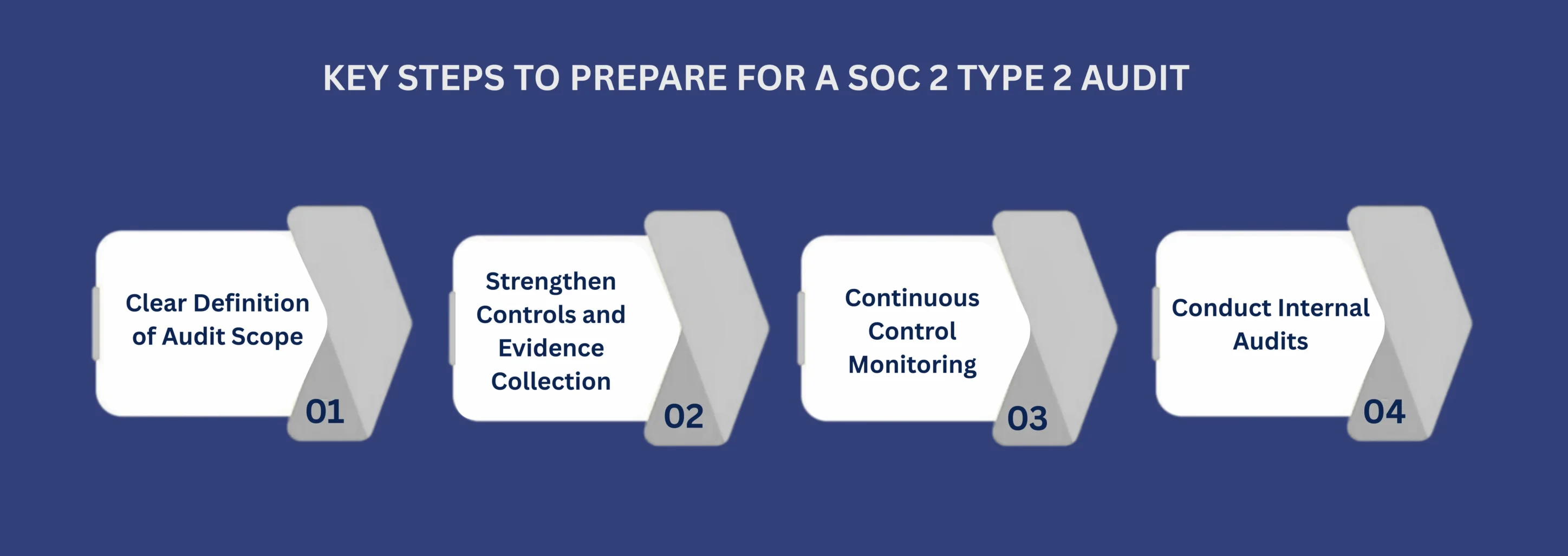
- ✓Scope Definition and System Description
- ✓Control Testing and Evidence Evaluation
- ✓Attestation Report Issuance and Annual Renewal
SOC 2 Compliance Requirements for Christchurch Businesses
SOC 2 compliance in Christchurch encompasses both technical and organizational requirements that service organizations must satisfy to achieve and maintain a clean audit opinion. These requirements are derived from the AICPA Trust Services Criteria and are evaluated in the context of the specific services provided, the data processed, and the commitments made to customers. While the TSC provide the evaluative framework, the specific controls required to satisfy each criterion are determined by the nature of the organization’s operational environment. There is no single prescribed control set — instead, the SOC 2 audit evaluates whether the controls in place are fit for purpose given the risks and commitments inherent to the organization’s service model.
Technical controls form the operational core of SOC 2 compliance and are subject to the most rigorous evidence-based testing during audit fieldwork. Christchurch organizations undergoing a SOC 2 audit must demonstrate the existence and effective operation of controls across key technical domains. Access control systems must enforce least-privilege principles, with documented procedures for provisioning, modifying, and revoking access rights. Multi-factor authentication must be implemented for remote access and privileged account management. Encryption must be applied to sensitive data both in transit and at rest using industry-standard algorithms. Vulnerability management programs must include regular scanning, timely remediation, and documented risk acceptance processes for vulnerabilities that cannot be immediately remediated.
Network security architecture must incorporate segmentation controls, firewall rule management, and intrusion detection or prevention capabilities. Security logging and monitoring systems must collect and retain logs from critical system components, with defined alert thresholds and documented response procedures for security events. Patch management processes must ensure that operating systems, application components, and third-party libraries are maintained at current security patch levels within defined timeframes. For Christchurch organizations operating in cloud environments — including those using AWS, Azure, or Google Cloud — the shared responsibility model must be clearly understood and documented, with controls addressing the organization’s responsibilities within that model explicitly included in the system description and SOC 2 compliance framework.
Documentation requirements for SOC 2 compliance are extensive and must be maintained throughout the observation period for Type 2 audits. Christchurch organizations must maintain formal, approved versions of core security policies covering information security, access management, incident response, business continuity and disaster recovery, vendor management, and acceptable use. These policies must be reviewed and approved at defined intervals — typically annually — and must reflect current operational practices rather than aspirational control objectives. Outdated policy documentation that is inconsistent with actual practice or lacks evidence of formal approval is a common source of audit findings.
Procedural documentation must complement policies by providing operational-level guidance for control execution. Access provisioning request forms, change management records, security incident logs, vendor due diligence questionnaires, and disaster recovery test reports are examples of procedural documentation that auditors examine as primary evidence of control operation. For Christchurch SaaS companies and fintech organizations, customer-facing documentation — including privacy notices, data processing agreements, service-level agreements, and terms of service — is also reviewed during the SOC 2 audit to verify consistency between published commitments and the controls in place to fulfill those commitments.
Third-party vendor management is a significant component of SOC 2 compliance, reflecting the reality that modern service organizations rely on extensive networks of subservice providers, cloud infrastructure vendors, and software suppliers. The Trust Services Criteria require organizations to identify vendors whose services are relevant to the security, availability, confidentiality, processing integrity, or privacy of the in-scope system, and to demonstrate that appropriate due diligence and ongoing oversight is applied to those relationships. For Christchurch technology companies, this typically includes infrastructure providers, payment processors, identity and access management platforms, security monitoring vendors, and data backup service providers.
Vendor management controls evaluated during a SOC 2 audit include the existence of a formal vendor inventory, defined risk assessment procedures for onboarding new vendors, contractual requirements for security standards and data handling, and periodic review of vendor compliance credentials — such as their own SOC 2 reports or ISO 27001 certificates. The system description must identify subservice organizations and describe the nature of their involvement in the system, as well as the complementary user entity controls that the Christchurch organization relies on from those subservice providers. Failure to adequately document and manage subservice organization relationships is a frequent source of scope-related findings in SOC 2 audits.
- ✓Formal information security policy approved by senior management and reviewed annually
- ✓Access control procedures with documented provisioning, modification, and revocation workflows
- ✓Multi-factor authentication implemented for remote access and privileged system accounts
- ✓Encryption controls applied to sensitive data in transit and at rest using current standards
- ✓Vulnerability management program with defined scanning frequency and remediation timelines
- ✓Security incident response plan with documented detection, containment, and notification procedures
- ✓Business continuity and disaster recovery plan tested at defined intervals with documented results
- ✓Vendor management program with risk assessment, due diligence, and ongoing oversight procedures
- ✓Change management process with authorization, testing, and rollback procedures for system changes
- ✓Security awareness training program conducted for all personnel with access to in-scope systems
- ✓Technical Control Requirements
- ✓Documentation and Policy Requirements
- ✓Vendor and Third-Party Management Requirements
Benefits of SOC 2 Certification for Christchurch Organizations
SOC 2 certification delivers measurable operational, commercial, and reputational value for Christchurch service organizations competing in technology and financial services markets. The attestation report produced through a SOC 2 audit serves as an authoritative, third-party-verified declaration of an organization’s data security and operational control environment. For organizations competing for enterprise contracts — where security questionnaires and vendor due diligence programs are standard components of procurement — a SOC 2 attestation significantly accelerates the sales cycle by providing a standardized, auditor-verified response to security capability inquiries.
SOC 2 certification for Christchurch companies provides direct access to enterprise procurement channels that require vendor security attestations as a non-negotiable condition of engagement. US-headquartered technology companies, financial institutions, and healthcare organizations routinely require SOC 2 attestation from all service providers handling customer data. Without a current SOC 2 report, Christchurch companies seeking to serve these markets face disqualification from procurement processes regardless of their actual security capabilities. The attestation report eliminates this barrier by providing a universally recognized credential that enterprise procurement teams can evaluate and accept without conducting independent security assessments.
Beyond direct market access, SOC 2 compliance also functions as a competitive differentiator in domestic markets where enterprise clients are increasingly sophisticated about vendor security expectations. As New Zealand’s Privacy Act 2020 raises organizational awareness of data governance obligations, Christchurch-based enterprise clients are applying rigorous security standards to their own vendor selection processes. SOC 2 Certification in Christchurch signals to domestic enterprise clients that a service provider has undergone independent evaluation of its security controls — a signal that carries far greater weight than self-assessment claims or marketing representations about security practices.
The SOC 2 audit process itself drives meaningful operational improvements in control design and risk management practices. Organizations undergoing their first SOC 2 audit frequently identify gaps in existing control frameworks — areas where controls exist in policy but lack consistent operational implementation, or where critical risk areas have not been formally addressed. The audit program provides a structured framework for identifying and resolving these gaps. Over successive annual audit cycles, the audit process reinforces continuous improvement in the control environment, creating a feedback loop between audit findings, management responses, and control enhancement.
Security incident response capabilities are particularly strengthened through the SOC 2 compliance process. The requirement to maintain documented incident response procedures, test those procedures periodically, and demonstrate evidence of incident detection and management creates organizational discipline around security event handling. For Christchurch technology companies operating in environments with elevated cyber threat exposure — particularly those handling financial data, health information, or personally identifiable information — the incident response discipline enforced by SOC 2 compliance translates directly into reduced breach impact when security events occur. Cyber liability insurance underwriters increasingly recognize SOC 2 attestation as evidence of reduced risk exposure, which can influence premium calculations for Christchurch organizations maintaining current certifications.
SOC 2 attestation provides a formal mechanism for service organizations to communicate their security posture to customers, business partners, and regulators with credibility backed by independent auditor verification. The transparency inherent in sharing a SOC 2 report — which includes a detailed description of the system, the controls in place, and the auditor’s testing procedures and results — builds customer trust in ways that marketing claims and self-assessments simply cannot achieve. For Christchurch organizations in regulated sectors such as financial services, healthcare IT, and government services, SOC 2 attestation demonstrates alignment with internationally recognized control frameworks that regulators and oversight bodies treat as indicators of mature governance.
- ✓Accelerated enterprise sales cycles through pre-verified security attestation eliminating vendor questionnaire delays
- ✓Access to US, Canadian, UK, and Australian enterprise procurement channels requiring SOC 2 compliance
- ✓Competitive differentiation in domestic Christchurch markets against non-certified competitors
- ✓Demonstrated alignment with New Zealand Privacy Act 2020 data governance principles
- ✓Reduced cyber liability insurance premiums through demonstrated security control maturity
- ✓Identification and remediation of control gaps through structured annual audit cycles
- ✓Strengthened customer data protection commitments backed by independent auditor verification
- ✓Enhanced vendor risk management framework through third-party oversight requirements
- ✓Regulatory credibility with New Zealand financial services and health sector oversight bodies
- ✓Organizational discipline in security incident response, change management, and access governance
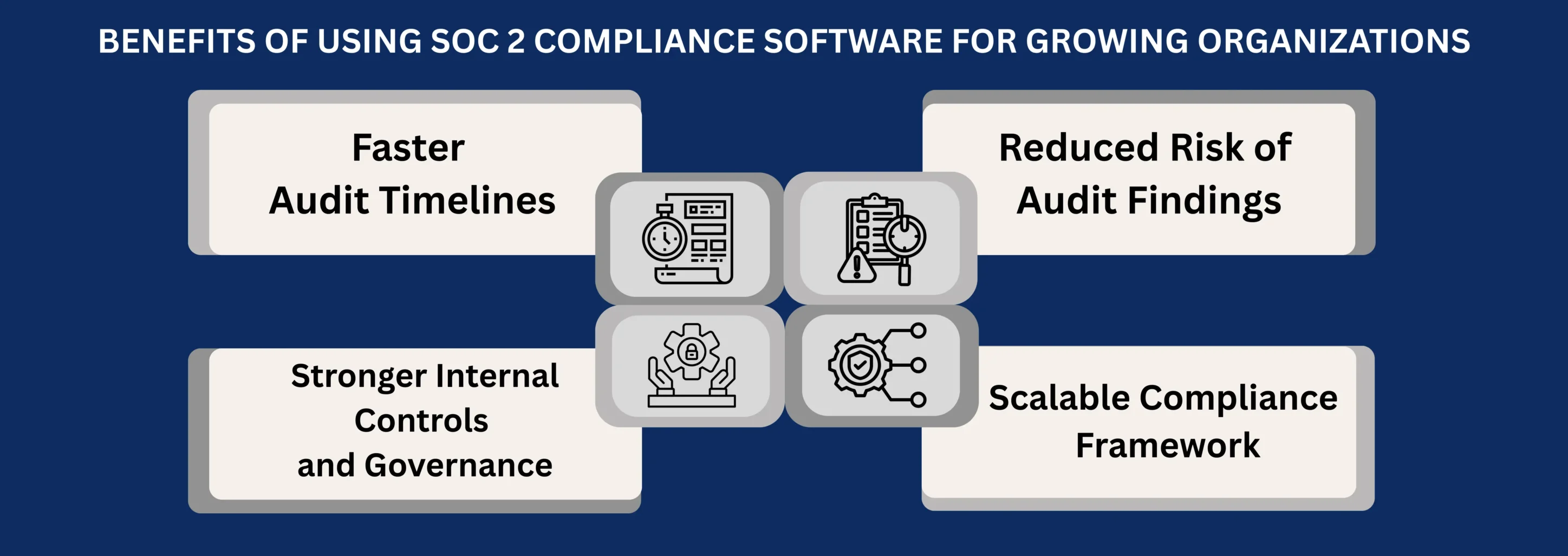
- ✓Commercial and Market Access Benefits
- ✓Operational and Risk Management Benefits
- ✓Trust, Transparency, and Regulatory Alignment
SOC 2 Certification Cost in Christchurch
SOC 2 certification costs in Christchurch are determined by the scope and complexity of the audit engagement. The primary cost drivers include the size of the organization and its technical environment, the number of Trust Services Criteria categories included in the audit scope, the report type selected (Type 1 or Type 2), the duration of the observation period for Type 2 engagements, and the number of locations or cloud environments within the system boundary. CertPro provides fixed-price SOC 2 audit engagements for Christchurch organizations, ensuring cost certainty and eliminating open-ended billing arrangements that can create budget uncertainty during multi-month audit programs.
Cost Factors for Christchurch SOC 2 Audits
The complexity of the technical environment is the most significant determinant of SOC 2 audit cost. Organizations with large, heterogeneous infrastructure environments — encompassing multiple cloud providers, on-premises data centers, dozens of application components, and complex data flows — require more extensive audit programs than organizations with simple, well-documented cloud-native architectures. Similarly, organizations with large personnel populations requiring access control testing, extensive vendor ecosystems requiring subservice organization evaluation, or complex data processing workflows subject to Processing Integrity or Privacy criteria will incur higher SOC 2 audit costs than organizations with narrower, more straightforward system boundaries.
The number of Trust Services Criteria categories included in the audit scope directly influences cost, as each additional criterion requires additional control identification, documentation review, and testing procedures. A SOC 2 audit scoped to the Security criterion only will be less costly than an engagement covering Security, Availability, Confidentiality, and Privacy. The observation period length for Type 2 audits also affects cost — a twelve-month observation period requires examination of evidence across a longer timeframe than a six-month period, increasing audit effort. For Christchurch organizations planning their first SOC 2 engagement, engaging with CertPro early in the planning process allows for scope optimization that balances certification objectives with cost efficiency.
| Audit Scope Factor | Lower Cost Scenario | Higher Cost Scenario |
|---|---|---|
| Technical Environment | Single cloud provider, limited applications | Multi-cloud, on-premises, complex integrations |
| TSC Categories | Security only (Common Criteria) | Security + Availability + Confidentiality + Privacy |
| Report Type | Type 1 (point-in-time) | Type 2 (12-month observation period) |
| Personnel Population | Small team, limited access control scope | Large organization, extensive access governance |
| Vendor Ecosystem | Few critical subservice organizations | Extensive third-party dependency chain |
Fixed Pricing and Engagement Transparency
CertPro’s fixed-price engagement model for SOC 2 audit services in Christchurch, New Zealand provides organizations with definitive cost clarity before the audit commences. The fixed-price structure covers the complete audit program — from initial scope definition through system description review, control testing, nonconformity review, and attestation report issuance. There are no variable billing components or open-ended hourly fee structures that can result in cost overruns during extended audit programs. The engagement agreement specifies the total fee, the deliverables included, and the timeline for completion, enabling Christchurch organizations to plan and budget for their SOC 2 audit investment with confidence.
Annual renewal engagements for organizations maintaining ongoing SOC 2 certification are structured to reflect the efficiencies gained through familiarity with the organization’s control environment from prior audit cycles. Organizations that maintain strong control discipline between audit cycles — including continuous monitoring, documented evidence collection, and timely remediation of identified issues — are well-positioned to achieve efficient annual renewal audits. CertPro’s structured renewal process ensures that each annual SOC 2 audit produces a current, complete attestation report that satisfies the requirements of enterprise clients and procurement programs globally.
Why CertPro for SOC 2 Audit in Christchurch
CertPro is a Licensed CPA Firm authorized to issue SOC 2 attestation reports under AICPA auditing standards. SOC 2 attestation reports may only be issued by CPA firms licensed under applicable professional standards — not by technology companies, management consultancies, or security advisory firms. CertPro’s status as a Licensed CPA Firm is the foundational credential that gives its SOC 2 attestation reports the institutional authority recognized by enterprise procurement programs, financial regulators, and business partners globally. For Christchurch organizations selecting a SOC 2 auditor, the CPA firm credential is the non-negotiable prerequisite that determines whether the resulting attestation report will be accepted by relying parties.
Audit Authority and Professional Credentialing
CertPro’s audit team comprises certified professionals with deep expertise in information systems, Trust Services Criteria evaluation, and AICPA attestation standards. The professional credentialing of CertPro’s audit personnel — including Certified Public Accountants, Certified Information Systems Auditors, and technology-specialized audit professionals — provides the technical depth required to evaluate complex cloud-native, hybrid, and on-premises system environments effectively. For SOC 2 audit engagements in Christchurch, CertPro applies a rigorous, evidence-driven audit methodology that reflects current AICPA guidance, emerging technology risk considerations, and best practices in control framework evaluation.
The independence requirements applicable to SOC 2 audit engagements are strict under AICPA professional standards. The auditing firm and its personnel must be independent of the organization under audit — meaning they cannot have financial interests in the organization, cannot have performed management functions for the organization, and cannot have conflicts of interest that could impair objective evaluation. CertPro’s engagement management processes enforce independence at both the firm and engagement-team level, ensuring that the SOC 2 attestation reports issued carry the full weight of independent professional judgment. This independence is the foundational quality that distinguishes SOC 2 attestation from self-assessment and gives the report its value to relying parties.
Experience with Christchurch Technology Sectors
CertPro has conducted SOC 2 certification audits across the technology sectors most prevalent in Christchurch’s business ecosystem, including cloud infrastructure providers, SaaS application developers, managed IT service organizations, fintech platforms, healthcare IT systems, and data analytics companies. This sector-specific experience enables CertPro’s audit team to efficiently evaluate the control environments characteristic of each sector, ask targeted questions relevant to industry-specific risk areas, and recognize control design patterns that reflect appropriate risk management for the service type under review. SOC 2 Certification in Christchurch for specialized technology sectors benefits from auditor familiarity with the technical architectures, data flows, and operational practices common to those sectors.
Christchurch SaaS organizations undergoing SOC 2 compliance face specific audit considerations related to multi-tenant data isolation, application-layer access control, customer data portability, and API security. CertPro’s audit program addresses these SaaS-specific control areas through targeted testing procedures that reflect the technical realities of multi-tenant cloud architectures. Similarly, Christchurch fintech organizations pursuing SOC 2 certification benefit from CertPro’s experience evaluating financial data processing controls, payment system security, and regulatory compliance intersections relevant to New Zealand’s financial services oversight framework. The combination of sector expertise and licensed CPA firm authority positions CertPro as the rigorous, credible audit partner for SOC 2 engagements across Christchurch’s diverse technology landscape.
Structured Audit Delivery and Report Quality
CertPro’s SOC 2 audit delivery framework is structured around clear milestones, defined evidence requirements, and systematic quality review at each stage of the audit program. This structured delivery approach provides Christchurch organizations with predictable timelines, clear communication of evidence requirements in advance of fieldwork, and organized reporting of preliminary findings that enables management to prepare informed responses before report finalization. The result is a SOC 2 audit process that is manageable alongside normal business operations, with minimal disruption and maximum transparency throughout each engagement phase.
The quality of the SOC 2 attestation report itself is a critical deliverable. A well-structured report with a clear system description, comprehensive control documentation, and precise testing result descriptions is more useful to relying parties and demonstrates greater audit thoroughness than a generic or templated report. CertPro’s report quality standards require that each report accurately reflects the specific control environment examined, provides sufficient detail for relying parties to understand the scope and nature of the audit, and presents findings in a format consistent with AICPA report presentation guidance. High-quality attestation reports from CertPro are designed to withstand scrutiny from sophisticated enterprise procurement and security teams globally.
SOC 2 Certification for Christchurch’s Technology and Finance Sectors
Christchurch’s technology and financial services sectors represent the primary driver of SOC 2 certification demand within the city’s business community. As Christchurch has developed as a technology hub — with a growing concentration of SaaS startups, cloud service providers, digital health platforms, and fintech innovators — the need for internationally recognized data security attestations has grown in parallel with market expansion ambitions. SOC 2 Certification in Christchurch is particularly relevant for organizations in these sectors because their customer bases frequently include enterprise clients in the United States, United Kingdom, and Australia, where SOC 2 attestation is a standard procurement requirement.
SaaS and Cloud Service Providers
Christchurch SaaS companies and cloud service providers face procurement-level SOC 2 requirements from enterprise customers as a standard condition of vendor approval. The shift toward cloud-delivered software across all industry sectors has made SOC 2 attestation the universal language of vendor security credentialing in enterprise technology markets. A Christchurch SaaS provider seeking to serve a US healthcare system, a UK financial institution, or an Australian government agency will invariably encounter SOC 2 as a mandatory vendor qualification requirement. SOC 2 compliance that Christchurch SaaS organizations achieve is therefore not merely a trust signal — it is a commercial prerequisite for market participation in regulated enterprise segments.
The technical architecture of modern SaaS platforms introduces specific control considerations that SOC 2 auditors evaluate with sector-specific expertise. Multi-tenant data isolation — the technical assurance that one customer’s data cannot be accessed by another customer — is a fundamental security requirement for SaaS platforms that must be demonstrated through both architectural design and operational evidence. Customer data export and deletion capabilities relevant to contractual data portability and retention commitments must be operational and documented. API security controls governing third-party integrations — including authentication, authorization, rate limiting, and input validation — are examined as critical control areas in SaaS-focused SOC 2 audits.
Fintech and Financial Services Organizations
Christchurch’s fintech sector includes payment processing platforms, digital banking services, investment management technology providers, and financial data analytics firms. These organizations handle sensitive financial data subject to multiple regulatory frameworks — including New Zealand’s Financial Markets Authority oversight, the Reserve Bank of New Zealand’s prudential requirements, and international financial services regulations applicable to cross-border service delivery. SOC 2 certification that Christchurch fintech organizations pursue provides a structured control framework aligned with financial services regulatory expectations while satisfying the attestation requirements of institutional clients in international markets.
Financial data processing controls evaluated in fintech SOC 2 audits encompass transaction authorization workflows, fraud detection mechanisms, payment data encryption standards, financial record retention controls, and audit trail integrity requirements. For Christchurch fintech organizations that process transactions on behalf of customers, the Processing Integrity criterion — which addresses completeness, accuracy, and timeliness of financial data processing — is a critical audit scope component. SOC 2 attestation for fintech organizations also intersects with PCI DSS requirements for organizations in the payment card processing chain, and CertPro’s audit team understands the control overlay between these frameworks.
Healthcare IT and Managed Service Organizations
Healthcare IT organizations operating in Christchurch — including electronic health record platform providers, telehealth services, health data analytics companies, and clinical information system vendors — face heightened data security obligations arising from the sensitive nature of health information. New Zealand’s Health Information Privacy Code 2020, administered under the Privacy Act 2020, establishes specific requirements for the handling of health information that align closely with the Privacy and Confidentiality criteria in the SOC 2 framework. SOC 2 certification provides healthcare IT organizations with a recognized attestation of their health data protection controls that satisfies both regulatory expectations and the vendor security requirements of hospital systems, district health boards, and private health sector clients.
Managed IT service organizations in Christchurch — providing outsourced IT operations, network management, security monitoring, and cloud management services to enterprise clients — are among the most active pursuers of SOC 2 certification. As MSPs increasingly manage the IT infrastructure of organizations in regulated industries, their clients’ compliance programs extend security attestation requirements to the MSP tier. A Christchurch MSP with a current SOC 2 Type 2 attestation can satisfy the security due diligence requirements of multiple enterprise clients simultaneously, reducing the administrative burden of responding to individual client security questionnaires while demonstrating a consistently high level of operational control maturity.
SOC 2 Attestation and New Zealand Regulatory Context
SOC 2 attestation operates within New Zealand’s regulatory environment as a recognized mechanism for demonstrating data security and privacy control maturity. While SOC 2 is an AICPA-originated framework developed for the US market, its adoption has become genuinely global, with enterprise clients and regulators in New Zealand and internationally recognizing the attestation report as credible evidence of control effectiveness. For Christchurch organizations subject to New Zealand’s Privacy Act 2020, the Office of the Privacy Commissioner’s expectations around security safeguards for personal information align substantively with the controls evaluated under the SOC 2 Security and Privacy criteria.
New Zealand Privacy Act 2020 and SOC 2 Alignment
New Zealand’s Privacy Act 2020 introduced strengthened obligations for organizations holding personal information, including mandatory breach notification requirements, enhanced Information Privacy Principles governing data collection, use, and disclosure, and expanded enforcement powers for the Privacy Commissioner. The Act’s Information Privacy Principle 5 — which requires organizations to protect personal information from loss, unauthorized access, use, modification, or disclosure — aligns directly with the control objectives evaluated under the SOC 2 Security criterion. Organizations that maintain SOC 2 attestation demonstrating effective operation of security controls are well-positioned to satisfy Privacy Commissioner inquiries regarding their data protection practices.
The mandatory breach notification provisions of the Privacy Act 2020 — which require organizations to notify the Privacy Commissioner and affected individuals of notifiable privacy breaches — reinforce the importance of effective security incident detection and response controls evaluated under the SOC 2 framework. Organizations with SOC 2-attested security monitoring and incident response capabilities are better equipped to detect, assess, and respond to potential privacy breaches within the timeframes required by the Privacy Act. The incident management disciplines enforced by SOC 2 compliance therefore carry direct regulatory relevance for Christchurch organizations operating under New Zealand privacy law.
Cross-Border Data Flows and International Compliance
Christchurch organizations that transfer personal data across borders — whether to cloud infrastructure providers in the United States, customer organizations in the European Union, or subservice providers in Australia — must satisfy the cross-border disclosure provisions of New Zealand’s Privacy Act 2020. These provisions require that personal information transferred overseas receives comparable protection to that required under New Zealand law. SOC 2 attestation, particularly where the Privacy criterion is included in scope, provides substantive evidence that the organization’s data protection controls satisfy this comparable protection standard for data transferred to in-scope system components operated outside New Zealand.
For Christchurch organizations subject to GDPR obligations — either as data processors handling personal data of EU individuals on behalf of EU-established controllers, or as organizations with EU-based customers — SOC 2 attestation provides a recognized security control framework that supports GDPR Article 32 compliance obligations. GDPR Article 32 requires data processors to implement appropriate technical and organizational measures to ensure a level of security appropriate to the risk — a standard that SOC 2 attestation directly evidences. While SOC 2 is not a GDPR certification mechanism, it provides substantive evidence of control maturity that is recognized by EU-based data controllers assessing their processors’ security posture.
FAQ
▶
What is the difference between SOC 2 certified and SOC 2 compliant?
▶
How long does a SOC 2 audit take for a Christchurch organization?
▶
Which industries in Christchurch most commonly require SOC 2 certification?
▶
How often must SOC 2 audits be renewed in Christchurch?
▶
Can a Christchurch company pursue SOC 2 and ISO 27001 simultaneously?
▶
What is included in CertPro’s SOC 2 attestation report for Christchurch clients?
▶
Is SOC 2 certification mandatory under New Zealand law?
▶
What is the SOC 2 evidence collection process?

SOC 1 VS SOC 2: WHICH REPORT YOUR CUSTOMERS ACTUALLY ASK FOR
If you sell SaaS or provide outsourced services, you have likely been asked for a SOC report. However, the follow-up question is rarely easy to answer…
SOC 2 Certified: What Does It Mean for Your Business
For companies that handle sensitive data or run cloud-based services, the question “Can you provide your SOC 2 report?” carries enormous weight. Yet, …

Secure Email Platform Exclaimer Renews ISO, SOC 2
Excerpt from The Manila Times Article, Published on February 26, 2026 Secure email solutions provider Exclaimer has renewed its ISO and SOC 2 certific…
Get In Touch
have a question? let us get back to you.