
SOC 2 Certification in Georgia
SOC 2 Certification is a formal attestation standard developed and governed by the American Institute of Certified Public Accountants (AICPA). It provides an independent, evidence-based evaluation of an organization’s internal controls as they relate to the security, availability, processing integrity, confidentiality, and privacy of systems used to process customer data. SOC 2 Certification in Georgia is recognized by enterprise procurement teams, financial institutions, and regulated-industry clients as the authoritative standard for third-party control validation.
OUR CLIENTS










What Is SOC 2 Certification?
SOC 2 Certification is a formal attestation standard developed and governed by the American Institute of Certified Public Accountants (AICPA). It provides an independent, evidence-based evaluation of an organization’s internal controls as they relate to the security, availability, processing integrity, confidentiality, and privacy of systems used to process customer data. SOC 2 Certification in Georgia is recognized by enterprise procurement teams, financial institutions, and regulated-industry clients as the authoritative standard for third-party control validation.
Unlike internal self-assessments or vendor questionnaires, a SOC 2 examination is conducted exclusively by a Licensed CPA Firm operating under AICPA attestation standards — specifically AT-C Section 105 and AT-C Section 205. The resulting SOC 2 report documents the auditor’s findings regarding control design and, for Type 2 reports, operating effectiveness over a defined period. This distinction is critical: SOC 2 attestation delivers documented, independently verified evidence rather than organizational self-declaration — making it the preferred standard for enterprise vendor qualification.
SOC 2 Certification Defined: Framework and Governing Authority
The SOC 2 framework is part of the AICPA’s System and Organization Controls reporting suite, which also includes SOC 1 (financial reporting controls) and SOC 3 (general-use summary reports). SOC 2 is specifically designed for technology and service organizations that store, process, or transmit customer data. The framework requires organizations to define their system boundaries, identify applicable Trust Services Criteria, implement controls, and submit to examination by an independent Licensed CPA Firm. For Georgia-based technology companies, SaaS providers, and cloud service organizations, SOC 2 represents the primary attestation mechanism for demonstrating security governance to U.S. enterprise clients.
The SOC 2 examination evaluates whether an organization’s controls are suitably designed and, in the case of Type 2 reports, whether those controls operated effectively throughout the audit period. The AICPA’s Trust Services Criteria (TSC) serve as the evaluative framework, replacing the earlier Trust Services Principles. Organizations define which criteria categories apply to their systems based on the nature of services provided and the commitments made to customers. The resulting SOC 2 report is a restricted-use document provided to management and specified users — typically existing or prospective enterprise clients conducting vendor due diligence.
SOC 2 Compliance vs. SOC 2 Certification: Key Distinction
SOC 2 compliance refers to an organization’s internal state of adherence to the Trust Services Criteria — meaning controls have been designed and implemented to meet the criteria’s requirements. SOC 2 Certification, by contrast, refers to the independently attested confirmation of that compliance through a formal examination by a Licensed CPA Firm. Compliance without certification lacks the third-party validation that enterprise clients and regulated-industry buyers require. SOC 2 compliance that Georgia organizations achieve internally must be externally verified through a SOC 2 examination to carry weight in procurement and vendor assurance processes.
This distinction matters in practice. An organization may have implemented robust security controls, documented policies, and defined system boundaries — all of which reflect SOC 2 compliance internally — but without a SOC 2 attestation report issued by a Licensed CPA Firm, those controls cannot be represented as independently verified to third parties. Enterprise procurement teams in Georgia’s financial services, healthcare, and technology sectors increasingly require the SOC 2 attestation report itself — not merely representations of compliance — as a condition of vendor onboarding and contract renewal.
Who Issues SOC 2 Attestation Reports?
SOC 2 attestation reports are issued exclusively by Licensed CPA Firms operating under AICPA attestation standards. Only a Certified Public Accountant holding the appropriate licensure and operating under AICPA professional standards is authorized to conduct a SOC 2 examination and issue the resulting attestation report. This distinguishes SOC 2 from ISO 27001, which is certified by accredited certification bodies, and from self-assessment frameworks such as CIS Controls or NIST CSF. The CPA firm’s independence from the examined organization is a mandatory condition — the auditor must have no financial, operational, or advisory relationship with the service organization that would impair objectivity.
CertPro operates as a Licensed CPA Firm conducting independent SOC 2 examinations for organizations throughout Georgia. As an independent attestation firm, CertPro evaluates controls against the AICPA Trust Services Criteria, tests evidence, and issues SOC 2 Type 1 and Type 2 reports under applicable AICPA attestation standards. CertPro’s fixed pricing structure gives Georgia organizations transparent attestation fees with no variable cost uncertainty — enabling predictable budget planning across annual SOC 2 audit cycles.
ENQUIRE NOW
Trust Services Criteria: The Evaluation Framework for SOC 2 Certification in Georgia
The Trust Services Criteria (TSC) are the evaluative standards against which a Licensed CPA Firm assesses an organization’s controls during a SOC 2 examination. Developed and maintained by the AICPA, the TSC replaced the earlier Trust Services Principles in 2017 and were subsequently updated in 2022. The criteria are organized into five categories: Security, Availability, Processing Integrity, Confidentiality, and Privacy. Security — formally designated as the Common Criteria — is mandatory for all SOC 2 examinations. The remaining four categories are selected based on the nature of the service organization’s system and its commitments to customers.
The Security criteria — formally identified as the Common Criteria (CC) series — address the protection of information and systems from unauthorized access, unauthorized disclosure, and damage to systems that could affect the entity’s ability to meet its service commitments. The Common Criteria encompass the control environment, communication and information, risk assessment, monitoring of controls, logical and physical access controls, system operations, and change management. All SOC 2 examinations, regardless of scope, must include evaluation against the Security criteria.
For Georgia-based technology organizations and SaaS providers, the Security criteria examination covers access control policies, user authentication mechanisms, network security configurations, vulnerability management programs, and incident response procedures. During the SOC 2 audit, the Licensed CPA Firm evaluates whether controls within each of these domains are suitably designed and — for Type 2 reports — whether they operated consistently throughout the defined review period. Evidence requirements under the Security criteria include access control logs, change management records, security incident documentation, and network configuration artifacts.
The Availability criteria address whether the system is available for operation and use as committed or agreed. Organizations that commit to uptime service levels — including SaaS providers, cloud hosting companies, and data center operators — typically include Availability in their SOC 2 scope. The examination evaluates controls related to performance monitoring, disaster recovery planning, backup procedures, and incident management as they relate to system availability commitments. Georgia’s data hosting and cloud service organizations frequently include Availability criteria given enterprise client expectations around uptime guarantees.
The Processing Integrity criteria address whether system processing is complete, valid, accurate, timely, and authorized. These criteria are particularly relevant for organizations providing transaction processing services, financial data processing, or automated workflow systems. Processing Integrity controls include input validation, processing controls, error handling procedures, and output reconciliation mechanisms. The Confidentiality criteria address whether information designated as confidential is protected as committed or agreed — relevant for organizations handling proprietary client data, trade secrets, or contractually protected information. Organizations in Georgia’s financial services and healthcare sectors frequently include both Processing Integrity and Confidentiality in their SOC 2 examination scope.
The Privacy criteria address the collection, use, retention, disclosure, and disposal of personal information in conformity with the entity’s privacy notice and the AICPA’s Generally Accepted Privacy Principles (GAPP). Privacy criteria are selected when an organization collects, stores, or processes personal information as part of its service delivery. Georgia-based healthcare technology organizations, consumer data platforms, and organizations subject to U.S. state privacy regulations frequently include Privacy criteria in their SOC 2 scope. Doing so addresses both customer and regulatory expectations around personal data handling within a single, independently verified attestation framework.
| Trust Services Category | Primary Focus | Typical Applicability |
|---|---|---|
| Security (Common Criteria) | Protection from unauthorized access and disclosure | All SOC 2 examinations — mandatory |
| Availability | System availability per service commitments | SaaS providers, cloud hosts, data centers |
| Processing Integrity | Completeness, accuracy, and timeliness of processing | Transaction processors, financial data systems |
| Confidentiality | Protection of designated confidential information | Financial services, legal, healthcare organizations |
| Privacy | Personal information collection, use, and disposal | Consumer platforms, healthcare technology, HR systems |
- ✓Security Criteria: The Common Criteria Foundation
- ✓Availability, Processing Integrity, and Confidentiality Criteria
- ✓Privacy Criteria in SOC 2 Examinations
SOC 2 Type 1 vs. SOC 2 Type 2 Reports
SOC 2 examination reports are issued in two forms: Type 1 and Type 2. Understanding the difference between these report types is fundamental to evaluating the scope and evidential weight of a SOC 2 attestation. Both report types are issued by a Licensed CPA Firm under AICPA attestation standards and both evaluate controls against the applicable Trust Services Criteria. However, they differ significantly in the nature of the examination, the audit period, and the conclusions the auditor can draw regarding control effectiveness.
SOC 2 Type 1 Report: Point-in-Time Attestation
A SOC 2 Type 1 report attests to the suitability of control design at a specific point in time. The Licensed CPA Firm evaluates whether the controls described in the organization’s system description are suitably designed to meet the applicable Trust Services Criteria as of a defined report date. Type 1 examinations do not assess whether controls operated effectively over a period — they establish that, on the report date, the controls were in place and appropriately designed. For Georgia organizations newly entering the SOC 2 certification process, a Type 1 report establishes the baseline attestation and demonstrates initial control design adequacy to prospective enterprise clients.
SOC 2 Type 1 reports are commonly used by organizations beginning their SOC 2 attestation program, those responding to initial procurement requirements that do not yet specify Type 2, and organizations seeking to demonstrate control design maturity while preparing for a subsequent Type 2 examination. Type 1 reports are valid as representations of control design at the stated report date. However, most enterprise procurement teams and regulated-industry clients in Georgia ultimately require SOC 2 Type 2 attestation as the standard for ongoing vendor qualification and contract renewal.
SOC 2 Type 2 Report: Operating Effectiveness Over a Defined Period
A SOC 2 Type 2 report attests to both the suitability of control design and the operating effectiveness of those controls over a defined review period. The examination period for a SOC 2 Type 2 audit is typically a minimum of six months, with twelve-month periods being the most common in practice. During the Type 2 examination, the Licensed CPA Firm tests controls across multiple points throughout the audit period — reviewing evidence that controls operated as described consistently, not merely on a single date. This temporal dimension makes the Type 2 report significantly more evidentially robust than the Type 1.
SOC 2 Type 2 reports are the standard attestation document requested by enterprise clients, financial institutions, and regulated-industry procurement teams throughout Georgia and across U.S. markets. Enterprise vendor risk management programs typically require annual Type 2 reports from technology vendors, SaaS providers, and cloud service organizations as a condition of vendor qualification. Following issuance of an initial SOC 2 Type 2 report, organizations are expected to maintain continuous annual audit cycles to keep the attestation current. An expired or lapsed SOC 2 report — one covering a period ending more than twelve months prior — may be flagged as insufficient during enterprise vendor reviews.
Report Validity and Annual Audit Cycle Requirements
SOC 2 reports do not have a fixed statutory expiration date, but industry practice and enterprise procurement standards treat reports covering periods ending more than twelve months prior as effectively outdated. Organizations in Georgia that obtain SOC 2 attestation are expected to undergo annual examination cycles to maintain a current attestation. The annual cycle typically involves engaging the Licensed CPA Firm before the end of the current audit period to initiate evidence collection and fieldwork for the subsequent report period — ensuring continuity of coverage without gaps in attestation history.
| Report Type | Examination Scope | Audit Period | Primary Use Case |
|---|---|---|---|
| SOC 2 Type 1 | Control design suitability | Point in time (single date) | Initial attestation, design validation |
| SOC 2 Type 2 | Control design and operating effectiveness | Minimum 6 months (typically 12) | Ongoing vendor qualification, enterprise procurement |
| SOC 3 | General use summary (no detailed testing) | Same as underlying SOC 2 | Public-facing marketing representation |
SOC 2 Certification Audit Process in Georgia
The SOC 2 audit process in Georgia follows the structured examination methodology defined by AICPA attestation standards. Conducted exclusively by a Licensed CPA Firm, the process moves through defined stages — from initial scoping through issuance of the attestation report. Each stage involves specific activities, evidence requirements, and auditor evaluations that collectively produce the SOC 2 examination opinion. Organizations pursuing SOC 2 Certification in Georgia should understand each stage to facilitate effective evidence preparation and examination coordination.
The first stage of the SOC 2 audit process involves defining the examination scope — specifically, the system boundaries, applicable Trust Services Criteria categories, and the examination period. The system description is a management-prepared document that defines the services provided, the components of the system (infrastructure, software, people, processes, and data), and the controls implemented to meet the applicable criteria. The Licensed CPA Firm reviews the system description for completeness and accuracy, assessing whether it fairly presents the system as designed and implemented.
Scope definition determines which Trust Services Criteria categories apply to the examination and which organizational systems, processes, and controls fall within the audit boundary. Organizations in Georgia operating multi-system environments — including SaaS platforms, cloud infrastructure, internal corporate systems, and third-party subservice organizations — must clearly delineate which systems are in scope and how subservice organization controls are addressed. The Licensed CPA Firm evaluates the appropriateness of scope boundaries as part of the SOC 2 examination planning phase.
Following scope definition, the Licensed CPA Firm identifies the controls that the service organization has implemented to address each applicable Trust Services Criterion. Controls are mapped to specific criteria points of focus, establishing the control environment the examination will evaluate. For each control, the auditor assesses the design — whether the control, if operating as designed, would effectively address the related criterion. This design assessment is the primary evaluative activity in a Type 1 examination and the first phase of a Type 2 examination.
Documentation assessment during this stage covers policies, procedures, system configurations, organizational charts, access matrices, and other management documents that describe the control environment. The Licensed CPA Firm evaluates whether documented controls are specific, operable, and appropriately designed to address the criteria. Where controls are inadequately documented or where documentation does not support the described control operation, the auditor identifies deficiencies that must be resolved before the SOC 2 examination can proceed to testing. Georgia organizations with complex, multi-team control environments benefit from maintaining current, version-controlled documentation libraries to support efficient examination progression.
Evidence collection and control testing is the primary fieldwork phase of the SOC 2 Type 2 examination. The Licensed CPA Firm requests and evaluates evidence demonstrating that controls operated as designed throughout the examination period. Evidence types include system-generated logs, configuration exports, approval records, training completion records, access review documentation, incident response records, change management tickets, and backup verification records. The auditor applies sampling methodologies consistent with AICPA auditing standards to select representative evidence across the examination period.
Control testing procedures vary by control type. For automated controls — such as access provisioning systems, logging configurations, or encryption enforcement — the auditor evaluates system configurations and validates that automated enforcement mechanisms operated as configured. For manual controls — such as access reviews, change management approvals, or security training delivery — the auditor selects samples from the examination period and evaluates supporting evidence for each sample. For frequency-based controls, such as monthly access reviews or quarterly vulnerability scans, the auditor validates that the control was performed at the required frequency and that supporting evidence exists for each required occurrence.
Following control testing, the Licensed CPA Firm evaluates identified control deficiencies to determine whether they constitute exceptions that affect the examination opinion. Deficiencies identified during testing are assessed for their nature and significance — the auditor evaluates whether exceptions represent isolated occurrences or systemic failures, and whether they indicate that controls did not operate effectively to meet the applicable criteria. Exceptions are documented in the SOC 2 report, including the nature of the deviation, the frequency of occurrence, and the auditor’s assessment of impact on the overall opinion.
The SOC 2 examination concludes with issuance of the attestation report, which includes the service auditor’s report (containing the opinion), management’s description of the system, management’s assertion, and the description of controls with testing results. For Type 2 reports, the report also includes the results of control tests performed throughout the examination period. The SOC 2 attestation report is a restricted-use document intended for management and specified users — typically existing or prospective customers conducting vendor due diligence — rather than the general public. A SOC 3 report, which is a general-use summary without detailed testing results, may be issued separately for public distribution.
| Audit Stage | Key Activities | Output |
|---|---|---|
| Scope Definition | System boundary determination, criteria selection, subservice organization assessment | Defined examination scope and system description |
| Control Identification | Control mapping to TSC, design assessment, documentation review | Control matrix with design conclusions |
| Evidence Collection | Evidence requests, sample selection, documentation gathering | Evidence population for testing |
| Control Testing | Automated and manual control testing, sampling procedures | Testing results with exceptions identified |
| Reporting | Exception evaluation, opinion formation, report issuance | SOC 2 Type 1 or Type 2 attestation report |
- ✓Stage 1: Scope Definition and System Description Review
- ✓Stage 2: Control Identification and Documentation Assessment
- ✓Stage 3: Evidence Collection and Control Testing
- ✓Stage 4: Nonconformity Review and Reporting
Control Evaluation Methodology and Internal Controls Assessment
The SOC 2 examination evaluates controls across the five components of the COSO Internal Control — Integrated Framework, which the AICPA incorporates by reference in the Trust Services Criteria. These five components — Control Environment, Risk Assessment, Control Activities, Information and Communication, and Monitoring Activities — provide the structural basis for evaluating whether an organization’s control environment is sound and whether specific controls are appropriately designed and operating. The Licensed CPA Firm assesses controls within each component during the SOC 2 audit, with the Security (Common Criteria) mapped directly to COSO components.
Control Design Evaluation
Control design evaluation assesses whether a control, if operating as described, would effectively address the related Trust Services Criterion. The Licensed CPA Firm reviews the control description — as stated in the system description — and evaluates whether the described control mechanism is logically capable of achieving its intended objective. Design deficiencies occur when a control cannot achieve its objective even if it operates exactly as described. For example, an access review control described as annual would have a design deficiency relative to a criterion requiring timely access modification, if annual reviews are insufficient to address access changes occurring throughout the year.
The design evaluation phase also includes a review of the completeness of the control set — whether the organization has implemented controls that collectively address all applicable points of focus within each Trust Services Criterion. The AICPA’s Trust Services Criteria include specific points of focus under each criterion category representing best practice considerations. While not all points of focus are mandatory, the Licensed CPA Firm evaluates whether the overall control design reasonably addresses the substantive requirements of each criterion. Organizations with control gaps — areas where no control addresses a specific criterion component — are assessed accordingly in the SOC 2 examination.
Operating Effectiveness Testing Methodology
Operating effectiveness testing — the primary differentiator of a Type 2 examination — evaluates whether controls operated as designed throughout the defined examination period. The Licensed CPA Firm designs testing procedures based on the nature of each control. Inquiry, observation, inspection, and re-performance are the four primary testing procedures available under AICPA standards. Inquiry alone is not sufficient for SOC 2 testing; the auditor must corroborate inquiries with one or more additional procedures, typically inspection of evidence or re-performance of control activities.
Sample sizes for operating effectiveness testing are determined based on the frequency of each control and the examination period. For controls that operate continuously — such as automated logging — the auditor evaluates system configurations and validates that the automated mechanism was active throughout the period. For controls that operate on a defined frequency — daily, weekly, monthly, quarterly, or annually — sample sizes are calibrated to provide sufficient coverage of the examination period. Controls with higher frequencies require larger samples to achieve the same level of assurance. The AICPA’s audit sampling guidance provides the framework for sample size determination in SOC 2 examinations.
Complementary User Entity Controls
SOC 2 examinations often identify Complementary User Entity Controls (CUECs) — controls that user organizations (the service organization’s customers) are expected to implement to complement the service organization’s own controls. CUECs are documented in the SOC 2 report and represent the division of control responsibility between the service organization and its customers. For example, a SaaS provider may rely on its customers to maintain appropriate access credentials and to promptly notify the provider when user access should be revoked. The SOC 2 audit evaluates the service organization’s controls assuming CUECs are in place; user organizations reviewing the report should assess whether they have implemented the specified CUECs.
Evidence Collection Requirements for SOC 2 Examinations
Evidence collection is a central activity in the SOC 2 audit process. The quality, completeness, and organization of evidence provided by the service organization directly affects examination efficiency and the auditor’s ability to reach conclusions. Evidence requirements vary by control type, but the general standard requires that evidence be sufficient, appropriate, and directly traceable to the control activity being tested. The Licensed CPA Firm evaluates evidence objectively — evidence that is incomplete, inconsistent with the control description, or lacking in specificity cannot support a conclusion of operating effectiveness in the SOC 2 examination.
SOC 2 audit evidence spans multiple categories depending on the controls being tested. Policy and procedure documentation establishes the control framework — auditors review information security policies, access management procedures, change management protocols, incident response plans, and business continuity documentation. Configuration evidence — including firewall rule exports, encryption settings, access control lists, and logging configurations — demonstrates the technical implementation of automated controls. Transaction-level evidence — including access provisioning tickets, change request records, and security training completion logs — supports testing of manual and frequency-based controls throughout the SOC 2 examination period.
- ✓Information security policy documentation, including version history and approval records
- ✓Access control matrices and user provisioning/deprovisioning records
- ✓Change management system records with approval workflows and change logs
- ✓Vulnerability scanning reports and remediation tracking records
- ✓Security incident logs and incident response documentation
- ✓Business continuity and disaster recovery plan documentation with test results
- ✓Employee security training completion records across the examination period
- ✓Vendor management documentation including third-party risk assessments
- ✓System configuration exports for firewalls, servers, and cloud environments
- ✓Backup execution logs and restoration test records
Many Georgia-based technology organizations rely on third-party infrastructure providers — including cloud platforms such as Amazon Web Services, Microsoft Azure, or Google Cloud — to deliver their services. These third-party providers are designated as subservice organizations in the SOC 2 system description. The service organization must address subservice organization controls using one of two methods: the inclusive method (where subservice organization controls are included in the examination scope) or the carve-out method (where subservice organization controls are excluded from scope and addressed through reference to the subservice organization’s own SOC 2 report).
Under the carve-out method — the more commonly used approach — the service organization’s SOC 2 examination excludes subservice organization controls from direct testing. Instead, the system description identifies the nature of services provided by subservice organizations and the complementary controls that the service organization relies upon from those providers. The Licensed CPA Firm reviewing the SOC 2 report may request the subservice organization’s own SOC 2 report to assess coverage of complementary controls. Georgia organizations using major cloud platforms should maintain current copies of their cloud providers’ SOC 2 reports to facilitate this review process efficiently.
- ✓Categories of Evidence Required in SOC 2 Audits
- ✓Subservice Organization Evidence and the Carve-Out Method
Ongoing SOC 2 Compliance Monitoring and Annual Certification Maintenance
SOC 2 attestation is not a one-time event — it represents a continuous program of control monitoring, evidence maintenance, and annual examination. Organizations that obtain SOC 2 Certification in Georgia are expected to maintain their control environment on an ongoing basis to support the next annual audit cycle. Continuous monitoring practices ensure that controls remain operative and that evidence is generated and retained throughout the year, rather than assembled reactively at examination time. Organizations with strong ongoing monitoring programs experience more efficient annual SOC 2 audits and demonstrate greater control maturity to enterprise clients reviewing their attestation history.
Continuous Control Monitoring Programs
Continuous control monitoring involves the ongoing review and validation of control performance between annual SOC 2 examinations. Effective monitoring programs include automated alerting for control failures — such as unauthorized access attempts, configuration changes outside the change management process, or backup failures — as well as regular management review of key control metrics. Centralized logging and monitoring systems aggregate security events, system activities, and access records into a unified platform, enabling both real-time detection of anomalies and retrospective evidence retrieval during SOC 2 audits.
Access review programs represent one of the most commonly tested controls in SOC 2 examinations. Organizations are expected to conduct periodic reviews of user access rights — validating that access provisioned to employees, contractors, and system accounts remains appropriate to job functions and that access is promptly modified or revoked when personnel changes occur. Monthly or quarterly access reviews, documented with evidence of reviewer approval and remediation actions taken, provide robust support for operating effectiveness conclusions. Georgia organizations that automate access review workflows through identity governance platforms generate consistent, auditor-ready evidence that reduces SOC 2 audit burden year over year.
Surveillance and Recertification Audit Cycles
SOC 2 does not include a formal surveillance audit structure in the same manner as ISO 27001 — there are no interim surveillance audits between annual examinations. Instead, the continuity of SOC 2 attestation is maintained through annual examination cycles, where each new SOC 2 Type 2 report covers the most recent twelve-month period. Organizations must engage a Licensed CPA Firm annually to maintain a current attestation. The annual examination evaluates the same control domains as the initial examination, with testing coverage extending across the full twelve-month period.
Material changes to an organization’s system — including significant infrastructure migrations, major software releases, organizational restructuring, or changes in service commitments — should be evaluated for their impact on the current SOC 2 scope and control environment. Changes occurring within an active audit period are documented in the system description and may require additional testing or scope adjustments. Organizations in Georgia undergoing cloud migration, mergers and acquisitions, or significant system changes should communicate these events to their Licensed CPA Firm promptly to assess examination implications and ensure continued SOC 2 attestation coverage without interruption.
Who Needs SOC 2 Certification in Georgia
SOC 2 Certification in Georgia is relevant to any organization that stores, processes, or transmits customer data and is subject to enterprise procurement requirements, regulatory expectations, or contractual obligations requiring independent control validation. Georgia’s economy encompasses a wide range of technology-intensive industries — from fintech and cloud computing to healthcare technology and logistics — each with distinct SOC 2 drivers. The sectors below represent the primary population of organizations in Georgia seeking SOC 2 attestation.
SOC 2 Certification for Georgia Fintech and Financial Services Organizations
SOC 2 Certification Georgia fintech companies pursue is driven by the stringent vendor risk management programs maintained by banks, insurance companies, credit unions, and investment firms. Georgia is one of the leading fintech hubs in the United States, with Atlanta serving as a major concentration point for payment processing companies, banking technology providers, and financial data analytics firms. These organizations handle sensitive financial data and face procurement requirements from regulated financial institution clients that mandate independent security attestation. SOC 2 attestation Georgia financial services vendors obtain satisfies these requirements and enables access to enterprise and regulated-institution client markets.
Financial services organizations in Georgia that process payment card data, banking transactions, or investment account information face converging requirements from multiple directions: client procurement teams requiring SOC 2 reports, regulatory examination expectations for third-party risk management, and contractual obligations under technology services agreements. SOC 2 Certification Georgia financial services companies obtain addresses these requirements through a single attestation mechanism — providing a standardized, AICPA-governed report that financial institution clients and their examiners recognize and accept. Organizations providing payment processing infrastructure, core banking integrations, or financial reporting software represent the highest-frequency SOC 2 Certification seekers in Georgia’s financial technology sector.
SOC 2 Certification for Georgia Technology Companies and SaaS Providers
SOC 2 Certification Georgia technology companies pursue has become a standard requirement in enterprise software sales cycles. SaaS providers — organizations delivering software functionality through cloud-hosted platforms accessed by enterprise clients — are among the most frequent seekers of SOC 2 attestation in Georgia’s technology sector. Enterprise procurement teams at large organizations routinely include SOC 2 Type 2 report requirements in vendor qualification processes for any SaaS solution that will access, store, or process company or customer data. Without a current SOC 2 attestation, Georgia-based SaaS providers face significant barriers to enterprise client acquisition and retention.
Cloud service providers and data hosting organizations in Georgia — including infrastructure-as-a-service platforms, managed hosting providers, and colocation facilities — also pursue SOC 2 Certification to satisfy the vendor assurance requirements of their customers. These organizations typically scope their SOC 2 examinations to include the Security, Availability, and Confidentiality criteria, reflecting the nature of their service commitments. Cloud security and data center organizations that obtain SOC 2 attestation can demonstrate to prospective customers that their environments meet independently verified control standards, differentiating their service offerings in a competitive market.
Healthcare Technology, Logistics, and Cybersecurity Organizations
Healthcare technology organizations in Georgia — including electronic health record platforms, telehealth providers, healthcare data analytics companies, and medical device software developers — frequently pursue SOC 2 Certification alongside HIPAA compliance programs. While HIPAA addresses specific healthcare privacy and security requirements, SOC 2 provides a broader, independently attested framework for evaluating the organization’s overall control environment. Enterprise healthcare system clients — hospital networks, health plans, and large physician groups — routinely require SOC 2 Type 2 reports from their technology vendors as evidence of security governance.
Georgia’s logistics and supply chain technology sector — encompassing transportation management systems, warehouse management software, freight brokerage platforms, and supply chain analytics providers — represents a growing segment of SOC 2 Certification seekers. As logistics technology platforms handle operational data for large enterprise shippers and retailers, procurement teams increasingly require SOC 2 attestation from their technology vendors. Cybersecurity organizations themselves — managed security service providers, threat intelligence platforms, and security operations center providers — obtain SOC 2 Certification to demonstrate that their own security posture meets the standards they monitor for clients, a particularly important assurance for organizations handling sensitive client security data.
- ✓SaaS providers and cloud application vendors serving enterprise clients in Georgia and nationally
- ✓Fintech and payment processing companies serving regulated financial institutions
- ✓Financial technology vendors providing core banking, lending, and investment platform integrations
- ✓Healthcare technology organizations handling electronic health records and patient data
- ✓Cloud infrastructure providers, managed hosting organizations, and data centers
- ✓Managed security service providers and security operations center organizations
- ✓Logistics and supply chain technology platforms serving enterprise shippers and retailers
- ✓Human resources and payroll technology providers handling sensitive employee data
- ✓Legal technology platforms managing confidential client and case information
- ✓Data analytics and business intelligence platforms processing customer and operational data
Why SOC 2 Attestation Matters for Georgia Organizations
SOC 2 attestation Georgia organizations obtain provides a structured, independently verified demonstration of control effectiveness that serves multiple organizational objectives simultaneously. The attestation is relevant to vendor procurement processes, regulatory expectations, customer confidence programs, and cybersecurity governance frameworks. The sections below address each of these dimensions, explaining why SOC 2 attestation has become a standard expectation in Georgia’s technology and regulated-industry markets.
Enterprise Vendor Risk Management and Procurement Requirements
Enterprise organizations in Georgia and across U.S. markets maintain formal vendor risk management programs that require third-party service providers to demonstrate security control effectiveness. SOC 2 Type 2 reports have become the de facto standard attestation document for technology vendor qualification in enterprise procurement processes. Procurement teams and information security functions at large organizations — including Fortune 500 companies, financial institutions, and healthcare systems — request SOC 2 reports from technology vendors during vendor onboarding, annual vendor reviews, and contract renewal processes. Organizations lacking a current SOC 2 attestation may be disqualified from vendor consideration or required to complete extensive security questionnaires as an alternative evaluation mechanism.
Cross-border procurement scenarios further reinforce the importance of SOC 2 attestation for Georgia-based organizations. A Georgia SaaS provider selling to enterprise clients headquartered outside the state — including organizations in New York’s financial sector, California’s technology market, or healthcare organizations across multiple states — will encounter SOC 2 requirements as a consistent procurement standard. The AICPA’s SOC 2 framework is recognized across U.S. markets, making a single SOC 2 report from a Licensed CPA Firm sufficient to satisfy vendor security requirements across multiple client organizations and geographic markets simultaneously.
Cybersecurity Governance and Risk Management Frameworks
SOC 2 attestation operates as an independent verification layer within an organization’s broader cybersecurity governance program. The SOC 2 examination evaluates controls across the same domains addressed by major cybersecurity frameworks — including the NIST Cybersecurity Framework, CIS Controls, and ISO 27001 — but provides the additional dimension of independent, CPA-audited attestation. The SOC 2 audit examines not only whether controls exist, but whether they operate effectively in practice — providing a level of assurance that self-assessment against framework standards cannot achieve.
For Georgia organizations subject to regulatory examination — including state-chartered financial institutions under Georgia Department of Banking and Finance oversight, healthcare organizations under HHS/OCR review, and federal contractors subject to CMMC or FISMA requirements — SOC 2 attestation provides documented evidence of security control effectiveness that supports regulatory examination responses. While SOC 2 is not a regulatory mandate in most contexts, regulators examining vendor management programs at supervised institutions evaluate the quality of attestation documentation provided by technology vendors. A current SOC 2 Type 2 report from a Licensed CPA Firm represents the highest-quality vendor security attestation available under AICPA standards.
Customer Confidence and Contractual Data Protection Commitments
SOC 2 attestation provides Georgia-based service organizations with documented, independent confirmation that their controls meet the commitments made to customers in service agreements, privacy notices, and security representations. Enterprise customers increasingly include SOC 2 reporting requirements in technology services contracts — requiring service providers to maintain current SOC 2 attestation and provide copies of SOC 2 reports upon request. Organizations that demonstrate a consistent history of annual SOC 2 Type 2 attestation — particularly those with clean opinions and no significant exceptions — give enterprise customers a higher level of assurance than organizations with first-time or lapsed attestation histories.
SOC 2 Certification in Georgia: CertPro’s Independent Attestation Services
CertPro is a Licensed CPA Firm providing independent SOC 2 examination services to organizations throughout Georgia. As an independent attestation firm operating under AICPA attestation standards, CertPro conducts SOC 2 Type 1 and Type 2 examinations — evaluating service organization controls against the applicable Trust Services Criteria and issuing attestation reports that satisfy enterprise procurement, regulatory, and contractual requirements. CertPro’s SOC 2 examination services are provided at fixed pricing, enabling Georgia organizations to plan attestation programs with transparent, predictable fee structures.
Independent Third-Party Examination Under AICPA Standards
CertPro’s SOC 2 examinations are conducted under AT-C Section 105 (Concepts Common to All Attestation Engagements) and AT-C Section 205 (Examination Engagements) — the AICPA attestation standards governing SOC 2. As a Licensed CPA Firm, CertPro maintains independence from examined organizations. CertPro has no financial, operational, or advisory relationship with service organizations that would impair the objectivity required for attestation engagements. This independence is the foundational requirement that gives SOC 2 attestation its evidentiary value: enterprise clients and regulatory reviewers rely on the Licensed CPA Firm’s independence as the basis for trusting the attestation conclusions.
CertPro’s examination methodology follows the structured stages of the SOC 2 audit process: scope definition, system description review, control identification, evidence collection, testing procedures, exception evaluation, and report issuance. The examination is conducted by CPA professionals with expertise in information security controls, cloud architecture, and AICPA attestation standards. Organizations pursuing SOC 2 Certification in Georgia engage CertPro as the independent examining party — CertPro evaluates, tests, and reports on controls, while the service organization remains responsible for the design, implementation, and operation of those controls throughout the examination period.
Fixed Pricing Structure for SOC 2 Examinations
CertPro provides SOC 2 examination services at fixed pricing, removing the uncertainty associated with variable-fee audit engagements. Fixed pricing allows Georgia organizations — from early-stage technology companies to established enterprise software providers — to plan attestation budgets accurately without exposure to scope creep charges or variable billing based on examination hours. CertPro’s fixed pricing structure covers the full examination engagement, from initial scope review through final report issuance, providing complete transparency on examination fees before fieldwork begins.
Fixed-price SOC 2 examinations are particularly valuable for Georgia technology companies managing multiple compliance initiatives simultaneously — organizations that may be pursuing SOC 2 alongside HIPAA assessments, PCI DSS evaluations, or ISO 27001 certification. Predictable attestation costs support integrated compliance budget planning and enable organizations to communicate accurate cost expectations to executive stakeholders and boards of directors. CertPro’s engagement process includes an initial scope assessment that establishes the examination parameters and confirms the fixed fee applicable to the specific SOC 2 engagement before fieldwork begins.
SOC 2 Examination Coverage Across Georgia’s Technology Ecosystem
CertPro conducts SOC 2 examinations for organizations across Georgia’s diverse technology ecosystem — including Atlanta-based fintech and SaaS companies, healthcare technology organizations throughout the state, logistics and supply chain technology providers, cloud infrastructure companies, and managed security service providers. CertPro’s examination experience spans all five Trust Services Criteria categories and multiple subservice organization environments, including AWS, Azure, and Google Cloud infrastructure configurations. Organizations in Georgia at any stage of their SOC 2 program — from first-time Type 1 examinations to ongoing annual Type 2 audit cycles — engage CertPro as their independent examining Licensed CPA Firm.
Benefits of SOC 2 Certification for Georgia-Based Organizations
SOC 2 Certification in Georgia delivers measurable, documented benefits across enterprise sales, risk management, regulatory alignment, and operational governance. The benefits described below reflect practical outcomes observed for Georgia technology organizations, fintech companies, and service providers that maintain annual SOC 2 attestation programs. These outcomes are evidence-based and grounded in the institutional role that SOC 2 attestation plays in U.S. enterprise procurement and vendor risk management frameworks.
- ✓Independent verification of control design and operating effectiveness by a Licensed CPA Firm under AICPA standards
- ✓Satisfaction of enterprise vendor qualification requirements without repeated ad-hoc security questionnaire processes
- ✓Documented evidence of security governance for use in regulatory examinations and third-party risk management reviews
- ✓Structured SOC 2 audit methodology that identifies control gaps and inconsistencies in operating effectiveness
- ✓Ongoing surveillance oversight through annual examination cycles that maintain continuous attestation coverage
- ✓Recognition in financial sector and healthcare procurement processes where SOC 2 Type 2 is a standard vendor requirement
- ✓Differentiation in competitive technology markets where prospective clients evaluate vendor security posture
- ✓Cross-border market access for Georgia organizations selling to enterprise clients in regulated industries nationally
- ✓Contractual compliance with technology services agreements that require current SOC 2 attestation
- ✓Foundation for additional compliance frameworks that reference or align with SOC 2 Trust Services Criteria
The practical benefit of SOC 2 attestation in enterprise procurement is the replacement of extensive, time-consuming security questionnaires with a standardized, independently verified attestation document. Enterprise procurement teams that receive a current SOC 2 Type 2 report from a Licensed CPA Firm have objective, structured evidence of the vendor’s control environment — evidence that is more reliable and comprehensive than self-reported questionnaire responses. Georgia-based SaaS and technology companies that maintain current SOC 2 attestation can accelerate enterprise sales cycles by providing the attestation report directly at the procurement stage, satisfying vendor security review requirements without additional documentation requests.
The value of SOC 2 attestation in procurement extends to contract negotiation: enterprise clients with vendor risk management programs are more likely to accept standard technology services agreement terms when the vendor has current SOC 2 attestation, as the independent examination provides assurance that reduces the need for extensive contractual security addenda. Georgia technology companies that include SOC 2 attestation as a standard element of their vendor qualification documentation — alongside security questionnaire responses, penetration test reports, and data processing agreements — demonstrate a mature security posture that enterprise procurement teams associate with lower vendor risk.
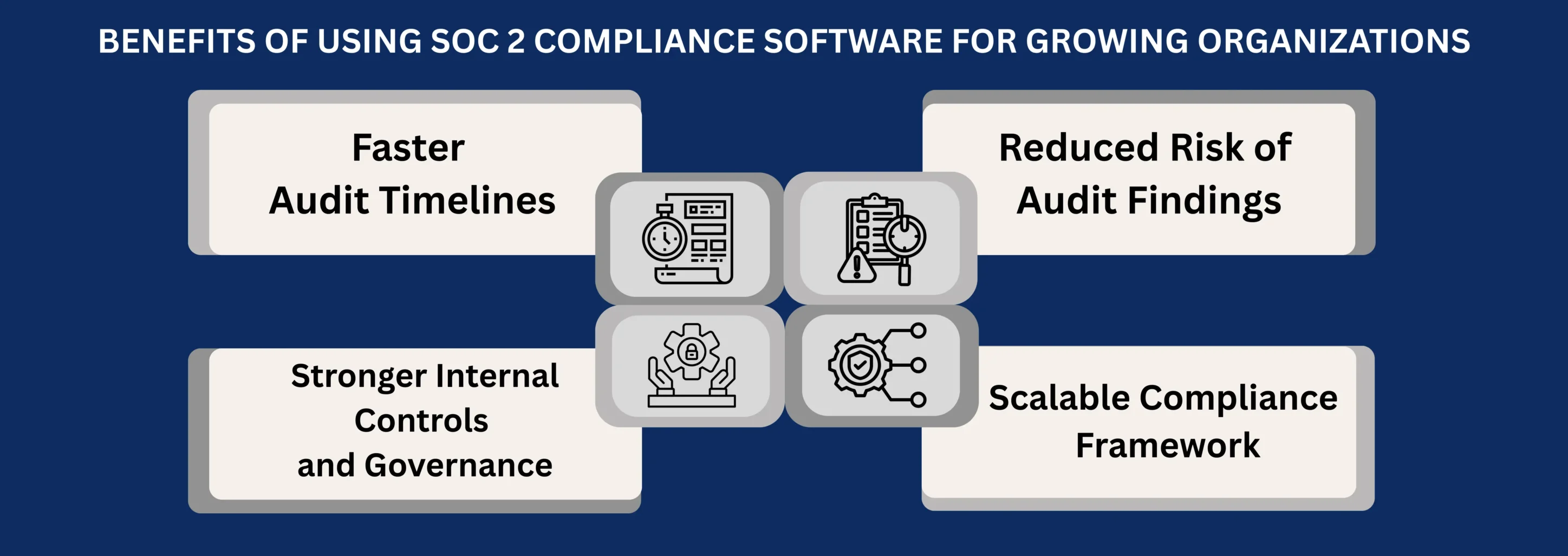
- ✓SOC 2 Attestation in Enterprise Procurement Processes
FAQ
▶
What is SOC 2 Certification and how does it differ from SOC 2 compliance?
▶
Who conducts SOC 2 examinations in Georgia?
▶
What is the difference between a SOC 2 Type 1 and Type 2 report?
▶
How long is a SOC 2 report valid for Georgia vendor procurement purposes?
▶
Which Trust Services Criteria are required for a SOC 2 examination?
▶
What types of organizations in Georgia need SOC 2 Certification?
▶
How does the SOC 2 audit process work from start to finish?
▶
Is SOC 2 Certification required by law for Georgia organizations?

More articles about SOC 2 are coming soon. Check back for updates!
More articles about SOC 2 are coming soon. Check back for updates!
More articles about SOC 2 are coming soon. Check back for updates!
Get In Touch
have a question? let us get back to you.