
SOC 2 Certification in Milan
SOC 2 attestation delivers measurable operational, commercial, and regulatory benefits for Milan organizations across financial services, technology, and professional services sectors. The following benefits are derived from the independent, third-party nature of the SOC 2 examination process and the recognized authority of the AICPA framework within international enterprise procurement contexts. Organizations that complete SOC 2 Certification in Milan consistently report improved client acquisition outcomes and reduced vendor questionnaire overhead.
OUR CLIENTS










SOC 2 Certification for Milan-Based Financial and Technology Organizations
Milan occupies a singular position within Italy’s commercial and regulatory landscape. As the home of Italy’s primary stock exchange — Borsa Italiana, where FTSE MIB-listed enterprises are concentrated — and as the headquarters location for a substantial portion of Italy’s multinational corporations, Milan represents the nation’s most demanding environment for third-party security assurance. SOC 2 Certification in Milan is increasingly required as a precondition for enterprise vendor onboarding, financial sector procurement, and cross-border technology contracts. CertPro, a Licensed CPA Firm, conducts independent SOC 2 audit engagements for organizations headquartered and operating in Milan, issuing attestation reports that satisfy enterprise and regulatory requirements.
The Porta Nuova technology corridor — Milan’s primary district for technology firms, SaaS providers, and cloud infrastructure organizations — has emerged as a concentrated zone of SOC 2 audit demand. Organizations operating from Porta Nuova and the surrounding Garibaldi-Repubblica axis serve international clients in financial services, healthcare IT, and enterprise software. These clients routinely require SOC 2 attestation as part of their vendor risk management programs. The concentration of technology firms in this district makes it a focal point for SOC 2 compliance activity across Milan, and CertPro’s audit scope covers organizations regardless of physical location within the metropolitan area.
Milan’s Piazza Affari financial district houses the headquarters of Italy’s largest banking groups, insurance conglomerates, and asset management firms. These institutions — subject to Bank of Italy supervision and European Central Bank oversight — increasingly mandate that their technology vendors and cloud service providers hold current SOC 2 attestation. SOC 2 Certification in Milan for companies serving the financial sector is therefore not a discretionary credential but a functional procurement requirement. CertPro conducts SOC 2 audit services across Milan and Italy under the AICPA framework, issuing independent attestation reports that financial sector procurement teams can evaluate and retain.
Milan’s Regulatory Environment and SOC 2 Compliance Intersection
Italy’s data protection authority — the Garante per la protezione dei dati personali, commonly referred to as the Garante Privacy — enforces the General Data Protection Regulation (GDPR) and Italy’s national data protection legislation. The Garante Privacy has issued enforcement decisions and significant fines against organizations that failed to demonstrate adequate technical and organizational measures for personal data protection. SOC 2 compliance, specifically when the Privacy Trust Services Criterion is included within the audit scope, provides documented and independently verified evidence of data protection controls. Milan-based organizations subject to Garante Privacy enforcement can reference their SOC 2 attestation as part of their accountability framework under GDPR Article 5(2).
Milan organizations with operational footprints in the United Kingdom — including subsidiary operations, data processing agreements with UK-based clients, or cross-border service delivery — are also subject to the UK Information Commissioner’s Office (ICO) enforcement framework following Brexit. The ICO’s enforcement of the UK GDPR and Data Protection Act 2018 creates parallel compliance obligations for Milan companies with UK exposure. SOC 2 attestation in Milan, particularly when Privacy and Security Trust Services Criteria are in scope, provides a recognized mechanism for demonstrating control maturity to both Garante Privacy and ICO oversight structures. This dual regulatory relevance makes SOC 2 Certification in Milan especially valuable to technology companies and financial services firms as a consolidated assurance instrument.
CertPro as a Licensed CPA Firm for SOC 2 Certification in Milan
SOC 2 attestation is exclusively issued by licensed Certified Public Accountant firms operating under AICPA professional standards. CertPro is a Licensed CPA Firm authorized to conduct System and Organization Controls examinations and issue SOC 2 attestation reports. This designation distinguishes CertPro from technology vendors, cybersecurity consultancies, or advisory firms that may offer preparatory services but lack the regulatory authorization to issue SOC 2 reports. The SOC 2 attestation issued by CertPro constitutes an independent, professional opinion on the design and operating effectiveness of an organization’s controls as evaluated against the applicable Trust Services Criteria — forming the foundation of every SOC 2 audit CertPro conducts for Milan organizations.

What Is SOC 2 Certification
SOC 2 is defined as a System and Organization Controls examination framework established by the American Institute of Certified Public Accountants (AICPA). Designed specifically for service organizations that store, process, or transmit customer data, it evaluates whether an organization’s controls meet the AICPA’s Trust Services Criteria (TSC). A SOC 2 audit results in an attestation report — not a certification certificate in the ISO sense — that provides an independent auditor’s opinion on control design and effectiveness. SOC2 Certification is the industry term widely used to describe this attestation process and its resulting report, and it is increasingly recognized across North American and European procurement environments.
The AICPA Trust Services Criteria define the evaluative framework against which controls are assessed. The five TSC categories are: Security (the Common Criteria, mandatory for all SOC 2 examinations), Availability, Processing Integrity, Confidentiality, and Privacy. Organizations select which criteria apply based on their service commitments, contractual obligations, and the data categories they handle. For example, an organization that processes personal data and makes service level availability commitments to clients would typically include Security, Availability, and Privacy within their SOC 2 audit scope. The scope of Trust Services Criteria is determined during the audit scoping phase in collaboration with the Licensed CPA Firm conducting the examination.
SOC 2 Defined: Key Terminology for Milan Organizations
SOC 2 compliance refers to an organization’s ongoing adherence to the controls and policies required to meet the Trust Services Criteria. SOC 2 compliance is distinct from SOC 2 attestation: compliance describes the internal state of controls, while attestation refers to the independent verification of that compliance state by a Licensed CPA Firm. Organizations that maintain SOC 2 compliance internally but have not undergone an independent SOC 2 audit cannot represent themselves as holding SOC 2 attestation. This distinction is critical for Milan-based organizations responding to vendor questionnaires or procurement requests from enterprise clients who specifically require third-party verified SOC 2 reports.
| Term | Definition | Who Issues/Owns |
|---|---|---|
| SOC 2 Compliance | Internal adherence to controls aligned with Trust Services Criteria | The organization itself |
| SOC 2 Attestation | Independent auditor’s opinion on control design and/or effectiveness | Licensed CPA Firm (e.g., CertPro) |
| Trust Services Criteria (TSC) | AICPA framework defining control evaluation categories | AICPA |
| SOC 2 Type 1 Report | Point-in-time evaluation of control design suitability | Licensed CPA Firm |
| SOC 2 Type 2 Report | Period-of-time evaluation of control operating effectiveness | Licensed CPA Firm |
SOC 2 Type 1 vs SOC 2 Type 2: Definitions and Application
SOC 2 Type 1 and SOC 2 Type 2 are two distinct forms of SOC 2 attestation, and understanding the difference is essential for Milan organizations determining which report to pursue. A SOC 2 Type 1 audit evaluates the design suitability of an organization’s controls at a specific point in time. The auditor assesses whether the controls as designed are capable of meeting the applicable Trust Services Criteria — but does not test whether those controls operated effectively over a period of time. SOC 2 Type 1 audit engagements in Milan are appropriate for organizations that have recently implemented their control environment and need to demonstrate design adequacy to initial client or prospect requirements.
A SOC 2 Type 2 audit evaluates both the design suitability and the operating effectiveness of controls over a defined review period — typically a minimum of six months and commonly twelve months. The SOC 2 Type 2 report provides substantially greater assurance to relying parties because it demonstrates that controls not only existed but functioned as designed throughout the audit period. Enterprise clients — particularly FTSE MIB-listed organizations, financial institutions, and multinational technology companies — typically require SOC 2 Type 2 reports rather than Type 1 reports. Type 2 provides evidence of sustained control performance rather than a static design assessment, making it the preferred standard for SOC 2 Certification in Milan across regulated sectors.
When to Pursue SOC 2 Type 1 vs Type 2
Milan organizations with no prior SOC 2 attestation history that face an immediate procurement requirement from a new enterprise client may pursue a Type 1 audit as a first step. The understanding is that a Type 2 audit will follow once the minimum observation period has elapsed. Organizations with established control environments and a history of internal monitoring are better positioned to proceed directly to a Type 2 audit. The SOC 2 audit engagement type for each Milan organization is determined during the scoping phase, where the Licensed CPA Firm reviews service commitments, control maturity, and client requirements to determine the appropriate examination form.
| Criterion | SOC 2 Type 1 | SOC 2 Type 2 |
|---|---|---|
| Evaluation Scope | Control design at a point in time | Control design and operating effectiveness over a period |
| Minimum Audit Period | No minimum (point in time) | Minimum 6 months; typically 12 months |
| Assurance Level | Design suitability only | Design and operating effectiveness |
| Common Use Case | Initial attestation for new control environments | Ongoing enterprise procurement and annual renewal |
| Enterprise Acceptability | Accepted as interim report | Preferred by financial sector and enterprise clients |
SOC 2 Certification Audit Process for Organizations in Milan
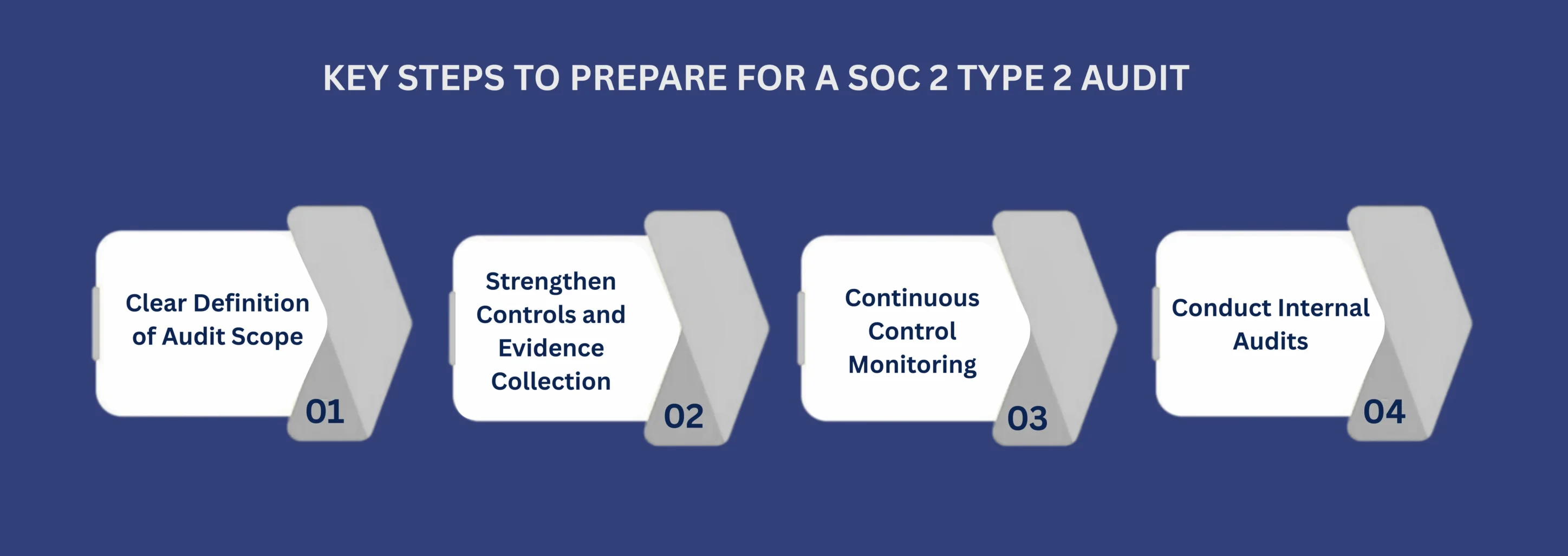
The SOC 2 audit process follows a defined sequence of stages governed by AICPA attestation standards. CertPro conducts each stage as an independent Licensed CPA Firm, evaluating evidence objectively against the applicable Trust Services Criteria. The following describes the complete audit process for SOC 2 Certification in Milan — from initial scoping through attestation issuance. Each stage produces documented outputs that form the basis of the final attestation report, ensuring that every SOC 2 compliance requirement is thoroughly examined and recorded.
- Scope Definition and Engagement Agreement: The audit scope is defined to identify which systems, services, and data categories are included in the SOC 2 examination. The applicable Trust Services Criteria categories are selected based on the organization’s service commitments and contractual obligations. The engagement agreement between the organization and CertPro as the Licensed CPA Firm is executed at this stage.
- Audit Program Determination: CertPro develops the audit program, identifying specific control objectives, testing procedures, and evidence requirements aligned with the selected Trust Services Criteria. The audit program reflects the nature of the organization’s systems and the complexity of its control environment.
- Stage 1 Audit — Documentation and Design Review: The Stage 1 audit examines the organization’s control documentation, policies, procedures, and system descriptions. The auditor assesses whether documented controls are designed to address the applicable Trust Services Criteria requirements. Identified deficiencies in design are communicated to the organization before Stage 2.
- Stage 2 Audit — Evidence Collection and Control Testing: The Stage 2 audit involves substantive testing of control operating effectiveness over the defined review period (for Type 2) or design evaluation at a point in time (for Type 1). Evidence is collected through document review, system inspection, inquiry, observation, and re-performance of controls.
- Nonconformity Identification and Review: Where control deficiencies, exceptions, or nonconformities are identified during the SOC 2 audit, these are documented and reviewed with the organization. The auditor evaluates the significance of each finding relative to the Trust Services Criteria and the overall control environment.
- Draft Report Preparation and Management Review: CertPro prepares the draft SOC 2 attestation report, including the system description, the auditor’s opinion, and the description of tests performed and results. The organization reviews the draft for factual accuracy of the system description.
- Certification Committee Decision and Attestation Issuance: The final SOC 2 attestation report is reviewed and approved through CertPro’s internal quality review process before issuance. The attestation report constitutes the official output of the SOC 2 audit and represents CertPro’s independent professional opinion.
- Surveillance and Recertification: SOC 2 Type 2 reports are issued annually, requiring organizations to maintain continuous control effectiveness and undergo recurring audit cycles. Annual recertification audits sustain the validity of the SOC 2 attestation and demonstrate ongoing SOC 2 compliance to clients and stakeholders.
Evidence collection is the operational core of the SOC 2 audit process. During a SOC 2 Type 2 examination, the auditor collects evidence demonstrating that each control operated effectively throughout the review period. Evidence categories include system-generated logs, access control records, change management documentation, incident response records, vendor management documentation, and monitoring outputs. Organizations undergoing a SOC 2 audit in Milan must maintain organized, retrievable evidence records covering the full audit period. Gaps in evidence — such as missing log records, undocumented exceptions, or incomplete policy review cycles — are identified during fieldwork and documented in the attestation report as exceptions or nonconformities.
A common operational challenge for Milan-based organizations undergoing their first SOC 2 audit is the absence of systematic evidence collection processes at the time the audit period begins. Organizations must establish automated or procedural mechanisms for capturing control evidence from the start of the audit observation window. This includes configuring security information and event management (SIEM) systems, access review workflows, and change management ticketing systems to generate retrievable records. The completeness and organization of evidence collected during the audit period directly determines the quality and scope of findings documented in the final SOC 2 attestation report.
- ✓Evidence Collection Requirements in the SOC 2 Audit
Trust Services Criteria: Detailed Coverage for Milan Organizations
The AICPA Trust Services Criteria comprise five categories against which SOC 2 controls are evaluated. The Security criterion — also referred to as the Common Criteria — is mandatory for all SOC 2 examinations. The remaining four criteria (Availability, Processing Integrity, Confidentiality, and Privacy) are additional categories that organizations include based on their specific service commitments and client requirements. Milan organizations pursuing SOC 2 compliance must select applicable criteria carefully, as the chosen criteria define the scope of the audit and the content of the attestation report shared with clients and stakeholders.
The Security criterion — designated as CC1 through CC9 within the AICPA Common Criteria framework — evaluates whether an organization’s systems are protected against unauthorized access, both physical and logical. This criterion covers organizational governance and risk management (CC1), communication and information quality (CC2), risk assessment processes (CC3), monitoring activities (CC4), logical and physical access controls (CC6), system operations (CC7), change management (CC8), and risk mitigation (CC9). All Milan organizations undergoing SOC 2 Certification must satisfy the Security Common Criteria as a baseline requirement. Controls within this category include multi-factor authentication, encryption of data in transit and at rest, network segmentation, intrusion detection, and security incident response procedures.
The Availability criterion evaluates whether systems are available for operation and use as committed to in service level agreements. Milan cloud providers and SaaS companies with uptime commitments to clients typically include Availability within their SOC 2 audit scope. Controls evaluated include infrastructure redundancy, disaster recovery procedures, backup testing, and capacity monitoring. The Processing Integrity criterion evaluates whether system processing is complete, accurate, timely, and authorized. This criterion is particularly relevant for Milan fintech organizations and payment processing platforms where data accuracy and transaction completeness are directly tied to client financial outcomes.
The Confidentiality criterion evaluates whether information designated as confidential is protected as committed. This criterion applies when an organization processes confidential business information, trade secrets, or contractually protected data on behalf of clients. The Privacy criterion — directly relevant to GDPR compliance and Garante Privacy enforcement in Italy — evaluates whether personal information is collected, used, retained, disclosed, and disposed of in conformity with the organization’s privacy notice and applicable privacy regulations. Milan organizations that process personal data of Italian or EU residents and seek to align their SOC 2 attestation with GDPR accountability obligations should include the Privacy TSC category within their examination scope.

- ✓Security (Common Criteria)
- ✓Availability, Processing Integrity, Confidentiality, and Privacy Criteria
SOC 2 Compliance Requirements: Controls, Policies, and Documentation
SOC 2 compliance requires organizations to establish, document, implement, and maintain a structured set of controls across information security, access management, change management, risk management, and operational domains. Unlike prescriptive frameworks such as PCI-DSS, SOC 2 does not mandate specific technical configurations. Instead, it evaluates whether an organization’s controls — as designed and operated — effectively address the applicable Trust Services Criteria. This principle-based approach means that Milan organizations have flexibility in how they implement controls, provided the implemented controls demonstrably achieve the required outcomes as evidenced during the SOC 2 audit.
- ✓Information security policy framework covering all applicable Trust Services Criteria domains
- ✓Access control policies defining least-privilege principles, access provisioning and deprovisioning procedures, and periodic access reviews
- ✓Change management procedures with documented approval, testing, and rollback processes
- ✓Risk assessment documentation identifying risks to system security, availability, and data confidentiality
- ✓Incident response policy with defined detection, escalation, containment, and notification procedures
- ✓Vendor and third-party management program with risk-based due diligence and monitoring
- ✓Business continuity and disaster recovery plans with documented testing cycles
- ✓Encryption and data protection standards covering data in transit and at rest
- ✓Personnel security procedures including background screening and security awareness training
- ✓Monitoring and logging framework capturing security events and system activity for the duration of the SOC 2 audit period
Documentation quality is a primary determinant of SOC 2 audit outcomes. Each control evaluated during the SOC 2 audit must be supported by evidence that demonstrates the control’s existence, design, and operation. Documentation requirements span policy documents, procedure manuals, system configuration records, audit logs, training records, vendor contracts, and management review minutes. For Milan organizations operating in regulated sectors — banking, insurance, healthcare IT — documentation standards must also satisfy the requirements of applicable Italian and European regulatory frameworks. This creates an integrated documentation environment that serves both SOC 2 compliance and regulatory reporting purposes simultaneously.
- ✓Documentation Standards for SOC 2 Audit Evidence
SOC 2 Attestation Report: Structure, Distribution, and Application
The SOC 2 attestation report is the formal output of a SOC 2 examination conducted by a Licensed CPA Firm. The report structure is defined by AICPA attestation standards and includes four primary components: the service auditor’s report (the independent opinion), the management’s assertion, the system description, and the description of tests performed and results obtained (for Type 2 reports). The SOC 2 attestation report issued by CertPro for Milan organizations documents the systems reviewed, the Trust Services Criteria applicable to the examination, the controls tested, and the auditor’s findings regarding design suitability and operating effectiveness.
SOC 2 attestation reports are confidential documents and are not publicly available. They are distributed under non-disclosure agreements to user entities — the clients and business partners of the audited organization — who rely on the report for vendor risk management and procurement due diligence. Enterprise clients, financial institutions, and regulated organizations that require SOC 2 attestation from their service providers will request either a full report or an executive summary bridge letter. Milan organizations holding a current SOC 2 attestation can provide the report to prospective clients as part of their security due diligence response process, significantly reducing the time and effort required to complete vendor security questionnaires.
SOC 2 Report Opinion Types and Their Significance
A SOC 2 attestation report may contain one of three opinion types: an unqualified opinion, a qualified opinion, or an adverse opinion. An unqualified opinion indicates that the auditor found no material exceptions and that controls were suitably designed and — for Type 2 reports — operated effectively throughout the review period. A qualified opinion indicates that one or more exceptions were identified but did not affect the overall adequacy of the control environment. An adverse opinion is issued when exceptions are sufficiently material to indicate that controls did not meet the Trust Services Criteria. Most enterprise procurement processes require an unqualified or at minimum a qualified SOC 2 opinion from service providers. Milan organizations receiving a qualified opinion must disclose the nature of the exceptions and their remediation plans to relying parties.
Why Organizations in Milan Pursue SOC 2 Certification
The drivers for pursuing SOC 2 Certification in Milan vary by organizational type, target market, and regulatory context, but converge on a consistent set of demand signals. Enterprise vendor security reviews — particularly from multinational corporations, financial institutions, and healthcare organizations — represent the most immediate commercial driver. Milan’s position as Italy’s primary business and financial center means that a significant proportion of enterprise procurement decisions affecting Italian technology vendors originate from or pass through Milan-based procurement and legal teams. These teams apply international vendor security standards, including SOC 2 attestation, as baseline requirements for service provider onboarding.
Financial Sector Procurement and SOC 2 Certification Milan Financial Services
SOC 2 Certification in Milan’s financial services sector is driven by the concentration of banking, insurance, and asset management organizations that require evidence of third-party control effectiveness before onboarding technology vendors. Italian banking groups supervised by the Bank of Italy and the European Central Bank operate under risk management frameworks that mandate third-party security assurance. Milan’s fintech ecosystem — comprising payment technology firms, digital banking platforms, and financial data analytics providers — frequently serves these regulated institutions and must hold current SOC 2 attestation to meet vendor due diligence requirements. SOC 2 compliance for Milan fintech organizations is therefore both a market access requirement and an ongoing operational obligation.
International SaaS Expansion and Enterprise Sales Enablement
Milan-based SaaS providers and cloud infrastructure organizations targeting markets in the United States, the United Kingdom, Germany, and the Nordic countries encounter SOC 2 attestation as a standard procurement requirement. US-based enterprise buyers in particular treat SOC 2 Type 2 reports as the baseline security assurance standard for cloud service providers. Milan technology companies seeking international expansion find that SOC 2 Certification in Milan accelerates sales cycles by eliminating security questionnaire bottlenecks that typically delay contract execution. A current SOC 2 Type 2 report issued by CertPro as a Licensed CPA Firm satisfies the majority of enterprise security questionnaire requirements from US and European clients, enabling Milan organizations to close deals faster without repeated ad hoc security assessments.
Benefits of SOC 2 Certification for Milan-Based Organizations
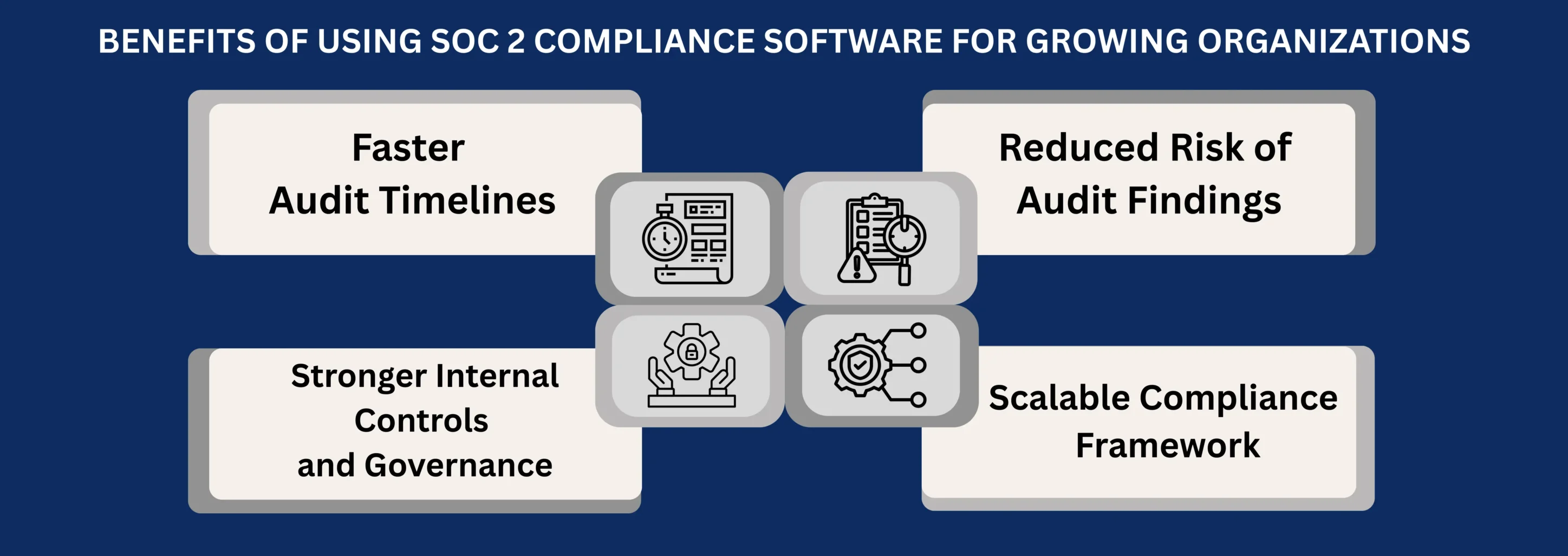
SOC 2 attestation delivers measurable operational, commercial, and regulatory benefits for Milan organizations across financial services, technology, and professional services sectors. The following benefits are derived from the independent, third-party nature of the SOC 2 examination process and the recognized authority of the AICPA framework within international enterprise procurement contexts. Organizations that complete SOC 2 Certification in Milan consistently report improved client acquisition outcomes and reduced vendor questionnaire overhead.
- ✓Independent verification of control design and operating effectiveness by a Licensed CPA Firm, providing an objective assessment distinct from internal self-assessment
- ✓Formal attestation document that satisfies enterprise vendor security review requirements in financial services, technology, and healthcare procurement processes
- ✓Demonstrated alignment with GDPR accountability requirements under Article 5(2), relevant to Garante Privacy compliance obligations for Milan organizations processing personal data
- ✓Competitive differentiation in enterprise sales processes where prospective clients require SOC 2 Type 2 reports as a vendor qualification criterion
- ✓Reduction of vendor security questionnaire burden — a current SOC 2 attestation report responds to the majority of standard security assessment questions from enterprise clients
- ✓Structured SOC 2 audit methodology that identifies control gaps and exceptions before they become regulatory or contractual compliance incidents
- ✓Annual recertification cycle that maintains ongoing surveillance of control effectiveness and supports continuous improvement of the information security program
- ✓Recognition in cross-border procurement processes involving US, UK, and EU enterprise buyers who apply SOC 2 as a recognized international assurance standard
- ✓Intersection with financial sector regulatory expectations from Bank of Italy supervised institutions and ECB-regulated banking groups operating from Milan
- ✓Support for international market expansion by providing recognized third-party assurance that eliminates market access barriers in SOC 2 requiring jurisdictions
Industries in Milan Served by SOC 2 Certification Audits
SOC 2 certification audit demand in Milan spans multiple industry sectors, reflecting the city’s role as Italy’s primary commercial, financial, and technology center. The following sectors represent the primary organizational categories for which SOC 2 attestation is relevant, based on the nature of data handled, client requirements, and applicable regulatory frameworks. Across each sector, SOC 2 compliance serves as both a procurement enabler and an ongoing risk management discipline.
Fintech, Banking, and Financial Services Technology
Milan’s fintech sector includes payment processing platforms, digital lending providers, open banking API developers, and financial data aggregators. These organizations handle sensitive financial transaction data, personal financial information, and account credentials, making SOC 2 Certification a baseline requirement for institutional client relationships. Banking technology vendors serving FTSE MIB-listed banking groups or European banking subsidiaries headquartered in Milan must demonstrate SOC 2 compliance as part of standard vendor risk management processes. SOC 2 compliance for Milan fintech organizations is also relevant for European Banking Authority (EBA) ICT risk management compliance, where third-party risk management obligations require evidence of vendor security control effectiveness.
SaaS Providers, Cloud Infrastructure, and Data Centers
Milan hosts a growing concentration of SaaS providers across enterprise resource planning, customer relationship management, human capital management, and industry-specific vertical software. These organizations process substantial volumes of client business data and personal information on behalf of their subscribers, creating SOC 2 audit obligations when serving enterprise or regulated-sector clients. Milan’s data center operators — including Tier III and Tier IV facilities serving cloud infrastructure and colocation requirements — pursue SOC 2 attestation to satisfy the security assurance requirements of their hyperscaler and enterprise tenants. Cloud infrastructure providers operating from Milan’s data center ecosystem that serve financial institutions, healthcare organizations, or public sector entities require current SOC 2 Type 2 attestation as a contractual condition of service.
Healthcare IT, Manufacturing Technology, and Professional Services
Healthcare IT organizations operating in Milan — including electronic health record platforms, medical imaging software providers, and clinical data management systems — handle sensitive health data subject to both GDPR and national health data protection regulations. SOC 2 attestation, particularly with Privacy and Confidentiality criteria in scope, provides evidence of control effectiveness relevant to healthcare data protection obligations. Milan’s manufacturing technology sector — encompassing industrial IoT platforms, manufacturing execution systems, and supply chain analytics providers — increasingly serves multinational manufacturing clients with enterprise security requirements that include SOC 2 attestation. Professional services firms, legal technology providers, and accounting software organizations serving enterprise clients from Milan also represent a growing segment of SOC 2 Certification demand across the city.
SOC 2 Certification Scope and Independent Decision Framework
The scope of a SOC 2 certification examination is defined by three principal dimensions: the systems included in the examination (the system boundary), the Trust Services Criteria categories applicable to the examination, and the time period covered by the examination (for Type 2 audits). Establishing an accurate and appropriate system boundary is essential to the integrity of the SOC 2 attestation. An overly narrow scope may exclude systems that clients expect to be covered; an overly broad scope may create unnecessary audit complexity and evidence burden. CertPro, as the Licensed CPA Firm conducting the examination, evaluates the proposed system boundary for completeness and appropriateness before the SOC 2 audit program is finalized.
Subservice Organizations and Shared Responsibility in SOC 2
Milan organizations that rely on third-party cloud infrastructure providers, managed security service providers, or outsourced data processing organizations must address the role of these subservice organizations within their SOC 2 system description. AICPA standards provide two methods for addressing subservice organizations: the carve-out method, which excludes the subservice organization’s controls from the examination scope and references their separate SOC 2 report; and the inclusive method, which includes the subservice organization’s controls within the examination. Most Milan organizations using AWS, Microsoft Azure, or Google Cloud as infrastructure providers use the carve-out method and reference the hyperscaler’s SOC 2 Type 2 report as complementary user entity controls evidence.
Nonconformity Review and Conditions for Report Qualification
When the SOC 2 audit identifies control exceptions or deviations from stated control descriptions, these findings are evaluated for materiality and impact on the overall control environment. A single isolated exception in a well-controlled environment may result in a qualified but generally favorable attestation opinion. Pervasive or high-impact control failures across multiple Trust Services Criteria categories may result in a qualified or adverse opinion. The nonconformity review process — conducted by CertPro’s audit team before the final attestation is issued — provides the organization with an opportunity to submit management’s response to identified exceptions. These responses, where appropriate, are included in the final SOC 2 attestation report and are reviewed by relying parties assessing the overall adequacy of the control environment.
CertPro: Licensed CPA Firm Conducting SOC 2 Certification in Milan
CertPro is a Licensed CPA Firm authorized under AICPA professional standards to conduct System and Organization Controls examinations and issue SOC 2 attestation reports. CertPro’s audit methodology applies a structured, evidence-based evaluation framework to each SOC 2 engagement, assessing controls objectively against the applicable Trust Services Criteria without advisory, consulting, or implementation involvement. The independence of CertPro’s role as a Licensed CPA Firm is fundamental to the validity and market acceptance of the SOC 2 attestation reports it issues for Milan organizations.
CertPro’s audit teams bring direct experience with the Milan and Italian regulatory environment, including familiarity with the Garante Privacy’s enforcement priorities, the Bank of Italy’s third-party risk management guidance, and the European Banking Authority’s ICT risk framework. This regulatory context knowledge ensures that SOC 2 audit scoping decisions account for the intersection of AICPA Trust Services Criteria with applicable Italian and European regulatory obligations. Organizations seeking SOC 2 Certification in Milan benefit from an audit firm that understands both the international SOC 2 framework and the local regulatory environment in which Milan organizations operate.
CertPro conducts SOC 2 audit services across Milan and Italy for all five Trust Services Criteria categories, covering both Type 1 and Type 2 examination forms. The firm serves organizations ranging from early-stage SaaS providers to established multinational technology and financial services firms. The attestation reports issued by CertPro satisfy the requirements of enterprise procurement teams, financial sector vendor risk programs, and international client security due diligence processes across North American, European, and Asia-Pacific markets.
SOC 2 vs Other Frameworks: Positioning Within Milan’s Compliance Landscape
Milan organizations frequently evaluate SOC 2 alongside other information security and data protection frameworks, including ISO 27001, ISO 27701, PCI-DSS, and NIS2. Understanding how SOC 2 differs from these frameworks enables organizations to make informed certification decisions based on client requirements, regulatory obligations, and operational priorities. Each framework addresses distinct assurance needs, and the choice of which to pursue first often depends on the primary markets and client types an organization serves.
SOC 2 vs ISO 27001 for Milan Organizations
ISO 27001 is an internationally recognized information security management system (ISMS) standard that results in a publicly verifiable certification. SOC 2 is a US-origin attestation framework that results in a confidential attestation report distributed under NDA. ISO 27001 certification has broader global recognition, particularly in European, Asian, and Middle Eastern markets. SOC 2 attestation is the dominant assurance standard in North American enterprise markets and is increasingly required in UK, Australian, and European markets as well. Milan organizations targeting US enterprise clients should prioritize SOC 2 attestation; organizations targeting European public sector or regulated-industry clients may prioritize ISO 27001 certification. Many Milan organizations pursue both SOC 2 attestation and ISO 27001 certification to address the full spectrum of client security assurance requirements across their target markets.
SOC 2 and GDPR Alignment for Milan Data Processors
SOC 2 does not replace GDPR compliance obligations for Milan organizations. However, SOC 2 attestation — particularly when the Privacy Trust Services Criterion is included — provides independently verified evidence of the technical and organizational measures required under GDPR Articles 25 and 32. The Garante Privacy’s enforcement framework focuses on the adequacy and effectiveness of these measures. A current SOC 2 Type 2 attestation report from a Licensed CPA Firm provides documented, third-party verified evidence of control effectiveness that is directly relevant to demonstrating GDPR accountability. Milan data processors serving EU data controllers can reference their SOC 2 attestation as part of the contractual assurance obligations under GDPR Article 28 data processing agreements.
FAQ
▶
What is SOC 2 Certification and why is it relevant for Milan-based organizations?
▶
Who can conduct a SOC 2 audit in Milan?
▶
How long does a SOC 2 Type 2 audit take for a Milan organization?
▶
Is SOC 2 compliance the same as SOC 2 attestation?
▶
Does SOC 2 certification satisfy GDPR requirements for Milan organizations?
▶
What is the difference between a SOC 2 Type 1 audit and a SOC 2 Type 2 audit in Milan?
▶
Which Trust Services Criteria should a Milan fintech organization include in its SOC 2 scope?
▶
How often must SOC 2 certification be renewed for Milan organizations?
SOC 1 VS SOC 2: WHICH REPORT YOUR CUSTOMERS ACTUALLY ASK FOR
If you sell SaaS or provide outsourced services, you have likely been asked for a SOC report. However, the follow-up question is rarely easy to answer…
SOC 2 Certified: What Does It Mean for Your Business
For companies that handle sensitive data or run cloud-based services, the question “Can you provide your SOC 2 report?” carries enormous weight. Yet, …
HOW SOC 2 AUDITORS REVIEW EVIDENCE OVER TIME
Most businesses pursuing a SOC 2 report spend months building security controls but overlook a fundamental reality: SOC 2 auditors do not just verify …
Get In Touch
have a question? let us get back to you.