
SOC 2 Certification in Wellington
Executive Summary: SOC 2 Certification in Wellington is issued by CertPro, a Licensed CPA Firm, following a structured audit of controls against the AICPA’s Trust Services Criteria. The audit evaluates Security, Availability, Processing Integrity, Confidentiality, and Privacy across Wellington-based service organizations. SOC 2 attestation reports confirm the operational effectiveness of internal controls governing data protection and service delivery — making SOC 2 Certification in Wellington an essential credential for organizations competing in enterprise and government markets.
OUR CLIENTS










What Is SOC 2 Certification?
SOC 2 Certification is a formal attestation issued by a Licensed CPA Firm confirming that a service organization’s information systems and operational controls satisfy the American Institute of Certified Public Accountants (AICPA) Trust Services Criteria. SOC 2 — System and Organization Controls 2 — is not a self-declared compliance badge. It is an independently audited attestation that verifies the design and operational effectiveness of controls governing how an organization protects customer data and delivers services reliably. SOC 2 Certification in Wellington applies to any organization that stores, processes, or transmits client data through technology-enabled services, including cloud platforms, SaaS providers, managed service firms, and data center operators. Unlike self-assessed compliance declarations, SOC2 Certification provides externally verified evidence of security posture that enterprise procurement teams and regulators recognize and trust.
The AICPA Trust Services Criteria Framework
The Trust Services Criteria (TSC) form the evaluative foundation of every SOC 2 audit. The AICPA defines five TSC categories, each addressing a distinct dimension of organizational control. Security is the mandatory baseline category required in all SOC 2 audits — it evaluates whether systems are protected against unauthorized access, both physical and logical. Availability addresses whether systems are operational and accessible as committed in service agreements. Processing Integrity examines whether system processing is complete, valid, accurate, timely, and authorized. This criterion is particularly critical for financial processing environments common in Wellington’s fintech sector.
Confidentiality evaluates whether information designated as confidential is protected throughout its lifecycle — from collection through disposal. Privacy addresses the handling of personal information in alignment with the organization’s privacy notice and applicable regulatory frameworks, including New Zealand’s Privacy Act 2020. Wellington organizations that process personal data for residents or international clients must demonstrate alignment between their privacy controls and applicable law. Each additional TSC category selected beyond Security expands the audit scope and increases the specificity of the resulting SOC 2 attestation report. Organizations determine which criteria apply based on their service commitments and contractual obligations.
| Trust Services Criterion | Control Focus | Applicable Organizations |
|---|---|---|
| Security | Logical and physical access controls, threat monitoring | All SOC 2 audit engagements (mandatory) |
| Availability | System uptime, disaster recovery, business continuity | Cloud providers, SaaS platforms, data centers |
| Processing Integrity | Accurate, complete, timely transaction processing | Fintech, payment processors, financial data platforms |
| Confidentiality | Data classification, encryption, access restriction | Legal, healthcare, enterprise data processors |
| Privacy | Personal data collection, use, retention, and disposal | Any organization processing personal information |
SOC 2 Attestation vs. Certification: A Critical Distinction
SOC 2 attestation is technically distinct from traditional certification frameworks such as ISO 27001. While ISO 27001 issues a certificate of conformance, SOC 2 produces an attestation report — a formal opinion issued by a Licensed CPA Firm under AICPA standards. The attestation report contains the auditor’s opinion, a description of the system under audit, the applicable Trust Services Criteria, and detailed findings on control design and operating effectiveness. Organizations pursuing SOC 2 compliance in Wellington must understand that the report itself is the deliverable, not a certificate or badge. The attestation report is typically shared with clients, prospects, and regulators under a non-disclosure agreement to evidence the organization’s control environment.
SOC 2 differs from self-declared compliance in a fundamental way: self-declared compliance means following internal policies without independent verification, whereas SOC 2 attestation requires an independent Licensed CPA Firm to examine evidence, test controls, and issue a formal opinion. This distinction matters significantly in Wellington’s competitive technology and financial services market. Enterprise clients and government contractors routinely require SOC 2 attestation rather than self-assessed compliance documentation. The credibility of SOC 2 attestation in Wellington derives directly from the independence and professional standards applied by the issuing Licensed CPA Firm.
SOC 2 vs. ISO 27001: Structural Differences
SOC 2 and ISO 27001 address information security from fundamentally different frameworks. ISO 27001 is a globally recognized management system standard that issues a certificate of conformance, focusing on establishing, maintaining, and continually improving an information security management system (ISMS). SOC 2, by contrast, tests specific controls based on the Trust Services Criteria, service commitments, and contractual requirements — producing an attestation report rather than a certificate. ISO 27001 offers global recognition and is often preferred for international market entry, while SOC 2 is dominant in North American markets and increasingly required by US-headquartered enterprises with Wellington-based vendors. Wellington organizations serving both markets sometimes pursue both frameworks in parallel, given their complementary but non-overlapping scope.

SOC 2 Type 1 vs. SOC 2 Type 2 in Wellington
SOC 2 audit reports are issued in two distinct types, each addressing a different dimension of control evaluation. Understanding the difference between SOC 2 Type 1 and SOC 2 Type 2 is essential for Wellington organizations determining which audit engagement is appropriate given their maturity, client requirements, and timeline. Both report types are issued by a Licensed CPA Firm under AICPA attestation standards. The key distinction lies in the period of evaluation and the depth of evidence examined. SOC 2 Type 1 evaluates control design at a specific point in time, while SOC 2 Type 2 evaluates both design and operating effectiveness across a defined observation period — making it the preferred standard for enterprise SOC 2 compliance in Wellington.
SOC 2 Type 1: Point-in-Time Design Assessment
A SOC 2 Type 1 report evaluates whether an organization’s controls are suitably designed to meet the applicable Trust Services Criteria as of a specific date. The Licensed CPA Firm examines system descriptions, control documentation, and policy frameworks to determine whether the controls, if operating as described, would achieve the stated control objectives. SOC 2 Type 1 does not involve testing whether controls actually functioned over time — it is a design-level opinion only. This makes Type 1 appropriate for organizations earlier in their compliance journey that need to demonstrate control design to clients quickly, often as a direct precursor to a full Type 2 engagement.
Wellington technology startups and early-stage SaaS companies frequently pursue SOC 2 Type 1 first when enterprise procurement teams require evidence of security posture before extending vendor contracts. Type 1 reports can typically be completed more quickly than Type 2 because there is no observation period requirement. However, enterprise clients — particularly those in Wellington’s financial services sector or those contracting with US-based corporations — often require SOC 2 Type 2 attestation as the minimum standard for ongoing vendor qualification. Type 1 should therefore be viewed as an interim milestone on the path to a full SOC 2 audit in Wellington, not as a terminal compliance objective.
SOC 2 Type 2: Operational Effectiveness Over Time
A SOC 2 Type 2 audit in Wellington examines both the design and operating effectiveness of controls over a defined review period, typically ranging from six to twelve months. During this observation period, the Licensed CPA Firm collects and tests evidence demonstrating that controls were consistently applied throughout — not merely documented as policies. Evidence testing involves examining access logs, change management records, incident reports, vendor assessments, backup verification records, and other operational artifacts that demonstrate continuous control execution. SOC 2 Type 2 attestation is the most widely recognized and credible form of SOC 2 report in enterprise procurement and regulatory contexts, making it the gold standard for SOC 2 compliance in Wellington.
Wellington organizations in the financial services, government contracting, and managed services sectors are frequently required to maintain current SOC 2 Type 2 reports as a condition of contract. Enterprise clients in these sectors understand that a Type 2 report provides evidence of sustained operational discipline — not just documented intent. Organizations must complete annual audit cycles to maintain current SOC2 Certification status and meet customer expectations. Each annual Type 2 engagement covers a new observation period, ensuring that the attestation report remains current and reflects the organization’s active control environment rather than a historical snapshot.
| Attribute | SOC 2 Type 1 | SOC 2 Type 2 |
|---|---|---|
| Evaluation Period | Single point in time | 6–12 month observation period |
| Control Assessment | Design suitability only | Design and operating effectiveness |
| Evidence Testing | Documentation review | Operational artifact testing over time |
| Market Acceptance | Interim or early-stage indicator | Preferred standard for enterprise contracts |
| Audit Duration | Shorter engagement | Longer engagement (period-dependent) |
Requirements for SOC 2 Certification in Wellington
SOC 2 Certification in Wellington requires organizations to establish, document, and operate a defined control environment aligned with the applicable AICPA Trust Services Criteria. There is no prescriptive checklist of controls. Instead, each organization’s controls are evaluated against the objectives defined within the TSC categories selected. This flexibility means that Wellington technology companies, financial services providers, and data center operators each design control environments appropriate to their service model and risk profile — which are then independently assessed by the Licensed CPA Firm conducting the SOC 2 audit. Understanding these requirements early helps organizations prepare efficiently and avoid common audit pitfalls.
SOC 2 audit requirements at the documentation level demand that organizations maintain formal, approved policies governing information security, access control, incident response, change management, and business continuity. These policies must be current, version-controlled, and demonstrably communicated to relevant personnel. The system description — a formal narrative of the services provided, the components of the system (infrastructure, software, people, procedures, and data), and the relevant control environment — is a mandatory deliverable submitted to the Licensed CPA Firm. An inaccurate or incomplete system description is a common cause of audit findings and can materially affect the opinion issued in the final SOC 2 attestation report.
Wellington organizations pursuing SOC 2 compliance must ensure that their documentation reflects actual operational practices rather than aspirational policies. Auditors test whether documented controls match observed evidence. Discrepancies between written policies and operational evidence result in exceptions noted in the attestation report. A clean or unqualified SOC 2 attestation — one without noted exceptions — requires that documentation, training records, operational logs, and system configurations all corroborate one another consistently across the audit period. Maintaining this alignment between policy and practice is the fundamental discipline that effective SOC 2 compliance in Wellington demands.
Technical controls evaluated in a SOC 2 audit in Wellington encompass logical access management, encryption standards, network security architecture, vulnerability management, and system monitoring. Access controls must implement the principle of least privilege, with formal provisioning and de-provisioning processes documented and evidenced through access logs and ticket records. Multi-factor authentication is a standard expectation for privileged access in contemporary SOC 2 audits. Encryption requirements apply to data at rest and data in transit, with specific cryptographic standards evaluated against current AICPA guidance and industry practice. Wellington data centers and cloud-native organizations must evidence that encryption keys are managed under formal key management procedures.
Vulnerability management programs must demonstrate regular scanning cadences, defined remediation timelines by severity rating, and evidence of patching completion. Penetration testing results and remediation evidence are often examined as supplementary evidence in SOC 2 Type 2 engagements — particularly for Wellington organizations in high-risk sectors such as financial services or government cloud services. Security monitoring controls require evidence of continuous log collection, alert configuration, and documented incident response activations. SOC 2 audit evaluations in Wellington examine not only whether monitoring tools are deployed, but whether alerts are actioned and documented in accordance with the incident response policy.
Organizational requirements for SOC 2 Certification in Wellington extend beyond technical controls to governance structures, human resources practices, and vendor management programs. Background screening processes for personnel with access to sensitive systems must be formalized and documented. Security awareness training programs must be current, with completion records available as audit evidence. Risk assessment processes must be conducted at defined intervals, with documented outputs demonstrating that identified risks have been evaluated and treated through the control environment. Board or executive-level oversight of information security — evidenced through meeting minutes, security reporting structures, or assigned accountability — is evaluated under the Security TSC’s governance control objectives.
- Formal information security policy suite: documented, approved, and version-controlled
- System description prepared and aligned with actual service delivery model
- Logical access controls implementing least privilege with formal provisioning workflows
- Multi-factor authentication for privileged and remote access
- Encryption standards applied to data at rest and in transit with key management procedures
- Vulnerability management program with defined scanning cadence and remediation timelines
- Incident response plan with documented activation records and post-incident reviews
- Change management process with approval workflows and rollback procedures
- Business continuity and disaster recovery plans tested at defined intervals
- Vendor management program with third-party risk assessments for critical suppliers

- ✓Documentation and Policy Requirements
- ✓Technical Control Requirements
- ✓Organizational and Operational Requirements
The SOC 2 Audit Process in Wellington
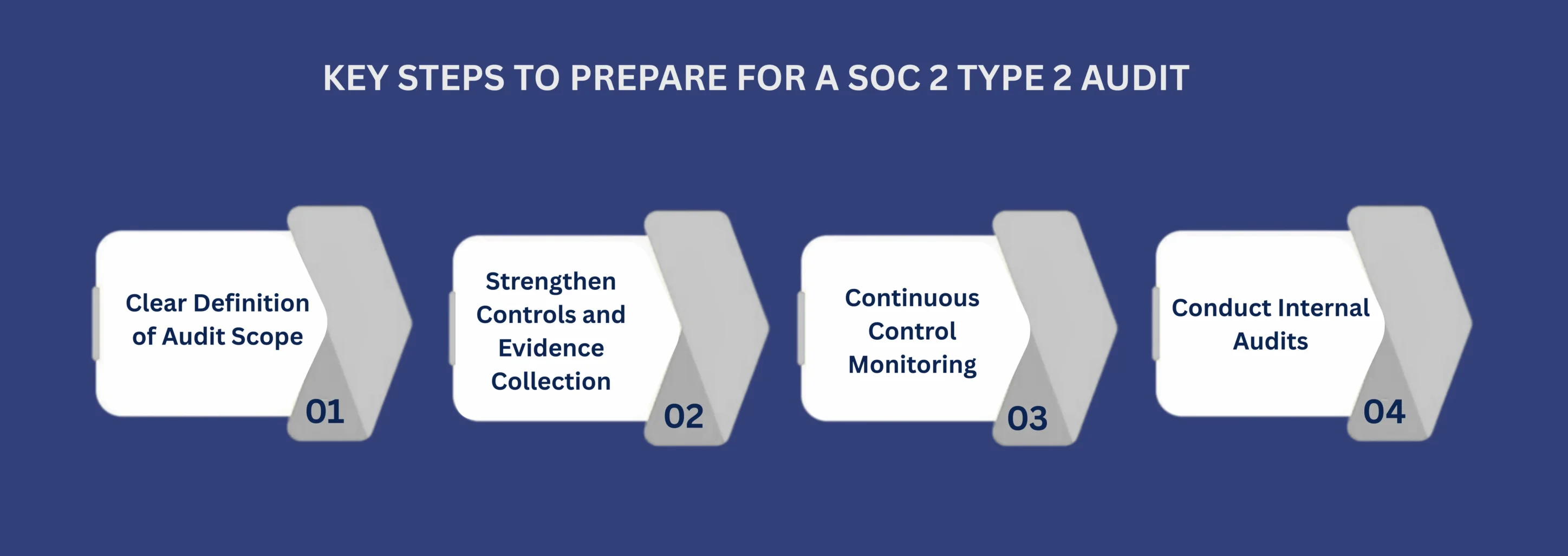
The SOC 2 audit process follows a structured sequence of evaluation stages conducted by the Licensed CPA Firm. Each stage produces defined outputs that build toward the final attestation report. SOC 2 audit engagements in Wellington conducted by CertPro adhere strictly to AICPA AT-C Section 205 standards for examination engagements, ensuring that the resulting attestation report carries the professional authority recognized by enterprise clients, regulatory bodies, and international counterparties. The following stages define the complete SOC 2 audit process for Wellington organizations seeking certification.
Scope definition is the foundational stage of the SOC 2 audit process. The Licensed CPA Firm works with the organization to formally establish which systems, services, and infrastructure components fall within the audit boundary. The scope determines which Trust Services Criteria categories apply and which organizational units, third-party subservice organizations, and geographic locations are included in the examination. For Wellington organizations operating hybrid cloud environments or utilizing offshore data processing arrangements, scope definition must explicitly address subservice organization boundaries and the allocation of control responsibilities between the organization and its third-party providers.
Audit program determination follows scope definition. The Licensed CPA Firm establishes the specific control objectives to be evaluated, the evidence collection procedures to be applied, and the sampling methodology to be used for Type 2 engagements. The engagement letter formalizes the scope, audit period, applicable TSC categories, report type (Type 1 or Type 2), and timeline. Wellington organizations should ensure that the scope accurately reflects all services covered by client contractual commitments. Scope gaps identified after the engagement concludes can undermine the utility of the resulting SOC 2 attestation report and may require additional audit work to resolve.
Control evaluation begins with the Stage 1 audit, during which the Licensed CPA Firm examines the organization’s system description, control documentation, and policy frameworks to assess whether controls are suitably designed. For Type 1 engagements, the Stage 1 audit constitutes the primary examination. For Type 2 engagements, Stage 1 findings inform the evidence testing program conducted across the observation period. The system description is reviewed for completeness, accuracy, and alignment with the actual operational environment. Inaccuracies in the system description are a source of audit risk that must be resolved before the SOC 2 attestation report is finalized.
Evidence testing in a SOC 2 Type 2 audit involves examining operational artifacts collected across the review period. Auditors select samples from access provisioning logs, change management tickets, incident records, vulnerability scan reports, backup verification logs, and training completion records. The sampling methodology is determined by the Licensed CPA Firm based on population size and risk assessment. For Wellington technology companies, evidence collection typically involves extracting records from ITSM platforms, SIEM systems, cloud provider audit logs, and HR management systems. Poorly organized evidence collection is among the most common challenges organizations face — maintaining continuous, structured evidence repositories throughout the audit period is far more effective than assembling evidence retrospectively.
Following evidence testing, the Licensed CPA Firm compiles findings and communicates identified control exceptions to the organization. Nonconformities are classified by nature — design deficiencies, operating effectiveness failures, or system description inaccuracies — and presented for management response. The organization has the opportunity to provide factual corrections and management responses, which are incorporated into the final report. The Licensed CPA Firm then issues the formal opinion, which may be unqualified (clean), qualified, adverse, or a disclaimer of opinion depending on the significance and pervasiveness of identified exceptions.
The final SOC 2 attestation report is issued as a formal document under the Licensed CPA Firm’s professional seal. For Wellington organizations, this report is the primary deliverable used in client due diligence, vendor qualification processes, regulatory submissions, and security questionnaire responses. Maintaining SOC 2 certified status requires organizations to operate their control environments continuously and engage in annual SOC 2 audit cycles to produce updated Type 2 reports. Enterprise clients typically require reports dated within the past twelve months, making annual engagement a practical necessity for organizations that rely on SOC 2 attestation as a market credential in Wellington and beyond.
- Scope Definition: Establish system boundaries, applicable TSC categories, and subservice organization inclusions
- Audit Program Determination: Confirm report type (Type 1 or Type 2), observation period, and evidence procedures
- Stage 1 Audit: Evaluate system description accuracy and control design suitability
- Type 1 or Type 2 Assessment: Confirm engagement path and evidence collection scope
- Control Testing: Execute evidence sampling across the observation period for operating effectiveness
- Nonconformity Review: Identify and communicate exceptions; receive management responses
- Certification Decision: Licensed CPA Firm formulates attestation opinion based on audit findings
- Issuance of Attestation: Formal SOC 2 attestation report issued under AICPA AT-C Section 205 standards
- Surveillance and Recertification: Annual audit cycle engagement to maintain current attestation status
- ✓Stage 1: Scope Definition and Engagement Planning
- ✓Stage 2: Control Evaluation and Evidence Testing
- ✓Stage 3: Nonconformity Review and Report Issuance
Benefits of SOC 2 Certification for Wellington Organizations
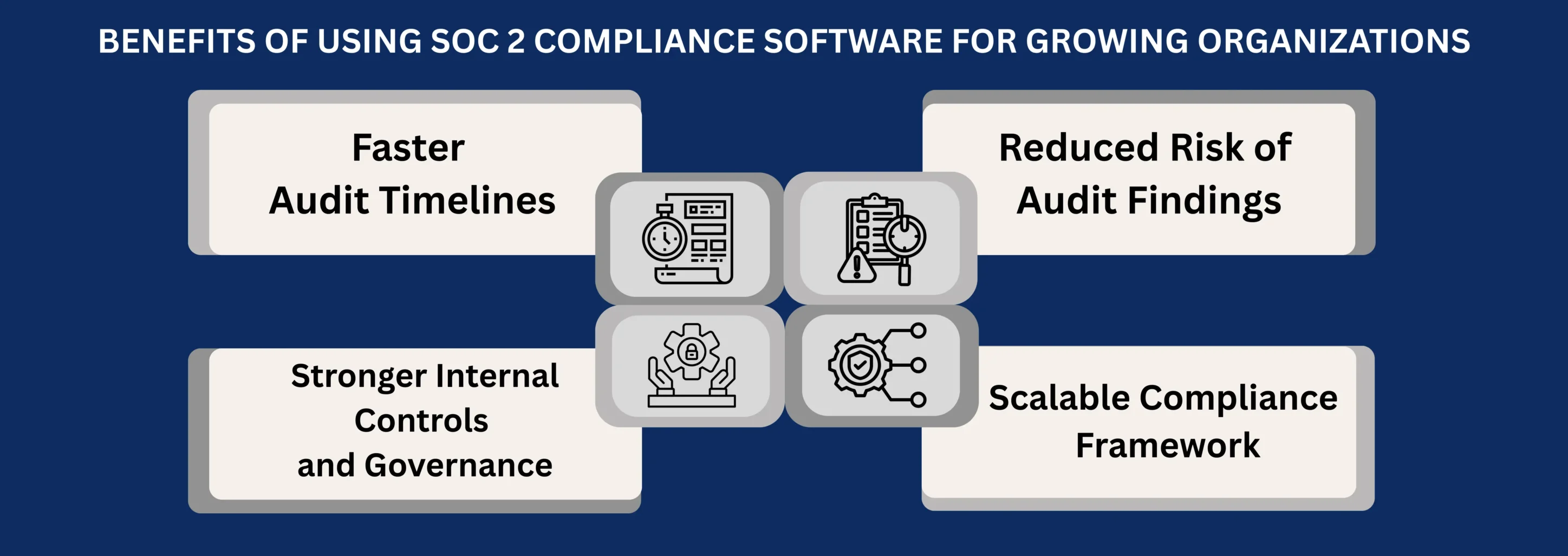
SOC 2 Certification in Wellington delivers measurable operational, commercial, and regulatory benefits for organizations that store, process, or transmit client data. As Wellington’s technology sector matures and its financial services industry deepens integration with global markets, SOC 2 attestation has transitioned from a competitive differentiator to an entry requirement in many enterprise and government procurement contexts. Wellington organizations holding current SOC 2 Type 2 reports are positioned to compete for contracts that would otherwise be inaccessible to unattested vendors — making SOC2 Certification a strategic business investment as much as a compliance obligation.
SOC 2 Certification in Wellington enables financial services organizations to access enterprise and institutional client contracts that mandate third-party attestation as a vendor qualification criterion. US-headquartered enterprises, FTSE-listed multinationals with Wellington operations, and government agencies increasingly include SOC 2 Type 2 requirements in their standard vendor questionnaires and contract terms. Wellington SaaS providers and managed service organizations without current SOC 2 attestation are routinely disqualified from procurement processes regardless of technical capability. The SOC 2 attestation report functions as a pre-qualified security credential that reduces procurement friction and accelerates sales cycles.
SOC 2 compliance achieved by Wellington fintech organizations demonstrates alignment with international data security standards required by banking and financial institution clients. New Zealand’s growing fintech sector — centered significantly in Wellington — serves clients across Australia, Southeast Asia, and North America, each market carrying its own vendor security requirements. A current SOC 2 Type 2 attestation provides a single, independently verified credential that satisfies security due diligence requirements across multiple markets simultaneously. This reduces the compliance burden associated with responding to individual client security questionnaires and positions Wellington organizations as credible, audit-ready partners.
The SOC 2 audit process drives systematic improvements in an organization’s internal control environment as a natural consequence of audit preparation and examination. Wellington technology companies that pursue SOC 2 Certification consistently report that the audit cycle identifies control gaps, process inconsistencies, and documentation deficiencies that would otherwise remain undetected. Resolving audit findings produces a demonstrably stronger security posture — not merely documentation of existing practices. Continuous evidence collection disciplines instilled by SOC 2 audit cycles improve operational consistency and reduce the risk of security incidents resulting from process lapses.
Incident response maturity is a direct operational benefit of SOC 2 compliance. The audit requires documented incident response plans with evidence of activation and post-incident review — requirements that compel organizations to exercise their incident response capabilities rather than maintain untested plans. Business continuity and disaster recovery controls evaluated under the Availability TSC require tested recovery procedures with documented results, building organizational resilience that benefits both clients and internal operations. For Wellington data centers and cloud service providers, these operational disciplines translate directly into higher service reliability and reduced mean time to recovery.
SOC 2 attestation provides Wellington organizations with documented evidence of security controls that supports compliance with New Zealand’s Privacy Act 2020, the Office of the Privacy Commissioner’s information security expectations, and contractual data protection obligations. While SOC 2 is not mandated by New Zealand law, the control disciplines it requires align closely with the privacy principles governing personal information handling. Organizations subject to cross-border data transfer obligations — particularly those processing data for EU residents under GDPR — find that SOC 2 attestation supports their ability to demonstrate adequate protection measures to international counterparties and regulators, strengthening trust across every market they serve.
- ✓Enterprise procurement qualification: SOC 2 attestation satisfies vendor security requirements in enterprise and government contracting
- ✓Reduced sales cycle friction: current attestation report replaces repetitive security questionnaire responses
- ✓International market access: SOC 2 recognized across North American, Australian, and Southeast Asian markets
- ✓Demonstrated security posture: independently verified controls signal organizational maturity to clients and partners
- ✓Regulatory alignment: SOC 2 control disciplines support Privacy Act 2020 and GDPR compliance obligations
- ✓Operational improvement: audit cycles identify and drive resolution of control gaps and process deficiencies
- ✓Insurance positioning: documented security controls may support favorable cyber insurance terms
- ✓Competitive differentiation: SOC 2 certified status distinguishes Wellington organizations in competitive procurement
- ✓Client confidence: SOC 2 attestation in Wellington signals commitment to data protection and service reliability
- ✓Commercial and Market Access Benefits
- ✓Operational and Risk Management Benefits
- ✓Regulatory and Client Trust Benefits
Wellington’s Compliance Landscape and SOC 2
Wellington operates as New Zealand’s regulatory and governmental capital, housing central government agencies, major financial institutions, and a dense concentration of technology firms serving both public and private sector clients. This concentration of regulated industries and government contractors creates a compliance environment where data security attestation is not merely a commercial preference — it is increasingly a procurement and regulatory expectation. SOC 2 compliance in Wellington operates within a layered regulatory context that includes New Zealand’s Privacy Act 2020, the Financial Markets Conduct Act, and international frameworks applicable to organizations serving overseas clients.
New Zealand Privacy Act 2020 and SOC 2 Alignment
New Zealand’s Privacy Act 2020 introduced significant obligations around personal information handling, mandatory breach notification, and cross-border data transfer requirements. The Act’s Information Privacy Principles govern how organizations collect, store, use, and disclose personal information. SOC 2’s Privacy Trust Services Criterion addresses equivalent domains — collection limitation, data quality, purpose specification, use limitation, security safeguards, openness, and individual participation — creating substantial alignment between SOC 2 audit requirements and Privacy Act obligations. Wellington organizations that establish SOC 2-compliant privacy controls are simultaneously building the operational infrastructure required to satisfy Privacy Act 2020 obligations, reducing duplicated compliance effort across both frameworks.
The Privacy Act 2020’s mandatory breach notification requirement obligates organizations to notify the Office of the Privacy Commissioner and affected individuals when a privacy breach causes or is likely to cause serious harm. This underscores the operational importance of SOC 2 Security and Privacy TSC controls. Incident detection, response, and notification procedures evaluated under the SOC 2 audit directly address the operational capabilities required for timely breach notification compliance. Wellington organizations subject to both frameworks benefit from this control alignment, reducing duplication of compliance effort across the two regulatory regimes and enabling a more efficient, integrated approach to data protection governance.
GDPR Considerations for Wellington Organizations
Wellington organizations that process personal data of individuals located in the European Union are subject to GDPR obligations, regardless of where the organization is incorporated. New Zealand currently holds an EU adequacy decision for personal data transfers under the GDPR, meaning that personal data can flow from the EU to New Zealand-based organizations without additional safeguards — provided those organizations comply with New Zealand’s privacy framework. SOC 2 attestation supports GDPR accountability obligations by providing independent verification of technical and organizational measures protecting personal data. This aligns directly with GDPR Article 32 requirements for appropriate security measures and strengthens Wellington organizations’ standing with EU-based clients and regulators.
Wellington technology companies providing cloud services, data processing, or SaaS platforms to EU clients frequently face contractual requirements to demonstrate GDPR-compliant security controls through independent attestation. SOC 2 attestation, while not a GDPR-specific certification, provides documented evidence of security control effectiveness that EU data controllers can reference when fulfilling their own GDPR due diligence obligations under Article 28 processor agreements. The Privacy and Confidentiality TSC categories evaluated in Wellington SOC 2 audits address control domains directly relevant to GDPR data minimization, purpose limitation, and security requirements — making SOC 2 a practical and recognized tool for cross-border compliance.
Government and Critical Infrastructure Requirements
Wellington’s role as New Zealand’s governmental capital means that a significant proportion of technology vendors operating in the city serve central government agencies subject to the New Zealand Government’s Protective Security Requirements (PSR) and the NZISM (New Zealand Information Security Manual). While the NZISM and SOC 2 are distinct frameworks, SOC 2 audit evidence overlaps substantially with NZISM control domains. Wellington organizations holding current SOC 2 Type 2 attestations can leverage audit evidence in NZISM compliance activities, improving efficiency across both programs. Government agencies increasingly reference SOC 2 attestation as evidence of supplier security capability in cloud procurement assessments conducted under the All-of-Government cloud framework.
Industries in Wellington That Require SOC 2 Certification
SOC 2 Certification for Wellington companies spans a broad range of industries, driven by the city’s concentration of financial services institutions, government agencies, technology firms, and professional services organizations. The common denominator across these sectors is the handling of sensitive client data through technology-enabled services — the precise scenario SOC 2 was designed to address. Industry-specific drivers for SOC 2 attestation in Wellington vary, but enterprise client requirements and regulatory expectations consistently emerge as the primary catalysts for organizations seeking SOC 2 audit engagements.
Financial Services and Fintech
Wellington’s financial services sector — encompassing investment management firms, banking institutions, insurance companies, and a growing fintech ecosystem — represents the most active demand segment for SOC 2 Certification in Wellington. Financial institutions processing client funds, investment data, and transaction records operate under both regulatory mandates and contractual obligations requiring demonstrable security controls. SOC 2 compliance pursued by Wellington fintech organizations addresses client expectations for independently verified data protection, satisfying due diligence requirements from institutional investors, banking partners, and enterprise clients. The Processing Integrity TSC is particularly relevant for payment processing and financial data platforms, while Confidentiality and Privacy criteria address investment account and personal financial data protection obligations.
Technology and SaaS Providers
Wellington’s technology sector includes established software development firms, SaaS platform operators, managed service providers, and cloud infrastructure companies serving clients across New Zealand, Australia, and international markets. SOC 2 Certification pursued by Wellington technology companies enables market access to enterprise and government clients with formal vendor security requirements. SaaS providers face persistent demand for SOC 2 Type 2 reports from procurement teams evaluating cloud-based software for deployment in regulated environments. The Security and Availability TSC categories are foundational for most technology organizations, with additional criteria added based on the nature of the data processed and the markets served.
Government Contractors and Professional Services
Professional services firms — including legal, accounting, and management consulting organizations — that manage sensitive client data in digital environments are increasingly subject to client-driven SOC 2 requirements. Wellington law firms and accounting practices managing confidential client records through cloud-based platforms face contractual expectations from enterprise clients requiring evidence of third-party security attestation. Government contractors providing digital services to central government agencies in Wellington may encounter SOC 2 requirements as part of All-of-Government procurement evaluations, particularly for cloud hosting and data processing arrangements involving classified or sensitive government information.
Healthcare and Life Sciences Data Processors
Healthcare technology organizations and life sciences data processors operating in Wellington handle some of the most sensitive personal information categories — health records, clinical trial data, and genomic information — under both Privacy Act 2020 obligations and international regulatory requirements. SOC 2 audit engagements in Wellington for these organizations typically engage the Security, Confidentiality, and Privacy TSC categories to address the multi-layered sensitivity of health data. International pharmaceutical companies and research institutions partnering with Wellington-based data processors frequently require SOC 2 Type 2 attestation as a condition of data sharing arrangements, given the global regulatory expectations for health data protection.
SOC 2 Certification Cost in Wellington
The cost of SOC 2 Certification in Wellington is determined by several structural variables, including the size and complexity of the organization, the number of Trust Services Criteria categories selected, the report type (Type 1 or Type 2), the length of the observation period for Type 2 engagements, and the scope of systems included within the audit boundary. There is no standard market rate applicable to all organizations. A small SaaS provider with a focused system scope and a single TSC category will face a materially different cost structure than a large financial services technology platform with multiple TSC categories and complex subservice organization arrangements. Understanding these cost drivers early helps Wellington organizations plan compliance budgets accurately.
Key Cost Drivers for Wellington SOC 2 Engagements
Audit scope complexity is the primary cost driver in SOC 2 certification engagements. Organizations with a single, well-defined system boundary, consolidated infrastructure, and limited third-party dependencies present lower audit complexity than those with distributed systems, multiple cloud providers, offshore processing arrangements, or numerous subservice organizations. Each additional TSC category selected increases the number of control objectives evaluated and the volume of evidence required, directly influencing engagement duration and cost. The Processing Integrity and Privacy categories in particular introduce specialized control evaluation requirements that extend audit scope and affect overall SOC 2 audit investment in Wellington.
CertPro operates on a fixed pricing model for SOC 2 audit engagements in Wellington, providing organizations with complete cost certainty from engagement planning through report issuance. Fixed pricing eliminates the billing uncertainty associated with time-and-materials audit engagements and enables Wellington organizations to budget compliance expenditure accurately. The fixed pricing structure encompasses all stages of the audit — scope definition, evidence collection, control testing, nonconformity review, and report issuance — without variable billing for additional audit hours. This model is particularly valued by Wellington technology companies and fintech organizations managing compliance budgets within defined fiscal frameworks.
Ongoing Annual Audit Investment
SOC 2 attestation is not a one-time certification — it requires annual renewal through successive audit engagements to maintain the currency of the attestation report. Enterprise clients typically require SOC 2 reports dated within the prior twelve months; reports older than twelve months are generally considered expired for vendor qualification purposes. Wellington organizations must therefore factor annual SOC 2 audit expenditure into their operating budgets as a recurring compliance cost. Organizations that maintain well-organized evidence repositories and consistent control operations reduce the friction and time investment associated with successive annual audits. Auditors can rely on established evidence collection processes rather than rebuilding audit programs from scratch each cycle, resulting in more efficient and cost-effective annual SOC 2 compliance in Wellington.
CertPro: Licensed CPA Firm for SOC 2 Audit in Wellington
CertPro is a Licensed CPA Firm providing SOC 2 audit services in Wellington, New Zealand, issuing AICPA-standard attestation reports for service organizations across Wellington’s financial services, technology, government contracting, and professional services sectors. CertPro’s SOC 2 audit engagements are conducted under AICPA AT-C Section 205 standards, ensuring that attestation reports meet the professional requirements recognized by enterprise procurement teams, regulatory bodies, and international counterparties. SOC 2 Certification in Wellington issued by CertPro provides organizations with independently verified attestation reports that carry the credibility of a Licensed CPA Firm’s professional opinion — the recognized standard for SOC 2 compliance across global markets.
Licensed CPA Firm Credentials and Audit Authority
The AICPA framework requires that SOC 2 attestation reports be issued exclusively by Licensed CPA Firms — organizations meeting the professional licensing, independence, and quality control requirements established by the American Institute of Certified Public Accountants. CertPro’s status as a Licensed CPA Firm is not a marketing claim; it is a professional requirement that underpins the legal and regulatory standing of SOC 2 attestation reports issued under its seal. Wellington organizations receiving SOC 2 attestation from non-CPA-licensed entities receive documents that do not meet AICPA standards and are not recognized as valid SOC 2 reports by enterprise clients or regulatory bodies familiar with the framework’s requirements. Choosing a properly credentialed Licensed CPA Firm is the first and most critical decision in any SOC 2 audit engagement.
CertPro’s audit teams bring specialized expertise in evaluating control environments across Wellington’s dominant industry sectors, including financial services technology, government cloud services, and SaaS platform operations. Audit personnel are experienced in the evidence collection practices specific to cloud-native environments, applying sampling methodologies appropriate to high-volume, automated control environments where traditional manual evidence collection approaches are insufficient. The firm’s fixed pricing model applies consistently across all Wellington engagement types — from early-stage SOC 2 Type 1 engagements to comprehensive SOC 2 Type 2 audit examinations covering multiple TSC categories — giving organizations full visibility into their compliance investment from day one.
Wellington-Specific Audit Expertise
CertPro’s SOC 2 audit experience in Wellington encompasses the regulatory environment specific to New Zealand-based service organizations, including the intersection of SOC 2 control requirements with Privacy Act 2020 obligations, NZISM expectations for government-serving technology providers, and Financial Markets Conduct Act compliance contexts relevant to financial technology firms. This regulatory familiarity enables CertPro’s auditors to scope SOC 2 engagements with precision — capturing the control domains most material to Wellington organizations’ actual risk environments rather than applying generic control frameworks developed for different market contexts. The result is a more targeted, efficient, and credible SOC 2 audit outcome.
Wellington organizations pursuing SOC 2 attestation for the first time benefit from CertPro’s structured engagement approach, which defines clear evidence requirements, audit timelines, and report issuance milestones at the outset of each engagement. This structure enables Wellington organizations to allocate internal resources efficiently across the audit cycle without disrupting ongoing service operations. CertPro’s fixed pricing model eliminates billing uncertainty, and the firm’s commitment to AICPA professional standards ensures that issued attestation reports are immediately recognized and accepted by enterprise clients and government procurement bodies — without further qualification or supplementary verification requirements.
FAQ
▶
What is SOC 2 certification and why does it matter for Wellington businesses?
▶
What is the difference between SOC 2 Type 1 and SOC 2 Type 2?
▶
How long does the SOC 2 audit process take for Wellington organizations?
▶
Which industries in Wellington require SOC 2 certification?
▶
Does SOC 2 certification satisfy New Zealand Privacy Act 2020 requirements?
▶
What is the difference between SOC 2 certified and SOC 2 compliant?
▶
Should a Wellington organization pursue SOC 2 or ISO 27001 first?
▶
How frequently must SOC 2 attestation reports be renewed?
SOC 1 VS SOC 2: WHICH REPORT YOUR CUSTOMERS ACTUALLY ASK FOR
If you sell SaaS or provide outsourced services, you have likely been asked for a SOC report. However, the follow-up question is rarely easy to answer…

Secure Email Platform Exclaimer Renews ISO, SOC 2
Excerpt from The Manila Times Article, Published on February 26, 2026 Secure email solutions provider Exclaimer has renewed its ISO and SOC 2 certific…
SOC 2 FRAMEWORK REQUIREMENTS IN 2026. WHAT HAS CHANGED?
Security reviews used to happen at the tail end of a deal. Today, they happen in the first conversation. Enterprise buyers come prepared. They ask abo…
Get In Touch
have a question? let us get back to you.