
ISO 42001 Certification in UK
CertPro is a Licensed CPA Firm delivering ISO 42001 certification audits across the United Kingdom. CertPro evaluates Artificial Intelligence Management Systems (AIMS) against the requirements of ISO/IEC 42001:2023, issuing certification decisions based on documented evidence, structured audit programmes, and independent conformity assessments. Organisations operating AI systems in the UK financial services, technology, healthcare, and public sectors engage CertPro for third-party ISO 42001 audit and certification services.
OUR CLIENTS










What Is ISO 42001 and Why It Matters for UK Organisations
ISO/IEC 42001:2023 is the first internationally recognised management system standard specifically designed for Artificial Intelligence. Published by the International Organisation for Standardisation (ISO) and the International Electrotechnical Commission (IEC) in December 2023, the standard establishes requirements for organisations to create, implement, maintain, and continually improve an Artificial Intelligence Management System (AIMS). ISO 42001 certification in the UK confirms that an organisation’s AI governance framework has been independently evaluated against these requirements by an accredited third-party certification body.
The standard applies to any organisation — regardless of size, sector, or type — that develops, provides, or uses AI-based products or services. In the United Kingdom, this includes fintech companies, healthcare providers, legal firms, public sector bodies, retail businesses, and technology companies deploying machine learning, natural language processing, computer vision, and other AI-driven systems. ISO 42001 does not prescribe specific AI technologies or outcomes; instead, it defines a structured management framework through which organisations demonstrate accountability, transparency, and risk governance over their AI operations.
Structural Alignment with ISO Management System Standards
ISO 42001 follows the High-Level Structure (HLS) — also referred to as Annex SL — shared by ISO 9001 (Quality Management), ISO 27001 (Information Security Management), and ISO 14001 (Environmental Management). This common architecture means that organisations already certified to ISO 27001 or ISO 9001 can integrate ISO 42001 requirements into their existing management system frameworks with reduced duplication of documentation, policies, and audit activities. For UK organisations maintaining multiple ISO certifications, this structural alignment significantly reduces implementation overhead and allows for integrated audit programmes.
The standard is organised into ten clauses. Clauses 1 through 3 establish scope, normative references, and definitions. Clauses 4 through 10 contain the core audit-relevant requirements covering context of the organisation, leadership, planning, support, operation, performance evaluation, and improvement. Annex A of ISO 42001 provides 38 controls across nine control domains, including AI risk assessment, data governance, AI system impact assessment, human oversight, and transparency. These controls form the primary evaluation criteria during a third-party ISO 42001 audit in the UK.
ISO 42001 Within the UK Regulatory Landscape
The United Kingdom does not currently have a single binding AI regulation equivalent to the EU AI Act. Instead, AI governance in the UK is distributed across sector-specific regulators including the Financial Conduct Authority (FCA), the Information Commissioner’s Office (ICO), the Medicines and Healthcare products Regulatory Agency (MHRA), and the Competition and Markets Authority (CMA). The UK Government’s AI Regulation White Paper, published in March 2023, established five cross-sectoral principles — safety, security, robustness, transparency, fairness, accountability, and contestability — that directly map to the control objectives of ISO 42001.
ISO 42001 certification in the UK provides organisations with a documented, independently audited framework that aligns with these regulatory principles across all applicable sectors. The ICO’s guidance on AI and data protection explicitly recognises the need for accountability and transparency in automated decision-making — requirements that ISO 42001 addresses through its AIMS controls on explainability, bias mitigation, and human oversight. UK organisations certified to ISO 42001 are therefore better positioned to demonstrate regulatory compliance to sector-specific regulators without constructing separate governance frameworks for each authority.
Relevance to the EU AI Act for UK-Based Organisations
Although the United Kingdom left the European Union, UK-based companies that provide AI systems, services, or products to EU customers, or whose AI systems produce outputs used within the EU, fall within the extraterritorial scope of the EU AI Act. The EU AI Act, which entered into force in August 2024, classifies AI systems by risk level and imposes mandatory governance, transparency, and conformity assessment requirements on high-risk AI systems. ISO 42001 certification provides a documented management system that addresses key EU AI Act obligations including risk management, data governance, technical documentation, and human oversight — making it an operationally valuable framework for UK companies maintaining EU market access.
UK financial services firms, technology companies, and manufacturers exporting AI-integrated products into EU member states face direct EU AI Act obligations. ISO 42001 certification, while not itself a legal requirement under the EU AI Act, demonstrates systematic compliance with governance principles that regulators, procurement bodies, and enterprise customers in the EU recognise. For UK organisations trading with EU markets, ISO 42001 certification functions as a structured risk mitigation instrument against regulatory scrutiny, contract requirements, and supply chain due diligence assessments.

ISO 42001 Certification Requirements in the UK
ISO 42001 certification in the UK requires organisations to establish and maintain a documented Artificial Intelligence Management System that satisfies the requirements of all audit-relevant clauses within ISO/IEC 42001:2023. A third-party certification body — such as CertPro — conducts an independent audit to evaluate whether the organisation’s AIMS conforms to these requirements. Certification is issued only when the audit confirms satisfactory conformity across all mandatory clauses and applicable Annex A controls. The requirements apply to the defined scope of the AIMS, which the organisation establishes based on its AI use cases, internal and external context, and interested party obligations.
ISO 42001 Clause 4 requires organisations to determine their internal and external context as it relates to AI. This includes identifying the AI systems in scope, the organisational objectives linked to those systems, applicable legal and regulatory requirements, the needs and expectations of interested parties (including regulators, customers, employees, and affected communities), and the boundaries of the AIMS scope. UK organisations must document how their AI activities relate to broader business objectives and how external factors — including UK regulatory obligations and sector-specific requirements — affect the AIMS.
The AIMS scope statement is a primary audit artefact. Auditors evaluate whether the scope accurately reflects the AI systems and activities managed under the AIMS, and whether it is consistent with documented context analysis. UK organisations operating multiple AI systems across different business units must clearly delineate which systems are included within the certified scope and provide documented rationale for any exclusions. Scope misrepresentation or incomplete scope definition constitutes a nonconformity during the ISO 42001 audit process.
ISO 42001 Clause 5 places explicit requirements on top management to demonstrate leadership commitment to the AIMS. In UK organisations, this means senior leadership — including boards, C-suite executives, and AI governance committees — must formally approve the AIMS scope and policy, assign roles and responsibilities for AI governance, and ensure that AIMS objectives are integrated into organisational strategy. Auditors review documented evidence of leadership engagement, including board-level AI governance policies, terms of reference for AI oversight committees, and records of management review meetings.
The AI policy required by Clause 5.2 must address the organisation’s commitment to responsible AI development and use, compliance with applicable legal requirements, and continual improvement of the AIMS. For UK financial services firms regulated by the FCA, the AI policy must be consistent with FCA expectations on algorithmic accountability and model risk management. For NHS organisations and healthcare providers, the AI policy must align with MHRA guidance on AI as a medical device and NHS AI Lab governance frameworks. Auditors assess the policy for completeness, board-level approval, and communication to relevant personnel.
ISO 42001 Clause 6 and its associated Annex A controls require organisations to conduct structured AI risk assessments and AI system impact assessments. The risk assessment must identify risks and opportunities associated with the organisation’s AI systems, evaluate the likelihood and potential impact of identified risks, and determine appropriate risk treatment options. AI system impact assessments — analogous to Data Protection Impact Assessments under UK GDPR — evaluate the broader societal, ethical, and operational impacts of deploying specific AI systems.
UK organisations must document their risk assessment methodology and maintain records demonstrating that risk assessments have been conducted for each AI system within the AIMS scope. Annex A control 6.1.2 specifically addresses AI risk assessment processes, requiring organisations to define criteria for risk acceptance and to ensure that risks are prioritised consistently. Auditors review risk assessment records, risk registers, risk treatment plans, and evidence of management approval of residual risk levels. Incomplete or undocumented risk assessments represent the most frequently cited nonconformity in ISO 42001 audits across UK organisations.
ISO 42001 Annex A contains 38 controls organised across nine domains. Organisations must evaluate the applicability of each control to their AIMS scope and document their selection decisions in a Statement of Applicability. Controls that are excluded must be justified with documented rationale. The nine Annex A domains cover: AI policy, internal organisation, resources for AI systems, assessing AI system impacts, life cycle considerations for AI systems, data for AI systems, information for interested parties about AI systems, use of AI systems, and human oversight of AI systems.
| Annex A Domain | Key Control Objectives | UK Relevance |
|---|---|---|
| AI Policy | Documented commitments to responsible AI use | FCA model risk, ICO accountability |
| Data for AI Systems | Data quality, provenance, and bias controls | UK GDPR Article 22 compliance |
| Life Cycle Considerations | Design, development, deployment, and decommissioning controls | NHS AI Lab, MHRA AI device guidance |
| Human Oversight | Human review mechanisms for AI decisions | FCA Consumer Duty, automated decision-making |
| Interested Party Information | Transparency and explainability to affected parties | UK AI White Paper transparency principle |
ISO 42001 Clause 7 requires organisations to maintain documented information sufficient to provide evidence of AIMS conformity. Required documented information includes the AIMS scope, AI policy, AI risk assessment results, Statement of Applicability, AI system impact assessment records, objectives and plans, competence records for personnel involved in AI governance, and operational procedures. UK organisations are also required to establish processes for controlling documented information, including version control, access management, and retention schedules consistent with UK GDPR data management requirements.
Clause 8 addresses operational planning and control, requiring organisations to implement processes that fulfil AIMS requirements and achieve AI management objectives. This includes planning and controlling the AI system development or procurement lifecycle, managing external providers of AI components or services, and implementing controls for AI system changes. UK organisations that procure AI systems from third-party vendors — including cloud-based AI services from major providers such as Microsoft Azure AI, Google Cloud AI, and Amazon AWS AI — must demonstrate that supplier management controls are in place and that third-party AI systems within the AIMS scope are subject to appropriate governance oversight.
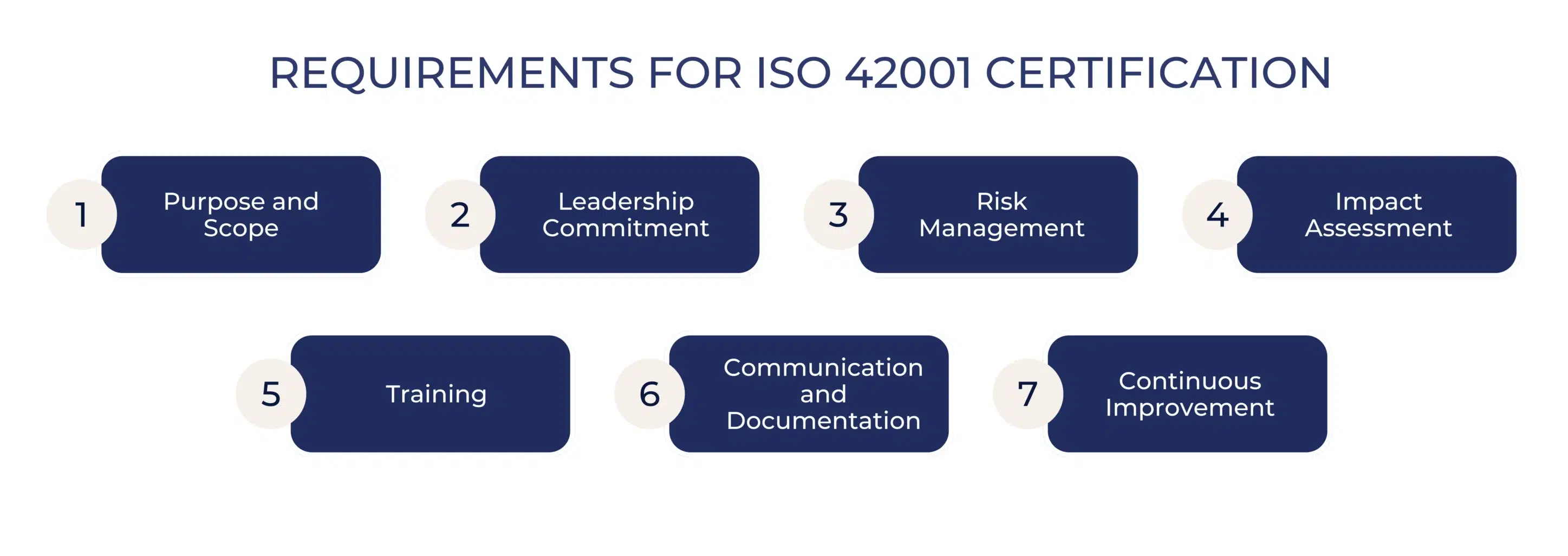
- ✓Organisational Context and Scope Requirements
- ✓Leadership and Governance Requirements
- ✓Risk Assessment and AI Impact Assessment Requirements
- ✓Annex A Control Requirements for ISO 42001
- ✓Documentation and Operational Requirements
ISO 42001 Certification Process in the UK
The ISO 42001 certification process in the UK follows a structured multi-stage audit programme conducted by an accredited certification body. CertPro executes each stage in accordance with ISO/IEC 17021-1 requirements for certification body accreditation and the specific audit methodology applicable to management system certifications. The certification process evaluates documented evidence, interviews personnel, and tests operational controls to determine conformity with ISO/IEC 42001:2023 requirements. Certification is not awarded on the basis of self-declaration; it requires independent third-party evaluation and a formal certification decision.
The ISO 42001 certification process begins with a Stage 1 audit, which evaluates the organisation’s readiness for a full conformity assessment. During Stage 1, the audit team reviews the organisation’s documented AIMS to determine whether the scope is appropriately defined, whether key mandatory documents are in place, and whether the organisation has sufficiently addressed the requirements of ISO/IEC 42001:2023 to proceed to Stage 2. Stage 1 is primarily a desktop review of documented information, conducted either on-site or remotely depending on the organisation’s preference and the audit programme agreed with CertPro.
Stage 1 findings are documented in a Stage 1 audit report that identifies areas of concern, items for clarification, and any significant deficiencies that must be addressed before Stage 2 can proceed. The Stage 1 audit report does not result in a certification decision; it informs the planning of the Stage 2 audit and allows the organisation to address documented information gaps. UK organisations typically complete Stage 1 preparation over a period of four to twelve weeks, depending on the maturity of existing management system documentation and the number of AI systems within the AIMS scope.
The Stage 2 audit is a full conformity assessment conducted on-site or through a combination of on-site and remote activities. During Stage 2, audit team members evaluate the implementation and operational effectiveness of the AIMS by reviewing evidence, interviewing responsible personnel across relevant departments, and testing whether documented controls are functioning as intended. Stage 2 covers all audit-relevant clauses of ISO/IEC 42001:2023 and all applicable Annex A controls identified in the organisation’s Statement of Applicability.
Audit findings are classified as Major Nonconformities, Minor Nonconformities, or Observations. Major Nonconformities indicate a failure to satisfy a fundamental requirement of the standard and must be resolved before certification can be issued. Minor Nonconformities identify partial fulfilment of requirements and require corrective action plans within a defined timeframe. Observations highlight areas for improvement that do not constitute nonconformities. UK organisations receiving Major Nonconformities during Stage 2 must submit documented evidence of corrective actions for review by the audit team before the certification decision is finalised.
Following Stage 2 and the resolution of any Major Nonconformities, CertPro’s certification decision-maker — independent from the audit team — reviews the audit report, nonconformity records, and corrective action evidence. The certification decision is made based solely on documented audit evidence and cannot be influenced by commercial or relationship considerations. Upon a positive certification decision, CertPro issues the ISO 42001 certificate specifying the certified organisation, AIMS scope, standard version (ISO/IEC 42001:2023), issue date, and certificate expiry date.
ISO 42001 certificates are valid for three years from the date of issuance, subject to satisfactory surveillance audits conducted annually. The certificate includes the certification body’s accreditation marks, confirming that the audit was conducted under an accredited certification programme. UK organisations may display the ISO 42001 certification mark in commercial communications, tender submissions, regulatory disclosures, and procurement documentation in accordance with CertPro’s certification mark usage rules.
ISO 42001 certification is maintained through annual surveillance audits conducted in Year 1 and Year 2 of the three-year certification cycle. Surveillance audits are shorter than the initial certification audit and focus on verifying that the AIMS continues to conform to ISO/IEC 42001:2023 requirements, that corrective actions from previous audits have been effectively implemented, and that the organisation is maintaining continual improvement activities. Surveillance audits also evaluate any significant changes to AI systems within the AIMS scope that may affect certification validity.
Recertification audits are conducted in Year 3, prior to certificate expiry, and constitute a full reassessment of the AIMS equivalent in scope to the original Stage 2 audit. UK organisations that fail to schedule surveillance audits within the required timeframes, or that experience significant AIMS failures between audits, may have their certification suspended or withdrawn. Recertification audit results determine whether the three-year certification cycle continues or whether the certificate is withdrawn pending resolution of identified nonconformities.
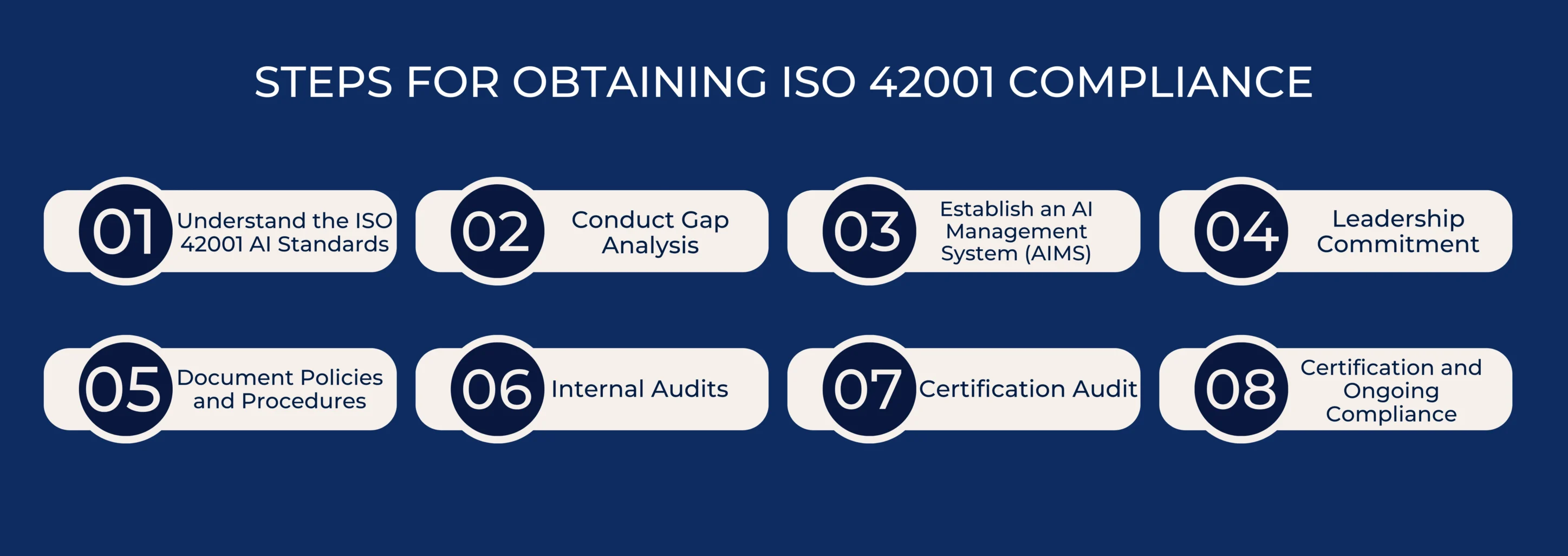
- ✓Stage 1: Scope Definition and Document Review
- ✓Stage 2: Conformity Assessment Audit
- ✓Certification Decision and Issuance
- ✓Surveillance Audits and Recertification
Steps to Achieve ISO 42001 Certification in the UK
UK organisations pursuing ISO 42001 certification follow a structured sequence of activities to establish a conforming AIMS and prepare for third-party audit. The steps below represent the standard preparation and certification pathway. Timelines vary depending on organisational size, AI system complexity, existing management system maturity, and the number of AI systems within the defined AIMS scope.
- Define the AIMS scope by identifying all AI systems, products, and services subject to ISO 42001 governance and document the internal and external context relevant to the organisation’s AI activities.
- Conduct an AI system inventory to catalogue all AI models, tools, automated decision-making systems, and third-party AI services operating within the defined AIMS scope.
- Establish the AI governance policy and assign top management responsibility for AIMS oversight, including forming an AI governance committee or designating an AI Officer with documented authority and accountability.
- Perform AI risk assessments for each in-scope AI system, documenting identified risks, likelihood and impact evaluations, risk treatment decisions, and residual risk acceptance by authorised management.
- Complete AI system impact assessments addressing ethical, social, and operational impacts of in-scope AI systems, with particular attention to systems affecting UK individuals through automated decision-making.
- Develop and implement Annex A controls identified as applicable in the Statement of Applicability, including data governance controls, human oversight mechanisms, transparency measures, and AI lifecycle management processes.
- Establish internal audit procedures and conduct at least one full internal audit of the AIMS prior to Stage 1, documenting findings, nonconformities, and corrective actions.
- Conduct a management review of AIMS performance, including review of audit results, risk assessment outcomes, objective achievement, and decisions on AIMS improvements.
- Submit certification application to CertPro, agree the audit programme, and complete Stage 1 document review with any identified documentation gaps addressed prior to Stage 2.
- Participate in Stage 2 conformity assessment audit, respond to nonconformity findings with documented corrective actions, and receive the formal ISO 42001 certification decision.
One of the most operationally complex steps in ISO 42001 certification preparation for UK organisations is conducting a comprehensive AI system inventory. Many UK companies deploy AI tools across multiple business functions — including customer service chatbots, credit scoring models, fraud detection algorithms, HR screening tools, marketing recommendation engines, and predictive maintenance systems — without a centralised register. ISO 42001 requires that the AIMS scope clearly defines which of these systems are subject to governance and provides documented rationale for any systems excluded from scope.
The AI system inventory must capture the AI system’s purpose and functionality, the data inputs it processes, the outputs it produces, the decisions it informs or makes, the populations it affects, the risk classification of the system, and the responsible business owner. This inventory forms the foundation of the risk assessment, impact assessment, and Annex A control selection processes. UK organisations with large and varied AI portfolios may need to phase their AIMS scope across multiple certification cycles, beginning with the highest-risk AI systems and expanding scope in subsequent recertification periods.
ISO 42001 Clause 9.2 requires organisations to conduct internal audits of the AIMS at planned intervals to determine whether the AIMS conforms to the organisation’s own requirements and to the requirements of ISO/IEC 42001:2023. Internal auditors must be competent in ISO 42001 requirements and must be independent of the activities being audited. UK organisations that lack internal ISO 42001 audit competence must establish a training and development programme for designated internal auditors or engage appropriately qualified personnel to conduct internal audits on their behalf.
Internal audit results must be documented and reported to top management. Nonconformities identified during internal audits must be addressed through documented corrective actions with defined timelines and responsible owners. Stage 2 auditors from CertPro review internal audit records as part of the conformity assessment to confirm that the internal audit programme has been implemented, that findings have been documented, and that corrective actions have been completed. Absence of a functioning internal audit programme constitutes a Major Nonconformity under ISO 42001 Clause 9.2.
- ✓AI System Inventory and Scope Boundary Setting
- ✓Internal Audit Requirements for ISO 42001
Benefits of ISO 42001 Certification for UK Organisations
ISO 42001 certification delivers measurable operational, commercial, and regulatory benefits to UK organisations that deploy or develop AI systems. Certification confirms that an organisation’s AIMS has been independently evaluated by a third-party certification body and found to conform to the requirements of ISO/IEC 42001:2023 — an internationally recognised standard for AI governance. The benefits described below apply across UK sectors including financial services, technology, healthcare, public sector, legal, and professional services.
ISO 42001 certification provides UK organisations with documented, third-party-verified evidence of AI governance that regulators, procurement bodies, and enterprise customers can independently validate. The FCA’s expectations on model risk management, the ICO’s requirements for algorithmic accountability under UK GDPR, and the MHRA’s guidance on AI medical devices all require organisations to demonstrate systematic governance of AI systems. ISO 42001 certification provides a single, structured framework that addresses governance requirements across these multiple regulatory contexts simultaneously.
For UK organisations supplying to the public sector — including NHS trusts, local authorities, central government departments, and defence procurement bodies — ISO 42001 certification increasingly features in tender qualification criteria. Crown Commercial Service frameworks and NHS Digital procurement requirements are incorporating AI governance standards as supplier qualification requirements. ISO 42001 certification positions UK organisations to compete for public sector contracts that require demonstrable AI governance, without the need to respond to bespoke due diligence questionnaires for each procurement exercise.
ISO 42001 certification requires organisations to implement structured risk management processes across the full lifecycle of in-scope AI systems — from design and data sourcing through development, testing, deployment, monitoring, and decommissioning. This lifecycle approach reduces the probability of AI system failures that result in regulatory sanctions, customer harm, reputational damage, or legal liability. UK organisations that have implemented ISO 42001 controls report improved detection of data quality issues, algorithmic bias, model drift, and security vulnerabilities before these issues manifest as operational incidents.
The human oversight controls required by ISO 42001 Annex A are particularly relevant for UK financial services firms subject to FCA Consumer Duty obligations, which require firms to deliver good outcomes for retail customers. Where AI systems make or significantly influence decisions affecting consumer outcomes — including credit decisions, insurance pricing, claims management, and investment recommendations — ISO 42001’s human oversight controls provide structured mechanisms for reviewing AI outputs, identifying anomalies, and intervening in automated processes to prevent foreseeable consumer harm.
ISO 42001 certification provides UK organisations with a verified competitive differentiator in commercial markets where AI governance is increasingly scrutinised by enterprise customers, investors, and business partners. Enterprise procurement teams in regulated industries — including banking, insurance, pharmaceuticals, and telecommunications — conduct supplier due diligence on AI governance practices before awarding contracts involving AI-integrated services. ISO 42001 certification provides a recognised, independently verified answer to supplier due diligence questions on AI risk management, data governance, and ethical AI use.
UK technology companies and AI solution providers holding ISO 42001 certification can differentiate their offerings in competitive tender situations, particularly when competing for contracts with large enterprises, financial institutions, and public sector bodies that have adopted AI procurement policies requiring governance evidence. Investors and private equity firms evaluating UK AI companies as acquisition or investment targets increasingly include AI governance maturity in their due diligence scope — and ISO 42001 certification provides independently verified evidence of governance maturity that self-assessed frameworks cannot replicate.
- ✓Independent third-party verification of AI governance framework conformity with ISO/IEC 42001:2023
- ✓Demonstrated regulatory alignment with FCA, ICO, MHRA, and UK Government AI principles
- ✓Strengthened position in public sector procurement processes requiring AI governance evidence
- ✓Reduced regulatory investigation risk through documented, auditable AI governance records
- ✓Improved AI system reliability through structured risk assessment and control implementation across the AI lifecycle
- ✓Enhanced customer and partner trust through transparent, independently certified AI governance
- ✓Integration efficiency with existing ISO 27001, ISO 9001, and ISO 14001 management systems
- ✓Structured readiness for EU AI Act obligations relevant to UK companies with EU market exposure
- ✓Board-level AI accountability framework supporting ESG reporting and responsible technology governance disclosures
- ✓Competitive advantage in enterprise sales, financial services procurement, and investor due diligence processes
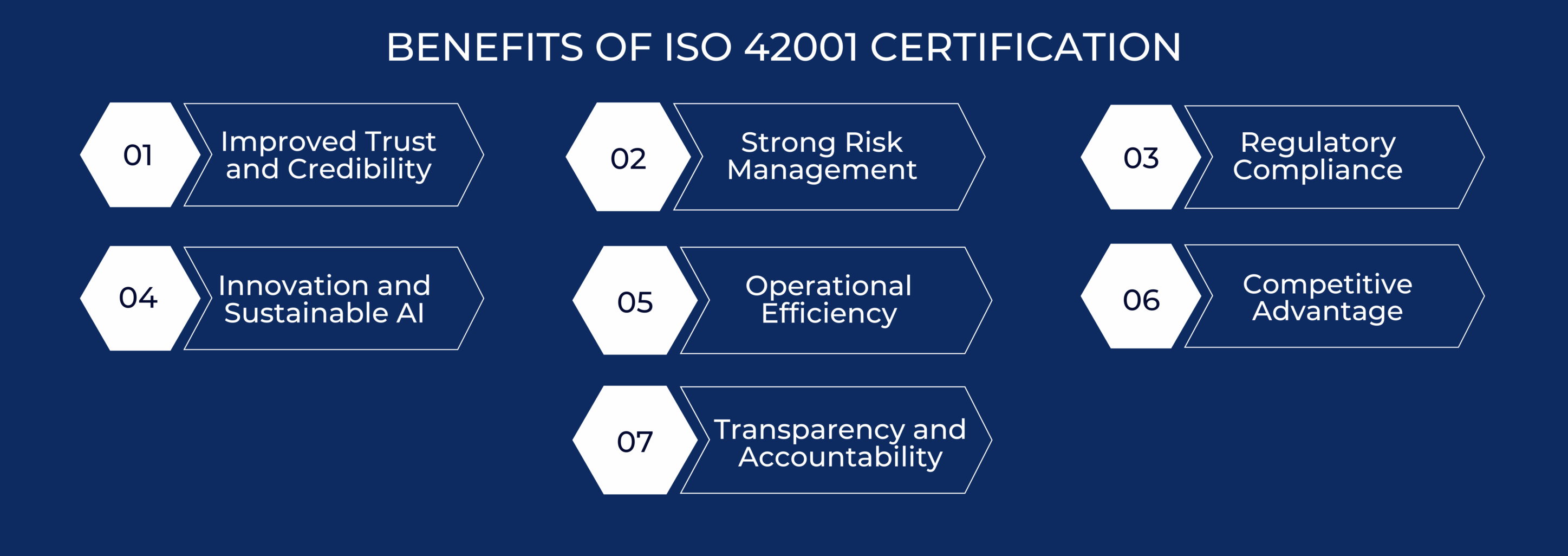
- ✓Regulatory Alignment and Compliance Demonstration
- ✓Risk Reduction Across the AI Lifecycle
- ✓Commercial and Competitive Advantages
ISO 42001 Certification Cost in the UK
ISO 42001 certification cost in the UK is determined by the scope and complexity of the organisation’s Artificial Intelligence Management System, the number and type of AI systems within the certified scope, the size of the organisation in terms of personnel involved in AI governance, the number of sites or locations included in the audit, and the duration of the audit programme required to cover all applicable clauses and controls. CertPro provides organisations with a formal quotation based on a scope assessment; certification costs are not published as fixed-rate pricing schedules because no two AIMS scopes are identical.
Factors Affecting ISO 42001 Certification Cost
The primary cost driver in ISO 42001 certification is audit duration, which is calculated based on the complexity and risk profile of in-scope AI systems. An organisation with a single, well-defined AI system — such as a UK fintech company deploying a single credit risk model — will require significantly fewer audit days than a large UK bank deploying twenty or more AI systems across retail banking, investment management, and fraud prevention. Audit duration directly affects audit fees, which represent the largest component of total certification cost.
Additional cost factors include the number of sites included in the audit scope — UK organisations with AI operations distributed across multiple offices or data centres require proportionally more audit time — and the technical complexity of the AI systems being audited. Organisations auditing machine learning pipelines with complex data supply chains, ensemble models, or real-time decision systems require auditors with specialised AI technical competence, which affects audit resource allocation. Annual surveillance audit costs are typically 30-40% of the initial certification audit cost, and recertification audits are approximately 80% of the initial audit cost.
Cost Components of ISO 42001 Certification
| Cost Component | Description | Approximate Proportion of Total Cost |
|---|---|---|
| Stage 1 Audit Fee | Document review and AIMS readiness assessment | 15–20% |
| Stage 2 Audit Fee | Full conformity assessment and nonconformity evaluation | 40–50% |
| Certification Administration | Certificate issuance, registration, and accreditation body fees | 5–10% |
| Annual Surveillance Audits (Years 1 & 2) | Ongoing conformity verification across the certification cycle | 20–25% |
| Recertification Audit (Year 3) | Full AIMS reassessment prior to certificate renewal | 15–20% |
UK organisations that have already achieved ISO 27001 or ISO 9001 certification may realise cost efficiencies in ISO 42001 certification through integrated audit programmes. Where management system elements — including internal audit procedures, management review processes, document control systems, and corrective action frameworks — are shared between existing certifications and the ISO 42001 AIMS, CertPro can design integrated audit programmes that reduce overall audit days compared to standalone ISO 42001 certification audits. Organisations interested in cost-efficient integrated certification programmes should discuss scope and audit programme options with CertPro directly.
ISO 42001 Certification for UK Technology and Financial Services Sectors
The United Kingdom’s technology and financial services sectors represent the highest concentrations of AI deployment among all UK industry sectors. London is the largest fintech hub in Europe and one of the largest globally, with over 1,600 fintech companies operating AI-driven products in areas including payments, lending, wealth management, insurance technology, and regulatory technology. The UK technology sector — concentrated in London, Manchester, Edinburgh, Cambridge, and Bristol — encompasses AI software development, cloud computing, cybersecurity, and data analytics companies for which AI governance certification is increasingly a commercial prerequisite.
ISO 42001 for UK Financial Services Firms
UK financial services firms regulated by the FCA and the Prudential Regulation Authority (PRA) operate under some of the most comprehensive AI governance expectations in the UK regulatory landscape. The FCA’s Discussion Paper DP5/22 on AI and machine learning explicitly addressed risks from model bias, opacity, and inadequate human oversight in financial services AI. The PRA’s Supervisory Statement SS1/23 on model risk management establishes expectations for model governance, validation, and ongoing monitoring that directly align with ISO 42001 AIMS requirements for financial services organisations.
ISO 42001 certification for UK financial services firms — including retail banks, investment banks, asset managers, insurance companies, credit providers, and payment service providers — provides an independently verified governance framework that addresses FCA and PRA model risk expectations within a recognised international standard. Firms using AI for credit decisioning, fraud detection, algorithmic trading, customer segmentation, claims assessment, and anti-money laundering screening can demonstrate to regulators that their AI governance meets internationally recognised standards, providing documented evidence during regulatory reviews, supervisory visits, and enforcement actions.
ISO 42001 for UK Technology Companies and AI Developers
UK technology companies that develop AI products, platforms, or APIs for sale to enterprise customers face growing governance scrutiny from their customer base. Enterprise buyers of AI software — particularly those in regulated sectors such as financial services, healthcare, and utilities — increasingly require AI vendors to demonstrate governance frameworks covering data provenance, model explainability, bias testing, and incident response. ISO 42001 certification provides UK AI developers with a recognised, third-party-verified governance credential that satisfies enterprise procurement requirements across multiple customer sectors simultaneously.
UK AI companies seeking investment from institutional investors, venture capital firms, or private equity funds are subject to increasing ESG due diligence scrutiny on AI governance practices. ISO 42001 certification provides documented, independently audited evidence of AI governance maturity that investors can incorporate into ESG assessments. For UK AI companies pursuing US listings, NASDAQ or NYSE listing requirements — along with SEC guidance on AI-related material risks — increasingly require public companies to disclose AI governance frameworks. ISO 42001 certification provides a structured, auditable framework that supports these disclosure obligations.
ISO 42001 for UK Healthcare and Public Sector Organisations
The NHS and UK healthcare providers are among the most active deployers of AI systems for clinical decision support, medical imaging analysis, patient triage, administrative automation, and predictive health analytics. The MHRA regulates AI-powered medical devices under the UK Medical Devices Regulations 2002, and the NHS AI Lab has published guidance on AI governance through its AI and Digital Regulations Service. ISO 42001 certification provides NHS trusts, integrated care systems, and independent healthcare providers with a structured AIMS framework that aligns with NHS AI governance expectations and MHRA regulatory requirements.
UK local authorities, central government departments, and arm’s length bodies deploying AI systems for public service delivery — including benefits processing, planning applications, child safeguarding risk assessment, and tax compliance screening — face particular scrutiny on fairness, transparency, and accountability grounds. The Government’s Algorithmic Transparency Recording Standard requires public sector bodies using algorithmic tools to publish transparency records. ISO 42001 certification provides a governance framework that supports algorithmic transparency obligations and demonstrates that public sector AI deployments are subject to systematic, independently verified oversight.
How ISO 42001 Aligns with UK GDPR and Data Protection Requirements
ISO 42001 and UK GDPR share significant areas of operational overlap for UK organisations deploying AI systems that process personal data. The ICO’s guidance on AI and data protection identifies accountability, transparency, data minimisation, purpose limitation, and fairness as key data protection principles applicable to AI systems. ISO 42001’s Annex A controls on data governance, impact assessment, and transparency directly address these data protection principles, creating a documented management system that organisations can reference in ICO regulatory inquiries, subject access requests, and data protection enforcement actions.
Article 22 of UK GDPR provides individuals with the right not to be subject to solely automated decisions that produce legal or similarly significant effects. For UK organisations using AI systems to make automated decisions — including credit decisions, insurance underwriting, recruitment screening, or benefits eligibility assessments — Article 22 requires that meaningful human oversight mechanisms are in place for individuals who exercise their right to challenge automated decisions. ISO 42001 Annex A control on human oversight of AI systems provides the structured governance framework for documenting and implementing these human review mechanisms.
UK organisations certified to ISO 42001 can demonstrate to the ICO that their automated decision-making AI systems are subject to systematic governance controls including impact assessments, bias monitoring, human review procedures, and transparency obligations. This documented governance evidence is directly relevant in ICO investigations into automated decision-making complaints under Article 22 UK GDPR. Organisations with ISO 42001 certification have structured, audited records of their governance processes available for ICO review, reducing the risk of enforcement action and demonstrating proactive compliance with data protection principles applicable to AI systems.
ISO 42001 Annex A Domain 7 addresses data governance controls for AI systems, covering data quality assessment, data provenance documentation, training data management, and ongoing data monitoring. These controls directly complement UK GDPR requirements for data accuracy, purpose limitation, and storage limitation in AI contexts. For UK organisations training machine learning models on personal data, ISO 42001 data governance controls establish documented processes for assessing data representativeness, identifying and mitigating dataset biases, and ensuring that training data quality meets defined acceptance criteria before model deployment.
The intersection of ISO 42001 data governance and UK GDPR is particularly relevant for UK organisations processing special category personal data — including health data, biometric data, and data revealing racial or ethnic origin — within AI systems. ISO 42001 impact assessment controls require organisations to specifically assess risks associated with AI systems processing sensitive personal data and to implement proportionate controls to mitigate those risks. Documented impact assessments covering sensitive personal data in AI systems provide evidence of the systematic, rights-respecting approach to data processing that the ICO expects from organisations operating AI systems at scale.
- ✓Automated Decision-Making and Article 22 UK GDPR
- ✓Data Governance Controls Under ISO 42001
ISO 42001 Integration with ISO 27001 and Other Management Systems
ISO 42001 shares the High-Level Structure (HLS) with ISO 27001, ISO 9001, ISO 14001, and ISO 45001, enabling UK organisations to integrate their AIMS with existing management system frameworks. Integration reduces documentation duplication, simplifies audit programmes, and creates a coherent governance ecosystem across quality, information security, environmental management, and AI governance. UK organisations that approach ISO 42001 as an extension of their existing management system landscape — rather than a standalone certification — achieve both compliance objectives and operational efficiency gains.
ISO 42001 and ISO 27001 Integration for AI Security
ISO 27001 and ISO 42001 address complementary but distinct governance domains. ISO 27001 governs the security of information assets, including AI systems as information processing components. ISO 42001 governs the responsible development and use of AI systems, including security as one of several governance dimensions alongside ethics, bias, transparency, and human oversight. UK organisations certified to both standards can map their Information Security Management System (ISMS) controls under ISO 27001 to the security-related Annex A controls under ISO 42001, avoiding duplication of security policies, access control procedures, incident response plans, and vulnerability management processes.
Integrated audit programmes for ISO 27001 and ISO 42001 allow UK organisations to conduct combined audits that evaluate both standards simultaneously, reducing total audit days and audit disruption to operational teams. CertPro designs integrated audit programmes for organisations holding or pursuing multiple ISO certifications, with integrated audit plans that allocate audit time efficiently across shared management system elements and standard-specific requirements. UK technology companies and financial services firms — which typically hold ISO 27001 certification and are pursuing ISO 42001 — are the primary beneficiaries of integrated audit programme design.
ISO 42001 and ISO 31000 Risk Management Alignment
ISO 31000:2018, the international standard for risk management principles and guidelines, provides a foundational risk management framework that ISO 42001 builds upon for AI-specific risk governance. UK organisations that have adopted ISO 31000 as their enterprise risk management framework can extend their existing risk governance processes — including risk identification methodologies, risk evaluation criteria, risk appetite statements, and risk treatment decision processes — to encompass AI-specific risks within the ISO 42001 AIMS. This extension approach reduces the effort required to establish ISO 42001 risk management processes from scratch.
AI-specific risks addressed by ISO 42001 — including algorithmic bias, model drift, data poisoning, explainability failures, regulatory non-compliance, and reputational damage from AI system failures — can be incorporated into existing enterprise risk registers under an ISO 31000-aligned framework. This integration ensures that AI risks are evaluated consistently with other enterprise risks, are subject to the same board-level risk oversight processes, and are reported through the same governance structures as financial, operational, and compliance risks. For UK FTSE 350 companies and regulated financial institutions with mature enterprise risk management frameworks, ISO 42001 AIMS alignment with ISO 31000 supports seamless integration of AI governance into board-level risk reporting.
Why Choose CertPro for ISO 42001 Certification in the UK
CertPro is a Licensed CPA Firm providing ISO 42001 certification audit services to organisations across the United Kingdom. CertPro conducts ISO 42001 conformity assessments in strict accordance with ISO/IEC 17021-1 accreditation requirements, ensuring that all certification decisions are made on the basis of documented audit evidence by qualified, independent auditors. CertPro’s ISO 42001 audit teams include personnel with demonstrated competence in AI system governance, data management, risk assessment methodology, and UK regulatory requirements applicable to AI deployments across major industry sectors.
CertPro’s Sector-Specific ISO 42001 Audit Competence
CertPro’s ISO 42001 audit teams have sector-specific competence across the principal UK industries in which AI governance certification is most frequently sought. In financial services, CertPro auditors have competence in FCA and PRA model risk management requirements, algorithmic trading governance, and credit risk model validation. In healthcare, CertPro auditors have competence in MHRA AI medical device regulation, NHS data security standards, and clinical decision support system governance. In technology and software development, CertPro auditors have competence in ML pipeline governance, AI API security, and responsible AI development practices.
This sector-specific competence ensures that ISO 42001 audit findings are contextually relevant to the organisation’s regulatory environment and operational AI use cases, rather than limited to generic management system observations. UK organisations in specialist sectors — including energy and utilities, legal services, retail and e-commerce, and advanced manufacturing — benefit from audit teams that understand the specific AI governance challenges and regulatory obligations relevant to their sector, enabling more precise and operationally useful audit findings.
CertPro’s ISO 42001 Audit Methodology
CertPro’s ISO 42001 audit methodology is structured around four core audit principles: independence, objectivity, evidence-based evaluation, and consistent application of ISO/IEC 42001:2023 requirements. Audit teams are assigned based on technical competence and sector experience, with independence requirements verified to ensure no conflict of interest between auditors and the organisations being audited. All audit findings are documented in structured audit reports with clear references to the specific ISO 42001 clause or Annex A control that gives rise to each finding, providing organisations with precise, actionable information on conformity status.
CertPro’s certification decisions are made by a certification decision-maker who is independent of the audit team, reviewing audit evidence objectively to determine whether the documented AIMS conforms to ISO/IEC 42001:2023 requirements. This separation of audit and certification decision functions ensures that certification decisions reflect the evidence gathered during the audit, free from commercial or relationship pressures. UK organisations seeking ISO 42001 certification from CertPro receive a formal certification decision letter explaining the basis for the decision and, where applicable, the conditions that must be met before certification can be issued.
CertPro’s Track Record in UK Management System Certification
CertPro has an established track record of conducting ISO management system certification audits for UK organisations across multiple standards, including ISO 27001, ISO 9001, ISO 27701, and SOC 2. This multi-standard certification experience enables CertPro to design integrated audit programmes for UK organisations pursuing ISO 42001 alongside existing certifications, creating efficient and comprehensive audit approaches that minimise organisational disruption while maximising audit coverage. UK organisations that engage CertPro for ISO 42001 certification benefit from audit teams with direct experience of the UK business environment, regulatory landscape, and management system certification ecosystem.
FAQ
▶
What is ISO/IEC 42001:2023 and what does it certify?
▶
Which UK organisations need ISO 42001 certification?
▶
How long does ISO 42001 certification take in the UK?
▶
Is ISO 42001 a legal requirement in the UK?
▶
How does ISO 42001 differ from ISO 27001 for UK organisations?
▶
What documentation is required for ISO 42001 certification in the UK?
▶
How often are surveillance audits conducted for ISO 42001?
▶
Can UK SMEs achieve ISO 42001 certification?

MindSec Launches AI Compliance for Law 25 & ISO 42001
Excerpt from Barchart Article, Published on December 3, 2025 Today, Canadian organizations face increasing pressure to comply with stringent privacy a…

UNDERSTANDING ISO 42001: A GUIDE FOR RESPONSIBLE AI MANAGEMENT SYSTEMS
The invention of artificial intelligence (AI) has changed the operational processes of many industries. However, the rapid growth of technology increa…
ENSURING AI DATA PRIVACY COMPLIANCE WITH ISO 42001
According to Stanford’s AI report, the private AI investment in the U.S. alone reached more than $109 billion last year, which is equal to 12 times th…
Get In Touch
have a question? let us get back to you.