In 2025, businesses are expected to achieve legal and ethical practices more than just profits. This is why adhering to compliance regulations is more important now than ever. In the current data-driven business world, noncompliance could ultimately lead to risks such as cyberattacks. Such incidents could result in legal penalties, reputational damage, and the loss of business opportunities. Hence, each business must adhere to top standards by understanding the compliance regulations by industry. What are compliance regulations? They are rules made by governments, industry groups, and international bodies. These rules help businesses operate legally, ethically, and safely.
In particular, the compliance regulations focus on information security, data privacy, risk management, governance, and operational aspects of the organization. The rules protect customer data, outline safety measures and prevent fraudulent activities. Moreover, the nature and scope of every industry are different and unique. This is why they are bound to follow different compliance regulations. For instance, a healthcare firm will handle sensitive patient data. So, it must adhere to healthcare compliance On the other hand, a cloud-based startup dealing with customers’ data should protect it from cyberthreats like data breaches. Hence, it must follow SaaS compliance requirements.
Each industry deals with unique risks and has different obligations. Therefore, the governments and regulatory bodies have established rules that match those needs. Following compliance regulations is no longer a legal requirement but a core business mandate. Because if a company fails to follow these rules, it might lose its reputation and trust among its stakeholders. Hence, this blog will explain the major compliance regulations by industry, helping you in understanding what matters the most in these sectors.

Tl; DR:
Concern: In today’s digital economy, noncompliance is more than a legal issue—it’s a business risk. Therefore, failing to follow industry regulations can lead to data breaches, financial penalties, and loss of trust.
Overview: Each industry—healthcare, SaaS, fintech—has unique risks and must meet specific compliance standards. Therefore, healthcare firms need to comply with HIPAA and HITECH, while SaaS companies must adhere to SOC 2 and ISO 27001. Likewise, fintech firms must follow PCI DSS, AML, and KYC. Compliance also depends on your data type, target market, and client expectations.
Solution: To stay compliant, businesses must identify applicable regulations, train employees, and use tools like GRC platforms. Partnering with experienced consultants like CertPro simplifies this process. We guide you through multi-standard compliance, risk analysis, and audits—helping you build a strong, future-ready compliance strategy.
WHAT IS COMPLIANCE AND ITS TYPES
Compliance means following certain rules and regulations established by regulatory bodies and governments. This process helps businesses to run smoothly in a safe, ethical and legal manner. Additionally, this compliance is classified into three main types, each serving its purpose. Let’s learn about them in detail.
Regulatory compliance refers to the process of adhering to government laws and global standards. To add on, official bodies create these standards and they are applied across the region and country. For example, a firm dealing with EU citizens’ personal data must follow GDPR. And a US-based healthcare provider must follow the HIPAA rules to ensure compliance.
These laws protect the people’s rights by setting strict regulations for privacy, security, and fairness. They also play a vital role in healthcare risk management by helping providers reduce legal and safety risks.
Secondly, the industry specific regulations refer to regulations made for certain sectors. It focuses on the unique needs and risks of each industry. These compliance regulations by industry help businesses protect sensitive data, reduce legal risks, and meet customer expectations. For example, a fintech firm is required to follow PCI DSS to safeguard its payment data and financial transactions. Likewise, a SaaS firm needs to follow SOC 2 and ISO 27001 to show their commitment to data security. Finally, the operational compliance focuses on the reliability and integrity of an organization’s operations. In simple words, it focuses on the organization’s daily business practices. The company performs this work by creating rules and policies for key business operations. Understanding compliance regulations by industry also supports operational compliance by matching internal practices with external rules. Thereby, it reduces internal mistakes and builds a culture of responsibility within the organization.
COMPLIANCE REGULATIONS BY INDUSTRY: KEY FOCUS ON HEALTHCARE, SAAS, AND FINTECH
As mentioned earlier, different industries follow different standards according to their needs and requirements. Let’s learn about them in the following sections. Our major focus here is to study the compliance regulations by industry concerning healthcare, SaaS, and fintech firms.
1. Healthcare Compliance: Healthcare organizations handle highly sensitive patient data as part of their regular operations. So, they must follow healthcare compliance laws like HIPAA and HITECH. These laws guide data privacy, breach reporting, and patient rights. Strong healthcare risk management helps lower the risk of data leaks and legal trouble. Breaking these laws can result in large fines and a loss of trust. Key challenges in healthcare compliance include protecting Electronic Health Records (EHRs) and handling third-party vendors. Often, healthcare risk management also means checking vendor contracts and controlling access to patient data.
2. SaaS Compliance: SaaS startups and firms store and manage user data on cloud platforms. So, they must protect that data to earn customer trust. SaaS compliance shows that a company meets data protection laws. SOC 2 and ISO 27001 are two major regulations. SOC 2 is an audit standard with five rules covering security, privacy, and more. These firms also follow laws like GDPR in the EU, CCPA in California, and FedRAMP for US government cloud use.
3. Fintech Compliance: Fintech companies process large financial transactions and sensitive data. This makes them a target for cybercrime. To stay compliant, they must follow rules like PCI DSS, AML, and KYC. PCI DSS protects card data. AML stops illegal money transfers. KYC checks customer identity to fight fraud. In the US, the SEC, FinCEN, and CFPB are the top regulators of fintech firms.
KEY STEPS TO FOLLOW WHILE CHOOSING THE RIGHT COMPLIANCE REGULATION
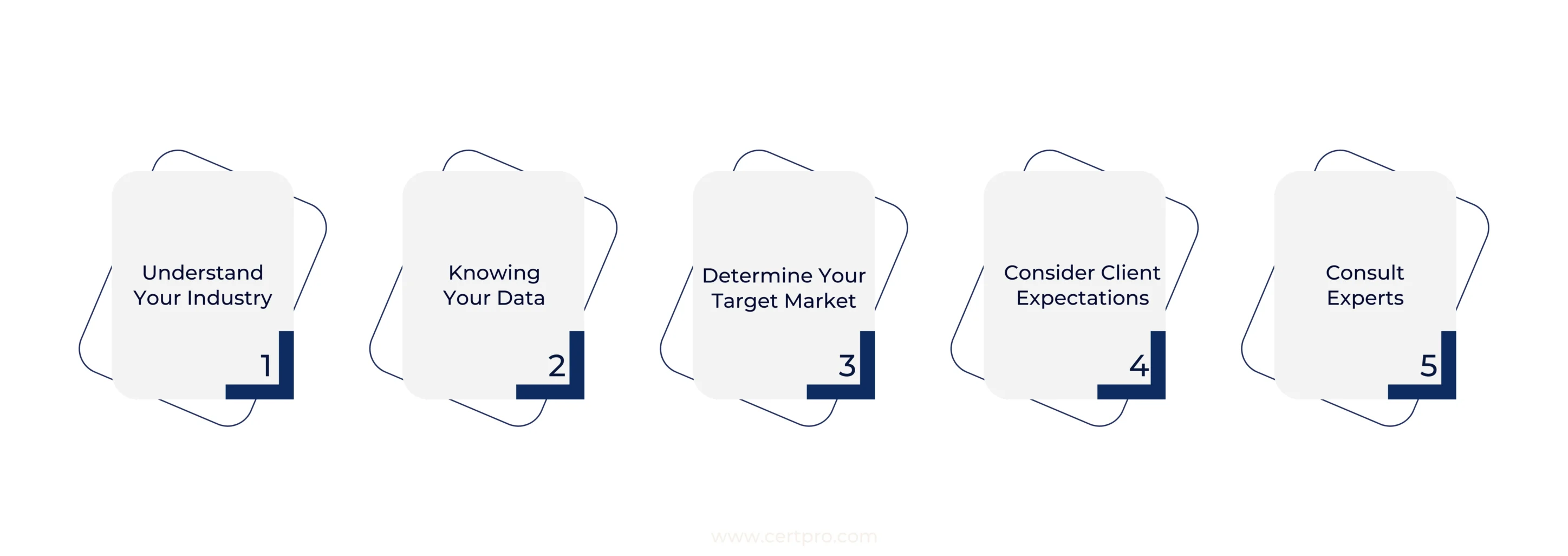
You have gained a clear picture about what are compliance regulations from the previous sections. Now, you must consider the following factors while choosing their compliance regulations by industry standards.
1. Understand Your Industry: First understand the nature and scope of the industry. This could largely determine the standards that you must follow. For instance, if you are a healthcare startup, then you must follow the HIPAA rules to ensure healthcare compliance. This also necessitates managing healthcare risks effectively.
2. Knowing Your Data: The next step is to understand the type of data that your business is handling. Identify whether it’s personal information, medical, financial, or important government data. Because each data set demands adherence to specific compliance regulations by industry. For example, handling medical data requires HIPAA, and cardholder data requires PCI DSS.
3. Determine Your Target Market: The location of your firm, clients, and customers, and their respective jurisdiction is another key factor to consider. To clarify, if your firm handles EU citizens’ sensitive data, then GDPR is a must. Similarly, CCPA is essential if your company handles data for Californian users.
4. Consider Client Expectations: Some enterprise businesses demand their vendors and third parties to meet high standards. Many expect full alignment with compliance regulations by industry, especially in sectors like finance, healthcare, and tech. For instance, achieving SOC 2 and ISO 27001 compliance will help you win more business deals when competing with your non-compliant rivals.
5. Consult Experts: When facing struggles, you don’t always have to face them alone. You can partner with leading compliance consultants and audit experts like CertPro. We can help you in understanding your business type, data inventory, performing gap analysis, risk management, and passing external audits.
BENEFITS OF ADHERING TO COMPLIANCE REGULATIONS BY INDUSTRY
Adhering to compliance regulations by industry has profound benefits. Let’s study them in detail here.
1. Build Trust with Customers: Being compliant is not just a regulatory exercise. But you are showing your commitment to safeguarding data security and privacy. This commitment builds trust among customers and key interested parties. In the long run, it boosts your brand reputation and helps you win loyal and reliable partners. For a healthcare startup aiming to partner with major hospitals, HIPAA compliance is mandatory. Because hospitals work only with those vendors who follow strict rules and ensure data security.
2. Improves Operational Efficiency: Achieving compliance regulates, organizes and structures your daily business operations. Consequently, it pushes you to set clear policies and procedures. Compliance is like organizing your workspace with clear goals, policies, and timelines. Thus, you save more time and make fewer errors.
3. Reduces Risks: Staying compliant lowers the chance of data leaks and cyberattacks. This compliance helps you avoid legal and financial risks, such as penalties and lawsuits. It also supports strong healthcare risk management by protecting sensitive patient data and ensuring privacy controls are in place.
4. Global Business Growth: Another inevitable benefit of compliance is that it helps businesses to expand into new countries and markets. Moreover, it helps you meet the investor and customer demands. By understanding compliance regulations by industry, businesses can enter new sectors with confidence and avoid legal trouble. It also keeps you ready for future risks like changing data privacy regulations and AI misuse.
5. Competitive Business Advantage: The corporate market is always crowded. Compliance is the key factor that sets you apart from your competitors. As clients prefer vendors who follow strict compliance regulations by industry, it gives you a clear edge while bidding for projects and deals.
PARTNER WITH CERTPRO FOR CROSS-INDUSTRY COMPLIANCE STRATEGY
In this hyperconnected world, the organizations are serving clients across multiple industries and countries. This gives rise to the complex compliance requirements. For instance, a SaaS startup dealing with sensitive health data must follow both SOC 2 and HIPAA standards. This makes SaaS compliance a growing area of concern, especially as data laws become stricter. In short, it is now common for organizations to aim for multi-standard compliance. Accordingly, managing multiple standards will cause confusion. Companies use compliance management systems and GRC platforms to track policies, conduct audits and generate reports.
But organizations can’t obtain multi-standard compliance without proper guidance and training. This is where the role of compliance consultants like CertPro becomes important. We are a leading consultant in the market, providing multi-standard auditing services for global clients. Our auditors possess thorough knowledge across compliance regulations, from healthcare law to financial regulations to cybersecurity standards. For SaaS firms expanding into new markets, our services help achieve SaaS compliance with both local and global laws. To add on, our expert guidance helps you save time, reduce errors, and build a compliance-driven business strategy. So, what are you waiting for? Connect with CertPro today and schedule a meeting with our consultants to begin your multi-standard compliance journey.
FAQ
Why is compliance important for SaaS businesses?
Compliance is crucial for Software as a Service (SaaS) companies because they handle vast amounts of user data. Adhering to standards like SOC 2 and ISO 27001 demonstrates a commitment to data security and privacy.
What are the consequences of not following industry-specific compliance regulations?
Failing to adhere to relevant compliance regulations can lead to severe consequences, including hefty fines, legal actions, and loss of customer trust. A data breach resulting from non-compliance can damage a company’s reputation.
What is regulatory compliance, and why is it important for businesses?
Regulatory compliance means following laws and rules set by governments and industry bodies. It is important because it helps businesses operate legally and ethically.
Why is PCI DSS compliance crucial for FinTech firms?
PCI DSS compliance ensures that FinTech firms securely handle credit card information. It helps prevent data breaches and fraud.
What role do compliance consultants play in achieving regulatory compliance?
Compliance consultants provide expertise in understanding and implementing regulations. They assist in identifying gaps, conducting audits, and developing compliance strategies.

About the Author
Anuja Patil
Anuja Patil, an Executive Team Lead at CertPro, excels in guiding her team to deliver premier information security solutions. With a strong background in ISO 27001, SOC2, GDPR, and various other compliance standards, she ensures that projects are managed efficiently and security frameworks are continually optimized.