

How Remote Audits Save Time, Cut Costs, and Improve Accuracy

As the corporate environment grows more dynamic, remote audits have become an essential tool for preserving operational integrity, evaluating performance, and guaranteeing compliance. According to PwC’s Global Compliance Survey 2025, 49% of organizations now rely on technology for 11 or more compliance activities. This trend is a clear sign of the industry’s shift toward digital reporting and remote audit evidence management.
While audits are meant to deliver clarity, the logistics of traditional on-site audits often create more complexity than insight. Take a multi-site quality audit, for example: instead of analyzing data, half the team ends up arranging travel. By the time everyone finally gathers in one room, the pressure has already peaked.
The good news is that technology now offers a smarter alternative in the form of remote audits, which cut through these barriers and simplify the process. Sometimes called virtual audits or e-audits, they advance the audit process by replacing crowded conference rooms with secure video calls, endless paper stacks with digital repositories, and rigid schedules with flexible collaboration.
We have reached this point due to digital transformation and the tools we already use daily, such as video conferencing, encrypted document portals, and real-time collaboration platforms. A remote audit process has shifted from “experimental” to “essential” by leveraging these technologies.
Therefore, in this blog, we will unpack the core benefits and provide you with best practices for success in conducting remote audits. Whether you’re managing compliance budgets, streamlining internal audits, or safeguarding operational continuity, the way forward is clear. That is, the remote audits are becoming the smarter solution to mitigate the complexities of the current compliance landscape.

Tl; DR:
Concern: Traditional on-site audits are costly, time-consuming, and disruptive, slowing compliance cycles and limiting scalability across regions.
Overview: Remote audits, or e-audits, leverage secure digital tools such as video calls, document portals, screen sharing, and audit trails to conduct full, hybrid, or desk audits efficiently. They save travel expenses, reduce staff disruption, boost collaboration, improve accuracy, and enhance transparency.
Solution: CertPro designs remote audits around your business goals, following best practices and regulatory standards. With secure platforms, parallel workflows, and real-time system access, organizations achieve faster, more accurate, and scalable compliance. Startups and global businesses benefit from predictable costs, minimal downtime, and accelerated certifications. Don’t let outdated audit methods hold you back. Partner with CertPro to simplify compliance, reduce costs, and strengthen operational resilience with remote ISO, SOC, HIPAA, and GDPR audits.
WHAT ARE REMOTE AUDITS? DEFINITION AND SCOPE
In this section, let’s understand what is remote audit. A remote audit, also called a virtual audit or e-audit, is an inspection conducted entirely or partly online. Instead of traveling onsite, auditors use secure digital tools to review documents, interview staff, and validate compliance processes. To elaborate, it is an audit conducted without everyone gathering in the same room. It focuses more on inspection-based review rather than physical presence.
They’re not all the same, though. A full remote audit process happens entirely online, with every step managed through secure platforms. Conversely, a hybrid audit combines digital reviews with a shorter on-site visit to cover physical checks. Then, there are desk audits, which focus almost entirely on paperwork and data, without live observation.
Key factors such as your risk appetite, business goals, current compliance posture, and industry nature will help you choose the best model.
Now, here’s the big question many compliance leaders ask: are remote audits legitimate? The short answer is yes. Standards like ISO 19011 explicitly recognize remote techniques as valid methods for gathering audit evidence. Many regulators and accreditation bodies have also issued guidance, making it clear that remote audits are acceptable in areas like quality management, IT security, and compliance checks.
But there are limits. Document-heavy audits, system reviews, and management interviews fit perfectly online. On the other hand, high-risk safety inspections, or audits where physical conditions are critical, such as heavy machinery or chemical handling, still require in-person verification.
At the heart of every remote audit process are the tools. Secure document portals, video walkthroughs, live screen sharing, real-time access to systems, and audit trails leveraged by tamper-proof data logs make the process work.
BENEFITS OF REMOTE AUDITING
Remote audits offer several benefits: they save time, reduce costs, and enhance the transparency of the audit process. Let’s learn about them in detail in this section.
Direct Cost and Time Savings:
- Travel, lodging, and logistical expenses vanish for both auditors and auditees during remote audits. Hence, no more juggling flights, hotels, or last-minute cancellations.
- You don’t have to disrupt staff time, clear office space, or allocate extra resources for auditors while auditing remotely.
- Administrative overhead also witnesses a drop with fewer coordinators, less paperwork, and simplified scheduling.
Operational Efficiency & Better Resource Utilization:
- Auditors spend less time in transit and more time analyzing evidence. Thereby boosting productivity while auditing remotely.
- With remote audits, you could also audit multiple sites across regions without your costs scaling.
- Tracking ROI is easy while auditing remotely. Compare costs of remote audits with traditional on-site audits and witness immediate savings.
Scalability and Flexibility:
- Remote audits make frequent or smaller audits possible without breaking the budget.
- Standardized digital workflows keep remote audits for compliance consistent, repeatable, and easier to manage across teams.
- Flexible scheduling reduces idle time, letting auditors and auditees work more efficiently.
Enhanced Accuracy Through Digital Access:
- Real-time access to systems, shared screens, and secure portals ensures precise evidence collection.
- Digital audit trails, timestamps, and logs boost traceability and accountability.
- You can review recordings, photos, or multiple auditor perspectives whenever needed.
Improved Transparency and Reliability:
- Auditees can share unscripted evidence directly, cutting down selective reporting.
- Less “observer effect” means staff behave naturally, giving auditors a clear picture.
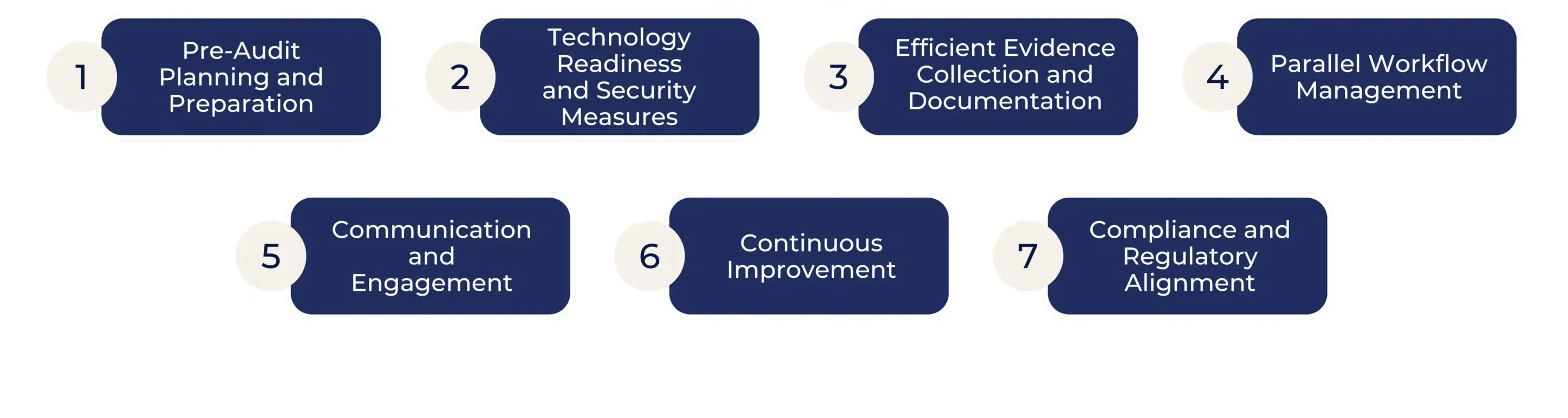
BEST PRACTICES FOR CONDUCTING AND MASTERING REMOTE AUDITS
Remote audits demand their own discipline, tools, and mindset. Therefore, to get them right, organizations must treat them as a distinct process, not an improvised workaround. In this section, let’s discuss some of the remote auditing best practices.
Pre-Audit Planning and Preparation
Success starts long before your first video call during remote audits. Therefore, define the scope clearly, decide what can be reviewed remotely, and assign roles on both sides. Don’t underestimate logistics such as time zones, system downtime, and staff availability.
Technology Readiness and Security Measures
Tech can either enable or derail your remote auditing process. Use secure platforms for file sharing and live access, and ensure that encryption and audit logs are in place.
Efficient Evidence Collection and Documentation
Consider your compliance documentation as the audit’s backbone. Centralized storage and instant access speed things up during remote audits for compliance. Thus, auditors can obtain direct evidence through live screen sharing and video conferences.
Parallel Workflow Management
Remote audits shine when work happens in parallel. To clarify, auditors can review one set of documents while auditees prepare the next. Hence, break sessions into smaller blocks to avoid fatigue, and handle clarifications in real time instead of letting questions pile up.
Communication and Engagement
Clear expectations up front keep both sides working towards the same goal. Frequent updates are better than silences. Hence, treat the remote audit process as a collaborative procedure with shared responsibility and accountability.
Continuous Improvement
Communicate findings quickly, gather feedback, and update the process according to the audit findings. As a result, learning from every remote audit should make the next one smoother.
Compliance and Regulatory Alignment
ISO 19011 allows remote auditing, but not every process fits into it. Safety inspections or highly sensitive data often still need a physical check. Therefore, balancing remote efficiency with compliance integrity is what separates effective audits from risky shortcuts.
KEY TAKEAWAYS: STRATEGIC VALUE OF REMOTE AUDITS
1. Industry-Wide Adoption: Most auditors now prefer remote audits, proving their effectiveness and signaling a lasting shift in compliance practices.
2. Hybrid Advantage: Blending remote audits with selective on-site checks balances efficiency with the depth needed for high-risk industries.
3. Technology Makes it Possible: Emerging tools like AR/VR, IoT, and drones allow auditors to remotely validate physical assets, monitor supply chains, and perform site inspections with regulatory precision.
4. Business Agility: Remote audits reduce travel costs, ease staffing pressures, and allow firms to serve clients across geographies.
5. Competitive Edge: Firms mastering remote audits lower costs, scale faster, and offer clients stronger business continuity during disruptions.
ADVANCE YOUR COMPLIANCE GOALS WITH CERTPRO’S REMOTE AUDITING CAPABILITIES
The modern business world is driven by new technologies, rising risks, and complex compliance demands. At the same time, most organizations, regardless of size or sector, want to expand globally and enter new markets. But with global aspirations comes the challenge of meeting region-specific regulations in every jurisdiction. If your compliance strategy still relies on traditional on-site audits, you are complicating the process unnecessarily. The trend is clear: remote audits for compliance are a smarter, more scalable path forward.
Delaying remote audits wastes your resources, slows down the compliance process, and limits scalability. This results in your businesses being less agile and unprepared for disruptions.
This is where CertPro steps in as a strategic partner with quality auditing services. We are not just another firm that “does audits remotely.” Rather, we follow the remote auditing best practices and design them around your business goals and objectives. With industry-leading audit management and compliance automation platforms, proven frameworks, and deep expertise in regulatory standards, we help you cut through the noise and focus on what matters: compliance clarity, operational efficiency, and long-term trust with regulators and stakeholders.
For startups and growth-focused businesses, the payoff is even sharper. Remote audits mean fewer disruptions to lean teams, predictable costs, and faster certifications that accelerate global market entry. Now is the right time to act. Let’s make your next audit faster, smarter, and more resilient. CertPro helps businesses conduct remote ISO, SOC, HIPAA, and GDPR audits with proven frameworks and secure platforms. Partner with us to simplify compliance, cut costs, and accelerate certifications.
FAQ
What are remote audits?
Remote audits, also called virtual or e-audits, use digital tools to review documents, interview staff, and observe processes without being physically on-site. They save time, reduce costs, and improve accuracy while maintaining regulatory compliance.
What does a remote auditor do?
A remote auditor collects and reviews evidence, conducts interviews, monitors processes using secure digital platforms, and ensures adherence to compliance standards without visiting the site. They analyze data, track findings, and maintain accurate digital audit records.
Can audits be done remotely?
Yes, many audits can be conducted remotely, especially document-heavy, IT, and compliance audits. Standards like ISO 19011 recognize remote methods, though high-risk or physical inspections may still require on-site verification for safety or accuracy.
How to conduct a remote audit?
Conducting a remote audit involves planning the scope, preparing digital tools, collecting evidence through secure platforms, conducting live interviews or screen sharing, tracking findings in real time, and ensuring regulatory compliance throughout the process.
What are the challenges of remote auditing?
Challenges include limited physical observation, missing nonverbal cues, incomplete or disorganized digital evidence, connectivity issues, and ensuring data security. Proper planning, hybrid audits, and secure tools can mitigate these risks effectively.
WHAT IS CONTROL TESTING? A PRACTICAL GUIDE FOR COMPLIANCE AUDITS

AUDIT SAMPLING EXPLAINED: WHY AUDITORS TEST ONLY SELECTED EVIDENCE
How CertPro Conducts an Effective SOC 2 Type II Audit: A CPA-Led Playbook for SaaS
A SOC 2 Type 2 examination results in an independent CPA - issued attestation report on whether your controls are suitably designed and operated effectively over a period of time. It’s based on the AICPA Trust Services Criteria. This requirement is essential, as in...