
ISO 27001 Certification in North Carolina
Executive Summary: ISO 27001 Certification in North Carolina is issued by CertPro, a Licensed CPA Firm operating as an independent third-party certification body. CertPro conducts structured, evidence-based audits of an organization’s Information Security Management System (ISMS) against ISO/IEC 27001:2022, evaluating control design and operating effectiveness across defined certification scopes. North Carolina organizations in technology, financial services, healthcare, and related sectors rely on this rigorous ISO 27001 audit process to achieve credible, independently verified ISMS certification.
OUR CLIENTS









Independent ISO 27001 Certification by a Licensed CPA Firm in North Carolina
ISO 27001 Certification in North Carolina is conducted by CertPro as an independent, third-party certification body structured as a Licensed CPA Firm. CertPro’s role is exclusively that of a certification auditor — evaluating whether an organization’s Information Security Management System conforms to the requirements of ISO/IEC 27001:2022. CertPro does not provide advisory, consulting, or implementation services. Every ISO 27001 certification engagement is audit-framed, evidence-based, and governed by independence standards consistent with CPA professional requirements. This ensures that every certification decision reflects an objective, unbiased assessment of ISMS conformance.
ISO 27001 and the ISMS Standard: What North Carolina Organizations Must Know
ISO 27001 is the internationally recognized standard for Information Security Management Systems, published jointly by the International Organization for Standardization (ISO) and the International Electrotechnical Commission (IEC). The current governing version is ISO/IEC 27001:2022, which specifies requirements for establishing, implementing, maintaining, and continually improving an ISMS within the context of an organization. The standard applies to any organization regardless of size, sector, or geography, and is designed to be risk-driven and scalable — making it equally relevant for a small Research Triangle startup and a large Charlotte financial institution.
The structure of ISO/IEC 27001:2022 follows the High-Level Structure (HLS) common to all ISO management system standards. Clauses 4 through 10 form the core management system requirements: Clause 4 establishes organizational context; Clause 5 addresses leadership and commitment; Clause 6 covers planning and risk management; Clause 7 specifies support requirements including documentation; Clause 8 governs operational planning and control; Clause 9 addresses performance evaluation and monitoring; and Clause 10 requires continual improvement. Together, these clauses define how an organization manages information security as a systematic, governed program — not merely a collection of ad hoc technical controls.
Annex A of ISO/IEC 27001:2022 contains 93 information security controls organized across four domains: Organizational Controls (37 controls), People Controls (8 controls), Physical Controls (14 controls), and Technological Controls (34 controls). This represents a significant restructuring from the 114 controls across 14 domains in the 2013 version. Organizations are not required to implement every Annex A control. Instead, they select applicable controls based on risk assessment results and document the rationale in a Statement of Applicability (SoA). Pursuing ISMS certification in North Carolina requires that the SoA, risk treatment plan, and implemented controls all be evaluated by an independent auditor to confirm conformance with the standard.
ISMS certification means a formal, third-party evaluated determination that an organization’s information security controls are designed appropriately and operating effectively in conformance with ISO/IEC 27001:2022. Certification is not self-declared — it results from an independent audit conducted by a qualified certification body. For organizations pursuing ISMS certification North Carolina, this provides an externally verified attestation of information security posture. That attestation carries credibility with enterprise customers, regulators, and business partners who require documented evidence of security governance rather than self-reported assurances.
North Carolina’s Regulatory and Business Context for Information Security Certification
North Carolina’s business environment creates significant and growing demand for ISO 27001 compliance North Carolina across multiple sectors. The Research Triangle — anchored by Raleigh, Durham, and Chapel Hill — hosts a dense concentration of software companies, SaaS providers, life sciences firms, research universities, and technology startups. The Charlotte metropolitan area functions as one of the largest U.S. banking and financial services centers, housing major financial institutions, fintech companies, payment processors, and insurance organizations. Both ecosystems face increasing scrutiny from enterprise customers, regulators, and institutional partners who require demonstrable information security governance as a precondition for vendor engagement and contract award.
ISO 27001 compliance North Carolina is further driven by alignment requirements with U.S. federal and sector-specific frameworks. Healthcare organizations operating under HIPAA, financial institutions subject to the Gramm-Leach-Bliley Act (GLBA), and government contractors subject to NIST SP 800-171 or CMMC requirements increasingly view ISO 27001 certification as a complementary framework supporting multi-regulatory compliance. The NIST Cybersecurity Framework (CSF), widely adopted across North Carolina state agencies and private sector organizations, maps closely to ISO 27001 control domains — enabling organizations to satisfy multiple compliance obligations through a single, documented ISMS.
A practical cross-border compliance scenario illustrates why an ISO 27001 audit North Carolina matters: consider a Research Triangle SaaS provider offering cloud-based data analytics to federally regulated financial institutions across multiple states. Its banking customers may require ISO 27001 Certification in North Carolina as a condition of vendor onboarding. Their third-party risk management programs mandate independent verification of the vendor’s ISMS — not a self-supplied questionnaire or self-attestation. In this scenario, a certificate issued by an independent certification body such as CertPro satisfies the customer’s due diligence requirement and enables the vendor to enter and maintain enterprise relationships across state and sector boundaries.
CertPro as an Independent Certification Body in North Carolina
CertPro operates exclusively as an independent third-party certification body in North Carolina. CertPro does not provide consulting, implementation, or advisory services to the organizations it certifies. This structural independence is fundamental to the integrity of every ISO 27001 audit North Carolina engagement. Organizations seeking certification engage CertPro solely for audit and certification evaluation — not for ISMS design, control implementation guidance, or remediation support. This clear separation ensures that CertPro’s certification decisions remain objective, evidence-based, and free from conflicts of interest that would arise if the same firm both built and certified the ISMS.
CertPro’s structure as a Licensed CPA Firm provides a distinct credentialing foundation for its certification practice. CPA firm standards emphasize independence, professional skepticism, evidence evaluation, and structured reporting — qualities directly applicable to ISO 27001 certification audits. The audit methodology applied by CertPro requires auditors to examine documented evidence, test control effectiveness, and form objective conclusions about ISMS conformance. Certification decisions are made by a certification committee that is independent of the audit team, ensuring that no single individual controls both the evidence collection and the final certification outcome.
CertPro’s positioning as a Licensed CPA Firm and independent certification body is particularly relevant for North Carolina organizations in regulated sectors. Financial services organizations in Charlotte, healthcare technology providers in the Research Triangle, and cloud service providers serving multi-state enterprise customers all benefit from ISO 27001 Certification in North Carolina issued by a body whose independence, methodology, and professional standards are clearly defined and verifiable. A certificate from CertPro reflects a structured, evidence-based determination of ISMS conformance — one that carries institutional weight in enterprise procurement, regulatory review, and third-party risk assessment contexts.

ISO 27001 Certification Audit Process for North Carolina Organizations
The ISO 27001 certification audit process conducted by CertPro follows a structured, multi-stage methodology designed to evaluate both the design adequacy and operating effectiveness of an organization’s ISMS. Each stage produces documented findings that inform the final certification decision. The process applies consistently to organizations of all sizes and sectors across North Carolina — from Charlotte-based financial institutions to Raleigh-area SaaS providers and Durham life sciences companies. The stages below define the complete ISO 27001 assessment and certification cycle.
The Stage 1 audit is a structured review of the organization’s ISMS documentation and scope definition. The auditor examines the information security policy, risk assessment documentation, risk treatment plan, Statement of Applicability, and supporting records to determine whether the ISMS is sufficiently documented and defined to proceed to Stage 2. Any significant gaps in documentation or scope definition that would prevent a meaningful Stage 2 evaluation are identified and communicated to the organization before the Stage 2 audit is scheduled. This ensures organizations are well-prepared for the more intensive certification phase.
Scope definition is a critical element evaluated during Stage 1. The organization must clearly identify which information assets, processes, locations, and organizational units fall within the ISMS boundary. For a North Carolina technology company, the scope might encompass the cloud-hosted software development and delivery environment, customer data processing systems, and supporting IT infrastructure. For a financial services organization in Charlotte, it might include customer account management systems, payment processing infrastructure, and third-party vendor interfaces. The auditor evaluates whether the defined scope is logical, complete, and appropriately documented in the ISMS scope statement.
The Stage 2 audit is the primary certification audit, during which the auditor conducts an in-depth evaluation of ISMS implementation and control effectiveness. The auditor reviews objective evidence — including system configurations, access control records, audit logs, training records, incident reports, internal audit results, and management review documentation — to assess whether the controls documented in the Statement of Applicability have been implemented and are operating as designed. The Stage 2 audit evaluates all mandatory clauses of ISO/IEC 27001:2022 (Clauses 4 through 10) and all applicable Annex A controls within the defined scope.
During the ISO 27001 assessment at Stage 2, auditors employ techniques including document review, direct observation of processes, interviews with responsible personnel, and technical evidence examination. Nonconformities identified during the audit are classified and documented in the audit report. The organization must address each identified nonconformity through documented corrective actions before certification can be issued. The Stage 2 audit results, combined with the corrective action review, form the evidentiary basis for the certification committee’s final decision.
Following completion of the Stage 2 audit and nonconformity resolution review, all audit findings are submitted to CertPro’s certification committee. This committee is fully independent of the audit team that conducted the Stage 1 and Stage 2 audits. The committee reviews the complete audit record — including Stage 1 findings, the Stage 2 audit report, nonconformity documentation, and corrective action evidence — and makes an independent determination regarding whether ISO 27001 certification should be issued, deferred pending further evidence, or withheld due to unresolved nonconformities.
When the certification committee determines that the organization’s ISMS conforms to ISO/IEC 27001:2022 requirements within the defined scope, an ISO 27001 certificate is issued. The certificate identifies the certified organization, the defined ISMS scope, the certification standard and version, the issue date, and the certificate validity period. ISO 27001 certificates are valid for three years, subject to satisfactory completion of annual surveillance audits. North Carolina organizations receiving certification can reference the certificate in customer communications, vendor qualification submissions, and regulatory disclosures as evidence of independent third-party ISMS assessment.
Following initial certification, the organization enters a three-year certification cycle that includes annual surveillance audits and a recertification audit in year three. Surveillance audits are conducted annually to evaluate whether the ISMS continues to conform to ISO/IEC 27001:2022 requirements. They review specific ISMS elements — including internal audit results, management review outcomes, corrective action effectiveness, and the continued applicability of the scope and controls. Satisfactory surveillance audit outcomes are required to maintain the validity of the ISO 27001 certificate throughout the certification cycle.
- Application Review: Organizational profile, ISMS scope description, and audit program determination
- Stage 1 Audit: Documentation review of ISMS policy, risk assessment, risk treatment plan, Statement of Applicability, and scope
- Stage 1 Findings Review: Identification of documentation gaps; scheduling of Stage 2 audit upon satisfactory completion
- Stage 2 Audit: On-site or remote evaluation of ISMS implementation, control effectiveness, and Clause 4–10 conformance
- Nonconformity Review: Documentation of identified nonconformities; review of organization’s corrective action evidence
- Certification Committee Decision: Independent review of complete audit record; certification issuance, deferral, or withholding decision
- Certificate Issuance: ISO 27001 certificate issued for defined scope with three-year validity period
- Annual Surveillance Audit: Year 1 and Year 2 audits evaluating continued ISMS conformance
- Recertification Audit: Full ISMS re-evaluation in year three to renew the three-year certification cycle

- ✓Stage 1: Documentation Review and ISMS Scope Evaluation
- ✓Stage 2: On-Site Certification Audit and Control Effectiveness Assessment
- ✓Certification Committee Decision and Certificate Issuance
- ✓Surveillance Audits and Recertification
ISO 27001 Certification Requirements for North Carolina Organizations
ISO 27001 certification requirements define what an organization must establish, document, implement, and demonstrate during an ISO 27001 assessment conducted by an independent certification body. These requirements are specified in ISO/IEC 27001:2022 and apply uniformly to all organizations seeking certification — including those pursuing ISO 27001 certification in Charlotte NC, Raleigh NC, and Durham NC. The certification evaluation examines both the adequacy of ISMS design and the effectiveness of control implementation within the defined scope. Meeting these requirements is the foundation of credible ISO 27001 compliance North Carolina.
ISO/IEC 27001:2022 specifies mandatory documentation that organizations must maintain as part of their ISMS. The core documentation set includes: the ISMS scope statement defining the boundaries of the certified system; the information security policy establishing management’s commitment and objectives; the risk assessment methodology and results documenting identified information security risks; the risk treatment plan specifying selected controls and treatment decisions; the Statement of Applicability listing all Annex A controls with justification for inclusion or exclusion; and records of competence, awareness, and operational controls demonstrating that the ISMS is actively implemented and monitored.
The Statement of Applicability (SoA) is among the most significant documents evaluated during an ISO 27001 audit North Carolina. The SoA must identify all 93 Annex A controls, state whether each is applicable or not applicable to the organization’s scope, provide justification for exclusions, and reference the risk treatment decisions that necessitate each applicable control. For a North Carolina cloud service provider, the SoA might include all Technological Controls related to cryptography, access management, and secure configuration, while potentially excluding certain Physical Controls not applicable to a fully cloud-hosted operating model. The auditor evaluates whether the SoA accurately reflects the organization’s risk assessment results and control implementation status.
Beyond documentation, ISO 27001 certification requirements extend to demonstrated implementation of the ISMS framework across governance, risk management, operational controls, and continual improvement processes. Organizations must show that information security objectives are established, communicated, and measurable; that risk assessments are conducted at planned intervals or when significant changes occur; that selected Annex A controls are implemented and operating; that internal audits of the ISMS are conducted; and that management reviews ISMS performance against defined objectives on a regular basis.
The four Annex A control domains reflect distinct categories of information security control that an organization must address within its ISMS. Organizational Controls cover policies, roles, responsibilities, supplier relationships, information classification, and incident management. People Controls address personnel security screening, security awareness, training, and confidentiality obligations. Physical Controls encompass physical access security, equipment protection, clear desk and clear screen policies, and secure disposal of media. Technological Controls include user access management, cryptographic controls, network security, vulnerability management, application security, and monitoring. During the ISO 27001 audit, the auditor evaluates implementation evidence for each applicable control within the defined scope.
ISO/IEC 27001:2022 requires organizations to establish and operate a systematic risk management process as the foundation of the ISMS. The risk assessment process must identify information security risks associated with the loss of confidentiality, integrity, and availability of in-scope information assets. It must also analyze the likelihood and consequences of identified risks and evaluate them against defined criteria to determine which require treatment. The risk treatment process must then select appropriate controls — drawn from Annex A or other recognized sources — to reduce identified risks to acceptable levels, with all decisions documented in the risk treatment plan.
- ✓Defined ISMS scope statement referencing organizational boundaries, locations, and assets
- ✓Information security policy approved by top management and communicated to all personnel
- ✓Documented risk assessment methodology with defined risk acceptance criteria
- ✓Current risk assessment records identifying and evaluating information security risks
- ✓Risk treatment plan specifying selected controls and responsible owners
- ✓Statement of Applicability covering all 93 Annex A controls with inclusion/exclusion justifications
- ✓Documented information security objectives with measurable targets and monitoring mechanisms
- ✓Records of competence, awareness training, and personnel security obligations
- ✓Internal audit program with documented results and corrective actions
- ✓Management review records demonstrating periodic ISMS performance evaluation
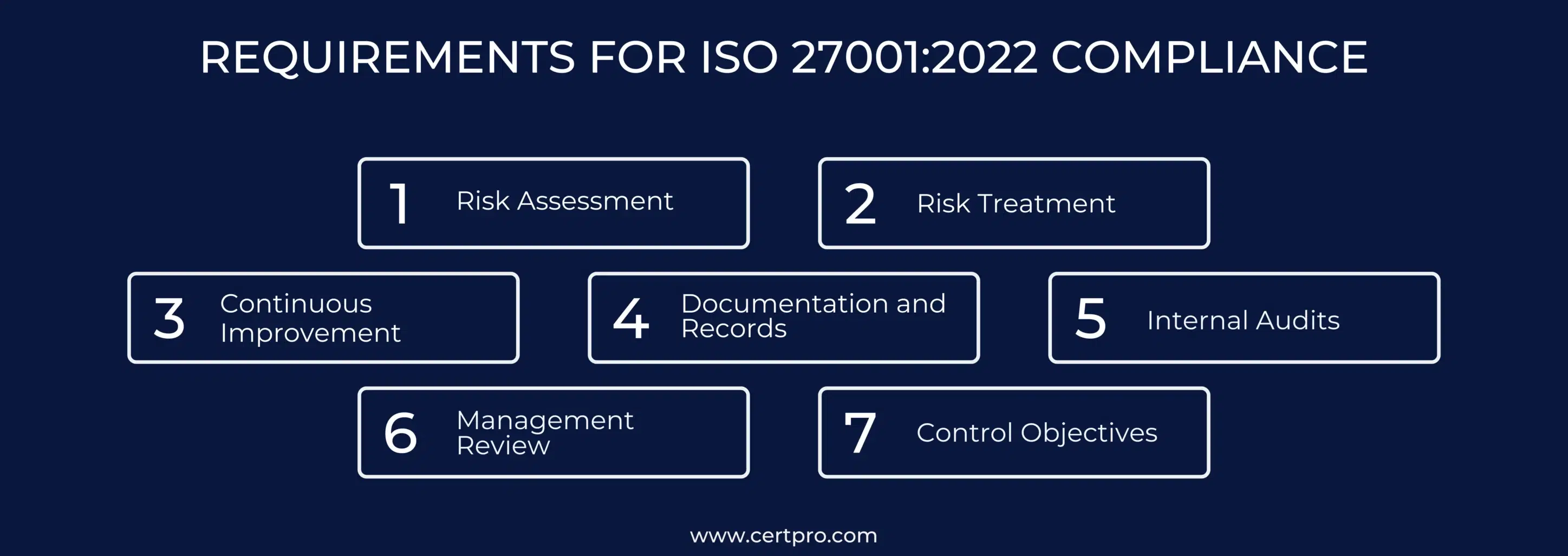
- ✓Mandatory Documentation Requirements
- ✓ISMS Framework and Control Implementation Requirements
- ✓Risk Management and Continual Improvement Requirements
Information Security Management System Framework Components
An Information Security Management System is a structured framework of policies, processes, procedures, and controls that an organization implements to manage information security risks systematically. For North Carolina organizations pursuing ISO 27001 Certification, understanding the ISMS framework components is essential to recognizing what the certification audit evaluates. The ISMS is not a product or technology platform — it is a governance and management system that integrates information security into the organization’s operations, risk management practices, and strategic decision-making processes.
Governance Structures and Leadership Commitment
Effective ISMS governance requires demonstrated top management commitment to information security. Under ISO/IEC 27001:2022 Clause 5, top management must establish an information security policy, assign roles and responsibilities, ensure that ISMS objectives align with the organization’s strategic direction, and actively participate in management review processes. For any information security management system North Carolina organization, this means senior leadership — not only IT or security teams — must be visibly accountable for ISMS performance, resource allocation, and objective achievement.
Governance structures within the ISMS also encompass the assignment of specific information security roles. Organizations typically designate an Information Security Officer or equivalent role responsible for day-to-day ISMS management, internal audit coordination, risk assessment oversight, and regulatory liaison. Asset owners are assigned responsibility for protecting specific information assets within the ISMS scope. Supplier relationship management responsibilities are defined to ensure that third-party vendors and cloud service providers handling in-scope information assets are subject to appropriate security requirements and periodic review. All of these governance elements are evaluated during the ISO 27001 audit North Carolina process.
Risk Assessment, Risk Treatment, and Security Control Implementation
Risk management is the operational core of the ISMS framework. The risk assessment process begins with identifying information assets within the ISMS scope — including data, systems, applications, and supporting infrastructure — and determining the threats and vulnerabilities that could result in loss of confidentiality, integrity, or availability. Risk analysis then estimates the likelihood and impact of each identified risk scenario. Risk evaluation compares these results against defined acceptance criteria to identify which risks require treatment and which fall within acceptable tolerances.
Risk treatment involves selecting and implementing controls to reduce unacceptable risks to within acceptable levels. Controls are selected from Annex A or from other recognized control frameworks, and the selection is documented in the risk treatment plan. For a North Carolina financial services organization, risk treatment decisions might address controls such as multi-factor authentication (Annex A 8.5), encryption of sensitive customer data (Annex A 8.24), privileged access management (Annex A 8.2), and supplier security agreements (Annex A 5.19). During the ISO 27001 assessment, the auditor evaluates whether selected controls are appropriately linked to identified risks and whether implementation evidence demonstrates that controls are operating as designed.
Monitoring, Incident Management, and Continual Improvement
ISO/IEC 27001:2022 Clause 9 requires organizations to establish processes for monitoring, measuring, analyzing, and evaluating ISMS performance. This includes monitoring the effectiveness of implemented controls, conducting internal audits at planned intervals, and performing management reviews that assess ISMS performance against objectives, audit results, risk status, and improvement opportunities. Monitoring activities generate records that serve as primary evidence during certification audits — demonstrating that the ISMS is actively operated and reviewed rather than merely documented.
Incident management is a specific operational requirement of the ISMS. Organizations must establish processes for identifying, reporting, classifying, responding to, and reviewing information security incidents. Post-incident review processes must evaluate whether incidents reveal systemic weaknesses requiring corrective action. Continual improvement, mandated by Clause 10, requires that nonconformities — identified through internal audits, management reviews, or incident investigations — are addressed through documented corrective actions that eliminate root causes and prevent recurrence. The auditor examines corrective action records as evidence that the ISMS is subject to ongoing improvement rather than static maintenance.
ISO 27001 Certification for North Carolina Industries
ISO 27001 certification for North Carolina companies spans a broad and diverse range of industry sectors, reflecting the state’s position as a major technology, financial services, healthcare, and research hub. The specific drivers for certification vary across sectors, but the common thread is the need for independent, third-party verification of information security governance — whether to satisfy enterprise customer requirements, meet regulatory expectations, or demonstrate security maturity in competitive procurement processes. The sector profiles below describe the most significant applications of ISO 27001 Certification in North Carolina across key industries.
Technology and SaaS Companies in the Research Triangle
The Research Triangle region — encompassing Raleigh, Durham, and Chapel Hill — hosts one of the most concentrated technology ecosystems in the southeastern United States. Software-as-a-Service (SaaS) providers, cloud platform companies, data analytics firms, artificial intelligence startups, and enterprise software developers operate across the Triangle. Many of them process sensitive customer data on behalf of enterprise clients in regulated industries. For these organizations, ISO 27001 certification in Raleigh NC and ISO 27001 certification in Durham NC represent critical credentials in enterprise sales cycles where information security questionnaires, vendor risk assessments, and security due diligence are standard practice.
Technology companies in the Research Triangle often serve customers in healthcare, financial services, government, and education — sectors where contracts include explicit information security requirements, audit rights provisions, and certification as a vendor qualification criterion. A SaaS provider that holds ISO 27001 Certification in North Carolina can demonstrate compliance with these contractual requirements by reference to an independently issued certificate. This reduces the burden of individual customer security audits and accelerates the vendor onboarding process. Certification also supports international expansion for Triangle-based companies targeting European, UK, or Asia-Pacific enterprise markets where ISO 27001 is a standard procurement prerequisite.
Financial Services and Fintech Organizations in Charlotte
Charlotte, North Carolina, is the second-largest U.S. banking center, hosting headquarters and major operations of some of the country’s largest financial institutions alongside a growing ecosystem of fintech companies, payment processors, wealth management platforms, and insurance technology providers. ISO 27001 certification for North Carolina financial services organizations is driven by multiple concurrent pressures: vendor risk management requirements from banking regulators, contractual information security requirements from institutional banking partners, and competitive differentiation in a sector where data security incidents carry significant reputational and regulatory consequences.
ISO 27001 compliance North Carolina fintech organizations is increasingly viewed as a baseline expectation rather than a competitive differentiator. Charlotte-based fintech companies that process payment data, manage investment accounts, or support banking operations for regulated institutions are regularly subject to third-party risk assessments by their banking partners. ISO 27001 certification in Charlotte NC provides these organizations with a documented, independently verified attestation of ISMS conformance that satisfies the most common third-party risk assessment requirements — reducing audit fatigue, streamlining vendor qualification, and enabling fintech companies to scale their enterprise customer base without disproportionate security review overhead.
Healthcare, Life Sciences, and Research Organizations
North Carolina’s healthcare and life sciences sector is substantial, encompassing major academic medical centers, pharmaceutical manufacturers, clinical research organizations, health information technology providers, and biotechnology companies. Organizations in this sector handle protected health information (PHI), clinical trial data, proprietary research data, and sensitive patient records — all subject to HIPAA, FDA data integrity requirements, and increasingly stringent enterprise customer security expectations. ISO 27001 certification provides a structured ISMS framework that supports HIPAA compliance by establishing systematic controls for PHI access management, incident response, workforce security training, and business associate management.
Research institutions and contract research organizations (CROs) in North Carolina — particularly those affiliated with the Research Triangle’s major universities — face growing requirements from federal research sponsors, including NIH, NSF, and DoD, to demonstrate information security governance for federally funded research data. ISO 27001 Certification in North Carolina provides these organizations with an independently verified ISMS demonstrating alignment with federal data protection expectations. It also supports compliance with requirements such as NIST SP 800-171 for Controlled Unclassified Information (CUI). The structured risk management approach of the ISMS is directly applicable to research data governance challenges.
Cloud Service Providers and Managed Service Organizations
North Carolina hosts a significant number of cloud infrastructure providers, managed security service providers (MSSPs), data center operators, and IT managed service providers (MSPs) that process and store information on behalf of multiple customer organizations. For these multi-tenant service providers, ISO 27001 certification serves as a foundational security credential that establishes trust across their entire customer base. Rather than completing individual customer security questionnaires or accommodating numerous point-in-time audits, a certified cloud service provider can reference its ISO 27001 certificate as evidence of independently verified security controls across all applicable service domains.
| North Carolina Sector | Primary ISO 27001 Demand Driver | Key Applicable Controls |
|---|---|---|
| Technology / SaaS (Research Triangle) | Enterprise customer vendor risk programs; international expansion | Access management, cryptography, secure development, vulnerability management |
| Financial Services / Fintech (Charlotte) | Banking regulatory expectations; third-party risk management requirements | Access control, incident management, supplier security, audit logging |
| Healthcare / Life Sciences | HIPAA alignment; federal research sponsor requirements; PHI protection | People controls, access management, incident response, physical security |
| Cloud / Managed Services | Multi-customer security attestation; procurement qualification | Network security, tenant isolation, change management, monitoring |
| Government Contractors / Research Institutions | NIST SP 800-171 alignment; federal data governance requirements | Information classification, access control, configuration management |
Benefits of ISO 27001 Certification for North Carolina Organizations
ISO 27001 Certification in North Carolina delivers measurable and verifiable value across multiple dimensions of business operations, risk management, regulatory alignment, and market positioning. The benefits derive directly from the structured ISMS framework and the independent certification audit — not from any single control implementation or policy document. The following sections address the principal categories of value associated with achieving and maintaining ISO 27001 certification.
The primary value of ISO 27001 certification is independent, third-party verification of an organization’s information security controls — a form of assurance that self-assessment and internal audit cannot replicate. When a Licensed CPA Firm and independent certification body such as CertPro issues an ISO 27001 certificate, that certificate represents an objective determination — based on documented evidence — that the organization’s ISMS is designed and operating in conformance with ISO/IEC 27001:2022. This determination carries credibility with enterprise customers, institutional investors, regulatory bodies, and business partners precisely because it is issued by an entity with no financial interest in the certification outcome beyond the audit engagement itself.
Independent verification reduces information asymmetry in security-sensitive business relationships. A North Carolina SaaS provider that has completed an ISO 27001 assessment conducted by an independent certification body can demonstrate its security posture to prospective customers without disclosing proprietary technical details or submitting to individualized customer audits. The certificate serves as a standardized, recognized, and independently verifiable signal of security governance maturity — one that enterprise procurement teams, third-party risk managers, and information security professionals across industries understand and can evaluate consistently.
ISO 27001 certification is increasingly referenced as a qualification requirement in enterprise vendor procurement processes, particularly for technology vendors, cloud service providers, and professional services firms handling sensitive data. In competitive technology markets — including the Charlotte financial technology sector and the Research Triangle software industry — organizations holding current ISO 27001 Certification in North Carolina demonstrate information security governance maturity that organizations without certification cannot match through self-reported questionnaire responses. This creates a tangible competitive differentiation in procurement evaluations where information security is a scored evaluation criterion.
ISO 27001 compliance North Carolina provides a structured mechanism for aligning with multiple regulatory and compliance frameworks simultaneously. The ISMS risk management approach and Annex A control framework map directly to requirements under the HIPAA Security Rule, GLBA Safeguards Rule, NIST Cybersecurity Framework, and SOC 2 Trust Services Criteria. Organizations that establish and certify an ISO 27001-conformant ISMS create a documented control library and evidence base that can be leveraged across multiple compliance obligations — reducing duplicative compliance effort and associated resource expenditure.
For North Carolina organizations subject to multiple concurrent regulatory requirements — for example, a healthcare technology company subject to both HIPAA and state data breach notification requirements, or a financial services firm subject to GLBA and federal banking regulator examination — the ISMS framework provides a unifying structure for demonstrating compliance across all applicable requirements. The ISO 27001 assessment process evaluates control effectiveness comprehensively, producing documented evidence that supports multiple compliance assertions from a single audit engagement rather than requiring separate assessments for each regulatory framework.
The risk-based approach mandated by ISO/IEC 27001:2022 requires organizations to systematically identify, analyze, evaluate, and treat information security risks — creating a formal risk management program that reduces the likelihood and impact of security incidents. Organizations that maintain a certified ISMS demonstrate not only that controls are implemented, but that controls are selected and maintained based on a current understanding of the threat and vulnerability landscape relevant to their specific information assets and operating environment. This risk-driven approach to security governance is more effective at reducing actual security risk than compliance-driven control implementation that does not account for organizational context.
- ✓Independent third-party verification of ISMS design and operating effectiveness by a Licensed CPA Firm
- ✓Competitive qualification credential recognized in enterprise vendor procurement and third-party risk management programs
- ✓Alignment with HIPAA, GLBA, NIST CSF, and other applicable regulatory frameworks through documented control mapping
- ✓Structured risk management framework reducing information security incident likelihood and impact
- ✓Recognized international certification enabling cross-border business development and global customer acquisition
- ✓Ongoing surveillance audit oversight maintaining continuous ISMS accountability and improvement discipline
- ✓Streamlined response to customer security questionnaires and audit requests through reference to issued certificate
- ✓Demonstration of governance maturity supporting institutional investor, board, and executive stakeholder confidence
- ✓Documented corrective action framework ensuring systematic identification and resolution of security control weaknesses
- ✓Evidence base supporting cyber insurance underwriting, vendor due diligence, and M&A transaction security reviews
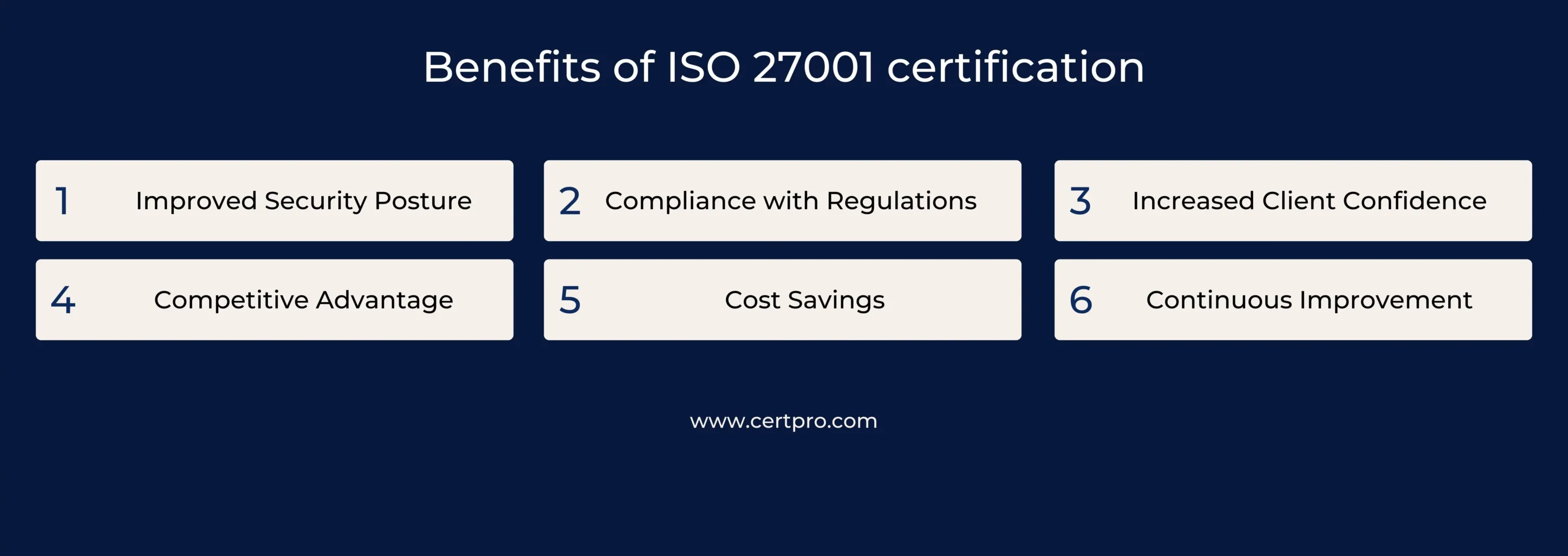
- ✓Independent Verification of Information Security Controls
- ✓Competitive Positioning in Enterprise Procurement
- ✓Regulatory Alignment and Multi-Framework Compliance Efficiency
- ✓Structured Risk Reduction and Incident Preparedness
ISO 27001 Certification Scope and Independent Decision Framework
The scope of ISO 27001 certification defines the boundaries of the ISMS subject to independent audit and certification. Scope definition is one of the most consequential decisions in the ISO 27001 assessment process, as it determines which information assets, processes, systems, locations, and organizational units are included in the certified ISMS. The scope must be defined with sufficient precision to enable meaningful audit evaluation while accurately representing the organization’s information security governance boundaries to certificate holders and relying parties.
Defining and Documenting Certification Scope
Scope definition requires organizations to consider the external and internal context factors addressed in ISO/IEC 27001:2022 Clause 4 — including the legal and regulatory environment, stakeholder requirements, and the nature of the organization’s information assets and processing activities. The scope statement must clearly identify what is included (specific systems, services, locations, and data types) and must not exclude elements in a manner that misrepresents the organization’s security governance to relying parties. For example, a North Carolina cloud service provider cannot exclude its cloud hosting infrastructure from the ISMS scope while certifying its customer-facing service delivery environment, if the two are operationally interdependent.
The scope is documented in the ISMS scope statement and referenced on the issued ISO 27001 certificate. Prospective customers and third-party risk managers reviewing a certificate must examine the scope statement to confirm that the certified ISMS covers the systems and services relevant to their specific business relationship with the certified organization. An ISO 27001 certification issued in Charlotte NC to a financial technology company may cover only the company’s payment processing platform — not its corporate IT environment — and relying parties must assess whether the certified scope is sufficient for their risk management purposes.
Evidence-Based Assessment and Control Evaluation Methodology
CertPro’s ISO 27001 assessment methodology is evidence-based throughout. Auditors do not accept management representations as sufficient evidence of control effectiveness. They require objective evidence in the form of documented policies, system configuration records, access control logs, training completion records, vulnerability scan results, penetration test reports, incident records, internal audit reports, and management review minutes. The nature and extent of evidence reviewed at each audit stage is documented in the audit program and audit report, providing a traceable record of the basis for certification findings and the certification committee’s decision.
Control design adequacy and operating effectiveness are evaluated as distinct dimensions during the ISO 27001 audit. A control may be well-designed — documented in a policy, configured in a system, or established in a procedure — yet may not be operating effectively if it is not consistently applied, monitored, or enforced in practice. The auditor evaluates both dimensions: whether the control is designed appropriately to address the identified risk, and whether evidence demonstrates that the control has been operating as designed during the audit period. Both dimensions must be satisfied for a control to be assessed as conforming to ISO/IEC 27001:2022 requirements.
Nonconformity Classification, Corrective Action, and Certificate Suspension
Nonconformities identified during an ISO 27001 audit North Carolina are documented in the audit report with sufficient detail to enable the organization to understand the nature of the finding and implement effective corrective action. The organization must investigate the root cause of each nonconformity, implement corrective actions to eliminate that root cause, and provide documented evidence of corrective action effectiveness before certification can be issued or maintained. The certification committee reviews corrective action evidence as part of its independent certification decision process.
An issued ISO 27001 certificate may be suspended or withdrawn if the organization fails to complete required surveillance audits within the prescribed schedule, if a surveillance audit identifies significant nonconformities not resolved within specified timeframes, or if the organization’s ISMS scope changes materially without a corresponding audit review. Certificate suspension is communicated to the organization and to any parties relying on the certificate as evidence of current certification status. North Carolina organizations maintaining ISO 27001 certification must ensure surveillance audit schedules are kept and that any material ISMS scope changes are reported to CertPro for assessment.
ISO 27001 Certification Pricing for North Carolina Organizations
CertPro offers transparent, fixed-fee pricing for ISO 27001 Certification in North Carolina. Fixed-fee pricing enables organizations to plan and budget for certification costs without exposure to variable billing based on audit hours, scope complexity escalations, or open-ended engagement structures. The fixed-fee model reflects CertPro’s structured audit methodology: the scope of work, audit stages, and deliverables are defined at the outset of the engagement, and pricing is established accordingly based on organizational size, ISMS scope, and certification type.
The fixed-fee certification pricing structure covers the complete ISO 27001 certification cycle: application review, Stage 1 documentation audit, Stage 2 certification audit, nonconformity review, certification committee decision, and certificate issuance. Annual surveillance audits and recertification audits in year three are priced separately at the commencement of the post-certification maintenance period. Organizations seeking ISO 27001 certification in Charlotte NC, Raleigh NC, or Durham NC are encouraged to contact CertPro directly to obtain a fixed-fee engagement proposal based on their specific ISMS scope and organizational profile.
ISO 27001 Transition: ISO/IEC 27001:2022 Update Requirements
Organizations currently certified to ISO/IEC 27001:2013 are required to transition to ISO/IEC 27001:2022. The transition deadline established by certification bodies was October 31, 2025, after which ISO/IEC 27001:2013 certificates are no longer considered valid. North Carolina organizations that have not yet completed the transition must understand what the updated standard requires and how their existing ISMS must be updated to conform to the 2022 version’s revised control structure and management system requirements. Timely transition is essential to maintaining uninterrupted ISO 27001 compliance North Carolina.
The principal changes in ISO/IEC 27001:2022 relative to the 2013 version include the restructuring of Annex A controls from 114 controls across 14 domains to 93 controls across 4 domains (Organizational, People, Physical, and Technological). Eleven new controls were introduced in the 2022 version, addressing areas such as threat intelligence (Annex A 5.7), information security for cloud services (Annex A 5.23), ICT readiness for business continuity (Annex A 5.30), physical security monitoring (Annex A 7.4), configuration management (Annex A 8.9), data masking (Annex A 8.11), data leakage prevention (Annex A 8.12), web filtering (Annex A 8.23), and secure coding (Annex A 8.28). These new controls reflect the evolution of the information security threat landscape since the 2013 version was published.
Organizations transitioning from ISO/IEC 27001:2013 must update their Statement of Applicability to reflect the restructured control framework, ensuring that all 93 Annex A controls are addressed with current inclusion/exclusion determinations and justifications. Risk assessments must also be reviewed to confirm that newly introduced controls are appropriately evaluated in the context of the organization’s risk profile. For North Carolina organizations undergoing transition, CertPro conducts transition audits that evaluate the updated ISMS against the requirements of ISO/IEC 27001:2022, resulting in reissuance of the certificate under the current version of the standard.
- ✓Key Changes in ISO/IEC 27001:2022
Why North Carolina Organizations Choose CertPro for ISO 27001 Certification
CertPro’s positioning as a Licensed CPA Firm and independent third-party certification body provides North Carolina organizations with a certification pathway that combines the rigor of CPA professional standards with deep expertise in ISO 27001 certification methodology. The ISO 27001 auditors at CertPro serve exclusively in an evaluative role — examining evidence, identifying nonconformities, and informing the certification committee’s objective determination of ISMS conformance. This exclusive focus on audit and certification — without any advisory, implementation, or consulting function — preserves the independence that makes CertPro’s ISO 27001 certificates credible to all relying parties.
North Carolina organizations across the Research Triangle technology corridor, Charlotte financial services sector, healthcare and life sciences industry, cloud services market, and research institution landscape have pursued ISO 27001 Certification in North Carolina through CertPro to satisfy enterprise customer security requirements, demonstrate regulatory alignment, and establish competitive differentiation in information security governance. The combination of fixed-fee transparent pricing, structured audit methodology, independent certification committee governance, and CPA firm professional standards makes CertPro a credible and methodologically rigorous choice for organizations of all sizes seeking ISO 27001 certification across North Carolina.
ISO 27001 Certification in North Carolina represents a formal, documented, and independently verified commitment to information security governance — one that simultaneously supports business growth, regulatory compliance, customer trust, and risk management. Organizations that achieve and maintain ISO 27001 certification demonstrate to all stakeholders — customers, partners, regulators, investors, and employees — that information security is managed as a governed, systematic, and continuously improved organizational capability rather than an ad hoc or reactive function. For North Carolina’s technology-driven, data-intensive, and regulated business environment, ISO 27001 Certification is an increasingly essential credential for organizations seeking to operate with credibility and resilience in the digital economy.
FAQ
▶
What is ISO 27001 Certification and why does it matter for North Carolina organizations?
▶
How is an ISO 27001 audit North Carolina conducted by CertPro?
▶
What documentation is required for ISO 27001 certification?
▶
What is the difference between ISMS certification North Carolina and ISO 27001 compliance?
▶
How long does ISO 27001 certification remain valid?
▶
Which North Carolina industries most commonly pursue ISO 27001 certification?
▶
Does ISO 27001 certification satisfy HIPAA or GLBA compliance requirements?
▶
What is the ISO 27001 assessment process for determining which Annex A controls apply?
ETHICAL HACKING FOR AUDIT ASSURANCE: STRENGTHENING SOC 2, ISO 27001, AND HIPAA COMPLIANCE
Ethical Hacking For Control Effectiveness. Uncover Gaps And Strengthen Audit Evidence For SOC 2, ISO 27001, And HIPAA Compliance Reviews.
HOW COMPLIANCE AUDIT SOFTWARE IMPROVES AUDIT READINESS
Today, most companies deal with a growing number of compliance regulations. From data privacy standards to security frameworks like SOC 2 and ISO 2700…
Get In Touch
have a question? let us get back to you.