
SOC 2 Certification in Western Australia
The SOC 2 audit process for Western Australia organizations follows a structured sequence of examination stages governed by AICPA attestation standards. Each stage produces documented outputs that form the evidentiary basis for the Licensed CPA Firm’s attestation opinion. The process is designed to be objective, repeatable, and auditable — characteristics that clearly distinguish a SOC 2 examination from advisory assessments and internal control reviews.
OUR CLIENTS










Independent SOC 2 Certification by a Licensed CPA Firm in Western Australia
SOC 2 Certification in Western Australia is issued exclusively by a Licensed CPA Firm following an independent examination of a service organization’s controls against the AICPA Trust Services Criteria (TSC). The attestation is governed by AT-C Section 205 of the AICPA attestation standards, establishing an objective, evidence-based determination of control design and operating effectiveness. The certification decision is made by an independent review committee on the basis of audit evidence collected during the SOC 2 examination — without advisory or consulting involvement in the organization’s control environment. This structure ensures that every SOC 2 audit produces a credible, impartial result that enterprise customers can rely on for vendor qualification decisions.
The Role of a Licensed CPA Firm in SOC 2 Attestation
A SOC 2 report is not a self-certification, accreditation badge, or vendor assessment questionnaire. Under AICPA attestation standards, only a Licensed CPA Firm is authorized to perform a SOC 2 examination and issue an attestation report. This independence requirement is fundamental to the credibility of SOC 2 attestation in Western Australia.
The Licensed CPA Firm evaluates the organization’s controls against the selected Trust Services Criteria — Security, Availability, Processing Integrity, Confidentiality, and Privacy — and issues an opinion based solely on documented audit evidence. Organizations operating in Western Australia’s SaaS, cloud, energy technology, resources, and managed services sectors rely on this independent structure to satisfy enterprise vendor due diligence requirements and cross-border customer security expectations.
This is particularly relevant for U.S.-based enterprises that treat SOC 2 attestation as a baseline procurement requirement. The attestation report documents the auditor’s findings and opinion, giving third parties an objective basis for evaluating the service organization’s control environment — without conducting their own on-site assessment.
Western Australia’s Regulatory and Commercial Context
Western Australia occupies a distinct position within Australia’s technology and industrial landscape. The state’s economy is anchored by resources and mining technology, LNG and energy operations, agricultural technology, healthcare services, and a growing cohort of SaaS providers, cloud companies, and managed service providers operating out of Perth and surrounding regions.
Organizations in these sectors frequently process sensitive customer data, operational technology information, and financial records on behalf of enterprise clients headquartered in the United States, Europe, and across the Asia-Pacific region. U.S.-based enterprises, in particular, apply SOC 2 compliance in Western Australia as a vendor qualification standard — requiring service organizations to produce a current SOC 2 report before contract execution or data sharing can proceed.
Western Australia’s alignment with the Australian Privacy Act 1988 and the Notifiable Data Breaches (NDB) scheme establishes a domestic regulatory baseline. SOC 2 Certification in Western Australia addresses the broader international vendor assurance requirements that domestic privacy law alone does not satisfy. The combination of local regulatory obligations and cross-border enterprise procurement expectations makes SOC 2 Certification in Western Australia a structured, evidence-based mechanism for demonstrating control effectiveness to multiple stakeholder groups simultaneously.
Independence and Objectivity of the Certification Decision
The independence of the Licensed CPA Firm is a non-negotiable structural requirement of SOC 2 attestation. The auditing firm must have no financial, operational, or consulting relationship with the organization under examination. This independence requirement ensures that the SOC 2 audit in Western Australia produces an objective, evidence-based opinion rather than a commercially motivated assessment.
The certification decision is made by an internal review committee within the Licensed CPA Firm — separate from the engagement team — based on documented workpapers, evidence samples, and identified control gaps. Where nonconformities are identified during the SOC 2 examination, they are documented in the report and communicated to management.
The organization does not receive advance notice of the committee’s decision, and the auditor’s opinion cannot be negotiated or modified based on commercial considerations. This structural independence is what distinguishes a SOC 2 attestation from vendor self-assessment programs and differentiates it from compliance questionnaires used in procurement processes. Enterprise customers and regulated institutions in Western Australia’s resources, energy, and financial sectors recognize this independence as the foundation of the report’s evidentiary value.

What Is SOC 2 Certification?
SOC 2 Certification is an independently attested report issued by a Licensed CPA Firm that evaluates whether a service organization’s controls meet the AICPA Trust Services Criteria. Unlike regulatory compliance frameworks that rely on self-declaration, SOC 2 compliance requires independent examination and evidence collection conducted by a qualified auditor.
The result is an attestation report that documents the auditor’s opinion on control design and — in the case of a Type 2 report — operating effectiveness over a defined observation period. For organizations seeking to understand what SOC 2 Certification means in practice, the key distinction is the independent auditor’s opinion: it is not a management assertion, but an externally verified finding based on documented evidence.
Trust Services Criteria: The Evaluation Framework
The Trust Services Criteria (TSC) published by the AICPA form the evaluative foundation of every SOC 2 examination. The Security criterion — formally referred to as the Common Criteria — is mandatory for all SOC 2 engagements. It addresses logical and physical access controls, system monitoring, change management, and incident response.
The four additional criteria — Availability, Processing Integrity, Confidentiality, and Privacy — are selected based on the service organization’s commitments to customers and the nature of the data it processes. For a Western Australian SaaS company processing health records, the Privacy criterion may be in scope. For a cloud infrastructure provider offering uptime guarantees, the Availability criterion is typically included.
The SOC 2 examination evaluates the organization’s controls against each selected criterion using a structured, evidence-based methodology. Auditors review policies, procedures, system configurations, access logs, and operational records to assess whether controls are suitably designed and, over the observation period, whether they operated effectively. The TSC framework provides a consistent, comparable basis for evaluating controls across organizations — regardless of size, technology stack, or industry sector.
SOC 2 Type 1 and Type 2 Reports Explained
SOC 2 attestation is issued in two report formats, each serving a distinct purpose in the vendor assurance process.
A SOC 2 Type 1 report evaluates the design of controls at a specific point in time. The auditor assesses whether the described controls are suitably designed to meet the selected Trust Services Criteria as of the report date. A SOC 2 Type 1 audit in Western Australia is typically pursued by organizations establishing their control environment for the first time — demonstrating control design to customers before a full observation period is completed.
A SOC 2 Type 2 report extends the evaluation to assess whether controls operated effectively over a defined observation period, typically six to twelve months. The SOC 2 Type 2 audit in Western Australia is the format most commonly required by enterprise customers, U.S.-headquartered technology companies, and regulated financial institutions. It provides evidence of sustained control performance rather than a point-in-time snapshot.
Enterprise procurement teams generally require a current Type 2 report — issued within the preceding twelve months — as a condition of vendor approval. Organizations in Western Australia frequently pursue a Type 1 report as an initial milestone before transitioning to the annual Type 2 audit cycle.
| Report Type | Evaluation Focus | Observation Period | Common Use Case |
|---|---|---|---|
| SOC 2 Type 1 | Control design at a point in time | None — single date | Initial vendor qualification or new control environment |
| SOC 2 Type 2 | Control design and operating effectiveness | 6–12 months (minimum 6 months) | Enterprise procurement, ongoing vendor assurance |
| SOC 2 + Privacy | All selected TSC including Privacy criterion | 6–12 months | Organizations processing personal or health data |
| SOC 2 + Availability | Security and Availability criteria | 6–12 months | Cloud and infrastructure providers with uptime SLAs |
SOC 2 vs. Other Assurance Frameworks
SOC 2 Certification differs from ISO 27001 certification and from internal compliance programs in several important respects. ISO 27001 is a management system standard that certifies the existence and operation of an Information Security Management System (ISMS) against a globally recognized international standard. SOC 2 attestation, by contrast, tests specific controls against the Trust Services Criteria and documents how those controls address the service organization’s customer commitments and contractual requirements.
SOC 2 compliance is not interchangeable with ISO 27001 certification — they serve different assurance purposes and are evaluated against different frameworks. Organizations serving U.S. enterprise customers typically require SOC 2 attestation because it is the dominant third-party assurance framework in U.S. technology procurement, regardless of whether the service organization holds ISO 27001 certification.
SOC 2 compliance in Western Australia is also distinct from internal audit reports, vendor security questionnaires, and self-assessed compliance declarations — all of which lack the independent attestation component that enterprise customers require. The SOC 2 examination produces an auditor’s opinion, not a management assertion. That independence is the critical distinction that gives the report its procurement value.
SOC 2 Certification Audit Process in Western Australia
The SOC 2 audit process for Western Australia organizations follows a structured sequence of examination stages governed by AICPA attestation standards. Each stage produces documented outputs that form the evidentiary basis for the Licensed CPA Firm’s attestation opinion. The process is designed to be objective, repeatable, and auditable — characteristics that clearly distinguish a SOC 2 examination from advisory assessments and internal control reviews.
The SOC 2 audit in Western Australia begins with scope definition, during which the Licensed CPA Firm and the service organization establish the boundaries of the examination. Scope encompasses the systems, services, data categories, and organizational units subject to evaluation.
The organization identifies the Trust Services Criteria applicable to its service commitments — typically Security at a minimum, with additional criteria selected based on customer contracts, regulatory obligations, and the nature of data processed. The audit program is then determined based on the confirmed scope, selected criteria, and the type of report being issued (Type 1 or Type 2). For a Type 2 engagement, the observation period start and end dates are established at this stage.
The audit program documents the specific control areas to be tested, the evidence types required for each criterion, and the sampling methodology the auditor will apply during fieldwork. This structured planning phase ensures that the SOC 2 examination is calibrated to the organization’s actual system boundaries and customer commitments — rather than applying a generic checklist that may not reflect the organization’s specific control environment or service delivery model.
During the fieldwork phase of the SOC 2 examination, the Licensed CPA Firm collects and evaluates evidence across all in-scope control areas. Evidence collection for a SOC 2 audit typically includes review of written policies and procedures, inspection of system configuration records, sampling of access provisioning and deprovisioning events, review of security monitoring logs, evaluation of change management records, and testing of incident response procedures.
For Type 2 engagements, evidence is collected across the full observation period to assess whether controls operated consistently and effectively — not merely whether they existed at a single point in time. Auditors apply attribute sampling to determine whether controls functioned as described in the organization’s System Description. Where deviations are identified, they are documented as exceptions and evaluated against the materiality of the control failure relative to the Trust Services Criteria.
The evidence collected during fieldwork forms the factual basis for the auditor’s opinion. Evidence is retained in the Licensed CPA Firm’s workpapers and is subject to peer review prior to report issuance. The rigor of this evidence-based process is what distinguishes SOC 2 attestation from assessment frameworks that rely on self-reported information.
Following fieldwork completion, the engagement team’s findings are submitted to the Licensed CPA Firm’s internal review committee. The committee evaluates the workpapers, identified exceptions, and the System Description against the requirements of AT-C Section 205. Where nonconformities are identified, the committee determines whether they are sufficiently material to affect the auditor’s opinion.
The SOC 2 report may be issued with an unqualified opinion — indicating that controls met the Trust Services Criteria — or with a qualified, adverse, or disclaimer opinion where material exceptions were identified. The report is then issued to the service organization and distributed to specified user entities as agreed.
The SOC 2 attestation report in Western Australia remains valid for the period covered by the examination. Enterprise customers and procurement teams typically require a report issued within the preceding twelve months. Organizations maintain SOC 2 compliance through annual audit cycles, with each successive Type 2 report covering the subsequent observation period. This continuous audit cycle provides ongoing, independently verified evidence of control effectiveness to enterprise customers and regulated institutions.
| Audit Stage | Key Activities | Output |
|---|---|---|
| Scope Definition | Identify systems, criteria selection, observation period establishment | Signed engagement letter, audit scope document |
| Audit Program Determination | Control mapping, evidence planning, sampling methodology | Documented audit program |
| Stage 1 — Documentation Review | Review system description, policies, and control design | Control gap identification, readiness observations |
| Stage 2 — Control Testing | Evidence collection, attribute sampling, exception identification | Completed workpapers, exception log |
| Certification Committee Review | Independent review of findings, opinion determination | Final SOC 2 attestation report |
- ✓Scope Definition and Audit Program Determination
- ✓Fieldwork, Evidence Collection, and Control Testing
- ✓Certification Committee Decision and Report Issuance
SOC 2 Certification Requirements and Evaluation Criteria
SOC 2 Certification requires a service organization to maintain a documented control environment that addresses the Trust Services Criteria applicable to its service commitments. The evaluation is evidence-based — the Licensed CPA Firm does not accept management assertions without supporting documentation and independent verification. Each control area must demonstrate both suitably designed controls (Type 1) and effective operation over the observation period (Type 2). Understanding these requirements is essential for any organization preparing to undergo a SOC 2 audit for the first time.
The SOC 2 examination evaluates controls across the Common Criteria (CC) framework, which is organized into logical groupings addressing organizational governance, communication, risk management, monitoring, logical access, system operations, and change management. Organizations pursuing SOC 2 Certification in Western Australia must maintain documented policies and procedures for each in-scope control area, supported by operational records that demonstrate consistent implementation.
Key documentation requirements include an information security policy, access control procedures, incident response plans, change management records, vendor management policies, and risk assessment documentation. These documents must reflect the organization’s actual practices — not aspirational standards — and must be implemented and followed consistently throughout the observation period.
Auditors assess whether the documentation accurately describes the control environment, whether employees and systems operate in accordance with documented procedures, and whether exceptions are identified, escalated, and resolved through defined processes. The System Description — a narrative prepared by management describing the service organization’s system, controls, and control objectives — is a core component of the SOC 2 report and is evaluated for completeness and accuracy as part of the examination.
Technical controls evaluated during a SOC 2 audit in Western Australia span multiple domains depending on the criteria in scope. Under the Security (Common Criteria), auditors assess logical access controls including multi-factor authentication, role-based access provisioning, privileged access management, and access review cycles. Network security controls — including firewalls, intrusion detection systems, and vulnerability management programs — are evaluated for design and operational consistency. Encryption controls for data at rest and in transit are reviewed against documented standards.
Under the Availability criterion, auditors assess business continuity planning, disaster recovery testing, system capacity monitoring, and incident response procedures. Processing Integrity evaluations focus on data validation controls, error handling procedures, and completeness checks on data processing workflows. Confidentiality controls address data classification, retention and disposal procedures, and contractual data handling obligations.
Privacy criterion evaluations follow the AICPA’s Generally Accepted Privacy Principles (GAPP) and assess notice, consent, collection limitation, use and retention, access, disclosure, security, and monitoring controls for personal information. The specific technical controls required vary based on the organization’s technology environment, but all must be demonstrable through documented evidence rather than verbal attestation.
The observation period is a defining characteristic of the SOC 2 Type 2 examination. AICPA standards require a minimum observation period of six months for a Type 2 report, with twelve-month periods being most common in enterprise procurement contexts. During the observation period, the service organization’s controls must operate consistently and effectively — not just be in place on paper.
The observation period start date is established at the commencement of the engagement, and evidence must be collected across the entire period rather than concentrated near the report date. Enterprise customers receiving SOC 2 reports from Western Australian service providers evaluate the currency of the report as part of their vendor review process. A report covering a period that ended more than twelve months ago is generally considered expired for procurement purposes, regardless of the opinion expressed.
This creates a practical requirement for annual SOC 2 audit cycles. Organizations maintaining SOC 2 compliance in Western Australia typically align their observation periods with calendar or fiscal years to facilitate consistent annual reporting. Surveillance audits conducted between full examination cycles provide additional assurance to customers that controls have not materially degraded since the last full audit period.
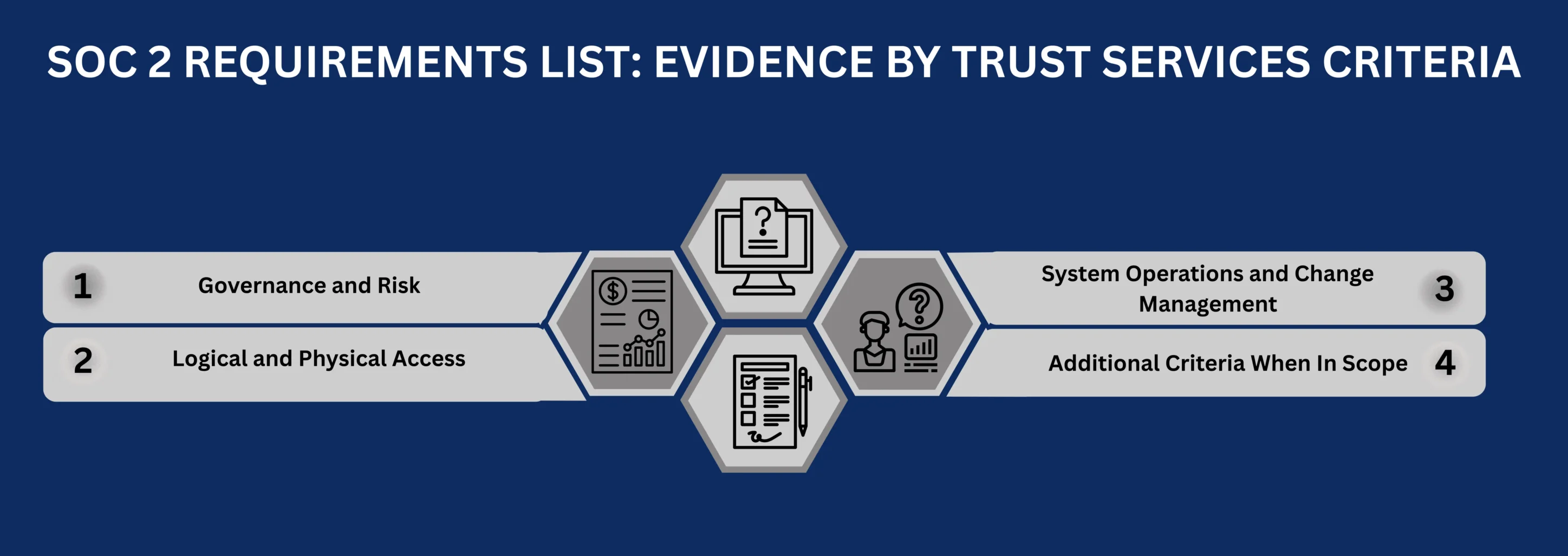
- ✓Control Environment and Documentation Requirements
- ✓Technical Control Requirements Across Trust Services Criteria
- ✓Observation Period and Report Validity
Business Sectors in Western Australia Pursuing SOC 2 Certification
SOC 2 Certification for Western Australia companies is concentrated in sectors where customer data processing, cross-border service delivery, and enterprise vendor due diligence requirements are most prevalent. Western Australia’s economic base — anchored in resources, energy, agriculture, and a growing technology services sector — generates specific SOC 2 demand patterns that differ from other Australian states. Understanding which sectors most commonly pursue SOC 2 Certification in Western Australia helps organizations benchmark their own compliance timelines against industry peers.
Resources, Mining Technology, and Energy Sectors
Western Australia’s resources and mining technology sector generates significant SOC 2 demand from technology providers serving major mining operators. Companies developing operational technology platforms, remote monitoring systems, geological data management tools, and mine planning software frequently process sensitive operational and commercial data on behalf of enterprise mining clients headquartered in Australia, the United States, and Asia.
These enterprise clients apply vendor assurance requirements that include SOC 2 attestation as a condition of system integration and data sharing. LNG and energy sector operators in Western Australia similarly require technology vendors and managed service providers to demonstrate SOC 2 compliance as part of critical infrastructure procurement standards.
A SOC 2 examination conducted for an energy technology provider evaluates controls over systems processing operational data, SCADA-adjacent information management, and customer-facing reporting platforms. The SOC 2 audit in Western Australia for these organizations typically includes the Security and Availability criteria, reflecting the uptime requirements inherent in energy sector service commitments. SOC 2 attestation provides an independently verified basis for enterprise clients to evaluate the technology vendor’s control environment — without conducting their own audit.
SaaS Providers, Cloud Companies, and Managed Service Providers
Perth’s growing technology ecosystem includes a significant concentration of SaaS companies, cloud service providers, and managed service providers serving enterprise clients across Australia, the United States, and Southeast Asia. For these organizations, SOC 2 Certification in Perth is frequently a direct requirement imposed by enterprise customers during vendor qualification processes.
U.S.-headquartered technology companies procuring services from Western Australian providers routinely require a current SOC 2 Type 2 report as a condition of contract execution. This makes SOC 2 examination in Western Australia a practical business enabler rather than a voluntary compliance activity. Managed service providers handling IT infrastructure, endpoint management, and security operations for regulated clients — including financial institutions, healthcare organizations, and government contractors — face SOC 2 attestation requirements from both their clients and their clients’ auditors.
Cloud service providers offering data hosting, backup, and disaster recovery services typically include the Availability criterion in their SOC 2 scope to address customer uptime and data recovery commitments. The SOC 2 report produced by these examinations serves as the primary mechanism through which managed service providers and cloud companies demonstrate control effectiveness to enterprise customers — without requiring individual on-site audits by each customer’s internal security team.
Healthcare, Agricultural Technology, and Financial Services
Western Australia’s healthcare technology sector includes organizations processing electronic health records, telehealth platforms, and clinical data management systems that handle sensitive personal health information. SOC 2 Certification for these organizations typically includes the Privacy criterion, reflecting obligations under the Privacy Act 1988 and customer expectations regarding the protection of health data.
Agricultural technology companies operating in Western Australia — providing precision agriculture platforms, supply chain management systems, and agribusiness data analytics — increasingly serve enterprise clients with formal vendor assurance requirements that include SOC 2 compliance in Western Australia as an evaluation criterion.
Financial services organizations and fintech companies in Western Australia’s Perth-based financial services sector face SOC 2 attestation requirements from banking clients, institutional investors, and regulators evaluating technology vendor risk. The SOC 2 examination provides a structured, independently verified assessment of the financial technology provider’s controls over customer financial data — addressing confidentiality, processing integrity, and security criteria relevant to financial data handling. Across all these sectors, the SOC 2 audit in Western Australia serves as a common assurance currency that bridges domestic regulatory requirements and international enterprise procurement standards.
Why Organizations in Western Australia Pursue SOC 2 Certification
SOC 2 Certification in Western Australia is pursued for a combination of enterprise procurement requirements, cross-border client expectations, and regulatory alignment objectives. The drivers are specific and concrete — organizations do not pursue SOC 2 attestation as a general best practice exercise, but in direct response to identifiable commercial and regulatory requirements. The following sections outline the primary reasons Western Australian service organizations invest in SOC 2 compliance.
Enterprise Vendor Due Diligence and Procurement Requirements
Enterprise vendor due diligence is the primary commercial driver of SOC 2 Certification for Western Australia companies. Large enterprises — particularly those headquartered in the United States — embed SOC 2 attestation requirements directly into vendor contracts and supplier qualification processes. A Western Australian SaaS company seeking to expand into the U.S. market, for example, will typically encounter SOC 2 compliance as a non-negotiable condition during the procurement stage of a commercial partnership.
The enterprise’s security team will request the vendor’s most recent SOC 2 Type 2 report, review the auditor’s opinion and identified exceptions, and evaluate the System Description against the data types and services involved in the proposed engagement. Without a current SOC 2 attestation report, the Western Australian vendor may be excluded from consideration — regardless of the quality of its technology or service offering.
This dynamic is particularly pronounced in sectors where U.S. enterprises are major customers of Western Australian technology services — including mining software, energy technology, agricultural data platforms, and cloud infrastructure. SOC 2 examination in Western Australia therefore functions as a market access mechanism for organizations seeking to serve enterprise clients in the United States, Canada, and other markets where SOC 2 attestation is the recognized standard for third-party assurance.
Cross-Border Data Handling and Privacy Compliance
Organizations in Western Australia that process personal data on behalf of overseas clients face layered compliance obligations that SOC 2 attestation helps address. The Australian Privacy Act 1988 applies domestic obligations, while contracts with U.S., European, and Asian clients impose additional data protection requirements derived from the jurisdictions in which the client’s end-users reside.
SOC 2 compliance in Western Australia — particularly where the Privacy criterion is included — provides independently verified evidence that the service organization’s controls address notice, consent, collection limitation, use and retention, access, disclosure, security, and monitoring requirements for personal information. This independent verification is more persuasive to enterprise legal and compliance teams than management-issued data processing agreements alone.
A localized scenario: a Perth-based healthcare data analytics company processing U.S. patient data for a U.S. health system client would be expected to maintain SOC 2 attestation covering the Security, Availability, and Privacy criteria. This provides the U.S. client’s compliance team with an independent auditor’s opinion on the vendor’s data protection controls. The SOC 2 report, issued by the Licensed CPA Firm, satisfies the client’s internal vendor assurance requirements and reduces the need for the client to conduct its own audit of the Western Australian vendor’s facilities and systems.
Benefits of SOC 2 Certification for Western Australia-Based Organizations
SOC 2 Certification in Western Australia produces documented, independently verified outcomes across commercial, operational, and regulatory dimensions. The following benefits reflect the practical value of SOC 2 attestation for service organizations operating across Western Australia’s diverse economic sectors.
- ✓Independent verification of control design and operating effectiveness against the AICPA Trust Services Criteria, providing enterprise customers with an auditor’s opinion rather than a management assertion
- ✓Satisfaction of U.S. enterprise vendor qualification requirements that mandate a current SOC 2 Type 2 report as a condition of contract execution or data sharing
- ✓Reduction in the volume of individual customer security questionnaires by providing a single, independently audited report that addresses common control inquiries across multiple stakeholders
- ✓Structured evidence of compliance with data protection obligations under the Australian Privacy Act 1988 and applicable international frameworks, supported by the Privacy criterion evaluation where included in scope
- ✓Competitive differentiation in procurement processes where SOC 2 attestation in Western Australia is a distinguishing criterion between vendors under evaluation
- ✓Ongoing surveillance audit cycles that provide continuous, independently verified evidence of control effectiveness between full SOC 2 examination periods
- ✓Documentation of the organization’s control environment in a format recognized by enterprise legal, procurement, and security teams in the United States, Canada, Australia, and the Asia-Pacific region
- ✓Objective identification of control exceptions and gaps through the SOC 2 audit process, with documented findings that inform management’s operational priorities
Beyond commercial procurement benefits, SOC 2 compliance in Western Australia produces measurable operational and governance outcomes for service organizations. The structured evidence collection required by the SOC 2 audit process creates operational discipline around access management, change control, incident response, and vendor oversight. Organizations that maintain continuous SOC 2 compliance typically develop more mature operational practices in these areas compared to organizations relying solely on internal control frameworks without external verification.
The annual audit cycle creates recurring accountability checkpoints that reinforce control discipline across technical and operational teams. Documented SOC 2 examination findings — even where they identify exceptions — provide management with an independently validated basis for prioritizing control improvements. The System Description prepared as part of the SOC 2 report documents the organization’s systems, services, and control objectives in a structured format that serves as both an internal reference document and an external disclosure.
Governance teams, board-level audit committees, and senior leadership within Western Australian organizations use SOC 2 attestation reports as evidence of operational risk management maturity — a dimension increasingly relevant to institutional investors, insurance underwriters, and regulatory bodies evaluating technology service providers in the resources, energy, and healthcare sectors.
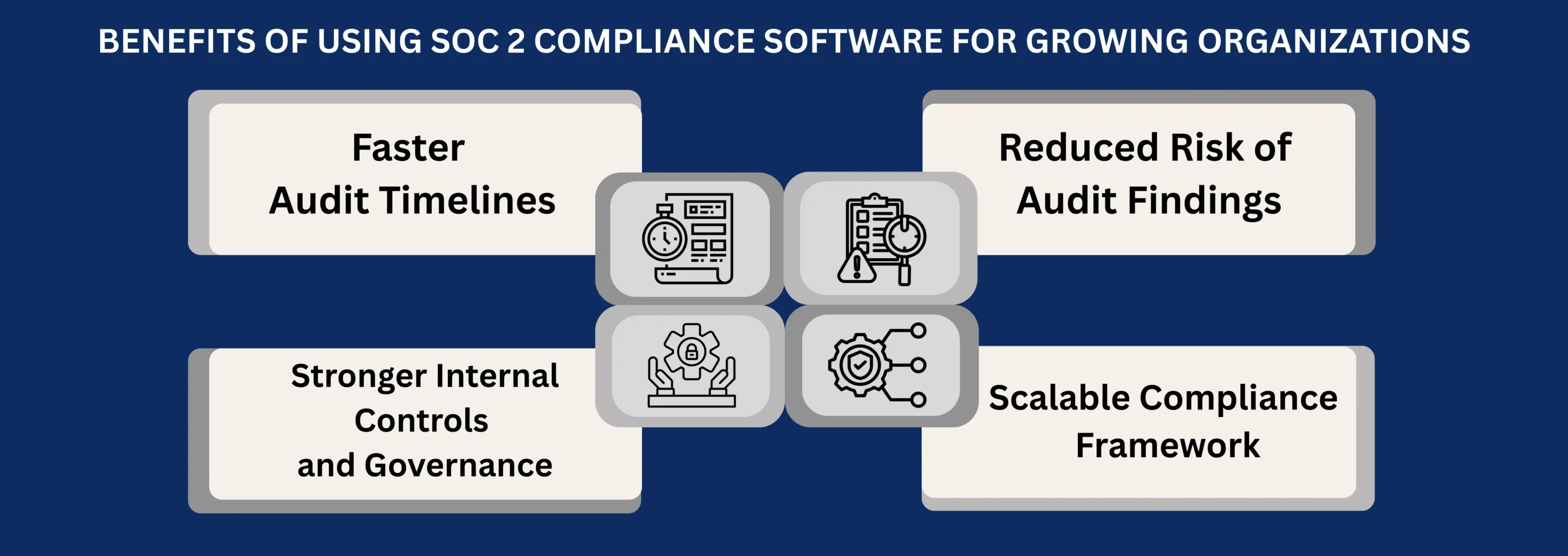
- ✓Operational and Governance Outcomes of SOC 2 Compliance
SOC 2 Certification Scope and Independent Decision Framework
The scope of SOC 2 Certification in Western Australia is defined by the boundaries of the system under examination, the Trust Services Criteria selected for evaluation, and the observation period covered by the report. Scope is established collaboratively between the Licensed CPA Firm and the service organization at the commencement of the engagement, based on the organization’s service commitments and customer contracts. Clearly defining scope at the outset is essential to ensuring the SOC 2 examination accurately reflects the organization’s operating environment.
Defining the System Boundary and In-Scope Infrastructure
The system boundary in a SOC 2 examination defines which infrastructure components, applications, data stores, and organizational processes are included in the scope of the audit. For a Western Australian cloud service provider, the system boundary may encompass production servers, database environments, network infrastructure, identity and access management systems, and the operational processes used to monitor and maintain those systems.
Subservice organizations — third-party vendors on whom the service organization relies to deliver its services — may be included within the scope of the examination (carved in) or explicitly excluded (carved out) from the audit scope. Where subservice organizations are carved out, the SOC 2 report documents the nature of the service organization’s reliance on those third parties and the controls applied to monitor subservice organization performance.
The Licensed CPA Firm assesses whether the defined system boundary accurately reflects the systems relevant to the service commitments described in the System Description. Misalignment between the stated scope and the organization’s actual operating environment is evaluated as a potential control deficiency. For SOC 2 Certification in Perth, system boundaries frequently include cloud-hosted infrastructure in Australian data centers, hybrid environments, and third-party software-as-a-service components integral to the service delivery model.
Nonconformity Review and Suspension of Certification
Nonconformities identified during the SOC 2 examination are classified based on their nature and materiality relative to the Trust Services Criteria. Where identified exceptions indicate that controls did not operate effectively during the observation period, the auditor evaluates whether the exceptions are sufficiently material to affect the opinion expressed in the report.
A qualified opinion indicates that, except for the described exceptions, controls met the criteria. An adverse opinion indicates that controls did not meet the criteria. A disclaimer of opinion indicates that the auditor was unable to collect sufficient evidence to form an opinion.
Where a service organization’s controls deteriorate materially between audit periods — due to a significant security incident, system migration, or organizational change that disrupts established controls — the organization may receive a qualified or adverse opinion in the subsequent SOC 2 examination. There is no formal suspension mechanism in SOC 2 attestation as there is in ISO 27001 certification. Instead, the SOC 2 report simply expires at the end of the period covered, and a new examination is required to produce a current report. Organizations that fail to maintain annual audit cycles or receive adverse opinions risk losing the ability to satisfy enterprise vendor qualification requirements that mandate a current, unqualified SOC 2 Type 2 report.
Maintaining SOC 2 Compliance in Western Australia: Annual Audit Cycles and Ongoing Monitoring
SOC 2 compliance is not a one-time certification event. Maintaining current SOC 2 attestation in Western Australia requires organizations to sustain their control environments continuously and engage in annual examination cycles. Enterprise customers evaluate the currency of SOC 2 reports as part of ongoing vendor management — a report more than twelve months old is generally treated as expired, regardless of the opinion it contains. Organizations that treat SOC 2 Certification in Western Australia as an ongoing program rather than a point-in-time project are best positioned to meet enterprise customer expectations consistently.
Annual SOC 2 Audit Cycles and Observation Period Management
Organizations maintaining SOC 2 compliance in Western Australia manage their audit cycles to ensure continuous coverage without gaps in the observation period. A twelve-month observation period ending on 30 June must be followed by a new engagement commencing immediately to maintain uninterrupted coverage. Gaps in observation periods — periods of time not covered by a current SOC 2 report — are evaluated by enterprise customers as potential indicators of inconsistent control maintenance.
The Licensed CPA Firm conducting the annual SOC 2 audit in Western Australia reviews the prior period’s report and identified exceptions as part of audit planning, assessing whether previously identified control weaknesses have been addressed. Corrective actions taken during the current observation period in response to prior-year exceptions are evaluated during fieldwork to determine whether they were effective. This continuity between successive audit periods creates a documented control improvement trajectory that enterprise customers can evaluate as evidence of organizational responsiveness to audit findings.
For Western Australian organizations serving U.S. enterprise clients with fiscal year-end reporting requirements, aligning the SOC 2 observation period with the customer’s fiscal year facilitates integration of the SOC 2 report into the customer’s own annual vendor assurance review cycle — a practical consideration that simplifies the customer’s compliance documentation process.
Continuous Control Monitoring Between Audit Periods
The SOC 2 examination covers a defined observation period, but the controls being evaluated must operate continuously — not only when the auditor is present. Organizations maintaining SOC 2 compliance in Western Australia implement continuous monitoring mechanisms to detect and respond to control deviations throughout the year.
Log aggregation platforms gather and analyze system logs, user activity records, and security events in real time, providing operational teams with the visibility needed to identify anomalies before they become material control failures. Configuration management systems track changes to system settings, software versions, and access permissions — creating audit trails that support evidence collection during the next SOC 2 examination. Access review processes — typically conducted quarterly or semi-annually — validate that user access rights remain appropriate and that deprovisioning has been completed for terminated employees and contractors. Vendor management processes ensure that subservice organizations relied upon for service delivery are subject to equivalent security oversight.
These continuous monitoring activities generate the operational evidence that the Licensed CPA Firm collects and evaluates during the SOC 2 audit. Organizations with mature continuous monitoring programs typically present more complete and consistent evidence during fieldwork, reducing the likelihood of exception findings attributable to evidence gaps rather than actual control failures.
FAQ
▶
What is SOC 2 certification?
▶
Who needs SOC 2 certification?
▶
How long does SOC 2 certification take?
▶
What are the benefits of SOC 2 certification?
▶
What is the cost of SOC 2 certification?
▶
How do I prepare for SOC 2 certification?
▶
What happens after SOC 2 certification?
▶
How long does the SOC 2 certification process take?
SOC 1 VS SOC 2: WHICH REPORT YOUR CUSTOMERS ACTUALLY ASK FOR
If you sell SaaS or provide outsourced services, you have likely been asked for a SOC report. However, the follow-up question is rarely easy to answer…
SOC 2 Certified: What Does It Mean for Your Business
For companies that handle sensitive data or run cloud-based services, the question “Can you provide your SOC 2 report?” carries enormous weight. Yet, …
HOW SOC 2 AUDITORS REVIEW EVIDENCE OVER TIME
Most businesses pursuing a SOC 2 report spend months building security controls but overlook a fundamental reality: SOC 2 auditors do not just verify …
Get In Touch
have a question? let us get back to you.