
SOC 2 Certification in Canberra
SOC 2 Certification in Canberra is conducted by a Licensed CPA Firm under AICPA attestation standards AT-C 105 and AT-C 205. The process produces an independent attestation report that evaluates a service organization’s controls against the Trust Services Criteria. The examination covers security, availability, processing integrity, confidentiality, and privacy — and is recognized across U.S.-centric and international enterprise procurement processes as a trusted third-party assurance standard.
OUR CLIENTS










SOC 2 Certification for Canberra-Based Technology and Public-Sector Organizations
SOC 2 Certification in Canberra is conducted by a Licensed CPA Firm under AICPA attestation standards AT-C 105 and AT-C 205. The process produces an independent attestation report that evaluates a service organization’s controls against the Trust Services Criteria. The examination covers security, availability, processing integrity, confidentiality, and privacy — and is recognized across U.S.-centric and international enterprise procurement processes as a trusted third-party assurance standard.
Canberra occupies a structurally distinct position in Australia’s technology economy. The city hosts the highest concentration of government technology vendors, defence and national security systems integrators, cybersecurity organizations, and public-sector data management providers of any Australian capital. The Australian Capital Territory also contains a substantial cluster of higher education and research institutions, many of which operate managed cloud environments, student data platforms, and research data repositories that fall within the scope of SOC 2 compliance evaluations.
Alongside these established sectors, Canberra has developed a growing ecosystem of SaaS providers, managed service providers, and cloud infrastructure companies. Many of these organizations contract directly with federal government agencies or supply services to regulated enterprise customers in the United States and internationally — making SOC 2 Certification in Canberra increasingly relevant across the city’s technology sector.
For these organizations, SOC 2 Certification in Canberra functions as an independent, evidence-based verification mechanism. It is distinct from internal security declarations, self-assessed compliance frameworks, or supplier questionnaire responses. When a federal agency procurement team, a U.S.-based enterprise customer, or an international financial services client requests a SOC 2 report, they are requesting documentation produced by a Licensed CPA Firm that has independently tested and evaluated the service organization’s controls over a defined period.
This is what distinguishes SOC 2 attestation from internal audit activity and from certification schemes that rely on organizational self-declaration.
The AICPA Trust Services Criteria form the normative basis against which controls are evaluated during a SOC 2 examination. The Common Criteria — which address security and logical access — apply to all SOC 2 engagements. Additional criteria covering availability, processing integrity, confidentiality, and privacy are included in scope when the service organization’s system commitments and customer contractual obligations require them.
The selection of applicable Trust Services Criteria is determined during scope definition and documented in the system description that forms part of the attestation report.
Canberra-based organizations pursuing SOC 2 Certification face procurement environments that increasingly require current, independently verified SOC 2 reports as a condition of vendor approval. U.S. federal contractors and technology supply chain participants, in particular, treat the SOC 2 Type 2 report as a baseline third-party risk management document.
Defence technology firms operating under Australian Government security frameworks — while simultaneously contracting with U.S. Department of Defense supply chains — encounter SOC 2 attestation requirements as part of vendor assurance processes that run parallel to Australian-specific security accreditation obligations. This dual-framework environment makes independent SOC 2 examination particularly relevant across Canberra’s technology sector.
SOC 2 Certification in Canberra is relevant to any organization that stores, processes, or transmits customer data using cloud-based or managed technology systems and is subject to customer-driven or contractual security assurance obligations. The certification is not sector-restricted. It applies equally to SaaS providers, cloud service providers, managed security service providers, data analytics firms, health technology companies, and government technology vendors operating from Canberra.
The attestation report produced through the SOC 2 examination provides independent documentation of control design and operating effectiveness — structured for use in enterprise vendor management, regulatory due diligence, and third-party risk assessment processes.

What Is SOC 2 Certification?
SOC 2 Certification is a formal attestation process in which a Licensed CPA Firm examines and reports on the controls of a service organization relevant to security, availability, processing integrity, confidentiality, or privacy. The examination is conducted under AICPA attestation standards and produces a written report that includes the auditor’s opinion on whether the described controls were suitably designed.
In the case of a Type 2 report, the auditor also opines on whether those controls operated effectively over a specified review period. The term SOC 2 certified refers to an organization that has received an unqualified opinion from a Licensed CPA Firm following a completed SOC 2 examination.
SOC 2 Type 1 and Type 2 Reports Explained
A SOC 2 Type 1 certification in Canberra evaluates whether a service organization’s controls are suitably designed as of a specific point in time. The Licensed CPA Firm examines the system description and control design but does not test operating effectiveness over time. A SOC 2 Type 1 report is often used to establish baseline documentation for organizations that have recently implemented controls and need to demonstrate design adequacy before accumulating sufficient operating history for a Type 2 review.
Type 1 reports are accepted in some vendor approval contexts but are generally considered less comprehensive than Type 2 attestations.
A SOC 2 Type 2 audit in Canberra extends the examination to cover both control design and operating effectiveness across a defined observation period — typically between six and twelve months. The auditor tests whether controls functioned consistently throughout the review period, examines evidence of control operation at multiple points in time, and documents any exceptions identified during testing.
An unqualified opinion on a SOC 2 Type 2 report confirms that controls operated effectively without material exceptions during the covered period. Enterprise customers and U.S.-centric procurement processes most commonly request SOC 2 Type 2 reports as the standard third-party assurance document, precisely because they assess control performance over time rather than at a single moment.
Trust Services Criteria: The Normative Framework
The AICPA Trust Services Criteria define the control objectives and individual criteria points against which the SOC 2 examination is conducted. The five Trust Services Categories are: Security (Common Criteria), Availability, Processing Integrity, Confidentiality, and Privacy.
Security is mandatory for all SOC 2 engagements and covers logical and physical access controls, change management, risk assessment, monitoring, and incident response. The remaining four categories are included in scope when the service organization’s system commitments, service level agreements, or customer contractual obligations make them relevant. For Canberra-based organizations handling government data, processing financial transactions, or operating health technology platforms, Availability and Confidentiality criteria are frequently included alongside the mandatory Security category.
| Trust Services Category | Scope Condition | Common Applicability in Canberra |
|---|---|---|
| Security (Common Criteria) | Mandatory for all SOC 2 engagements | All service organizations |
| Availability | Included when uptime commitments exist | Cloud providers, managed services, SaaS platforms |
| Processing Integrity | Included when transaction accuracy is critical | Financial processing, data analytics firms |
| Confidentiality | Included when confidential data handling is committed | Government technology vendors, defence contractors |
| Privacy | Included when personal information is collected and processed | Health technology, education platforms, HR systems |
How SOC 2 Differs from Self-Assessment and Other Frameworks
SOC 2 compliance evaluated through a formal examination differs fundamentally from internal self-assessment or questionnaire-based vendor reviews. When a service organization completes a security questionnaire, it self-reports on control status without independent verification. SOC 2 attestation, by contrast, requires a Licensed CPA Firm to independently examine evidence, test control operation, and issue a written opinion.
That opinion is professional and carries the auditor’s accountability under AICPA standards — which is precisely why SOC 2 examination outputs are accepted in enterprise vendor management and regulatory due diligence contexts where self-reported declarations are considered insufficient. SOC 2 also differs from ISO 27001: it evaluates controls against Trust Services Criteria rather than an information security management system framework, and reports are produced in a structured AICPA format rather than an ISO certificate.
SOC 2 Certification Audit Process in Canberra
The SOC 2 audit process in Canberra follows a structured sequence governed by AICPA attestation standards AT-C 105 and AT-C 205. Each stage of the examination produces documented outputs that contribute to the final attestation report. The process applies consistently across SOC 2 Type 1 and Type 2 engagements — with the key distinction being that Type 2 includes an observation period during which control operation is tested over time.
The first stage of a SOC 2 examination involves defining the scope of the engagement. The service organization documents system boundaries, identifies the services covered, determines which Trust Services Categories apply, and prepares the system description. The system description is a management-prepared document that explains the service organization’s infrastructure, software, personnel, data, and procedures relevant to the in-scope services.
The Licensed CPA Firm reviews the system description for completeness and accuracy. For Canberra-based government technology vendors, scope definition typically addresses the boundaries between government-managed environments and the service organization’s own infrastructure — a boundary that directly affects which controls fall within the SOC 2 examination scope.
During the control testing phase of a SOC 2 audit, the Licensed CPA Firm examines evidence that controls were designed as described and — for Type 2 engagements — that they operated consistently throughout the observation period. Testing procedures include inquiry, observation, inspection of documentation, and re-performance where applicable.
Evidence types reviewed during a SOC 2 audit in Canberra typically include system configuration records, access provisioning and deprovisioning logs, security monitoring alerts and responses, change management tickets, encryption configuration documentation, and vendor management records. The auditor determines sample sizes based on the frequency of control operation and the length of the observation period. Controls operating daily are sampled more extensively than those operating annually.
Exception identification is a standard part of the SOC 2 examination. Where a control did not operate as described on one or more sampled instances, the auditor documents the exception, assesses its nature and frequency, and considers whether it constitutes a material deviation from the control description. The presence of exceptions does not automatically preclude an unqualified opinion — the auditor evaluates the overall pattern of control operation and the materiality of identified deviations.
Organizations subject to a SOC 2 examination in Canberra should maintain detailed, contemporaneous evidence of control operation throughout the observation period. Retrospective documentation is generally not accepted as primary evidence during testing.
Following the completion of control testing and nonconformity review, the Licensed CPA Firm drafts the SOC 2 attestation report. The report contains the auditor’s opinion, the management assertion, the system description, a description of the controls tested, testing procedures applied, results of testing, and any exceptions identified. For a Type 2 engagement, the report also specifies the observation period covered.
The SOC 2 attestation is issued under the auditor’s professional signature and reflects the independent evaluation completed during the examination. SOC 2 reports are typically distributed under a non-disclosure agreement to authorized recipients including customers, prospects, and regulators. A SOC 2 attestation report in Canberra remains valid as a current assurance document for approximately twelve months, after which organizations are expected to complete a subsequent annual SOC 2 audit to maintain continuous coverage.
| Audit Stage | Key Activities | Output |
|---|---|---|
| Scope Definition | System boundary identification, Trust Services Category selection, system description preparation | Agreed engagement scope and documented system description |
| Stage 1 Review | Review of system description, control documentation, and readiness of evidence | Documented observations and confirmation of readiness for Stage 2 |
| Control Testing (Type 2) | Evidence collection, sampling, inquiry, inspection, and re-performance across observation period | Testing workpapers and identified exceptions |
| Nonconformity Review | Assessment of exception materiality and pattern analysis | Documented exception assessment and management response |
| Report Issuance | Draft report preparation, management review, and final attestation issuance | Signed SOC 2 attestation report with auditor opinion |
- ✓Scope Definition and System Description
- ✓Control Testing and Evidence Collection
- ✓Report Issuance and Attestation Output
Why Canberra Organizations Pursue SOC 2 Certification
Demand for SOC 2 Certification in Canberra is driven by the city’s unique intersection of government-adjacent technology supply chains, defence sector obligations, and international market expansion requirements. The structured demand patterns for SOC 2 attestation in Canberra differ from those observed in other Australian capitals — largely because of the concentration of federal government procurement activity and the prevalence of organizations operating under dual Australian and U.S. compliance obligations.
Government Technology Vendor Requirements
Canberra-based technology vendors supplying cloud platforms, data management systems, analytics tools, or managed IT services to Australian federal government agencies increasingly encounter security assurance requirements in procurement documentation. While Australian Government security frameworks such as the Information Security Manual and the Protective Security Policy Framework govern many aspects of government ICT security, technology vendors contracting with agencies that have international partnerships or U.S.-aligned security requirements may also receive requests for SOC 2 attestation reports as part of vendor risk assessment processes.
SOC 2 compliance documentation produced through a Licensed CPA Firm examination is accepted in these procurement contexts because it reflects independently verified control testing — not vendor self-declaration.
Defence, Cybersecurity, and National Security Sector Drivers
Defence technology firms and national security systems integrators based in Canberra that participate in joint Australia-U.S. technology programs — or supply services to U.S. defence procurement chains — frequently encounter SOC 2 attestation requirements alongside Australian-specific security accreditation obligations. In these dual-framework environments, the SOC 2 examination serves as the independent third-party verification mechanism that U.S.-side procurement processes require, while Australian accreditation frameworks address jurisdiction-specific obligations separately.
Cybersecurity firms operating from Canberra and providing managed detection and response, security operations centre services, or threat intelligence platforms to enterprise or government customers are also among the organizations for which SOC 2 certification has become a standard vendor assurance expectation.
SaaS Providers and Cloud Companies Expanding to U.S. Markets
Canberra’s growing SaaS and cloud technology sector includes companies that develop platforms for government workflow automation, regulatory compliance management, health data analytics, and enterprise resource planning. When these organizations seek to expand their customer base to include U.S. federal agencies, U.S. commercial enterprises, or international clients with U.S.-aligned security requirements, completing a SOC 2 Type 2 audit in Canberra becomes a standard market-entry requirement.
U.S. enterprise procurement teams conducting third-party risk reviews routinely request current SOC 2 Type 2 reports as baseline documentation before approving new cloud vendors. The SOC 2 examination provides these Canberra-based organizations with independently verified assurance documentation necessary to satisfy U.S. vendor approval processes — without requiring customer-specific site audits or extended due diligence engagements.
SOC 2 Certification Requirements and Control Environment
SOC 2 compliance is evaluated against the AICPA Trust Services Criteria, which define the control objectives and criteria points that service organizations must address. The control environment requirements for a SOC 2 examination are determined by the Trust Services Categories included in scope and the nature of the service organization’s system. The following outlines the primary control domains evaluated during a SOC 2 audit.
The Common Criteria — which address the Security Trust Services Category — apply to every SOC 2 engagement. They cover nine control environment domains: control environment and risk assessment; communication and information; monitoring of controls; logical and physical access controls; system operations; change management; risk mitigation; and vendor and subservice organization management.
For a Canberra-based service organization, logical access management control requirements include documented user access provisioning and deprovisioning procedures, multi-factor authentication for privileged access, periodic user access reviews, and controls over third-party access to production systems. Change management controls require documented approval workflows, testing procedures, and rollback capabilities. Security monitoring controls require continuous logging, alerting, and documented incident response procedures.
For a SOC 2 Type 2 audit, the organization must maintain documented evidence of control operation throughout the observation period. The observation period for a SOC 2 Type 2 audit in Canberra typically spans six to twelve months — with twelve months being standard for established programs seeking continuous coverage.
Evidence documentation requirements include system-generated logs that are tamper-evident, policy and procedure documents with version control and approval records, training completion records with timestamps, and vendor contract and review documentation. Evidence must be contemporaneous — generated at or near the time the control operates — rather than reconstructed after the fact. Auditors assess both the completeness and the authenticity of evidence submitted during the SOC 2 examination.
- ✓Documented information security policy approved by management and reviewed annually
- ✓Risk assessment process with documented outputs including identified risks and treatment decisions
- ✓Logical access provisioning and deprovisioning records with approval evidence
- ✓Multi-factor authentication configuration documentation for privileged and remote access
- ✓Change management records including approval, testing, and implementation documentation
- ✓Continuous security monitoring logs with documented alert review and response records
- ✓Incident response plan with documented activation records for any incidents during the observation period
- ✓Vendor and subservice organization management records including due diligence and contractual controls
Canberra-based service organizations frequently rely on cloud infrastructure providers, data centre operators, and third-party security tool vendors as subservice organizations. The SOC 2 examination must address how reliance on these subservice organizations is handled in the system description and control testing.
Two methods apply: the inclusive method — in which the subservice organization’s controls are included within the scope of the examination — and the carve-out method, in which the subservice organization’s controls are excluded from scope and management describes the complementary user entity controls that address the reliance. Most Canberra-based service organizations apply the carve-out method and rely on the subservice organization’s own SOC 2 report as evidence of control effectiveness. The Licensed CPA Firm reviews subservice organization reports as part of the SOC 2 compliance assessment where the carve-out method applies.
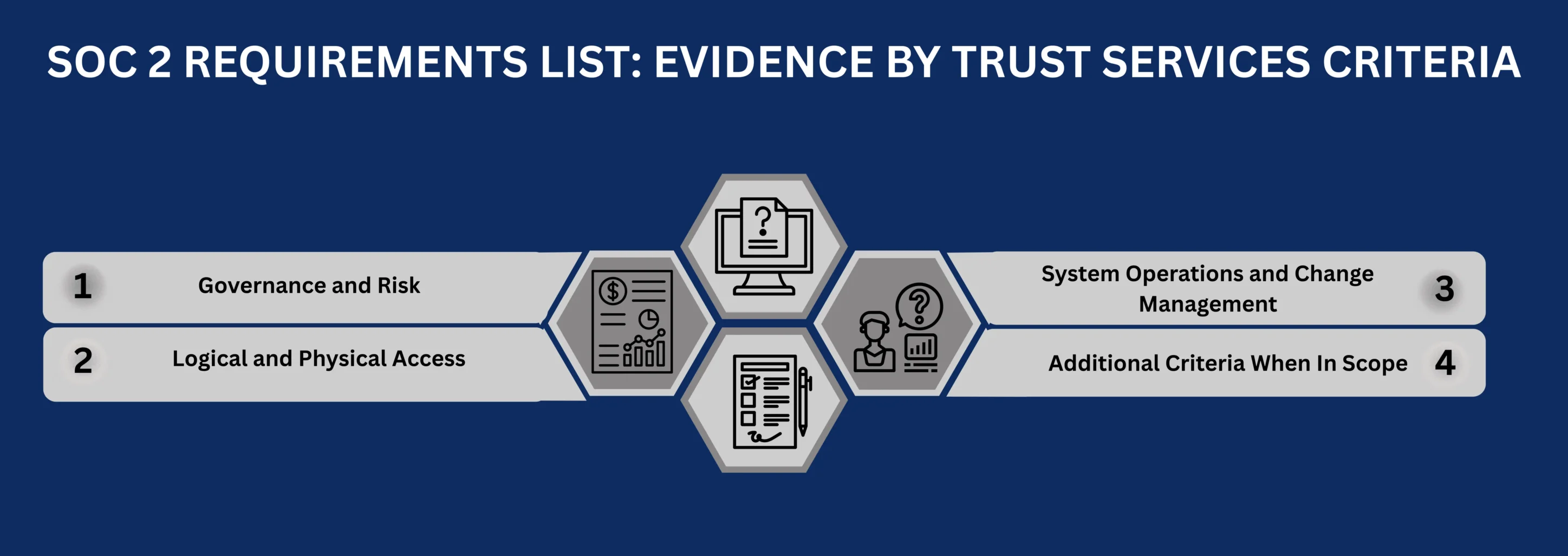
- ✓Common Criteria Control Requirements
- ✓Evidence Documentation and Observation Period
- ✓Subservice Organizations and Carve-Out vs. Inclusive Method
Benefits of SOC 2 Certification for Canberra-Based Organizations
SOC 2 Certification in Canberra produces attestation documentation that serves multiple operational and commercial functions for service organizations. The following describes the primary verified outcomes associated with completing a SOC 2 examination conducted by a Licensed CPA Firm.
The SOC 2 attestation report provides independent, professionally issued documentation confirming that the service organization’s controls were designed appropriately and operated effectively during the covered period. This independent verification is materially different from internal audit conclusions or management self-assessments — it is produced by a Licensed CPA Firm operating under AICPA attestation standards and subject to professional accountability obligations.
For Canberra-based organizations that handle sensitive government data, defence-related information, or personally identifiable information, the independent nature of the SOC 2 examination output is a critical characteristic that distinguishes it from other assurance mechanisms. The attestation report documents the specific controls tested, the testing procedures applied, and the results of testing — providing a transparent and auditable record of the examination.
SOC 2 Type 2 reports are recognized in U.S. enterprise procurement processes as the standard third-party risk documentation for cloud and technology service providers. Canberra-based organizations that hold a current SOC 2 Type 2 report can provide it to U.S.-based or U.S.-aligned customers during vendor approval processes — reducing the time and cost associated with responding to individual security questionnaires, customer-requested site audits, or extended due diligence requests.
In localized procurement scenarios — for instance, a Canberra-based SaaS provider seeking approval from a U.S. federal agency contractor or a U.S. financial institution — the SOC 2 attestation report serves as the primary independent assurance document. It satisfies third-party risk management requirements without requiring repeated customer-specific audit activity. This recognition is a direct operational benefit of completing the SOC 2 audit through a Licensed CPA Firm.
The annual SOC 2 audit cycle creates a structured, recurring mechanism for evaluating control effectiveness against consistent criteria. Organizations that maintain annual SOC 2 compliance programs benefit from the discipline of continuous evidence collection, periodic control reviews, and regular examination of their control environment by an independent Licensed CPA Firm.
This structured cycle produces updated attestation reports that reflect current control operation — enabling organizations to provide customers with current assurance documentation rather than reports covering periods that may no longer reflect the actual control environment. For Canberra-based organizations operating in dynamic technology environments where infrastructure, personnel, and system configurations change regularly, the annual SOC 2 audit cycle provides a systematic framework for evaluating whether changes to the control environment have been managed effectively.
- ✓Independent attestation report issued by a Licensed CPA Firm under AICPA standards
- ✓Verification of control design and operating effectiveness over the defined observation period
- ✓Recognized third-party assurance documentation accepted in U.S.-centric enterprise procurement
- ✓Reduction in customer-specific security questionnaire and due diligence burdens
- ✓Structured annual SOC 2 audit cycle providing ongoing independent evaluation of the control environment
- ✓Transparent documentation of control testing procedures and results for customer review
- ✓Support for regulatory and contractual assurance obligations in government and defence contexts
- ✓Differentiation in competitive vendor selection processes where SOC 2 attestation is required
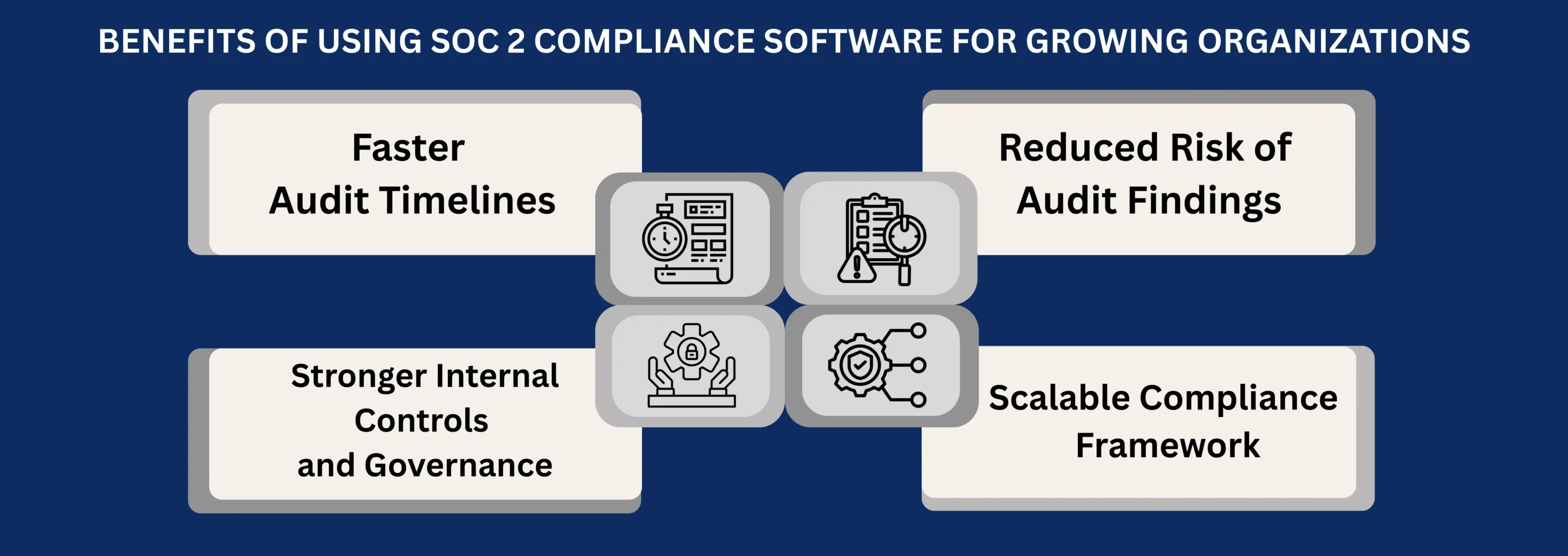
- ✓Independent Verification of Control Effectiveness
- ✓Enterprise Procurement and Vendor Approval Acceptance
- ✓Structured Audit Methodology and Ongoing Compliance Monitoring
SOC 2 Examination: Scope, Nonconformity Review, and Report Validity
The scope of a SOC 2 examination in Canberra and the conditions governing report validity and maintenance are defined by AICPA attestation standards and the engagement agreement between the service organization and the Licensed CPA Firm. Understanding these parameters is essential for organizations planning their SOC 2 compliance programs and for users of SOC 2 reports assessing their currency and applicability.
Defining and Bounding Examination Scope
Examination scope for a SOC 2 audit is defined by the services included in the system description, the Trust Services Categories selected, and the boundaries of the infrastructure and processes covered. Scope may be defined narrowly to cover a specific product line or service, or broadly to cover all services provided by the organization.
The Licensed CPA Firm reviews the system description for completeness — specifically, whether the description fairly presents the system as bounded. If the system description omits relevant aspects of the service organization’s environment that affect the Trust Services Criteria, the auditor may identify this as an issue affecting the completeness of the description. Canberra-based organizations with complex infrastructure environments spanning on-premises, cloud-hosted, and co-location facilities must address all relevant components within the system description or document the basis for their exclusion.
Nonconformity Review and Auditor Opinion
Where testing identifies exceptions — instances where a control did not operate as described — the Licensed CPA Firm assesses whether the exception is isolated or represents a pattern of control failure. Nonconformities are documented in the SOC 2 attestation report along with management’s response. The auditor’s opinion reflects the overall assessment of whether controls operated effectively during the observation period, taking into account the nature, frequency, and materiality of any exceptions identified.
An unqualified opinion confirms that, in the auditor’s professional judgment, controls operated effectively without material exceptions. A qualified opinion indicates that one or more areas did not meet the applicable criteria in a material respect. Report users — including enterprise customers conducting vendor reviews — evaluate the opinion type and the details of any documented exceptions when assessing the SOC 2 attestation output.
Report Validity and Annual Recertification
A SOC 2 attestation report does not carry an indefinite validity period. Enterprise customers and procurement teams generally consider a SOC 2 report to be current if it was issued within the preceding twelve months and if the observation period ended no more than twelve months prior to the date of review.
Organizations that allow their SOC 2 attestation to lapse — by failing to complete a subsequent annual examination — may find that customers no longer accept the report as current assurance documentation. Maintaining continuous SOC 2 compliance coverage requires completing a new SOC 2 Type 2 audit in Canberra annually, with the observation period of the new engagement commencing at or before the end date of the prior engagement’s observation period. Annual recertification is therefore a structural feature of mature SOC 2 programs rather than an optional activity.
SOC 2 Certification for Key Canberra Industry Sectors
SOC 2 Certification in Canberra applies across multiple industry sectors, each with distinct drivers for pursuing independent attestation. The following outlines how SOC 2 examination requirements present across Canberra’s primary technology and public-sector industry groups.
Government Technology Vendors and Public-Sector Data Platforms
Technology vendors supplying digital services, data platforms, or cloud-hosted applications to Australian federal government agencies represent a substantial portion of Canberra’s technology economy. These organizations frequently operate under contractual data handling obligations that require independent assurance of control effectiveness.
Where a government technology vendor also serves U.S. government-aligned programs or international enterprise clients, SOC 2 Certification in Canberra provides the independently verified attestation documentation that satisfies U.S.-side third-party risk requirements. The system description for government technology vendors must accurately describe the boundary between government-managed infrastructure and the vendor’s own systems, as this boundary determination affects the scope of control testing during the SOC 2 examination.
Higher Education, Research Institutions, and Health Technology
Canberra’s higher education and research sector — anchored by institutions including the Australian National University and the University of Canberra — operates managed cloud environments, research data repositories, and student information systems that process significant volumes of personally identifiable information and sensitive research data. Research institutions engaged in international collaborative programs involving U.S. research agencies, defence research programs, or international data sharing agreements may receive SOC 2 attestation requirements as part of data handling assurance obligations.
Health technology organizations operating from Canberra and providing clinical data management, electronic health record platforms, or population health analytics services to health networks with U.S. partnerships similarly encounter SOC 2 compliance requirements — particularly where the Privacy Trust Services Category becomes relevant alongside the mandatory Security criteria.
Managed Service Providers and Cloud Infrastructure Operators
Managed service providers and cloud infrastructure operators headquartered in or operating from Canberra — serving enterprise customers across Australia and internationally — represent another significant group for which a SOC 2 audit in Canberra is a recurring operational requirement. These organizations are commonly listed as subservice organizations in their customers’ own SOC 2 system descriptions, meaning their customers’ auditors will seek evidence of the managed service provider’s own SOC 2 attestation as part of evaluating complementary controls.
Holding a current SOC 2 Type 2 report is therefore not only a direct customer requirement for managed service providers, but also a facilitating factor for their customers’ own SOC 2 compliance programs. This network effect makes annual SOC 2 examination a standard operational obligation for managed service providers serving enterprise and regulated-sector customers from Canberra.
SOC 2 vs. Other Assurance Frameworks for Canberra Organizations
Organizations evaluating assurance frameworks for their Canberra operations frequently compare SOC 2 Certification with ISO 27001 certification and with Australian-specific frameworks including the Australian Signals Directorate’s Essential Eight and the Information Security Manual. Each framework serves distinct purposes and is recognized in different procurement and regulatory contexts.
SOC 2 Compared with ISO 27001
SOC 2 and ISO 27001 are both independently verified assurance frameworks, but they differ significantly in structure, geographic recognition, and report format. SOC 2 is U.S.-centric and is produced through an attestation engagement conducted by a Licensed CPA Firm under AICPA standards. ISO 27001 is globally recognized and is awarded through a certification body accredited by an IAF member accreditation body following a staged audit against the ISO/IEC 27001 standard.
SOC 2 evaluates controls against Trust Services Criteria specific to the service organization’s commitments; ISO 27001 evaluates whether the organization has implemented and maintains an information security management system meeting the standard’s requirements. For Canberra-based organizations serving U.S. markets, SOC 2 attestation is typically the primary assurance requirement. For those seeking global enterprise recognition or operating under European data protection frameworks, ISO 27001 may be pursued in parallel. Customer requirements and target markets are the primary determinants of which framework to prioritize.
SOC 2 and Australian-Specific Security Frameworks
The Australian Government Information Security Manual and the ASD Essential Eight Maturity Model address Australian jurisdiction-specific security obligations for organizations handling government information. These frameworks operate independently of SOC 2 and address different compliance populations and regulatory contexts.
Canberra-based organizations subject to Australian Government security accreditation requirements under the ISM or PSPF address those obligations through Australian accreditation processes — while separately pursuing SOC 2 examination in Canberra to satisfy U.S.-aligned or international customer assurance requirements. SOC 2 compliance does not substitute for ISM or Essential Eight compliance, nor do Australian accreditations satisfy SOC 2 attestation requirements. Organizations operating in both regulatory environments maintain separate compliance programs addressing each framework’s distinct requirements. The coexistence of these frameworks in Canberra’s technology sector reflects the city’s dual positioning as both a government-adjacent technology hub and an international technology services provider.
| Framework | Governing Body | Report Type | Primary Recognition Context |
|---|---|---|---|
| SOC 2 | AICPA (Licensed CPA Firm) | Attestation report with auditor opinion | U.S. enterprise and federal procurement |
| ISO 27001 | ISO / IAF-accredited certification body | Certificate of conformity | Global enterprise and European regulatory contexts |
| ASD Essential Eight | Australian Signals Directorate | Maturity level assessment | Australian government ICT security |
| ISM / PSPF | Australian Government | Accreditation documentation | Australian federal agency ICT environments |
FAQ
▶
What is SOC 2 Certification and who conducts it?
▶
What is the difference between SOC 2 Type 1 and SOC 2 Type 2?
▶
Which Trust Services Categories apply to a SOC 2 examination in Canberra?
▶
How long is the observation period for a SOC 2 Type 2 audit in Canberra?
▶
How long is a SOC 2 attestation report considered current?
▶
Why do Canberra-based government technology vendors pursue SOC 2 Certification?
▶
What is the difference between SOC 2 certification and SOC 2 compliance?
▶
Does a SOC 2 attestation report satisfy Australian Government security accreditation requirements?
SOC 1 VS SOC 2: WHICH REPORT YOUR CUSTOMERS ACTUALLY ASK FOR
If you sell SaaS or provide outsourced services, you have likely been asked for a SOC report. However, the follow-up question is rarely easy to answer…
SOC 2 Certified: What Does It Mean for Your Business
For companies that handle sensitive data or run cloud-based services, the question “Can you provide your SOC 2 report?” carries enormous weight. Yet, …
HOW SOC 2 AUDITORS REVIEW EVIDENCE OVER TIME
Most businesses pursuing a SOC 2 report spend months building security controls but overlook a fundamental reality: SOC 2 auditors do not just verify …
Get In Touch
have a question? let us get back to you.