
SOC 2 Certification in Lisbon
SOC 2 Certification in Lisbon is issued by a Licensed CPA Firm following an independent examination conducted under AICPA attestation standards AT-C Section 105 and AT-C Section 205. The examination evaluates whether an organization’s controls are designed and operating effectively against the applicable Trust Services Criteria — covering Security, Availability, Processing Integrity, Confidentiality, and Privacy. The SOC 2 certification decision is based exclusively on audit evidence collected during a structured examination engagement, with no consulting, advisory, or implementation activities involved.
OUR CLIENTS










SOC 2 Certification for Lisbon-Based Financial and Technology Organizations
SOC 2 Certification in Lisbon is issued by a Licensed CPA Firm following an independent examination conducted under AICPA attestation standards AT-C Section 105 and AT-C Section 205. The examination evaluates whether an organization’s controls are designed and operating effectively against the applicable Trust Services Criteria — covering Security, Availability, Processing Integrity, Confidentiality, and Privacy. The SOC 2 certification decision is based exclusively on audit evidence collected during a structured examination engagement, with no consulting, advisory, or implementation activities involved.
Lisbon has established itself as a primary technology and fintech hub in Southern Europe, anchored by a dense concentration of SaaS companies, cloud service providers, technology scale-ups, telecommunications operators, and financial institutions. The city’s Web Summit residency, its designation as a European startup capital, and its growing population of digital-native organizations have collectively attracted substantial enterprise investment from the United States, the United Kingdom, and Northern Europe.
Organizations operating within this ecosystem increasingly process sensitive customer data on behalf of U.S.-headquartered clients or international enterprises subject to rigorous vendor assurance frameworks. For these organizations, SOC 2 Certification in Lisbon functions as a formally recognized mechanism for demonstrating control effectiveness to international procurement teams, enterprise security reviewers, and financial sector clients.
The Trust Services Criteria (TSC), developed and maintained by the American Institute of Certified Public Accountants (AICPA), define the evaluative standards applied during every SOC 2 examination. The Security criterion — also referred to as the Common Criteria — is mandatory for all SOC 2 engagements. Additional criteria covering Availability, Processing Integrity, Confidentiality, and Privacy are applied selectively based on the service commitments and contractual obligations relevant to each organization’s operations.
Lisbon-based fintech organizations and SaaS providers frequently include Availability and Confidentiality criteria in scope due to the nature of their hosted service offerings and the data handling expectations embedded in enterprise client contracts.
SOC 2 compliance for Lisbon organizations is not achieved through internal self-declaration. The SOC 2 framework requires an independent third-party examination performed by a Licensed CPA Firm authorized under AICPA standards. The resulting SOC 2 attestation report — either a Type I or Type II — constitutes the formal output of the examination engagement.
A Type I report addresses control design at a specific point in time, while a Type II report addresses both design and operating effectiveness across a defined observation period, typically ranging from three to twelve months. Enterprise clients in regulated industries almost universally require a Type II SOC 2 attestation as evidence of sustained control operation rather than point-in-time design adequacy. Lisbon-based organizations serving U.S. financial institutions, cloud marketplace operators, or global SaaS platforms are routinely required to produce current Type II SOC 2 reports as a condition of vendor onboarding and annual contract renewal.
CertPro functions as an independent third-party certification body — not as a consultant, advisor, or implementation provider. Engagements are structured exclusively as examination and attestation activities. The audit team collects evidence, tests controls, identifies nonconformities, and issues findings through a defined examination methodology.
Organizations in Lisbon seeking SOC 2 Certification engage CertPro to conduct an objective, standards-governed assessment of their control environment — not to receive guidance on how to build or modify that environment. This positioning preserves the independence and objectivity that give the SOC 2 attestation its commercial and regulatory value in enterprise procurement contexts across the United States and internationally.

SOC 2 Certification Audit Process for Organizations in Lisbon
The SOC 2 audit process for organizations in Lisbon follows a structured examination methodology governed by AICPA attestation standards. Each stage involves defined activities, specific evidence requirements, and documented outputs that progress toward the issuance of a formal SOC 2 attestation report.
The process is designed to be objective, repeatable, and auditor-independent — meaning the examination outcome is determined by evidence collected against established criteria rather than by internal organizational representations.
| Audit Stage | Key Activities | Output |
|---|---|---|
| Scope Definition | Identify applicable Trust Services Criteria, define system boundaries, confirm service commitments and organizational context | Agreed scope document |
| Audit Program Determination | Design SOC 2 examination procedures, determine evidence requirements, establish observation period for Type II engagements | Audit program and engagement letter |
| Stage 1 — Documentation Review | Review system description, control documentation, policies, and evidence of control design against TSC requirements | Stage 1 findings and readiness observations |
| Stage 2 — Control Testing | Test operating effectiveness through inquiry, inspection, observation, and re-performance across the observation period | Control testing workpapers and nonconformity log |
| Nonconformity Review and Certification Decision | Review identified exceptions, evaluate materiality, issue management responses, and convene certification committee | SOC 2 Type I or Type II attestation report |
A SOC 2 Type I report is issued following an examination of control design at a single point in time. The auditor evaluates whether controls are suitably designed to meet the applicable Trust Services Criteria as of the report date. A Type I report does not involve an observation period and does not assess whether controls operated continuously or effectively over time.
Lisbon-based organizations that have recently implemented a control environment — particularly technology startups entering their first enterprise sales cycle — may pursue a Type I report as an initial attestation baseline while preparing for a subsequent Type II SOC 2 engagement.
A SOC 2 Type II report is issued following an examination of both control design and operating effectiveness over a defined observation period. The observation period typically spans three to twelve months, with six and twelve-month periods being the most common in enterprise procurement contexts. During this period, the auditor collects and tests evidence demonstrating that controls operated as designed throughout — not merely at inception.
Enterprise clients, U.S. financial institutions, and cloud marketplace operators routinely require current Type II reports as a vendor assurance condition. For Lisbon-based SaaS providers and fintech firms, the SOC 2 Type II report constitutes the primary instrument of SOC 2 compliance documentation in international commercial relationships.
The observation period for a SOC 2 Type II examination is a contractually defined interval during which control operation is assessed. Evidence collected during this period — including logs, access reviews, incident records, change management documentation, and vendor assessment records — forms the evidentiary basis for the auditor’s conclusions.
The observation period begins after control implementation is confirmed and runs continuously until the agreed report date. Most enterprise procurement frameworks treat a SOC 2 Type II report as current for twelve months from the period-end date. After this interval, organizations must complete a recertification examination to maintain active attestation status. Lisbon organizations serving U.S. clients on annual contract renewal cycles typically align their recertification schedule to the client’s vendor review calendar to avoid lapses in current SOC 2 attestation coverage.
- ✓Examination Stages: From Scope Definition to Attestation Issuance
- ✓Type I and Type II SOC 2 Reports: Distinctions and Applications
- ✓Observation Period, Report Validity, and Recertification
Trust Services Criteria Applied in SOC 2 Examinations
The Trust Services Criteria define the evaluative framework applied by the Licensed CPA Firm during every SOC 2 examination. Developed and maintained by the AICPA, the TSC specify the control objectives and points of focus against which an organization’s controls are assessed. The Security criterion is mandatory for all SOC 2 engagements and is supplemented by additional criteria selected based on the organization’s service commitments and the nature of data processed on behalf of clients.
The Security criterion — formally designated as the Common Criteria (CC) — addresses the protection of information and systems from unauthorized access, unauthorized disclosure, and damage that could compromise availability, integrity, confidentiality, and privacy. The Common Criteria encompass control environment, communication and information, risk assessment, monitoring activities, logical and physical access controls, system operations, change management, and risk mitigation.
Every SOC 2 examination, regardless of which additional criteria are included in scope, evaluates the organization’s control environment against the full set of Common Criteria. For Lisbon-based technology companies, the Common Criteria evaluation typically covers access management, endpoint security, network monitoring, vulnerability management, and incident response procedures — controls that form the operational backbone of any secure cloud or SaaS environment.
The Availability criterion evaluates whether systems are operational and accessible as committed or agreed. Organizations providing hosted SaaS platforms, cloud infrastructure, or managed services to clients with defined uptime requirements commonly include this criterion. The Processing Integrity criterion addresses whether system processing is complete, valid, accurate, timely, and authorized — relevant for payment processors, data transformation services, and financial data platforms in Lisbon’s fintech sector.
The Confidentiality criterion evaluates controls over information designated as confidential, including data classification, encryption, and access restrictions. The Privacy criterion applies when personal information is collected, used, retained, disclosed, or disposed of, and is evaluated against the AICPA’s Generally Accepted Privacy Principles (GAPP). Lisbon organizations subject to EU GDPR obligations often find that Privacy criterion controls align structurally with existing GDPR data protection requirements — although the SOC 2 examination remains a distinct and separately governed attestation activity.
During the SOC 2 examination, the auditor assesses both the design and operating effectiveness of controls. Control design assessment determines whether a control, if operating as intended, would satisfy the relevant Trust Services Criterion. Operating effectiveness assessment determines whether the control operated as designed throughout the observation period, based on evidence collected through inquiry, inspection, observation, and re-performance.
A control that is well-designed but inconsistently applied — for example, an access review policy specifying quarterly reviews where only two of four were completed — would result in an exception noted in the auditor’s report. Exceptions and nonconformities identified during the SOC 2 audit are documented in the report, along with management’s response. The presence of exceptions does not automatically prevent report issuance, but material exceptions may affect the auditor’s opinion and the commercial utility of the resulting SOC 2 attestation.
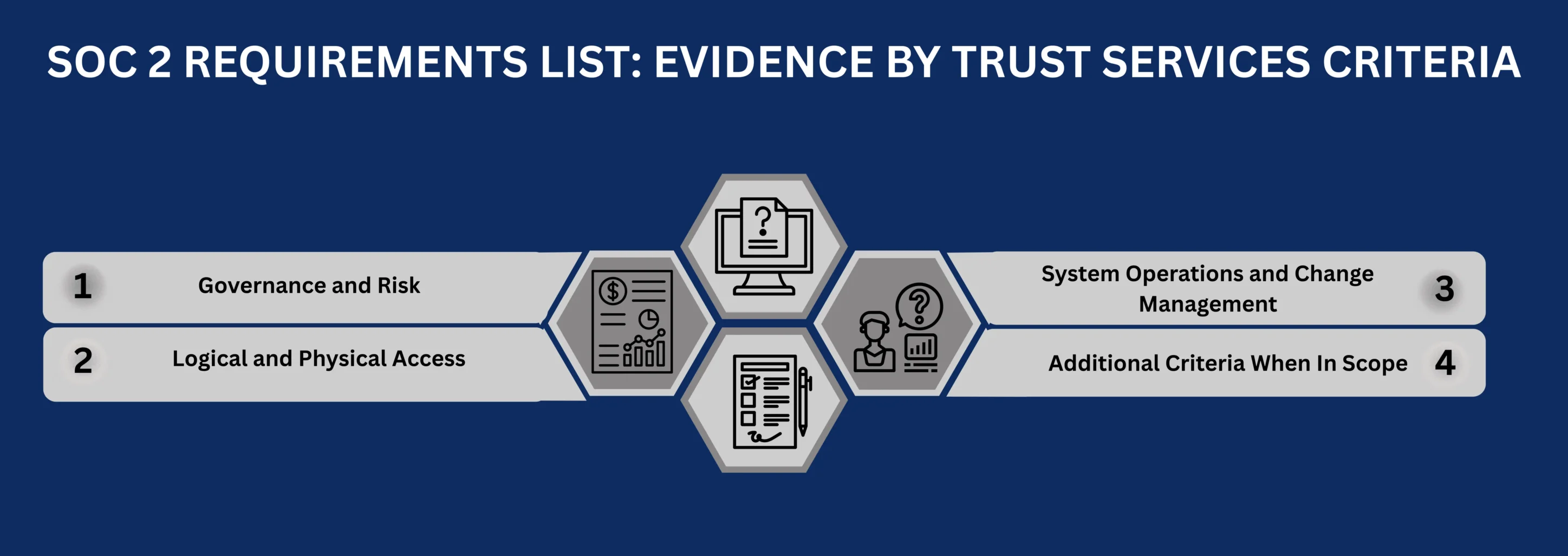
- ✓Security: The Mandatory Common Criteria
- ✓Availability, Processing Integrity, Confidentiality, and Privacy Criteria
- ✓Control Design and Operating Effectiveness Assessment
Why Organizations in Lisbon Pursue SOC 2 Certification
Demand for SOC 2 Certification in Lisbon is primarily driven by explicit requirements from enterprise clients, financial sector procurement programs, and third-party risk management frameworks operated by U.S. and international organizations. Lisbon’s position as a Southern European technology hub means that a significant proportion of its SaaS providers, cloud companies, and fintech firms operate in commercial relationships with U.S.-headquartered counterparties for whom SOC 2 attestation is a standard vendor assurance requirement.
Enterprise Vendor Security Reviews and Financial Sector Procurement
Enterprise organizations in the United States and internationally require vendors that process, store, or transmit their data to produce current SOC 2 Type II attestation reports as part of annual vendor security reviews. For a Lisbon-based SaaS provider contracting with a U.S. financial institution, healthcare operator, or enterprise technology company, the absence of a current SOC 2 report can disqualify the organization at the procurement stage — regardless of the technical quality of its product.
Lisbon’s concentration of technology scale-ups and fintech firms that have grown from early-stage startups into mid-market vendors serving international enterprise clients means that SOC 2 Certification in Lisbon has transitioned from an optional differentiator to a baseline commercial requirement in many market segments.
International SaaS Expansion and Cloud Marketplace Requirements
Lisbon-based technology companies expanding into the U.S. market or listing on major cloud marketplaces — including AWS Marketplace, Microsoft Azure Marketplace, and Google Cloud Marketplace — encounter SOC 2 attestation requirements embedded in partner and listing eligibility criteria. Cloud marketplace operators require vendors to demonstrate control effectiveness against recognized security frameworks as a condition of marketplace participation, with SOC 2 Type II being the most frequently referenced attestation standard for cloud-native and SaaS vendors.
SOC 2 Certification in Lisbon that technology companies pursue through CertPro directly addresses these marketplace and partner program requirements by producing a standards-governed attestation report issued by a Licensed CPA Firm — the specific format required by U.S. procurement and marketplace review processes.
Fintech and Financial Services Vendor Assurance Frameworks
SOC 2 certification that Lisbon financial services organizations seek is frequently driven by counterparty risk management requirements from banking institutions, payment networks, and investment management firms. Lisbon hosts a growing cluster of fintech companies — spanning payments, open banking, regulatory technology, and digital lending — many of which process financial data on behalf of regulated institutions subject to EBA outsourcing guidelines, U.S. OCC third-party risk management guidance, and equivalent frameworks.
These regulatory expectations flow downstream to technology vendors in the form of contractual security requirements, with SOC 2 Type II attestation serving as the primary standardized evidence mechanism. Organizations in Lisbon’s fintech ecosystem that hold contracts with European financial institutions subject to cross-border U.S. reporting requirements encounter SOC 2 audit requirements through both directions of their client portfolio.
SOC 2 Certification Scope and Independent Decision Framework
The scope of a SOC 2 examination is defined at the outset of the engagement through a structured scoping process that identifies the systems, services, and organizational units subject to examination. Scope definition determines which Trust Services Criteria apply, which infrastructure components and data flows fall within the examination boundary, and which third-party subservice organizations — if any — are included in or carved out of scope.
For Lisbon-based organizations operating hybrid or multi-cloud environments, scope definition requires careful mapping of data flows and service dependencies to ensure the examination boundary accurately reflects the organization’s service commitments to clients.
System Description and Service Commitments
The system description is a management-prepared narrative that defines the boundaries of the system under examination. It documents the infrastructure, software, people, procedures, and data that comprise the service being provided to clients. The system description forms a central element of the SOC 2 report and is evaluated by the auditor for accuracy and completeness as part of the examination.
Inaccuracies or omissions in the system description — such as undisclosed third-party data processors or infrastructure components not reflected in the documented architecture — are noted as exceptions. For Lisbon-based SaaS and cloud organizations, the system description typically covers cloud infrastructure (hosted on AWS, Azure, or GCP), application components, data storage and processing flows, administrative access controls, and monitoring systems. Service commitments to clients — including uptime guarantees, data handling obligations, and confidentiality provisions — are reflected in the system description and determine which Trust Services Criteria are applicable to the SOC 2 examination.
Subservice Organizations: Inclusive vs. Carve-Out Method
Many Lisbon-based technology organizations rely on third-party subservice providers — such as cloud infrastructure vendors, colocation facilities, payment processors, or identity management platforms — whose controls are relevant to the SOC 2 examination scope. The examination methodology addresses these dependencies through two recognized approaches.
Under the inclusive method, the subservice organization’s controls are included within the examination scope and evaluated directly by the auditor. Under the carve-out method, the subservice organization’s controls are excluded from the examination scope, and management describes the controls it assumes the subservice organization has in place. Most Lisbon-based organizations applying the carve-out method for major cloud infrastructure providers (AWS, Azure, GCP) reference those providers’ own SOC 2 reports as complementary user entity controls documentation. The choice between inclusive and carve-out method is determined during scope definition and disclosed transparently in the system description and auditor’s report.
Nonconformity Review, Certification Committee, and Report Issuance
Following completion of control testing, the auditor compiles a nonconformity log documenting all exceptions identified during the examination. Nonconformities are classified by nature and evaluated for their potential impact on the auditor’s conclusions. Management is provided the opportunity to respond to identified exceptions prior to report finalization.
The certification committee — composed of senior audit personnel independent of the examination team — reviews the complete examination file, including control testing workpapers, exception log, and management responses, before issuing the certification decision. The resulting SOC 2 attestation report includes the auditor’s opinion, the system description, the description of controls, and the results of control testing. The report is issued to the organization and is typically shared with clients under confidentiality provisions, as SOC 2 reports are not public documents.
Business Sectors in Lisbon Seeking SOC 2 Certification
SOC 2 certification for Lisbon companies spans multiple sectors, reflecting the diversity of the city’s technology and financial services ecosystem. The organizations most actively pursuing SOC 2 examination engagements are those that process, store, or transmit client data in cloud or hosted environments and that operate under contractual or regulatory expectations from U.S. or international enterprise clients.
SaaS Providers and Cloud Service Organizations
Lisbon hosts a substantial and growing population of SaaS companies delivering vertical and horizontal software solutions to enterprise clients across Europe and North America. These organizations — ranging from HR technology and CRM platforms to supply chain management and legal tech tools — process significant volumes of sensitive customer data within their hosted environments.
SOC 2 certification for Lisbon technology companies in the SaaS sector provides enterprise procurement teams with an independent, structured assessment of the vendor’s control environment, replacing the need for bespoke security questionnaire assessments and enabling faster vendor onboarding. A SOC 2 examination completed through a Licensed CPA Firm produces a standardized report that addresses the specific Trust Services Criteria relevant to the organization’s service delivery model, making it directly applicable to U.S. client procurement requirements.
Fintech, Payments, and Financial Data Organizations
Lisbon’s fintech sector has expanded considerably since the mid-2010s, with the city hosting a range of organizations in payments technology, open banking infrastructure, regulatory reporting, digital lending, and wealth management platforms. SOC 2 certification that Lisbon fintech companies pursue is driven primarily by requirements from banking partners, payment network operators, and enterprise financial institution clients for whom security control attestation is a non-negotiable vendor qualification condition.
The SOC 2 examination for fintech organizations typically includes the Security, Availability, and Processing Integrity criteria — reflecting the real-time data processing obligations, transaction accuracy requirements, and uptime commitments embedded in financial services contracts. Fintech organizations in Lisbon operating as payment facilitators or open banking API providers may also include the Confidentiality criterion, given the sensitive nature of financial data processed on behalf of end-users and institutional clients.
Telecommunications, Managed Services, and Data Hosting Organizations
Telecommunications operators and managed service providers in Lisbon that deliver network infrastructure, data hosting, connectivity, or outsourced IT services to enterprise clients encounter SOC 2 attestation requirements through their clients’ vendor assurance programs. Managed security service providers (MSSPs) and network operations centers (NOCs) that monitor and manage client environments are particularly subject to SOC 2 scrutiny given the privileged access their services require.
Data hosting organizations and colocation providers serving international clients may be included within client-initiated SOC 2 examination scopes as subservice organizations, or may independently pursue SOC 2 Certification in Lisbon to streamline their own vendor qualification processes. The breadth of Lisbon’s technology services sector means that SOC 2 audit engagements span infrastructure, application, and operational contexts across a wide range of organizational sizes and service delivery models.
Benefits of SOC 2 Certification for Lisbon-Based Organizations
SOC 2 Certification in Lisbon produces tangible, documented outcomes for organizations that complete the examination process. The benefits listed below reflect the direct consequences of a successfully completed SOC 2 examination — not projected outcomes or consulting deliverables. Each benefit is grounded in the structure of the attestation process and the commercial contexts in which SOC 2 reports are used.
- ✓Independent verification of control design and operating effectiveness against AICPA Trust Services Criteria, issued by a Licensed CPA Firm
- ✓Formal SOC 2 attestation report suitable for submission to U.S. enterprise procurement teams, financial institution vendor review programs, and cloud marketplace operators
- ✓Reduction in customer-initiated security questionnaire burden, as a current SOC 2 Type II report addresses the majority of standard vendor assurance questions
- ✓Demonstrated SOC 2 compliance that Lisbon organizations can reference in commercial negotiations, contract terms, and regulatory disclosures
- ✓Structured documentation of the control environment, system description, and service commitments that can be maintained and updated across annual recertification cycles
- ✓Competitive positioning in enterprise sales processes where SOC 2 attestation is a baseline qualification requirement rather than a differentiating factor
- ✓Alignment of internal control documentation with internationally recognized standards, supporting parallel compliance activities under ISO 27001, GDPR, and other applicable frameworks
- ✓Ongoing surveillance and recertification structure that maintains the currency of the attestation and satisfies annual vendor review timelines
In enterprise procurement contexts, a current SOC 2 Type II attestation report issued by a Licensed CPA Firm carries evidentiary weight that internal security self-assessments do not. Procurement teams at U.S. financial institutions, healthcare organizations, and technology companies are trained to evaluate vendor risk using standardized attestation reports rather than vendor-prepared security documentation.
A Lisbon-based SaaS provider that produces a current SOC 2 Type II report in response to a vendor security review request demonstrates that its controls have been independently tested and confirmed as operating effectively — not merely that it has written policies in place. This distinction is commercially significant: organizations that can produce a SOC 2 report at the procurement stage move through vendor qualification faster, encounter fewer supplemental security questionnaires, and are less likely to be disqualified on security grounds during contract negotiation. SOC 2 attestation that Lisbon organizations hold also supports contract renewal discussions by providing clients with updated evidence of control effectiveness on an annual basis.
SOC 2 compliance for Lisbon organizations operates alongside — not as a replacement for — applicable European regulatory frameworks, including the General Data Protection Regulation (GDPR), the Network and Information Security Directive (NIS2), and DORA (Digital Operational Resilience Act) for financial entities. The control areas examined under SOC 2’s Security and Privacy criteria frequently overlap with GDPR data protection obligations and NIS2 security measure requirements, meaning that organizations with established GDPR compliance programs will often find relevant documented controls already in place.
However, a SOC 2 examination does not constitute a GDPR compliance assessment, and the resulting attestation report should not be represented as GDPR certification. The SOC 2 report addresses AICPA Trust Services Criteria exclusively. The value of the SOC 2 attestation that Lisbon organizations derive is its direct applicability to U.S. and international enterprise client requirements — a gap that EU-specific regulatory attestations do not fill for organizations with transatlantic commercial relationships.
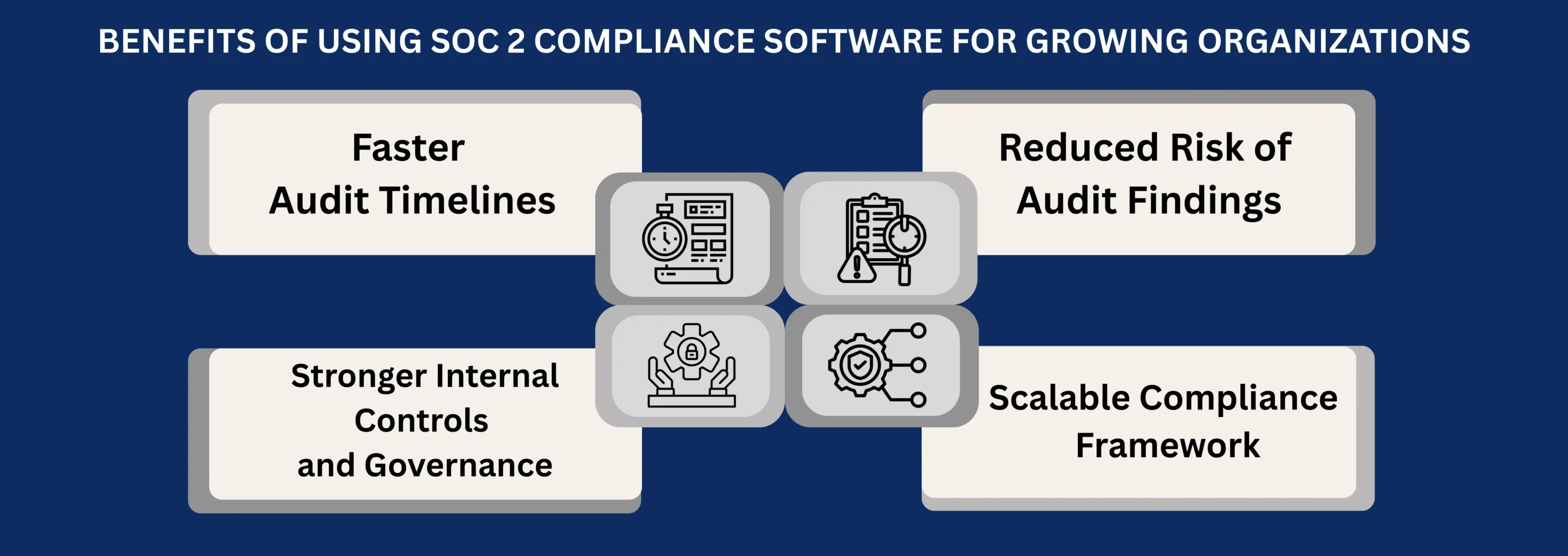
- ✓SOC 2 Attestation in Enterprise Procurement and Contract Negotiations
- ✓Relationship Between SOC 2 Compliance and Parallel Regulatory Frameworks
SOC 2 Certification Requirements for Lisbon Organizations
SOC 2 examination eligibility is not governed by sector-specific licensing requirements. Any organization that provides services to other organizations and processes, stores, or transmits client data may pursue SOC 2 Certification in Lisbon. The examination requirements are determined by the applicable Trust Services Criteria and the organization’s system description — not by industry classification or organizational size. The following requirements reflect the standard evidence and documentation expectations applied during a SOC 2 examination engagement.
Organizations subject to SOC 2 examination are required to maintain documented policies and procedures that correspond to the controls relevant to the applicable Trust Services Criteria. Documentation requirements typically include: an information security policy addressing the Common Criteria control areas; access management procedures covering provisioning, review, and de-provisioning; incident response and notification procedures; change management and system development lifecycle procedures; vendor and third-party management policies; and backup and recovery procedures for systems within scope.
For Lisbon-based organizations, documentation is accepted in any language, but audit workpapers are typically prepared in English to align with the AICPA attestation standards under which the SOC 2 examination is conducted. The auditor reviews documentation for completeness, consistency with described controls, and alignment with the Trust Services Criteria being evaluated. Documentation that references controls not actually implemented — or that omits controls that are operationally in place — creates risk of exception findings during the examination.
Technical evidence requirements for a SOC 2 audit address the operational implementation of controls across the systems within scope. Common technical evidence categories include: access control configurations and user access review records; system and application logging and monitoring outputs; vulnerability scan reports and remediation records; encryption configuration documentation; network architecture diagrams and firewall rule reviews; backup test records and recovery validation logs; and security awareness training completion records.
For Type II SOC 2 examinations, evidence must demonstrate that controls operated consistently across the entire observation period — a single point-in-time screenshot is insufficient to establish operating effectiveness over six or twelve months. Lisbon-based technology organizations operating cloud-native environments on AWS, Azure, or GCP can typically export relevant configuration and access data from cloud management consoles to support evidence collection. The auditor determines the sufficiency and appropriateness of evidence based on professional judgment applied within the AICPA attestation standards framework.
- ✓Documentation and Policy Requirements
- ✓Technical and Operational Evidence Requirements
FAQ
▶
What is SOC 2 Certification and who issues it in Lisbon?
▶
What is the difference between SOC 2 Type I and SOC 2 Type II?
▶
How long does a SOC 2 audit take for a Lisbon-based organization?
▶
Which Trust Services Criteria are most relevant for Lisbon fintech companies?
▶
Is SOC 2 compliance the same as GDPR compliance?
▶
How long is a SOC 2 attestation report valid?
▶
Can a Lisbon-based startup without a mature control environment pursue SOC 2 certification?
▶
What sectors in Lisbon most frequently require SOC 2 audit reports from vendors?
SOC 1 VS SOC 2: WHICH REPORT YOUR CUSTOMERS ACTUALLY ASK FOR
If you sell SaaS or provide outsourced services, you have likely been asked for a SOC report. However, the follow-up question is rarely easy to answer…
SOC 2 Certified: What Does It Mean for Your Business
For companies that handle sensitive data or run cloud-based services, the question “Can you provide your SOC 2 report?” carries enormous weight. Yet, …
HOW SOC 2 AUDITORS REVIEW EVIDENCE OVER TIME
Most businesses pursuing a SOC 2 report spend months building security controls but overlook a fundamental reality: SOC 2 auditors do not just verify …
Get In Touch
have a question? let us get back to you.