
SOC 2 Certification in Budapest
SOC 2 Certification in Budapest is issued by a Licensed CPA Firm following an independent examination conducted under AICPA attestation standards AT-C Section 205. The examination evaluates whether an organization’s controls meet the applicable Trust Services Criteria across security, availability, processing integrity, confidentiality, and privacy. Enterprise customers, financial institutions, and procurement teams rely on the resulting SOC 2 attestation report to validate third-party control environments and make informed vendor decisions.
OUR CLIENTS










SOC 2 Certification for Budapest-Based Financial and Technology Organizations
SOC 2 Certification in Budapest is issued by a Licensed CPA Firm following an independent examination conducted under AICPA attestation standards AT-C Section 205. The examination evaluates whether an organization’s controls meet the applicable Trust Services Criteria across security, availability, processing integrity, confidentiality, and privacy. Enterprise customers, financial institutions, and procurement teams rely on the resulting SOC 2 attestation report to validate third-party control environments and make informed vendor decisions.
Budapest’s Role as a Regional Technology and Services Hub
Budapest has developed into one of Central and Eastern Europe’s most prominent centers for shared services, business process outsourcing, financial services, SaaS development, cloud hosting, software engineering, and automotive IT operations. The city hosts regional headquarters and delivery centers for global enterprises across banking, insurance, telecommunications, and technology sectors. Budapest-based organizations in these industries routinely handle sensitive customer data on behalf of U.S. and Western European clients. This creates direct exposure to enterprise vendor due diligence requirements that mandate SOC 2 attestation as a condition of procurement. The volume of technology and data-processing organizations in Budapest has grown substantially over the past decade, driven by EU integration, access to skilled technical talent, and cost-competitive operating environments that attract multinational shared service centers.
Organizations operating within Budapest’s technology ecosystem — including fintech platforms, SaaS providers, managed service providers, and cloud infrastructure companies — increasingly face formal requests for SOC 2 Type 1 or SOC 2 Type 2 attestation reports from U.S.-headquartered clients conducting third-party risk assessments. Budapest’s position as a preferred destination for European delivery operations of U.S. software companies has made SOC 2 compliance in Budapest a measurable business requirement rather than an optional assurance activity. Regulatory frameworks such as GDPR, the NIS2 Directive, and DORA further reinforce the expectation that service organizations demonstrate structured, audited control environments. SOC 2 Certification in Budapest — for companies operating in regulated supply chains — addresses these expectations through an independent, standardized examination process governed by AICPA professional standards.
Licensed CPA Firm and Independent Attestation Requirements
SOC 2 attestation is exclusively issued by a Licensed CPA Firm authorized under the American Institute of Certified Public Accountants (AICPA) attestation standards. This requirement distinguishes SOC 2 from self-certification programs, internal compliance declarations, and consulting-based readiness reviews. A Licensed CPA Firm conducts an independent SOC 2 audit of the service organization’s control environment, collects and evaluates audit evidence, assesses control design and operating effectiveness, and issues a formal attestation report expressing an opinion on whether the organization’s controls meet the applicable Trust Services Criteria. Budapest-based organizations engaging in a SOC 2 audit must work with a Licensed CPA Firm recognized under AICPA standards — not with a general management consulting, IT advisory, or cybersecurity services firm. This independence requirement is foundational to the credibility and market acceptance of every SOC 2 attestation report.
Trust Services Criteria as the Evaluation Standard
The Trust Services Criteria (TSC), published by the AICPA, define the evaluation framework applied during every SOC 2 examination. The Security category — formally referred to as the Common Criteria — is mandatory in all SOC 2 engagements. Additional criteria covering Availability, Processing Integrity, Confidentiality, and Privacy are included based on the nature of the service organization’s operations and its commitments to customers. During the SOC 2 examination, the Licensed CPA Firm evaluates whether the organization’s controls satisfy each applicable criterion through documented evidence review, system walkthroughs, control testing, and inquiry procedures. The Trust Services Criteria are structured to align with COSO’s internal control framework, covering control environment, risk assessment, control activities, logical access, change management, incident response, and monitoring. Organizations in Budapest’s technology and financial services sectors typically address Security and Availability criteria as the minimum scope, with Confidentiality and Privacy added for data-intensive processing environments.

What Is SOC 2 Certification?
SOC 2 Certification refers to the formal attestation issued by a Licensed CPA Firm confirming that a service organization’s controls satisfy the applicable AICPA Trust Services Criteria. The term “SOC 2” stands for System and Organization Controls 2 — a reporting framework developed by the AICPA specifically for technology and cloud-based service organizations that store, process, or transmit customer data. Unlike regulatory certifications or self-assessed compliance declarations, SOC 2 attestation is the product of an independent third-party examination conducted by qualified auditors operating under AICPA professional standards. The SOC 2 examination produces a formal report — either Type 1 or Type 2 — that enterprise customers, financial institutions, and procurement teams rely upon to assess the security posture and control effectiveness of their service providers.
SOC 2 Type 1 and Type 2 Reports Defined
SOC 2 examinations produce two distinct report types that differ in scope and depth of auditor evaluation. A SOC 2 Type 1 report evaluates the design of controls at a specific point in time, assessing whether the controls described in the service organization’s system description are suitably designed to meet the applicable Trust Services Criteria as of the report date. A SOC 2 Type 2 report evaluates both the design and the operating effectiveness of controls over a defined observation period — typically a minimum of six months. The Type 2 examination requires the Licensed CPA Firm to test whether controls operated effectively throughout the observation window, making it a substantially more rigorous and evidence-intensive engagement than Type 1. Enterprise customers in U.S. procurement processes generally require SOC 2 Type 2 certification in Budapest as evidence of sustained control performance rather than a point-in-time design assessment.
| Report Type | Evaluation Scope | Time Dimension | Common Use Case |
|---|---|---|---|
| SOC 2 Type 1 | Control design suitability | Point in time | Initial vendor qualification |
| SOC 2 Type 2 | Control design and operating effectiveness | Observation period (6–12 months) | Ongoing enterprise procurement and risk reviews |
SOC 2 vs. ISO 27001: Distinct Frameworks with Different Purposes
SOC 2 and ISO 27001 are both recognized information security assurance frameworks, but they differ fundamentally in structure, issuing body, geographic recognition, and audit methodology. SOC 2 is an AICPA attestation standard issued exclusively by a Licensed CPA Firm, primarily recognized in U.S. enterprise procurement contexts. ISO 27001 is an international standard issued by accredited certification bodies under ISO/IEC 17021, with broader global recognition across European and Asia-Pacific markets. SOC 2 evaluates controls against specific Trust Services Criteria tied to service commitments and system requirements, whereas ISO 27001 assesses whether an organization has implemented a conformant Information Security Management System covering the Annex A control domains. Budapest-based organizations serving U.S. customers typically pursue SOC 2 Certification in Budapest to satisfy American enterprise vendor security review requirements, while simultaneously maintaining ISO 27001 certification for European regulatory alignment. The two frameworks are complementary and not mutually exclusive.
The Difference Between SOC 2 Certified and SOC 2 Compliant
SOC 2 compliance and SOC 2 certification are not equivalent terms, and the distinction has material consequences in enterprise procurement. SOC 2 compliance refers to an organization’s internal adherence to controls aligned with the Trust Services Criteria — without independent external verification. An organization may describe itself as SOC 2 compliant based on internal assessments or consulting reviews, but this status does not carry the evidentiary weight of a formal SOC 2 attestation issued by a Licensed CPA Firm. SOC 2 Certification in Budapest, by contrast, requires completing a formal SOC 2 examination by an independent CPA, resulting in an auditor’s opinion expressed in a signed attestation report. Enterprise customers and financial sector procurement teams consistently request the formal SOC 2 attestation report — not internal compliance declarations — as part of vendor due diligence. Organizations must complete annual audit cycles to maintain current certified status and meet evolving customer expectations.
SOC 2 Certification Audit Process for Organizations in Budapest
The SOC 2 audit process for organizations in Budapest follows a structured sequence of activities conducted by a Licensed CPA Firm under AICPA attestation standards. Each stage is governed by professional auditing requirements that define evidence collection procedures, evaluation methodology, and reporting obligations. The process applies consistently whether the engagement produces a Type 1 or Type 2 report. The principal difference between the two is the introduction of an observation period and control effectiveness testing in the Type 2 examination — making the SOC 2 audit a rigorous, evidence-driven process that enterprise customers recognize and trust.
| Audit Stage | Key Activities | Output |
|---|---|---|
| Scope Definition | Identify applicable Trust Services Criteria, system boundaries, and relevant system components | Defined audit scope and system description boundaries |
| Audit Program Determination | Develop control testing procedures aligned with selected TSC categories | Documented audit program |
| Stage 1 – Documentation Review | Review system description, policies, control documentation, and organizational context | Documentation assessment findings |
| Stage 2 – Control Testing | Test control design (Type 1) and operating effectiveness over the observation period (Type 2) | Control testing workpapers and findings |
| Nonconformity Review | Evaluate exceptions and assess their impact on the auditor’s opinion | Identified exceptions and management responses |
| Attestation Issuance | Draft and issue the SOC 2 attestation report with auditor’s opinion | Signed SOC 2 Type 1 or Type 2 attestation report |
For SOC 2 Type 2 engagements, the Licensed CPA Firm establishes an observation period during which the operating effectiveness of controls is tested. In a SOC 2 Type 2 certification engagement in Budapest, the observation period is typically a minimum of six months, though twelve-month periods are common in established audit cycles and are generally preferred by enterprise customers conducting vendor risk reviews. During this period, the auditor collects and evaluates evidence confirming that controls operated as described throughout the observation window. Evidence types include system-generated logs, access control records, change management tickets, incident response documentation, configuration reviews, and relevant monitoring outputs. The auditor applies sampling procedures to evaluate whether controls operated consistently, and any exceptions identified during testing are documented in the report along with their assessed impact on the auditor’s opinion.
Upon completion of the SOC 2 audit, the Licensed CPA Firm issues a formal attestation report containing the auditor’s opinion, the service organization’s system description, a description of the controls, and the results of control testing. SOC 2 attestation reports are not publicly registered and are distributed under a restricted-use agreement to specified parties — typically the service organization and its current or prospective customers. These reports do not carry indefinite validity; enterprise procurement teams generally treat them as current for twelve months from the report date. Organizations pursuing ongoing SOC 2 compliance in Budapest conduct annual examination cycles to maintain report currency. Each annual cycle is conducted as a full examination engagement covering the defined observation period, reassessing the control environment against the applicable Trust Services Criteria with updated evidence and testing procedures.
- ✓Stages of the SOC 2 Examination Engagement
- ✓Observation Period and Evidence Collection
- ✓Report Issuance and Ongoing Surveillance
Why Organizations in Budapest Pursue SOC 2 Certification
Demand for SOC 2 Certification in Budapest is driven by the city’s integration into global technology supply chains and the prevalence of U.S.-headquartered enterprises that mandate formal third-party risk assessments of their service providers. Budapest’s technology and services sector includes a substantial population of organizations that process customer data under service agreements governed by U.S. legal and contractual frameworks. This creates direct exposure to procurement requirements that specify SOC 2 attestation as a condition of vendor approval. The following subsections outline the primary demand drivers for SOC 2 audit engagements in Budapest across the city’s key industry verticals.
Fintech and Financial Services Vendor Requirements
SOC 2 certification demand among Budapest fintech organizations reflects the city’s concentration of payment processing platforms, banking technology providers, insurance technology firms, and financial data analytics companies serving regulated institutions in the U.S. and EU markets. U.S. banks, investment managers, and financial services organizations operating third-party risk management programs under OCC, FFIEC, and SEC guidance consistently require SOC 2 Type 2 attestation reports from technology vendors accessing or processing financial data. Budapest-based fintech and financial services technology organizations that have not obtained a current SOC 2 attestation face barriers in U.S. enterprise procurement processes, as vendor risk review teams routinely reject vendors lacking independent attestation. The SOC 2 examination provides the structured, evidence-based control assessment that financial sector procurement programs require — covering access controls, data encryption, incident response, change management, and availability monitoring.
SaaS Providers and Cloud Companies Serving U.S. Markets
Budapest technology companies operating as SaaS providers, cloud infrastructure vendors, and managed service providers face consistent demand for SOC 2 Type 2 attestation from U.S. enterprise customers conducting annual vendor security reviews. A U.S.-headquartered software company contracting with a Budapest-based SaaS provider for data processing, application hosting, or customer support functions will typically require a current SOC 2 Type 2 report as part of its vendor onboarding and ongoing oversight program. The SOC 2 examination evaluates the Budapest-based provider’s controls across logical access, system monitoring, data handling, change management, and incident response — the control domains most directly relevant to the risks of outsourced SaaS and cloud service relationships. Organizations that obtain SOC 2 attestation in Budapest demonstrate to U.S. customers that their control environment has been independently assessed by a Licensed CPA Firm against the AICPA Trust Services Criteria, satisfying the evidentiary standard required by enterprise procurement and vendor risk teams.
Shared Services and BPO Organizations
Budapest hosts one of Europe’s largest concentrations of shared service centers and business process outsourcing operations, many of which process sensitive personal, financial, and operational data on behalf of multinational parent organizations or external clients. Shared service centers handling HR data, financial records, IT infrastructure, or customer contact functions for U.S.-headquartered organizations are increasingly subject to formal vendor risk review requirements that include SOC 2 attestation. BPO organizations in Budapest that process regulated data categories — including health information, financial data, and personally identifiable information — face third-party risk management requirements from U.S. clients that reference SOC 2 Type 2 reports as the accepted format for independent control assurance. Completing a SOC 2 audit in Budapest allows shared service and BPO organizations to provide current, independently verified attestation reports to multiple client organizations, reducing the overhead of responding to individual security questionnaire requests.
SOC 2 Certification Scope and Trust Services Criteria Coverage
The scope of a SOC 2 examination is defined by the applicable Trust Services Criteria categories selected for the engagement, the boundaries of the system under review, and the components of the service organization’s infrastructure relevant to delivering in-scope services. Scope determination is a critical step in the SOC 2 audit process, as it establishes the framework against which controls are evaluated and the boundaries within which the auditor’s opinion applies. For organizations pursuing SOC 2 Certification in Budapest, scope decisions directly affect the relevance and utility of the resulting attestation report for enterprise customers in specific industry contexts.
The AICPA Trust Services Criteria define five categories that may be included in a SOC 2 examination scope. Security (Common Criteria) is mandatory and covers logical and physical access controls, system operations, change management, risk mitigation, and monitoring. Availability addresses whether systems are available for operation and use as committed or agreed. Processing Integrity evaluates whether system processing is complete, valid, accurate, timely, and authorized. Confidentiality covers whether information designated as confidential is protected as committed. Privacy addresses the collection, use, retention, disclosure, and disposal of personal information in conformance with the organization’s privacy notice and AICPA privacy commitments. Organizations pursuing SOC 2 Certification in Budapest select the TSC categories most relevant to their service commitments and their customers’ risk expectations, with Security serving as the baseline in every SOC 2 examination engagement.
| Trust Services Category | Core Focus | Typical Applicability |
|---|---|---|
| Security (Common Criteria) | Access controls, monitoring, change management, risk mitigation | All SOC 2 engagements — mandatory |
| Availability | System uptime commitments and performance monitoring | SaaS, cloud hosting, managed services |
| Processing Integrity | Accuracy and completeness of data processing | Transaction processing, fintech, data analytics |
| Confidentiality | Protection of designated confidential information | B2B data processing, professional services |
| Privacy | Personal information lifecycle management | HR systems, consumer platforms, health data processing |
The service organization’s system description is a foundational document in the SOC 2 examination. It describes the services provided, the components of the system (including infrastructure, software, people, processes, and data), and the controls in place to address the applicable Trust Services Criteria. The Licensed CPA Firm evaluates the system description for completeness and accuracy as part of the SOC 2 audit, assessing whether it fairly presents the system as designed and operated during the examination period. The control environment assessment extends to governance structures, risk assessment processes, control monitoring activities, and the information and communication mechanisms that support effective control operation. For Budapest-based technology organizations, the system description typically encompasses cloud infrastructure configurations, software development and deployment pipelines, access management systems, incident response procedures, and vendor management controls — each of which is subject to audit evidence review during the SOC 2 examination.
The SOC 2 attestation opinion is determined exclusively by the Licensed CPA Firm based on audit evidence collected during the examination. The auditor’s opinion is independent of management representations and is formed through objective evaluation of control design, documented evidence of control operation, and assessment of any exceptions identified during testing. The opinion expressed in the SOC 2 report may be unmodified (indicating controls were suitably designed and, for Type 2, operated effectively), qualified (indicating specific controls did not meet criteria), or adverse (indicating pervasive control failures). Nonconformities identified during the SOC 2 audit are documented in the report along with management’s responses. The independent certification decision framework under AICPA standards prohibits the auditor from participating in control design or remediation activities during the examination period — preserving the independence that makes every SOC 2 attestation report credible and professionally defensible.
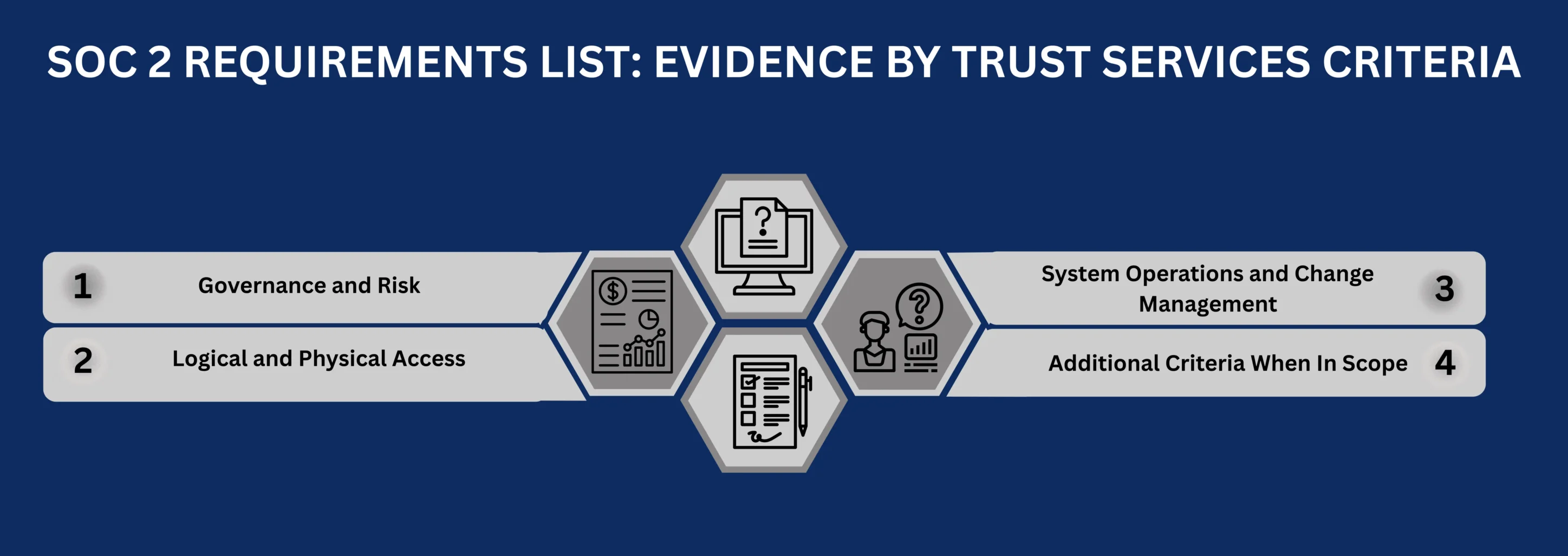
- ✓The Five Trust Services Criteria Categories
- ✓System Description and Control Environment Assessment
- ✓Independent Certification Decision Framework
Benefits of SOC 2 Certification for Budapest-Based Organizations
SOC 2 Certification in Budapest produces verifiable, independently assessed evidence of control effectiveness that organizations can present to enterprise customers, financial sector counterparties, and regulatory stakeholders. The benefits of obtaining a formal SOC 2 attestation report extend across commercial, operational, and risk management dimensions. These benefits reflect the structured audit methodology and evidence-based evaluation process that the AICPA Trust Services Criteria framework requires — making SOC 2 certification a meaningful differentiator in competitive enterprise markets.
- ✓Independent verification of control design and operating effectiveness by a Licensed CPA Firm under AICPA professional standards
- ✓Formal SOC 2 attestation report accepted by U.S. enterprise procurement teams and financial sector vendor risk programs
- ✓Structured audit methodology covering security, availability, processing integrity, confidentiality, and privacy controls
- ✓Recognition in third-party risk management reviews conducted by regulated financial institutions and technology enterprises
- ✓Reduction in individual customer security questionnaire overhead through delivery of a single, standardized attestation report
- ✓Demonstrated alignment with U.S. cybersecurity and data protection expectations applicable to international service providers
- ✓Annual SOC 2 examination cycle that maintains current report validity and supports ongoing SOC 2 compliance commitments in Budapest
- ✓Competitive differentiation in enterprise sales processes where SOC 2 Type 2 attestation is a mandatory vendor qualification criterion
Enterprise organizations in the U.S. financial services, healthcare, technology, and professional services sectors conduct structured third-party risk management programs that assess the control environments of service providers before contract award and on an ongoing basis. These programs specify SOC 2 Type 2 attestation as the accepted format for independent control assurance from technology and data-processing vendors. Budapest-based organizations holding a current SOC 2 attestation report issued by a Licensed CPA Firm satisfy the evidentiary standard required by these programs — avoiding the delays and disqualifications associated with vendors that cannot produce attestation documentation. The SOC 2 examination provides procurement teams with a standardized, auditor-verified assessment of the organization’s controls, not a marketing document or self-assessment. This makes it a reliable input to vendor risk scoring and due diligence processes. SOC 2 audit engagements in Budapest conducted under AICPA standards produce reports that meet the professional standards requirements of U.S. enterprise procurement frameworks.
The SOC 2 examination process produces structured documentation and evidence review outcomes that inform the service organization’s understanding of its own control environment. The audit process identifies control gaps, untested procedures, and documentation deficiencies through the evidence collection and testing activities that the Licensed CPA Firm conducts during the examination. This audit-driven identification of control weaknesses — reflected in exception disclosures within the SOC 2 report — provides a factual baseline for internal risk management activities following the examination. Organizations that maintain annual SOC 2 Type 2 examination cycles develop progressively more mature evidence management practices, as the recurring audit requirement creates institutional discipline around control documentation, monitoring, and operational consistency. The ongoing SOC 2 compliance cycle in Budapest supports continuous improvement across access management, system monitoring, change control, and incident response — the domains most frequently evaluated during SOC 2 audit engagements.
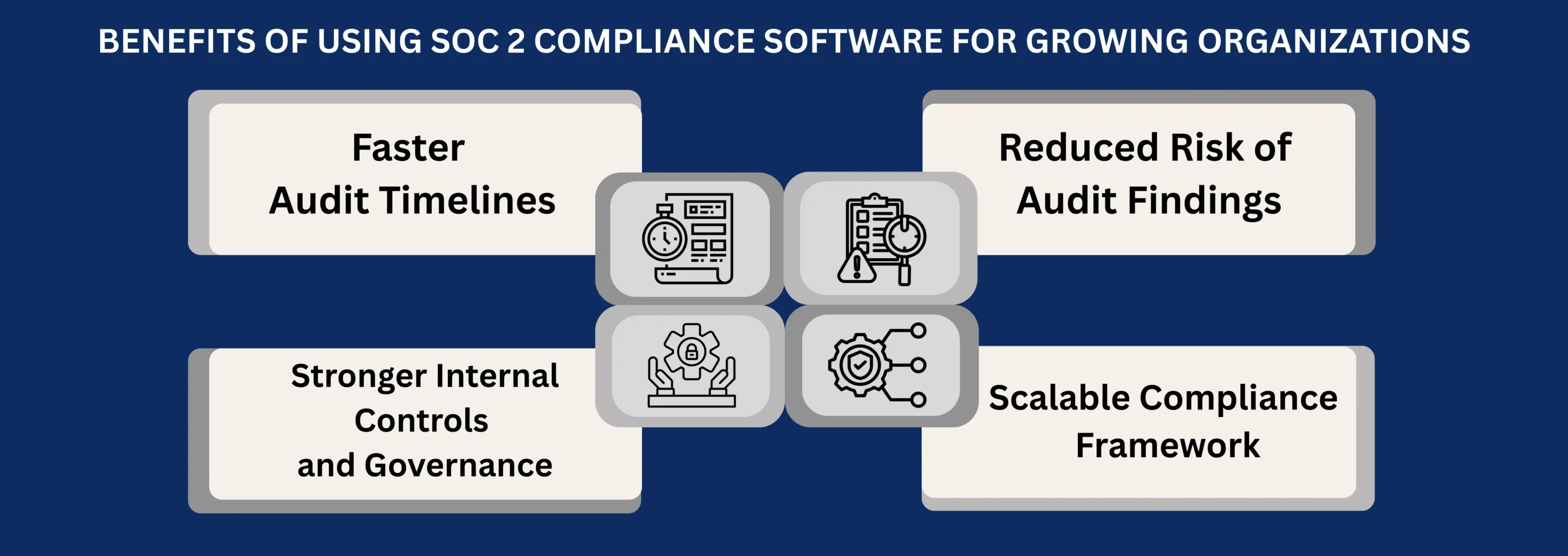
- ✓Enterprise Procurement and Vendor Risk Recognition
- ✓Operational and Risk Management Value
SOC 2 Certification Requirements for Budapest Organizations
SOC 2 certification requirements are defined by the AICPA Trust Services Criteria and the professional attestation standards governing the Licensed CPA Firm conducting the examination. Organizations pursuing SOC 2 Certification in Budapest must satisfy documentation, control design, and operational evidence requirements across the applicable Trust Services Criteria categories. The following subsections outline the principal requirements applicable to the most common SOC 2 audit engagements for Budapest-based technology and services organizations.
SOC 2 examination requirements include a foundational set of documented policies, procedures, and system descriptions that the Licensed CPA Firm reviews as part of the audit. Key documentation requirements include: an information security policy governing data classification, access control, and acceptable use; a risk assessment process documenting the identification and treatment of relevant risks to the system; change management procedures covering software deployment, infrastructure changes, and configuration management; an incident response plan defining detection, escalation, containment, and post-incident review procedures; and a vendor management policy addressing third-party risk evaluation for subservice organizations. For Budapest-based organizations subject to GDPR, privacy-related documentation — including data processing records and data subject rights procedures — may also be evaluated during Privacy criteria assessments. The system description, prepared by management and evaluated by the auditor, must accurately represent the system components, services, and controls relevant to the applicable Trust Services Criteria.
Technical control requirements for SOC 2 examination coverage under the Security Common Criteria include logical access controls governing user provisioning, access rights management, multi-factor authentication, and access reviews; network security controls including firewall configurations, intrusion detection, and network segmentation; encryption controls for data at rest and in transit; system monitoring and logging configurations that capture security-relevant events; vulnerability management processes including periodic scanning and remediation tracking; and backup and recovery procedures demonstrating availability control effectiveness. For Budapest technology companies operating cloud-based systems, the technical control assessment addresses cloud configuration management, container security, API access controls, and infrastructure-as-code change management — control domains increasingly prominent in SOC 2 audit examinations of cloud-native service organizations in Budapest. Each technical control is evaluated through evidence provided by the organization and independently verified by the Licensed CPA Firm through inspection, observation, and re-performance procedures.
Budapest-based service organizations frequently rely on subservice organizations — including cloud infrastructure providers such as AWS, Microsoft Azure, and Google Cloud — for components of their system that are relevant to the applicable Trust Services Criteria. The SOC 2 examination addresses subservice organization relationships through either the inclusive method (extending audit procedures to the subservice organization) or the carve-out method (excluding the subservice organization’s controls from scope and noting that their controls are addressed separately). Most Budapest technology organizations use the carve-out method and reference the subservice organization’s own SOC 2 reports as complementary attestation evidence. The SOC 2 report also identifies Complementary User Entity Controls (CUECs) — controls that the SOC 2 examination assumes will be implemented by the customer organizations using the service — which are relevant for enterprise customers reviewing the attestation report in the context of their own vendor risk assessments.
- ✓Documentation and Policy Requirements
- ✓Technical Control Requirements
- ✓Subservice Organization and Complementary User Entity Controls
Industry Sectors in Budapest Requiring SOC 2 Attestation
SOC 2 attestation requirements in Budapest span multiple industry sectors operating within the city’s technology and services ecosystem. The following sectors represent the primary organizational profiles for which SOC 2 certification for Budapest companies is a recurring procurement and contractual requirement. Each of these sectors faces distinct driver conditions that make SOC 2 compliance and formal SOC 2 audit engagement a business necessity rather than a discretionary investment.
- ✓SaaS providers and cloud service organizations delivering software platforms to U.S. enterprise customers
- ✓Fintech and financial technology companies processing payment, lending, or investment data under U.S. client agreements
- ✓Shared service centers and BPO organizations processing financial, HR, or customer data for multinational clients
- ✓Managed service providers delivering IT infrastructure, monitoring, and security operations for regulated industries
- ✓Software development and IT services firms operating under U.S. software development agreements with data access provisions
- ✓Automotive engineering IT organizations handling proprietary design data, connected vehicle systems, or supplier portal integrations
- ✓Data hosting and cloud infrastructure providers serving regulated U.S. and EU clients with SLA-governed uptime commitments
- ✓Healthcare IT and medical device software organizations subject to U.S. HIPAA Business Associate Agreement requirements
Budapest as a Hub for U.S. Technology Delivery Operations
Budapest’s technology sector includes a significant population of software development centers, regional IT operations hubs, and technology delivery offices operated by U.S. parent companies or serving U.S.-headquartered clients. These organizations operate under master service agreements, data processing addenda, and vendor security policies that incorporate SOC 2 attestation requirements as standard terms. A Budapest-based software development center contracted to build and maintain a SaaS platform for a U.S. financial services customer, for example, may be required to obtain an annual SOC 2 Type 2 attestation report covering its development environment controls, access management practices, and code deployment procedures. The SOC 2 examination in this context evaluates the controls relevant to the development and maintenance of the software system — not merely the production hosting environment. Budapest technology companies serving U.S. markets face this SOC 2 certification requirement with increasing frequency as U.S. enterprise procurement programs standardize on SOC 2 Type 2 as the vendor assurance format of record.
SOC 2 Report Validity, Renewal, and Ongoing Compliance
SOC 2 attestation reports are time-bounded documents that reflect the state of an organization’s controls during a specific examination period. Unlike ISO 27001 certificates — which carry a three-year certification cycle with annual surveillance audits — SOC 2 attestation reports are reissued annually through a full examination engagement covering the defined observation period. Organizations maintaining SOC 2 compliance in Budapest conduct annual Type 2 examination cycles to ensure that current, independently verified attestation reports are available for enterprise procurement and vendor risk review purposes.
Report Currency and Customer Expectations
Enterprise customers and vendor risk management programs treat SOC 2 Type 2 attestation reports as current for approximately twelve months from the report’s period end date. A report with a period ending in December of a given year is generally accepted as current through the following December, after which customers expect a renewed attestation covering the subsequent twelve-month observation period. Budapest-based organizations that allow their SOC 2 attestation to lapse — by failing to conduct an annual examination — risk disqualification from vendor panels, delays in contract renewals, and escalation in customer security questionnaire requirements as procurement teams seek alternative assurance mechanisms. Maintaining continuous SOC 2 audit cycles through a consistent Licensed CPA Firm relationship ensures report continuity and supports the annual renewal expectations embedded in enterprise vendor management programs. Each annual SOC 2 examination cycle reassesses the control environment in full, addressing any changes in system scope, organizational structure, or control design that occurred during the preceding period.
Scope Changes and System Updates During the Audit Cycle
Organizations undergoing material changes to their systems, services, or control environments during the SOC 2 observation period must assess whether those changes affect the scope or conclusions of the examination. Material changes — such as migration to a new cloud platform, significant changes in personnel handling sensitive data, or introduction of new service offerings — may require scope adjustments or supplemental documentation to ensure the system description accurately reflects the system as operated during the examination period. The Licensed CPA Firm conducting the SOC 2 audit engagement in Budapest evaluates the impact of system changes on the control testing program and adjusts audit procedures accordingly. Organizations planning significant system changes are advised to coordinate the timing of those changes relative to the SOC 2 observation period to avoid coverage gaps or system description inaccuracies that could affect the auditor’s opinion. The annual SOC 2 examination cycle provides a natural review point at which scope updates and system description revisions are incorporated into the new engagement.
FAQ
▶
What is SOC 2 Certification and which organizations in Budapest need it?
▶
What is the difference between SOC 2 Type 1 and SOC 2 Type 2?
▶
Who can issue a SOC 2 attestation report for a Budapest organization?
▶
How long does the SOC 2 audit process take for a Budapest organization?
▶
Which Trust Services Criteria categories apply to Budapest technology companies?
▶
How long is a SOC 2 attestation report valid?
▶
Does SOC 2 certification satisfy GDPR requirements for Budapest organizations?
▶
What is the difference between SOC 2 and ISO 27001 for Budapest organizations?
SOC 1 VS SOC 2: WHICH REPORT YOUR CUSTOMERS ACTUALLY ASK FOR
If you sell SaaS or provide outsourced services, you have likely been asked for a SOC report. However, the follow-up question is rarely easy to answer…
SOC 2 Certified: What Does It Mean for Your Business
For companies that handle sensitive data or run cloud-based services, the question “Can you provide your SOC 2 report?” carries enormous weight. Yet, …
HOW SOC 2 AUDITORS REVIEW EVIDENCE OVER TIME
Most businesses pursuing a SOC 2 report spend months building security controls but overlook a fundamental reality: SOC 2 auditors do not just verify …
Get In Touch
have a question? let us get back to you.