
ESTONIA
HIPAA CERTIFICATION IN ESTONIA
HIPAA certification is a crucial component in safeguarding sensitive healthcare information in Estonia. Although originating from the United States, the Health Insurance Portability and Accountability Act (HIPAA) carries global significance, resonating with healthcare principles worldwide, including within Estonia’s healthcare sector. While not legally mandatory, the importance of HIPAA certification in Estonia has grown due to the interconnected nature of healthcare systems and the imperative to safeguard patient data.
Estonian healthcare organizations, clinics, and professionals are increasingly acknowledging the pivotal role of HIPAA certification in upholding patient privacy, ensuring data security, and adhering to international standards. This certification includes rules and best practices for keeping electronic health information (ePHI) confidential, intact, and accessible.
Through the attainment of HIPAA certification, healthcare entities in Estonia showcase their dedication to maintaining the confidentiality and security of patient data, ultimately strengthening trust among patients and collaborators. In today’s digitalized healthcare era, HIPAA certification in Estonia is vital for maintaining top-notch data security, promoting interoperability, and nurturing a patient-centered care culture. As the landscape of healthcare continues to evolve, HIPAA certification remains a beacon of trust and security within Estonia’s healthcare realm.






CERTIFICATION AND AUDITING SERVICES BY CERTPRO FOR HIPAA IN ESTONIA
CertPro, a well-known HIPAA consulting services in Estonia, is committed to helping organizations in Estonia establish a strong Information Protection Management System (ISMS) with a focus on data protection. The experienced team assists businesses of all sizes and sectors in navigating HIPAA complexities, developing robust data security policies, and ensuring legal compliance. Their flexible consulting services address specific organizational challenges, providing tailored HIPAA compliance services in Estonia.
WHY CHOOSE CERTPRO FOR HIPAA CERTIFICATION AND AUDITING?
CertPro, a well-known HIPAA consulting firm in Estonia, is committed to helping organizations establish a strong Information Protection Management System (ISMS) focusing on data protection. The experienced team navigates HIPAA complexities, aids in developing robust data security policies, and ensures legal compliance. CertPro’s flexible consulting services cater to businesses of all sizes and sectors, addressing specific organizational challenges and offering HIPAA compliance services in Estonia.
| Factors | CertPro Advantage |
| Time to Certification | 4x faster than traditional approaches |
| Price | Competitive rates with flexible options |
| Process | Streamlined and efficient methodology |
| Expertise | Over 12 years of industry experience |
Related Links
SOC 2 in Estonia
ISO 27701 in Estonia
GDPR in Estonia
ISO 27018 in Estonia
HIPAA in Estonia
CCPA in Estonia
PIPEDA in Estonia
ISO 17025 in Estonia
ISO 13485 in Estonia
CE Mark in Estonia
GDP in Estonia
GLP in Estonia
ISO 9001 in Estonia
ISO 45001 in Estonia
ISO 22000 in Estonia
HACCP in Estonia
ISO 22301 in Estonia
ISO 21001 in Estonia
ISO 41001 in Estonia
ISO 20000-1 in Estonia

CERTPRO’S COST-EFFECTIVE APPROACH FOR HIPAA CERTIFICATION IN ESTONIA
CertPro provides cost-effective HIPAA certification services in Estonia for residents. Our approach optimizes resources and reduces expenses while fully complying with HIPAA regulations. We offer customized solutions at budget-friendly prices, including risk assessments, policy development, and personnel training. CertPro’s dedication to affordability empowers healthcare organizations in Estonia to maintain patient trust, showcase HIPAA compliance, and strengthen data security without financial strain.
| No. of employees | Timeline | Cost (approx.) |
| 1 – 25 | 4 weeks | 2500 USD |
| 25-100 | 6 weeks | 3500 USD |
| 100-250 | 6-8 weeks | 5000 USD |
| 250 plus | 8 weeks | Custom plans |
WHAT IS HIPAA?
The Health Insurance Portability and Accountability Act, or HIPAA, is a major federal law in the United States that was passed in 1996 with the goal of protecting the confidentiality and privacy of personal health information. The Privacy Rule, which is made up of several fundamental parts, places stringent requirements on protecting patient medical records and private health information and forbids healthcare organizations from sharing it without the consent of the patient. The Security Rule requires the use of security protocols to protect electronic protected health information (ePHI).
Furthermore, under Transaction and Code Set Standards, HIPAA mandates the use of standardized codes and electronic transactions in healthcare billing and claims. It presents the National Provider Identifier (NPI), which gives healthcare providers a special identity number to aid in tracking and verification during electronic transactions. The Enforcement Rule also outlines the methods and penalties for enforcing HIPAA requirements, emphasizing how crucial compliance is to maintaining the security and confidentiality of medical records.
WHY DO WE NEED HIPAA CERTIFICATION?
Obtaining HIPAA certification is crucial in today’s digital era to guarantee the privacy and security of sensitive healthcare information. Primarily, it acts as a vital safeguard for patients’ rights, ensuring the confidentiality and protection of their medical records and personal health information. HIPAA certification provides healthcare professionals and organizations with the knowledge and tools to implement strong data security measures, lowering the risk of data breaches and the related legal and reputational consequences.
In addition, HIPAA certification plays a vital role in maintaining trust and credibility within the healthcare industry. Both patients and partners prioritize the security of their health data, and by achieving HIPAA certification, healthcare entities demonstrate their commitment to upholding the highest standards of data security and privacy. This, in turn, enhances their reputation and fosters trust among patients.
Furthermore, with the increasing interconnection and globalization of healthcare, HIPAA certification holds international relevance. It ensures that healthcare providers and organizations can meet the stringent data protection requirements of international standards, facilitating interoperability and data exchange across borders.
HOW TO GET HIPAA CERTIFICATION IN ESTONIA?
Securing HIPAA certification demands extensive effort, involving meticulous planning, thorough research, and steadfast dedication. For enterprises seeking a streamlined certification process, exploring HIPAA consulting services in Estonia is a logical step. Collaborating with a qualified external auditor offers an impartial evaluation of your compliance endeavors.
Engaging HIPAA consulting services in Estonia significantly expedites the certification process. These services bring specialized knowledge, faster implementation, and more efficient certification procedures by leveraging their understanding of local regulations and business norms. Consequently, your company enhances its information security management system, earning recognition within Estonia’s business community for reliability and a steadfast commitment to security. Tapping into the expertise of HIPAA specialists can simplify this intricate process, ensuring a favorable certification outcome in Estonia’s dynamic healthcare sector.
STEPS FOR OBTAINING HIPAA CERTIFICATION
As you work towards assisting your company in complying with the Health Insurance Portability and Accountability Act (HIPAA) and achieving certification by the end of this year, please keep the following recommendations in mind:
Step 1: Recognize the HIPAA requirements: The regulations that pertain to your team, as well as HIPAA regulations, must be familiar to you. Give them adequate time to comprehend the Security Rule, Privacy Rule, and any associated instructions.
Step 2: Conduct a HIPAA risk assessment: Start by evaluating the procedures, processes, and policies that your company presently uses to protect patient privacy and security.
Step 3: Construct HIPAA policies and practices: Policy and process creation and implementation are necessary for maintaining, exchanging, and safeguarding protected health information (PHI).
Step 4: Implementing physical and technical safeguards: To guarantee that patient data is protected, put in place administrative, technical, and physical security measures.
Step 5: Regular monitoring: Keep a careful check on your organization’s compliance efforts, and review and adjust policies and processes on a regular basis to ensure that they stay in line with changing regulatory standards.
Step 6: Maintain HIPAA Documentation: Keep detailed records of all policies, processes, risk assessments, instructional strategies, and security measures implemented by the organization.
Step 7: Appointing an HIPAA Compliance Officer: The designation of a HIPAA Compliance Officer, who will oversee compliance with legal regulations, will guarantee the security of user data.
Note: It’s important to recognize that different organizations may have distinct circumstances in this case. Please do not hesitate to contact CertPro.com in order to obtain a thorough comprehension of the particulars. We are always available and prepared to provide thorough justifications and pertinent data as required.
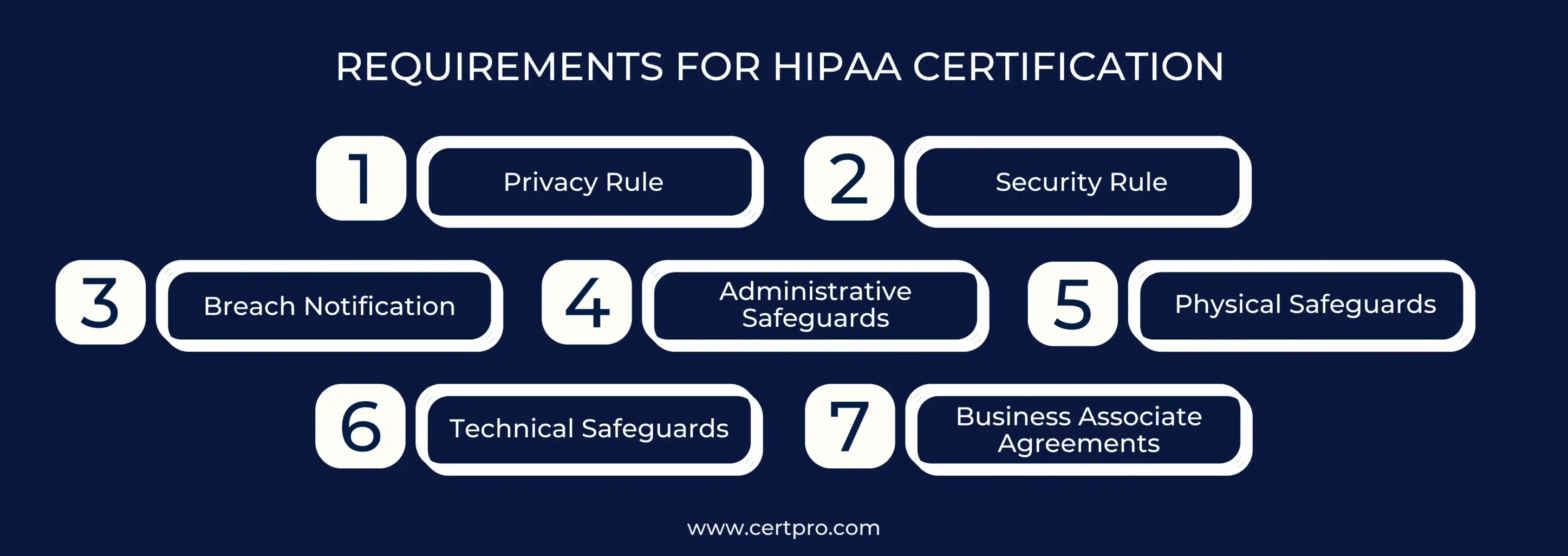
REQUIREMENTS FOR HIPAA CERTIFICATION
Businesses should do due diligence and consult with knowledgeable HIPAA specialists or legal experts because specific requirements may vary based on a company’s size and particulars.
Privacy Rule: The HIPAA Privacy Rule governs how protected health information (PHI) is handled and disseminated, and it outlines an individual’s rights with regard to their medical information.
Security Rule: It’s necessary to follow the HIPAA Security Rule, which details security measures for electronic protected health information (ePHI), including technological, administrative, and physical
Breach Notification: As soon as you learn of a breach involving PHI data, notify the affected parties and the Department of Health and Human Services in accordance with the established protocols.
Administrative Safeguards: To put in place administrative controls, create PHI privacy protection guidelines, designate security and privacy officers, educate staff members on HIPAA compliance, and efficiently manage risk.
Physical Safeguards: To put in place administrative controls, create PHI privacy protection guidelines, designate security and privacy officers, educate staff members on HIPAA compliance, and efficiently manage risk.
Technical Safeguards: To guarantee the strict protection of electronic Protected Health Information (ePHI), use encryption for data both during transmission and while it is at rest. You should also regularly update security software and keep a close eye on network activity monitoring to quickly identify any potential unauthorized access or data breaches.
Business Associate Agreements: Formal contracts should be established to ensure the privacy of PHI and the business associates’ adherence to HIPAA laws.
Note: It’s important to recognize that different organizations may have distinct circumstances in this case. Please do not hesitate to contact CertPro.com in order to obtain a thorough comprehension of the particulars. We are always available and prepared to provide thorough justifications and pertinent data as required.
HIPAA CERTIFICATION COST IN ESTONIA
Securing HIPAA certification in Estonia involves variable costs influenced by several factors. These factors encompass the organization’s complexity and size, the desired certification level, existing compliance status, and the chosen certification provider or consulting firm. Expenses typically cover consultation fees, internal personnel involvement, technological investments, and the implementation of necessary procedural changes to align with HIPAA compliance services in Estonia.
Consultation fees can fluctuate based on the required assistance, ranging from a few thousand to tens of thousands of dollars. The organization’s staff needs to allocate time and effort to support compliance endeavors, utilizing internal resources.
Despite the financial commitment, this investment is crucial. It ensures adherence to legal requirements, strengthens data security protocols, and enhances patient trust within Estonia’s healthcare sector.
BENEFITS OF HIPAA CERTIFICATION
Getting HIPAA certified has several significant benefits for safeguarding patient rights, bolstering data security, and improving the overall condition of the healthcare system.
Data security: Organizations can successfully defend sensitive patient information from threats, breaches, and hacker attempts by following HIPAA compliance rules. The implementation of strengthened security measures is crucial to upholding the organization’s reputation, as they mitigate the risk of data breaches.
Legal Compliance: Businesses that adhere to HIPAA laws reduce their risk of paying fines, penalties, and other sanctions for noncompliance, as well as fulfill their legal obligations.
Better Data Management: HIPAA compliance actively promotes the use of better data management practices in the healthcare sector. Risk assessments, continuous audits, and the creation of protocols and processes for safeguarding Protected Health Information (PHI) all contribute to better data management practices.
Avoiding Breach Notification Costs: Organizations can avoid negative consequences from PHI data breaches, including financial losses and harm to their brand, by adhering to HIPAA regulations. This commitment makes it possible to employ tactics designed to prevent and reduce violations.
Better Healthcare Results: The HIPAA standards, which ensure the security and confidentiality of patient data, improve medical outcomes. Patients are more likely to offer accurate and comprehensive health information when they are certain that their data is secure, which enhances treatment planning and patient care in general.

HIPAA COMPLIANCE SERVICES IN ESTONIA: AN EXPERT’S GUIDE
In response to challenges in health insurance coverage, HIPAA was enacted. As the foremost provider of HIPAA consulting services in Estonia, CertPro distinguishes itself through its unwavering commitment to assisting businesses in achieving HIPAA certification successfully. Offering a range of services, CertPro supports businesses in establishing a robust Information Security Management System (ISMS) aligned with HIPAA regulations.
Organizations committed to excellence and precision have successfully attained their HIPAA certification in Estonia with CertPro’s assistance. This accomplishment enhances their data security stance and solidifies their standing as reliable partners in a fiercely competitive business landscape. CertPro’s continual dedication to safeguarding confidential information actively contributes to fostering a secure and compliant healthcare environment in Estonia.
FAQ
Why is HIPAA certification important in Estonia?
HIPAA certification is crucial in Estonia as it safeguards sensitive healthcare information, upholds patient privacy, and ensures data security, aligning with international standards. Noncompliance may lead to penalties, reputational harm, and a decline in confidence.
What factors influence the cost of HIPAA certification in Estonia?
The cost varies based on factors such as organization size, complexity, current compliance level, chosen certification provider, and the need for procedural and technological changes.
What actions are necessary to achieve HIPAA compliance in Estonia?
Achieving HIPAA compliance involves evaluating current practices, staff training, policy establishment, implementing safeguards, conducting risk assessments, participating in audits, and adhering to HIPAA regulations.
What is the timeline for achieving HIPAA compliance in Estonia?
The timeline varies based on organization size and complexity, requiring continuous effort and meticulous attention to detail for successful compliance.
What are CertPro's cost-effective approaches for HIPAA certification in Estonia?
CertPro provides budget-friendly solutions, optimizing resources and reducing expenses while ensuring full compliance with HIPAA regulations.

HIPAA UPDATES 2026: KEY REGULATORY CHANGES, NEW RULES, AND COMPLIANCE IMPACT EXPLAINED
Healthcare data breaches continue to rise, and the pattern is clear. Attackers target patient records because they carry long-term value. At the same time, many organizations still rely on outdated controls, scattered data systems, and weak vendor oversight. That gap...
Why is HIPAA Important to Patients
LAST UPDATE -- 10-01-2025 The Health Insurance Portability and Accountability Act, also known as HIPAA, is crucial for patients because it safeguards their privacy and health information. In order to provide national standards for the security of specific health...
WHAT IS THE HIPAA OMNIBUS RULE
In the U.S. healthcare sector, sensitive medical records are often subjected to cyberattacks like data breaches and ransomware. For example, recently a misconfigured MongoDB database has led to the exposure of 2.7 million patient profiles. This incident is due to a...