
MALAYSIA
HIPAA CERTIFICATION IN MALAYSIA
HIPAA (Health Insurance Portability and Accountability Act) certification, while primarily associated with the United States, has garnered international recognition and relevance, including in Malaysia. HIPAA certification in Malaysia refers to compliance with the rigorous data privacy and security standards mandated by HIPAA, particularly for organizations handling health-related information.
Malaysia’s healthcare sector, like many countries, has seen an increasing reliance on electronic health records and telemedicine. With this shift, there is a growing need for robust data protection measures to safeguard sensitive patient information. HIPAA certification provides a comprehensive framework for achieving this goal.
Organizations in Malaysia seeking HIPAA certification must adhere to strict guidelines related to the handling, transmission, and storage of healthcare data, ensuring patient confidentiality and data integrity. Achieving HIPAA certification not only helps in safeguarding sensitive medical information but also enhances an organization’s global reputation, making it a preferred choice for international partnerships.
In a world where data breaches and cyber threats are on the rise, HIPAA certification in Malaysia serves as a testament to an organization’s commitment to maintaining the highest standards of data security and patient privacy, fostering trust among patients and partners alike.
MALAYSIA CLIENTS





CERTIFICATION AND AUDITING SERVICES BY CERTPRO FOR HIPAA IN MALAYSIA
CertPro, a reputable provider of HIPAA consulting services in Malaysia, offers essential HIPAA compliance services in Malaysia. They assist organizations in the healthcare sector to achieve HIPAA certification by conducting rigorous audits and assessments. CertPro’s expert team evaluates data security protocols, privacy practices, and compliance with HIPAA regulations. Their services ensure that healthcare entities in Malaysia meet the highest standards of data protection and patient privacy, building trust and credibility in the industry. CertPro’s specialized HIPAA certification and auditing services are a valuable asset for organizations seeking to excel in healthcare data management and compliance in Malaysia.
WHY CHOOSE CERTPRO FOR HIPAA CERTIFICATION AND AUDITING?
Choosing CertPro for HIPAA certification and auditing is a wise decision for several compelling reasons. CertPro boasts a team of seasoned experts with in-depth knowledge of HIPAA regulations, ensuring thorough and accurate assessments. Their commitment to excellence is reflected in their track record of helping numerous organizations achieve HIPAA compliance. CertPro’s tailored solutions are cost-effective and efficient, saving clients time and resources. They offer ongoing support and guidance, staying up-to-date with evolving HIPAA standards. By selecting CertPro, organizations in Malaysia gain a trusted partner in their pursuit of data security and regulatory compliance.
WHAT IS HIPAA?
HIPAA, or the Health Insurance Portability and Accountability Act, is a significant piece of healthcare legislation enacted in the United States in 1996. It serves two main purposes: to improve the portability and continuity of health insurance coverage for individuals and to establish strict regulations for the protection and security of personal health information.
HIPAA’s primary components include:
Portability: HIPAA ensures that individuals can maintain their health insurance coverage when changing or losing jobs. It limits pre-existing condition exclusions, making it easier for people to transition between insurance plans without losing coverage.
Privacy Rule: This rule mandates the protection of patients’ confidential health information. Healthcare providers, insurers, and their business associates must maintain the privacy and security of patient records. It grants patients certain rights over their health information and requires the issuance of a Notice of Privacy Practices.
Security Rule: This rule outlines the specific safeguards that must be in place to protect electronic health information. It sets standards for the technical, physical, and administrative aspects of data security.
HIPAA has a profound impact on healthcare in the United States, fostering patient privacy and data security while also influencing international data protection and healthcare standards.
WHY DO WE NEED HIPAA CERTIFICATION?
Protecting patients’ sensitive health information is paramount. HIPAA certification ensures that healthcare organizations and providers have robust safeguards in place to prevent unauthorized access or disclosure of patient data. This helps maintain patient trust and confidentiality. HIPAA is a legal requirement in the United States. Failing to comply with its regulations can lead to severe penalties, including substantial fines and legal action. Certification demonstrates a commitment to adhering to these laws.
In an age of increasing cyber threats and data breaches, HIPAA certification obliges healthcare entities to implement comprehensive data security measures. This includes encryption, access controls, and regular risk assessments to protect electronic health records. HIPAA certification is internationally recognized as a symbol of stringent data protection and privacy practices. It can open doors to collaborations and partnerships with organizations worldwide. Certified healthcare providers and organizations often gain a competitive advantage, as patients and partners are more likely to trust entities that prioritize patient privacy and data security.
ENQUIRE NOW
Related Links
SOC 2 in Malaysia
ISO 27701 in Malaysia
GDPR in Malaysia
ISO 27018 in Malaysia
HIPAA in Malaysia
CCPA in Malaysia
PIPEDA in Malaysia
ISO 17025 in Malaysia
ISO 13485 in Malaysia
CE Mark in Malaysia
GDP in Malaysia
GLP in Malaysia
ISO 9001 in Malaysia
ISO 14001 in Malaysia
ISO 45001 in Malaysia
ISO 22000 in Malaysia
HACCP in Malaysia
ISO 22301 in Malaysia
ISO 21001 in Malaysia
ISO 41001 in Malaysia
ISO 20000-1 in Malaysia

HOW TO GET HIPAA CERTIFICATION IN MALAYSIA?
Begin with a comprehensive assessment of your organization’s existing practices and policies. Identify gaps between your current state and HIPAA requirements. Ensure that your staff is well-trained in HIPAA regulations and understands the importance of compliance. Implement robust data security measures, including encryption, access controls, and risk assessments, to protect electronic health records. Develop and implement privacy policies and procedures in line with HIPAA requirements. Create a Notice of Privacy Practices (NPP) to inform patients of their rights.
Maintain thorough documentation of your compliance efforts, including security policies, risk assessments, and staff training records. Regularly audit and test your data security and privacy measures to identify vulnerabilities and ensure ongoing compliance. Consider hiring certified third-party HIPAA compliance services in Malaysia to assess your compliance and provide official HIPAA certification in Malaysia. HIPAA compliance is an ongoing process. Continuously monitor and update your policies and practices to adapt to changing regulations and emerging threats.
STEPS FOR OBTAINING HIPAA CERTIFICATION
Obtaining HIPAA certification involves a series of steps to ensure compliance with the Health Insurance Portability and Accountability Act. Here are the essential steps:
Step 1: Recognize the HIPAA requirements: Start by ensuring that your team understands the HIPAA rules. Familiarize yourself with the Privacy Rule, Security Rule, and relevant regulations to grasp the obligations and responsibilities regarding the protection of protected health information (PHI).
Step 2: Conduct a HIPAA Risk Assessment: Perform a comprehensive risk assessment to identify gaps and weaknesses in your organization’s PHI management. This assessment will help you pinpoint areas in need of improvement, providing a roadmap to compliance.
Step 3: Construct HIPAA Policies and Procedures: Create and implement policies and procedures that address the handling, security, and privacy of PHI. Ensure that these guidelines are in full compliance with HIPAA regulations and tailored to your specific operational needs.
Step 4: Implement Physical and Technical Safeguards: It’s crucial to adopt appropriate physical and technical safeguards, including access controls, secure data storage, and encryption. These security measures protect data against unauthorized access and breaches.
Step 5: Regular Monitoring: Maintain ongoing oversight of your compliance efforts, regularly reviewing and updating policies and procedures to stay current with changes in the legal landscape.
Step 6: Maintain HIPAA Documentation: Maintain thorough records of your HIPAA compliance initiatives, including risk assessments, training sessions, and incident response plans. Proper documentation demonstrates your commitment to compliance.
Step 7: Appoint an HIPAA Compliance Officer: Designate a dedicated HIPAA Compliance Officer responsible for overseeing regulatory compliance, ensuring data security, and safeguarding patient privacy.
Please note that the specifics of HIPAA compliance can vary across different organizations. For a deeper understanding of your unique requirements, don’t hesitate to contact us at CertPro.com, where we can provide you with the necessary guidance and information.
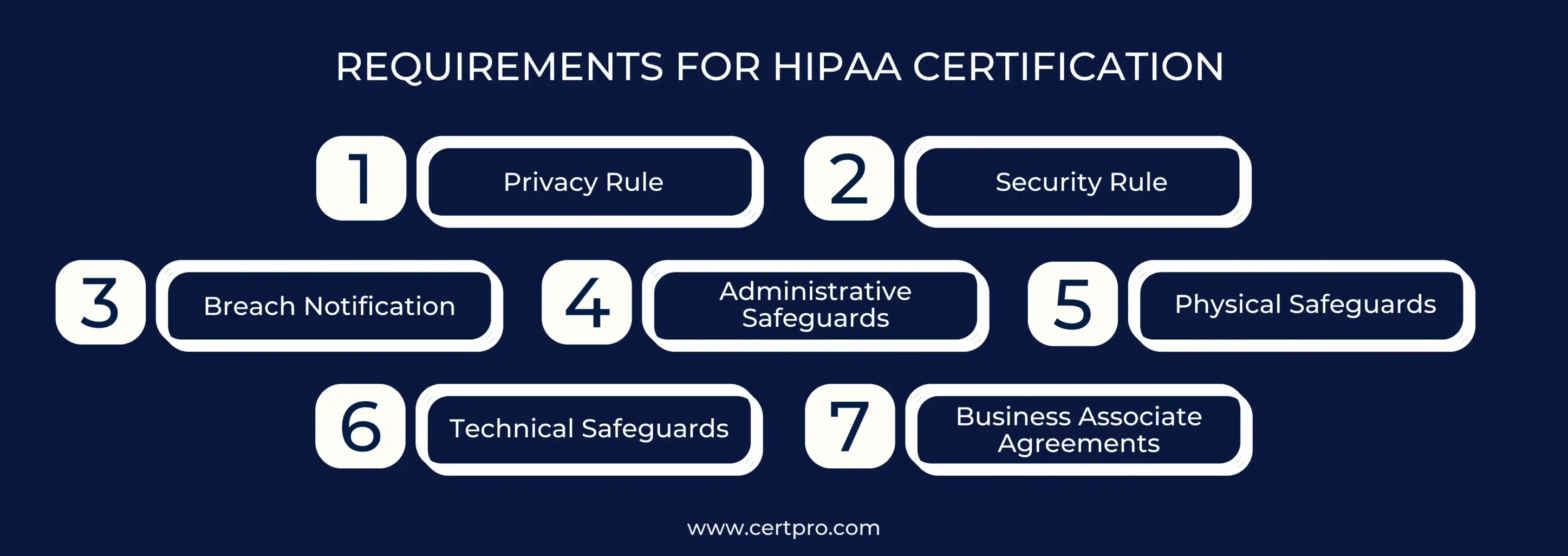
REQUIREMENTS FOR HIPAA CERTIFICATION
These requirements, as established by the Health Insurance Portability and Accountability Act (HIPAA), are stringent and comprehensive. Here are the key requirements for HIPAA certification:
Privacy Rule: This rule focuses on ensuring the proper use and disclosure of protected health information (PHI). It mandates obtaining individual consent for using and disclosing PHI, implementing safeguards to protect patient data, and granting individuals access and correction rights for their PHI. By enforcing the Privacy Rule, organizations maintain patient confidentiality and privacy.
Security Rule: The Security Rule revolves around safeguarding electronic protected health information (ePHI). It requires organizations to establish administrative, physical, and technical safeguards to prevent unauthorized access, use, or disclosure of ePHI. This involves implementing robust access controls, data encryption, security updates, and monitoring network activity to protect patient data from security breaches.
Breach Notification: In the event of a data breach involving PHI, organizations must follow specific procedures. This includes promptly notifying affected individuals and reporting the breach to the Department of Health and Human Services.
Administrative Safeguards: Organizations must appoint a privacy and security officer, train employees on HIPAA requirements, and effectively manage risk to protect patient data and uphold HIPAA compliance.
Physical Safeguards: Protecting the physical security of PHI storage facilities is essential. This includes controlling access, restricting entry to authorized personnel, and employing security measures such as surveillance cameras.
Technical Safeguards: Technical safeguards focus on securing ePHI. Measures include implementing access controls like unique user IDs and passwords and data encryption at rest and in transit.
Business Associate Agreements: Organizations must establish formal agreements with business associates to ensure their compliance with HIPAA regulations.
Please note that the specifics of HIPAA compliance can vary across different organizations. For a deeper understanding of your unique requirements, don’t hesitate to contact us at CertPro.com, where we can provide you with the necessary guidance and information.
HIPAA CERTIFICATION COST IN MALAYSIA
The choice of a certification provider, such as CertPro, can impact the cost. Different providers offer various packages and services with varying pricing structures. Larger organizations with more extensive data systems and a higher volume of patient records may face higher costs due to the complexity of achieving compliance. Upgrading or implementing new technology, such as encryption tools or access control systems, to meet HIPAA requirements can also impact the overall cost. HIPAA certification in Malaysia is an ongoing effort. Organizations should budget for the cost of maintaining compliance, including regular audits and updates to policies and procedures. The cost is significantly influenced by the organization’s size and complexity. Larger organizations with more extensive operations may face higher costs.
It’s crucial for organizations to assess their specific requirements and conduct a cost analysis to determine the overall expense of obtaining and maintaining HIPAA compliance services in Malaysia. While there are costs involved, the benefits of HIPAA certification, including enhanced patient trust and data security, often outweigh these expenses.
BENEFITS OF HIPAA CERTIFICATION
HIPAA (Health Insurance Portability and Accountability Act) certification offers a range of benefits for healthcare organizations and providers in terms of data security, patient trust, and legal compliance:
Data Security: HIPAA compliance plays a pivotal role in bolstering data security. It empowers businesses to implement stringent measures to protect sensitive patient data against threats like hacking and data breaches. By enhancing data security, the likelihood of data breaches is significantly reduced, preserving the organization’s reputation and trust.
Legal Compliance: HIPAA regulations ensure that businesses fulfill their legal obligations under federal law. Compliance safeguards organizations from potential fines, penalties, and legal consequences associated with non-compliance. By adhering to HIPAA standards, businesses demonstrate their commitment to the legal and ethical handling of patient data.
Better Data Management: HIPAA compliance encourages healthcare businesses to adopt efficient data management practices. This includes regular audits, comprehensive risk analyses, and the development of policies and procedures for the efficient management of protected health information (PHI). These practices lead to better data organization and accessibility.
Avoiding Breach Notification Costs: PHI-related data breaches can be financially and reputationally costly. HIPAA compliance helps organizations either prevent data breaches or manage them effectively. This proactive approach can save businesses from the financial burdens of breach notification and recovery costs.
Better Healthcare Results: HIPAA compliance significantly contributes to improved healthcare outcomes. By ensuring the confidentiality and privacy of patient information, patients are more likely to share accurate and complete health data with their healthcare providers. This, in turn, leads to better treatment strategies and patient care, ultimately improving health outcomes.

SAFEGUARD PATIENT DATA AND ACHIEVE HIPAA CERTIFICATION IN MALAYSIA WITH CERTPRO
Safeguarding patient data and achieving HIPAA certification in Malaysia is made achievable and efficient with CertPro. We specialize in providing comprehensive services tailored to the unique needs of healthcare organizations.
CertPro offers meticulous guidance in understanding and implementing the intricate requirements of HIPAA regulations. We assist in conducting thorough risk assessments, developing HIPAA-compliant policies and procedures, and establishing the necessary administrative, physical, and technical safeguards to protect patient data.
Our expert team not only streamlines the certification process but also ensures ongoing compliance through regular audits and updates. We take the complexity out of achieving HIPAA certification, safeguarding your organization’s reputation and patient trust. With CertPro as your partner, you can confidently navigate the intricate landscape of HIPAA compliance services in Malaysia. We’re committed to helping you prioritize patient data security and privacy, ensuring you meet the highest standards of regulatory compliance.
FAQ
What is the significance of HIPAA certification for healthcare organizations in Malaysia?
HIPAA certification is crucial for healthcare organizations in Malaysia as it ensures the highest standards of patient data protection and regulatory compliance. It also fosters trust and credibility among patients and partners.
How can organizations in Malaysia assess their readiness for HIPAA certification?
Healthcare organizations in Malaysia should begin by conducting a thorough self-assessment to identify gaps in their data security and privacy practices. This helps determine the level of preparation required for HIPAA certification.
What are some common challenges that healthcare organizations face when pursuing HIPAA certification in Malaysia?
CertPro focuses on Privacy Rule, Security Rule, Breach Notification, administrative, physical, and technical safeguards, and business associate agreements to ensure comprehensive compliance.
Are there any benefits to HIPAA compliance beyond legal requirements?
Yes, HIPAA compliance enhances data security, which, in turn, safeguards an organization’s reputation. It also improves patient trust, encourages better data management practices, and can lead to more efficient healthcare operations.
How often should healthcare organizations in Malaysia conduct audits and risk assessments to maintain HIPAA compliance?
Regular audits and risk assessments are essential, with many organizations performing these tasks annually. The frequency may vary depending on the organization’s size, operations, and evolving regulatory landscape.

HIPAA UPDATES 2026: KEY REGULATORY CHANGES, NEW RULES, AND COMPLIANCE IMPACT EXPLAINED
Healthcare data breaches continue to rise, and the pattern is clear. Attackers target patient records because they carry long-term value. At the same time, many organizations still rely on outdated controls, scattered data systems, and weak vendor oversight. That gap...

Why is HIPAA Important to Patients
LAST UPDATE -- 10-01-2025 The Health Insurance Portability and Accountability Act, also known as HIPAA, is crucial for patients because it safeguards their privacy and health information. In order to provide national standards for the security of specific health...
WHAT IS THE HIPAA OMNIBUS RULE
In the U.S. healthcare sector, sensitive medical records are often subjected to cyberattacks like data breaches and ransomware. For example, recently a misconfigured MongoDB database has led to the exposure of 2.7 million patient profiles. This incident is due to a...