
ISO 27001 Certification in Hyderabad
CertPro is a Licensed CPA Firm conducting ISO 27001 Certification audits for organizations operating in Hyderabad’s IT, SaaS, and Global Capability Center (GCC) ecosystems. Audit scope, effort, and certification decisions are determined by organizational risk profile, ISMS complexity, and control alignment with ISO/IEC 27001:2022 requirements. CertPro does not provide consulting or advisory services.
OUR CLIENTS









ISO 27001 Certification in Hyderabad: What It Means for Your Organization
ISO 27001 Certification in Hyderabad represents a formal, third-party validated confirmation that an organization’s Information Security Management System (ISMS) meets the requirements defined in ISO/IEC 27001:2022. This internationally recognized standard establishes the criteria for systematically managing sensitive company and customer information, ensuring its confidentiality, integrity, and availability across all organizational processes and digital infrastructure. Achieving ISO 27001 Certification signals to clients, regulators, and stakeholders that information security is managed rigorously and continuously.
Hyderabad has emerged as one of India’s most significant technology and financial services hubs, with HITEC City serving as the nerve center of the region’s IT and SaaS ecosystem. The city hosts hundreds of Global Capability Centers (GCCs) operated by multinational corporations, large-scale data centers, and a rapidly growing cloud infrastructure supporting sectors including fintech, pharmaceuticals, healthcare technology, and enterprise software. These industries collectively process vast volumes of sensitive personal, financial, and operational data, making robust information security governance not merely a competitive differentiator but an operational imperative.
ISO 27001 Certification is grounded in the ISO/IEC 27001:2022 standard, updated in October 2022 from its previous 2013 version. The 2022 revision reduced the number of Annex A controls from 114 to 93, reorganizing them across four domains: Organizational Controls, People Controls, Physical Controls, and Technological Controls. Organizations certified under the 2013 standard must transition to the 2022 version by October 31, 2025, as established by accredited certification bodies globally. For Hyderabad-based organizations seeking initial certification, the 2022 standard is the only applicable version.
Defining ISO 27001 ISMS: Framework and Scope
The ISO 27001 ISMS is a systematic framework that enables organizations to identify, assess, and manage information security risks through documented policies, procedural controls, technical safeguards, and governance structures. An ISO 27001 ISMS is not a single product or technology — it is a management system that integrates people, processes, and technology into a coherent, continuously improving information security posture. The ISMS defines how an organization protects all forms of information — digital, physical, and procedural — from unauthorized access, misuse, disclosure, or destruction.
For organizations operating within Hyderabad’s dense technology corridor, defining the ISMS scope is a critical early step in the certification process. The scope determines which business units, locations, information assets, and processes fall within the boundary of the certified system. A GCC operating across multiple floors of a HITEC City campus, for example, may scope its ISO 27001 ISMS to cover customer data processing operations and IT service delivery functions, while explicitly excluding unrelated administrative functions. Precise scope definition directly affects audit complexity, certification cost, and the evidential value of the resulting ISO 27001 certificate.
ISO/IEC 27001:2022 vs. the 2013 Version: Key Structural Changes
The 2022 revision of ISO/IEC 27001 introduced meaningful structural and substantive changes that affect how organizations in Hyderabad build and document their ISMS. The standard now includes 93 controls across four domains, compared to 114 controls across 14 domains in the 2013 version. Eleven new controls were introduced, including Threat Intelligence, Information Security for Use of Cloud Services, ICT Readiness for Business Continuity, Physical Security Monitoring, Configuration Management, Information Deletion, Data Masking, Data Leakage Prevention, Monitoring Activities, Web Filtering, and Secure Coding. These additions reflect the evolving threat landscape relevant to cloud-first and SaaS organizations prevalent in Hyderabad’s technology sector.
| ISO 27001 Version | Number of Controls | Number of Domains | Transition Deadline |
|---|---|---|---|
| ISO/IEC 27001:2013 | 114 controls | 14 domains | October 31, 2025 |
| ISO/IEC 27001:2022 | 93 controls | 4 domains | Current standard |
| New Controls Added | 11 new controls | Integrated across 4 domains | Applicable from October 2022 |
Why Hyderabad’s Technology Ecosystem Demands ISO 27001 Certification
Hyderabad’s status as India’s second-largest IT export hub creates specific information security obligations for resident organizations. The city hosts more than 1,500 IT and ITeS companies, over 100 GCCs operated by Fortune 500 corporations, and a rapidly expanding fintech and healthtech ecosystem. These organizations routinely handle personally identifiable information (PII), protected health information (PHI), financial transaction data, and proprietary intellectual property belonging to global clients and end-users. The concentration of high-value data assets makes Hyderabad-based organizations attractive targets for sophisticated cyber threats — including ransomware, data exfiltration, supply chain attacks, and insider threats — reinforcing the need for ISO 27001 Certification.
India’s Digital Personal Data Protection Act (DPDPA), enacted in 2023, establishes legal obligations for organizations processing personal data of Indian citizens, with significant implications for data processors and fiduciaries operating in Hyderabad. ISO 27001 Certification in Hyderabad provides a structured mechanism for demonstrating compliance with data protection obligations by requiring organizations to document controls over data access, processing, storage, and destruction. The ISO 27001 ISMS framework aligns naturally with the DPDPA’s requirements for maintaining data security safeguards, conducting periodic risk assessments, and maintaining records of processing activities.

ISO 27001 Requirements: Clauses 4 Through 10 Explained
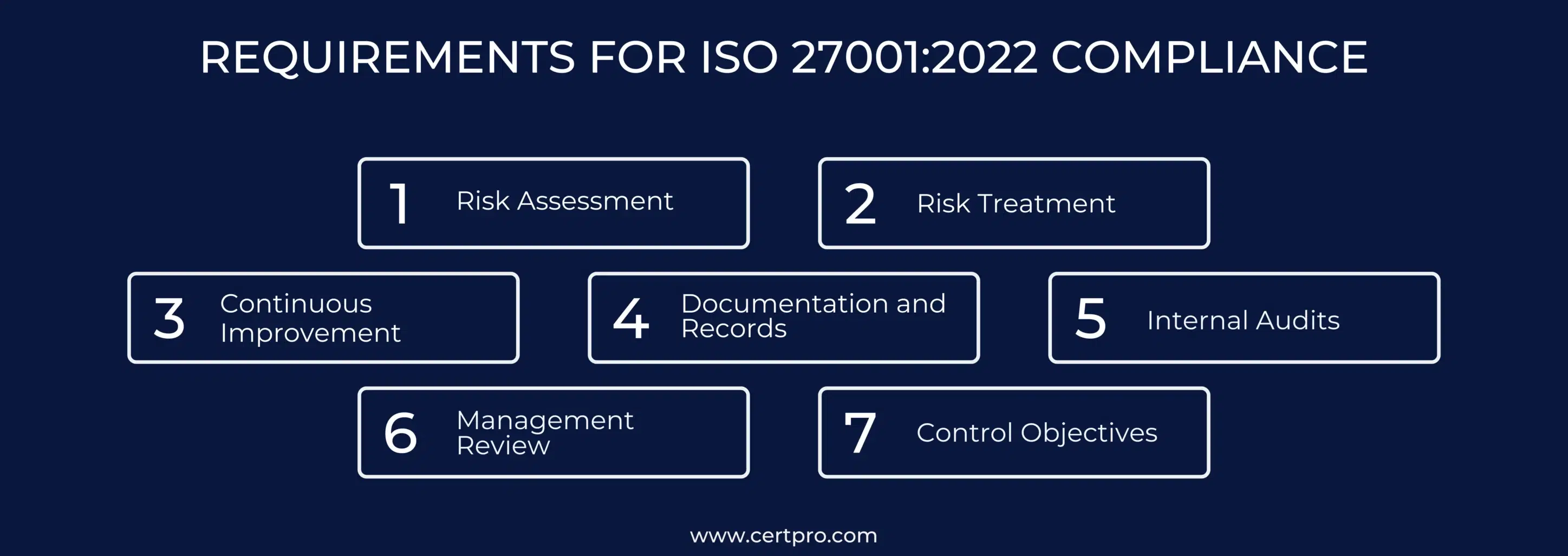
ISO 27001 Certification mandates compliance with specific requirements outlined in Clauses 4 through 10 of the standard. These clauses form the normative core of the standard and define the mandatory management system requirements that every certified organization must satisfy, regardless of size, industry, or geographic location. Unlike the Annex A controls — which are selected based on a risk assessment and documented in a Statement of Applicability — Clauses 4 through 10 are non-negotiable and apply universally to all organizations pursuing ISO 27001 Certification in Hyderabad.
Clause 4 requires organizations to understand the internal and external context in which the ISO 27001 ISMS operates. This includes identifying interested parties — such as clients, regulators, contractual partners, and employees — and understanding their information security requirements. For a Hyderabad-based SaaS company, external context includes regulatory requirements under India’s IT Act, client contractual obligations specifying security standards, and the competitive intelligence landscape. Internal context encompasses organizational structure, existing information assets, technology infrastructure, and the company’s risk tolerance.
The ISMS scope defined under Clause 4 must be documented with sufficient precision to allow auditors to determine what is included and what has been deliberately excluded. For organizations operating in Hyderabad’s multi-tenant IT parks, or those with offshore delivery centers, scope definition requires careful consideration of network boundaries, shared infrastructure, and third-party service dependencies. The scope statement becomes a central reference document throughout the ISO 27001 Audit process and is scrutinized during both Stage 1 and Stage 2 audit activities.
Clause 5 establishes leadership and commitment requirements, mandating that top management demonstrate active involvement in the ISMS by assigning roles, allocating resources, and communicating the importance of information security throughout the organization. Clause 6 addresses planning, requiring organizations to conduct a formal risk assessment and risk treatment process. The risk assessment must identify and evaluate information security risks using a consistent, repeatable methodology — producing a Risk Treatment Plan that documents how identified risks will be mitigated, transferred, accepted, or avoided.
Clause 7 covers support requirements, including human resources, awareness training, documentation control, and communication. Organizations pursuing ISO 27001 Certification in Hyderabad must maintain documented information as evidence of ISMS operation, including records of risk assessments, internal audits, management reviews, and corrective actions. Clause 8 operationalizes the ISMS by requiring organizations to plan, implement, and control the processes needed to meet information security requirements and execute the risk treatment plan. These operational controls are tested during the ISO 27001 Audit to verify that documented procedures are consistently followed in practice.
Clause 9 requires organizations to monitor, measure, analyze, and evaluate the performance of the ISMS through internal audits and management reviews. Internal audits must be conducted at planned intervals by personnel who are independent of the processes being audited. Management reviews must consider ISMS performance data, risk assessment results, audit findings, and stakeholder feedback to evaluate the continuing suitability, adequacy, and effectiveness of the system. These reviews produce documented outputs that inform resource allocation and ISMS improvement decisions.
Clause 10 addresses nonconformities and corrective actions. When a nonconformity is identified — whether through internal audit, incident investigation, or external ISO 27001 Audit finding — the organization must react to address the immediate situation, investigate the root cause, implement corrective actions, and verify the effectiveness of those actions. Continual improvement is embedded as a core principle of the ISO 27001 ISMS, requiring organizations to continuously enhance the suitability, adequacy, and effectiveness of their information security management system over time. This clause is directly relevant to the surveillance and recertification cycle that follows initial certification.
Annex A of ISO/IEC 27001:2022 provides a reference set of 93 information security controls organized across four domains. Organizations are not required to implement all 93 controls. Instead, they must document their control selection decisions in a Statement of Applicability (SoA). The SoA identifies which Annex A controls are applicable, which have been implemented, and which have been excluded with documented justification. For a Hyderabad-based fintech company, controls related to cloud security, cryptography, and secure coding may be assessed as highly applicable given the organization’s technology profile and threat landscape.
- ✓Organizational Controls (37 controls): Information security policies, roles, responsibilities, asset management, supplier relationships, and incident management
- ✓People Controls (8 controls): Screening, terms of employment, information security awareness, disciplinary processes, and remote working
- ✓Physical Controls (14 controls): Physical security perimeters, entry controls, equipment protection, cable security, and clear desk policy
- ✓Technological Controls (34 controls): Access control, authentication, cryptography, network security, secure development, vulnerability management, and monitoring
- ✓Clause 4: Organizational Context and ISMS Scoping
- ✓Clauses 5–8: Leadership, Planning, Support, and Operations
- ✓Clauses 9–10: Performance Evaluation and Continual Improvement
- ✓Annex A Controls and the Statement of Applicability
The ISO 27001 Audit Process: Stage-by-Stage Structure
The ISO 27001 Audit is a structured, multi-stage evaluation process conducted by an accredited certification body. CertPro, as a Licensed CPA Firm, conducts ISO 27001 certification audits following a defined methodology that evaluates both the documentation adequacy of the ISMS and the operational effectiveness of implemented controls. Understanding the audit process enables organizations in Hyderabad to prepare appropriately, allocate the necessary internal resources, and understand what evidence will be required at each stage.
The Stage 1 audit — also referred to as the documentation review or preliminary audit — evaluates whether the organization’s ISMS documentation meets the requirements of ISO/IEC 27001:2022. During the Stage 1 ISO 27001 Audit, the auditor reviews the ISMS scope statement, information security policy, risk assessment methodology and results, risk treatment plan, Statement of Applicability, internal audit records, and management review minutes. The Stage 1 audit determines whether the organization is ready to proceed to Stage 2 and identifies any significant gaps that must be addressed before on-site evaluation.
For organizations pursuing ISO 27001 Certification in Hyderabad, the Stage 1 audit is typically conducted remotely, with documentation submitted electronically for review. The auditor produces a Stage 1 audit report identifying observations, minor concerns, and major nonconformities. If major nonconformities are identified at Stage 1, the organization must address these before the Stage 2 audit can be scheduled. The interval between Stage 1 and Stage 2 audits typically ranges from four to eight weeks, providing sufficient time to address Stage 1 findings.
The Stage 2 audit is the definitive on-site or remote evaluation of the ISMS’s operational effectiveness. During this phase of the ISO 27001 Audit, auditors test whether the controls documented in the Statement of Applicability are implemented and functioning as intended. Control testing involves reviewing access control configurations, interviewing personnel responsible for security functions, examining incident response records, testing backup and recovery procedures, reviewing vendor security assessments, and verifying that security awareness training has been conducted. The audit examines evidence collected over a defined period rather than evaluating a single point-in-time configuration.
For Hyderabad-based organizations with complex IT environments — such as hybrid cloud architectures spanning AWS Mumbai region and on-premises data centers — the Stage 2 audit scope may encompass multiple technical environments and administrative functions. Auditors assess the consistency of control implementation across the entire ISMS scope. Nonconformities identified during Stage 2 are classified as major or minor. Major nonconformities must be resolved before ISO 27001 Certification can be issued. Minor nonconformities must be addressed within a defined timeframe — typically 90 days following certification issuance — with evidence of corrective action submitted to the certification body.
Following the successful completion of the Stage 2 audit with no unresolved major nonconformities, the certification body reviews the audit findings and makes an independent certification decision. The ISO 27001 certificate, once issued, is valid for three years from the date of certification. During this period, the organization must undergo annual surveillance audits to verify that the ISMS continues to function effectively and that identified nonconformities have been resolved. Surveillance audits are less comprehensive than the initial certification audit but cover high-risk areas identified during previous evaluations.
At the end of the three-year certification cycle, organizations must undergo a full recertification audit to renew their ISO 27001 certificate. The recertification audit evaluates the overall effectiveness of the ISMS over the three-year period, reviews the organization’s response to audit findings and incidents, and assesses the continued relevance of the ISMS scope and risk assessment in light of organizational and threat landscape changes. Organizations that fail to complete a timely recertification audit may have their certificate suspended or withdrawn by the certification body.
- Scope Definition: Organization defines ISMS boundaries, assets, and applicable regulatory requirements
- Audit Program Determination: Certification body determines audit effort based on organizational complexity, headcount, and ISMS scope
- Stage 1 Audit: Documentation review evaluating ISMS policy, risk assessment, SoA, and management system records
- Stage 2 Audit: On-site or remote control testing evaluating operational effectiveness of implemented controls
- Nonconformity Review: Major and minor nonconformities are categorized, and corrective action timelines are established
- Certification Decision: Independent review of audit findings by certification body technical reviewer
- Issuance of Certificate: ISO 27001 certificate issued for a three-year period upon successful audit completion
- Annual Surveillance Audits: Year 1 and Year 2 surveillance audits verify ISMS continuity and corrective action closure
- Recertification Audit: Full-scope audit at the end of Year 3 to renew the ISO 27001 certificate

- ✓Stage 1 Audit: Documentation Review and Readiness Assessment
- ✓Stage 2 Audit: On-Site Control Testing and Effectiveness Evaluation
- ✓Certification Decision, Issuance, and the Three-Year Certification Cycle
ISO 27001 Assessment in Hyderabad: Risk-Based Evaluation Framework
The ISO 27001 Assessment is a foundational activity within the ISMS that enables organizations to identify, quantify, and prioritize information security risks prior to implementing controls. Unlike a generic security review, the ISO 27001 Assessment follows a structured, documented methodology that produces repeatable, comparable results over time. The assessment methodology must define how risks are identified, how likelihood and impact are evaluated, what risk acceptance criteria apply, and how risk treatment decisions are recorded and tracked. This structured approach allows auditors to verify the logical connection between identified risks and the controls selected in the Statement of Applicability.
Risk Identification and Asset Inventory
The ISO 27001 Assessment begins with a comprehensive inventory of information assets within the ISMS scope. Information assets include data repositories (databases, file servers, cloud storage), hardware (servers, workstations, network devices), software (applications, operating systems, utilities), services (cloud services, internet connectivity, managed security services), and human resources (employees, contractors, third-party service providers). For organizations in Hyderabad’s technology sector, information asset inventories frequently include cloud-hosted application environments, containerized workloads, API integrations with client systems, and outsourced data processing arrangements.
Each asset in the inventory must be assigned an owner responsible for ensuring that appropriate security controls are applied. Asset owners are accountable for classifying information according to sensitivity, implementing access controls, and reporting security incidents. The asset inventory is a living document that must be maintained and updated as the organization’s technology environment evolves. Auditors conducting an ISO 27001 Assessment in Hyderabad review the asset inventory for completeness, accuracy, and evidence of regular maintenance as part of the Stage 2 audit evaluation.
Threat and Vulnerability Analysis in the Hyderabad Context
Following asset identification, the ISO 27001 Assessment requires organizations to identify threats that could exploit vulnerabilities in their information assets. Threats are characterized as any potential event or circumstance that could negatively affect the confidentiality, integrity, or availability of information assets. For Hyderabad-based organizations, the threat landscape includes external threats such as targeted phishing campaigns, ransomware attacks, nation-state sponsored cyber espionage, supply chain compromises, and distributed denial-of-service attacks. Internal threats include unauthorized data access by employees, inadvertent data disclosure, and insider trading of proprietary information.
Vulnerabilities represent weaknesses in systems, processes, or human behavior that increase susceptibility to threats. Common vulnerabilities identified during ISO 27001 Assessment engagements in Hyderabad include unpatched software, misconfigured cloud storage permissions, inadequate access control policies, insufficient employee security awareness, weak password policies, and absence of encryption for data in transit or at rest. The threat-vulnerability pairing produces a risk scenario for each asset, enabling the organization to calculate a risk level using the chosen risk assessment methodology — whether qualitative, semi-quantitative, or quantitative.
Risk Treatment Planning and Control Selection
The Risk Treatment Plan documents how each identified risk above the organization’s acceptance threshold will be addressed. Risk treatment options under ISO 27001 include risk modification (implementing controls to reduce likelihood or impact), risk avoidance (ceasing the activity that creates the risk), risk sharing (transferring risk through insurance or contractual arrangements), and risk acceptance (formally acknowledging that the risk falls within acceptable parameters). Each treatment decision must be documented with a reference to the Annex A controls selected to implement the treatment, forming the evidentiary basis for the Statement of Applicability.
ISO 27001 Certification Cost in Hyderabad: Determining Factors
ISO 27001 certification cost in Hyderabad varies based on several deterministic factors that affect the scope and complexity of the certification audit. Understanding these cost drivers enables organizations to budget accurately and allocate resources effectively. The certification body’s fee is only one component of the total investment; organizations must also account for internal resource costs, documentation development, and the sustained operational costs of maintaining the ISO 27001 ISMS through the three-year certification cycle.
Primary Cost Drivers for ISO 27001 Certification Audits
The most significant determinant of ISO 27001 certification cost in Hyderabad is the size of the organization, typically measured by the number of employees within the ISMS scope. Accredited certification bodies calculate audit man-days using standardized formulas based on employee headcount, adjusted for ISMS complexity. A startup with 50 employees and a limited ISMS scope covering a single cloud-hosted application may require 3 to 5 man-days of audit effort. A large GCC with 2,000 employees, multiple offices across Hyderabad, and a complex hybrid IT environment may require 15 to 25 man-days for the initial certification audit.
ISMS complexity is the second major cost driver. Organizations with multiple physical locations, diverse technology stacks, extensive third-party dependencies, or operations across multiple regulatory jurisdictions present greater audit complexity. For ISO 27001 Certification for IT companies in Hyderabad that operate offshore delivery models — serving European clients under GDPR, North American clients under SOC 2 requirements, and domestic clients under DPDPA — the ISMS must address multiple overlapping regulatory frameworks, increasing the scope and depth of audit evaluation required.
| Organization Size | ISMS Complexity | Estimated Audit Man-Days | Annual Surveillance Frequency |
|---|---|---|---|
| Small (1–50 employees) | Low to moderate | 3–6 man-days | 1 surveillance audit per year |
| Medium (51–250 employees) | Moderate | 6–12 man-days | 1 surveillance audit per year |
| Large (251–1000 employees) | Moderate to high | 12–20 man-days | 1–2 surveillance audits per year |
| Enterprise (1000+ employees) | High | 20–30+ man-days | 2 surveillance audits per year |
Selecting an ISO 27001 Certification Body in Hyderabad
An ISO 27001 certification body in Hyderabad must be accredited by a recognized national or international accreditation authority to issue certificates that carry international validity. Accreditation bodies active in India include the Quality Council of India (QCI) through its National Accreditation Board for Certification Bodies (NABCB), and internationally recognized bodies such as UKAS (United Kingdom Accreditation Service), DAkkS (Deutsche Akkreditierungsstelle), and ANAB (ANSI National Accreditation Board). Certificates issued by accredited certification bodies carry greater recognition in international markets — particularly important for Hyderabad-based organizations serving European and North American clients.
CertPro operates as a Licensed CPA Firm offering ISO 27001 Certification in Hyderabad with transparent, fixed-scope audit pricing. Unlike certification bodies that bundle consulting services with audit activities — creating a conflict of interest — CertPro maintains strict separation between certification audit functions and any advisory activities. This independence is fundamental to the integrity of the ISO 27001 certificate and ensures that the certification decision reflects an objective evaluation of ISMS conformance rather than a commercial relationship.
Benefits of ISO 27001 Certification for Hyderabad Organizations
ISO 27001 Certification delivers measurable business and operational benefits to organizations across Hyderabad’s diverse industry sectors. Beyond the fundamental security improvements achieved through systematic risk management, certification provides tangible commercial advantages in client acquisition, regulatory compliance, and organizational resilience. For organizations competing in global technology markets from their Hyderabad base, ISO 27001 Certification functions as a universally recognized signal of information security maturity — reducing friction in enterprise sales cycles and supply chain qualification processes.
ISO 27001 Certification enables Hyderabad financial services organizations to meet the security qualification requirements of banking and insurance clients who mandate third-party security certifications as a condition of contract award. India’s major private sector banks, insurance companies, and payment processors increasingly require ISO 27001 Certification from their technology service providers as part of vendor due diligence processes. Similarly, ISO 27001 Certification for Hyderabad pharma companies enables them to meet the stringent data integrity and information security requirements of global pharmaceutical clients and regulatory bodies such as the US FDA and EMA.
ISO 27001 compliance for Hyderabad fintech organizations is used to satisfy the Reserve Bank of India’s IT risk management guidelines, the SEBI cybersecurity framework, and requirements imposed by international payment card network operators. The certification provides documented evidence of security controls implementation that simplifies compliance mapping across multiple regulatory frameworks. For Hyderabad-based SaaS companies targeting enterprise clients in the European Union, ISO 27001 Certification is frequently cited as a prerequisite in procurement questionnaires and forms a foundational layer of the Trust Center documentation provided to prospective customers.
The structured risk assessment and treatment process required by ISO 27001 ISMS implementation produces significant operational benefits independent of the certification itself. Organizations that systematically identify and document information security risks develop a clearer understanding of their critical assets, dependencies, and control gaps. This knowledge enables more informed investment decisions in security technology and personnel, ensuring that security budgets are allocated to address the highest-priority risks rather than deployed reactively in response to incidents. Hyderabad’s rapidly growing technology companies — which frequently scale their IT environments faster than their security governance frameworks — benefit particularly from the structured discipline that ISO 27001 ISMS adoption enforces.
- ✓Demonstrated compliance with India’s Digital Personal Data Protection Act (DPDPA) and IT Act security requirements
- ✓Reduced cyber insurance premiums through documented evidence of security controls implementation
- ✓Accelerated enterprise client onboarding by satisfying vendor security qualification requirements
- ✓Improved incident detection and response capabilities through formalized security monitoring and incident management processes
- ✓Enhanced supply chain security through structured third-party risk assessment and vendor management requirements
- ✓Increased customer trust and stakeholder confidence through internationally recognized ISO 27001 Certification
- ✓Competitive differentiation in government and public sector procurement where ISO 27001 Certification is mandated
- ✓Improved business continuity posture through ISMS controls covering information availability and recovery
- ✓Reduced likelihood of regulatory penalties through proactive, documented security governance
- ✓Foundation for multi-framework compliance with SOC 2, ISO 27701, and other security and privacy standards
ISO 27001 Certification in Hyderabad provides a structured mechanism for mapping organizational controls to multiple overlapping regulatory requirements. The standard’s risk-based approach enables organizations to document which controls address which regulatory obligations, creating a unified compliance evidence base that satisfies multiple auditors and regulators simultaneously. For Hyderabad-based organizations subject to the IT Act 2000 and its amendments, the RBI’s Guidelines on Information Security, the SEBI Cybersecurity and Cyber Resilience Framework, and sector-specific data localization requirements, ISO 27001 provides a coherent framework that integrates these obligations into a single management system.
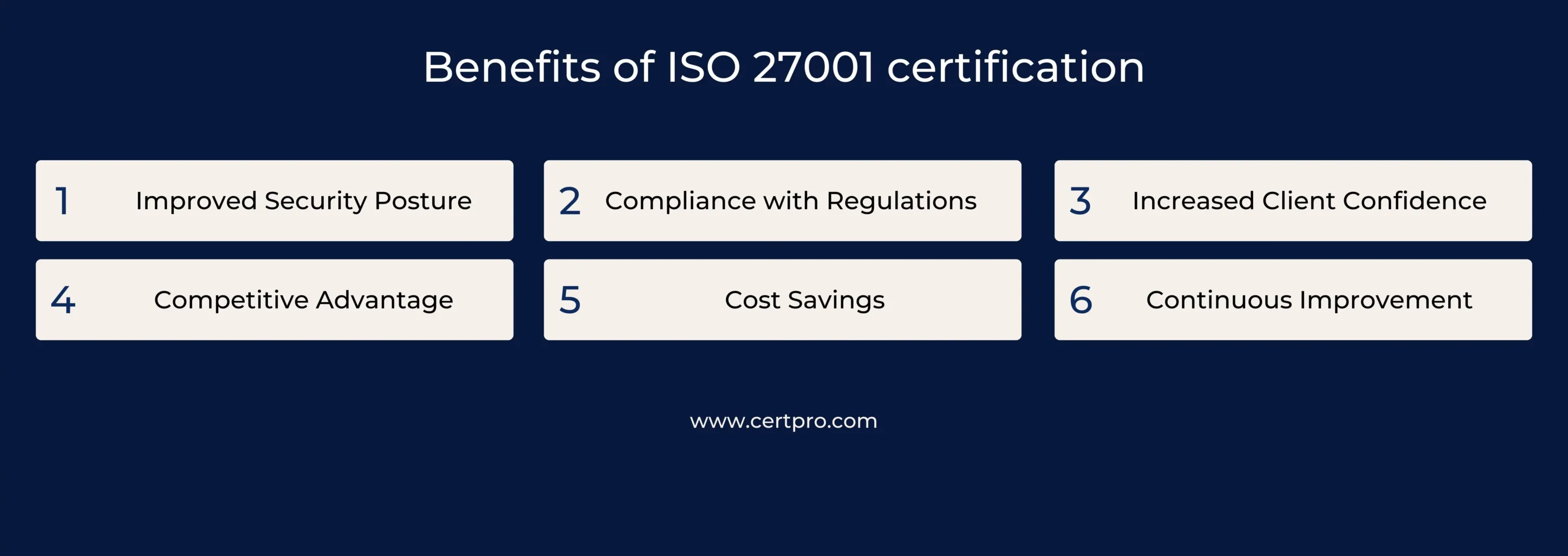
- ✓Commercial and Competitive Advantages
- ✓Operational and Risk Management Benefits
- ✓Regulatory and Legal Compliance Alignment
Industries and Organizations That Require ISO 27001 Certification in Hyderabad
ISO 27001 Certification is applicable to organizations of all sizes and types in Hyderabad, but certain industries face particularly strong drivers for certification based on regulatory requirements, contractual obligations, and the sensitivity of the data they process. Hyderabad’s diverse economic base spans information technology, financial services, pharmaceuticals, healthcare, manufacturing, and government services — each with distinct information security requirements that ISO 27001 addresses comprehensively.
IT Services, SaaS, and Global Capability Centers
ISO 27001 Certification for IT companies in Hyderabad is driven primarily by client contractual requirements and the need to demonstrate information security maturity to enterprise buyers. Hyderabad’s IT services sector — concentrated in HITEC City and adjacent technology parks such as Nanakramguda and Gachibowli — includes managed services providers, application development firms, IT infrastructure companies, and business process outsourcing organizations. These entities handle client data under strict contractual confidentiality obligations and must demonstrate that their information security controls meet or exceed client requirements. ISO 27001 Certification provides an objective, third-party validated confirmation of this capability.
Global Capability Centers operating in Hyderabad face dual certification pressure: requirements imposed by their parent organizations globally and requirements imposed by Indian regulatory bodies. Many GCCs are required by their parent corporations to maintain ISO 27001 Certification as a condition of their operating charter, particularly those handling data subject to GDPR, CCPA, or HIPAA. The ISO 27001 ISMS Certification framework provides GCCs in Hyderabad with a localized certification that satisfies both parent company requirements and domestic regulatory expectations.
Financial Services, Fintech, and Banking Technology
Hyderabad hosts a growing number of fintech startups, payments technology companies, insurance technology firms, and banking technology providers. These organizations process high-value financial transaction data, personal financial information, and authentication credentials, making them attractive targets for cybercriminals. ISO 27001 compliance for Hyderabad fintech organizations is increasingly mandated by the Reserve Bank of India’s IT governance frameworks, which require regulated entities and their technology service providers to demonstrate robust information security management. ISO 27001 Certification provides the documented evidence framework that satisfies RBI inspection requirements and supports applications for payment aggregator licenses and prepaid payment instrument authorizations.
Pharmaceutical, Healthcare, and Life Sciences Organizations
Hyderabad is recognized as India’s pharmaceutical capital, home to major drug manufacturers, contract research organizations, clinical trial management companies, and healthcare technology providers. ISO 27001 Certification for Hyderabad pharma companies ensures that sensitive research data, clinical trial information, intellectual property, and patient health information is protected by a certified information security management system. The pharmaceutical sector’s heavy reliance on electronic data interchange with global partners, regulatory submission systems, and laboratory information management systems creates complex information security requirements that ISO 27001’s risk-based framework addresses systematically.
ISO 27001 Certification Checklist for Hyderabad Organizations
Organizations preparing for ISO 27001 Certification in Hyderabad must satisfy a comprehensive set of documentation, process, and operational requirements. The following checklist reflects the key deliverables evaluated during the ISO 27001 Audit and provides a structured reference for organizations assessing their ISMS completeness. Items are organized by ISMS component and reflect the requirements of ISO/IEC 27001:2022.
Documentation and Policy Requirements
Mandatory documentation for ISO 27001 Certification includes a documented ISMS scope statement that precisely defines organizational boundaries, an information security policy approved by top management, a documented risk assessment methodology, completed risk assessment records, a Risk Treatment Plan with control ownership assignments, and a Statement of Applicability referencing all 93 Annex A controls. Additional required documentation includes records of information security objectives, competence records for personnel with information security responsibilities, internal audit records, management review minutes, and documented nonconformity and corrective action records.
- ✓ISMS scope statement with defined boundaries and exclusions
- ✓Information security policy signed by executive leadership
- ✓Risk assessment methodology documentation and completed risk assessment records
- ✓Risk Treatment Plan with control owners and implementation timelines
- ✓Statement of Applicability covering all 93 ISO/IEC 27001:2022 Annex A controls
- ✓Information security objectives and plans for achieving them
- ✓Asset inventory with assigned owners and classification labels
- ✓Access control policy and supporting access management procedures
- ✓Incident management policy and incident response procedures
- ✓Business continuity and IT disaster recovery plans
- ✓Supplier security assessment records and contractual security clauses
- ✓Security awareness training records and competence evidence
- ✓Internal audit program and completed audit reports
- ✓Management review records covering ISMS performance and improvement decisions
- ✓Corrective action records with root cause analysis and effectiveness verification
Technical and Operational Control Requirements
Beyond documentation, ISO 27001 Certification requires evidence of implemented and operating technical controls. Auditors conducting an ISO 27001 Audit in Hyderabad verify that access control configurations restrict system access to authorized personnel based on the principle of least privilege, that multi-factor authentication is implemented for privileged and remote access, that encryption protects sensitive data in transit and at rest, that vulnerability management processes identify and remediate security weaknesses within defined timeframes, and that security monitoring systems detect and log potential security events. Each control’s effectiveness is evaluated through a combination of configuration review, log analysis, personnel interviews, and documentary evidence review.
ISO 27001 ISMS Certification Hyderabad: Sector-Specific Implementation Considerations
While the ISO 27001 ISMS framework is industry-agnostic, effective implementation requires adaptation to the specific threat landscape, regulatory environment, and operational characteristics of each sector. Organizations pursuing ISO 27001 ISMS Certification in Hyderabad must calibrate their risk assessments and control selections to reflect sector-specific risks rather than applying a generic control set that may over- or under-address relevant threats. The following considerations apply to the primary industry sectors represented in Hyderabad’s economy.
Cloud-First and SaaS Organizations
SaaS organizations in Hyderabad typically operate within cloud-hosted environments where the traditional physical security perimeter is replaced by logical access controls, identity management systems, and cloud security configurations. For these organizations, the ISO 27001 ISMS must address the shared responsibility model of cloud service providers, ensuring that organizational controls cover the security responsibilities that fall outside the cloud provider’s scope. Critical control areas for SaaS organizations include identity and access management, API security, data isolation between tenants, encryption key management, and cloud infrastructure configuration management.
The ISO/IEC 27001:2022 standard’s new control for Information Security for Use of Cloud Services (Control 5.23) directly addresses governance requirements for cloud usage. This control requires organizations to document processes for selecting, using, managing, and exiting cloud service arrangements — including security requirements for cloud providers and procedures for managing security incidents involving cloud-hosted systems. For Hyderabad-based SaaS companies using multiple cloud platforms such as AWS, Azure, GCP, and specialized SaaS tools, this control requires a comprehensive cloud security inventory and governance policy covering all significant cloud dependencies.
Data Centers and IT Infrastructure Providers
Hyderabad hosts several major commercial data centers operated by providers including NTT, CtrlS, Colt, and Adani, as well as enterprise captive data centers serving large GCCs and technology companies. For data center operators, the ISO 27001 ISMS must address physical security controls with particular rigor — covering access control to physical spaces, environmental monitoring, equipment maintenance, and cable management. The ISO/IEC 27001:2022 standard includes strengthened physical security controls under the Physical Controls domain, reflecting the continued relevance of physical security in protecting digital assets housed in data center environments.
Government and Defense-Related Technology Organizations
Hyderabad hosts several organizations involved in defense technology, aerospace, and government IT services, including units affiliated with DRDO, ISRO’s National Remote Sensing Centre, and private defense technology contractors. These organizations face additional information security requirements beyond ISO 27001’s standard framework, including classified information handling protocols and compliance with the Ministry of Defence’s security directives. However, ISO 27001 Certification provides the foundational information security governance framework upon which these additional requirements are layered, and government technology procurement increasingly requires ISO 27001 Certification as a baseline qualification criterion.
How CertPro Conducts ISO 27001 Audits in Hyderabad
CertPro is a Licensed CPA Firm that conducts ISO 27001 certification audits for organizations in Hyderabad under a strictly independent, audit-only engagement model. CertPro does not provide ISMS design, control implementation, or advisory services. This structural independence ensures that the ISO 27001 certificate issued by CertPro reflects an objective evaluation of the organization’s ISMS conformance with ISO/IEC 27001:2022 requirements, free from conflicts of interest that arise when certification bodies also provide consulting services to the same clients.
CertPro’s Audit Methodology and Scope Determination
CertPro determines audit scope, effort, and audit program structure based on the organization’s risk profile, ISMS complexity, employee headcount within scope, number of physical locations, technology environment characteristics, and applicable regulatory obligations. The audit program is documented prior to audit commencement and communicated to the organization to establish clear expectations regarding audit activities, evidence requirements, and reporting timelines. CertPro’s auditors are qualified professionals with sector-specific experience in IT, financial services, healthcare, and manufacturing — enabling context-relevant evaluation of control effectiveness during each ISO 27001 Audit.
During the ISO 27001 Audit, CertPro auditors evaluate conformance through document review, personnel interviews, technical configuration review, and observation of operational processes. Evidence collected during the audit is assessed against the specific requirements of ISO/IEC 27001:2022 clauses and the controls listed in the organization’s Statement of Applicability. Audit findings are classified as conformant, observation, minor nonconformity, or major nonconformity — each classification carrying defined reporting and remediation requirements. The audit report produced by CertPro provides a detailed, clause-by-clause evaluation of ISMS conformance that serves as the basis for the certification decision.
Post-Certification Support and Surveillance Management
Following initial certification, CertPro conducts annual surveillance audits to verify that the certified ISMS continues to operate in conformance with ISO/IEC 27001:2022 requirements. Surveillance audits focus on areas identified as requiring improvement during the initial certification audit, review corrective action effectiveness, and evaluate ISMS performance data including internal audit results and management review outputs. Organizations that have experienced significant changes to their ISMS scope, technology environment, or organizational structure during the surveillance period should proactively communicate these changes to ensure that the surveillance audit scope accurately reflects the current state of the ISMS.
ISO 27001 Certification in Hyderabad: Multi-Framework Integration
Many Hyderabad-based organizations operate under obligations from multiple security and privacy frameworks simultaneously — including ISO 27001, SOC 2, ISO 27701, GDPR, DPDPA, HIPAA, and PCI DSS. Pursuing these certifications and compliance attestations independently results in duplicated audit effort, redundant documentation, and significant costs. ISO 27001 Certification in Hyderabad provides a robust foundational framework that integrates with complementary standards, enabling organizations to leverage existing ISMS documentation and controls across multiple compliance programs.
ISO 27001 and ISO 27701: Privacy Information Management
ISO 27701 is a privacy extension to ISO 27001 that specifies requirements for a Privacy Information Management System (PIMS). Organizations certified under ISO 27001 can extend their ISMS to incorporate ISO 27701 requirements without duplicating the foundational management system elements. For Hyderabad-based organizations subject to the DPDPA and GDPR, ISO 27701 certification — built on an existing ISO 27001 ISMS — provides a privacy management framework that documents how personal data is collected, processed, stored, and deleted in accordance with applicable privacy law requirements.
ISO 27001 and SOC 2: Complementary Attestation for US Market Access
SOC 2 Type II reports and ISO 27001 certificates serve overlapping but distinct purposes in the information security assurance market. SOC 2 is primarily demanded by North American enterprise clients and addresses controls relevant to the Trust Services Criteria defined by the AICPA. ISO 27001 Certification is preferred in European and Asian markets and focuses on the management system requirements of ISO/IEC 27001:2022. For Hyderabad-based IT services and SaaS organizations serving both markets, maintaining both a SOC 2 Type II report and an ISO 27001 certificate provides comprehensive market coverage. CertPro, as a Licensed CPA Firm, is uniquely positioned to conduct both SOC 2 audits and ISO 27001 certification audits — enabling coordinated engagement planning that reduces total audit burden and cost.
Integrated Audit Planning for Multiple Frameworks
Organizations pursuing concurrent ISO 27001 Certification and SOC 2 attestation can significantly reduce audit burden through coordinated evidence collection planning. Many of the controls required by ISO 27001 — access control, incident management, change management, business continuity, vendor management, and vulnerability management — map directly to SOC 2 Trust Services Criteria. Where evidence collected for the ISO 27001 Audit satisfies corresponding SOC 2 testing requirements, CertPro’s coordinated audit approach eliminates redundant evidence collection activities, reducing organizational disruption and total certification cost without compromising the independence or rigor of either evaluation.
Sustaining ISO 27001 Certification: Continuous Improvement and ISMS Evolution
ISO 27001 Certification is not a one-time achievement but a continuous commitment to maintaining and improving the effectiveness of the ISMS over time. The standard’s Plan-Do-Check-Act (PDCA) cycle embeds continual improvement as a structural requirement, ensuring that the ISMS evolves in response to changes in the threat landscape, organizational structure, technology environment, and regulatory requirements. For Hyderabad organizations operating in fast-evolving sectors — where technology infrastructure changes, business models pivot, and new regulatory obligations emerge regularly — maintaining a living, responsive ISMS is essential to preserving the value of ISO 27001 Certification in Hyderabad.
Managing ISMS Changes Between Surveillance Audits
Significant changes to the ISMS scope, organizational structure, or technology environment between surveillance audits must be managed through a formal change management process that evaluates the information security implications of proposed changes before implementation. Examples of changes that trigger ISMS change management in Hyderabad technology organizations include cloud migration projects, acquisition of new business units, deployment of new SaaS applications handling sensitive data, establishment of new data center facilities, and changes to key technology vendors or managed security service providers. Each significant change must be evaluated against the existing risk assessment, with updates made to asset inventories, risk records, and the Statement of Applicability as appropriate.
Internal Audit Program Effectiveness
The internal audit program is a critical mechanism for maintaining ISO 27001 ISMS effectiveness between external certification audits. Internal auditors must be independent of the processes they audit and must have sufficient knowledge of ISO 27001 requirements to conduct meaningful evaluations. The internal audit program should cover the entire ISMS scope over a rolling 12-month period, with higher-risk areas audited more frequently. Internal audit findings must be documented, reported to management, and tracked through to verified corrective action closure. Organizations that maintain a rigorous internal audit program demonstrate ISMS maturity that enhances the efficiency and outcomes of external ISO 27001 Audit activities conducted by CertPro.
Management Review and Strategic ISMS Governance
Management review is the top-level governance mechanism through which executive leadership evaluates the continuing suitability, adequacy, and effectiveness of the ISO 27001 ISMS. Management reviews must be conducted at planned intervals — typically annually at minimum, with more frequent reviews recommended for high-growth Hyderabad technology organizations experiencing rapid organizational change. Management review inputs include ISMS performance metrics, internal audit results, risk assessment updates, incident statistics, regulatory changes, and feedback from interested parties. Review outputs must include decisions and actions related to ISMS improvement, resource allocation, and changes to information security objectives. These outputs are documented and retained as mandatory ISMS records subject to review during the ISO 27001 Audit.
FAQ
▶
Additional FAQs: Cost, Scope, and Multi-Framework Certification
▶
What is the validity period of ISO 27001 certification?
▶
Can ISO 27001 certification be revoked?
Multi-Framework Compliance Guide: Best Practices and Strategies
Most compliance teams aren’t managing one framework. They’re managing three, four, sometimes five — simultaneously. A SaaS company selling to enterpri…
HOW COMPLIANCE AUDIT SOFTWARE IMPROVES AUDIT READINESS
Today, most companies deal with a growing number of compliance regulations. From data privacy standards to security frameworks like SOC 2 and ISO 2700…

THE IMPORTANCE OF ISO 27001 COMPLIANCE FOR FINTECH STARTUPS IN CANADA
ISO 27001 is a global standard for managing organizations’ information security and sensitive information. In simple words, fintech companies use tech…
Get In Touch
have a question? let us get back to you.