
ISO 27001 Certification in Mumbai
The ISO 27001 ISMS framework is structured around the Plan-Do-Check-Act (PDCA) cycle, ensuring that information security management is treated as a continual process rather than a one-time implementation. The framework encompasses ten clauses in the main body of the standard, with Clauses 4 through 10 specifying mandatory requirements. Annex A provides the reference control set. Together, these elements define a comprehensive governance architecture for information security that organizations must operationalize and sustain to achieve and maintain ISO 27001 Certification.
OUR CLIENTS










What Is ISO 27001 Certification?
ISO 27001 Certification is an internationally recognized credential awarded to organizations that demonstrate conformance with the ISO/IEC 27001:2022 standard for Information Security Management Systems (ISMS). Published jointly by the International Organization for Standardization (ISO) and the International Electrotechnical Commission (IEC), the standard specifies a systematic framework for establishing, implementing, maintaining, and continually improving information security across an organization’s operations. ISO 27001 Certification is issued exclusively upon successful completion of an independent third-party ISO 27001 audit conducted by an accredited certification body against defined conformance criteria.
The ISO/IEC 27001:2022 Standard Defined
ISO/IEC 27001:2022 is the current version of the standard, replacing the 2013 edition with a significant structural update. The 2022 revision reduced the number of Annex A controls from 114 to 93, reorganized them across four thematic domains, and introduced 11 new controls addressing contemporary security challenges — including cloud security, threat intelligence, and data masking. Organizations certified under the 2013 version must transition to the 2022 standard by October 31, 2025, as mandated by international accreditation bodies. The updated framework reflects the evolving threat landscape and modern organizational structures, where information security must address digital transformation, remote work environments, and complex supply chains.
The standard applies to organizations of all sizes, sectors, and geographies. It does not prescribe specific technologies or tools. Instead, it requires a risk-based approach to managing information security. ISO 27001 compliance demands that organizations identify their information assets, assess applicable risks, implement proportionate controls, and continually evaluate the effectiveness of their ISMS. The scope of an ISMS can encompass an entire organization or a defined subset of operations, departments, or services — depending on what the organization elects to certify.
Key Definitions: ISMS, Annex A, and the Statement of Applicability
An Information Security Management System (ISMS) is the core construct of ISO 27001. It is a documented, systematic framework that governs how an organization identifies, manages, and reduces information security risks to an acceptable level. The ISMS encompasses people, processes, and technology. It requires defined policies, measurable objectives, operational procedures, risk registers, and evidence of continual improvement. ISMS certification confirms that an organization’s framework meets the requirements of the ISO 27001 standard, as verified by an independent auditor through a formal ISO 27001 assessment.
Annex A of ISO/IEC 27001:2022 contains 93 controls organized across four domains: Organizational Controls (37), People Controls (8), Physical Controls (14), and Technological Controls (34). These controls serve as a reference set from which organizations select applicable measures based on their risk assessment outcomes. The Statement of Applicability (SoA) is a mandatory document that lists all Annex A controls, declares which are applicable, justifies the inclusion or exclusion of each, and maps them to identified risks. The SoA is a critical audit artifact that auditors examine during the ISO 27001 audit to verify that control selection is risk-driven and properly documented.
Risk assessment and risk treatment are foundational processes within the ISMS. ISO 27001 requires organizations to conduct structured risk assessments that identify threats to information assets, evaluate the likelihood and impact of those threats materializing, and determine appropriate treatment options. Risk treatment plans must be documented and linked to specific Annex A controls. The risk assessment must be repeated at planned intervals and whenever significant changes occur within the organization or its operating environment. These assessments form the evidential basis for the ISO 27001 assessment conducted by the certification auditor.
Why ISO 27001 Certification Matters for Organizations
ISO 27001 Certification demonstrates that an organization’s information security posture has been independently verified against a globally recognized benchmark. Unlike self-declared compliance or internal audits, third-party ISO 27001 Certification provides an objective, evidence-based confirmation that the ISMS is operational, effective, and aligned with international requirements. For organizations in financial services, healthcare, technology, and government contracting, ISO 27001 Certification is frequently a prerequisite for entering procurement processes, executing enterprise contracts, or satisfying regulatory expectations. The certification signals institutional commitment to protecting sensitive information and managing cybersecurity risks in a structured, accountable manner.

ISO 27001 Certification in Mumbai — Local Business Context and Relevance
Mumbai is India’s financial capital and one of Asia’s most significant global business hubs. The city hosts the headquarters of major banks, non-banking financial companies (NBFCs), insurance corporations, stock exchanges, and asset management firms. Mumbai’s commercial landscape also encompasses a dense ecosystem of multinational corporations, technology companies, IT and ITeS service providers, fintech startups, and large-scale data center operators. This concentration of high-value data-processing organizations creates a correspondingly high information security risk environment — making ISO 27001 Certification in Mumbai a critical operational and regulatory priority for businesses across all sectors.
Mumbai’s BFSI Sector and Information Security Imperatives
The Banking, Financial Services, and Insurance (BFSI) sector in Mumbai represents one of the highest concentrations of sensitive financial data in the country. Public sector banks, private commercial banks, NBFCs, insurance underwriters, and brokerage firms process millions of transactions daily and maintain extensive repositories of customer financial records, identity data, and transaction histories. Regulatory bodies including the Reserve Bank of India (RBI), Securities and Exchange Board of India (SEBI), and Insurance Regulatory and Development Authority of India (IRDAI) have issued cybersecurity frameworks and IT governance guidelines that align closely with ISO 27001 compliance requirements. Organizations pursuing ISO 27001 Certification in Mumbai within the BFSI sector often find that the standard directly supports fulfillment of these regulatory obligations.
The RBI’s Master Direction on Information Technology Framework for the NBFC Sector and its Cybersecurity Framework for Urban Cooperative Banks explicitly reference information security management practices consistent with ISO 27001. SEBI’s Cybersecurity and Cyber Resilience Framework (CSCRF) for registered entities similarly requires structured risk management, incident response, and access control measures that map directly to ISO 27001’s Annex A controls. For BFSI organizations in Mumbai, achieving ISMS certification provides documented evidence of conformance with these frameworks. It also demonstrates to customers, counterparties, and regulators that information security is governed through an independently verified system.
Fintech and Technology Companies in Mumbai
Mumbai’s fintech sector has expanded significantly over the past decade. Companies offering digital payments, lending platforms, insurtech solutions, wealth management applications, and blockchain-based financial services now form a core part of the city’s economic fabric. These organizations often process sensitive personal and financial data at scale, operate under API-driven architectures that interface with banking systems, and are subject to RBI’s Payment Aggregator and Payment Gateway regulatory guidelines. ISO 27001 compliance in Mumbai’s fintech segment is increasingly demanded by partner banks, enterprise clients, and investors as evidence that information security controls are embedded into product development and operational processes.
IT and ITeS companies headquartered in or operating from Mumbai — including software development firms, managed service providers, and business process outsourcing organizations — are frequently required to demonstrate ISO 27001 Certification to global clients. International enterprises outsourcing technology services to Mumbai-based providers routinely include ISO 27001 Certification as a mandatory vendor qualification criterion. For technology sector organizations, ISO 27001 Certification in Mumbai directly supports client acquisition, contract retention, and expansion into regulated global markets. The certification provides a structured framework for managing information security obligations arising from processing client data across multiple jurisdictions.
Data Center and Cloud Infrastructure Operators
Mumbai is home to a substantial concentration of data centers and cloud infrastructure facilities serving both domestic and international clients. These facilities process and store data on behalf of organizations across sectors, creating multi-tenant security environments where physical, logical, and administrative controls must be rigorously maintained. ISO 27001 Certification in Mumbai for data center operators provides independent verification that physical security, environmental controls, access management, change management, and incident response processes meet internationally recognized standards. Many enterprise and government clients require their data center providers to hold current ISO 27001 Certification as a contractual condition of service.
ISO 27001 ISMS Framework — Components, Controls, and Annex A
The ISO 27001 ISMS framework is structured around the Plan-Do-Check-Act (PDCA) cycle, ensuring that information security management is treated as a continual process rather than a one-time implementation. The framework encompasses ten clauses in the main body of the standard, with Clauses 4 through 10 specifying mandatory requirements. Annex A provides the reference control set. Together, these elements define a comprehensive governance architecture for information security that organizations must operationalize and sustain to achieve and maintain ISO 27001 Certification.
Mandatory Clauses of ISO/IEC 27001:2022
Clause 4 (Context of the Organization) requires organizations to identify internal and external factors that affect information security, understand the needs of interested parties, and define the ISMS scope. Clause 5 (Leadership) mandates top management commitment — including establishing an information security policy, assigning roles and responsibilities, and integrating ISMS requirements into organizational processes. Clause 6 (Planning) requires risk assessment, risk treatment planning, and the setting of measurable information security objectives. These planning requirements establish the analytical foundation upon which the entire ISMS operates and are subject to detailed scrutiny during the ISO 27001 audit.
Clause 7 (Support) addresses resources, competence, awareness, communication, and documented information requirements. Clause 8 (Operation) covers the execution of operational plans, risk assessment processes, and risk treatment implementation. Clause 9 (Performance Evaluation) requires internal audits, management reviews, and monitoring of ISMS effectiveness through defined metrics. Clause 10 (Improvement) mandates processes for addressing nonconformities, implementing corrective actions, and driving continual improvement. Each clause contains specific requirements that must be evidenced through documented records — all of which the ISO 27001 assessment process evaluates against the standard’s conformance criteria.
The Four Annex A Control Domains in ISO/IEC 27001:2022
| Annex A Domain | Control Count | Key Focus Areas |
|---|---|---|
| Organizational Controls | 37 | Policies, roles, asset management, supplier security, incident management, business continuity |
| People Controls | 8 | Screening, terms of employment, awareness, training, disciplinary processes, remote working |
| Physical Controls | 14 | Physical perimeters, entry controls, secure areas, equipment security, clear desk/screen policy |
| Technological Controls | 34 | Access control, cryptography, network security, SIEM, data masking, vulnerability management, cloud security |
The Organizational Controls domain contains the largest number of controls and addresses governance-level security requirements — including information security policies, roles and responsibilities, threat intelligence, information security in project management, and supplier relationships. The Technological Controls domain reflects the significant expansion of digital risk management requirements in the 2022 update, incorporating controls for cloud service security, web filtering, data leakage prevention, and secure coding practices. These controls are particularly relevant for ISO 27001 Certification in Mumbai for IT companies, which operate complex technology environments requiring granular technical security measures.
Risk Assessment Methodology within the ISMS
The risk assessment methodology is the analytical engine of the ISMS. ISO 27001 requires organizations to define and apply a documented risk assessment process that produces consistent, comparable, and reproducible results. The process must identify information security risks associated with the confidentiality, integrity, and availability of information within the ISMS scope. Each identified risk must be analyzed for likelihood and impact, assigned an inherent risk rating, evaluated against the organization’s defined risk acceptance criteria, and subjected to a treatment decision. Risk treatment options under ISO 27001 compliance include applying controls, accepting the risk, avoiding the risk, or transferring it through contractual or insurance mechanisms.
ISO 27001 Certification Requirements
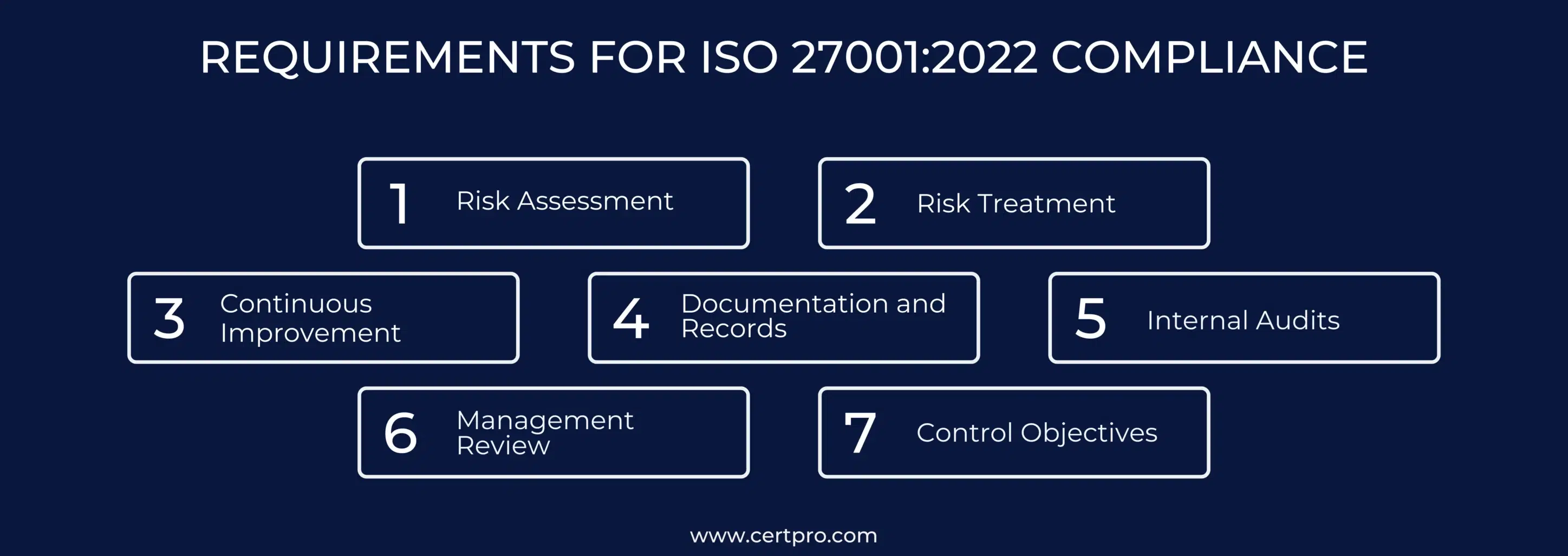
Achieving ISO 27001 Certification in Mumbai requires organizations to satisfy a defined set of documentation, operational, and evidential requirements as specified in ISO/IEC 27001:2022. The requirements span organizational governance, risk management, control implementation, performance monitoring, and continual improvement. Organizations must demonstrate that each mandatory clause has been addressed and that their ISMS operates effectively in practice — not merely on paper. The following requirements represent the core criteria evaluated during the ISO 27001 assessment and audit process.
- ✓Information Security Policy — approved by top management, communicated to all personnel and relevant external parties
- ✓ISMS Scope Document — defining the boundaries and applicability of the information security management system
- ✓Risk Assessment Report — documenting the methodology, identified risks, likelihood and impact ratings, and risk owners
- ✓Risk Treatment Plan — mapping selected controls to identified risks with implementation timelines and responsible parties
- ✓Statement of Applicability (SoA) — listing all 93 Annex A controls with justification for inclusion or exclusion
- ✓Information Security Objectives — measurable targets with defined monitoring mechanisms
- ✓Competence Records — evidence of training, qualifications, and awareness activities for relevant personnel
- ✓Operational Procedures — documented processes for key security activities including access control, incident response, and change management
- ✓Internal Audit Records — reports from completed internal ISMS audits with findings and corrective actions
- ✓Management Review Minutes — records of periodic top management reviews of ISMS performance
Beyond documentation, ISO 27001 compliance requires operational evidence that controls are actively functioning. Access control systems must be configured and maintained in accordance with the access control policy. Cryptographic controls must be applied to sensitive data in transit and at rest where required by the risk treatment plan. Incident response procedures must be tested, and records of any security incidents must be maintained. Vulnerability management processes must demonstrate that systems are regularly scanned, vulnerabilities are tracked, and remediation is prioritized based on risk. Physical security controls must be documented, tested, and evidenced through visitor logs, access records, and environmental monitoring reports.
Supplier and third-party security management is a particularly significant requirement for Mumbai-based organizations that rely extensively on cloud services, outsourced IT operations, and third-party data processors. ISO 27001 requires organizations to assess information security risks associated with supplier relationships, include security requirements in supplier contracts, and monitor supplier compliance on an ongoing basis. For organizations in Mumbai’s BFSI and technology sectors — where supply chains often include international cloud providers, software vendors, and managed service providers — supplier security management represents one of the most complex areas of ISMS implementation and ISO 27001 audit scrutiny.
ISO 27001 mandates that organizations conduct internal audits of their ISMS at planned intervals. These audits determine whether the ISMS conforms to the organization’s own requirements and to the requirements of the standard, and whether it is effectively implemented and maintained. Internal auditors must be competent and must not audit their own work, ensuring objectivity. Internal audit findings must be documented, reported to relevant management, and addressed through corrective action processes. Management reviews must be conducted at planned intervals and must consider inputs including internal audit results, risk assessment outcomes, and the status of information security objectives. These reviews must produce documented outputs including decisions on continual improvement opportunities.
- ✓Documentation Requirements
- ✓Operational and Technical Requirements
- ✓Internal Audit and Management Review Requirements
ISO 27001 Audit Process — Stage 1 and Stage 2 Certification Audit
The ISO 27001 audit process follows a structured two-stage approach conducted by an independent, accredited certification body. CertPro, as a Licensed CPA Firm and independent third-party certification body, conducts ISO 27001 audits in Mumbai through a defined program that evaluates ISMS conformance against all applicable requirements of ISO/IEC 27001:2022. The stages below describe the complete certification audit process — from initial engagement through certificate issuance — for organizations pursuing ISO 27001 Certification in Mumbai.
The certification process begins with scope definition. The organization formally defines the boundaries of its ISMS, including the assets, locations, functions, and processes included within the certification perimeter. The certification body reviews the proposed scope to ensure it is clearly defined, does not create misleading impressions about the extent of certification, and is consistent with the documented ISMS. The audit program is then determined based on the scope, the complexity of the ISMS, the number of locations included, and the risk profile of the organization. Audit days are calculated according to accreditation body guidelines, which specify minimum audit durations based on organizational size and scope complexity.
The Stage 1 audit is a documentation review and readiness evaluation conducted by the certification auditor. During Stage 1, the auditor reviews the organization’s ISMS documentation to assess whether the mandatory requirements of ISO/IEC 27001:2022 have been addressed, whether the ISMS scope is appropriate, and whether the organization is ready to proceed to Stage 2. The auditor examines the information security policy, ISMS scope document, risk assessment report, risk treatment plan, Statement of Applicability, and key operational procedures. Stage 1 identifies any significant gaps or areas of concern that must be resolved before the Stage 2 ISO 27001 audit can proceed.
Stage 1 audit findings are documented in a formal report that classifies identified issues as major nonconformities, minor nonconformities, or observations. Major nonconformities identified at Stage 1 must be resolved before the Stage 2 audit commences. The Stage 1 audit also includes planning for Stage 2, covering identification of specific audit areas, allocation of audit time, and confirmation of audit team composition. Stage 1 and Stage 2 audits are typically scheduled with an interval of 1 to 3 months, giving organizations sufficient time to address any issues identified during the documentation review.
The Stage 2 audit is the primary certification audit. The auditor conducts on-site (or remote, where applicable) evaluation of the organization’s ISMS implementation and operational effectiveness. Control testing is performed through personnel interviews, process observation, and examination of evidence records. Testing covers all Annex A controls declared applicable in the Statement of Applicability, with audit sampling performed in accordance with defined audit procedures. The auditor evaluates whether controls are implemented as documented, whether they are effective in managing identified risks, and whether the ISMS is actively monitored and continually improved — all core criteria for ISO 27001 Certification.
- Scope Definition — formal documentation of ISMS boundaries, assets, locations, and processes within certification scope
- Audit Program Determination — calculation of audit days, team composition, and audit schedule based on scope and complexity
- Stage 1 Audit — documentation review assessing ISMS completeness, SoA adequacy, and readiness for Stage 2
- Stage 1 Nonconformity Review — resolution of identified gaps and major nonconformities before Stage 2 commencement
- Stage 2 Audit — on-site control testing, personnel interviews, evidence examination, and ISMS operational effectiveness evaluation
- Stage 2 Nonconformity Classification — identification and documentation of major and minor nonconformities with required corrective action timelines
- Corrective Action Verification — review and acceptance of corrective action evidence submitted by the organization
- Certification Decision — independent technical review and certification decision by the certification body
- Issuance of ISO 27001 Certificate — formal certificate issued with defined scope, validity period (3 years), and certification body accreditation details
- Surveillance Audits — annual surveillance audits in Years 1 and 2 to verify ongoing ISMS conformance and continual improvement
- Recertification Audit — full recertification audit conducted in Year 3 before certificate expiry
Nonconformities identified during the ISO 27001 audit are classified as major or minor based on their severity and systemic significance. A major nonconformity represents a significant failure of the ISMS to meet a mandatory requirement, an absence of a required control, or a systemic breakdown in an ISMS process that poses substantial risk. Major nonconformities must be resolved within a defined timeframe — typically 90 days — and corrective action evidence must be reviewed and accepted by the auditor before ISO 27001 Certification can be issued. A minor nonconformity represents an isolated gap or deficiency that does not constitute a systemic failure. Minor nonconformities must be addressed within the certification cycle and verified at the next scheduled audit.

- ✓Pre-Audit Scope Definition and Audit Program Determination
- ✓Stage 1 Audit — Documentation Review and Readiness Evaluation
- ✓Stage 2 Audit — Control Testing and Conformance Evaluation
- ✓Nonconformity Classification and Corrective Action Requirements
ISO 27001 Certification Benefits for Mumbai Businesses
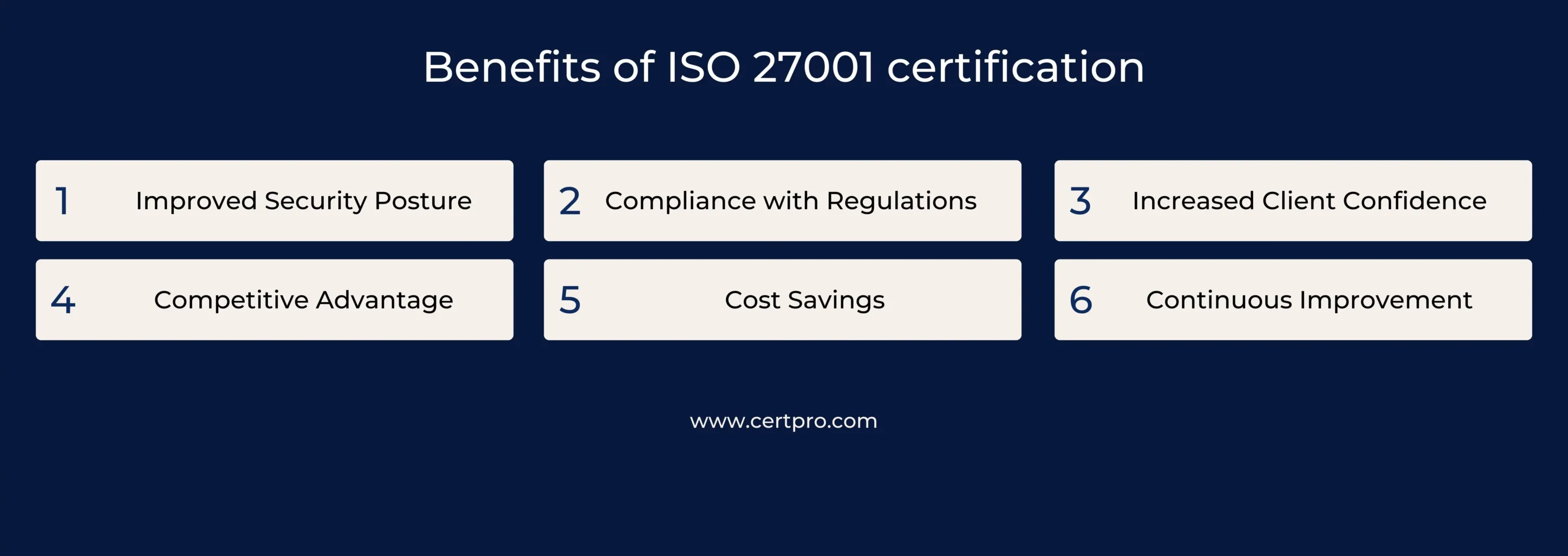
ISO 27001 Certification in Mumbai delivers measurable organizational, commercial, regulatory, and operational benefits. For organizations operating in Mumbai’s competitive and regulated business environment, ISMS certification provides a structured mechanism for managing information security risks while simultaneously signaling credibility and trustworthiness to customers, regulators, and business partners. The following benefits reflect the substantive value that ISO 27001 Certification delivers to Mumbai-based organizations across sectors.
- ✓Qualification for enterprise and government procurement processes that require ISO 27001 Certification as a mandatory vendor criterion
- ✓Expansion of market access to international clients and regulated industries where ISO 27001 is a standard contractual requirement
- ✓Competitive differentiation in sectors where information security credentials influence vendor selection decisions
- ✓Reduced due diligence burden in client onboarding processes, as certification substitutes for repeated ad hoc security questionnaires
- ✓Enhanced credibility with investors and financial institutions evaluating organizational risk management maturity
- ✓Strengthened position in BFSI sector vendor qualification processes governed by RBI, SEBI, and IRDAI vendor risk management requirements
- ✓Improved client confidence in data handling practices, supporting customer retention and contract renewal
- ✓Accelerated sales cycles where ISO 27001 Certification reduces procurement approval timelines
ISO 27001 Certification establishes a documented, risk-driven approach to information security that systematically reduces the likelihood and impact of data breaches, unauthorized access, and security incidents. Organizations with certified ISMS frameworks demonstrate measurably lower incident rates compared to those without structured information security programs — due to the systematic identification and treatment of risks before incidents occur. For Mumbai-based organizations handling sensitive financial data, personal information, and intellectual property, this risk reduction translates directly into reduced exposure to financial losses, legal liability, and reputational damage associated with security breaches.
The structured incident response and business continuity requirements within ISO 27001 compliance ensure that organizations have tested plans for maintaining operations during and after security incidents. Business continuity planning, which aligns with ISO 27001’s Annex A requirements for information security continuity, ensures that critical operations can be restored within defined recovery time objectives. For financial services organizations in Mumbai — where system downtime translates directly into transaction losses and regulatory reporting obligations — this operational resilience is a substantive business benefit that extends beyond information security into enterprise risk management.
ISO 27001 Certification provides a structured framework for mapping and documenting compliance with legal, regulatory, and contractual information security requirements. ISO 27001 compliance helps organizations align with the Digital Personal Data Protection Act (DPDPA) 2023, which imposes obligations on data fiduciaries and processors regarding personal data protection, breach notification, and security safeguards. The ISMS framework provides the documented controls and processes necessary to demonstrate DPDPA compliance to regulators. Similarly, ISO 27001 Annex A controls address requirements under the IT Act 2000 and its amendments, RBI cybersecurity guidelines, SEBI’s CSCRF, and IRDAI IT governance regulations applicable to Mumbai-based regulated entities.
- ✓Commercial and Market Access Benefits
- ✓Risk Reduction and Operational Security Benefits
- ✓Regulatory and Legal Compliance Benefits
Industries and Sectors in Mumbai That Require ISO 27001
ISO 27001 Certification in Mumbai is applicable across a wide range of industries and sectors. While all organizations that handle sensitive information can benefit from ISMS certification, specific sectors face particularly strong demand for ISO 27001 Certification — driven by regulatory requirements, client contractual obligations, and the high sensitivity of the data they process. The following sectors represent the primary industries in Mumbai where ISO 27001 Certification is most frequently required or strongly recommended.
Financial Services and BFSI
Banks, NBFCs, insurance companies, mutual fund houses, stockbrokers, and payment system operators in Mumbai are subject to multiple regulatory frameworks that reference or require information security management practices aligned with ISO 27001. The RBI’s Master Direction on IT Governance, Risk, Controls and Assurance Practices (ITGRC) — applicable to banks and select financial institutions — specifies requirements for information security governance, risk management, and audit that map directly to ISO 27001’s mandatory clauses. ISO 27001 Certification for Mumbai financial services organizations demonstrates regulatory alignment while providing an independently verified evidence base for regulatory examinations and supervisory reviews.
Information Technology and IT-Enabled Services
IT service providers, software development companies, application managed service providers, and business process outsourcing firms operating from Mumbai are among the most frequent pursuers of ISO 27001 Certification. International clients in financial services, healthcare, retail, and government routinely require their Mumbai-based IT vendors to hold current ISO 27001 Certification as a condition of contract award and renewal. For technology sector organizations, ISO 27001 Certification in Mumbai effectively functions as a market access credential — enabling engagement with regulated global clients who cannot outsource to providers without independently verified information security controls.
Healthcare, Pharmaceuticals, and Life Sciences
Healthcare organizations, hospital networks, pharmaceutical companies, and clinical research organizations in Mumbai handle sensitive patient data, clinical trial information, and proprietary research data that require rigorous information security controls. ISO 27001 provides the framework for managing these risks systematically. Annex A controls address access management, data classification, secure disposal, and incident response. As digital health records, telemedicine platforms, and health information exchanges become more prevalent in Mumbai’s healthcare sector, ISMS certification provides an independently verified foundation for patient data protection obligations under the DPDPA and applicable clinical data regulations.
| Sector | Key ISO 27001 Drivers | Applicable Regulations |
|---|---|---|
| BFSI | Customer financial data, transaction security, regulatory compliance | RBI, SEBI CSCRF, IRDAI, DPDPA |
| IT and ITeS | Client data processing, international contracts, vendor qualification | IT Act, DPDPA, client contractual requirements |
| Fintech | Payment data, API security, partner bank requirements | RBI Payment Aggregator guidelines, DPDPA |
| Healthcare | Patient records, clinical data, electronic health systems | DPDPA, Clinical Establishments Act |
| Data Centers | Multi-tenant data hosting, physical and logical security | DPDPA, client contractual requirements, RBI cloud guidelines |
Regulatory Alignment — DPDPA, RBI, SEBI, and India’s Data Protection Framework
India’s evolving regulatory landscape for data protection and information security creates direct demand for ISO 27001 compliance among Mumbai-based organizations. The convergence of the Digital Personal Data Protection Act (DPDPA) 2023, RBI cybersecurity frameworks, SEBI’s information security requirements, and IRDAI guidelines establishes a multi-layered regulatory environment. In this context, ISO 27001 Certification serves as a unifying framework for demonstrating systematic compliance across multiple obligations — making it one of the most strategically valuable credentials for regulated businesses in Mumbai.
Digital Personal Data Protection Act (DPDPA) 2023
The Digital Personal Data Protection Act (DPDPA) 2023 establishes statutory obligations for data fiduciaries and data processors regarding the collection, processing, storage, and protection of personal data of Indian citizens. The Act requires data fiduciaries to implement reasonable security safeguards to prevent personal data breaches, notify the Data Protection Board and affected individuals of significant breaches, and ensure that data processors handle personal data only as instructed. ISO 27001’s ISMS framework directly supports fulfillment of these obligations by providing documented risk assessment, control implementation, incident response, and breach notification procedures. ISMS certification in Mumbai under the context of DPDPA compliance provides a documented, independently verified evidence base for regulatory examinations.
The DPDPA’s requirements for security safeguards are broadly framed, allowing organizations to adopt recognized international standards as evidence of compliance with the Act’s security obligations. ISO 27001 Certification provides this evidentiary foundation by demonstrating that personal data protection controls have been systematically identified, implemented, and independently verified. For Mumbai-based organizations that process large volumes of personal data — including financial institutions, healthcare providers, e-commerce operators, and IT service providers — ISO 27001 Certification represents the most internationally credible mechanism for demonstrating DPDPA security compliance.
RBI Cybersecurity Frameworks and ISO 27001
The Reserve Bank of India has issued multiple cybersecurity and IT governance frameworks applicable to regulated entities including scheduled commercial banks, urban cooperative banks, NBFCs, payment system operators, and payment aggregators. The RBI Cybersecurity Framework for Banks (2016) and subsequent guidelines require regulated entities to implement a cybersecurity policy, establish a Security Operations Centre (SOC), conduct regular vulnerability assessments and penetration testing, and maintain detailed incident response plans. These requirements align substantially with ISO 27001 Annex A controls in the Technological Controls and Organizational Controls domains — making ISO 27001 Certification a practical mechanism for demonstrating RBI compliance in a structured, auditable manner.
SEBI CSCRF and IRDAI Information Security Requirements
SEBI’s Cybersecurity and Cyber Resilience Framework (CSCRF) — applicable to Market Infrastructure Institutions, registered investment advisers, stockbrokers, and other SEBI-regulated entities — specifies requirements for cybersecurity governance, risk management, access control, incident response, and third-party risk management. These requirements map directly to ISO 27001 mandatory clauses and Annex A controls. SEBI has also published guidance encouraging regulated entities to align with recognized information security standards, with ISO 27001 being the most widely adopted framework among SEBI-regulated entities in Mumbai. IRDAI’s Guidelines on Information and Cyber Security for Insurers similarly reference structured information security management practices consistent with ISO 27001 compliance requirements.
ISO 27001 Certification Cost in Mumbai
The cost of ISO 27001 Certification in Mumbai varies based on multiple factors — including organizational size, ISMS scope complexity, number of locations included in the certification, and the certification body selected. Understanding the cost structure enables organizations to budget appropriately and evaluate the total investment required for initial ISO 27001 Certification and ongoing surveillance and recertification activities over the three-year certification cycle.
Factors Affecting ISO 27001 Certification Cost
- ✓Organizational Size — the number of employees and personnel within the ISMS scope directly determines the minimum number of audit days required by accreditation body guidelines
- ✓ISMS Scope Complexity — organizations with complex technology environments, multiple business units, or extensive third-party integrations require more audit time
- ✓Number of Locations — multi-site certifications require additional audit days for each included location, increasing overall certification costs
- ✓Risk Profile — high-risk environments such as financial data processors may require more extensive control testing, extending ISO 27001 audit duration
- ✓Certification Body Selected — fees vary between ISO 27001 certification body providers in Mumbai based on accreditation status, auditor expertise, and service model
- ✓Nonconformity Resolution — organizations with significant nonconformities identified during the audit may incur additional auditor time for corrective action verification
- ✓Transition Requirements — organizations transitioning from ISO 27001:2013 to ISO 27001:2022 may require additional audit scope to cover new controls
- ✓Annual Surveillance Audits — ongoing certification costs include annual surveillance audits in Years 1 and 2 of the three-year certification cycle
CertPro operates on a fixed-fee pricing model for ISO 27001 Certification audits in Mumbai, providing organizations with full cost transparency before audit commencement. Fixed pricing eliminates uncertainty about audit costs and enables accurate budgeting across the full certification cycle. Organizations can obtain a detailed fee proposal based on their specific ISMS scope, size, and complexity through direct engagement with CertPro’s certification team. All fees are inclusive of Stage 1 and Stage 2 audit activities, audit reporting, certification decision, and certificate issuance.
Why CertPro for ISO 27001 Certification in Mumbai
CertPro is a Licensed CPA Firm and independent third-party certification body conducting ISO 27001 audits in Mumbai against the requirements of ISO/IEC 27001:2022. As an ISO 27001 certification body serving Mumbai’s business community, CertPro’s audit engagements are conducted by qualified lead auditors with verified technical expertise in information security management systems. These auditors possess deep sector knowledge across the industries prevalent in Mumbai’s business landscape — including BFSI, technology, healthcare, and manufacturing. CertPro’s institutional positioning as an independent certification body — distinct from consulting or advisory services — ensures that the ISO 27001 audit is conducted without conflicts of interest and in strict conformance with accreditation requirements.
Independent Third-Party Audit Integrity
CertPro’s ISO 27001 audit engagements in Mumbai are conducted exclusively as independent third-party certification audits. CertPro does not provide consulting, advisory, or implementation services to organizations it certifies — maintaining strict independence between certification activities and any organizational support functions. This separation ensures that CertPro’s certification decisions are based solely on objective audit evidence and conformance with ISO/IEC 27001:2022 requirements. Organizations that receive ISO 27001 Certification from CertPro can present the certificate to regulators, clients, and counterparties with confidence that it reflects genuine, independently verified conformance.
CertPro’s audit teams include lead auditors with sector-specific expertise in BFSI, technology, healthcare, and manufacturing — the dominant industries seeking ISO 27001 Certification in Mumbai. This sector knowledge enables auditors to evaluate ISMS implementations in the context of specific regulatory requirements, operational risks, and technology environments relevant to each organization’s business. CertPro auditors are trained to evaluate not only whether ISMS documentation exists, but whether the system is operationally effective and proportionate to the organization’s actual risk profile.
Structured Audit Methodology and Transparent Reporting
CertPro’s ISO 27001 assessment follows a documented audit methodology that ensures consistency, reproducibility, and objectivity across all certification engagements. Stage 1 and Stage 2 audit reports are structured to provide clear, specific findings referenced to applicable clauses and controls — enabling organizations to understand exactly what evidence was evaluated and how findings were determined. Nonconformity reports include precise descriptions of the observed evidence, the applicable requirement, and the basis for the nonconformity classification. This transparency supports organizations in addressing findings effectively and provides a documented audit trail that can be presented to regulators or clients as evidence of the ISO 27001 Certification process.
Surveillance and Recertification Services
ISO 27001 certificates issued by CertPro are valid for three years, subject to satisfactory annual surveillance audits in Years 1 and 2. Surveillance audits verify that the ISMS continues to conform to ISO/IEC 27001:2022 requirements, that corrective actions from previous audits have been effectively implemented, and that the organization continues to demonstrate continual improvement. Recertification audits in Year 3 constitute a full re-evaluation of the ISMS against all applicable requirements. CertPro’s structured surveillance program ensures that ISO 27001 Certification maintains its integrity and value throughout the certification cycle — providing organizations with continuous independent assurance of their ISMS effectiveness.
FAQ
▶
What is ISO 27001 Certification and what does it certify?
▶
How long does the ISO 27001 audit process take for Mumbai organizations?
▶
What is the difference between ISO 27001 certification and ISO 27001 compliance?
▶
Which organizations in Mumbai are eligible for ISO 27001 certification?
▶
How does ISO 27001 certification align with India’s DPDPA requirements?
▶
What is the validity period of an ISO 27001 certificate issued in Mumbai?
▶
What is the Statement of Applicability and why is it important?
▶
How does ISO 27001 differ from other information security frameworks such as SOC 2?

NEW BLOG DESIGN
Ethical Hacking for SOC 2, ISO 27001, HIPAA Audit Readiness | CertPro CPA LLC HERO Dark bg, full width, padded Image as rounded card LEFT | Info panel…
ETHICAL HACKING FOR AUDIT ASSURANCE: STRENGTHENING SOC 2, ISO 27001, AND HIPAA COMPLIANCE
Enterprise security reviews have changed significantly over the last few years. Buyers now evaluate vendors more aggressively before signing contracts…
Multi-Framework Compliance Guide: Best Practices and Strategies
Most compliance teams aren’t managing one framework. They’re managing three, four, sometimes five — simultaneously. A SaaS company selling to enterpri…
Get In Touch
have a question? let us get back to you.