
ISO 27018 Certification in New York
CertPro is a Licensed CPA Firm conducting ISO 27018 certification audits for cloud service providers and data processors operating in New York. Audit engagements evaluate controls against ISO/IEC 27018 privacy principles, Trust Services Criteria alignment, and applicable cloud data protection obligations applicable to organizations across Manhattan, NYC financial district, and greater New York State.
OUR CLIENTS










Introduction to ISO 27018 Certification in New York
ISO 27018 certification is a formal validation that an organization’s cloud-based information systems comply with ISO/IEC 27018, the international standard for the protection of Personally Identifiable Information (PII) in public cloud computing environments. Published by the International Organization for Standardization (ISO) and the International Electrotechnical Commission (IEC), this standard establishes a set of privacy-specific controls applicable to public cloud service providers acting as PII processors. In New York, where cloud infrastructure supports financial services, healthcare, legal, media, and technology industries, ISO 27018 certification serves as a critical compliance benchmark for organizations processing personal data on behalf of clients.
New York is one of the most data-intensive business environments in the United States. With over 9,000 technology companies operating in New York City alone, and with the state hosting major financial institutions, hospitals, insurance carriers, and multinational corporations, the volume of personally identifiable information processed through cloud platforms is substantial. ISO 27018 certification provides a recognized framework for demonstrating that PII is handled with appropriate controls, governance, and accountability — directly addressing obligations under New York SHIELD Act, NYDFS cybersecurity regulations (23 NYCRR 500), HIPAA, and GDPR where applicable to New York organizations with international operations.
What Is ISO 27018?
ISO/IEC 27018 is an international code of practice that extends ISO/IEC 27001 and ISO/IEC 27002 by adding privacy-specific controls for public cloud service providers that process PII. First published in 2014 and updated in 2019, ISO 27018 defines requirements and guidelines for cloud PII processors to implement appropriate technical and organizational measures. The standard covers areas including consent management, data minimization, purpose limitation, transparency obligations, data subject rights, cross-border data transfers, and subprocessor accountability. ISO 27018 differs from general information security standards by focusing specifically on the personal data of individuals — not just organizational data assets — making it uniquely relevant to cloud environments where personal information is a core data type.
ISO 27018 operates as an extension to ISO 27001’s Information Security Management System (ISMS). An organization that has achieved ISO 27001 certification can pursue ISO 27018 by implementing the additional PII-specific controls defined in Annex A of the 27018 standard. These controls address obligations that cloud service providers assume when processing personal data on behalf of their customers (PII principals and PII controllers). The standard explicitly recognizes that cloud service providers, in their role as PII processors, must not use customer data for unauthorized purposes such as advertising or marketing, and must establish transparent sub-processing agreements. In New York’s complex regulatory environment, ISO 27018 aligns with both state-level and federal privacy obligations.
ISO 27018 vs. Related Standards
ISO 27018 is frequently evaluated alongside related frameworks including ISO 27001, SOC 2, and NIST SP 800-53. ISO 27001 establishes the foundational ISMS requirements and is a prerequisite for ISO 27018 certification. SOC 2, performed under AT-C 315 by licensed CPA firms, evaluates Trust Services Criteria including Security, Availability, Confidentiality, Processing Integrity, and Privacy — with the Privacy category overlapping substantially with ISO 27018 controls. However, ISO 27018 provides a globally recognized, standard-specific attestation applicable to international cloud procurement decisions, whereas SOC 2 reports are primarily used in U.S. enterprise vendor evaluations. Organizations in New York’s financial and healthcare sectors often pursue both ISO 27018 and SOC 2 to satisfy multiple client and regulatory requirements simultaneously.
| Standard | Primary Focus | Applicable To | New York Relevance |
|---|---|---|---|
| ISO 27018 | PII protection in public cloud | Cloud PII processors | NYDFS, SHIELD Act, GDPR alignment |
| ISO 27001 | Information Security Management System | All organizations | Foundational ISMS requirement |
| SOC 2 | Trust Services Criteria (Security, Privacy) | U.S. service organizations | Enterprise vendor assessments |
| NIST SP 800-53 | Federal information system controls | U.S. government contractors | Federal and state agency suppliers |
| HIPAA | Protected health information | Healthcare entities | NY healthcare and health-tech organizations |
Applicability to New York Cloud Service Providers
ISO 27018 certification applies directly to any organization that provides public cloud services and processes PII on behalf of its customers. In New York, this includes cloud infrastructure providers (IaaS), cloud platform providers (PaaS), and cloud software vendors (SaaS) that handle personal data for clients in regulated sectors. Financial technology companies in NYC’s Silicon Alley district, electronic health record platforms serving New York hospitals, cloud-based legal practice management tools used by Manhattan law firms, and digital media platforms processing subscriber data all fall within the applicability scope of ISO 27018. The certification is particularly relevant for New York organizations that serve European clients subject to GDPR, as ISO 27018 supports demonstration of adequate technical and organizational measures under Article 28 of the GDPR.

Why ISO 27018 Certification Matters for New York Organizations
New York State has enacted some of the most demanding data protection regulations in the United States. The New York SHIELD Act (Stop Hacks and Improve Electronic Data Security Act), effective March 2020, expanded the definition of private information and required all businesses that handle New York residents’ data to implement reasonable administrative, technical, and physical safeguards. The NYDFS Cybersecurity Regulation (23 NYCRR Part 500), applicable to licensed financial services companies, mandates specific technical controls including encryption, access management, and third-party vendor oversight. ISO 27018 certification provides a structured framework that directly addresses the technical and organizational control requirements of both regulatory regimes, enabling certified organizations to demonstrate compliance more efficiently during regulatory examinations.
Beyond regulatory alignment, ISO 27018 certification provides commercial differentiation in New York’s competitive cloud services marketplace. Enterprise procurement teams at New York’s major financial institutions — including those operating in the Wall Street and Midtown Manhattan financial districts — routinely require cloud vendors to demonstrate third-party validated privacy controls before contract execution. ISO 27018 certification, issued following an independent audit by a Licensed CPA Firm or accredited certification body, provides the level of attestation rigor that institutional buyers demand. This certification can directly influence vendor selection decisions in competitive procurement processes involving Fortune 500 companies, government agencies, and healthcare systems headquartered in New York.
Regulatory Drivers in New York State
New York’s regulatory environment creates specific compliance obligations that ISO 27018 controls directly address. The NYDFS Cybersecurity Regulation (23 NYCRR 500), which applies to banks, insurance companies, and other financial services entities regulated by the New York Department of Financial Services, requires covered entities to maintain a cybersecurity program that includes risk assessments, encryption of nonpublic information in transit and at rest, access privilege management, and third-party service provider security policies. Cloud service providers serving NYDFS-regulated entities must demonstrate alignment with these requirements through vendor due diligence processes. ISO 27018 certification provides a structured basis for demonstrating these controls during NYDFS vendor assessments.
The New York SHIELD Act extended the scope of New York’s data breach notification law and added affirmative data security requirements for businesses that own or license computerized data containing private information about New York residents. Private information under the SHIELD Act includes biometric information, account numbers combined with passwords, and combinations of name with social security number, driver’s license number, or financial account details. Cloud service providers processing this category of information on behalf of New York-based clients must implement reasonable technical safeguards, which ISO 27018 controls directly address. Certification provides documented evidence of these controls, supporting both contractual compliance representations and regulatory examination responses.
Industry-Specific Relevance in New York
New York’s financial services sector, which includes commercial banks, investment banks, hedge funds, insurance carriers, and fintech companies, represents one of the most privacy-sensitive industries in the state. Cloud platforms used by these organizations process vast quantities of personally identifiable financial data, transaction records, and account information. ISO 27018 certification provides financial sector cloud vendors with a recognized attestation that their PII processing controls meet internationally accepted standards. This is particularly relevant for New York fintech companies seeking to expand their enterprise client base, as institutional financial clients require documented evidence of cloud privacy controls before onboarding third-party vendors.
New York’s healthcare industry, centered on major hospital systems including NewYork-Presbyterian, Mount Sinai Health System, and NYU Langone Health, along with thousands of physician practices, health insurance carriers, and health information exchanges, creates significant demand for ISO 27018-compliant cloud platforms. Healthcare organizations are prohibited under HIPAA from engaging cloud service providers that cannot demonstrate adequate PHI protection measures. While HIPAA compliance and ISO 27018 certification address overlapping but distinct obligations, ISO 27018 certification provides healthcare cloud vendors with a documented baseline of privacy controls that supports Business Associate Agreement execution and HIPAA audit readiness. New York healthcare organizations increasingly include ISO 27018 certification as a vendor qualification criterion.
ISO 27018 and GDPR Alignment for New York Exporters
New York-based organizations that export personal data to European Union member states, or that provide cloud services to EU-based clients, face obligations under the EU General Data Protection Regulation (GDPR). Article 28 of the GDPR requires that data controllers engage only processors that provide sufficient guarantees regarding the implementation of appropriate technical and organizational measures. ISO 27018 certification, recognized by European data protection authorities as evidence of appropriate technical and organizational measures, directly supports GDPR Article 28 compliance for New York cloud service providers operating in international markets. The certification’s alignment with GDPR principles of data minimization, purpose limitation, transparency, and data subject rights makes it a practical compliance tool for New York organizations with transatlantic operations.
Benefits of ISO 27018 Certification for New York Businesses
ISO 27018 certification delivers measurable operational, commercial, and regulatory benefits to New York cloud service providers. The certification process itself drives systematic improvements in privacy control implementation, documentation practices, and organizational accountability for PII processing. Beyond internal improvements, the resulting certification provides externally verifiable evidence of privacy control maturity that directly supports sales cycles, contract negotiations, and regulatory examinations. For New York organizations competing for enterprise contracts, government agency business, or international clients, ISO 27018 certification represents a concrete competitive asset with quantifiable commercial value.
- ✓Demonstrated compliance with ISO/IEC 27018 PII protection controls through third-party audit attestation
- ✓Accelerated vendor qualification processes with enterprise clients in New York’s financial and healthcare sectors
- ✓Documented alignment with New York SHIELD Act technical safeguard requirements
- ✓Strengthened due diligence positioning for NYDFS-regulated financial services clients
- ✓GDPR Article 28 compliance support for New York organizations with EU data processing activities
- ✓Reduced risk of data breach incidents through systematic PII control implementation
- ✓Enhanced contractual positioning with clients requiring documented cloud privacy controls
- ✓Improved organizational awareness of PII processing obligations across cloud infrastructure teams
- ✓Competitive differentiation in New York’s crowded cloud services marketplace
- ✓Foundation for additional certifications including ISO 27701 Privacy Information Management System
ISO 27018 certification establishes a formal commitment to transparency in PII processing that directly supports trust with the individuals whose data is being processed. The standard requires certified organizations to disclose the countries and regions where PII may be stored, to provide PII principals with mechanisms to exercise access and deletion rights, and to prohibit the use of PII for unauthorized secondary purposes including targeted advertising. For New York cloud service providers, these transparency requirements align with growing consumer expectations around data privacy and support compliance with New York’s consumer privacy obligations. When clients evaluate cloud vendors, documented transparency controls reduce procurement risk and strengthen contractual confidence.
The prohibition on unauthorized use of PII — a core ISO 27018 requirement — provides a specific contractual assurance that cloud service providers will not monetize client data through advertising or behavioral analytics. This assurance is particularly valuable in New York’s financial services sector, where the unauthorized use of client financial data would violate fiduciary obligations, securities regulations, and banking privacy rules. Cloud vendors serving New York financial institutions can cite ISO 27018 certification as evidence that data use restrictions are embedded in operational controls, independently verified, and subject to ongoing surveillance audits — providing a level of assurance that self-attestation alone cannot achieve.
The process of achieving ISO 27018 certification requires organizations to systematically document and test their PII processing controls, identify gaps between current practices and standard requirements, and implement corrective measures. This process creates significant operational benefits independent of the resulting certificate. Organizations develop comprehensive PII inventories, data flow maps, and processing activity records that support multiple compliance obligations simultaneously. Control testing during the certification audit identifies vulnerabilities in access management, encryption implementation, and subprocessor oversight that might otherwise remain undetected. For New York cloud service providers managing complex multi-cloud environments, ISO 27018 certification drives the systematic control review that strengthens overall security posture.
ISO 27018 certification provides New York cloud service providers with a commercially differentiating credential that influences enterprise purchasing decisions. Large organizations in New York — particularly those in regulated industries — maintain formal vendor risk management programs that score vendors against security and privacy certification criteria. A certified ISO 27018 status can reduce the scope of customer-initiated security questionnaires, shorten vendor onboarding timelines, and support premium pricing in competitive bids. Cloud vendors serving New York’s legal sector, where attorney-client privilege and client confidentiality obligations create heightened sensitivity around data handling, can use ISO 27018 certification to address law firm information security requirements more efficiently.
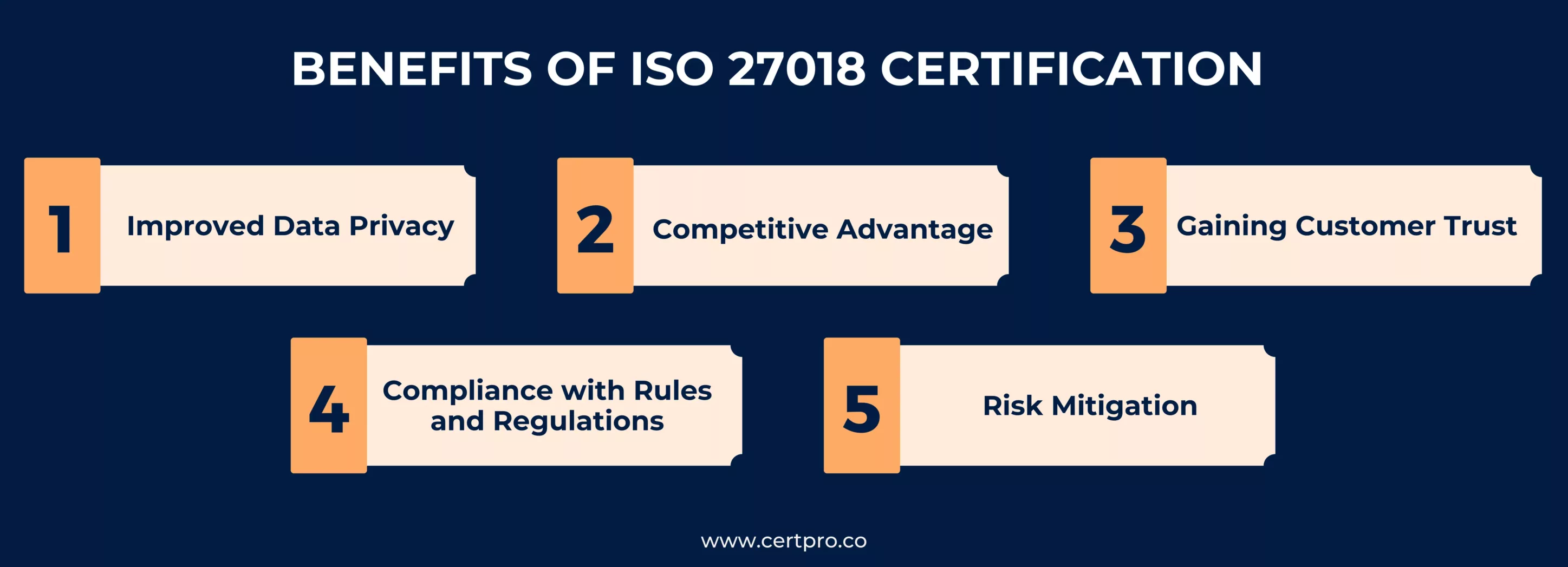
- ✓Trust and Transparency with PII Principals
- ✓Operational and Risk Management Benefits
- ✓Commercial and Competitive Advantages
ISO 27018 Certification Requirements
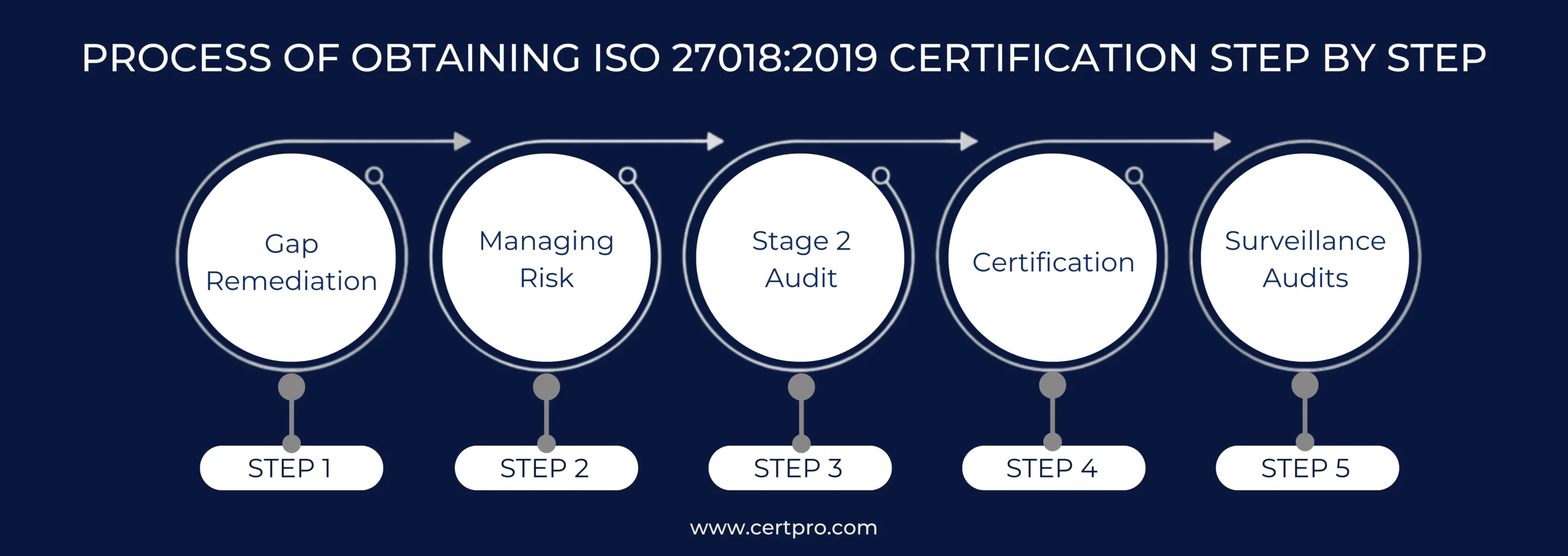
ISO 27018 certification requires organizations to satisfy a defined set of prerequisites, implement a comprehensive set of PII-specific controls, and demonstrate ongoing compliance through independent audit. The certification is structured as an extension of ISO 27001 — meaning that an active ISO 27001 certification is a foundational prerequisite. Organizations that have not yet achieved ISO 27001 certification must address the full ISMS requirements of that standard in addition to the PII-specific controls of ISO 27018. For New York cloud service providers seeking to achieve ISO 27018 certification efficiently, maintaining a well-documented and audit-ready ISO 27001 ISMS substantially reduces the incremental scope of the ISO 27018 certification engagement.
ISO 27001 certification establishes the Information Security Management System (ISMS) framework that ISO 27018 builds upon. To achieve ISO 27001 certification, organizations must define the scope of the ISMS, conduct a systematic information security risk assessment, implement a risk treatment plan, establish documented policies and procedures, and demonstrate ongoing management review and continual improvement processes. The ISO 27001:2022 update, which reduced controls from 114 in the 2013 version to 93 across four main domains (Organizational Controls, People Controls, Physical Controls, and Technological Controls), introduced new controls relevant to cloud environments including cloud service security, threat intelligence, and data masking — all of which directly support ISO 27018 implementation.
Organizations pursuing ISO 27001 certification must complete the transition to the 2022 version by October 31, 2025, as mandated by accreditation bodies. New York organizations currently certified under ISO 27001:2013 that are also pursuing or maintaining ISO 27018 certification should coordinate their transition planning to ensure that the expanded Annex A controls of the 2022 standard are properly documented and tested before the transition deadline. The four new ISO 27001:2022 control domains include several that directly support ISO 27018 compliance, including controls for configuration management, information deletion, data leakage prevention, and monitoring activities — all of which address PII protection in cloud environments.
ISO 27018 Annex A defines the PII-specific controls that cloud service providers must implement as an extension to ISO 27002. These controls are organized into categories addressing consent and choice, purpose legitimacy and specification, collection limitation, data minimization, use, retention and disclosure limitation, accuracy and quality, openness, transparency and notice, individual participation and access, accountability, information security, and privacy compliance. Each control category contains specific control objectives and implementation guidance applicable to cloud PII processing scenarios. For New York cloud service providers, the controls addressing subprocessor management, cross-border transfer restrictions, and data breach notification are particularly relevant given state regulatory requirements.
- ✓Consent and choice: Mechanisms enabling PII principals to control processing of their data
- ✓Purpose limitation: Processing PII only for specified and legitimate purposes disclosed to PII controllers
- ✓Data minimization: Collecting only PII necessary for specified processing purposes
- ✓Use limitation: Prohibition on use of PII for unauthorized secondary purposes including advertising
- ✓Data accuracy controls: Processes to maintain PII accuracy and enable correction by data subjects
- ✓Transparency and notice: Clear disclosure of data storage locations, retention periods, and processing activities
- ✓Individual access rights: Mechanisms for PII principals to access, correct, and delete their data
- ✓Subprocessor accountability: Due diligence and contractual controls over third-party PII processors
- ✓Cross-border transfer controls: Restrictions and safeguards for international PII transfers
- ✓Data breach notification: Procedures for timely notification to PII controllers following security incidents
ISO 27018 certification requires comprehensive documentation of PII processing activities, control implementations, and organizational privacy governance. Required documentation includes a PII processing inventory that identifies all categories of personal data processed, the legal basis for processing, retention periods, and the identity of subprocessors. Privacy policies must be documented and accessible to PII controllers and, where applicable, to PII principals. Data flow diagrams depicting the movement of PII through cloud infrastructure, across subprocessors, and into backup or archival systems must be maintained and kept current. Processing agreements with PII controllers must incorporate the specific representations required by ISO 27018, including commitments on data use restrictions, subprocessor notification, and breach reporting timelines.
Technical controls required for ISO 27018 certification address the specific vulnerabilities that arise in cloud PII processing environments. Encryption of PII in transit and at rest using current cryptographic standards is a fundamental requirement, with key management practices documented and subject to audit. Access control systems must enforce least-privilege principles, with PII access restricted to personnel whose job functions require it and with access logs maintained for review. Data masking and anonymization controls must be implemented where PII is used in non-production environments such as development and testing systems — a requirement that New York cloud service providers maintaining large development teams must specifically address in their control implementations.
Network security controls protecting cloud environments processing PII must include intrusion detection, network segmentation between PII processing systems and other infrastructure, and monitoring capable of detecting anomalous access patterns. Vulnerability management programs must include regular scanning of systems processing PII, with remediation timelines defined and tracked. Physical security controls at data center facilities must restrict access to authorized personnel and include environmental controls appropriate to the hardware hosting PII. For New York cloud service providers utilizing third-party data center facilities in the New York metropolitan area — including those in lower Manhattan, northern New Jersey, and Long Island — contractual provisions must ensure that physical security requirements are met at colocation facilities.

- ✓Prerequisite: ISO 27001 ISMS Foundation
- ✓PII-Specific Control Requirements
- ✓Documentation Requirements
- ✓Technical Control Requirements
ISO 27018 Certification Cost in New York
The cost of ISO 27018 certification in New York varies based on multiple factors including organizational size, cloud environment complexity, the number of PII categories processed, the number of subprocessors involved, and the maturity of existing ISO 27001 ISMS controls. Organizations should evaluate certification costs across two primary categories: internal preparation costs (including staff time, control implementation, and documentation development) and external audit fees charged by the certification body or Licensed CPA Firm conducting the audit engagement. Both categories represent significant investments that should be evaluated against the commercial and regulatory benefits of certification.
Factors Influencing Certification Cost
The primary drivers of ISO 27018 certification cost for New York organizations include the size and complexity of the cloud environment within scope, the number of employees involved in PII processing activities, the geographic distribution of data processing facilities, and the number of subprocessors that must be evaluated. Organizations with well-established ISO 27001 ISMS programs typically incur lower incremental costs for ISO 27018 certification, as the foundational documentation, control framework, and audit procedures are already in place. Conversely, organizations initiating ISO 27001 and ISO 27018 certification simultaneously face higher combined investment requirements, as both the ISMS foundation and the PII-specific control layer must be established before audit.
The complexity of subprocessor relationships is a particularly significant cost driver for New York cloud service providers that rely on extensive third-party service chains. ISO 27018 requires documented due diligence on all subprocessors handling PII, including contractual representations, security assessment results, and notification procedures for subprocessor changes. Organizations with large numbers of subprocessors — a common characteristic of SaaS platforms built on AWS or Azure with multiple third-party integrations — face proportionally higher documentation and review costs. For New York-based fintech platforms integrating with financial data aggregators, payment processors, and identity verification services, subprocessor management represents one of the most resource-intensive components of ISO 27018 certification preparation.
Cost Components and Investment Considerations
| Cost Component | Description | Typical Influencing Factors |
|---|---|---|
| Stage 1 Audit Fees | Documentation review and audit program determination | Scope size, documentation completeness |
| Stage 2 Audit Fees | On-site and remote control effectiveness testing | Number of locations, system complexity |
| Internal Preparation | Staff time for PII inventory, documentation, control implementation | ISMS maturity, team size |
| Annual Surveillance | Ongoing compliance verification audits (Years 1 and 2) | Scope changes, nonconformity volume |
| Recertification Audit | Three-year cycle comprehensive re-evaluation | Organizational changes, new services |
New York organizations evaluating the return on investment of ISO 27018 certification should consider the commercial value of accelerated vendor qualification, reduced security questionnaire burden, and premium pricing opportunities in addition to risk reduction and regulatory compliance benefits. For cloud service providers competing for enterprise contracts in New York’s financial services sector, a single large-enterprise contract win attributable to ISO 27018 certification can generate returns that substantially exceed total certification investment. Organizations should also consider the cost avoidance associated with reduced data breach probability and the potential regulatory penalty exposure that documented control frameworks help mitigate under New York’s expanding privacy enforcement environment.
CertPro’s ISO 27018 Audit Services in New York
CertPro is a Licensed CPA Firm that conducts ISO 27018 certification audits for cloud service providers and data processors operating in New York. CertPro’s audit engagements evaluate PII protection controls against the requirements of ISO/IEC 27018, Trust Services Criteria privacy components, and applicable cloud data protection obligations under New York state regulations. As a Licensed CPA Firm, CertPro operates under professional standards that require independence, objectivity, and evidence-based evaluation — ensuring that certification decisions reflect genuine control effectiveness rather than procedural compliance alone.
Audit Methodology and Independence
CertPro’s ISO 27018 audit methodology is structured around the ISO/IEC 17021-1 requirements for certification body operations and the specific competence requirements for information security management system auditors. Audit teams include certified ISO 27001 lead auditors with demonstrated experience in cloud architecture, privacy regulation, and PII processing controls relevant to New York’s regulated industries. The audit methodology incorporates control documentation review, technical configuration testing, personnel interviews, and process observation to develop a comprehensive assessment of control design and operating effectiveness. This evidence-based approach produces audit findings that can withstand scrutiny from enterprise clients, regulatory examiners, and legal counsel.
The independence requirements applicable to CertPro as a Licensed CPA Firm ensure that audit engagements are conducted without conflicts of interest that could compromise the objectivity of findings. CertPro does not provide implementation services or advisory support to organizations that it audits for certification — maintaining the clear separation between evaluation and preparation activities that is required for credible third-party attestation. For New York organizations that have received preparation support from other service providers, CertPro conducts the independent evaluation that transforms internally developed controls into externally verified certifications. This independence is recognized by enterprise procurement teams and regulatory examiners as a prerequisite for meaningful attestation.
Sector-Specific Expertise for New York Industries
CertPro’s audit teams bring sector-specific expertise relevant to New York’s principal industries, including financial services, healthcare, legal and professional services, media and entertainment, and technology. This sector knowledge enables auditors to evaluate ISO 27018 controls in the context of industry-specific regulatory requirements and operational characteristics. For New York fintech organizations subject to NYDFS regulation, CertPro auditors understand the intersection between ISO 27018 controls and 23 NYCRR 500 cybersecurity requirements, enabling integrated evaluation that produces findings relevant to multiple compliance frameworks. For healthcare cloud platforms, CertPro’s understanding of HIPAA technical safeguard requirements allows ISO 27018 audit findings to be contextualized within the broader healthcare compliance landscape that New York clients navigate.
Audit Engagement Structure for New York Organizations
CertPro structures ISO 27018 audit engagements for New York organizations around the specific characteristics of each client’s cloud environment and organizational context. Audit planning begins with scope confirmation discussions that identify the boundaries of the certification scope, the key control owners, and the evidence repositories where audit documentation is maintained. For New York organizations with operations distributed across Manhattan office locations, remote engineering teams, and third-party data centers in the tristate area, audit logistics are planned to ensure comprehensive coverage of all in-scope locations and personnel. Virtual audit procedures accommodate remote engineering teams and distributed organizational structures without compromising the rigor of evidence evaluation.
ISO 27018 Certification for New York Financial Services and Fintech
New York’s financial services sector represents the largest concentration of regulated data processing activity in the United States. Financial institutions and fintech companies operating in New York process billions of personally identifiable financial records daily, across cloud platforms ranging from core banking systems to payment processing infrastructure, wealth management platforms, and insurance administration systems. ISO 27018 certification provides a recognized framework for cloud service providers serving this sector to demonstrate privacy control maturity in a format that institutional buyers and regulators can evaluate independently.
NYDFS Alignment and Third-Party Vendor Requirements
The NYDFS Cybersecurity Regulation (23 NYCRR Part 500) requires covered financial institutions to implement a comprehensive cybersecurity program and to assess the cybersecurity practices of third-party service providers that have access to nonpublic information. Section 500.11 of the regulation requires covered entities to maintain written policies governing third-party service provider security, including due diligence requirements and contractual protections. Cloud service providers serving NYDFS-regulated entities must be prepared to demonstrate their security and privacy control frameworks during customer due diligence assessments. ISO 27018 certification provides a structured, independently verified response to NYDFS third-party security assessment requirements, reducing the assessment burden for both the cloud provider and the regulated financial institution.
The 2023 amendments to the NYDFS Cybersecurity Regulation expanded requirements for larger covered entities, introducing new obligations around board-level cybersecurity oversight, vulnerability management, and business continuity planning. These amendments increased the due diligence expectations that large NYDFS-regulated institutions place on their cloud service providers. ISO 27018 certified vendors that can demonstrate comprehensive PII protection controls are better positioned to satisfy the enhanced due diligence requirements of amended NYDFS-regulated clients. New York fintech companies that serve regulated financial institutions — including banking-as-a-service platforms, embedded finance providers, and payment infrastructure vendors — face particular pressure to maintain current, independently verified security and privacy certifications.
Cryptocurrency and Digital Asset Platforms
New York’s cryptocurrency and digital asset sector, regulated under the NYDFS BitLicense framework, includes exchanges, custodians, and trading platforms that process significant volumes of personally identifiable financial data in cloud environments. BitLicense regulations require licensees to maintain cybersecurity programs and to implement consumer protection measures that address the security of customer personal information. ISO 27018 certification provides cryptocurrency and digital asset platforms with a recognized PII protection framework that supports both BitLicense compliance and the security assessment requirements of institutional investors and enterprise clients evaluating digital asset service providers. As institutional adoption of digital assets grows in New York’s financial markets, ISO 27018 certification becomes an increasingly relevant credential for digital asset infrastructure providers.
ISO 27018 Certification for New York Healthcare and Life Sciences
New York’s healthcare and life sciences sector is among the most privacy-sensitive industries in the state, processing personal health information, genetic data, mental health records, and substance use disorder treatment data under multiple overlapping regulatory frameworks. Cloud service providers serving New York healthcare organizations must navigate HIPAA, New York Mental Hygiene Law, New York Public Health Law Article 27-F (HIV-related information confidentiality), and 42 CFR Part 2 (substance use disorder record confidentiality), in addition to general data protection obligations. ISO 27018 certification provides healthcare cloud vendors with a structured privacy control framework that addresses the common elements of these regulatory requirements.
HIPAA and ISO 27018 Control Alignment
HIPAA’s Security Rule requires covered entities and business associates to implement administrative, physical, and technical safeguards to protect the confidentiality, integrity, and availability of electronic protected health information (ePHI). ISO 27018 controls overlap substantially with HIPAA Security Rule requirements in areas including access control, encryption, audit logging, and incident response. Cloud service providers that achieve ISO 27018 certification build a documented control framework that addresses HIPAA technical safeguard requirements, supporting Business Associate Agreement execution with covered entity clients. New York healthcare organizations increasingly require cloud vendors to provide evidence of ISO 27018 certification as part of HIPAA business associate due diligence, recognizing the certification as a proxy for HIPAA technical safeguard compliance.
The intersection of ISO 27018 and HIPAA is particularly relevant for New York health information technology companies developing electronic health record platforms, clinical data management systems, telehealth infrastructure, and population health analytics tools. These platforms process large volumes of ePHI on behalf of New York healthcare provider clients and must demonstrate robust privacy controls to secure and maintain enterprise healthcare contracts. ISO 27018 certification, combined with HIPAA compliance documentation, provides a comprehensive privacy attestation package that satisfies both the international standard requirements and the specific U.S. healthcare regulatory framework that New York healthcare clients must observe.
Life Sciences and Clinical Research Data
New York’s life sciences sector includes pharmaceutical companies, clinical research organizations, genomics companies, and medical device manufacturers that collect and process highly sensitive personal health and genetic data in cloud environments. Clinical trial data, genomic sequences, and patient-reported outcome data are categories of PII that attract heightened regulatory scrutiny and require demonstrated protection measures. ISO 27018 certification provides life sciences cloud platform providers with a recognized framework for demonstrating that these sensitive data categories are protected through controls appropriate to their sensitivity. New York’s prominence as a center for biomedical research — anchored by institutions including Columbia University Medical Center, Memorial Sloan Kettering Cancer Center, and Rockefeller University — creates significant demand for ISO 27018-certified cloud platforms capable of supporting clinical research data management.
Securing ISO 27018 Certification in New York with CertPro
CertPro conducts ISO 27018 certification audits for cloud service providers and data processors across New York State, including organizations headquartered in Manhattan, Brooklyn, Queens, the Bronx, Staten Island, and the broader New York metropolitan area. As a Licensed CPA Firm, CertPro’s audit engagements meet the independence, professional standards, and evidence-based evaluation requirements that enterprise clients and regulatory bodies demand from certification attestations. CertPro’s audit teams bring demonstrated expertise in ISO 27018 control evaluation, New York regulatory requirements, and cloud architecture relevant to the industries that drive New York’s data economy.
Organizations seeking ISO 27018 certification in New York that engage CertPro for their certification audit receive structured, professional audit services focused on accurate control evaluation and clear, actionable audit findings. CertPro’s audit reports provide the level of detail and specificity that enterprise procurement teams, board-level oversight committees, and regulatory examiners require to assess the significance of certification findings. The institutional credibility of CertPro’s Licensed CPA Firm status ensures that ISO 27018 certifications issued following CertPro audit engagements carry the professional weight that New York’s demanding enterprise and regulatory environment requires.
New York cloud service providers at any stage of ISO 27018 readiness — from organizations initiating ISO 27001 ISMS implementation to those seeking recertification of existing ISO 27018 programs — can engage CertPro to discuss the scope, structure, and timeline of a certification audit engagement. CertPro’s audit program determinations are tailored to each organization’s specific cloud environment, regulatory context, and certification objectives, ensuring that the audit scope accurately reflects the PII processing activities that certification is intended to attest. Contact CertPro to initiate a scope discussion for ISO 27018 certification audit services in New York.
FAQ
▶
What is ISO 27018 certification and who needs it in New York?
▶
How long does the ISO 27018 certification process take in New York?
▶
Is ISO 27001 certification required before pursuing ISO 27018 in New York?
▶
How does ISO 27018 certification support compliance with New York’s SHIELD Act?
▶
What is the difference between ISO 27018 certification and SOC 2 in New York?
▶
How often must ISO 27018 certification be renewed for New York organizations?
▶
What types of cloud service providers in New York are eligible for ISO 27018 certification?
▶
How does ISO 27018 certification benefit New York organizations seeking GDPR compliance?


More articles about ISO 27018 are coming soon. Check back for updates!
More articles about ISO 27018 are coming soon. Check back for updates!
Get In Touch
have a question? let us get back to you.