
ISO 42001 Certification in Bangalore
CertPro, a Licensed CPA Firm, delivers ISO 42001 Certification in Bangalore through a structured, evidence-based assessment methodology. Certification scope covers AI Management System (AIMS) framework conformance, AI risk controls, governance documentation, and supplier obligations — evaluated against ISO/IEC 42001:2023 requirements for technology-driven organizations across Bangalore’s AI and SaaS ecosystem.
OUR CLIENTS










What Is ISO 42001 Certification?
ISO 42001 Certification refers to formal conformance verification against ISO/IEC 42001:2023 — the world’s first international standard for Artificial Intelligence Management Systems (AIMS). Published by the International Organization for Standardization (ISO) and the International Electrotechnical Commission (IEC) in December 2023, the standard establishes a structured framework enabling organizations to develop, deploy, and govern AI systems responsibly, ethically, and transparently.
ISO 42001 Certification in Bangalore is increasingly pursued by technology companies, AI startups, global capability centers (GCCs), and SaaS organizations. These organizations seek to demonstrate accountable AI governance to regulators, enterprise clients, and international partners — making this certification a strategic priority across the city’s technology ecosystem.
Definition of ISO/IEC 42001:2023
ISO/IEC 42001:2023 is an internationally recognized management system standard that specifies requirements for establishing, implementing, maintaining, and continually improving an Artificial Intelligence Management System within the context of an organization. The standard applies to any organization — regardless of type, size, or nature — that develops, provides, or uses AI-based products or services.
It provides a systematic approach to managing AI-related risks and opportunities, ensuring that AI systems operate within defined ethical boundaries, meet regulatory obligations, and deliver outcomes aligned with organizational objectives and societal expectations.
The AIMS framework under ISO 42001 is built around the Plan-Do-Check-Act (PDCA) cycle — the same management system logic underpinning ISO 27001 (information security) and ISO 9001 (quality management). This structural alignment means organizations already certified under related ISO standards can integrate ISO 42001 requirements into their existing management system architecture with measurable efficiency.
The standard addresses six primary domains: organizational context and AI governance, leadership commitment and AI policy, planning and AI risk management, support and resource allocation, operational controls for AI systems, and performance evaluation with continual improvement mechanisms.
What Is an AI Management System (AIMS)?
An Artificial Intelligence Management System (AIMS) is a formalized set of policies, processes, procedures, and controls that an organization uses to manage the design, development, deployment, monitoring, and decommissioning of AI systems throughout their lifecycle. An AIMS establishes clear accountability structures, defines AI-specific risk thresholds, mandates transparency in AI decision-making, and ensures that AI outputs are subject to human oversight where appropriate.
Under ISO/IEC 42001:2023, a certified AIMS demonstrates that the organization has implemented documented controls to address algorithmic bias, data quality governance, AI supply chain risks, and ethical use of AI technologies.
The AIMS framework also requires organizations to define and document the intended purpose of each AI system, the potential impact of AI decisions on affected individuals and groups, and the mechanisms in place to detect, report, and remediate AI system failures or unintended consequences.
For Bangalore-based organizations operating in regulated sectors such as fintech, healthtech, edtech, and legal technology, the AIMS framework provides a structured audit trail that demonstrates due diligence in AI governance. This documentation is increasingly demanded by enterprise procurement teams, institutional investors, and regulatory bodies evaluating AI governance maturity.
Scope of ISO 42001 Certification
The scope of ISO 42001 Certification is defined by the organization’s AI activities — whether it functions as an AI developer creating algorithms and models, an AI provider deploying AI services to clients, or an AI user integrating third-party AI systems into its operations.
Certification scope documentation must explicitly identify all AI systems within the boundary, including the nature of AI use (generative AI, predictive analytics, computer vision, natural language processing, and automated decision-making), the geographic and operational boundaries of the AIMS, and all relevant interested parties including customers, regulators, employees, and AI supply chain vendors. A precise scope definition is a mandatory prerequisite for any ISO 42001 audit engagement.

Why ISO 42001 Certification Matters for Bangalore Businesses
Bangalore occupies a singular position in India’s technology landscape. Widely recognized as India’s Silicon Valley, the city hosts more than 400 global capability centers (GCCs), thousands of SaaS companies, and a rapidly expanding base of AI-native startups. Industry estimates indicate that Bangalore accounts for over 35 percent of India’s total IT exports and hosts the highest concentration of AI research and development activity in the country.
This scale of AI development and deployment creates a corresponding obligation for structured AI governance — making ISO 42001 Certification in Bangalore a strategically essential credential for organizations seeking to operate responsibly and competitively within this ecosystem.
Alignment With India’s DPDP Act and AI Governance Frameworks
India’s Digital Personal Data Protection (DPDP) Act, 2023 introduces binding obligations for organizations that collect, process, and store personal data of Indian residents. AI systems — which frequently process personal data to generate predictions, recommendations, and decisions — are directly implicated by DPDP Act requirements around data minimization, consent management, purpose limitation, and data principal rights.
ISO 42001 compliance provides a structured framework for addressing DPDP Act obligations that intersect with AI system governance, including data lifecycle management, algorithmic transparency, and mechanisms for individuals to contest automated decisions. Organizations pursuing ISO 42001 Certification in Bangalore therefore gain a governance infrastructure that simultaneously supports DPDP Act compliance obligations.
Beyond the DPDP Act, Bangalore-based organizations servicing European clients must contend with the EU AI Act — the European Union’s comprehensive AI regulation that classifies AI systems by risk level and imposes conformity assessment requirements for high-risk AI applications. ISO 42001 certification is recognized as a relevant governance framework for demonstrating EU AI Act compliance, particularly for organizations in healthcare AI, financial services AI, biometric processing, and critical infrastructure AI.
Bangalore technology firms exporting AI services to EU markets face direct regulatory pressure to demonstrate AIMS certification — creating a concrete business case for ISO 42001 assessment and certification that extends well beyond voluntary governance commitments.
GCC and Enterprise Procurement Requirements
Global capability centers operating in Bangalore — including those established by Fortune 500 technology, financial services, and healthcare companies — increasingly mandate AI governance certifications as part of their vendor qualification and internal audit requirements. Enterprise procurement frameworks at multinational organizations now routinely include AI governance standards in supplier risk assessments, alongside established certifications such as ISO 27001 and SOC 2.
Bangalore-based AI vendors, SaaS providers, and technology service organizations that hold ISO 42001 Certification in Bangalore satisfy these procurement requirements with a recognized third-party attestation. This reduces procurement cycle friction and enables access to enterprise contract opportunities that are otherwise inaccessible without formal AIMS certification.
The competitive differentiation value of ISO 42001 certification for IT companies in Bangalore is measurable. In a market where hundreds of organizations offer nominally similar AI and technology services, third-party certification under a globally recognized ISO standard provides verifiable differentiation that marketing claims alone cannot replicate.
ISO 42001 certification for startups in Bangalore is particularly impactful during Series A and Series B funding rounds, where institutional investors conduct AI governance due diligence as part of their investment evaluation process. A certified AIMS signals operational maturity, reduced regulatory exposure, and a systematic approach to AI risk management that investors and acquirers assess favorably.
Bangalore’s AI Risk Landscape and Heightened Governance Scrutiny
The scale and velocity of AI deployment across Bangalore’s technology ecosystem creates a correspondingly elevated risk landscape. Algorithmic bias in hiring platforms, opaque credit-scoring models in fintech applications, unvalidated AI diagnostics in healthtech systems, and insufficiently audited recommendation engines in edtech platforms represent documented categories of AI risk requiring systematic management.
Regulatory bodies including the Reserve Bank of India (RBI), the Insurance Regulatory and Development Authority of India (IRDAI), and the Securities and Exchange Board of India (SEBI) have each issued guidance on algorithmic accountability that aligns with ISO 42001 compliance requirements. ISO 42001 assessment services in Bangalore conducted by accredited certification bodies provide an independent, evidence-based evaluation of whether organizational controls adequately address these sector-specific AI risks.
Requirements for ISO/IEC 42001:2023 Certification
ISO/IEC 42001:2023 certification requirements are organized across ten clauses aligned with the High-Level Structure (HLS) common to all ISO management system standards. Clauses 1 through 3 address scope, normative references, and terms and definitions. Clauses 4 through 10 contain the auditable requirements that form the basis of every ISO 42001 audit.
Organizations seeking ISO 42001 Certification in Bangalore must demonstrate documented conformance across all applicable clauses, with objective evidence reviewed and tested during the certification audit process. The following requirements represent the core pillars of an ISO/IEC 42001:2023 conformant AIMS.
Clause 4 of ISO/IEC 42001:2023 requires organizations to determine the internal and external context relevant to AI governance, identify interested parties and their AI-related requirements, and define the scope of the AIMS with documented boundaries. The organizational context analysis must capture the nature and extent of AI use, the applicable regulatory environment, and the ethical principles governing AI development and deployment.
For Bangalore-based technology organizations, the contextual analysis must address India’s DPDP Act obligations, sector-specific regulatory requirements, international client contractual obligations, and the organization’s position in the AI supply chain — whether as developer, provider, or user of AI systems.
The AIMS scope document — a mandatory output of Clause 4 — must identify all AI systems within the certification boundary by name, function, data inputs, decision outputs, and risk classification. Incomplete or ambiguous scope definitions are among the most common nonconformities identified during Stage 1 audits.
Organizations must maintain version-controlled scope documentation that is reviewed and updated whenever new AI systems are deployed, existing systems are materially modified, or the organization’s AI supply chain changes. This documentation forms the evidentiary foundation against which all subsequent AIMS controls are evaluated during the ISO 42001 audit.
Clause 5 requires top management to demonstrate active leadership commitment to the AIMS through a formally approved AI policy — a documented statement of the organization’s commitments regarding responsible AI development and use. The AI policy must be appropriate to the organization’s AI activities, include commitments to compliance with applicable AI-related legal and regulatory requirements, establish a framework for setting AI governance objectives, and be communicated to all personnel whose work affects AI system outcomes.
Critically, the AI policy must be reviewed at defined intervals and following any significant changes to the organization’s AI environment — including adoption of new AI platforms, entry into new AI markets, or material changes in regulatory requirements.
Clause 5 also requires the organization to define and document AI-specific roles and responsibilities. These include designation of an AI governance function or individual accountable for AIMS performance, roles responsible for AI risk assessments, roles responsible for AI system monitoring and incident reporting, and roles responsible for supplier AI governance oversight.
The assignment of these roles must be documented, communicated, and understood by the individuals occupying them. During the ISO 42001 audit, auditors verify role assignments through organizational charts, job descriptions, meeting records, and interviews with personnel responsible for AI governance functions.
Clause 6 addresses AI risk management planning — requiring organizations to establish a systematic process for identifying, analyzing, evaluating, and treating AI-specific risks. The AI risk assessment methodology must define risk criteria, risk acceptance thresholds, and treatment options for risks exceeding acceptable levels.
AI risks assessed under ISO/IEC 42001:2023 include: risks from biased training data, model drift and performance degradation over time, adversarial attacks on AI systems, inadequate human oversight of automated decisions, and AI supply chain vulnerabilities where third-party components introduce unvalidated behaviors.
AI risk treatment plans must be documented, assigned to responsible owners, subject to implementation timelines, and evaluated for effectiveness through defined performance metrics. Residual risks following treatment must be formally accepted by authorized management.
The risk management documentation — including risk registers, treatment plans, and residual risk acceptance records — constitutes core audit evidence reviewed during the ISO 42001 assessment. Organizations in Bangalore’s fintech and healthtech sectors face elevated AI risk profiles due to the sensitivity of data processed and the potential for AI decisions to cause material harm to individuals, making comprehensive risk documentation a critical certification prerequisite.
Clauses 8 through 10 address operational controls, performance evaluation, and continual improvement. Operational requirements include AI impact assessments for high-risk AI applications, AI system lifecycle documentation covering design through retirement, transparency mechanisms enabling affected individuals to understand and contest AI decisions where applicable, and supplier management controls ensuring that AI components and services from third parties meet defined governance standards.
The transparency requirement is particularly relevant for Bangalore-based organizations deploying AI in customer-facing applications — including chatbots, credit decisioning, fraud detection, and content recommendation — where affected individuals have a legitimate interest in understanding how AI-driven decisions are made.
- ✓Documented AIMS scope identifying all AI systems within certification boundaries
- ✓Formally approved AI policy signed by top management
- ✓Documented AI governance roles and responsibility assignments
- ✓Systematic AI risk assessment methodology with defined risk criteria
- ✓AI risk treatment plans with implementation timelines and accountability assignments
- ✓AI impact assessments for high-risk AI system deployments
- ✓AI system lifecycle documentation covering design through decommissioning
- ✓Transparency mechanisms for AI decision-making affecting individuals
- ✓Supplier AI governance controls and contractual obligations documentation
- ✓Internal audit program covering all AIMS clause requirements
- ✓Management review records demonstrating AIMS performance evaluation
- ✓Continual improvement records documenting corrective actions and AIMS enhancements
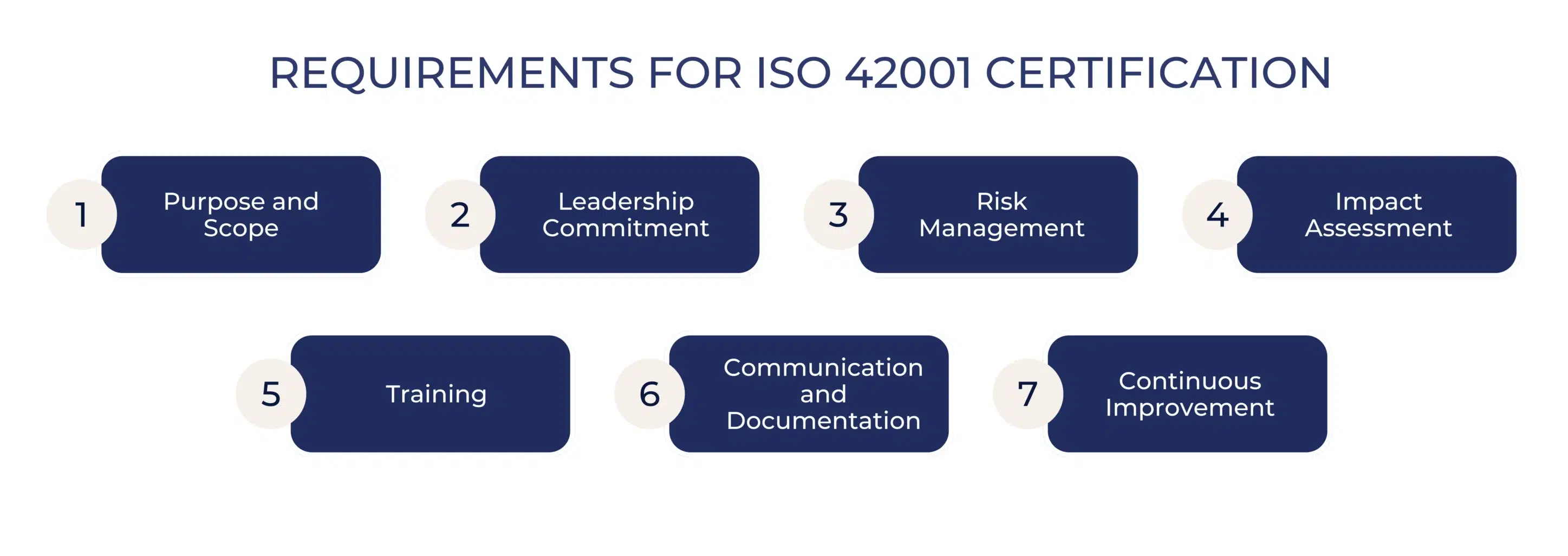
- ✓Organizational Context and AI Governance Documentation
- ✓AI Policy, Leadership Commitment, and Roles
- ✓AI Risk Management and Treatment
- ✓Transparency, Supplier Obligations, and Continual Improvement
ISO 42001 Certification Process in Bangalore
The ISO 42001 certification process in Bangalore follows a structured, multi-stage audit methodology consistent with ISO/IEC 17021-1 requirements for management system certification bodies. Each stage generates specific audit outputs, findings, and decisions that progress the organization toward certification issuance.
The process is designed to provide objective, independent verification that the organization’s AIMS conforms to ISO/IEC 42001:2023 requirements and is operationally effective. The following steps describe the complete ISO 42001 certification process as delivered by CertPro, a Licensed CPA Firm, for organizations pursuing ISO 42001 Certification in Bangalore.
The certification process begins with scope definition — the organization formally defines the boundary of its AIMS, identifying all AI systems, organizational units, geographic locations, and operational processes included within the certification scope. The scope statement is reviewed for completeness, clarity, and alignment with the organization’s actual AI activities.
Following scope finalization, the Stage 1 audit is conducted as a documentation review examining the organization’s AIMS documentation against ISO/IEC 42001:2023 clause requirements. The Stage 1 audit assesses whether the organization has developed the required documentation infrastructure — AI policy, risk assessment methodology, scope statement, roles and responsibilities, and operational procedures — and identifies any significant gaps that must be addressed before Stage 2 audit activities can proceed.
The Stage 1 audit produces a formal audit report documenting areas of conformance, observations, and any major or minor nonconformities identified during the documentation review. Organizations receive a defined timeframe — typically 30 to 90 days depending on the volume and nature of findings — to address Stage 1 nonconformities before Stage 2 audit scheduling.
The Stage 1 audit also finalizes the Stage 2 audit program, determining the specific processes, controls, personnel, and AI systems to be examined during the on-site certification audit. Adequate preparation of Stage 1 documentation is the single most determinative factor in the efficiency of the overall ISO 42001 certification timeline.
The Stage 2 audit is the substantive certification audit — conducted on-site or through approved remote audit mechanisms — during which the audit team evaluates the operational effectiveness of the organization’s AIMS against all applicable ISO/IEC 42001:2023 requirements. Stage 2 audit activities include interviews with personnel responsible for AI governance, examination of AI system documentation and operational records, and testing of AI risk management controls through review of risk registers and treatment plans.
The ISO 42001 audit also evaluates AI impact assessment documentation for deployed AI systems, reviews supplier governance records and AI-related contractual terms, and assesses internal audit and management review records demonstrating AIMS performance evaluation.
During the Stage 2 ISO 42001 audit, auditors apply sampling methodology to evaluate whether documented controls are consistently implemented across the scope of the AIMS. Audit evidence is collected through document examination, records review, personnel interviews, and — where applicable — observation of AI system operations and monitoring processes.
All audit findings are categorized as conformance, observations (potential future issues), minor nonconformities (isolated failures to meet a specific requirement), or major nonconformities (systemic failures or absence of required controls). The audit team’s findings are documented in a Stage 2 audit report submitted to the certification decision function.
Following the Stage 2 audit, organizations with identified nonconformities must submit documented corrective action plans — including root cause analysis and evidence of remediation — within defined timeframes. Major nonconformities require verification of closure before the certification decision can proceed. Minor nonconformities may be closed through documented corrective actions reviewed at the next surveillance audit.
The certification decision is made by a technically competent reviewer independent of the audit team. This reviewer evaluates the complete audit file — including Stage 1 and Stage 2 reports, nonconformity records, and corrective action evidence — to determine whether the organization’s AIMS demonstrates sufficient conformance to ISO/IEC 42001:2023 to warrant certificate issuance.
Upon a positive certification decision, the ISO 42001 certificate is issued with a three-year validity period. The certificate specifies the organization’s name, certification scope, the applicable standard (ISO/IEC 42001:2023), the certification body details, and the certificate validity dates.
Annual surveillance audits — conducted in years one and two of the certification cycle — verify that the organization’s AIMS continues to conform to ISO/IEC 42001:2023 requirements and that previously identified nonconformities have been addressed. Surveillance audits also evaluate whether significant changes to the organization’s AI environment — including deployment of new AI systems, organizational restructuring, or regulatory changes — have been appropriately managed within the AIMS framework.
Recertification audits are conducted in year three, prior to certificate expiry, to renew the certification for a further three-year cycle. The recertification audit is a comprehensive review of the AIMS — equivalent in scope to the original Stage 2 audit — assessing whether the system continues to meet ISO/IEC 42001:2023 requirements and whether the organization has demonstrated continual improvement over the certification cycle.
Organizations pursuing ISO 42001 Certification in Bangalore that maintain active, well-documented AIMS operations typically transition through surveillance and recertification audits efficiently, with minimal disruption to ongoing AI operations.
| Certification Stage | Activities | Typical Duration |
|---|---|---|
| Scope Definition | AIMS boundary finalization, scope statement preparation | 1–2 weeks |
| Stage 1 Audit | Documentation review against ISO/IEC 42001:2023 clauses | 1–3 days |
| Nonconformity Resolution | Corrective action development and documentation | 2–8 weeks |
| Stage 2 Audit | On-site operational effectiveness assessment | 2–5 days |
| Certification Decision & Issuance | Independent review and certificate issuance | 1–3 weeks |
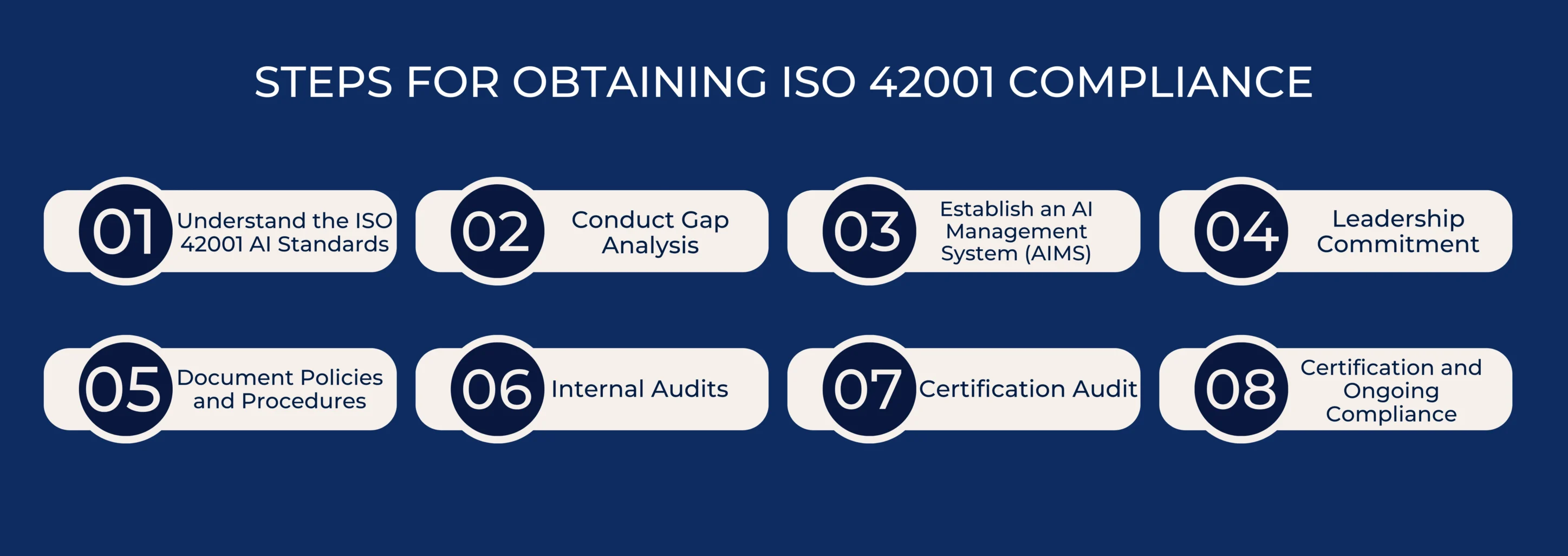
- ✓Stage 1: Scope Definition and Documentation Review
- ✓Stage 2: On-Site Certification Audit
- ✓Nonconformity Resolution and Certification Decision
- ✓Certificate Issuance, Surveillance, and Recertification
Benefits of ISO 42001 Certification for Bangalore Organizations
ISO 42001 Certification delivers measurable organizational benefits across governance, commercial, regulatory, and operational dimensions. For Bangalore-based technology organizations competing in global AI markets, third-party certification under ISO/IEC 42001:2023 provides a verified, internationally recognized attestation of AI governance maturity.
This certification differentiates organizations in procurement, partnership, and investment contexts. The benefits of ISO 42001 assessment and certification in Bangalore extend across the organization’s full operational lifecycle — from initial AI system design through deployment, monitoring, and ongoing improvement.
ISO 42001 compliance positions organizations to meet current and emerging AI regulatory requirements with a pre-established governance framework. The DPDP Act’s requirements for accountability in automated processing of personal data, the EU AI Act’s conformity assessment obligations for high-risk AI systems, and sector-specific AI guidance from RBI, SEBI, and IRDAI are all addressable within the ISO 42001 AIMS framework.
Organizations holding ISO 42001 Certification in Bangalore demonstrate documented evidence of systematic AI risk management — a core expectation of regulators assessing organizational accountability for AI decisions that affect individuals and markets.
The proactive regulatory posture enabled by ISO 42001 certification reduces the risk of enforcement actions, reputational damage from AI incidents, and costly post-incident remediation. Regulators across multiple jurisdictions have indicated a preference for organizations that demonstrate systematic AI governance over those responding reactively to AI failures.
ISO 42001 compliance in Bangalore also serves as documented due diligence evidence in the event of regulatory investigations or client audits, providing organizations with a structured response to governance inquiries and creating a tangible incentive to establish certified AIMS frameworks before regulatory pressure mandates it.
ISO 42001 certification provides a credible, third-party verified signal of AI governance commitment to customers, partners, regulators, investors, and employees. In Bangalore’s competitive technology market — where AI governance has shifted from a voluntary best practice to a procurement and investment prerequisite — certification under an internationally recognized standard establishes organizational credibility that unverified self-assessments cannot replicate.
Enterprise clients conducting supplier due diligence, institutional investors evaluating portfolio companies, and multinational partners assessing supply chain AI risks all place measurable weight on third-party AIMS certification as evidence of governance maturity.
For ISO 42001 certified companies in Bangalore, the certification also carries meaningful internal organizational benefits. It improves employee confidence in the organization’s ethical AI practices, attracts AI talent who prioritize responsible employers, and establishes a documented governance culture that reduces the likelihood of internal AI incidents caused by inadequate oversight.
The ISO 42001 assessment process itself frequently surfaces AI governance gaps that organizations were previously unaware of — enabling proactive remediation before those gaps become incidents with regulatory, reputational, or legal consequences.
The structured AI risk management framework mandated by ISO/IEC 42001:2023 enables organizations to identify, evaluate, and treat AI-specific risks systematically — reducing the frequency and severity of AI incidents. Documented AI impact assessments for high-risk deployments, mandatory model validation and testing requirements, human oversight mechanisms for consequential AI decisions, and AI system monitoring protocols all contribute to reduced operational risk exposure.
For Bangalore-based organizations where AI system failures can affect thousands or millions of users across healthcare, financial services, transportation, and e-commerce platforms, the operational risk reduction value of ISO 42001 implementation is directly proportional to the scale and societal impact of the AI systems deployed.
- ✓Verified regulatory readiness for DPDP Act, EU AI Act, and sector-specific AI regulations
- ✓Third-party attestation of AI governance maturity recognized globally
- ✓Competitive advantage in enterprise procurement and GCC vendor qualification processes
- ✓Investor confidence through demonstrated systematic AI risk management
- ✓Reduced exposure to regulatory enforcement actions and AI incident liability
- ✓Structured framework for continuous AI governance improvement
- ✓Enhanced AI supply chain oversight through documented supplier obligations
- ✓Improved internal accountability structures for AI development and deployment
- ✓Documented transparency mechanisms satisfying data subject rights obligations
- ✓Market differentiation for ISO 42001 certification for IT companies in Bangalore
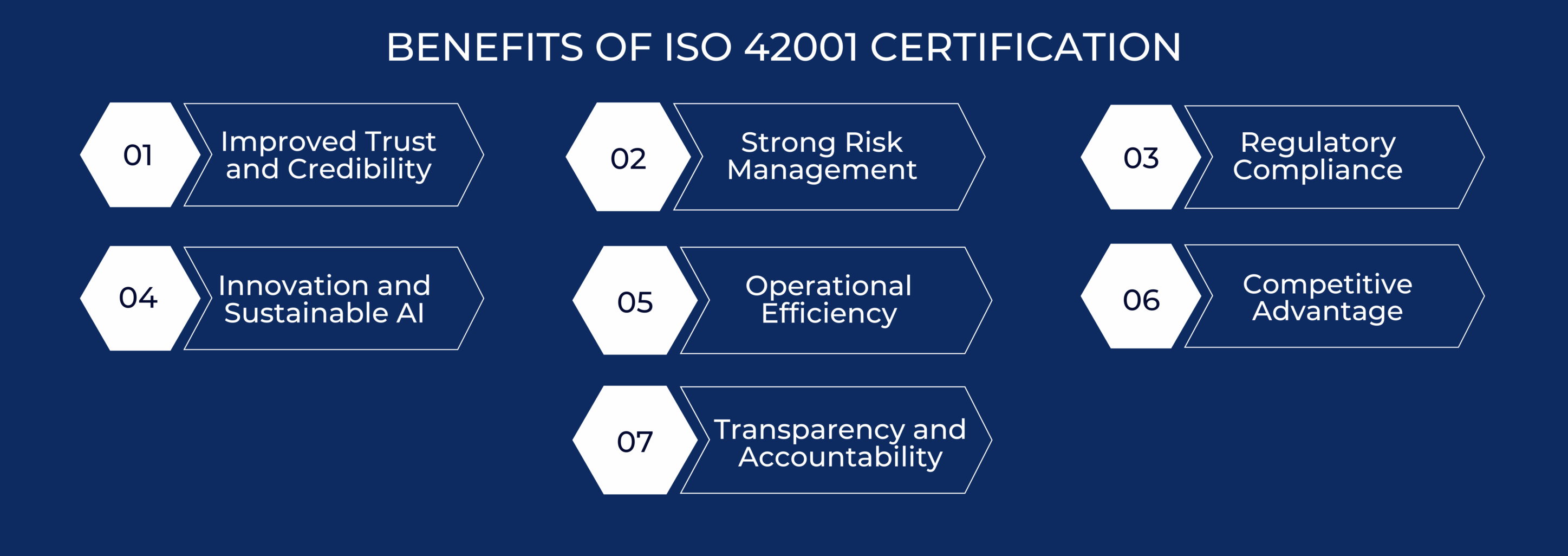
- ✓Regulatory Readiness and Compliance Positioning
- ✓Stakeholder Trust and Market Credibility
- ✓Operational Risk Reduction and AI Incident Prevention
Cost of ISO 42001 Assessment and Certification in Bangalore
The ISO 42001 certification cost in Bangalore varies based on several determinative factors: the size and complexity of the organization, the number and sophistication of AI systems within the certification scope, the geographic distribution of AI operations, the maturity of existing governance documentation, and the number of auditor days required to complete Stage 1 and Stage 2 audit activities.
CertPro, as a Licensed CPA Firm delivering ISO 42001 certification services, offers defined, transparent certification pricing structured to reflect the actual scope and complexity of each organization’s AIMS audit engagement — without bundling advisory or implementation services into certification fees.
Factors Determining Certification Cost
ISO 42001 certification cost in Bangalore is primarily determined by the volume of auditor days required — a function of organizational size, scope complexity, and AI system count. Startups and small AI organizations with a focused scope of one to three AI systems and fewer than 50 personnel typically require fewer auditor days than mid-market SaaS companies with multiple AI products and distributed teams, or large GCCs with enterprise-scale AI deployments spanning multiple business functions.
The maturity of existing documentation also affects audit efficiency — organizations with well-maintained AIMS documentation require less time in Stage 1 review, reducing overall audit duration and cost.
For ISO 42001 certification for startups in Bangalore, the cost consideration is typically structured around a minimum viable certification scope — identifying the core AI systems that are commercially most significant and governmentally most scrutinized — and building an AIMS around that focused boundary. This approach concentrates certification investment where the governance value is highest and enables organizations to obtain certification within commercially viable budget constraints.
Annual surveillance audit costs are generally lower than initial certification costs, reflecting the reduced audit scope of ongoing conformance verification versus the initial ISO 42001 assessment. This makes long-term certification maintenance financially predictable for growing organizations.
| Organization Type | Typical AIMS Scope Complexity | Key Cost Drivers |
|---|---|---|
| AI Startup (< 50 personnel) | 1–3 AI systems, focused scope | Documentation maturity, system complexity |
| Mid-Market SaaS (50–500 personnel) | 3–10 AI systems, multi-product scope | Audit days, personnel interviews, multi-team coverage |
| Large GCC or Enterprise (> 500 personnel) | 10+ AI systems, multi-location scope | Multi-site audits, supply chain controls, volume of records |
| Regulated Sector (Fintech/Healthtech) | Variable, high-risk AI classification | AI impact assessment complexity, regulatory alignment requirements |
ISO 42001 vs. Related Standards: Key Distinctions
Organizations evaluating ISO 42001 Certification frequently encounter questions about its relationship to other established standards — particularly ISO 27001, ISO 9001, and the NIST AI Risk Management Framework (AI RMF). Understanding the distinct scope, objectives, and application context of each standard enables organizations to make informed certification decisions and to design integrated management systems that address multiple governance requirements efficiently.
The following section addresses the principal distinctions between ISO 42001 and the most commonly compared frameworks, clarifying where each standard applies and why ISO 42001 compliance addresses a governance dimension that other standards do not.
ISO 42001 vs. ISO 27001
ISO 27001 is an information security management system (ISMS) standard addressing confidentiality, integrity, and availability of information assets. ISO 42001, by contrast, is an AI management system standard addressing the responsible development, deployment, and governance of AI systems — including AI-specific risks such as algorithmic bias, model drift, and AI supply chain vulnerabilities that fall outside the scope of ISO 27001’s information security controls.
While both standards employ the same High-Level Structure and share common management system elements (policy, roles, risk management, internal audit, management review), their control domains are distinct. Many Bangalore organizations hold or pursue both certifications, as the AIMS and ISMS address complementary but non-overlapping governance obligations.
ISO 42001 vs. ISO 9001
ISO 9001 is a quality management system (QMS) standard focused on consistent product and service delivery against defined customer requirements. ISO 42001 is not a quality standard — it does not certify the performance accuracy or functional quality of AI systems. Instead, ISO 42001 certifies the governance framework within which AI systems are managed: the risk controls, transparency mechanisms, ethical principles, accountability structures, and continual improvement processes that govern AI system operations.
An AI system could be technically high-performing and still fail ISO 42001 certification requirements if the governance processes surrounding its development and deployment are inadequately documented, risk-assessed, or overseen. For Bangalore organizations, ISO 9001 and ISO 42001 address different organizational obligations and are not substitutable certifications.
ISO 42001 vs. NIST AI RMF
The NIST AI Risk Management Framework (AI RMF 1.0), published by the U.S. National Institute of Standards and Technology in January 2023, is a voluntary framework providing guidance for AI risk identification, measurement, and management. Unlike ISO 42001, the NIST AI RMF is not a certifiable standard — organizations cannot obtain third-party certification under it.
ISO 42001 certification, by contrast, is a formal third-party certification issued by accredited certification bodies following an independent audit, providing a globally recognized attestation of AIMS conformance. For Bangalore-based organizations seeking verifiable, internationally recognized AI governance credentials — particularly for enterprise procurement, regulatory compliance, or investment due diligence — ISO 42001 certification provides the formal attestation that the NIST AI RMF, as a voluntary framework, does not.
| Standard | Scope | Certifiable? | Primary Application |
|---|---|---|---|
| ISO 42001 | AI Management System governance | Yes — third-party certification | AI governance, AI risk management, ethical AI |
| ISO 27001 | Information Security Management System | Yes — third-party certification | Data security, confidentiality, integrity, availability |
| ISO 9001 | Quality Management System | Yes — third-party certification | Product/service quality, customer satisfaction |
| NIST AI RMF | AI Risk Management Framework | No — voluntary framework only | AI risk identification, guidance, and measurement |
CertPro ISO 42001 Certification Services in Bangalore
CertPro is a Licensed CPA Firm delivering ISO 42001 Certification in Bangalore through an audit-led, evidence-based certification methodology. CertPro’s certification engagements are structured strictly around assessment, audit, and certification activities — not advisory services, implementation support, or compliance consulting.
The certification process is conducted by technically competent auditors with demonstrated expertise in AI governance, management system auditing, and the regulatory context of Bangalore’s technology ecosystem. CertPro’s ISO 42001 audit Bangalore engagements follow documented audit programs aligned with ISO/IEC 17021-1 requirements for management system certification bodies.
Evidence-Based ISO 42001 Audit Methodology
CertPro’s ISO 42001 audit methodology is structured around objective evidence collection and evaluation. Audit activities include structured document examination against clause-by-clause ISO/IEC 42001:2023 requirements, personnel interviews designed to verify that documented controls are understood and operationally implemented, and records review confirming that AIMS processes are consistently executed over time — not merely documented on paper.
Technical examination of AI system documentation — including model cards, AI impact assessment records, risk registers, and supplier governance files — rounds out the audit evidence base. The methodology produces findings based on verifiable evidence, enabling audit conclusions that are defensible, reproducible, and recognized by regulators and enterprise clients globally.
CertPro’s ISO 42001 assessment services in Bangalore are calibrated to the specific context of Bangalore’s technology ecosystem — accounting for the prevalence of multi-tenant SaaS platforms, the AI supply chain complexity common in GCC environments, the sector-specific regulatory overlay of fintech and healthtech AI deployments, and the international client obligations of Bangalore technology firms exporting AI services to North American, European, and Middle Eastern markets.
Audit programs are scoped and structured to evaluate AIMS controls against the full range of obligations applicable to each organization’s specific AI context — not a generic checklist applied uniformly across diverse organizations.
Transparent Pricing and Defined Certification Scope
CertPro offers defined, transparent certification pricing for ISO 42001 Certification in Bangalore — structured to reflect the actual scope, complexity, and auditor-day requirements of each certification engagement. Pricing is determined based on documented scope analysis conducted prior to engagement commencement, ensuring that organizations receive a certification fee that corresponds to the auditing work required rather than a generic market-rate estimate.
This pricing transparency enables organizations to budget certification investments accurately and to compare CertPro’s ISO 42001 certification cost in Bangalore against alternative certification body offerings on a like-for-like basis. No advisory, implementation, or consulting services are bundled into CertPro’s certification pricing — the engagement scope is strictly audit and certification delivery.
Sector Coverage and Organizational Eligibility
CertPro delivers ISO 42001 certification audit services to organizations across Bangalore’s technology and AI ecosystem. Eligible organizations include AI-native startups at seed through Series C stages, established IT services companies deploying AI in managed service delivery, SaaS platforms integrating generative AI and machine learning features, and global capability centers operating AI development functions for multinational parent organizations.
Financial services organizations employing AI in credit, risk, fraud, and trading applications, healthcare technology organizations deploying AI in diagnostics and clinical decision support, and educational technology platforms using AI for personalized learning and assessment are all equally eligible. Any organization developing, providing, or using AI systems within Bangalore’s technology ecosystem can pursue ISO 42001 Certification in Bangalore through CertPro’s structured audit process.
ISO 42001 Implementation and Compliance in Bangalore: Key Considerations
ISO 42001 implementation in Bangalore involves building the documented management system infrastructure that forms the basis for the certification audit. While CertPro’s role is strictly audit and certification — not implementation support — organizations preparing for ISO 42001 assessment benefit from understanding the key areas of AIMS development that auditors examine most rigorously.
The following considerations reflect common areas where Bangalore organizations encounter challenges during ISO 42001 compliance efforts, based on the structure of ISO/IEC 42001:2023 and the AI governance maturity typically observed across Bangalore’s technology sector.
AI Inventory and Impact Assessment Documentation
One of the most critical preparatory activities for ISO 42001 compliance in Bangalore is developing a comprehensive inventory of all AI systems within the proposed certification scope. Many Bangalore organizations discover during AIMS development that their AI footprint is significantly larger than initially perceived — encompassing not only internally developed AI models but also third-party AI APIs integrated into products, AI-powered features within subscribed cloud services, and AI systems inherited through acquisitions or vendor relationships.
A complete AI inventory — documenting each system’s purpose, data inputs, decision outputs, risk classification, and deployment context — is the foundational document against which all subsequent AIMS controls are structured and evaluated during the ISO 42001 audit.
AI impact assessments — required under Clause 8 of ISO/IEC 42001:2023 for AI systems with significant potential impacts on individuals or society — represent another area where Bangalore organizations frequently require focused effort. Impact assessments must evaluate the potential harms and benefits of each AI system, identify affected populations, assess the likelihood and severity of potential harms (including discriminatory outcomes, privacy violations, financial harm, and physical harm), and document the controls in place to mitigate identified harms to acceptable levels.
The depth and rigor of AI impact assessments is a primary focus of the ISO 42001 audit — auditors evaluate both the methodology employed and the specific findings and treatment decisions documented for each assessed system.
AI Supplier Governance and Supply Chain Controls
ISO 42001 compliance requires organizations to manage AI supply chain risks — addressing the governance obligations that arise when AI components, models, datasets, or services are sourced from external vendors. For Bangalore-based organizations integrating AI capabilities from major cloud AI providers (including AWS, Google Cloud, Microsoft Azure, and OpenAI), open-source model repositories, and specialized AI model vendors, the supplier governance requirements of ISO/IEC 42001:2023 are particularly significant.
These requirements mandate documented processes for evaluating supplier AI governance practices, establishing contractual AI governance obligations with suppliers, monitoring supplier compliance with agreed AI governance terms, and addressing supply chain AI risks that cannot be fully controlled through internal AIMS controls alone.
The supplier governance requirements are especially significant for Bangalore organizations operating as AI integrators — combining AI capabilities from multiple external sources into composite AI products or services delivered to enterprise clients. In these scenarios, the organization is simultaneously an AI user (of upstream AI components) and an AI provider (to downstream clients), creating a multi-tiered supply chain governance obligation.
ISO 42001 audit activities in these contexts examine whether the organization has adequate visibility into and control over the AI governance practices of its upstream suppliers, and whether this governance posture is transparently communicated to downstream clients through appropriate disclosure mechanisms.
Securing ISO 42001 Certification in Bangalore With CertPro
Achieving ISO 42001 Certification in Bangalore positions organizations as verified leaders in responsible AI governance within one of the world’s most dynamic technology ecosystems. CertPro’s structured audit process delivers an independent, evidence-based certification determination that carries recognized credibility with enterprise procurement teams, regulatory bodies, institutional investors, and international partners.
The certification attests that the organization’s AIMS meets the requirements of ISO/IEC 42001:2023 — providing a documented, globally recognized foundation for responsible AI operations in Bangalore’s technology market and beyond.
Organizations that complete ISO 42001 Certification in Bangalore gain access to a credential increasingly recognized across global AI governance discussions, regulatory frameworks, and enterprise procurement requirements. As AI regulation intensifies globally — with the EU AI Act in force, India’s DPDP Act operational, and sector-specific AI regulations advancing across financial services, healthcare, and critical infrastructure — the governance infrastructure validated through ISO 42001 certification positions Bangalore organizations to respond to evolving requirements from a position of documented compliance strength.
CertPro’s ISO 42001 audit Bangalore services provide the structured, auditor-led pathway to this certification through a process defined by technical rigor, institutional authority, and transparent engagement terms.
FAQ
▶
What is ISO 42001 and why is it relevant to Bangalore organizations?
▶
Which organizations in Bangalore are eligible for ISO 42001 Certification?
▶
How long does the ISO 42001 certification process take in Bangalore?
▶
How does ISO 42001 certification align with India’s DPDP Act?
▶
What does the ISO 42001 audit assess in Bangalore organizations?
▶
Does ISO 42001 certification apply to generative AI systems?
▶
How does ISO 42001 certification differ from an ISO 42001 assessment?
▶
What documentation is required before an ISO 42001 audit in Bangalore?

MindSec Launches AI Compliance for Law 25 & ISO 42001
Excerpt from Barchart Article, Published on December 3, 2025 Today, Canadian organizations face increasing pressure to comply with stringent privacy a…

UNDERSTANDING ISO 42001: A GUIDE FOR RESPONSIBLE AI MANAGEMENT SYSTEMS
The invention of artificial intelligence (AI) has changed the operational processes of many industries. However, the rapid growth of technology increa…
ENSURING AI DATA PRIVACY COMPLIANCE WITH ISO 42001
According to Stanford’s AI report, the private AI investment in the U.S. alone reached more than $109 billion last year, which is equal to 12 times th…
Get In Touch
have a question? let us get back to you.