
ISO 42001 Certification in Los Angeles
CertPro is a Licensed CPA Firm conducting ISO 42001 certification audits for organizations operating AI management systems in Los Angeles. Our ISO 42001 audit activities evaluate conformance against ISO/IEC 42001:2023 requirements across AI governance, risk controls, and operational accountability frameworks. We serve technology, media, healthcare, and enterprise sectors throughout the Los Angeles metropolitan area.
OUR CLIENTS








Introduction to ISO 42001 Certification in Los Angeles
ISO 42001 Certification in Los Angeles represents a formal, audit-based recognition that an organization has established, implemented, and maintained an Artificial Intelligence Management System (AIMS) in conformance with ISO/IEC 42001:2023. Published by the International Organization for Standardization, ISO/IEC 42001:2023 is the first internationally recognized standard designed specifically to govern the responsible development, deployment, and operation of AI systems across all industry sectors.
For organizations in Los Angeles, this certification provides a structured, verifiable framework for managing AI-related risks, ensuring ethical AI use, and demonstrating accountability to regulators, clients, and the public.
Los Angeles is one of the most AI-intensive metropolitan economies in the United States. The city hosts a dense ecosystem of technology companies, entertainment studios, healthcare systems, financial services firms, SaaS startups, and logistics operators — all of which increasingly depend on AI-driven systems for core operational functions.
From predictive analytics platforms used by major studios to AI-assisted diagnostic tools deployed in leading hospitals, the concentration of AI use cases in Los Angeles is both broad and deep. ISO 42001 Certification in Los Angeles is therefore not a theoretical exercise but a practical governance mechanism directly applicable to the operational realities of organizations across the region.
ISO/IEC 42001:2023 establishes requirements for organizations to define the scope of their AIMS, identify AI-specific risks and opportunities, implement appropriate controls, assign clear roles and responsibilities, and commit to continual improvement. The standard addresses the full AI lifecycle — from design and data acquisition through model development, deployment, monitoring, and decommissioning.
ISO 42001 certification is awarded following an independent third-party audit conducted by a qualified certification body. CertPro, operating as a Licensed CPA Firm, performs these ISO 42001 audit activities in Los Angeles — evaluating organizational conformance against the standard’s clauses and annexes.
What Is ISO/IEC 42001:2023?
ISO/IEC 42001:2023 is the international standard that specifies requirements for establishing, implementing, maintaining, and continually improving an Artificial Intelligence Management System. Developed by ISO/IEC Joint Technical Committee 1, Subcommittee 42, and published in December 2023, the standard applies to any organization — regardless of size, type, or industry sector — that develops, provides, or uses AI-based products and services.
It defines the AIMS as the set of policies, processes, procedures, and organizational structures through which an organization manages its AI-related activities in a responsible, transparent, and accountable manner.
The standard is structured around the ISO High-Level Structure (HLS) — the common framework shared by ISO management system standards including ISO 27001 (information security) and ISO 9001 (quality management). This structural alignment means organizations already certified to other ISO standards can integrate ISO 42001 requirements into their existing management system architecture, reusing policies, governance roles, and review processes where applicable.
For Los Angeles organizations that have already invested in ISO 27001 certification, ISO 42001 compliance represents a logical extension that addresses AI-specific governance dimensions not covered by information security controls alone.
Scope of ISO 42001 Certification
The scope of ISO 42001 certification is defined by the organization itself during the early stages of AIMS implementation and audit preparation. Scope definition identifies which AI systems, processes, departments, and geographic locations are included within the certification boundary.
For a Los Angeles entertainment company, the scope might include recommendation algorithms, content moderation AI, and synthetic media generation systems. For a Los Angeles healthcare organization, scope could encompass AI-assisted diagnostic imaging, patient triage algorithms, and predictive population health tools. Precise scope definition is critical because the ISO 42001 audit evaluates conformance only within the declared boundary.
ISO 42001 certification applies equally to AI developers, AI deployers, and organizations that use AI systems procured from third-party vendors. This breadth of applicability is particularly relevant in Los Angeles, where many organizations occupy multiple positions in the AI value chain simultaneously — developing proprietary models while also integrating external AI services from cloud providers and specialized vendors.
The standard provides distinct guidance for each role, ensuring that governance obligations are appropriately tailored to the organization’s specific relationship with the AI systems within its operational scope.
ISO 42001 and the Los Angeles AI Landscape
Los Angeles ranks among the top five U.S. metropolitan areas for AI investment, talent concentration, and enterprise AI adoption. The city’s economy encompasses major entertainment and media conglomerates, a rapidly expanding technology sector centered in Silicon Beach, a large financial services market, world-class academic medical centers, and a growing aerospace and defense technology base.
Each of these sectors deploys AI systems in high-stakes contexts where governance failures carry significant legal, financial, reputational, and ethical consequences. ISO 42001 Certification in Los Angeles provides the structured accountability framework necessary to manage these risks systematically.
California’s regulatory environment adds additional urgency to ISO 42001 compliance for Los Angeles organizations. The California Consumer Privacy Act (CCPA) and its 2020 amendment, the California Privacy Rights Act (CPRA), impose significant obligations on organizations that use personal data in AI systems.
California’s evolving AI governance landscape — including legislative proposals addressing automated decision-making, algorithmic accountability, and AI transparency — aligns directly with the governance controls required by ISO 42001. Organizations that achieve ISO 42001 Certification in Los Angeles are therefore better positioned to demonstrate compliance with both current and anticipated California regulatory requirements.

Why Organizations in Los Angeles Need ISO 42001 Compliance
The operational dependency of Los Angeles industries on AI systems has reached a level where unmanaged AI risk represents a material business concern. ISO 42001 compliance addresses this concern by establishing a systematic approach to identifying, evaluating, and controlling risks arising from AI system behavior, data quality, algorithmic bias, model drift, and third-party AI dependencies.
For organizations in sectors such as healthcare, financial services, and entertainment — where AI errors can directly harm individuals or trigger regulatory action — ISO 42001 compliance is a foundational risk management requirement.
Beyond risk management, ISO 42001 compliance serves as a competitive differentiator in the Los Angeles market. Enterprise clients, government agencies, and institutional partners increasingly require evidence of responsible AI governance as a procurement and contracting condition.
Organizations that hold ISO 42001 Certification in Los Angeles can demonstrate this evidence through an independently issued certificate backed by audit findings — rather than relying on self-assessment or marketing claims. This distinction is particularly significant in regulated industries and in transactions involving sensitive data or high-consequence AI applications.
AI Risk Exposure in Los Angeles Industries
Healthcare organizations in Los Angeles — including major academic medical centers, hospital networks, and health technology companies — deploy AI systems for clinical decision support, medical imaging analysis, patient flow optimization, and administrative automation. In these contexts, AI failures can result in patient harm, misdiagnosis, or treatment delays.
ISO 42001 compliance requires these organizations to document AI system objectives, validate model performance against clinical benchmarks, implement human oversight mechanisms, and maintain audit trails for AI-assisted decisions. The ISO 42001 audit evaluates whether these controls are operationally effective — not merely documented on paper.
The entertainment and media sector in Los Angeles presents a distinct AI risk profile. Major studios, streaming platforms, and content distribution networks use AI for content recommendation, audience targeting, synthetic media generation, rights management, and production optimization.
Algorithmic bias in recommendation systems can result in discriminatory content exposure patterns. AI-generated synthetic media raises legal questions around intellectual property, performer rights, and deepfake disclosure. ISO 42001 Certification in Los Angeles for entertainment industry organizations addresses these specific risk categories through controls for algorithmic transparency, bias testing, and content provenance documentation.
Los Angeles fintech organizations — including payment processors, lending platforms, insurance technology firms, and investment management companies — rely on AI for credit scoring, fraud detection, algorithmic trading, and regulatory reporting.
ISO 42001 compliance for Los Angeles fintech applications requires particular attention to fairness, explainability, and auditability of AI-driven financial decisions, given the potential for AI systems to produce discriminatory outcomes in lending and insurance contexts. The ISO 42001 assessment evaluates whether fintech organizations have implemented adequate controls for model governance, performance monitoring, and adverse action documentation.
Regulatory Alignment for Los Angeles Organizations
ISO 42001 compliance aligns with multiple regulatory frameworks applicable to Los Angeles organizations. The California Consumer Privacy Act (CCPA) requires organizations to disclose the use of personal information in automated decision-making processes and to provide consumers with the right to opt out of certain AI-driven profiling activities.
ISO 42001 controls for data governance, purpose limitation, and transparency directly support CCPA compliance obligations. Organizations that have implemented ISO 42001 requirements can map their AIMS controls to specific CCPA provisions, streamlining regulatory demonstration activities.
At the federal level, sector-specific AI governance requirements are emerging across healthcare (FDA AI/ML-based Software as a Medical Device framework), financial services (OCC model risk management guidance), and federal contracting (Executive Order on Safe, Secure, and Trustworthy AI).
ISO 42001 certification provides a cross-cutting governance framework that addresses the AI management system requirements common to all these sector-specific regulations, reducing the compliance burden for Los Angeles organizations navigating multiple regulatory regimes simultaneously. The standard’s alignment with the NIST AI Risk Management Framework (AI RMF) further facilitates integration with federal agency requirements.
ISO 42001 and the EU AI Act for Global Los Angeles Organizations
Many Los Angeles organizations operate globally and must address the European Union AI Act, which entered into force in August 2024 and establishes risk-based requirements for AI systems deployed in EU markets. The EU AI Act mandates conformity assessments, technical documentation, risk management systems, and human oversight mechanisms for high-risk AI applications — requirements that substantially overlap with ISO 42001’s AIMS framework.
Los Angeles tech companies with EU market exposure can leverage their ISO 42001 Certification documentation and audit evidence to support EU AI Act conformity assessment activities, avoiding duplicative governance work across regulatory jurisdictions.
ISO 42001 Certification Requirements
ISO 42001 certification requires organizations to demonstrate conformance with the mandatory requirements specified in clauses 4 through 10 of ISO/IEC 42001:2023. These clauses address organizational context, leadership commitment, planning, support, operation, performance evaluation, and continual improvement.
The standard also includes normative annexes providing additional controls for AI system impact assessment, AI system objectives, and the AI system lifecycle. Each clause contains specific requirements that must be implemented and documented before an organization can undergo a certification audit.
Clause 4 of ISO/IEC 42001:2023 requires organizations to determine the external and internal issues relevant to their AI management activities and to understand the needs and expectations of interested parties — including employees, customers, regulators, affected communities, and AI system users.
For Los Angeles organizations, relevant external issues include California AI legislation, industry sector regulations, contractual AI governance requirements from enterprise clients, and public expectations regarding ethical AI use in consumer-facing applications. The AIMS scope must be defined in documented form, specifying which AI systems, processes, and organizational units are included within the certification boundary.
Clause 5 requires top management to demonstrate active leadership and commitment to the AIMS. This includes establishing an AI policy that articulates the organization’s principles and commitments regarding AI governance, assigning roles and responsibilities for AIMS implementation, and ensuring that AIMS objectives are integrated into the organization’s strategic planning processes.
For Los Angeles organizations, leadership commitment must be demonstrable through documented decisions, resource allocations, and governance structures — not merely through policy statements. The ISO 42001 audit evaluates leadership engagement through interviews with senior executives and review of governance documentation.
Clause 6 of ISO/IEC 42001:2023 requires organizations to establish a systematic process for identifying and evaluating AI-related risks and opportunities. The standard requires organizations to address risks associated with AI system performance, data quality and bias, unintended consequences, third-party AI dependencies, and the potential for AI systems to cause harm to individuals or groups.
Risk assessment must consider both technical dimensions (model accuracy, robustness, security) and ethical dimensions (fairness, transparency, accountability). For each identified risk, the organization must determine appropriate treatment options and implement controls to bring residual risk to an acceptable level.
The planning requirements also address the establishment of AIMS objectives — measurable targets for AI system performance, governance effectiveness, and continual improvement. AIMS objectives must be documented, communicated to relevant personnel, monitored on an ongoing basis, and updated as the organization’s AI portfolio evolves.
For Los Angeles organizations with large and rapidly changing AI system inventories, maintaining current and accurate AIMS objectives documentation requires disciplined configuration management and regular governance review cycles. The ISO 42001 assessment evaluates whether objectives are meaningful, measurable, and actively managed — not simply listed in a policy document.
ISO 42001 certification requires organizations to maintain a defined set of documented information to support AIMS operation and provide evidence of conformance. Required documented information includes the AIMS scope, AI policy, risk assessment and treatment records, AI system lifecycle documentation, training records, internal audit reports, management review records, and nonconformity and corrective action records.
Operational controls must be established for each stage of the AI system lifecycle — from initial concept and data acquisition through model development, validation, deployment, monitoring, and decommissioning. All documentation must be controlled, version-managed, and accessible to relevant personnel.
Annex A of ISO/IEC 42001:2023 provides a comprehensive set of reference controls organized into six domains: organizational controls, people controls, technology controls, AI system lifecycle controls, supply chain controls, and controls specific to AI system impact.
Organizations must evaluate the applicability of each Annex A control to their AIMS scope and document their rationale for including or excluding specific controls in a Statement of Applicability (SOA). The ISO 42001 audit reviews the SOA to verify that control selection decisions are supported by the organization’s risk assessment findings and are consistent with the declared AIMS scope.
Clause 9 requires organizations to conduct internal audits of the AIMS at planned intervals to verify that it conforms to both the organization’s own requirements and to ISO/IEC 42001:2023 requirements, and is effectively implemented and maintained. Internal audit programs must be planned with consideration for the importance of the processes concerned and the results of previous audits.
Internal auditors must be competent and objective — they cannot audit their own work. Internal audit findings must be reported to relevant management, and corrective actions must be initiated for identified nonconformities. The ISO 42001 certification audit reviews internal audit records to assess the organization’s self-evaluation capability.
- ✓Documented AIMS scope defining which AI systems and processes are included
- ✓AI policy signed by top management articulating governance principles
- ✓AI risk assessment and risk treatment plan with documented residual risk acceptance
- ✓Statement of Applicability (SOA) referencing Annex A controls
- ✓AIMS objectives with measurable targets and monitoring mechanisms
- ✓AI system lifecycle documentation covering design, development, deployment, and monitoring
- ✓Competency and training records for personnel with AIMS responsibilities
- ✓Internal audit program with documented findings and corrective action records
- ✓Management review records demonstrating top management engagement
- ✓Nonconformity and corrective action records from operational experience
- ✓Supplier and third-party AI system governance documentation
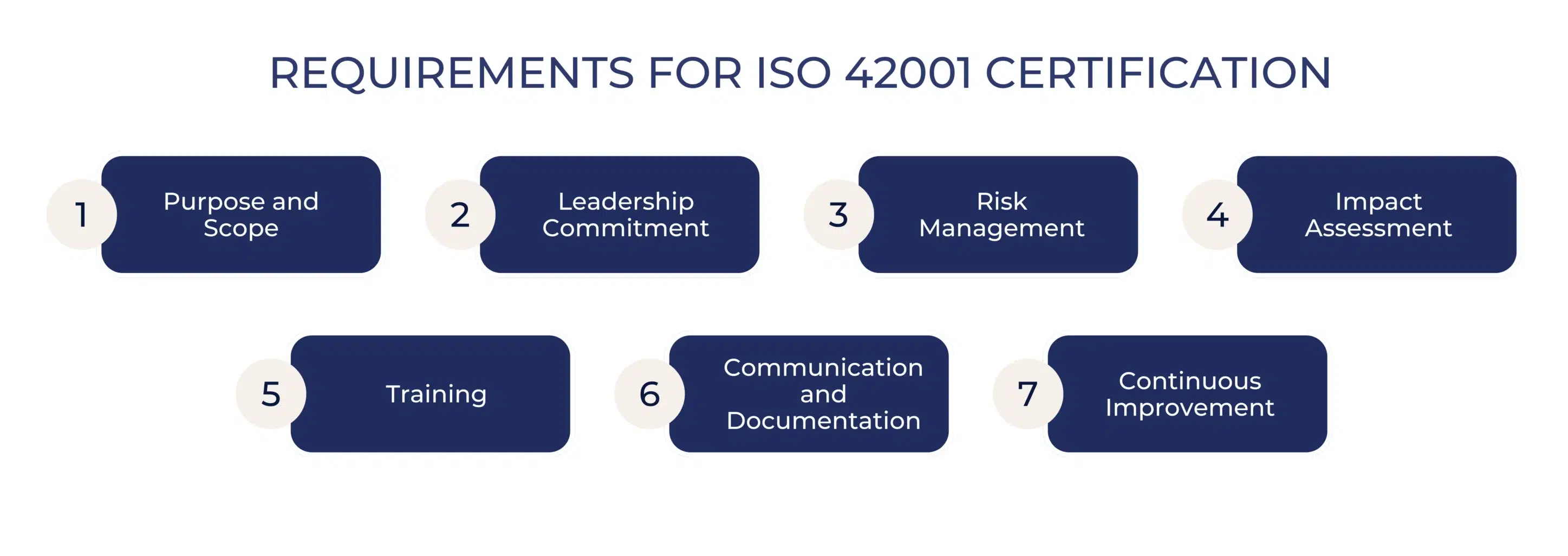
- ✓Organizational Context and Leadership Requirements
- ✓Risk Management and Planning Requirements
- ✓Documentation and Operational Control Requirements
- ✓Internal Audit and Management Review Requirements
ISO 42001 Certification Process
The ISO 42001 certification process follows a structured audit sequence that evaluates organizational conformance against ISO/IEC 42001:2023 requirements at two distinct stages. CertPro, as a Licensed CPA Firm, conducts these ISO 42001 audit activities in Los Angeles according to established certification body protocols.
The process begins with scope definition and audit program determination, proceeds through Stage 1 and Stage 2 audits, and concludes with a certification decision and issuance of the certification document. Organizations that achieve certification are subject to ongoing surveillance audits and recertification audits to maintain certification validity.
The Stage 1 audit is a documentation review conducted to evaluate whether the organization’s AIMS documentation meets ISO/IEC 42001:2023 requirements and whether the organization is ready to proceed to the Stage 2 on-site audit. During Stage 1, CertPro auditors review the AIMS scope documentation, AI policy, risk assessment records, Statement of Applicability, AIMS objectives, and selected operational procedures.
The Stage 1 audit also confirms that the organization has planned and conducted internal audits and management reviews as required by the standard. Stage 1 findings determine whether significant issues exist that would prevent a productive Stage 2 audit.
Stage 1 audit findings are classified as major nonconformities (failures to meet a mandatory ISO 42001 requirement), minor nonconformities (isolated lapses or incomplete implementation), or observations (improvement opportunities that do not constitute nonconformities). Major nonconformities identified during Stage 1 must be resolved before Stage 2 can proceed.
The Stage 1 audit report establishes the audit program for Stage 2, identifying the specific clauses, controls, and processes to be examined during the on-site evaluation. For Los Angeles organizations with complex AI portfolios, the Stage 1 audit program may be structured to prioritize high-risk AI systems and critical governance processes.
The Stage 2 audit is an on-site evaluation of the organization’s implemented AIMS against all mandatory requirements of ISO/IEC 42001:2023. CertPro auditors conduct the Stage 2 audit through a combination of document review, personnel interviews, observation of operational processes, and technical testing of AI system governance controls.
The audit team evaluates whether documented controls are operationally effective — meaning they are consistently applied, produce intended outcomes, and are understood and followed by relevant personnel. For ISO 42001 Certification in Los Angeles, Stage 2 audits typically span one to three days depending on organizational size and the complexity of the AIMS scope.
During the Stage 2 ISO 42001 audit, specific attention is given to the operational effectiveness of AI risk management processes, the implementation of Annex A controls identified in the Statement of Applicability, the functioning of AI system monitoring and incident response mechanisms, the competency and awareness of personnel with AIMS responsibilities, and the organization’s approach to managing AI system suppliers and third-party dependencies.
The audit concludes with a closing meeting at which the lead auditor presents findings to organizational management, identifies any nonconformities, and explains the path to certification decision.
Following the Stage 2 audit, organizations must address any identified nonconformities before a positive certification decision can be made. Major nonconformities require documented corrective actions and evidence of implementation, which are reviewed by CertPro before certification is recommended. Minor nonconformities require corrective action plans with defined timelines; evidence of implementation is verified at the next surveillance audit.
The certification decision is made by a CertPro certification panel that is independent of the audit team, reviewing the complete audit file to confirm that all mandatory requirements are met and that any nonconformities have been appropriately resolved.
Upon a positive certification decision, CertPro issues the ISO 42001 certification document, which specifies the certified organization’s name, the AIMS scope, the applicable standard (ISO/IEC 42001:2023), the certification date, and the validity period. ISO 42001 certification is valid for three years, subject to satisfactory completion of annual surveillance audits.
The certification is subject to withdrawal if the organization fails to maintain conformance with ISO 42001 requirements or fails to undergo required surveillance audits within the prescribed timeframes. The three-year certification cycle aligns with recertification audit requirements common to all ISO management system standards.
Annual surveillance audits are conducted to verify that the certified organization continues to maintain its AIMS in conformance with ISO/IEC 42001:2023 requirements. Surveillance audits are shorter than initial certification audits and focus on specific AIMS processes, areas identified as improvement opportunities during previous audits, and any significant changes to the organization’s AI portfolio or operational environment.
For Los Angeles organizations with rapidly evolving AI systems, surveillance audits provide an important mechanism for verifying that governance controls remain aligned with current AI deployment practices.
Recertification audits are conducted at the end of the three-year certification cycle and involve a comprehensive re-evaluation of the entire AIMS against ISO/IEC 42001:2023 requirements. Recertification audits follow the same structure as the initial certification audit but may be streamlined for organizations with strong surveillance audit records and demonstrated continual improvement.
Successful completion of the recertification audit results in issuance of a new three-year certification. Organizations that have maintained their AIMS effectively throughout the certification cycle typically find the recertification process more efficient than the initial certification, given the accumulated documentation and operational experience from the preceding three years.
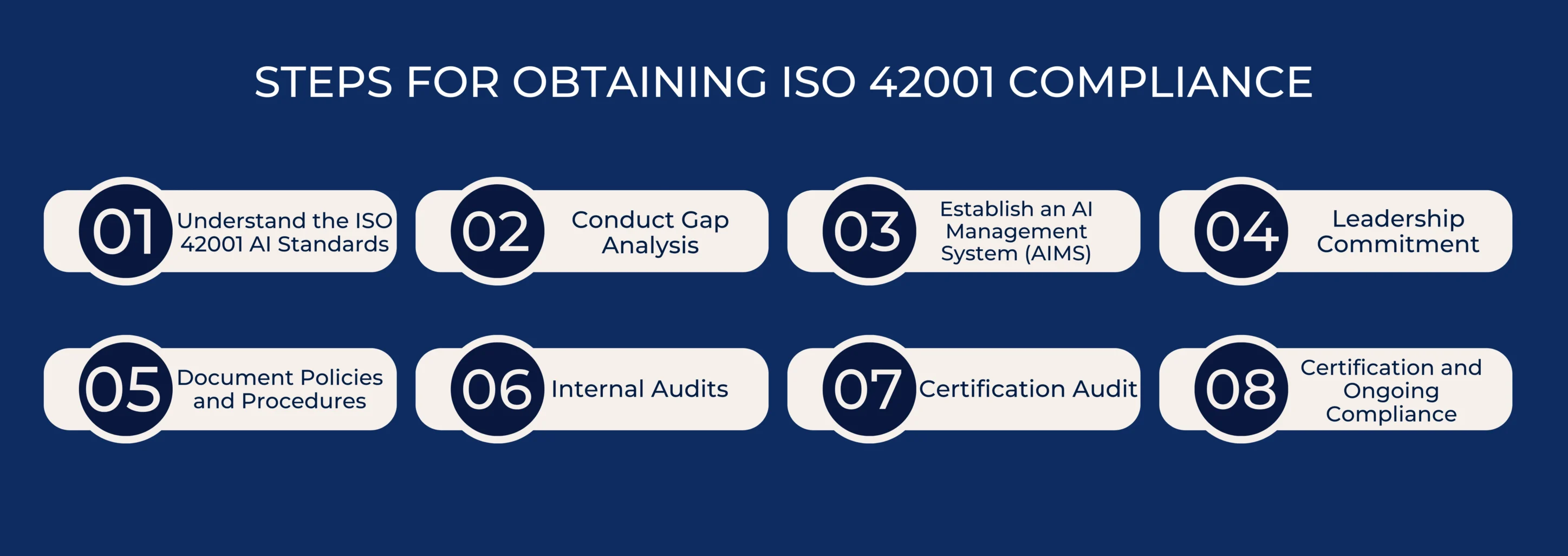
- ✓Stage 1: Documentation Review and Audit Program Determination
- ✓Stage 2: On-Site Certification Audit
- ✓Nonconformity Resolution and Certification Decision
- ✓Surveillance Audits and Recertification
Steps to Obtain ISO 42001 Certification in Los Angeles
Organizations pursuing ISO 42001 Certification in Los Angeles follow a structured implementation and audit sequence. The steps below reflect the activities required to move from initial scoping through certified AIMS operation. Each step involves specific deliverables and decision points that must be completed before proceeding to the next stage.
- Identify and inventory all AI systems, models, and AI-enabled processes within the intended AIMS scope, documenting their purposes, data inputs, decision outputs, and operational contexts
- Define the AIMS scope boundary, specifying which AI systems, departments, locations, and processes are included, and document the rationale for any exclusions
- Conduct an AI-specific risk assessment identifying threats, vulnerabilities, and potential harms associated with each in-scope AI system, considering technical, ethical, legal, and operational risk dimensions
- Develop the Statement of Applicability (SOA) by evaluating each Annex A control for applicability to the declared scope and documenting inclusion or exclusion justifications
- Establish and document the AI policy, AIMS objectives, roles and responsibilities, and organizational governance structures required by clauses 4 through 6 of ISO/IEC 42001:2023
- Implement operational controls for AI system lifecycle management, including documented procedures for design review, data governance, model validation, deployment authorization, performance monitoring, and incident response
- Conduct internal AIMS audits across all mandatory clauses to verify implementation completeness and identify nonconformities before the certification audit
- Conduct a management review meeting at which top management evaluates AIMS performance data, audit findings, risk status, and continual improvement initiatives
- Submit the AIMS documentation package to CertPro for Stage 1 audit review and address any issues identified in the Stage 1 audit report
- Undergo the Stage 2 on-site ISO 42001 audit conducted by CertPro auditors and resolve any nonconformities identified during the audit
- Receive the ISO 42001 certification decision and certificate upon confirmation that all nonconformities have been adequately addressed
- Maintain the AIMS through annual surveillance audits and ongoing continual improvement activities throughout the three-year certification cycle
Benefits of ISO 42001 Certification in Los Angeles
ISO 42001 Certification in Los Angeles delivers verifiable organizational benefits across multiple dimensions — governance, commercial, regulatory, operational, and reputational. These benefits are grounded in the discipline and rigor that the certification process introduces into AI management activities, rather than in marketing positioning.
Organizations that have implemented ISO/IEC 42001:2023 requirements report measurable improvements in AI risk visibility, governance consistency, stakeholder confidence, and regulatory readiness. The following subsections detail the primary benefit categories relevant to Los Angeles organizations across technology, media, healthcare, and enterprise sectors.
The core governance benefit of ISO 42001 certification is the establishment of a systematic, documented approach to AI risk identification, assessment, and control. Before implementing ISO 42001 requirements, many organizations manage AI risks informally — with governance activities fragmented across data science, IT security, legal, and compliance functions.
The AIMS framework consolidates these activities into a coherent system with defined responsibilities, documented processes, and measurable performance indicators. For Los Angeles organizations operating large AI portfolios, this consolidation produces immediate improvements in risk visibility, giving senior management a comprehensive view of the organization’s AI risk exposure for the first time.
ISO 42001 compliance also strengthens AI incident management capabilities. The standard requires organizations to establish documented procedures for detecting, reporting, investigating, and responding to AI system incidents — including model failures, bias events, data quality issues, and security breaches affecting AI systems.
For Los Angeles healthcare AI applications, effective incident management can mean the difference between a contained quality event and a reportable patient safety incident. For financial services AI, robust incident response reduces the regulatory impact of model failures and supports timely notification obligations under applicable financial regulations.
ISO 42001 certification provides Los Angeles organizations with a credible, independently verified credential that demonstrates AI governance maturity to enterprise clients, government agencies, and institutional partners. In competitive procurement processes, ISO 42001 certification documentation can satisfy AI governance due diligence requirements without the need for organizations to share detailed internal policies and procedures.
This reduces friction in enterprise sales cycles and expands the addressable market for Los Angeles technology companies competing for contracts with large corporations and government entities that require certified AI governance frameworks.
For Los Angeles tech companies operating in global markets, ISO 42001 Certification provides a recognized credential that is understood and respected by international clients, partners, and regulators. The ISO brand carries significant credibility in European, Asia-Pacific, and Middle Eastern markets, where ISO management system certification is frequently required as a supplier qualification criterion.
Los Angeles technology companies seeking to expand internationally benefit from holding an internationally recognized AI governance credential — eliminating the need to undergo multiple country-specific AI governance assessments for each target market.
ISO 42001 certification reduces regulatory risk exposure for Los Angeles organizations by establishing documented evidence of systematic AI governance practices. In the event of a regulatory investigation, litigation, or enforcement action arising from an AI system incident, the existence of a certified AIMS with documented risk assessment, control implementation, and monitoring records provides meaningful evidence of organizational due diligence.
Courts and regulators consistently treat documented, audited governance programs more favorably than informal or undocumented practices. For organizations subject to CCPA enforcement, ISO 42001 certification supports demonstration of good-faith compliance efforts in automated decision-making contexts.
The ISO 42001 compliance framework also reduces legal risk arising from third-party AI system dependencies. The standard requires organizations to establish documented processes for evaluating, selecting, contracting with, and monitoring AI system suppliers — including requirements for contractual provisions addressing AI system performance standards, data governance obligations, incident notification, and audit rights.
For Los Angeles organizations that procure AI systems from external vendors — including major cloud AI services, specialized AI platforms, and custom AI development firms — documented supplier governance reduces exposure to contractual disputes and liability arising from vendor AI system failures.
ISO 42001 certification instills operational discipline into AI development and deployment processes that improves AI system quality, reliability, and maintainability over time. Organizations with certified AIMS frameworks report fewer AI system failures attributable to inadequate validation, data quality issues, or deployment without appropriate human oversight.
The standard’s requirements for AI system lifecycle documentation create institutional knowledge assets that persist beyond individual team members — reducing the organizational risk associated with AI talent turnover, a significant concern for Los Angeles technology companies operating in a highly competitive AI talent market.
- ✓Systematic AI risk visibility through documented risk assessment and treatment processes covering the complete AI system inventory
- ✓Independent, third-party verified AI governance credential that satisfies enterprise and government procurement requirements
- ✓Reduced regulatory risk through documented evidence of AI governance due diligence aligned with CCPA, sector-specific regulations, and emerging California AI legislation
- ✓Improved AI system quality and reliability through structured lifecycle controls covering design, validation, deployment, and monitoring
- ✓Enhanced stakeholder trust through transparent, audited AI governance practices demonstrating organizational accountability
- ✓Competitive differentiation in international markets where ISO certification is a recognized supplier qualification criterion
- ✓Alignment with EU AI Act conformity assessment requirements for Los Angeles organizations with European market exposure
- ✓Integrated governance architecture compatible with ISO 27001 and ISO 9001, enabling shared policies and governance processes
- ✓Institutional AI knowledge documentation that reduces organizational risk from AI talent turnover
- ✓Structured supplier governance framework reducing third-party AI system risk and contractual liability exposure
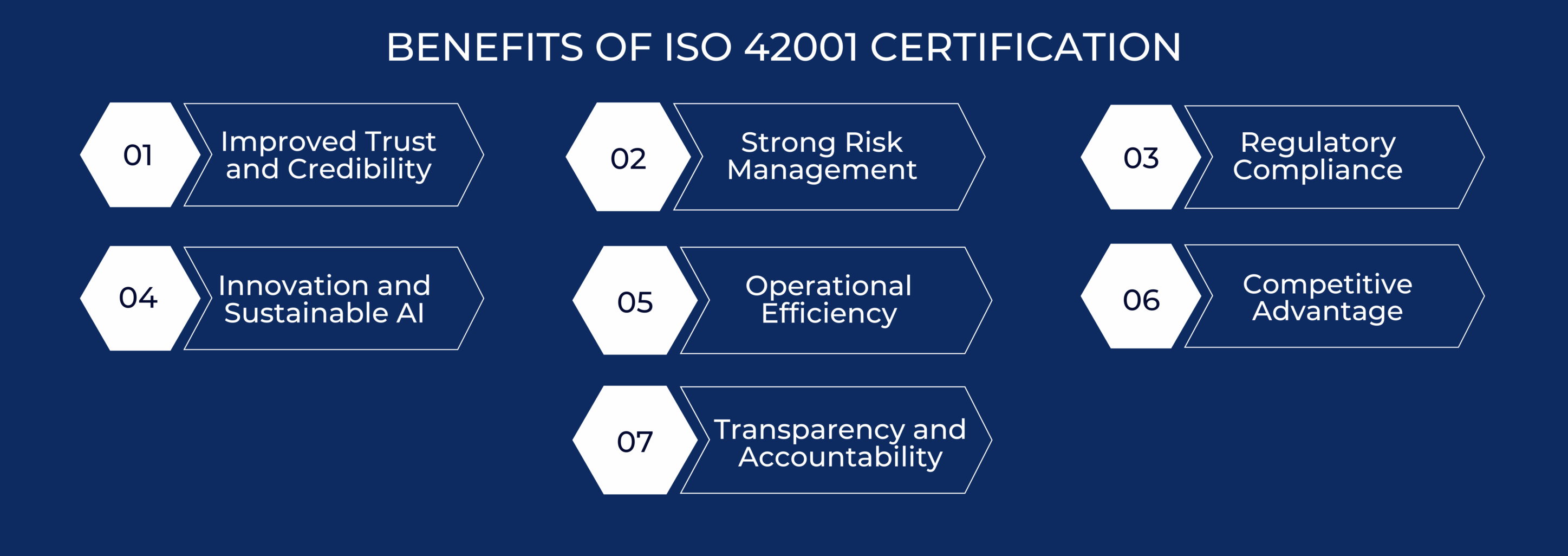
- ✓Governance and Risk Management Benefits
- ✓Commercial and Competitive Benefits
- ✓Regulatory and Legal Risk Reduction Benefits
- ✓Operational and Innovation Benefits
ISO 42001 Assessment: CertPro’s Audit Approach in Los Angeles
CertPro conducts ISO 42001 assessments in Los Angeles as a Licensed CPA Firm with established audit protocols for evaluating Artificial Intelligence Management Systems. The ISO 42001 assessment methodology applied by CertPro is structured to provide rigorous, independent evaluation of organizational conformance against ISO/IEC 42001:2023 requirements.
CertPro’s audit team brings domain expertise spanning AI governance, information security, enterprise risk management, and sector-specific regulatory environments relevant to Los Angeles industries. The assessment process is conducted with strict independence — CertPro does not provide implementation services, advisory support, or consulting to organizations it audits, ensuring audit objectivity and institutional credibility.
Audit Scope Definition and Program Determination
The ISO 42001 assessment begins with a scoping meeting between CertPro and the client organization to confirm the AIMS scope, identify key audit interfaces, and establish the audit program. The audit program specifies the audit objectives, scope, criteria, schedule, and resource requirements.
For complex Los Angeles organizations with multi-site AI operations, the audit program may be structured across multiple audit locations and may involve specialized technical auditors with expertise in specific AI application domains. The audit program is documented and shared with the client organization prior to audit commencement to ensure adequate preparation and appropriate personnel availability.
CertPro’s audit program determination considers the organizational context factors identified during the scoping meeting, including the types of AI systems in scope, the industry sectors served, the regulatory environment, the organization’s ISO 42001 implementation history, and findings from any previous CertPro audits.
For initial certification audits, the audit program allocates sufficient time to evaluate all mandatory ISO/IEC 42001:2023 clauses and the complete set of applicable Annex A controls. For surveillance and recertification audits, the program is risk-based — focusing on areas of identified weakness, significant organizational changes, and emerging AI governance risks relevant to the organization’s current AI portfolio.
CertPro’s Technical Audit Competencies
ISO 42001 audit engagements in Los Angeles conducted by CertPro draw on auditor competencies that span both management system audit methodology and AI-specific technical domains. CertPro auditors with AI technical expertise are able to evaluate the adequacy of model validation methodologies, assess the appropriateness of bias testing approaches for specific application contexts, review AI system monitoring configurations, and evaluate the technical completeness of AI system lifecycle documentation.
This technical depth distinguishes CertPro’s ISO 42001 audit practice from certification bodies that rely exclusively on management system generalists without substantive AI domain expertise.
For sector-specific ISO 42001 assessment engagements in Los Angeles, CertPro deploys audit teams with relevant industry expertise. Healthcare AI audits are conducted with auditors familiar with FDA Software as a Medical Device requirements and clinical AI validation standards. Financial services AI audits engage auditors with knowledge of OCC model risk management guidance and FINRA algorithmic trading requirements.
Entertainment and media AI audits draw on auditors experienced in digital rights management, algorithmic content governance, and synthetic media disclosure obligations. This sector-specific expertise ensures that the ISO 42001 assessment evaluates governance controls in the context of the organization’s actual operational environment and regulatory obligations.
Independence and Audit Quality Assurance
CertPro maintains strict independence between its certification audit function and any other service activities. CertPro does not provide AIMS implementation support, AI governance consulting, internal audit services, or training to organizations for which it conducts ISO 42001 certification audits. This independence is a fundamental requirement for certification body accreditation and ensures that CertPro’s audit opinions are based exclusively on objective evidence gathered during the audit.
For Los Angeles organizations evaluating certification body options, CertPro’s status as a Licensed CPA Firm with established audit independence protocols provides additional assurance of audit credibility and professional accountability.
ISO 42001 Certification Cost in Los Angeles
The cost of ISO 42001 Certification in Los Angeles is determined by a structured set of factors that reflect the scope and complexity of the certification audit. CertPro applies a transparent, scope-based pricing methodology that ensures organizations receive accurate cost information before committing to the certification process.
The primary cost drivers are organizational size (measured by number of employees and AI system users), AIMS scope complexity (measured by the number and diversity of in-scope AI systems), the number of operational sites included in the certification scope, and the depth of technical audit activities required by the AI system types in scope.
Cost Factors and Scope Variables
Organizations with broader AIMS scopes — encompassing larger numbers of AI systems, more diverse application domains, or more complex AI architectures — require more extensive audit activities and correspondingly higher certification costs. A Los Angeles startup with a single AI-powered product and a well-documented AIMS will incur significantly lower certification costs than a large enterprise with dozens of AI systems deployed across multiple business units, locations, and external-facing applications.
The number of auditor-days required for Stage 1 and Stage 2 audits is the primary determinant of certification cost, and this number scales directly with scope complexity.
Multi-site organizations — such as Los Angeles entertainment companies with production facilities, post-production operations, and distribution centers — incur additional audit costs for each physical location included in the certification scope. CertPro’s multi-site audit programs are structured to optimize audit efficiency through sampling-based approaches where operationally justified, reducing total audit time without compromising rigor.
Organizations with remote or hybrid work environments may be eligible for partially virtual audit activities, which can reduce travel-related cost components for geographically distributed Los Angeles organizations.
| Organization Type | Estimated Stage 1 Duration | Estimated Stage 2 Duration | Certification Cycle |
|---|---|---|---|
| Small organization (1–50 employees, 1–3 AI systems) | 0.5–1 day | 1–2 days | 3 years with annual surveillance |
| Mid-size organization (51–250 employees, 4–10 AI systems) | 1–1.5 days | 2–3 days | 3 years with annual surveillance |
| Large organization (251+ employees, 11+ AI systems) | 1.5–2 days | 3–5 days | 3 years with annual surveillance |
| Multi-site organization (multiple Los Angeles locations) | Varies by site count | Varies by site count | 3 years with annual surveillance |
Total Cost of Certification Ownership
The total cost of ISO 42001 Certification in Los Angeles encompasses not only the direct certification audit fees paid to CertPro but also internal organizational costs associated with AIMS implementation and maintenance. Internal costs include personnel time for AIMS documentation development, risk assessment activities, control implementation, internal audit execution, and management review preparation.
For organizations that approach AIMS implementation efficiently — leveraging existing governance infrastructure, reusing documentation from ISO 27001 or other management system certifications, and integrating AIMS activities into existing operational workflows — internal implementation costs can be substantially reduced.
Organizations should evaluate ISO 42001 certification costs in the context of the financial and operational risks that the certification addresses. For a Los Angeles healthcare AI company where an unmanaged AI system failure could result in patient harm, regulatory sanctions, and reputational damage with multi-million dollar financial consequences, the cost of maintaining a certified AIMS represents a rational risk management investment.
Similarly, for a Los Angeles fintech company where AI model failures in credit scoring or fraud detection could trigger regulatory investigations and class-action litigation, the cost of ISO 42001 compliance is proportionate to the risk exposure being managed.
ISO 42001 Certification for Los Angeles Industry Sectors
ISO 42001 certification applies across all industry sectors that develop, deploy, or use AI systems. In Los Angeles, several industry sectors present particularly concentrated ISO 42001 certification demand given the scale and criticality of their AI deployments. The following subsections address ISO 42001 certification requirements and benefits for the primary Los Angeles industry sectors where CertPro conducts ISO 42001 assessment activities.
Technology and SaaS Companies
Demand for AI management system certification among Los Angeles tech companies is driven primarily by enterprise client requirements and competitive differentiation in B2B technology markets. Los Angeles technology companies — including SaaS platforms, cloud service providers, AI application developers, and technology infrastructure firms — increasingly encounter enterprise procurement processes that require ISO 42001 certification as a vendor qualification criterion.
This trend mirrors the earlier adoption of ISO 27001 certification as a standard requirement in enterprise technology procurement and reflects growing corporate recognition of AI governance as a supply chain risk management priority.
For Los Angeles technology startups, ISO 42001 certification signals AI governance maturity to venture capital investors and strategic partners who increasingly factor AI governance risk into investment and partnership decisions. The certification provides credible evidence that the startup has established systematic governance processes that can scale with the business — a significant reassurance for investors concerned about regulatory risk and enterprise client retention in AI-intensive business models.
ISO 42001 Certification in Los Angeles also benefits tech companies through strong reputational positioning as members of the first cohort of certified AI governance organizations in the region.
Healthcare AI Organizations
ISO 42001 Certification in Los Angeles for healthcare AI applications addresses the governance requirements for AI systems deployed in clinical, administrative, and population health contexts. Major Los Angeles academic medical centers, hospital networks, and health technology companies deploy AI for diagnostic imaging analysis, clinical decision support, patient deterioration prediction, readmission risk scoring, and administrative automation.
The stakes of AI governance failures in these contexts are uniquely high — inadequate oversight of AI diagnostic tools can result in patient harm with direct implications for medical malpractice liability, accreditation status, and CMS reimbursement.
The ISO 42001 audit for healthcare organizations evaluates controls for clinical AI validation, human oversight of AI-assisted clinical decisions, AI system performance monitoring against clinical benchmarks, adverse event reporting for AI-related clinical incidents, and supplier governance for third-party clinical AI systems.
These controls align with FDA Software as a Medical Device (SaMD) guidance requirements and support Joint Commission accreditation standards addressing clinical AI use. Healthcare organizations that achieve ISO 42001 certification demonstrate to regulators, accreditation bodies, and patients that their AI governance practices meet internationally recognized standards.
Entertainment and Media Organizations
ISO 42001 Certification in Los Angeles for the entertainment industry encompasses the governance requirements for AI systems used in content creation, distribution, audience targeting, and rights management. Major studios, streaming platforms, talent agencies, and production companies in Los Angeles deploy AI for script analysis, box office prediction, content recommendation, targeted advertising, synthetic voice and image generation, and automated rights clearance.
The entertainment industry faces distinctive AI governance challenges including AI-generated content disclosure obligations, performer rights in synthetic media contexts, and algorithmic bias in audience targeting systems.
California’s AB 2602 and AB 1836, enacted in 2024, establish specific requirements for AI use of digital replicas of performers — directly impacting AI governance obligations for Los Angeles entertainment companies. ISO 42001 certification provides a framework for documenting, evaluating, and controlling AI systems that process performer digital representations, supporting compliance with these California-specific AI regulations.
The ISO 42001 audit for Los Angeles entertainment sector engagements evaluates whether organizations have established adequate controls for AI system transparency, performer rights documentation, and synthetic media governance consistent with both the standard’s requirements and applicable California law.
Financial Services and Fintech Organizations
Los Angeles fintech organizations face a particularly complex regulatory environment for AI governance under ISO 42001 compliance requirements. The Equal Credit Opportunity Act (ECOA) and Fair Housing Act impose fairness requirements on AI systems used in credit and housing decisions. The Consumer Financial Protection Bureau (CFPB) has issued guidance addressing AI model explainability requirements for adverse action notifications. The Securities and Exchange Commission (SEC) has signaled increased scrutiny of AI use in investment advisory and algorithmic trading contexts.
ISO 42001 compliance provides a documented governance framework that addresses the cross-cutting AI governance requirements common to all these regulatory regimes.
ISO 42001 Certification vs. Related Standards and Frameworks
ISO 42001 certification occupies a distinct position in the landscape of AI governance frameworks and related management system standards. Understanding how ISO 42001 differs from and relates to other frameworks is important for Los Angeles organizations determining their governance certification strategy.
The following comparison addresses the most frequently encountered frameworks in the Los Angeles market — ISO 27001, SOC 2, NIST AI RMF, and the EU AI Act — and clarifies how ISO 42001 certification interacts with each.
ISO 42001 vs. ISO 27001
ISO 42001 and ISO 27001 address different but complementary governance domains. ISO 27001 governs information security — protecting the confidentiality, integrity, and availability of information assets. ISO 42001 governs AI management systems — ensuring the responsible development, deployment, and operation of AI technologies.
While ISO 27001 covers security controls for AI system data and infrastructure (encryption, access control, vulnerability management), it does not address AI-specific governance concerns such as algorithmic bias, model drift, AI transparency, or the ethical implications of AI decision-making. ISO 42001 fills this gap by establishing governance requirements specific to AI system characteristics and risks.
The two standards are structurally compatible — both follow the ISO High-Level Structure and share common requirements for organizational context, leadership, planning, support, performance evaluation, and continual improvement. Los Angeles organizations certified to ISO 27001 can integrate ISO 42001 requirements into their existing management system infrastructure, reusing policies, audit schedules, training programs, and governance mechanisms where applicable.
This integration reduces the incremental implementation burden and allows organizations to pursue ISO 42001 Certification in Los Angeles more efficiently when an ISO 27001 foundation already exists.
ISO 42001 vs. NIST AI Risk Management Framework
The NIST AI Risk Management Framework (AI RMF), published in January 2023, provides a voluntary guidance framework organized around four core functions: Govern, Map, Measure, and Manage. Unlike ISO 42001, the NIST AI RMF is not a certifiable standard — organizations cannot obtain third-party certification to the NIST AI RMF. The framework provides guidance and recommended practices rather than mandatory requirements.
ISO 42001 certification is the third-party verifiable credential that demonstrates AI governance maturity, while NIST AI RMF alignment can be used as an internal implementation reference to inform AIMS design. Many Los Angeles organizations use NIST AI RMF guidance to structure their AIMS implementation and then pursue ISO 42001 certification to obtain external validation of their AI governance practices.
| Framework | Type | Certifiable? | Primary Focus | Relevant for Los Angeles Organizations |
|---|---|---|---|---|
| ISO/IEC 42001:2023 | International Standard | Yes — third-party certification available | AI Management System governance | All sectors with AI operations |
| ISO 27001:2022 | International Standard | Yes — third-party certification available | Information Security Management | All sectors; complements ISO 42001 |
| NIST AI RMF | Voluntary Guidance Framework | No — not certifiable | AI risk identification and management | Federal contractors and agencies |
| EU AI Act | Regulatory Requirement | Conformity assessment for high-risk AI | Risk-based AI regulation | Organizations with EU market exposure |
| SOC 2 Type II | Attestation Report | Yes — CPA firm attestation | Trust Services Criteria for service organizations | SaaS and cloud service providers |
Why Choose CertPro for ISO 42001 Certification in Los Angeles
CertPro’s ISO 42001 certification practice in Los Angeles is built on three foundational attributes: technical expertise in AI governance audit, strict certification body independence, and deep familiarity with the Los Angeles regulatory and business environment. As a Licensed CPA Firm, CertPro operates within established professional standards for audit independence, evidence evaluation, and reporting — standards that are directly applicable to ISO 42001 certification audit activities.
Los Angeles organizations that engage CertPro for ISO 42001 certification receive rigorous, credible audit services from a firm whose institutional positioning is defined by audit authority, not advisory services.
Sector-Specific Expertise in Los Angeles Markets
CertPro’s ISO 42001 assessment practice in Los Angeles maintains sector-specific audit expertise across the primary industries of the Los Angeles economy. The firm’s auditors include professionals with backgrounds in healthcare technology, entertainment and media, financial services, enterprise software, and manufacturing — sectors that collectively account for the majority of AI deployment activity in the Los Angeles metropolitan area.
This sector-specific expertise means that CertPro auditors understand the specific AI governance challenges, regulatory obligations, and operational contexts relevant to each client organization’s industry, enabling more focused and meaningful audit evaluations.
For ISO 42001 Certification in Los Angeles serving healthcare AI organizations, CertPro auditors are familiar with FDA SaMD guidance, HIPAA Security Rule requirements applicable to AI system data, and Joint Commission standards addressing clinical decision support tools. For Los Angeles entertainment industry clients, the firm’s auditors understand California’s AI and digital replica legislation, SAG-AFTRA agreements addressing synthetic media, and the technical architecture of recommendation and content generation systems.
This industry contextual knowledge is essential for conducting audit evaluations that are both technically rigorous and practically relevant to the organization’s actual operating environment.
Transparent Audit Process and Client Communication
CertPro’s ISO 42001 audit process is characterized by transparency in audit program communication, finding classification, and certification decision criteria. Organizations undergoing ISO 42001 Certification in Los Angeles receive a detailed audit program prior to audit commencement, a written Stage 1 audit report with specific findings and required actions, a written Stage 2 audit report with classified nonconformities and observations, and a formal certification decision notification with supporting rationale.
This documentation trail provides organizations with a clear understanding of their AIMS conformance status and the specific actions required to achieve and maintain certification.
Secure ISO 42001 Certification in Los Angeles with CertPro
ISO 42001 Certification in Los Angeles is a strategic governance investment for organizations that depend on AI systems for core operational functions. The certification provides independently verified evidence of AIMS conformance with ISO/IEC 42001:2023 — the international standard for responsible AI management — and delivers measurable benefits in risk management, regulatory alignment, competitive positioning, and stakeholder confidence.
For organizations across the Los Angeles technology, healthcare, entertainment, and financial services sectors, ISO 42001 Certification is an actionable response to the growing governance expectations of clients, regulators, and the public regarding AI accountability.
CertPro conducts ISO 42001 certification audits in Los Angeles as a Licensed CPA Firm with established protocols for audit independence, technical competence, and certification body integrity. The ISO 42001 audit process follows a defined sequence — scope definition, Stage 1 documentation review, Stage 2 on-site audit, nonconformity resolution, certification decision, and ongoing surveillance — providing organizations with a clear, predictable pathway to certification.
CertPro’s sector-specific expertise across Los Angeles industries ensures that each ISO 42001 assessment is conducted with appropriate understanding of the organization’s operational context, regulatory environment, and AI governance challenges.
Organizations seeking to initiate the ISO 42001 Certification in Los Angeles process are invited to contact CertPro to discuss AIMS scope, audit program requirements, and certification timelines. CertPro provides a structured initial consultation that enables organizations to understand the specific audit requirements applicable to their AI portfolio, the documentation needed for Stage 1 audit, and the estimated timeframe and resource requirements for achieving ISO 42001 Certification in Los Angeles.
This initial consultation is conducted as an informational exchange — CertPro’s role as a certification body is strictly that of auditor, not advisor or implementer.
FAQ
▶
What is ISO 42001 certification and why is it relevant for Los Angeles organizations?
▶
How long does the ISO 42001 certification process take in Los Angeles?
▶
What documents are required before the ISO 42001 audit begins?
▶
Does ISO 42001 certification replace ISO 27001 for Los Angeles technology companies?
▶
How does ISO 42001 compliance support CCPA obligations for Los Angeles organizations?
▶
What industries in Los Angeles most commonly pursue ISO 42001 certification?
▶
What is the difference between an ISO 42001 audit and an ISO 42001 assessment?
▶
How does ISO 42001 certification handle third-party AI systems from cloud providers?

MindSec Launches AI Compliance for Law 25 & ISO 42001
Excerpt from Barchart Article, Published on December 3, 2025 Today, Canadian organizations face increasing pressure to comply with stringent privacy a…

UNDERSTANDING ISO 42001: A GUIDE FOR RESPONSIBLE AI MANAGEMENT SYSTEMS
The invention of artificial intelligence (AI) has changed the operational processes of many industries. However, the rapid growth of technology increa…
ENSURING AI DATA PRIVACY COMPLIANCE WITH ISO 42001
According to Stanford’s AI report, the private AI investment in the U.S. alone reached more than $109 billion last year, which is equal to 12 times th…
Get In Touch
have a question? let us get back to you.