
SOC 2 Certification in Bangalore
CertPro, a Licensed CPA Firm, conducts SOC 2 audits and issues attestation reports for technology organizations operating in Bangalore. Each SOC 2 engagement is performed against the AICPA Trust Services Criteria, encompassing Security, Availability, Confidentiality, Processing Integrity, and Privacy. Audit scope covers both Type I and Type II engagements across Bangalore’s SaaS, cloud, and enterprise technology sectors.
OUR CLIENTS










Introduction to SOC 2 Certification in Bangalore
SOC 2 Certification in Bangalore represents a formal attestation confirming that a service organization has implemented and maintained controls aligned with the American Institute of Certified Public Accountants (AICPA) Trust Services Criteria. Established under the AICPA’s System and Organization Controls framework, SOC 2 is a voluntary compliance standard designed specifically for service organizations that store, process, or transmit customer data. The certification is not a product endorsement — it is a structured audit outcome produced by a Licensed CPA Firm following defined evaluation protocols.
Bangalore is recognized globally as India’s foremost technology and innovation hub, hosting thousands of SaaS companies, cloud infrastructure providers, fintech platforms, and enterprise technology firms. Many of these organizations serve international clients — particularly in North America and Europe — where SOC 2 attestation is increasingly a baseline requirement for vendor onboarding. As the city’s startup ecosystem continues to produce unicorn-stage companies and global-scale platforms, the demand for SOC 2 compliance Bangalore has intensified across sectors including healthcare IT, financial services, e-commerce, and managed services.
What Is SOC 2?
SOC 2 is defined by the AICPA as a reporting framework that evaluates a service organization’s controls relevant to security, availability, processing integrity, confidentiality, and privacy. Unlike financial reporting standards, SOC 2 focuses exclusively on operational and data security controls. A SOC 2 report is produced by a Licensed CPA Firm following an independent audit and contains the auditor’s opinion, a description of the system under review, and evidence-based findings on control effectiveness.
The Trust Services Criteria (TSC) form the evaluative backbone of every SOC 2 engagement. The Security criterion — also called the Common Criteria — is mandatory for all SOC 2 audits. It addresses logical and physical access controls, system monitoring, change management, and risk mitigation. The remaining four criteria (Availability, Confidentiality, Processing Integrity, and Privacy) are optional. Organizations select them based on the nature of services provided. For example, a Bangalore-based SaaS company handling protected health information would typically include the Privacy criterion in its audit scope.
SOC 2 Type I vs. SOC 2 Type II: Key Distinctions
SOC 2 Type I certification in Bangalore evaluates whether an organization’s controls are suitably designed and implemented at a specific point in time. A Type I report provides a snapshot assessment — the auditor confirms that described controls exist and are logically constructed to meet the Trust Services Criteria. This report type is typically pursued by organizations that are new to the SOC 2 framework and wish to establish a formal baseline before committing to a full operating-period review.
SOC 2 Type II certification in Bangalore evaluates whether controls are not only designed appropriately but also operating effectively over a defined review period — typically a minimum of six months, though twelve-month periods are standard for mature programs. A Type II report carries significantly greater weight with enterprise clients and procurement officers because it demonstrates sustained control performance rather than point-in-time compliance. Most multinational corporations and regulated-industry clients in the United States, United Kingdom, and Australia explicitly require a SOC 2 Type II report as a condition of vendor qualification.
| Attribute | SOC 2 Type I | SOC 2 Type II |
|---|---|---|
| Evaluation Period | Point in time (single date) | Minimum 6 months (typically 12 months) |
| Control Assessment | Design and implementation | Design, implementation, and operating effectiveness |
| Auditor Opinion | Suitability of design | Suitability of design and operating effectiveness |
| Common Use Case | Initial certification baseline | Enterprise vendor qualification, ongoing compliance |
| Market Acceptance | Moderate (early-stage organizations) | High (preferred by regulated-industry clients globally) |
Bangalore’s Technology Ecosystem and SOC 2 Relevance
Bangalore’s status as India’s Silicon Valley creates a concentrated demand environment for SOC 2 attestation. The city accounts for a substantial share of India’s software exports and hosts the India headquarters of global technology giants alongside a dense population of homegrown SaaS companies targeting international markets. Electronic City, Whitefield, and Koramangala function as distinct technology corridors — each hosting hundreds of data-handling enterprises for whom SOC 2 Certification in Bangalore is a prerequisite for competing in global procurement processes.
The proliferation of cloud-native applications and platform-as-a-service offerings from Bangalore has accelerated SOC 2 adoption. Organizations operating in the city’s fintech sector face particular scrutiny from international banking partners and payment processors that mandate SOC 2 compliance Bangalore fintech as a condition of integration. Similarly, SOC 2 certification for Bangalore SaaS companies has become a market differentiator that directly influences enterprise sales cycles, contract values, and time-to-close metrics in competitive B2B environments.

Benefits of SOC 2 Certification for Bangalore Organizations
SOC 2 Certification in Bangalore delivers measurable operational, commercial, and reputational benefits to technology organizations. These outcomes are not incidental — they are direct consequences of the structured control environment that SOC 2 audit Bangalore processes require organizations to build and sustain. Understanding these benefits in concrete terms helps leadership teams make informed decisions about the timing and scope of their SOC 2 engagement.
SOC 2 attestation functions as a powerful trust signal in enterprise sales contexts. When a Bangalore-based SaaS company or managed service provider presents a current SOC 2 Type II report to a prospective enterprise client, it removes a major friction point from the procurement process. Security questionnaires — which routinely contain 200 to 400 individual items — can be substantially addressed by referencing the SOC 2 report. This reduces sales cycle length by weeks or months. Organizations that have completed SOC 2 certification in Bangalore consistently report improved win rates in competitive enterprise deals.
Access to regulated industry verticals — including healthcare, financial services, and federal government contracting — is materially dependent on SOC 2 attestation in Bangalore. Clients operating under HIPAA, PCI DSS, or GLBA in the United States routinely require their technology vendors to maintain current SOC 2 reports. For Bangalore-based financial services technology providers serving those sectors, a valid SOC 2 report is not optional — it is a condition of contract execution and renewal. This creates a direct revenue protection function for the certification.
The control environment required to sustain SOC 2 compliance Bangalore produces material improvements in organizational security posture. Access control policies, vulnerability management programs, incident response procedures, and change management protocols — all evaluated during a SOC 2 audit Bangalore engagement — directly reduce the probability and impact of security incidents. Organizations that complete a SOC 2 audit report measurably lower mean-time-to-detect (MTTD) and mean-time-to-respond (MTTR) for security events compared to peers operating without formal control frameworks.
Internal operational discipline improves as a direct outcome of SOC 2 audit preparation and ongoing maintenance. The documentation, evidence collection, and control monitoring processes that auditors evaluate require organizations to formalize previously informal practices. Engineering teams implement structured change management. Operations teams establish documented incident response workflows. HR and security teams coordinate on access provisioning and termination controls. These improvements persist beyond the audit itself and contribute to long-term organizational resilience against both technical failures and human-error-driven incidents.
India’s Digital Personal Data Protection Act (DPDPA), enacted in 2023, establishes data fiduciary obligations that align substantively with the Privacy criterion in the SOC 2 Trust Services Criteria. Organizations in Bangalore that build SOC 2-aligned control environments simultaneously advance their compliance posture under the DPDPA framework. This dual-alignment value is particularly relevant for Bangalore organizations serving both domestic and international clients under overlapping regulatory obligations.
- ✓Demonstrates third-party verified security controls to enterprise clients and procurement officers
- ✓Reduces vendor security questionnaire response burden by up to 70% in qualified enterprise engagements
- ✓Enables access to regulated verticals including healthcare IT, financial services, and government contracting
- ✓Strengthens contractual positions in data processing agreements and vendor addendums
- ✓Aligns internal controls with India’s Digital Personal Data Protection Act (DPDPA) obligations
- ✓Reduces cybersecurity insurance premiums by demonstrating formal control frameworks
- ✓Supports multi-framework compliance by aligning with ISO 27001, HIPAA, and PCI DSS control structures
- ✓Improves investor and board-level confidence in organizational security governance
- ✓Accelerates enterprise sales cycles by removing security review friction from procurement processes
- ✓Provides a documented evidence base for incident response and regulatory inquiry management
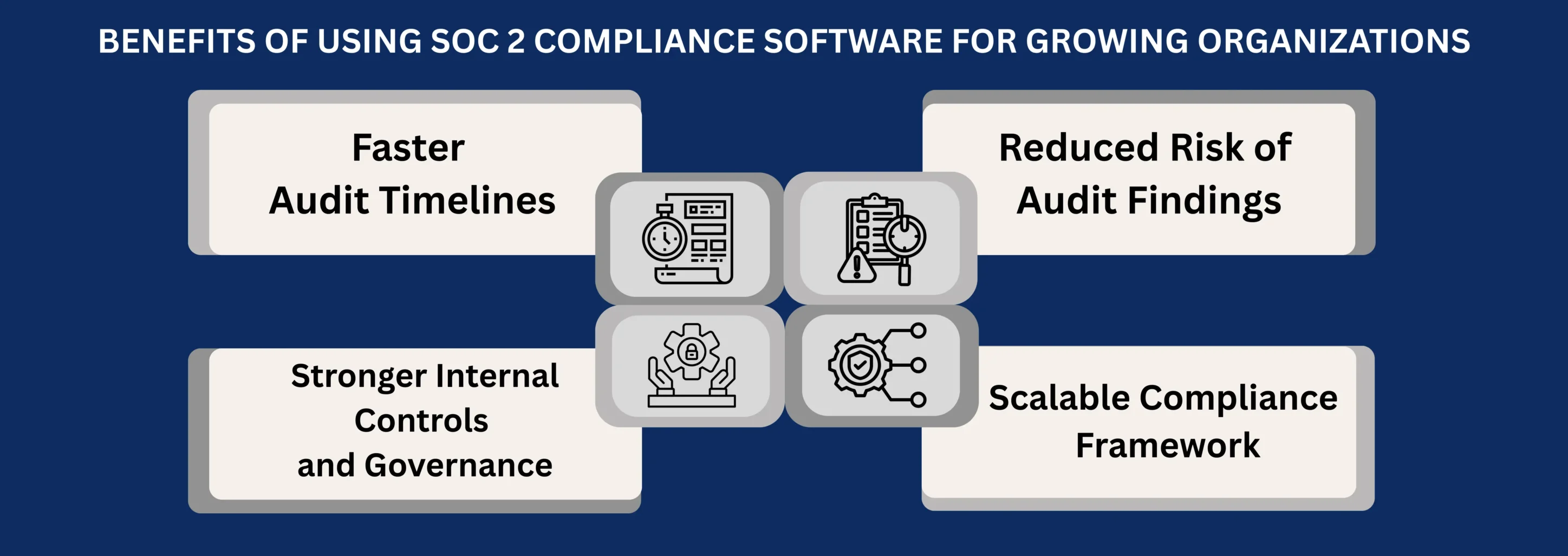
- ✓Commercial and Market Access Benefits
- ✓Operational and Risk Management Benefits
- ✓Regulatory Alignment and Data Protection Benefits
SOC 2 Certification Requirements for Bangalore Organizations
Meeting the requirements for SOC 2 Certification in Bangalore involves establishing a documented, operable control environment aligned with the AICPA Trust Services Criteria. These requirements are evaluated by the auditing CPA firm during the fieldwork phase and must be demonstrable through verifiable evidence — not policy statements alone. The following sections detail the primary requirement categories that Bangalore organizations must address prior to and during a SOC 2 audit Bangalore engagement.
Every SOC 2 engagement requires comprehensive system description documentation — a formal narrative that defines the boundaries of the system under review. This includes infrastructure components, software applications, data flows, and personnel with system access. The system description must accurately represent the environment that auditors will evaluate and must be prepared and maintained by management. Inaccuracies or omissions in the system description constitute a documentation deficiency that auditors will flag in their findings.
Supporting documentation requirements extend to policies, procedures, standards, and evidence artifacts that demonstrate control operation. Acceptable evidence formats include configuration screenshots, access review logs, ticketing system records, training completion records, vendor contracts with security provisions, and penetration test reports. Each control mapped to the Trust Services Criteria must be supported by evidence confirming the control operated as described during the audit period. For SOC 2 Type II engagements, evidence must span the entire review period and demonstrate consistent control execution — not isolated instances of compliance.
Technical controls evaluated during a SOC 2 audit Bangalore engagement encompass logical access management, network security architecture, encryption protocols, vulnerability management, and system monitoring. Access controls must implement the principle of least privilege, with documented processes for provisioning, reviewing, and revoking user access. Multi-factor authentication is now a de facto requirement for administrative access to production systems, cloud management consoles, and sensitive data repositories. Auditors treat its absence as a significant control gap under the Common Criteria.
Encryption requirements under SOC 2 apply to data in transit and data at rest. Bangalore organizations operating cloud infrastructure on AWS, Azure, or Google Cloud must demonstrate that encryption is consistently applied across storage volumes, databases, and network communications. Vulnerability management programs must include regular scanning (monthly at minimum), defined remediation timelines based on severity classification, and evidence of patch application. Security information and event management (SIEM) or equivalent log monitoring tools must be operational and reviewed regularly — auditors will sample monitoring logs to verify active oversight.
SOC 2 compliance Bangalore requires organizational structures that support security governance. This includes a defined security ownership role (CISO, Security Manager, or equivalent), a risk assessment process conducted at least annually, a documented incident response plan tested through tabletop or live exercises, and a business continuity and disaster recovery plan with recovery time and recovery point objectives aligned with customer commitments. These organizational requirements ensure security is embedded in governance structures rather than treated as a purely technical function.
- ✓Documented system description accurately defining system boundaries and components
- ✓Formalized security policies covering access control, incident response, change management, and acceptable use
- ✓Evidence of security awareness training completion for all personnel with system access
- ✓Logical access controls implementing least privilege with documented review cycles
- ✓Multi-factor authentication deployed for administrative and privileged account access
- ✓Encryption applied to data in transit (TLS 1.2 minimum) and data at rest across all production systems
- ✓Active vulnerability management program with defined scanning frequency and remediation SLAs
- ✓Documented and tested incident response and business continuity plans
- ✓Vendor management controls including security review processes for subservice organizations
- ✓Change management procedures with documented approval and testing requirements prior to production deployment

- ✓Documentation Requirements
- ✓Technical Control Requirements
- ✓Organizational and Process Requirements
The SOC 2 Audit Process in Bangalore: Stage-by-Stage Overview
The SOC 2 audit process in Bangalore follows a structured sequence of evaluation stages conducted by a Licensed CPA Firm in accordance with AICPA auditing standards. Each stage has defined objectives, deliverables, and participant responsibilities. Understanding this process enables Bangalore organizations to allocate internal resources appropriately and maintain audit momentum — from initial scoping through final attestation report issuance.
Scope definition establishes the precise boundaries of the SOC 2 engagement — specifically which systems, services, data flows, and organizational units fall within the audit perimeter. The auditor works with management to identify the principal service commitments and system requirements relevant to the selected Trust Services Criteria. Scope decisions directly influence the depth and cost of the audit. Overly broad scopes increase evidence requirements, while inappropriately narrow scopes may fail to satisfy client expectations or auditor completeness standards.
Audit program determination involves the auditor documenting the specific controls to be tested, the testing procedures to be applied, and the evidence samples to be reviewed. For SOC 2 audit services Bangalore engagements, the audit program is tailored to the organization’s specific technology environment — cloud providers, third-party subservice organizations, and application architecture all influence which controls are in scope and how they are tested. The audit program is finalized before fieldwork commences and governs the structure of the entire evaluation.
Walkthrough procedures involve the auditor conducting structured interviews and observations with personnel responsible for operating the in-scope controls. These walkthroughs confirm that the auditor’s understanding of control design matches actual operational practice. During walkthroughs, auditors identify controls that may be described in policy but not consistently practiced — a common finding in organizations conducting their first SOC 2 audit Bangalore engagement. Walkthrough findings then inform the evidence sampling strategy for subsequent fieldwork stages.
Stage 1 audit procedures for Type I engagements focus on evaluating whether controls are suitably designed and implemented as of the report date. The auditor reviews system architecture documentation, configuration settings, policy documents, and access control matrices to assess design adequacy. For organizations pursuing SOC 2 Type I certification in Bangalore, Stage 1 procedures constitute the primary fieldwork phase. Findings are documented in the auditor’s working papers before the draft report is prepared.
Control testing for SOC 2 Type II certification Bangalore engagements involves the auditor selecting and reviewing evidence samples across the entire review period to confirm that each control operated effectively throughout. Testing procedures vary by control type: inquiry, observation, inspection of documentation, and re-performance are the four primary testing techniques available under AICPA standards. The auditor’s sample size for each control is determined by the control’s frequency of operation — daily controls require larger samples than quarterly controls.
Evidence review during SOC 2 Type II fieldwork extends across the full observation period. Auditors examine access provisioning and deprovisioning tickets to verify timely execution, review vulnerability scan reports across multiple months to assess remediation consistency, inspect change management tickets to confirm approval workflows operated as documented, and analyze security monitoring logs to verify active oversight. Organizations that maintain centralized evidence repositories — such as GRC platforms or structured documentation systems — significantly reduce the administrative burden of responding to auditor evidence requests.
Following fieldwork completion, the auditor compiles findings and identifies any control deficiencies — categorized as deficiencies (minor), significant deficiencies (moderate), or material weaknesses (severe). Management is given the opportunity to respond to identified exceptions before the final report is issued. The SOC 2 attestation opinion is then determined: an unqualified (clean) opinion indicates controls met the Trust Services Criteria; a qualified opinion indicates one or more significant exceptions limited the auditor’s ability to issue an unqualified conclusion.
SOC 2 attestation report issuance formally concludes the engagement. The final report, issued by the Licensed CPA Firm, contains the independent service auditor’s report, management’s description of the system, and the auditor’s description of tests performed and results obtained. This report is the deliverable that organizations share with clients, prospects, and partners as evidence of their certified control environment. SOC 2 attestation reports are typically considered current for twelve months from the report period end date, after which organizations must initiate a new Type II engagement to maintain active certification status.
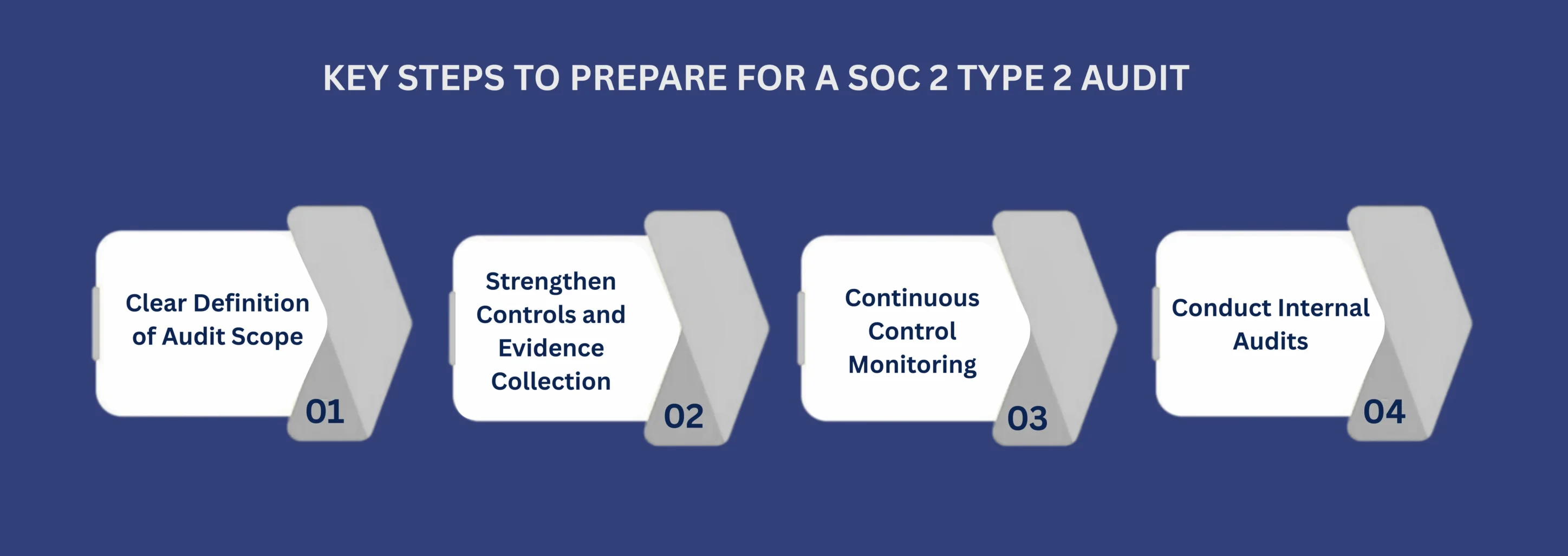
- ✓Stage 1: Scope Definition and Audit Program Determination
- ✓Stage 2: Walkthrough and Stage 1 Audit Procedures
- ✓Stage 3: Control Testing and Evidence Review (Type II)
- ✓Stage 4: Nonconformity Review, Certification Decision, and Attestation Issuance
SOC 2 Certification Cost in Bangalore
The cost of SOC 2 Certification in Bangalore is determined by multiple factors — including organizational size, system complexity, number of Trust Services Criteria in scope, audit period length, and the nature of the technology environment under review. Unlike prescriptive certification schemes with fixed fee structures, SOC 2 audit pricing reflects the actual scope of evaluation work required to produce an accurate, defensible attestation report. CertPro maintains a transparent, fixed-fee pricing model that eliminates cost uncertainty for Bangalore organizations planning their SOC 2 engagement budgets.
Cost Factors for SOC 2 Audit Bangalore Engagements
Organizational complexity is the primary cost driver in SOC 2 audit Bangalore engagements. A startup with 20 employees operating a single SaaS application on a single cloud platform presents substantially lower audit complexity than a 500-person organization running multiple products across hybrid infrastructure environments. Each additional in-scope system, application, or data center location increases the number of controls to be tested and the volume of evidence to be reviewed — directly affecting total audit cost.
Selecting Trust Services Criteria beyond the mandatory Security criterion adds incremental cost proportional to the controls required by each additional category. Adding the Availability criterion requires evaluation of backup, recovery, and uptime monitoring controls. Adding Confidentiality requires assessment of data classification, access restrictions, and disposal procedures. Adding Privacy requires review of data subject rights processes, consent management, and data retention programs. Organizations should evaluate which criteria are contractually required by their customers before expanding scope beyond a Security-only engagement.
| Organization Profile | Typical Audit Scope | Approximate Cost Range (INR) | Approximate Duration |
|---|---|---|---|
| Early-stage SaaS startup (≤50 employees) | Security criterion only, single cloud platform | ₹3,50,000 – ₹6,00,000 | 8–12 weeks (Type I) |
| Mid-size SaaS company (50–200 employees) | Security + 1–2 additional criteria, multi-service | ₹6,00,000 – ₹12,00,000 | 4–6 months (Type II) |
| Enterprise technology firm (200+ employees) | Multiple criteria, complex infrastructure | ₹12,00,000 – ₹25,00,000+ | 6–12 months (Type II) |
| Fintech / regulated-industry platform | Security + Confidentiality + Privacy criteria | ₹10,00,000 – ₹20,00,000 | 6–9 months (Type II) |
CertPro’s Fixed-Fee Pricing Model
CertPro’s fixed-fee pricing structure for SOC 2 Certification in Bangalore is determined at the outset of the engagement based on scoped audit parameters. This approach eliminates the cost overruns and invoice surprises that variable hourly billing models produce for organizations that underestimate evidence collection complexity. CertPro’s pricing reflects actual audit work scope — not artificial premiums based on brand positioning — making comprehensive SOC 2 audit services Bangalore accessible to organizations across the startup-to-enterprise spectrum.
The fixed-fee model also enables Bangalore organizations to accurately budget SOC 2 certification costs within annual compliance planning cycles. Finance and procurement teams can obtain a confirmed engagement cost before contract execution, enabling precise budget allocation without contingency reserves for scope creep. This pricing transparency is particularly valued by SOC 2 readiness assessment Bangalore programs that operate under defined budget authorities — such as those embedded in Series A or Series B fundraising compliance commitments.
SOC 2 Trust Services Criteria: Detailed Framework Overview
The AICPA Trust Services Criteria provide the evaluative structure for every SOC 2 engagement. These criteria define the specific control objectives that auditors assess during a SOC 2 audit Bangalore engagement. Each criterion addresses a distinct dimension of service organization risk and control performance. Understanding the content and scope of each criterion enables Bangalore organizations to construct appropriately targeted control environments before the audit period commences.
The Security criterion — mandatory for all SOC 2 attestation engagements — evaluates controls designed to protect against unauthorized access, use, disclosure, modification, or destruction of system components and data. The Common Criteria (CC) series within the Security Trust Services Category addresses nine control domains: CC1 (Control Environment), CC2 (Communication and Information), CC3 (Risk Assessment), CC4 (Monitoring Activities), CC5 (Control Activities), CC6 (Logical and Physical Access Controls), CC7 (System Operations), CC8 (Change Management), and CC9 (Risk Mitigation).
CC6 (Logical and Physical Access Controls) and CC7 (System Operations) represent the highest-evidence-volume criteria in typical SOC 2 audit Bangalore engagements. CC6 evaluates access provisioning workflows, authentication mechanisms, network segmentation, and physical facility access controls. CC7 evaluates vulnerability detection and response, incident identification and notification processes, and recovery activities. Organizations with strong IAM (Identity and Access Management) implementations and documented security operations programs address these criteria most effectively during audit fieldwork.
The Availability criterion evaluates controls that ensure the system is available for operation and use as committed or agreed. Relevant controls include backup and recovery procedures, capacity monitoring, failover mechanisms, and uptime tracking against SLA commitments. Bangalore-based cloud infrastructure providers and SaaS platforms with contractual uptime commitments of 99.9% or higher typically include this criterion in their SOC 2 engagement scope. Including it provides audited evidence of availability control effectiveness to enterprise clients.
The Confidentiality criterion applies to organizations that handle information designated as confidential — including proprietary business data, trade secrets, and contractually protected client information. Controls evaluated under this criterion include data classification processes, encryption of confidential data, access restrictions, and secure disposal procedures. The Privacy criterion is applicable when personally identifiable information (PII) is collected, used, retained, or disclosed. It evaluates controls aligned with AICPA Generally Accepted Privacy Principles (GAPP) — covering notice, choice and consent, collection, use and retention, access, and disclosure to third parties. These principles substantially overlap with India’s DPDPA obligations, making the Privacy criterion particularly relevant for organizations managing SOC 2 compliance Bangalore under dual regulatory frameworks.
- ✓Security Criterion (Common Criteria)
- ✓Availability, Confidentiality, Processing Integrity, and Privacy Criteria
SOC 2 Certification for Specific Bangalore Industry Verticals
SOC 2 Certification in Bangalore is pursued by organizations across multiple industry verticals, each driven by distinct client requirements, regulatory pressures, and competitive dynamics. The control requirements evaluated during a SOC 2 engagement remain consistent across industries — all audits reference the same Trust Services Criteria — but the specific controls implemented and the criteria selected vary significantly by sector. These differences reflect the nature of data processed and the expectations of downstream clients.
SaaS and Cloud Technology Companies
SOC 2 certification for Bangalore SaaS companies represents the highest-volume segment of SOC 2 audit activity in the city. SaaS organizations that process customer data — whether CRM records, financial transactions, HR information, or operational data — are routinely asked by enterprise procurement teams to provide SOC 2 Type II reports before contract execution. The security questionnaire replacement value of a SOC 2 report is particularly high for SaaS companies, which often respond to hundreds of security assessments annually from prospects and existing clients in security-conscious industries.
Cloud infrastructure and platform service providers in Bangalore — including managed hosting providers, DevOps platform companies, and data analytics services — require SOC 2 attestation to compete for contracts with financial institutions, healthcare organizations, and government-adjacent technology companies. These organizations typically include the Availability criterion in their audit scope given the centrality of uptime performance to their service commitments. Many also include Confidentiality given the proprietary nature of client data processed through their infrastructure environments.
Fintech and Financial Services Technology
SOC 2 compliance Bangalore fintech organizations face particularly acute compliance requirements. Fintech companies operating payment processing, lending platforms, wealth management tools, or banking infrastructure must satisfy security requirements from banking partners, NBFC regulators, and international financial institution clients simultaneously. SOC 2 Certification in Bangalore for financial services technology companies provides an internationally recognized attestation that satisfies the security evaluation requirements of banking regulators and institutional clients across North America, Europe, and Asia-Pacific markets.
The intersection of SOC 2 with India’s RBI cybersecurity frameworks, the SEBI Cybersecurity and Cyber Resilience Framework (CSCRF), and international standards like PCI DSS creates a layered compliance environment for Bangalore fintech organizations. SOC 2 attestation does not substitute for these frameworks but complements them effectively. Organizations that build SOC 2-aligned controls typically find that 60% to 80% of control requirements map directly to other applicable standards — creating significant efficiency in multi-framework compliance programs.
Healthcare IT and Life Sciences Technology
Bangalore-based healthcare IT companies — including electronic health record systems, telemedicine platforms, clinical data management tools, and health analytics providers — that serve US-based healthcare clients must address HIPAA Business Associate Agreement requirements. US healthcare clients routinely require SOC 2 Type II reports as evidence that their technology vendors maintain HIPAA-aligned security controls. For these organizations, the SOC 2 engagement typically includes Security, Confidentiality, and Privacy criteria to address the full spectrum of protected health information (PHI) handling obligations.
SOC 2 Readiness Assessment Bangalore: Preparing for the Formal Audit
Before initiating a formal SOC 2 audit Bangalore engagement, organizations benefit from conducting an internal evaluation of their current control environment against the applicable Trust Services Criteria. This internal review — distinct from a formal audit — identifies areas where documented controls are absent, evidence collection processes are not established, or technical configurations do not meet auditor thresholds. A structured SOC 2 readiness assessment Bangalore process enables organizations to address these gaps before the audit clock starts, reducing the probability of exceptions appearing in the final attestation report.
Control Environment Evaluation
A control environment evaluation maps an organization’s existing controls against the applicable SOC 2 Trust Services Criteria to identify coverage gaps and deficiency areas. This mapping exercise examines security policies for completeness and currency, access control configurations against least-privilege standards, encryption implementations across production systems, and change management workflows for documented approval processes. The output is a prioritized list of control areas requiring attention before the formal SOC 2 engagement commences.
Technical configuration reviews during the readiness phase examine cloud platform settings, network firewall rules, identity provider configurations, and database access controls. Common findings in Bangalore-based technology organizations include overly permissive IAM policies in AWS or GCP environments, incomplete MFA enrollment across administrative accounts, absence of structured vulnerability management programs, and inadequate audit logging coverage. Addressing these technical issues before the formal audit period begins prevents them from appearing as exceptions in the final SOC 2 attestation report.
Evidence Collection Framework Establishment
Establishing a structured evidence collection framework before the audit observation period is a critical success factor for SOC 2 Type II engagements. Auditors reviewing evidence over a 12-month period will sample control execution from multiple points across the observation window. Organizations that rely on manual evidence collection frequently discover that evidence from earlier in the period is incomplete, inconsistent, or missing entirely when auditors make their requests. Automated evidence collection through GRC platforms, API-based monitoring tools, or integrated compliance management systems eliminates this risk by creating continuous, timestamped evidence records from the first day of the observation period.
Why Choose CertPro for SOC 2 Certification and Auditing in Bangalore
CertPro is a Licensed CPA Firm authorized to conduct SOC 2 attestation engagements and issue formal SOC 2 reports under AICPA auditing standards. Organizations pursuing SOC 2 Certification in Bangalore require a CPA-licensed auditing firm to produce valid, market-accepted attestation reports. Reports issued by non-licensed entities do not satisfy the requirements of enterprise procurement programs, regulated-industry clients, or SOC 2-mandating contractual obligations. CertPro’s Licensed CPA Firm status is the foundational qualification that distinguishes its SOC 2 audit services Bangalore from non-licensed providers in the market.
CertPro’s SOC 2 Audit Methodology and Standards
CertPro’s SOC 2 audit methodology follows AICPA AT-C Section 205 (Examination Engagements) and the AICPA Guide Reporting on Controls at a Service Organization Relevant to Security, Availability, Processing Integrity, Confidentiality, or Privacy. All engagement procedures are designed to produce audit findings that withstand scrutiny from downstream reviewers — including client procurement teams, legal counsel, and independent auditors evaluating third-party vendor controls. The methodology is applied consistently across all SOC 2 audit Bangalore engagements, regardless of organization size or sector.
CertPro’s audit teams bring domain expertise in cloud architecture, DevSecOps environments, and the specific technology stacks prevalent among Bangalore’s technology organizations — including AWS, Google Cloud Platform, Microsoft Azure, Kubernetes environments, and microservices architectures. This technical depth enables CertPro auditors to conduct technically rigorous control testing rather than surface-level documentation reviews, producing SOC 2 reports that reflect genuine control effectiveness rather than procedural compliance theater.
Geographic Presence and Bangalore Market Experience
CertPro maintains active SOC 2 audit practices across Bangalore’s primary technology corridors, with experience spanning the city’s diverse technology sector — including SaaS platforms, cloud infrastructure providers, fintech organizations, healthcare IT companies, and enterprise software developers. This market experience informs CertPro’s scoping decisions, evidence request processes, and report documentation standards in ways that reflect the actual operational environments of Bangalore technology organizations rather than generic audit templates.
CertPro’s Bangalore SOC 2 audit practice serves organizations at all stages of compliance maturity — from early-stage startups pursuing their first SOC 2 Type I report to established enterprises renewing annual Type II certifications. The fixed-fee pricing model, technical audit competency, and Licensed CPA Firm status make CertPro a consistently qualified choice for SOC 2 Certification in Bangalore across the full organizational size and complexity spectrum.
SOC 2 Certification Timeline for Bangalore Organizations
The timeline for completing SOC 2 Certification in Bangalore varies by report type, organization complexity, and the maturity of the existing control environment at engagement commencement. Organizations that enter the process with documented policies, operational technical controls, and established evidence collection workflows complete their audits significantly faster than those that must build foundational elements during the audit process. The following timelines represent typical durations for Bangalore organizations across different engagement types.
SOC 2 Type I Certification Timeline
SOC 2 Type I certification Bangalore engagements typically require 8 to 16 weeks from engagement initiation to final report issuance. This timeline encompasses scope definition and audit program development (2–3 weeks), internal control environment preparation (2–4 weeks, depending on existing maturity), auditor walkthrough and fieldwork procedures (2–3 weeks), draft report review and management response (1–2 weeks), and final report preparation and issuance (1–2 weeks). Organizations with mature control environments and complete documentation can achieve Type I completion in as few as 8 weeks.
SOC 2 Type II Certification Timeline
SOC 2 Type II certification Bangalore engagements require a minimum of 6 months from audit period commencement to report issuance, with 12-month observation periods being the standard for organizations seeking market-accepted annual certifications. The observation period begins when controls are confirmed to be operational and properly documented. Organizations frequently use their Type I report date as the Type II observation period start date — creating a sequential certification pathway that delivers Type I attestation within months and Type II attestation approximately one year later.
Post-observation fieldwork for SOC 2 Type II engagements typically requires 4 to 8 weeks from observation period close to final report issuance. During this phase, CertPro auditors conduct control testing, evidence sampling, exception review, and report documentation. Organizations that maintain organized evidence repositories and provide timely responses to evidence requests minimize the duration of this post-observation phase. Annual SOC 2 renewal engagements — where the organization has an established compliance program — typically complete more efficiently than initial certifications, given institutional familiarity with audit processes and evidence requirements.
FAQ
▶
What is SOC 2 certification and who requires it?
▶
How long does SOC 2 certification take in Bangalore?
▶
What is the difference between SOC 2 Type I and Type II?
▶
Which Trust Services Criteria should Bangalore organizations include in their SOC 2 scope?
▶
Does SOC 2 certification expire?
▶
Can Bangalore startups achieve SOC 2 certification?
▶
Who can issue a valid SOC 2 report?
▶
How does SOC 2 relate to ISO 27001 for Bangalore organizations?

SOC 1 VS SOC 2: WHICH REPORT YOUR CUSTOMERS ACTUALLY ASK FOR
If you sell SaaS or provide outsourced services, you have likely been asked for a SOC report. However, the follow-up question is rarely easy to answer…
SOC 2 Certified: What Does It Mean for Your Business
For companies that handle sensitive data or run cloud-based services, the question “Can you provide your SOC 2 report?” carries enormous weight. Yet, …

Secure Email Platform Exclaimer Renews ISO, SOC 2
Excerpt from The Manila Times Article, Published on February 26, 2026 Secure email solutions provider Exclaimer has renewed its ISO and SOC 2 certific…
Get In Touch
have a question? let us get back to you.