
SOC 2 Certification in Bristol
CertPro is a Licensed CPA Firm conducting SOC 2 certification audits for organisations operating in Bristol. Audits are structured against the AICPA Trust Services Criteria, covering security, availability, confidentiality, processing integrity, and privacy. Certification scope is defined by the organisation’s systems and services, with attestation issued upon successful completion of the audit programme.
OUR CLIENTS










Introduction to SOC 2 Certification in Bristol
SOC 2 Certification in Bristol is a formal attestation issued by a Licensed CPA Firm confirming that a service organisation’s information systems meet the AICPA Trust Services Criteria (TSC). The certification covers five trust service categories: Security (Common Criteria), Availability, Confidentiality, Processing Integrity, and Privacy. Each category addresses specific control objectives that organisations must demonstrate through documented evidence reviewed during a structured audit programme.
Bristol has established itself as one of the United Kingdom’s most dynamic technology and innovation ecosystems. Home to a growing concentration of fintech firms, SaaS providers, aerospace technology companies, digital health platforms, and university-affiliated research institutions, Bristol’s commercial landscape increasingly intersects with data-intensive operations that require independent verification of security controls. SOC 2 Certification in Bristol has become a standard requirement for organisations seeking to demonstrate data security assurance to enterprise customers — particularly those operating across North American markets where SOC 2 attestation is a contractual baseline.
The AICPA System and Organisation Controls (SOC) framework defines the audit structure under which SOC 2 examinations are conducted. A SOC 2 audit produces an independent auditor’s report that evaluates whether an organisation’s controls were suitably designed (Type 1) or suitably designed and operating effectively over a defined period (Type 2). The resulting report is not a pass/fail certification in the traditional regulatory sense. Rather, it is an attestation — a formal professional opinion issued by a Licensed CPA Firm — confirming that controls meet the applicable Trust Services Criteria. Organisations in Bristol pursuing SOC 2 Certification must engage a qualified CPA Firm to conduct the examination and issue the report.
What Is SOC 2 and How Does It Differ from Other Frameworks
SOC 2 is a reporting framework developed by the American Institute of Certified Public Accountants (AICPA) specifically for service organisations that store, process, or transmit customer data. Unlike ISO 27001 — which is a prescriptive management system standard requiring organisations to implement a defined set of controls — SOC 2 evaluates controls against principles defined in the Trust Services Criteria. This allows organisations to design controls appropriate to their service commitments and system requirements. That flexibility makes SOC 2 particularly relevant for technology companies, cloud service providers, and SaaS platforms whose control environments vary significantly based on architecture and service delivery model.
SOC 2 differs from SOC 1 in a fundamental way. SOC 1 reports address internal controls over financial reporting and are primarily used by organisations whose services affect the financial statements of their customers. SOC 2 reports address operational security and data protection controls, making them the appropriate framework for technology service providers, data processors, and managed service organisations. Bristol companies operating in SaaS, cloud infrastructure, data analytics, and managed IT services sectors typically require SOC 2 attestation rather than SOC 1 reporting.
SOC 2 compliance is not mandated by UK law or regulation, but it has become a de facto contractual requirement imposed by enterprise customers — particularly those headquartered in the United States, Canada, and increasingly across European markets. Organisations in Bristol operating in regulated sectors, including financial services, healthcare technology, and legal technology, frequently encounter SOC 2 audit requirements as part of vendor due diligence processes. The alignment between SOC 2 compliance and the UK GDPR framework enforced by the Information Commissioner’s Office (ICO) provides additional strategic value. SOC 2 controls address many of the technical and organisational measures required under UK GDPR Article 32, making the frameworks mutually reinforcing.
Trust Services Criteria: The Foundation of SOC 2 Certification
The Trust Services Criteria (TSC) published by the AICPA form the evaluative foundation of every SOC 2 audit. The Security category — also referred to as Common Criteria — is mandatory for all SOC 2 examinations. The remaining four categories (Availability, Confidentiality, Processing Integrity, and Privacy) are selected based on the organisation’s service commitments and the nature of data processed. An organisation that processes personal data of individuals would typically include the Privacy category. A cloud hosting provider guaranteeing uptime SLAs would include the Availability criteria.
Each Trust Services Criterion contains Points of Focus — specific illustrative guidance on how controls might address the criterion. Auditors evaluate whether an organisation’s controls satisfy each applicable criterion based on the design of those controls and, in a Type 2 audit, their operating effectiveness over the audit period. Bristol organisations pursuing SOC 2 Certification must map their existing controls to the applicable TSC and demonstrate through evidence — including system configuration records, policy documentation, access logs, and personnel training records — that controls operated as designed throughout the observation window.
| Trust Services Category | Applicability | Key Control Focus |
|---|---|---|
| Security (Common Criteria) | Mandatory for all SOC 2 audits | Access controls, logical security, change management, risk assessment |
| Availability | Selected based on uptime commitments | System monitoring, incident response, capacity management |
| Confidentiality | Selected when confidential data is processed | Encryption, data classification, disposal procedures |
| Processing Integrity | Selected for transaction processing services | Quality assurance, processing completeness, error handling |
| Privacy | Selected when personal information is collected | Notice, consent, data subject rights, retention and disposal |
SOC 2 Type 1 vs SOC 2 Type 2: Key Distinctions
SOC 2 Type 1 certification in Bristol provides an auditor’s opinion on whether an organisation’s controls are suitably designed to meet the Trust Services Criteria as of a specific point in time. A Type 1 audit does not assess whether those controls operated effectively over a period — it evaluates design only. This report is typically sought by organisations early in their SOC 2 programme, as it establishes that the control framework is appropriately structured before a longer observation period begins. SOC 2 Type 1 certification in Bristol can typically be completed within a shorter engagement window than a Type 2 audit, making it appropriate for organisations responding to immediate customer requests for evidence of security posture.
A SOC 2 Type 2 audit in Bristol provides an auditor’s opinion on both the suitability of design and the operating effectiveness of controls over a minimum observation period of six months, with twelve months being the standard industry expectation. A Type 2 report carries significantly greater assurance value than a Type 1 report because it demonstrates sustained control performance — not merely theoretical design adequacy. Most enterprise customers and procurement teams require a SOC 2 Type 2 report as the basis for vendor approval decisions. Organisations that have obtained a Type 1 report typically proceed to a Type 2 examination during the subsequent audit cycle.

Why Bristol Organisations Require SOC 2 Certification
SOC 2 certification for Bristol companies has become a commercial necessity driven by enterprise procurement requirements, regulatory alignment considerations, and growing customer expectations around data security transparency. Bristol’s position as a leading UK technology hub — with significant concentrations of SaaS businesses, aerospace data platforms, and fintech organisations — places its companies at the intersection of global supply chains where SOC 2 attestation is increasingly non-negotiable. Understanding the specific drivers that make SOC 2 Certification in Bristol essential enables organisations to approach the audit programme with clarity about its strategic purpose.
Enterprise Procurement and Vendor Due Diligence Requirements
Enterprise organisations — particularly those in financial services, healthcare, and technology sectors — routinely require SOC 2 audit reports as part of third-party vendor risk management programmes. A Bristol SaaS company selling to a US-based financial institution, for example, will typically be required to provide a current SOC 2 Type 2 report before contract execution. This requirement is embedded in vendor procurement frameworks governed by regulations such as the SEC’s third-party risk guidelines, FINRA requirements, and HIPAA business associate provisions. SOC 2 attestation in Bristol satisfies these due diligence requirements by providing an independent auditor’s opinion rather than a self-assessed questionnaire response.
The SOC 2 report enables prospective customers to evaluate a vendor’s security posture without conducting their own on-site audit — a practical impossibility at enterprise procurement scale. By providing a standardised, auditor-verified document, Bristol organisations with SOC 2 Certification can accelerate sales cycles, reduce security questionnaire burden, and remove a common barrier to closing enterprise contracts. SOC 2 audit services conducted by CertPro produce reports that meet the evidentiary standards required by enterprise procurement and legal teams across multiple jurisdictions.
UK GDPR Alignment and ICO Regulatory Context
The UK General Data Protection Regulation (UK GDPR), enforced by the Information Commissioner’s Office (ICO), requires organisations to implement appropriate technical and organisational measures to secure personal data under Article 32. While UK GDPR does not mandate SOC 2 Certification, the controls required by the Security Trust Services Criterion — including access management, encryption, monitoring, and incident response — directly address the technical measures required under UK GDPR. Bristol organisations that achieve SOC 2 compliance can reference their SOC 2 attestation as evidence of appropriate technical measures in ICO regulatory correspondence, data protection impact assessments, and contractual data processing agreements.
The convergence between SOC 2 compliance requirements and UK GDPR obligations creates operational efficiency for Bristol organisations that process personal data. Rather than maintaining separate compliance programmes for each framework, organisations can design their control environment to satisfy both the AICPA Trust Services Criteria and UK GDPR Article 32 requirements simultaneously. This integrated approach reduces compliance overhead while producing auditable evidence suitable for both SOC 2 attestation and ICO regulatory requirements. Bristol fintech, healthtech, and legal technology organisations particularly benefit from this alignment given the sensitivity of the personal and financial data they process.
Bristol’s Technology Sector and SOC 2 Demand Drivers
Bristol’s technology ecosystem spans several sectors that generate significant SOC 2 certification demand. The city’s fintech sector includes payments processing companies, digital banking platforms, open banking API providers, and regulatory technology firms — all of which process sensitive financial data requiring independent security attestation. SOC 2 certification engagements for Bristol fintech organisations are among the most complex, as financial data processing systems must satisfy both the Security and Confidentiality Trust Services Categories, and frequently the Processing Integrity category given the transactional nature of financial services.
SOC 2 certification for Bristol financial services organisations — including insurance technology platforms, wealth management software providers, and compliance automation tools — faces particular scrutiny from institutional customers subject to FCA regulatory oversight. These customers impose SOC 2 audit requirements on their technology vendors as part of operational resilience frameworks. Bristol’s aerospace technology sector, including data analytics platforms supporting defence and aerospace programmes, similarly encounters SOC 2 requirements from government procurement frameworks and prime contractor supply chain requirements. The University of Bristol and Bristol’s network of research commercialisation entities also generate SOC 2 demand as they spin out data-handling technology ventures.
SOC 2 Audit Process for Bristol Organisations
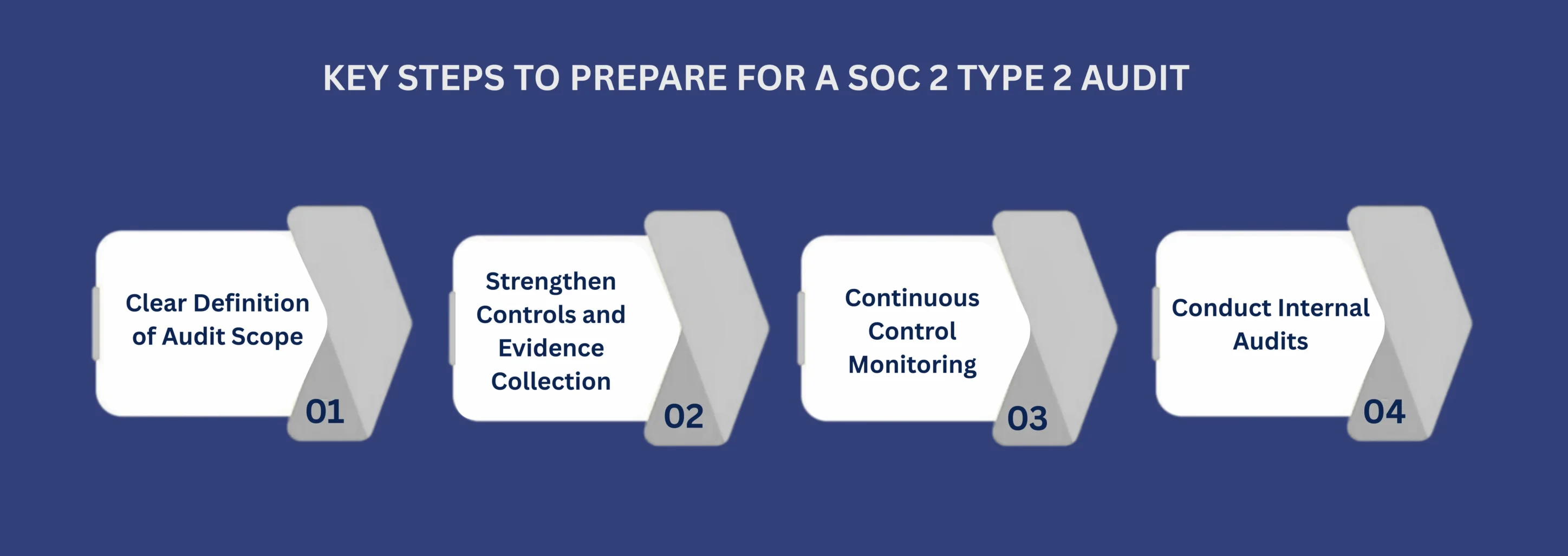
The SOC 2 audit process conducted by CertPro as a Licensed CPA Firm follows a structured examination programme aligned with AICPA AT-C Section 205 (Examination Engagements) and the Trust Services Criteria. Each stage of the audit programme is designed to produce independent, evidence-based findings that form the basis of the auditor’s attestation report. Bristol organisations undergoing SOC 2 Certification should understand each stage of this process to engage effectively with the audit programme and ensure that required documentation and evidence are available for auditor review.
Scope definition is the foundational stage of the SOC 2 audit programme. During this stage, the organisation defines the boundaries of the system under examination — specifying which services, infrastructure components, data flows, and organisational units fall within audit scope. The system description, a formal document required as part of the SOC 2 report, must accurately describe the system’s nature, purpose, infrastructure, software, people, procedures, and data. Auditors evaluate the completeness and accuracy of the system description as part of the examination. Incomplete or inaccurate system descriptions can result in qualification of the auditor’s opinion.
Trust Services Category selection is determined during scope definition based on the organisation’s service commitments, system requirements, and the nature of data processed. An organisation that has contractually committed to specific uptime levels must include the Availability criteria. An organisation that processes personal health information would be expected to include both Confidentiality and Privacy categories. The scope definition stage also identifies subservice organisations — third-party providers whose services are part of the system under examination — and determines whether the carve-out or inclusive method applies to each subservice organisation.
Following scope definition, the Licensed CPA Firm develops the audit programme — a structured plan specifying the audit procedures to be performed, the evidence types to be reviewed, the sampling methodology for control testing, and the timeline for fieldwork activities. The audit programme is developed in accordance with AICPA standards and adapted to the organisation’s specific control environment and selected Trust Services Categories. Audit programme determination includes identification of key controls mapped to each applicable criterion, and specification of the evidence population from which samples will be drawn during testing.
Evidence planning identifies the documentation categories required for the SOC 2 audit: system configuration records, access provisioning and deprovisioning logs, change management tickets, security incident records, backup verification logs, penetration testing reports, risk assessment documentation, and personnel training completion records. The organisation is responsible for maintaining this evidence throughout the audit observation period and making it available to auditors during fieldwork. Gaps in evidence availability are a primary cause of audit findings and qualified opinions in SOC 2 examinations.
Control testing is the core fieldwork activity of a SOC 2 audit. Auditors examine evidence of control operation across the audit observation period, applying inquiry, observation, inspection, and re-performance procedures to evaluate whether each control satisfied the applicable Trust Services Criterion. For a SOC 2 Type 2 audit in Bristol, control testing spans the full observation period — typically twelve months — and auditors select samples from the evidence population to verify that controls operated consistently throughout that period, not merely at a point in time. The frequency of control operation determines the sampling intensity applied by auditors.
Auditors evaluate both the design and operating effectiveness of controls during a Type 2 examination. A control that is well-designed but inconsistently applied — for example, an access review process performed only quarterly when policy requires monthly reviews — will generate a finding regardless of the quality of the control’s design. This is a critical distinction that Bristol organisations must understand: SOC 2 Type 2 audit findings are frequently related not to the absence of controls but to inconsistent execution or documentation gaps. Auditors note deviations from stated control procedures and evaluate whether those deviations are material to the overall opinion.
Following control testing, the Licensed CPA Firm reviews all findings, evaluates their materiality, and determines the appropriate audit opinion. SOC 2 attestation can take one of three forms: an unqualified opinion (controls met the criteria), a qualified opinion (certain controls did not meet the criteria but findings are isolated and described), or an adverse opinion (controls did not meet the criteria in a pervasive manner). The vast majority of SOC 2 audits produce unqualified opinions with described exceptions — individual control deviations noted in the report but not sufficient to qualify the overall opinion.
The final SOC 2 report issued by CertPro as part of the SOC 2 attestation engagement includes: the service auditor’s report containing the opinion, management’s assertion, the system description, and the description of tests of controls and results. This report constitutes the SOC 2 attestation and is provided to the organisation for distribution to customers and stakeholders under appropriate confidentiality agreements. SOC 2 reports are not publicly filed — they are restricted-use documents shared with specified users who have sufficient understanding of the subject matter to evaluate the findings.
- Scope Definition — Identify systems, services, infrastructure, and Trust Services Categories in scope
- System Description Development — Draft the formal system description covering infrastructure, software, people, procedures, and data
- Audit Programme Determination — Define audit procedures, evidence requirements, sampling methodology, and fieldwork timeline
- Evidence Collection Period — Maintain and document control operation evidence across the observation period
- Stage 1 Review — Auditor evaluates system description accuracy and control design suitability
- Control Testing Fieldwork — Auditor tests operating effectiveness through inquiry, inspection, and re-performance
- Nonconformity Review — Auditor evaluates findings for materiality and determines audit opinion
- Management Assertion — Management provides written assertion regarding the accuracy of the system description and effectiveness of controls
- Attestation Report Issuance — Licensed CPA Firm issues the formal SOC 2 attestation report
- Surveillance and Recertification — Annual audit cycle maintained to keep attestation current
- ✓Stage 1: Scope Definition and System Description
- ✓Stage 2: Audit Programme Determination and Evidence Planning
- ✓Stage 3: Control Testing and Operating Effectiveness Assessment
- ✓Stage 4: Nonconformity Review, Attestation Decision, and Report Issuance
Requirements for SOC 2 Certification in Bristol
SOC 2 Certification in Bristol requires organisations to establish and maintain a documented control environment that satisfies the applicable Trust Services Criteria. Unlike prescriptive frameworks that mandate specific control implementations, the Trust Services Criteria evaluate whether controls achieve defined objectives — allowing organisations flexibility in how controls are designed while holding them accountable for demonstrated effectiveness. Understanding the specific documentation, technical, and organisational requirements of a SOC 2 audit enables Bristol organisations to structure their control environments appropriately before the audit observation period begins.
Documentation is the evidentiary foundation of every SOC 2 audit. Auditors cannot evaluate controls that exist only in practice — controls must be documented, and their operation must be evidenced through retrievable records. Required documentation categories for SOC 2 Certification include: information security policies covering acceptable use, access control, data classification, incident response, and business continuity; system architecture diagrams and data flow documentation; vendor and subservice organisation agreements including relevant security addenda; risk assessment records; and board or management-level governance documentation demonstrating oversight of the security programme.
Operational documentation — records generated by control execution — is distinct from policy documentation and equally important. Access provisioning records demonstrating that user access was formally approved before granting; access review records showing periodic review and deprovisioning of unnecessary access; change management records documenting approval, testing, and deployment of system changes; and security monitoring logs demonstrating continuous oversight of system activity are all examples of operational documentation that auditors will examine during fieldwork. Bristol organisations that maintain automated logging and ticketing systems are better positioned to produce comprehensive operational evidence than those relying on manual documentation processes.
The Security Trust Services Criterion — mandatory for all SOC 2 audits — addresses nine control domains within the Common Criteria: control environment, communication and information, risk assessment, monitoring activities, control activities (logical and physical access), system operations, change management, and risk mitigation. Each domain requires specific technical controls to be implemented and evidenced. Access controls must include multi-factor authentication for privileged and remote access; encryption must be applied to data in transit and at rest; vulnerability management programmes must include periodic scanning and remediation tracking; and incident response procedures must be formally documented and tested.
Cloud-hosted infrastructure — prevalent among Bristol’s SaaS and technology organisations — introduces subservice organisation considerations into the SOC 2 audit scope. Organisations using Amazon Web Services, Microsoft Azure, or Google Cloud Platform must account for shared responsibility models in their system descriptions and control designs. Where a cloud provider’s SOC 2 report (or equivalent) is relied upon to satisfy certain infrastructure-level controls, this reliance must be documented and the subservice organisation’s report reviewed as complementary user entity controls. Bristol organisations that fail to address subservice organisation considerations risk scope gaps in their SOC 2 audit programmes.
SOC 2 compliance requires organisational structures that support security governance and accountability. The control environment criteria address board and management oversight of the security programme, including defined risk appetite, security committee structures, and clear assignment of security responsibilities. Bristol organisations pursuing SOC 2 Certification must demonstrate that security responsibilities are formally assigned — typically through documented role descriptions and responsibility matrices — and that management actively oversees the security programme through regular reporting and review mechanisms.
Personnel security controls are specifically evaluated in the hiring, retention, and departure control domains. Background screening procedures for personnel with access to systems in scope, security awareness training programmes with documented completion records, and formal offboarding procedures that include access deprovisioning within defined timeframes are all subject to auditor review. The People component of the SOC 2 system description requires organisations to identify the categories of personnel responsible for operating controls within the system — including employees, contractors, and third-party service providers with system access.
- ✓Formal information security policy suite covering all required control domains
- ✓Documented system architecture and data flow diagrams
- ✓Access control procedures with provisioning, review, and deprovisioning records
- ✓Multi-factor authentication implemented for privileged and remote system access
- ✓Encryption of data in transit (TLS 1.2 minimum) and at rest
- ✓Documented change management process with approval and testing records
- ✓Vulnerability management programme with scanning and remediation tracking
- ✓Incident response plan with documented testing and activation records
- ✓Business continuity and disaster recovery documentation with tested recovery procedures
- ✓Security awareness training programme with personnel completion records
- ✓Background screening procedures for personnel with access to in-scope systems
- ✓Vendor management programme addressing subservice organisation security controls

- ✓Documentation Requirements
- ✓Technical Control Requirements
- ✓Organisational and Personnel Requirements
Benefits of SOC 2 Certification for Bristol Companies
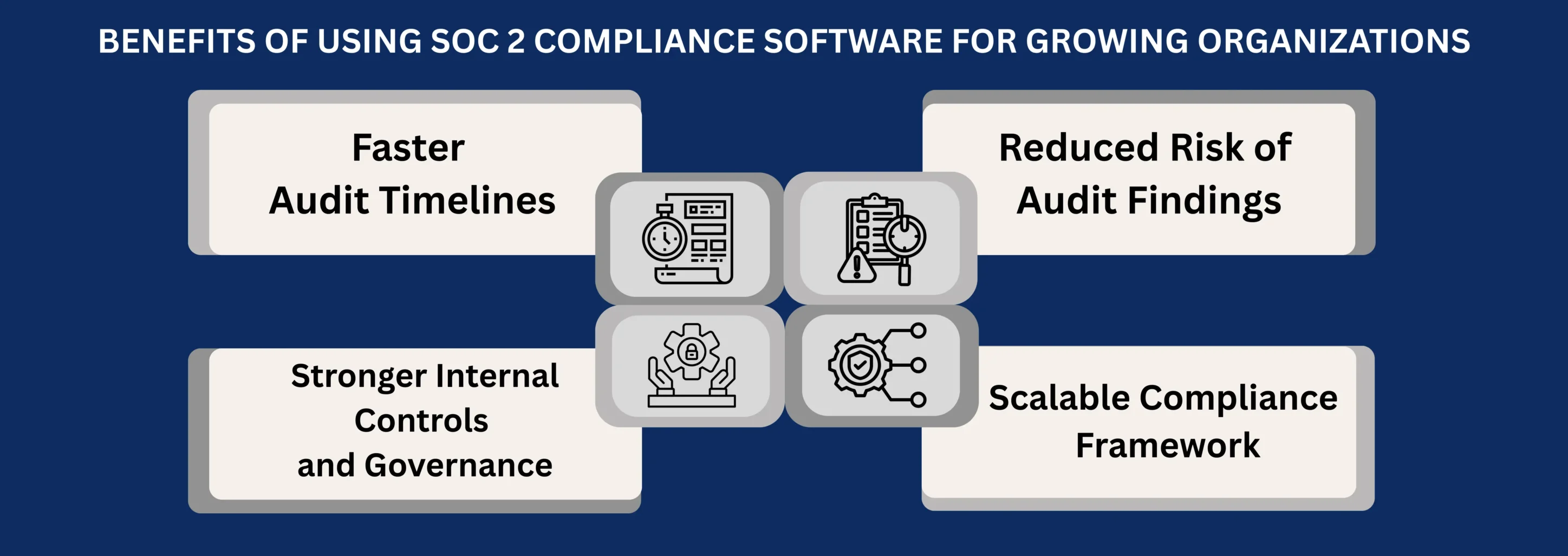
SOC 2 Certification delivers measurable operational, commercial, and strategic value to Bristol organisations. The attestation functions as an independent verification mechanism that reduces customer due diligence burden, enables access to enterprise markets, and demonstrates that an organisation’s security programme meets internationally recognised standards. Understanding the specific benefits of SOC 2 Certification in Bristol — particularly given the city’s commercial relationships with US and European enterprise customers — enables organisations to evaluate the business case for pursuing the certification programme.
SOC 2 attestation in Bristol is frequently a prerequisite for entry into enterprise market segments. Bristol SaaS companies targeting US enterprise customers — particularly in financial services, healthcare, and government sectors — consistently encounter SOC 2 as a contractual requirement embedded in vendor approval processes. Without a current SOC 2 Type 2 report, these organisations are disqualified from procurement shortlists regardless of the quality of their products or services. Obtaining SOC 2 Certification in Bristol removes this barrier and enables organisations to compete in procurement processes that were previously inaccessible.
SOC 2 certification accelerates sales cycles by reducing the time required for customer security reviews. Enterprise procurement teams that require vendors to complete extensive security questionnaires — some exceeding 200 questions — can often accept a current SOC 2 Type 2 report as a substitute for the majority of questionnaire responses. This reduction in pre-sales security assessment burden shortens the time from initial procurement contact to contract execution, improving revenue cycle efficiency. Bristol technology companies that have obtained SOC 2 Certification consistently report significant reductions in security review timelines during enterprise sales processes.
The SOC 2 audit process drives measurable improvement in security programme maturity. The requirement to document, implement, and evidence controls across the Common Criteria domains — including risk assessment, monitoring, change management, and incident response — compels organisations to formalise security processes that may have previously been informal or inconsistently applied. Bristol organisations that complete their first SOC 2 audit consistently identify and remediate security gaps that were previously undetected, including access control weaknesses, incomplete monitoring coverage, and undocumented change management procedures.
SOC 2 compliance in Bristol drives risk reduction through the implementation of controls that address the most common attack vectors against technology organisations. Access control requirements reduce the risk of unauthorised data access from both external and insider threats. Vulnerability management requirements ensure that known security weaknesses are identified and remediated on a systematic basis. Incident response requirements ensure that organisations can detect, contain, and recover from security events with minimal operational impact. These risk reductions have direct financial value by reducing the probability and impact of security incidents that could result in data breaches, regulatory penalties, and customer notification obligations.
SOC 2 Certification provides Bristol organisations with a credible, independently verified signal of security maturity that can be communicated to customers, investors, and partners. Unlike self-assessed security ratings or marketing claims about security investment, SOC 2 attestation is backed by the professional opinion of a Licensed CPA Firm — giving it credibility that internal assertions cannot match. This external verification is particularly valuable in investor due diligence processes, where institutional investors and venture capital firms increasingly evaluate portfolio companies’ security programmes as part of investment decisions.
- ✓Enables access to enterprise market segments requiring SOC 2 attestation as a vendor prerequisite
- ✓Reduces sales cycle duration by satisfying security questionnaire requirements with a single auditor-verified report
- ✓Demonstrates UK GDPR technical and organisational measure compliance to the ICO regulatory framework
- ✓Provides investor due diligence evidence of security programme maturity and operational controls
- ✓Reduces third-party risk assessment burden from enterprise customers through standardised reporting format
- ✓Drives formalisation and improvement of internal security processes and control documentation
- ✓Enables competitive differentiation in Bristol’s technology sector against non-certified competitors
- ✓Supports contract negotiation by providing auditor-verified evidence of security commitments
- ✓Reduces cyber insurance premiums through demonstrated security control implementation
- ✓Facilitates international market expansion where SOC 2 attestation is a recognised standard
- ✓Commercial Benefits: Enterprise Market Access and Sales Acceleration
- ✓Operational Benefits: Security Programme Maturity and Risk Reduction
- ✓Reputational and Strategic Benefits
SOC 2 Certification Cost in Bristol
SOC 2 certification costs in Bristol vary based on several determinant factors, including organisational size, system complexity, number of Trust Services Categories selected, audit type (Type 1 or Type 2), and the observation period duration for Type 2 engagements. Understanding the cost structure of SOC 2 certification enables Bristol organisations to plan audit budgets accurately and evaluate the return on investment relative to the commercial and operational benefits of obtaining attestation. CertPro provides fixed-fee engagement structures that enable cost certainty throughout the audit programme.
Primary Cost Determinants
The scope and complexity of the system under examination is the primary driver of SOC 2 audit cost. A Bristol SaaS company with a single cloud-hosted application, a small engineering team, and a clearly bounded system scope will incur lower audit costs than a financial services platform with multiple product lines, distributed infrastructure across several cloud providers, and a large population of personnel with system access. Each expansion of system scope increases the volume of evidence that auditors must review and the number of control testing procedures that must be performed, directly affecting engagement cost.
The number of Trust Services Categories selected affects audit cost because each additional category introduces a new set of criteria that must be evaluated against distinct control populations. An organisation selecting only the Security category undergoes a narrower examination than one selecting Security, Availability, Confidentiality, and Privacy — which requires auditors to evaluate controls across all four domains and their associated evidence populations. Bristol organisations should select only the Trust Services Categories relevant to their service commitments and customer requirements. Unnecessary category expansion increases audit cost without delivering proportional commercial benefit.
Type 1 vs Type 2 Cost Comparison
SOC 2 Type 1 certification engagements in Bristol are generally less costly than Type 2 examinations because they evaluate control design at a point in time rather than operating effectiveness over an extended observation period. Type 1 audits require less evidence sampling, shorter fieldwork periods, and fewer audit procedures than Type 2 examinations. However, the commercial value of a Type 1 report is significantly lower than a Type 2 report — most enterprise customers accept only Type 2 attestation for vendor approval purposes. Organisations that obtain a Type 1 report typically progress to a Type 2 audit in the following period, meaning the combined cost of both engagements should be considered in budget planning.
| Cost Factor | Lower Cost Scenario | Higher Cost Scenario |
|---|---|---|
| Organisation Size | Small team (under 50 employees) | Large organisation (200+ employees) |
| System Complexity | Single cloud application, defined scope | Multiple products, distributed infrastructure |
| Trust Services Categories | Security only (mandatory minimum) | Security, Availability, Confidentiality, Privacy |
| Audit Type | SOC 2 Type 1 (point in time) | SOC 2 Type 2 (12-month observation period) |
| Evidence Maturity | Automated logging and documented controls | Manual processes requiring extensive auditor sampling |
SOC 2 Compliance Consulting Bristol: CertPro’s Audit Methodology
CertPro operates exclusively as a Licensed CPA Firm conducting SOC 2 audit examinations and issuing attestation reports. Advisory or implementation services fall outside CertPro’s scope of practice. CertPro’s engagement model is structured around the formal audit examination programme: scope definition, audit programme determination, evidence review, control testing, nonconformity assessment, and attestation issuance. This independent audit positioning is fundamental to the credibility and validity of the SOC 2 attestation report issued at the conclusion of each engagement. Organisations in Bristol seeking SOC 2 compliance consulting should engage implementation advisors separately before commencing the formal CertPro audit examination.
CertPro’s Audit Examination Framework
CertPro conducts SOC 2 audit examinations in accordance with AICPA AT-C Section 205 (Examination Engagements) and the Trust Services Criteria for Security, Availability, Confidentiality, Processing Integrity, and Privacy as established in TSP Section 100. All audit engagements are conducted by CPA-qualified professionals with experience in technology control environments. CertPro’s audit methodology applies risk-based sampling to control populations, with sampling intensity calibrated to the frequency and nature of each control and the materiality threshold established for the engagement. This risk-based approach ensures that audit resources are concentrated in the control domains with the greatest risk of material deviation.
CertPro’s examination procedures for Bristol SOC 2 audit engagements include inquiry sessions with control owners, inspection of policy and procedural documentation, observation of control operation where applicable, inspection of evidence samples drawn from control populations, and re-performance of selected controls to verify that control outputs match expected results. These procedures are documented in the working papers that support the attestation report and are retained in accordance with AICPA professional standards for engagement documentation. The working papers form the evidentiary basis for the auditor’s opinion and are subject to quality review prior to report issuance.
Annual Audit Cycles and Recertification
SOC 2 attestation is not a one-time certification — it reflects the state of controls during a specific observation period, and customers expect organisations to maintain current reports. The standard industry expectation is that organisations complete annual SOC 2 audit cycles to ensure their attestation report covers the preceding twelve-month period. A SOC 2 report with an observation period ending more than twelve months ago is considered stale by most enterprise procurement teams and may not satisfy vendor approval requirements. Bristol organisations must therefore plan for annual SOC 2 audit engagements as a recurring operational commitment.
Recertification engagements typically build on the prior year’s audit programme, updating evidence populations, reviewing any changes to the system description, and testing whether previously identified deviations have been remediated. Organisations that addressed all findings from their prior audit and maintained consistent control operation throughout the new observation period can expect efficient recertification engagements. Organisations that made significant changes to their systems, infrastructure, or personnel during the observation period — such as cloud migrations, product launches, or rapid headcount growth — may face expanded audit scope and testing requirements in recertification years.
SOC 2 vs ISO 27001: Choosing the Right Framework for Bristol Organisations
Bristol organisations frequently evaluate SOC 2 Certification against ISO 27001 certification when determining which security framework to prioritise. Both frameworks address information security controls but differ fundamentally in structure, geographic recognition, audit methodology, and commercial applicability. Understanding these differences enables Bristol organisations to make informed decisions about which certification to pursue first — and whether both frameworks are necessary given their specific customer base and market positioning.
Structural and Methodological Differences
ISO 27001 is a prescriptive management system standard that requires organisations to implement an Information Security Management System (ISMS) meeting defined requirements. Certification is issued by an accredited third-party certification body following a two-stage audit. ISO 27001 specifies 93 controls across four categories in Annex A, and organisations must address all applicable controls or justify exclusions in their Statement of Applicability. SOC 2 Certification, by contrast, evaluates controls against principle-based Trust Services Criteria rather than a prescriptive control list — allowing organisations to design controls appropriate to their systems without mandatory reference to a specific control catalogue.
ISO 27001 produces a public-facing certificate confirming ISMS certification, valid for three years with annual surveillance audits. SOC 2 attestation produces a restricted-use report shared under confidentiality agreements, covering a specific observation period of typically twelve months. ISO 27001 certification is globally recognised and particularly valued in European, Middle Eastern, and Asia-Pacific markets. SOC 2 attestation is predominantly required by North American enterprise customers. Bristol organisations with customer bases spanning both US and European markets may need to pursue both certifications, prioritised based on which customer requirement is more immediately pressing commercially.
Decision Framework for Bristol Technology Companies
The primary criterion for choosing between SOC 2 and ISO 27001 is customer requirements. If a Bristol technology company’s immediate pipeline consists of US-based enterprise customers requiring SOC 2 Type 2 reports for vendor approval, SOC 2 Certification in Bristol should be prioritised. If the pipeline consists of European enterprise customers or government procurement frameworks where ISO 27001 certification is required, ISO 27001 should be prioritised. Organisations with balanced customer bases across both geographies should typically begin with SOC 2 if US revenue is more immediately material, or ISO 27001 if European institutional customers represent the larger commercial opportunity.
| Criterion | SOC 2 Certification | ISO 27001 Certification |
|---|---|---|
| Primary Market Recognition | North America (US, Canada) | Global (Europe, Middle East, Asia-Pacific) |
| Framework Type | Principle-based Trust Services Criteria | Prescriptive management system standard |
| Output Document | Restricted-use attestation report | Public-facing certificate |
| Audit Frequency | Annual examination cycle | 3-year certification with annual surveillance |
| UK GDPR Alignment | Addresses Article 32 technical measures | Formally recognised in ICO guidance as GDPR measure |
SOC 2 Audit Evidence: Collection, Management, and Common Gaps
Evidence collection and management is the operational backbone of a successful SOC 2 audit programme. Auditors review evidence to verify that controls operated as designed throughout the observation period — and evidence gaps are the most common cause of audit findings and qualified opinions. Bristol organisations undergoing SOC 2 audit engagements must understand what evidence auditors require, how evidence should be maintained throughout the observation period, and what common evidence deficiencies create audit risk.
Evidence Categories and Auditor Review Methodology
SOC 2 auditors review evidence across four primary procedural categories: inquiry (discussions with control owners about how controls operate), observation (direct observation of control execution), inspection (review of documented evidence such as logs, tickets, and records), and re-performance (independently executing a control procedure to verify it produces the expected result). Of these, inspection of documentary evidence is the most frequent and forms the largest portion of audit fieldwork. Organisations that rely heavily on informal or undocumented control execution — where controls operate effectively in practice but are not captured in retrievable records — face significant evidence risk during SOC 2 audit examination.
Evidence must cover the full audit observation period, not just the period immediately preceding the audit. A common error made by organisations undergoing their first SOC 2 Type 2 audit is beginning evidence collection shortly before fieldwork begins, rather than maintaining contemporaneous evidence throughout the observation period. Auditors sample from the entire population of control executions across the twelve-month period — meaning evidence gaps in months one through nine will generate audit findings even if controls operated flawlessly in months ten through twelve. Bristol organisations should establish automated evidence capture mechanisms — ticketing systems, log management platforms, and access review workflows — that generate retrievable records throughout the year.
Common Evidence Deficiencies in SOC 2 Audits
The most frequently observed evidence deficiencies in SOC 2 audit examinations fall into several recurring categories. Access review evidence gaps occur when organisations perform user access reviews but do not retain documentation of the review outcome — specifically, records showing which accounts were reviewed, what actions were taken, and by whom. Change management evidence gaps occur when code or configuration changes are deployed without formal change records, or where change records exist but do not document approvals and testing results. Incident response evidence gaps occur when security events are handled without formal documentation of detection, investigation, containment, and resolution activities.
Vendor management evidence deficiencies are increasingly common as Bristol technology organisations rely on extensive third-party service ecosystems. SOC 2 auditors evaluate whether organisations have performed security reviews of third-party vendors with access to in-scope systems and data, and whether those reviews are documented. Organisations that use cloud providers, SaaS tools, and third-party APIs extensively must maintain evidence of vendor security assessments — including review of vendor SOC 2 reports or equivalent security attestations — as part of their SOC 2 compliance programme. Failure to document vendor security reviews creates audit findings regardless of the quality of the organisation’s own internal controls.
How to Get SOC 2 Certification in Bristol: Practical Guidance
Organisations in Bristol seeking SOC 2 Certification should approach the process through a structured programme that begins with scope determination and progresses through control documentation, observation period evidence accumulation, and formal audit examination. The following practical guidance addresses the key decisions and activities required to progress from initial SOC 2 consideration to attestation report issuance. Bristol organisations that approach SOC 2 Certification with a structured programme from the outset experience more efficient audit engagements and fewer findings than those that approach the process reactively.
Initiating the SOC 2 Programme: Scope and Category Decisions
The first practical decision in pursuing SOC 2 Certification in Bristol is determining audit scope — specifically, which systems and services will be included in the examination and which Trust Services Categories are applicable. Scope should be defined by reference to the services provided to customers and the systems that support those services. Systems and infrastructure components not involved in service delivery to customers can typically be excluded from scope, though the system description must accurately reflect any scope limitations. Narrower scope reduces audit complexity and cost, but scope perceived by customers as artificially narrow may reduce the commercial value of the resulting attestation report.
Trust Services Category selection should be driven by customer requirements and service commitments. Reviewing customer contracts, standard service level agreements, data processing agreements, and security questionnaires received from prospective customers will identify which Trust Services Categories are most frequently referenced by the organisation’s customer base. Bristol fintech organisations, for example, will typically find that customers require both Security and Confidentiality categories given the financial data handled. Bristol cloud infrastructure providers offering uptime SLAs will typically need to include Availability. Organisations processing personal data under UK GDPR should consider including the Privacy category to strengthen their SOC 2 compliance posture.
Engaging a Licensed CPA Firm for SOC 2 Audit
SOC 2 attestation can only be issued by a Licensed CPA Firm — a Certified Public Accountant or CPA firm operating under AICPA standards. This is a fundamental requirement of the SOC 2 framework: the attestation derives its credibility from the independence and professional qualification of the auditing firm. Bristol organisations should confirm that any firm engaged to conduct their SOC 2 audit is a Licensed CPA Firm with demonstrated experience in technology control environments and SOC 2 examinations. CertPro operates as a Licensed CPA Firm with specific expertise in SOC 2 audit engagements in Bristol and a track record of issuing attestation reports for technology organisations across the UK.
When engaging a CPA Firm for SOC 2 audit services in Bristol, organisations should clarify the engagement structure: whether the firm offers fixed-fee pricing, what the audit timeline and milestones are, how the firm handles evidence collection and review logistics, and what the report issuance process entails — including review periods and management assertion requirements. CertPro’s engagement model for SOC 2 audit services in Bristol includes defined engagement timelines, fixed-fee structures that provide cost certainty, and a structured fieldwork process that minimises disruption to the organisation’s operational teams during the audit period.
SOC 2 Certification in Bristol: Industry-Specific Considerations
SOC 2 audit requirements and control considerations vary across Bristol’s primary industry sectors. The specific data types processed, regulatory frameworks applicable, and customer due diligence requirements differ materially between fintech, aerospace technology, healthtech, SaaS, and research commercialisation contexts. Understanding industry-specific SOC 2 considerations enables Bristol organisations to design control environments that address their particular risk profile and satisfy the expectations of their specific customer segments.
Fintech and Financial Services SOC 2 Requirements
Bristol fintech organisations pursuing SOC 2 certification face heightened control requirements due to the sensitivity of financial data and the regulatory overlay imposed by FCA-regulated customers. Fintech platforms processing payment data, open banking APIs handling account information, and investment technology platforms managing portfolio data must implement controls that satisfy both the SOC 2 Trust Services Criteria and the security expectations of FCA-regulated financial institution customers. These customers typically require not only a SOC 2 Type 2 report but supplementary evidence of penetration testing, encryption standards, and regulatory compliance programme documentation.
SaaS and Cloud Service Provider Considerations
Bristol’s substantial SaaS sector — spanning HR technology, legal technology, marketing automation, project management, and vertical-specific software platforms — represents the primary driver of SOC 2 audit demand in the city. SaaS organisations face specific SOC 2 considerations related to multi-tenant architecture, where controls must prevent data leakage between customer tenants; API security, where third-party integrations introduce subservice organisation risks; and data retention and disposal, where customer data must be managed in accordance with contractual commitments that align with Privacy criteria requirements.
Cloud-native SaaS organisations built on major hyperscaler platforms must address the shared responsibility model in their SOC 2 system descriptions and control matrices. The cloud provider is responsible for the security of the cloud infrastructure; the SaaS organisation is responsible for security in the cloud — covering application-layer controls, data access controls, customer configuration management, and API security. SOC 2 compliance for Bristol SaaS organisations requires clear documentation of the boundary between controls operated by the organisation and controls operated by subservice organisations, with appropriate complementary user entity controls identified for each in-scope subservice provider.
FAQ
▶
What is SOC 2 Certification and who issues it?
▶
How long does a SOC 2 audit take for a Bristol organisation?
▶
Is SOC 2 Certification required by law in the UK or Bristol?
▶
What is the difference between SOC 2 certified and SOC 2 compliant?
▶
Which Trust Services Categories should Bristol organisations select?
▶
How often must SOC 2 certification be renewed?
▶
Can a Bristol startup obtain SOC 2 Certification?
▶
What happens if a SOC 2 audit identifies control deficiencies?

SOC 1 VS SOC 2: WHICH REPORT YOUR CUSTOMERS ACTUALLY ASK FOR
If you sell SaaS or provide outsourced services, you have likely been asked for a SOC report. However, the follow-up question is rarely easy to answer…

Secure Email Platform Exclaimer Renews ISO, SOC 2
Excerpt from The Manila Times Article, Published on February 26, 2026 Secure email solutions provider Exclaimer has renewed its ISO and SOC 2 certific…
SOC 2 FRAMEWORK REQUIREMENTS IN 2026. WHAT HAS CHANGED?
Security reviews used to happen at the tail end of a deal. Today, they happen in the first conversation. Enterprise buyers come prepared. They ask abo…
Get In Touch
have a question? let us get back to you.