
SOC 2 Certification in Brussels
SOC 2 Certification in Brussels is issued by a Licensed CPA Firm following an independent examination conducted under AICPA attestation standards AT-C Section 105 and AT-C Section 205. The examination evaluates whether a service organization’s controls — relevant to the Trust Services Criteria of Security, Availability, Processing Integrity, Confidentiality, and Privacy — are designed and operating effectively. The resulting SOC 2 attestation report delivers independently verified evidence of control effectiveness, clearly distinct from self-certification or vendor questionnaire responses.
OUR CLIENTS










SOC 2 Certification in Brussels: Independent Attestation by a Licensed CPA Firm
SOC 2 Certification in Brussels is issued by a Licensed CPA Firm following an independent examination conducted under AICPA attestation standards AT-C Section 105 and AT-C Section 205. The examination evaluates whether a service organization’s controls — relevant to the Trust Services Criteria of Security, Availability, Processing Integrity, Confidentiality, and Privacy — are designed and operating effectively. The resulting SOC 2 attestation report delivers independently verified evidence of control effectiveness, clearly distinct from self-certification or vendor questionnaire responses.
Brussels occupies a unique position among European capitals. As the administrative and regulatory center of the European Union, the city hosts the European Commission, the European Parliament, NATO headquarters, and a dense concentration of international financial institutions, professional services firms, law offices, telecommunications providers, and technology enterprises. This institutional density generates significant demand for independently verified security assurance.
Organizations based in Brussels that serve U.S. clients, operate in transatlantic markets, or supply technology services to regulated sectors routinely encounter SOC 2 compliance requirements embedded in procurement contracts, vendor due diligence programs, and enterprise security reviews.
The Brussels technology and SaaS ecosystem has expanded substantially over the past decade. Cloud service providers, managed service providers, data hosting organizations, fintech platforms, and professional services firms handling sensitive customer data increasingly operate across jurisdictions where U.S.-based clients and enterprise buyers require SOC 2 attestation as a condition of doing business.
SOC 2 Certification in Brussels responds directly to this demand by providing a structured, evidence-based evaluation framework governed by AICPA standards — the same standards applied globally by Licensed CPA Firms performing SOC 2 examinations.
SOC 2 compliance differs fundamentally from regulatory compliance declarations or internal self-assessments. A SOC 2 examination requires an independent Licensed CPA Firm to assess the design and operating effectiveness of controls against defined Trust Services Criteria, collect documentary and technical evidence, and issue a formal attestation report expressing an opinion on control effectiveness.
This independent opinion — not a self-declaration — is what enterprise procurement teams and regulated-sector clients require when evaluating Brussels-based vendors. The SOC 2 attestation report communicates examination findings to specified users, typically enterprise customers, business partners, and regulators who need to understand the service organization’s control environment.
Brussels-based organizations operating under the General Data Protection Regulation (GDPR), the Digital Operational Resilience Act (DORA), the Network and Information Security Directive (NIS2), or sector-specific financial services frameworks benefit from SOC 2 certification as a complementary assurance instrument. While these European frameworks establish regulatory obligations, the SOC 2 examination provides structured third-party validation that specific controls are designed and operating effectively — a form of evidence that European regulatory frameworks do not themselves generate.
For organizations serving U.S. clients or participating in international procurement processes, SOC 2 Certification in Brussels is recognized as a direct and credible response to U.S.-origin vendor assurance requirements.

What Is SOC 2 Certification?
SOC 2 — System and Organization Controls 2 — is an attestation framework developed by the American Institute of Certified Public Accountants (AICPA). It defines a structured methodology for examining and reporting on the controls at a service organization relevant to the security, availability, processing integrity, confidentiality, and privacy of the systems used to process customer data.
Unlike ISO 27001, which is a management system certification standard, SOC 2 is an attestation engagement — a formal examination performed by a Licensed CPA Firm that results in an attestation report expressing an independent opinion on control design and effectiveness. Understanding what SOC 2 certification involves helps Brussels-based organizations prepare effectively and set accurate expectations for the engagement process.
The AICPA Trust Services Criteria Framework
The Trust Services Criteria (TSC) published by the AICPA define the evaluation benchmarks against which a service organization’s controls are assessed during a SOC 2 examination. The TSC comprises five categories: Security (the Common Criteria, mandatory for all SOC 2 examinations), Availability, Processing Integrity, Confidentiality, and Privacy.
Each category contains specific criteria describing the control objectives a service organization is expected to meet. During the SOC 2 audit, the Licensed CPA Firm evaluates whether the organization’s controls satisfy these criteria through evidence collection, walkthroughs, inquiry, observation, and inspection of supporting documentation. The scope of TSC categories included in an examination is defined during the scoping phase, based on the nature of services provided and the commitments made to customers.
Security — the Common Criteria — is the foundational TSC category required in every SOC 2 examination. It addresses logical and physical access controls, system operations, change management, risk mitigation, and monitoring activities. Availability criteria evaluate whether systems are available for operation and use as committed. Processing Integrity criteria assess whether system processing is complete, valid, accurate, timely, and authorized.
Confidentiality criteria evaluate the protection of information designated as confidential. Privacy criteria address the collection, use, retention, disclosure, and disposal of personal information in accordance with the organization’s commitments. Brussels-based organizations handling EU personal data typically include the Privacy TSC category alongside Security to address the overlap between AICPA privacy criteria and GDPR-aligned control expectations.
SOC 2 Type 1 and SOC 2 Type 2 Reports
SOC 2 examination engagements produce one of two report types: Type 1 or Type 2. A SOC 2 Type 1 report expresses an opinion on the fairness of presentation of the service organization’s system description and the suitability of control design as of a specific point in time. It does not evaluate whether controls operated effectively over a period.
A SOC 2 Type 2 report expresses an opinion on both the suitability of control design and the operating effectiveness of those controls over a defined observation period — typically six to twelve months. Type 2 is the more comprehensive and widely required report format, as it provides evidence that controls functioned consistently during the observation period rather than merely being in place at a single date.
| Report Type | Evaluation Scope | Time Dimension | Common Use Case |
|---|---|---|---|
| SOC 2 Type 1 | Control design suitability | Point in time | Initial market entry, first-time attestation |
| SOC 2 Type 2 | Control design and operating effectiveness | Observation period (6–12 months) | Enterprise procurement, ongoing vendor assurance |
| SOC 2 + Privacy TSC | Security and personal data controls | Point in time or period | Organizations handling EU personal data under GDPR |
| SOC 2 Restricted Use | Controls relevant to specified users | As agreed in engagement | Specific contractual or regulatory requirements |
SOC 2 Certification Audit Process for Organizations in Brussels
The SOC 2 audit process for organizations in Brussels follows a structured examination methodology governed by AICPA attestation standards AT-C Section 105 and AT-C Section 205. Each stage involves defined activities, evidence collection procedures, and documentation outputs. The process applies consistently regardless of the organization’s sector, size, or technical architecture — though the specific controls evaluated and evidence gathered will vary based on the agreed scope and applicable Trust Services Criteria categories.
The SOC 2 examination begins with scope definition and engagement acceptance. The Licensed CPA Firm reviews the service organization’s system boundaries, the nature of services provided, the categories of data processed, and the commitments made to customers through service agreements and system descriptions. Based on this review, the applicable Trust Services Criteria categories are identified and the audit program is determined.
The audit program documents the specific procedures the Licensed CPA Firm will apply during the examination — including the evidence types to be collected, the control areas to be tested, and the sampling approach for operating effectiveness testing in Type 2 engagements. For Brussels-based organizations, scope definition typically addresses cloud infrastructure, data processing systems, access management frameworks, and any subservice organizations relied upon to meet commitments.
During fieldwork, the Licensed CPA Firm collects evidence through multiple procedures: inquiry of relevant personnel, observation of control activities, inspection of documentation and system-generated records, and reperformance of control procedures where applicable. For SOC 2 Type 1 engagements, evidence collection focuses on whether controls are suitably designed to meet the applicable Trust Services Criteria as of the report date.
For SOC 2 Type 2 engagements, the Licensed CPA Firm additionally tests operating effectiveness by selecting samples of control executions across the observation period and evaluating whether each instance demonstrates effective performance. Evidence reviewed during a SOC 2 audit Brussels engagement typically includes access control logs, change management records, security monitoring outputs, incident response documentation, vendor management records, and system configuration evidence.
The observation period is a defined window of time — typically between six and twelve months — during which the Licensed CPA Firm evaluates the operating effectiveness of controls in a SOC 2 Type 2 engagement. Controls must operate consistently throughout this period for the examiner to express an unqualified opinion.
If the Licensed CPA Firm identifies control deficiencies during testing, these are documented as exceptions and reported in the attestation report. The SOC 2 examination does not result in a pass/fail certification in the traditional sense. Instead, the Licensed CPA Firm issues an attestation report describing identified exceptions and the examiner’s opinion. Qualified or adverse opinions indicate that controls did not meet the applicable criteria. Following review of findings and confirmation of factual accuracy, the Licensed CPA Firm issues the final SOC 2 attestation report to the service organization for distribution to specified users.
| Audit Stage | Key Activities | Output |
|---|---|---|
| Scoping & Engagement Acceptance | System boundary review, TSC category selection, audit program determination | Signed engagement letter, defined scope |
| Stage 1 – Documentation Review | System description review, policy and procedure inspection, control inventory assessment | Documented observations, readiness for fieldwork |
| Stage 2 – Control Testing | Evidence collection, inquiry, observation, inspection, reperformance, sampling | Control test workpapers, exception documentation |
| Observation Period (Type 2) | Ongoing control effectiveness monitoring across 6–12 month window | Operating effectiveness evidence across the period |
| Nonconformity Review | Exception classification, management response review, materiality assessment | Exception schedule for inclusion in report |
| Attestation Report Issuance | Opinion formulation, report drafting, management review, final issuance | Signed SOC 2 attestation report |
- ✓Scoping, Engagement Acceptance, and Audit Program Determination
- ✓Fieldwork, Evidence Collection, and Control Testing
- ✓Observation Period, Nonconformity Review, and Attestation Issuance
Why Organizations in Brussels Pursue SOC 2 Certification
SOC 2 certification for Brussels companies arises primarily from explicit requirements embedded in enterprise procurement processes, financial sector vendor assessments, and transatlantic commercial relationships. Brussels-based organizations are rarely self-motivated to pursue a SOC 2 examination absent an external driver. The demand patterns below characterize the Brussels market and explain why SOC 2 compliance Brussels has become an increasingly standard expectation across multiple sectors.
U.S. Client and Transatlantic Market Requirements
The most direct driver of SOC 2 audit Brussels demand is the requirement embedded in contracts with U.S.-based enterprise clients. U.S. organizations routinely require third-party vendors — regardless of geographic location — to provide a current SOC 2 Type 2 report as part of vendor onboarding, annual vendor reassessment, or specific security review programs.
A Brussels-based SaaS provider, cloud service company, or managed service provider serving U.S. financial institutions, healthcare organizations, or technology enterprises will typically receive a formal SOC 2 attestation requirement within the vendor contract or information security addendum. Without a current SOC 2 report, the Brussels vendor may be excluded from procurement shortlists or subjected to extended due diligence procedures that delay contract execution.
Transatlantic market expansion intensifies this dynamic. Brussels companies scaling into the U.S. market — whether through direct sales, channel partnerships, or acquisition by a U.S. parent — encounter SOC 2 compliance expectations at multiple points in the commercial relationship. Enterprise-level U.S. buyers in sectors such as financial services, insurance, healthcare technology, legal services, and government contracting treat SOC 2 Type 2 reports as baseline vendor qualification criteria.
SOC 2 certification Brussels fintech and SOC 2 certification Brussels technology companies have therefore emerged as active search categories as local organizations respond to these market-driven requirements.
EU Institutional Procurement and Financial Sector Expectations
Brussels hosts the largest concentration of EU institutions and associated organizations of any city in Europe. Technology vendors, cloud providers, data processors, and professional services firms supplying systems or services to EU bodies, NATO, or the dense network of international organizations headquartered in Brussels increasingly encounter third-party security assurance requirements.
While EU procurement frameworks reference European standards, many multinational organizations and public-sector technology buyers with U.S. operational connections accept or require SOC 2 attestation reports alongside European conformity documentation. SOC 2 certification Brussels financial services is particularly active given the presence of major banking institutions, insurance groups, and asset management firms operating from Brussels with both European and U.S. regulatory exposures.
Digital Operational Resilience and Vendor Risk Management
The Digital Operational Resilience Act (DORA), which applies to financial entities and their critical ICT third-party service providers operating within the EU from January 2025, establishes formal requirements for third-party risk management, ICT concentration risk monitoring, and contractual assurance provisions. Brussels-based ICT service providers supplying financial entities subject to DORA face heightened scrutiny of their control environments.
While DORA does not mandate SOC 2 specifically, a current SOC 2 Type 2 report provides structured, independently verified evidence of control design and operating effectiveness — evidence that financial entity clients can incorporate directly into their DORA-required third-party risk assessments. SOC 2 attestation Brussels therefore serves a dual function: addressing U.S.-origin vendor requirements while simultaneously generating control evidence relevant to EU regulatory frameworks.
SOC 2 Certification Requirements for Brussels Organizations
SOC 2 examination eligibility applies to any service organization that processes, stores, or transmits customer data using defined systems and makes commitments to customers regarding the security, availability, or other Trust Services Criteria-relevant characteristics of those systems. For Brussels-based organizations, the core requirements for SOC 2 examination encompass control environment documentation, defined system boundaries, and operational evidence demonstrating that controls function as described.
The SOC 2 attestation report includes a management-prepared system description that defines the boundaries of the system under examination. This description covers the nature of services provided, the infrastructure components, software, data, people, procedures involved, and the commitments made to customers and subservice organizations. The system description must be accurate and complete as of the report date.
The Licensed CPA Firm evaluates whether the system description fairly presents the system in accordance with the applicable TSC disclosure criteria. Control documentation must describe each control relied upon to meet the applicable Trust Services Criteria — including the control objective, the control activity, the frequency of operation, and the personnel responsible. Gaps in documentation or controls that cannot be evidenced during testing will be reflected in the examination findings.
For SOC 2 Type 2 examinations, Brussels organizations must demonstrate that controls operated effectively throughout the observation period — not merely that they were designed appropriately at a single point in time. This requires the preservation and availability of evidence generated by control execution during the observation period.
System-generated logs, approval records, access review outputs, incident tickets, change management approvals, and vendor assessment documentation must be retrievable and attributable to the control activities described in the system description. The Licensed CPA Firm applies sampling methodologies consistent with AICPA guidance to select evidence items for testing. The volume and nature of evidence required depends on control frequency — daily controls require larger samples than annual controls — and the nature of the testing procedure applied.
Many Brussels-based organizations rely on subservice organizations — cloud infrastructure providers, colocation data centers, identity management platforms, or payment processors — to fulfill portions of their service commitments. The SOC 2 examination must address these subservice relationships through either the inclusive method (where subservice organization controls are included within the scope of the examination) or the carve-out method (where the system description identifies the subservice organization and its functions, and the scope is limited to the service organization’s own controls).
Under the carve-out method, the service organization must address complementary subservice organization controls within its own control documentation. SOC 2 compliance Brussels for technology companies relying on major cloud platforms such as AWS, Microsoft Azure, or Google Cloud typically applies the carve-out method, with the cloud provider’s own SOC 2 report referenced to address infrastructure-level controls.
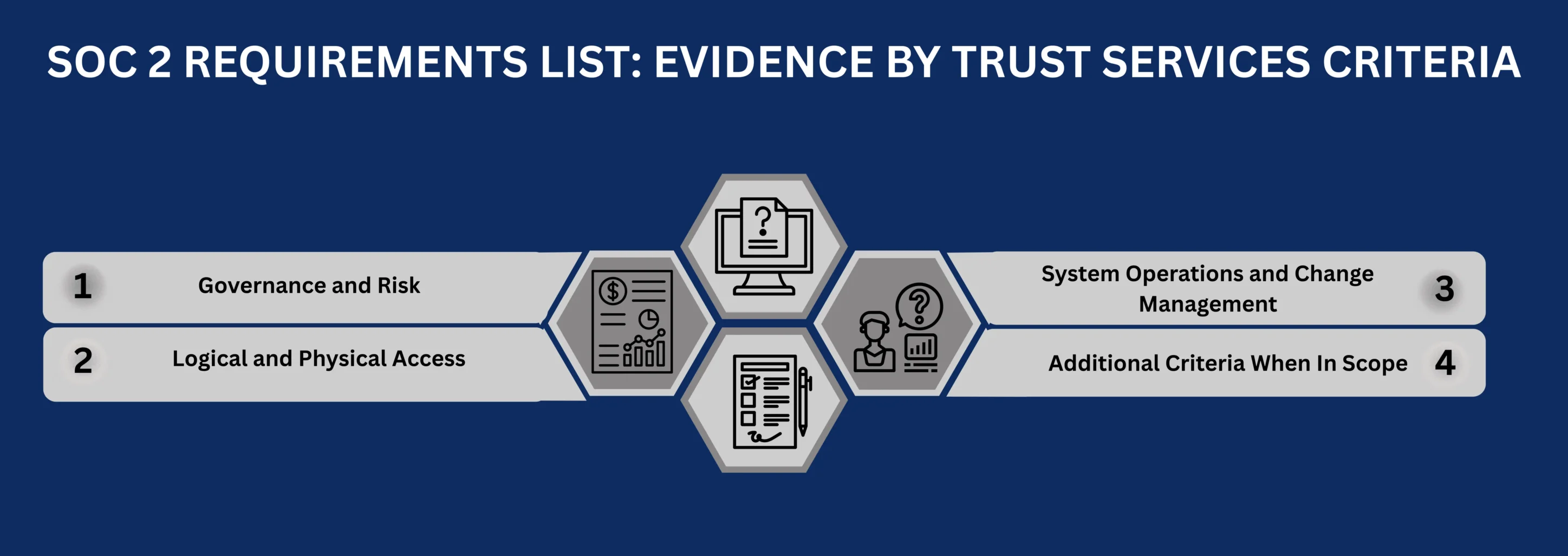
- ✓System Description and Control Documentation
- ✓Evidence Requirements and Control Operating Effectiveness
- ✓Subservice Organization Considerations
Who Needs SOC 2 Attestation in Brussels
SOC 2 examination in Brussels applies to a defined population of service organizations. The common characteristic is that these organizations process customer data using defined systems and make commitments — explicit or implied — about the security, availability, or other Trust Services Criteria-relevant characteristics of those systems. The following sectors represent the primary population of Brussels organizations for whom SOC 2 attestation is directly relevant.
- ✓SaaS providers and cloud software companies serving enterprise clients in regulated industries
- ✓Cloud infrastructure and data hosting organizations processing customer data across jurisdictions
- ✓Fintech platforms and payment service providers handling financial transaction data
- ✓Managed service providers (MSPs) and managed security service providers (MSSPs) with access to client systems
- ✓Professional services firms handling confidential client data in legal, accounting, consulting, and HR domains
- ✓Telecommunications and network service providers supplying connectivity services to regulated institutions
- ✓Government technology vendors supplying systems to EU institutions, NATO, or public-sector clients with U.S. connections
- ✓Healthcare technology organizations processing clinical or administrative patient data for international clients
SOC 2 for Brussels Financial Services and Fintech Organizations
Brussels is home to a significant concentration of banking institutions, investment firms, insurance groups, and fintech operators. Financial services organizations face heightened third-party risk management expectations from clients, regulators, and institutional counterparties. SOC 2 certification Brussels financial services organizations pursue typically covers the Security and Availability Trust Services Criteria at minimum — addressing controls over access management, system availability commitments, incident response, and operational continuity.
Fintech platforms operating cross-border — including those serving U.S. financial institutions through data aggregation, payment processing, or regulatory reporting functions — encounter SOC 2 Type 2 requirements as standard conditions of vendor agreements. SOC 2 certification Brussels fintech demand is projected to increase as DORA operational resilience requirements formalize ICT third-party risk documentation obligations across EU financial entities.
SOC 2 for Brussels Technology Companies and SaaS Providers
The Brussels technology ecosystem includes enterprise software providers, cloud-native SaaS companies, data analytics platforms, and digital infrastructure operators. Technology companies scaling into U.S. enterprise markets encounter SOC 2 attestation requirements early in the sales cycle — typically at the Request for Proposal (RFP) stage or during initial vendor security questionnaire completion. Providing a current SOC 2 Type 2 report replaces lengthy manual questionnaire responses and accelerates vendor onboarding processes.
SOC 2 certification Brussels technology companies pursue is typically scoped to the Security TSC as a foundation, with Confidentiality and Availability added based on the nature of data processed and the commitments embedded in customer contracts. Organizations handling EU personal data frequently extend scope to include the Privacy TSC to address data subject rights, collection limitation, and retention requirements alongside GDPR obligations.
SOC 2 Report Structure and Report Validity
The SOC 2 attestation report produced following a completed examination contains defined components that communicate the scope, methodology, findings, and independent opinion of the Licensed CPA Firm. Understanding the report structure allows Brussels-based organizations and their enterprise clients to interpret the report’s contents accurately and apply the findings in vendor risk management, procurement, and compliance contexts.
Components of a SOC 2 Attestation Report
A completed SOC 2 attestation report contains five primary components: (1) the independent service auditor’s report, which states the examiner’s opinion and the standards applied; (2) management’s assertion, in which the service organization’s management asserts that the system description is fairly presented and that controls meet the applicable criteria; (3) the system description, which documents the system boundary, infrastructure, data categories, personnel, procedures, and commitments; (4) the description of tests of controls and results, which details each control tested, the testing procedure applied, and the results including any exceptions identified; and (5) other information provided by management, which may include management’s response to identified exceptions.
The independent service auditor’s report is the definitive output of the SOC 2 examination and the component upon which enterprise clients rely for vendor assurance decisions.
Report Validity, Distribution, and Renewal Cycle
A SOC 2 Type 2 report covers a defined observation period — typically twelve months — and is generally considered current for twelve months following the report end date. Enterprise procurement teams and vendor risk management programs commonly treat reports older than twelve months as expired and require organizations to provide a current report covering a recent observation period.
This creates an annual renewal cycle: Brussels organizations maintaining SOC 2 attestation Brussels status must complete a new Type 2 examination each year to sustain access to markets requiring current reports. The report is restricted in distribution to specified users — typically the service organization’s existing and prospective customers and their auditors — and is not intended for public release. Management controls report distribution in accordance with the confidentiality provisions of the engagement letter and applicable AICPA standards governing restricted-use reports.
Benefits of SOC 2 Certification for Brussels-Based Organizations
SOC 2 Certification in Brussels provides service organizations with independently verified evidence of control effectiveness that self-assessment, internal audit, or vendor questionnaire responses simply cannot replicate. The benefits below reflect the substantive outcomes of completing a formal SOC 2 examination under AICPA attestation standards — outcomes that directly support enterprise market access, regulatory readiness, and competitive differentiation.
- ✓Independent third-party validation of control design and operating effectiveness by a Licensed CPA Firm under AICPA standards
- ✓Structured evidence base replacing manual vendor questionnaire responses in enterprise procurement processes
- ✓Demonstrated alignment with Trust Services Criteria across Security, Availability, Processing Integrity, Confidentiality, and Privacy
- ✓Qualification for U.S. enterprise vendor programs and transatlantic commercial relationships requiring formal SOC 2 attestation
- ✓Complementary evidence for EU regulatory frameworks including DORA third-party risk assessments and GDPR data processing agreements
- ✓Annual attestation cycle providing continuous control monitoring and documented improvement trajectories
- ✓Recognition in financial sector procurement processes where SOC 2 reports are standard vendor qualification criteria
- ✓Competitive differentiation in markets where SOC 2 attestation distinguishes independently verified vendors from self-declaring competitors
Enterprise vendor onboarding processes that previously required extensive manual questionnaire completion — sometimes spanning weeks of back-and-forth communication between security teams — are materially accelerated when a vendor provides a current SOC 2 Type 2 report. The report’s standardized structure, independent opinion, and detailed control testing results allow enterprise security and procurement teams to extract the information they require efficiently.
For Brussels-based technology companies and SaaS providers competing for enterprise contracts with U.S. clients, the availability of a current SOC 2 report can be a decisive factor in procurement shortlisting. SOC 2 examination Brussels engagements are structured to produce reports that directly address the most common vendor security questionnaire categories, reducing post-report information requests from prospective clients.
Brussels organizations subject to GDPR data processing obligations and DORA ICT risk management requirements benefit from SOC 2 attestation reports as a structured source of control evidence applicable across multiple regulatory contexts. GDPR Article 28 requires data controllers to use only processors providing sufficient guarantees to implement appropriate technical and organizational measures. A SOC 2 Type 2 report from a Licensed CPA Firm provides structured third-party evidence of these measures that data processing agreements can directly reference.
DORA Article 28 requires financial entities to assess ICT third-party service providers against defined risk criteria, and a current SOC 2 report provides independently evaluated control evidence directly applicable to this assessment. SOC 2 compliance Brussels therefore serves as a cross-regulatory evidence instrument — relevant to both U.S.-origin contractual requirements and EU regulatory obligations simultaneously.
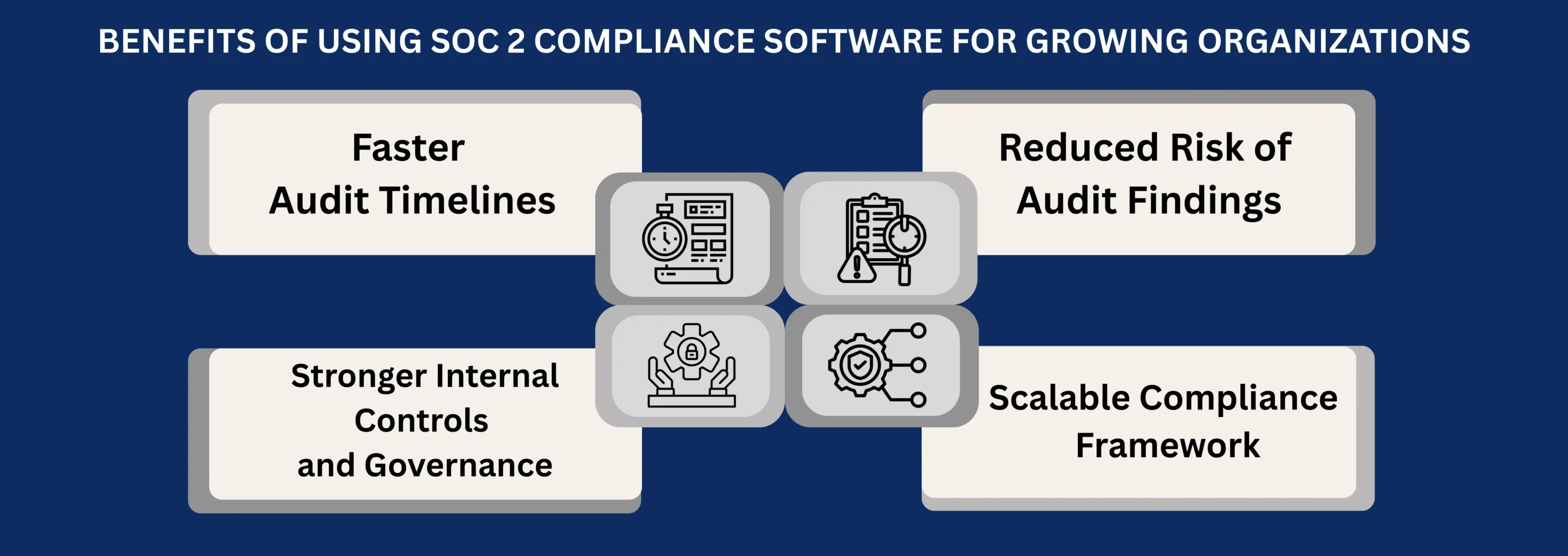
- ✓Accelerating Vendor Onboarding and Procurement Qualification
- ✓Supporting GDPR and DORA Control Evidence Requirements
SOC 2 Certification in Brussels vs. ISO 27001: Selecting the Appropriate Framework
Brussels organizations commonly evaluate SOC 2 and ISO 27001 simultaneously when responding to enterprise security assurance requirements. Understanding the structural differences between these frameworks enables informed scope decisions and prevents the misapplication of either standard to requirements the other is better designed to address.
Framework Differences: Attestation vs. Management System Certification
SOC 2 is an attestation framework — a formal examination performed by a Licensed CPA Firm resulting in an opinion report — not a management system standard. ISO 27001 is an international management system certification standard evaluated by an accredited certification body against defined implementation requirements. SOC 2 evaluates the design and operating effectiveness of specific controls relevant to the Trust Services Criteria and the organization’s commitments to customers. ISO 27001 evaluates the design, implementation, and maintenance of an Information Security Management System (ISMS) against the standard’s requirements and Annex A control set.
SOC 2 is U.S.-origin and primarily required by U.S. enterprise clients. ISO 27001 carries global recognition and is widely accepted across European, Middle Eastern, and Asian procurement programs. Brussels organizations serving both U.S. and European enterprise clients frequently pursue both frameworks in parallel or sequentially.
Decision Factors for Brussels Organizations
The primary decision factor for Brussels organizations choosing between SOC 2 and ISO 27001 is client and market requirements. Organizations receiving explicit SOC 2 attestation requirements from U.S. enterprise clients should prioritize a SOC 2 examination. Organizations primarily serving European enterprise buyers, government procurement programs, or global markets where ISO 27001 is referenced in tender specifications should prioritize ISO 27001.
Organizations serving both markets may benefit from pursuing ISO 27001 first — given its global recognition — and subsequently completing SOC 2 Certification in Brussels to address U.S.-specific requirements. The control overlap between ISO 27001 Annex A and SOC 2 Trust Services Criteria means that organizations maintaining ISO 27001 controls will have a relevant evidence base applicable to portions of the SOC 2 examination, though the two frameworks are not interchangeable and each requires a distinct examination process.
Independent SOC 2 Attestation by a Licensed CPA Firm in Brussels
SOC 2 examination engagements must be performed by a Licensed CPA Firm holding the qualifications and independence required under AICPA attestation standards. CertPro is a Licensed CPA Firm providing independent SOC 2 audit and attestation services to Brussels-based organizations under AICPA AT-C Section 105 and AT-C Section 205. All engagements are conducted with full examiner independence — no consulting, implementation, or advisory relationships with examined organizations — in strict accordance with AICPA independence requirements applicable to attestation engagements.
AICPA Standards and Examination Independence
AICPA attestation standards require the Licensed CPA Firm performing a SOC 2 examination to maintain independence from the examined organization. Independence means the Licensed CPA Firm has no financial, organizational, or operational relationships with the service organization that could impair the objectivity of the examination. This independence requirement distinguishes a SOC 2 attestation from internal audits, self-assessments, and security questionnaire responses — all of which are generated by parties with an organizational interest in favorable findings.
Enterprise procurement teams and regulated-sector clients rely on the Licensed CPA Firm’s independence as the foundation of the SOC 2 report’s credibility. The AICPA independence framework applicable to SOC 2 examinations is consistent with the independence standards applied to financial statement audits, ensuring that the same rigor governing public company audits governs SOC 2 attestation engagements.
Examiner Qualifications and Audit Rigor
Personnel performing SOC 2 examinations must possess the professional qualifications, technical competence, and industry knowledge necessary to evaluate controls across the applicable Trust Services Criteria. This includes competence in information technology general controls, application controls, cybersecurity frameworks, cloud infrastructure architectures, and the AICPA’s Trust Services Criteria structure.
The Licensed CPA Firm applies professional skepticism throughout the examination — evaluating evidence critically and considering the possibility that controls may not operate as described — consistent with AICPA attestation standards. SOC 2 examination Brussels engagements conducted by CertPro apply structured audit programs, documented sampling methodologies, and a defined quality review process prior to report issuance, consistent with the standards applicable to all AICPA attestation engagements performed by a Licensed CPA Firm.
FAQ
▶
What is SOC 2 Certification and why does it matter for Brussels organizations?
▶
What is the difference between SOC 2 Type 1 and Type 2 for Brussels organizations?
▶
Which Trust Services Criteria categories apply to Brussels-based organizations?
▶
How long does the SOC 2 audit process take for a Brussels organization?
▶
How long is a SOC 2 report valid for Brussels organizations?
▶
Is SOC 2 Certification in Brussels required under EU regulations such as GDPR or DORA?
▶
Can a Brussels organization use its existing ISO 27001 certification to satisfy SOC 2 requirements?
▶
Which Brussels sectors most commonly require SOC 2 attestation?
SOC 1 VS SOC 2: WHICH REPORT YOUR CUSTOMERS ACTUALLY ASK FOR
If you sell SaaS or provide outsourced services, you have likely been asked for a SOC report. However, the follow-up question is rarely easy to answer…
SOC 2 Certified: What Does It Mean for Your Business
For companies that handle sensitive data or run cloud-based services, the question “Can you provide your SOC 2 report?” carries enormous weight. Yet, …
HOW SOC 2 AUDITORS REVIEW EVIDENCE OVER TIME
Most businesses pursuing a SOC 2 report spend months building security controls but overlook a fundamental reality: SOC 2 auditors do not just verify …
Get In Touch
have a question? let us get back to you.