
SOC 2 Certification in Edinburgh
Executive Summary: CertPro is a Licensed CPA Firm delivering SOC 2 attestation, examination, and audit engagements in Edinburgh under the AICPA Trust Services Criteria framework. SOC 2 Certification in Edinburgh is issued following independent examination of security controls across defined audit periods. CertPro offers fixed, transparent pricing for all SOC 2 audit engagement types, giving Edinburgh organizations full cost clarity before any work begins.
OUR CLIENTS










What Is SOC 2 Certification?
SOC 2 Certification is a formal attestation engagement conducted by a Licensed CPA Firm under the framework established by the American Institute of Certified Public Accountants (AICPA). The term “SOC” stands for System and Organization Controls. The “2” designates the specific report type that evaluates controls relevant to security, availability, processing integrity, confidentiality, and privacy at a service organization. SOC 2 Certification in Edinburgh is issued only after a qualified, independent auditor has examined and tested an organization’s internal controls against the AICPA’s Trust Services Criteria — not upon self-declaration or internal assessment alone.
SOC 2 as a Formal Examination, Not a Self-Declaration
A SOC 2 examination is fundamentally distinct from internal compliance declarations or vendor questionnaire responses. In a SOC 2 examination, a Licensed CPA Firm — not the service organization itself — conducts independent testing and evaluation of the controls an organization has placed in operation. The auditor applies attestation standards, gathers and evaluates evidence, tests whether controls were suitably designed, and determines whether those controls operated effectively over a defined review period. The resulting SOC 2 report is a professional attestation document — not a marketing certificate or self-issued badge.
Many Edinburgh-based organizations mistakenly believe that implementing security controls is equivalent to achieving SOC 2 Certification. This is not accurate. Having security controls in place is a prerequisite, but SOC 2 Certification in Edinburgh requires those controls to be independently tested and confirmed as operating effectively. Auditors review documentation, interview personnel, inspect system configurations, and test control outputs before any attestation is issued. Organizations that claim SOC 2 compliance without a formal SOC 2 audit cannot accurately represent themselves as SOC 2 certified to customers, regulators, or institutional partners.
Key Definitions: Attestation, Examination, Engagement, and Trust Services Criteria
Attestation is the process by which a Licensed CPA Firm formally expresses a conclusion about the reliability of an assertion made by a service organization — specifically, that controls meet the Trust Services Criteria. Examination is the attestation procedure used in SOC 2 engagements, in which the auditor obtains sufficient, appropriate evidence to form an opinion. Engagement refers to the complete SOC 2 audit project, encompassing scope definition, fieldwork, control testing, and report issuance. Trust Services Criteria (TSC) are the evaluative standards defined by the AICPA’s Assurance Services Executive Committee against which an organization’s controls are measured. These four terms define the institutional and professional foundation of every SOC 2 report.
The SOC 2 engagement framework applies to service organizations — companies that provide services to other businesses and whose operations or technology platforms affect the security, availability, or confidentiality of customer data. In Edinburgh’s ecosystem of financial technology firms, cloud service providers, managed IT service organizations, healthcare data processors, and professional services companies, SOC 2 Certification serves as a recognized, independently verified attestation of control effectiveness. The AICPA framework for SOC 2 is globally recognized and frequently required by enterprise clients operating across North America, Europe, and the UK.
How SOC 2 Differs from Other Certification Frameworks
SOC 2 differs from ISO 27001 and other information security frameworks in several structurally important ways. ISO 27001 is an international management system standard certifying that an organization has implemented an Information Security Management System (ISMS) meeting defined requirements. SOC 2, by contrast, is a service auditor’s examination that tests specific controls against the Trust Services Criteria as they apply to a defined system and period of time. SOC 2 reports are more granular, more operationally specific, and directly address the contractual and service commitments made to customers. For Edinburgh-based businesses serving US enterprise clients or global technology buyers, SOC 2 is typically the first report requested — and often contractually mandated — before ISO 27001 becomes a consideration.
| Feature | SOC 2 Examination | ISO 27001 Certification |
|---|---|---|
| Issuing Body | Licensed CPA Firm (AICPA framework) | Accredited Certification Body (ISO framework) |
| Report Type | Attestation report with auditor opinion | Certificate of conformance |
| Evaluative Standard | Trust Services Criteria (AICPA) | ISO/IEC 27001 requirements |
| Scope Focus | Specific system controls over defined period | Organization-wide ISMS implementation |
| Primary Market | US enterprise clients; global SaaS buyers | Global recognition; EU regulatory alignment |

SOC 2 Type 1 vs. SOC 2 Type 2: Understanding the Distinction
SOC 2 engagements are structured into two distinct report types: SOC 2 Type 1 and SOC 2 Type 2. Each type serves a different evaluative purpose and applies to a different stage of an organization’s control maturity. Understanding the distinction between these two report types is essential for Edinburgh-based organizations planning their SOC 2 audit strategy, managing customer expectations, and structuring their audit timeline appropriately.
SOC 2 Type 1: Point-in-Time Design Evaluation
A SOC 2 Type 1 certification in Edinburgh establishes that an organization’s controls were suitably designed and implemented as of a specific date. The SOC 2 Type 1 audit evaluates whether the controls a service organization has placed in operation are appropriately designed to meet the relevant Trust Services Criteria at a single point in time. The Licensed CPA Firm conducting the examination reviews control descriptions, inspects documentation, evaluates system configurations, and forms a professional opinion on design suitability — but does not test whether those controls operated consistently over an extended period.
SOC 2 Type 1 is commonly the first formal attestation milestone for Edinburgh organizations that have recently implemented a structured control environment and wish to demonstrate credible, independently verified progress to customers or prospects. A Type 1 report provides market credibility and establishes a formal audit baseline. It is not, however, a substitute for a Type 2 report in contractual contexts where customers require evidence of sustained operational effectiveness. Most enterprise buyers in financial services, technology, and healthcare specifically require a SOC 2 Type 2 audit in Edinburgh before entering data processing agreements.
SOC 2 Type 2: Operational Effectiveness Over Time
A SOC 2 Type 2 audit in Edinburgh evaluates not only the design of controls but also their operational effectiveness over a defined review period — typically a minimum of six months, and commonly twelve months for mature organizations. The SOC 2 Type 2 examination tests whether controls functioned consistently and as designed throughout the entire audit period. Auditors collect and evaluate evidence of control operation across every month of the review window, examining logs, access records, incident reports, change management records, vendor assessments, and other operational artifacts that demonstrate sustained control performance.
The SOC 2 Type 2 report is the standard most valued by institutional clients, enterprise buyers, and regulated industry partners. It demonstrates that an Edinburgh organization’s security, availability, and confidentiality controls did not just exist on paper — they operated effectively, were monitored, and produced consistent, evidence-backed outcomes across months of real business operation. Sustained operational consistency across a full audit period is the meaningful differentiation that a SOC 2 Type 2 attestation confirms. Organizations holding a valid SOC 2 Type 2 report are positioned significantly more strongly in competitive procurement processes, vendor qualification reviews, and regulatory examinations than those holding Type 1 reports only.
Transition from Type 1 to Type 2
The structured progression from SOC 2 Type 1 to SOC 2 Type 2 follows a defined sequential logic. An organization that obtains a Type 1 report establishes its audit baseline — the date from which control operation begins to be formally tracked. The Type 2 audit period then commences from that baseline date, and the Licensed CPA Firm returns after the minimum six-month (or agreed twelve-month) operational window to conduct the Type 2 examination. Evidence collected during the audit period must be retained, organized, and produced to auditors. CertPro structures its SOC 2 engagements in Edinburgh to define this transition clearly from the outset, establishing evidence collection protocols at the start of each engagement so that the Type 2 audit period proceeds without disruption.
The Five Trust Services Criteria Explained
The AICPA Trust Services Criteria (TSC) define the evaluative standards that a Licensed CPA Firm applies during every SOC 2 audit. There are five Trust Services Criteria categories. The Security criterion is mandatory in all SOC 2 engagements. The remaining four — Availability, Processing Integrity, Confidentiality, and Privacy — are selected based on the nature of the services provided and the commitments made to customers. Edinburgh-based organizations select applicable criteria in consultation with their Licensed CPA Firm auditor before the SOC 2 examination formally commences.
The Security criterion — also called the Common Criteria — is mandatory in every SOC 2 examination. It evaluates whether a service organization’s system is protected against unauthorized access, both physical and logical. Security controls tested under this criterion include logical access controls (user authentication, role-based access, multi-factor authentication), network security (firewalls, intrusion detection, segmentation), change management procedures, risk assessment processes, and incident response protocols. For Edinburgh technology companies and financial services firms, the Security criterion maps directly to foundational data protection requirements under UK GDPR and the Financial Conduct Authority (FCA) operational resilience standards.
The Common Criteria are organized into logical control categories including the Control Environment (CC1), Communication and Information (CC2), Risk Assessment (CC3), Monitoring Activities (CC4), Control Activities (CC5), Logical and Physical Access Controls (CC6), System Operations (CC7), Change Management (CC8), and Risk Mitigation (CC9). Auditors test controls across each applicable category, collecting evidence that confirms both design and operational effectiveness. The breadth of the Security criterion means that organizations cannot achieve SOC 2 Certification in Edinburgh without demonstrating robust, systematically managed security controls across all of these domains.
The Availability criterion applies to organizations whose services include uptime or performance commitments to customers. It evaluates whether the system is available for operation and use as committed or agreed. Edinburgh cloud service providers, managed service organizations, and SaaS platforms routinely include Availability in their SOC 2 scope when customer contracts specify uptime service level agreements (SLAs). Controls tested include monitoring, incident management, capacity planning, backup and recovery, and business continuity procedures.
The Processing Integrity criterion evaluates whether system processing is complete, valid, accurate, timely, and authorized. It applies to organizations whose services involve data processing, financial transactions, or operational workflows where processing errors would materially affect customer outcomes. Edinburgh fintech companies, payment processors, and financial data platforms frequently include Processing Integrity in their SOC 2 scope. The Confidentiality criterion evaluates whether information designated as confidential is protected in accordance with the organization’s commitments. This criterion is relevant to organizations that process commercially sensitive data, trade secrets, or proprietary customer information under confidentiality agreements.
The Privacy criterion evaluates an organization’s collection, use, retention, disclosure, and disposal of personal information in conformity with its privacy notice and the AICPA’s privacy principles. For Edinburgh organizations operating under UK GDPR, the Privacy criterion provides a structured, independently verified attestation layer that directly complements regulatory data protection obligations. Organizations that collect, process, or store personal data — whether of customers, employees, or third parties — frequently include Privacy in their SOC 2 scope to demonstrate accountability under both the AICPA framework and applicable data protection law. The Privacy criterion does not replace UK GDPR compliance, but its inclusion in a SOC 2 report signals institutional commitment to structured personal data governance.
- ✓Security (Common Criteria) — Mandatory in all SOC 2 engagements; evaluates protection against unauthorized access
- ✓Availability — Evaluates system uptime and performance against committed service levels
- ✓Processing Integrity — Evaluates completeness, accuracy, and authorization of system processing
- ✓Confidentiality — Evaluates protection of designated confidential information per organizational commitments
- ✓Privacy — Evaluates collection, use, retention, disclosure, and disposal of personal information per AICPA privacy principles and applicable data protection law

- ✓Security: The Mandatory Common Criterion
- ✓Availability, Processing Integrity, and Confidentiality
- ✓Privacy: The Personal Information Criterion
Who Needs SOC 2 Certification in Edinburgh?
Edinburgh is one of the United Kingdom’s most significant financial and technology centers. The city hosts major global financial institutions, an expanding fintech sector, professional services firms, data analytics companies, and a growing ecosystem of cloud and managed IT service providers. This concentration of data-intensive, service-oriented businesses makes SOC 2 Certification in Edinburgh a relevant and increasingly standard requirement across multiple sectors. Any Edinburgh-based organization that stores, processes, or transmits customer data on behalf of other businesses — particularly those serving enterprise clients in the US, UK, or global markets — operates in an environment where SOC 2 attestation is expected.
Financial Services and Fintech Organizations
Edinburgh’s financial services sector is among the largest in the UK outside London, encompassing asset management, insurance, banking, and financial data services. SOC 2 certification Edinburgh financial services firms pursue delivers attestation that satisfies due diligence requirements from institutional partners, demonstrates compliance with FCA operational resilience frameworks, and provides independent verification of security controls to global enterprise clients. SOC 2 compliance Edinburgh fintech companies require the same attestation — increasingly as a contractual prerequisite — when entering data sharing or payment processing agreements with regulated financial institutions.
Financial services organizations in Edinburgh face heightened scrutiny from both domestic regulators and international counterparts. The FCA’s operational resilience rules require firms to identify, manage, and test the resilience of important business services — a requirement directly supported by the Security and Availability criteria within SOC 2. When an Edinburgh financial services organization holds a current SOC 2 Type 2 report, it provides auditable, independent evidence that aligns with FCA expectations for documented, tested, and consistently operated security and resilience controls.
Technology Companies and SaaS Providers
SOC 2 certification Edinburgh technology companies pursue reflects a fundamental commercial reality: enterprise buyers in the United States and globally require SOC 2 reports as a standard vendor qualification criterion. For Edinburgh-based SaaS platforms, cloud infrastructure providers, API service companies, and managed technology organizations, the absence of a SOC 2 Type 2 report frequently disqualifies a vendor during procurement. SOC 2 audit services Edinburgh technology firms access through CertPro enable these organizations to satisfy enterprise procurement requirements, accelerate sales cycles, and differentiate their platforms in competitive markets.
Edinburgh’s technology sector includes companies at various growth stages — from early-stage startups to established scale-ups and enterprise software providers. For earlier-stage organizations, a SOC 2 Type 1 certification in Edinburgh provides an initial, credible attestation that demonstrates control investment to prospective customers. For mature organizations with established operational histories, a SOC 2 Type 2 audit Edinburgh engagement delivers the full operational evidence that enterprise buyers require. CertPro structures SOC 2 engagements to match the maturity stage and scope requirements of each Edinburgh technology organization.
Healthcare, Professional Services, and Data Processors
Edinburgh-based healthcare technology companies, clinical data processors, and health information exchange organizations operate in an environment where data security attestation is both a regulatory expectation and a contractual requirement from NHS partners and private health sector clients. Professional services firms — including legal, accounting, and consulting organizations — that process client data through cloud platforms or shared technology infrastructure are also increasingly required to demonstrate SOC 2 attestation by their enterprise and institutional clients. Data processing organizations operating under UK GDPR as data processors find that SOC 2 Privacy criterion coverage provides structured, independently verified evidence of personal data governance directly relevant to their obligations.
- ✓Financial services firms and asset managers serving institutional clients globally
- ✓Fintech companies processing payments, financial data, or open banking integrations
- ✓SaaS platforms and cloud service providers serving US or UK enterprise buyers
- ✓Managed IT service providers and infrastructure companies
- ✓Healthcare technology organizations and clinical data processors
- ✓Legal, accounting, and professional services firms processing client data
- ✓Data analytics and business intelligence organizations
- ✓HR technology and payroll service providers handling employee data
- ✓E-commerce and retail technology platforms managing customer financial data
- ✓Cybersecurity and identity management service providers
SOC 2 Audit Process: Stages and Requirements
The SOC 2 audit process follows a structured sequence of professional stages conducted by the Licensed CPA Firm. Each stage of the SOC 2 examination in Edinburgh has defined objectives, evidence requirements, and outputs. Understanding the full process sequence enables Edinburgh organizations to allocate appropriate time, personnel, and documentation resources before the engagement formally commences. The following stages apply to both SOC 2 Type 1 and Type 2 engagements, with Type 2 adding an extended operational evidence collection and testing phase.
Stage 1 — Scope Definition: The Licensed CPA Firm and the service organization formally define the boundaries of the SOC 2 engagement. Scope definition establishes which systems, services, infrastructure components, and organizational units fall within the audit boundary. The scope determines which Trust Services Criteria apply and which controls will be subject to examination. Scope definition also produces the system description — a formal document describing the services provided, the infrastructure used, the data processed, and the controls placed in operation. The system description is a foundational artifact of every SOC 2 report and is subject to auditor review for completeness and accuracy. Proper scope definition prevents both over-scoping (which adds unnecessary audit cost and complexity) and under-scoping (which leaves material systems outside the examination boundary).
Stage 2 — Audit Program Determination: The Licensed CPA Firm develops the formal audit program, identifying the specific control testing procedures, evidence requirements, sampling approaches, and testing timelines that apply to the engagement. The audit program is derived from the Trust Services Criteria applicable to the defined scope and reflects the professional judgment of the audit team regarding risk areas and control dependencies. The audit program determines the nature, timing, and extent of all testing procedures conducted during SOC 2 fieldwork.
Stage 3 — Stage 1 Audit (Design Evaluation): The Licensed CPA Firm conducts the design evaluation phase, examining whether controls are suitably designed to achieve the relevant Trust Services Criteria. Auditors review control documentation, process narratives, system configurations, policy documents, and organizational structure. Design evaluation produces the findings that form the basis of a SOC 2 Type 1 report. For Type 2 engagements, design evaluation occurs at the start of the audit period, establishing the control baseline against which operational testing will later be conducted. Stage 4 — Type 1 or Type 2 Assessment Decision: Based on organizational requirements, the engagement is formally structured as either a Type 1 or Type 2 examination. For Type 2, the audit period commences from the design evaluation date and evidence collection protocols are activated.
Stage 5 — Control Testing: For Type 2 engagements, the Licensed CPA Firm conducts operational effectiveness testing across the full audit period. Auditors test control samples, review operational records, examine access logs, evaluate incident reports, assess change management documentation, and verify that monitoring activities produced the outputs required by the control design. Control testing is the most evidence-intensive stage of the SOC 2 examination and requires active cooperation from the service organization in producing, organizing, and presenting evidence to auditors.
Stage 6 — Nonconformity Review: When testing reveals that a control did not operate as designed during the audit period, the Licensed CPA Firm documents the finding, assesses its materiality, and determines whether it constitutes a control exception that must be reflected in the SOC 2 report. Service organizations are given the opportunity to respond to identified exceptions and provide additional context. Not all exceptions result in a qualified opinion — the auditor evaluates the nature, frequency, and impact of exceptions in forming the overall attestation conclusion. Stage 7 — Certification Decision and Report Drafting: The Licensed CPA Firm forms its attestation opinion and drafts the SOC 2 report, including the auditor’s opinion, the service organization’s system description, and detailed control test results. Stage 8 — Issuance of Attestation and Ongoing Surveillance: The final SOC 2 report is issued. Organizations typically repeat the audit cycle annually to maintain current SOC 2 certified status and meet continuous customer expectations.
- Stage 1: Scope Definition — Define system boundaries, applicable Trust Services Criteria, and system description
- Stage 2: Audit Program Determination — Develop control testing procedures, sampling approach, and evidence requirements
- Stage 3: Design Evaluation (Stage 1 Audit) — Examine suitability of control design against Trust Services Criteria
- Stage 4: Type 1 or Type 2 Assessment — Formalize engagement structure and activate audit period protocols
- Stage 5: Control Testing — Conduct operational effectiveness testing across audit period evidence
- Stage 6: Nonconformity Review — Document and evaluate control exceptions; assess materiality
- Stage 7: Certification Decision — Form attestation opinion; draft SOC 2 report with full test results
- Stage 8: Issuance of Attestation — Issue final SOC 2 report; establish annual recertification cycle
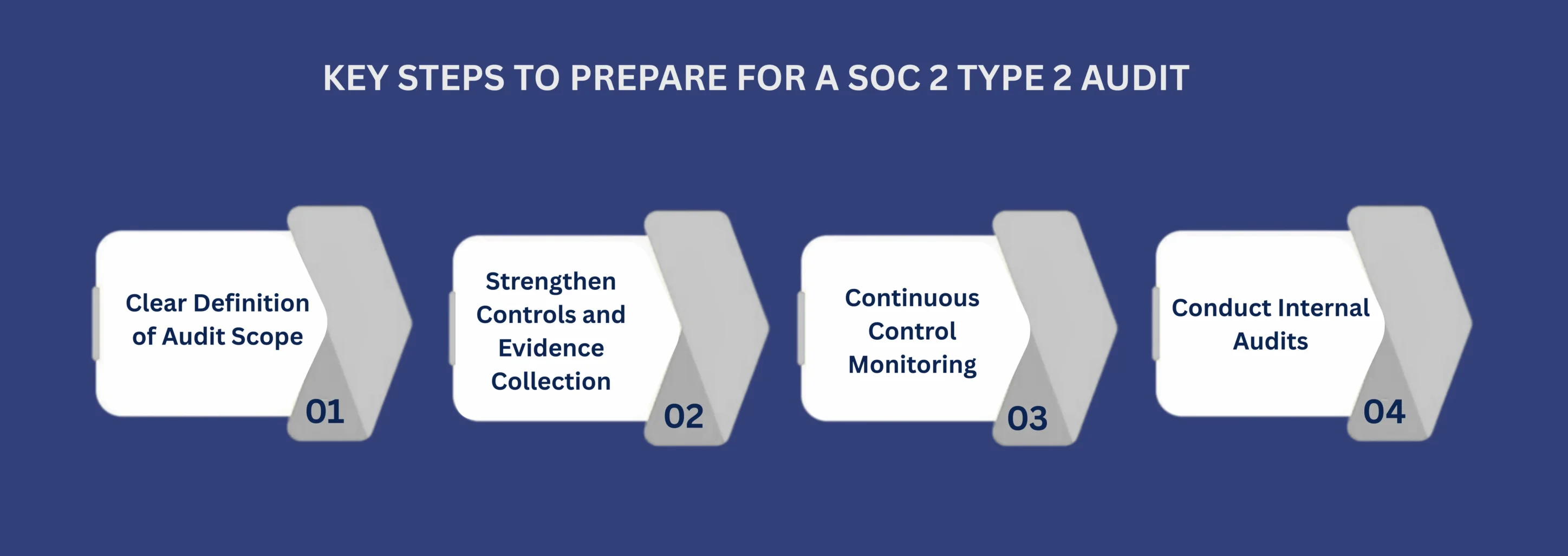
- ✓Stage 1: Scope Definition and System Description
- ✓Stages 2 through 4: Audit Program, Planning, and Fieldwork
- ✓Stages 5 through 8: Control Testing, Review, and Attestation
SOC 2 Report Components: What the Examination Covers
A SOC 2 report is a structured professional document produced by the Licensed CPA Firm following completion of the SOC 2 examination. The report has defined components, each serving a distinct purpose in communicating the auditor’s findings to report users — typically the service organization’s customers, prospects, and institutional partners. Understanding the components of a SOC 2 report enables Edinburgh organizations to communicate accurately with stakeholders about what the report contains and what it demonstrates.
The Independent Service Auditor’s Report
The Independent Service Auditor’s Report is the formal attestation issued by the Licensed CPA Firm. It contains the auditor’s professional opinion on whether the service organization’s system description is fairly presented, whether controls were suitably designed (Type 1 and Type 2), and whether controls operated effectively during the defined period (Type 2 only). The auditor’s opinion can be unqualified (clean opinion, confirming controls met the criteria), qualified (controls generally met criteria but with noted exceptions), or adverse (controls did not meet the criteria). It may also include an emphasis-of-matter paragraph for material disclosures. The type of opinion directly determines the commercial and regulatory value of the SOC 2 report to stakeholders.
System Description and Control Documentation
The Management’s Description of the System — prepared by the service organization and reviewed by auditors — describes the services provided, the infrastructure components, the software used, the data processed, organizational personnel, and the control objectives and activities the organization has placed in operation. The description must be accurate and complete; auditors test its fairness as part of the SOC 2 examination. Customers reading the report use the system description to understand exactly what system and controls were subject to audit and how those controls relate to the data they have entrusted to the organization.
The detailed control test results section — included in Type 2 reports — lists each control tested, the testing procedure applied, the evidence reviewed, and the auditor’s conclusion on whether the control operated effectively. This section is the most technically detailed part of the SOC 2 report. It provides customers with granular, control-by-control visibility into how the organization’s security and operational controls performed during the audit period. For Edinburgh organizations responding to enterprise procurement teams or vendor due diligence questionnaires, this level of documented control evidence is a significant competitive differentiator.
Complementary User Entity Controls
Most SOC 2 reports include a section on Complementary User Entity Controls (CUECs) — controls that the service organization’s customers (user entities) must maintain to achieve the overall control objectives. CUECs define what customers are responsible for on their side of the shared responsibility model. For example, a cloud infrastructure provider’s SOC 2 report may specify that customers are responsible for managing their own user access credentials and not sharing administrative passwords. Edinburgh organizations that are themselves customers of third-party service providers use their vendors’ SOC 2 reports — and specifically the CUEC sections — to identify and fulfill their own control obligations under shared responsibility frameworks.
Requirements for SOC 2 Certification in Edinburgh
SOC 2 Certification in Edinburgh requires organizations to meet defined standards across documentation, technical infrastructure, organizational governance, and operational practice. Requirements are evaluated against the applicable Trust Services Criteria, and the specific controls required vary based on the scope defined for the engagement. The following requirements represent the foundational expectations that Edinburgh organizations must satisfy before a Licensed CPA Firm can issue a SOC 2 attestation.
Documentation requirements for SOC 2 Certification encompass formal information security policies, acceptable use policies, access control policies, incident response plans, business continuity and disaster recovery plans, vendor management policies, change management procedures, and risk assessment documentation. Each policy must be formally approved, version-controlled, communicated to relevant personnel, and reviewed at defined intervals. Auditors evaluate not only the existence of these documents but also their completeness, accuracy, and alignment with actual operational practice. Policies that exist on paper but are not operationally implemented do not satisfy SOC 2 documentation requirements.
Technical requirements for SOC 2 Certification in Edinburgh include multi-factor authentication for access to systems in scope, role-based access control with documented provisioning and deprovisioning procedures, encrypted data transmission and storage, network segmentation and firewall controls, intrusion detection and monitoring systems, vulnerability management and patch management programs, backup and recovery systems with tested restoration procedures, and audit logging with log retention and review processes. Each technical control must produce evidence of operation — log records, configuration outputs, test results, or review documentation — that auditors can examine during the SOC 2 audit.
Organizational requirements include a defined control owner structure with named individuals responsible for each control, security awareness training programs with documented completion records, background screening procedures for personnel with access to sensitive systems, vendor risk management processes with documented third-party assessments, and a formal incident response program with evidence of incident tracking and resolution. Operational requirements include consistent execution of defined procedures throughout the audit period, regular monitoring activities, and documented evidence of management review and oversight of the control environment. For SOC 2 Type 2 engagements in Edinburgh, consistent operational execution across every month of the audit period is essential — isolated periods of strong performance surrounded by gaps in evidence will be identified and documented by auditors.
- ✓Formal information security policy suite — approved, version-controlled, and operationally implemented
- ✓Multi-factor authentication for all systems within the audit scope
- ✓Role-based access control with documented provisioning, review, and deprovisioning procedures
- ✓Encrypted data transmission (TLS 1.2 or higher) and encrypted data storage
- ✓Network security controls including firewalls, intrusion detection, and network segmentation
- ✓Vulnerability management program with documented scan results and remediation timelines
- ✓Backup and disaster recovery procedures with documented, tested restoration results
- ✓Audit logging with retention policy and documented log review activities
- ✓Vendor risk management program with third-party security assessments
- ✓Incident response plan with documented incident register and resolution records
- ✓Security awareness training program with completion records for all in-scope personnel
- ✓Formal risk assessment process with documented risk register and treatment decisions
- ✓Documentation and Policy Requirements
- ✓Technical Control Requirements
- ✓Organizational and Operational Requirements
SOC 2 Certification Cost in Edinburgh
The cost of SOC 2 certification in Edinburgh varies based on several structurally defined factors: the number of Trust Services Criteria included in scope, the complexity and scale of the systems subject to examination, the type of report being issued (Type 1 or Type 2), the duration of the audit period, and the maturity of the organization’s existing control environment. CertPro operates with fixed, transparent pricing for all SOC 2 engagements in Edinburgh, ensuring that organizations understand the full cost of the SOC 2 examination before the engagement formally commences — with no variable or discovery-based billing that creates budget uncertainty.
Factors That Determine SOC 2 Certification Cost
The primary cost driver in SOC 2 certification cost Edinburgh organizations face is the scope of the engagement. Organizations that include only the mandatory Security criterion in a tightly defined system boundary will incur lower examination costs than organizations with complex multi-system environments covering all five Trust Services Criteria. The number of in-scope infrastructure components, the volume of controls subject to testing, and the number of personnel and departments involved in control operation all affect the time required for fieldwork and therefore the overall engagement cost. Smaller Edinburgh technology companies with cloud-native, well-documented environments can complete a SOC 2 Type 2 audit at substantially lower cost than large enterprises with legacy infrastructure, multiple data centers, and complex organizational structures.
For Edinburgh organizations beginning their SOC 2 journey, the Type 1 report is a lower-cost entry point. Type 1 audits require less time to complete because they do not involve extended operational evidence collection or the broad sampling procedures required for operational effectiveness testing. Type 2 audits, conducted over a minimum six-month audit period, involve significantly more auditor time and evidence review. However, organizations that have already obtained a Type 1 report and maintained organized evidence throughout the subsequent operational period typically experience more efficient Type 2 examinations, as the foundational documentation and control structure are already auditor-reviewed and established.
CertPro Fixed Pricing for SOC 2 Engagements
CertPro provides fixed pricing for all SOC 2 Certification in Edinburgh engagements. Fixed pricing means the total cost of the examination — including all audit fieldwork, evidence review, report drafting, and attestation issuance — is defined before the engagement commences. There are no variable hourly billing overruns, no discovery-phase surcharges, and no additional costs for standard report revisions. This pricing structure allows Edinburgh organizations to budget accurately for their SOC 2 audit, present definitive cost information to finance and procurement stakeholders, and avoid the cost uncertainty that characterizes many professional services engagements billed on an hourly or open-ended basis.
| Engagement Type | Scope Factors | Typical Cost Range | Timeline |
|---|---|---|---|
| SOC 2 Type 1 | Security criterion only, limited system scope | Lower range — fixed pricing | 6–10 weeks |
| SOC 2 Type 1 (Expanded) | Multiple TSC, complex system environment | Mid range — fixed pricing | 8–14 weeks |
| SOC 2 Type 2 | Security criterion, 6-month audit period | Mid range — fixed pricing | 6-month period + 8–12 weeks reporting |
| SOC 2 Type 2 (Expanded) | Multiple TSC, 12-month audit period | Higher range — fixed pricing | 12-month period + 10–14 weeks reporting |
Benefits of SOC 2 Certification for Edinburgh Businesses
SOC 2 Certification in Edinburgh delivers structured, independently verified business benefits that extend well beyond regulatory compliance. Organizations holding a current SOC 2 Type 2 report occupy a demonstrably stronger position in enterprise sales processes, regulatory reviews, vendor qualification exercises, and institutional due diligence than those without formal attestation. The following benefits are direct, documented outcomes of SOC 2 certification for Edinburgh-based service organizations.
Edinburgh organizations with SOC 2 Type 2 attestation eliminate a significant friction point in enterprise sales cycles. Enterprise procurement teams at US-headquartered and global companies routinely issue vendor security questionnaires that require documented evidence of security controls. A SOC 2 report responds to the majority of these questions with a single, authoritative document produced by a Licensed CPA Firm — rather than a series of self-attested assertions that must be individually verified. This reduces the time from initial procurement inquiry to signed contract, accelerates revenue recognition for Edinburgh SaaS and technology companies, and removes a common disqualification point in competitive procurement processes.
SOC 2 certification Edinburgh technology companies obtain also enables entry into enterprise market segments that were previously inaccessible. Many Fortune 500 companies, US federal government contractors, and global financial institutions operate mandatory security requirements that disqualify vendors without current SOC 2 Type 2 reports. For Edinburgh-based companies targeting these markets, SOC 2 certification is not optional — it is a commercial prerequisite. Organizations that obtain SOC 2 attestation typically report measurable improvements in win rates for enterprise opportunities within the first twelve months of holding a current report.
SOC 2 Certification provides Edinburgh businesses with an independently verified demonstration of their commitment to data security and operational reliability. Unlike self-issued security statements or marketing claims, a SOC 2 report is produced by a Licensed CPA Firm that has professionally examined, tested, and attested to the organization’s controls. Customers who receive a SOC 2 report in response to security inquiries can place justified reliance on its contents — they are reading the conclusions of a qualified independent auditor, not a vendor’s self-assessment. This institutional credibility directly supports customer trust and retention, particularly in Edinburgh’s financial services and healthcare sectors where data governance expectations are highest.
The SOC 2 audit process itself drives internal control improvement for Edinburgh organizations. The structured evaluation of controls against Trust Services Criteria identifies gaps, inconsistencies, and design weaknesses in a service organization’s security environment that internal reviews frequently miss. Organizations that complete SOC 2 examinations typically emerge with cleaner access control structures, better-documented procedures, more consistent monitoring practices, and stronger vendor management frameworks. The discipline required to sustain a SOC 2-compliant control environment — including regular access reviews, consistent incident logging, and routine policy updates — produces measurable reductions in operational security risk over time.
- ✓Elimination of vendor disqualification in enterprise procurement processes requiring SOC 2 attestation
- ✓Reduction in time spent responding to individual customer security questionnaires
- ✓Measurable improvement in enterprise sales win rates for Edinburgh technology organizations
- ✓Independent verification of security controls that customers can rely on without additional due diligence
- ✓Regulatory alignment support for FCA operational resilience and UK GDPR data governance requirements
- ✓Identification and remediation of control gaps through structured auditor examination
- ✓Institutional credibility in global markets where SOC 2 attestation is a standard expectation
- ✓Annual audit cycle that enforces continuous improvement of the control environment
- ✓Reduced cyber insurance premiums for Edinburgh organizations demonstrating tested security controls
- ✓Competitive differentiation in Edinburgh’s financial services and technology sectors
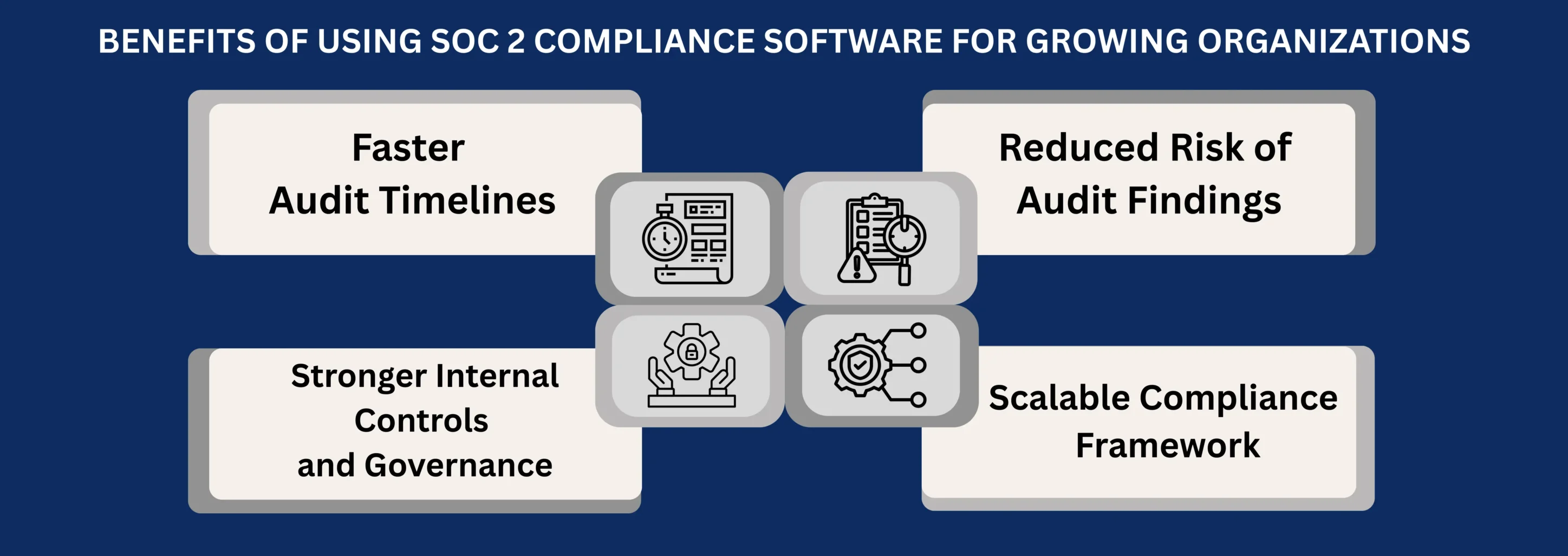
- ✓Commercial Advantage and Sales Cycle Acceleration
- ✓Customer Trust and Institutional Credibility
- ✓Internal Control Improvement and Risk Reduction
SOC 2 and UK GDPR: Compliance Alignment for Edinburgh Organizations
SOC 2 Certification and UK GDPR compliance are distinct frameworks with different legal and institutional foundations, but they address overlapping data security and governance concerns that are directly relevant to Edinburgh-based organizations. Understanding the relationship between SOC 2 audit obligations and UK GDPR requirements enables Edinburgh businesses to structure their compliance programs efficiently, leveraging SOC 2 control evidence across both frameworks where applicable.
How SOC 2 Aligns with UK GDPR Requirements
UK GDPR imposes obligations on data controllers and data processors to implement appropriate technical and organizational measures to protect personal data. The Information Commissioner’s Office (ICO), which enforces UK GDPR in Edinburgh and across the UK, expects organizations to demonstrate accountability — meaning documented evidence that appropriate security measures are in place and operating effectively. The SOC 2 Security and Privacy criteria directly address technical and organizational security measures that align with UK GDPR Article 32 requirements. Edinburgh organizations that undergo a SOC 2 audit produce organized, auditor-reviewed documentation of their security controls that can also be used to demonstrate UK GDPR accountability to the ICO.
SOC 2 does not replace UK GDPR compliance obligations. Edinburgh organizations are legally required to comply with UK GDPR regardless of their SOC 2 status. However, the structured control environment required for SOC 2 Certification — including documented access controls, incident response procedures, data retention policies, and vendor management processes — directly supports the technical and organizational measures that UK GDPR requires. Organizations in Edinburgh’s financial services and technology sectors frequently find that pursuing SOC 2 attestation strengthens their overall data governance posture and simplifies the demonstration of UK GDPR accountability during ICO inquiries or enforcement proceedings.
Data Processor Obligations and SOC 2 Attestation
Edinburgh-based organizations acting as data processors under UK GDPR — handling personal data on behalf of data controllers — are frequently required by their controller clients to provide evidence of appropriate technical and organizational measures. A SOC 2 report issued by a Licensed CPA Firm provides exactly this type of independent, auditor-verified evidence. Controller organizations that review a processor’s current SOC 2 Type 2 report can satisfy their due diligence obligations under UK GDPR Article 28, which requires controllers to use only processors that provide sufficient guarantees regarding appropriate technical and organizational measures. SOC 2 attestation from CertPro thus serves as a practical mechanism for Edinburgh data processors to fulfill contractual and regulatory evidence obligations simultaneously.
SOC 2 and ICO Enforcement Context
The ICO has consistently emphasized that accountability under UK GDPR requires documented, demonstrable evidence of data protection measures — not merely organizational assertions. Edinburgh organizations that have undergone a formal SOC 2 examination hold a body of auditor-reviewed, independently tested control evidence that can be presented during ICO inquiries, data breach investigations, or regulatory review processes. While a SOC 2 report does not constitute a legal defense against UK GDPR enforcement, it provides substantive, third-party-verified evidence of security control investment and operational rigor that is relevant to ICO assessments of whether an organization has taken appropriate technical and organizational measures under Article 32.
CertPro’s SOC 2 Audit Services in Edinburgh
CertPro is a Licensed CPA Firm delivering SOC 2 audit services Edinburgh organizations require to obtain, maintain, and renew SOC 2 attestation. CertPro conducts formal SOC 2 examinations under AICPA attestation standards, issuing SOC 2 Type 1 and Type 2 reports that are recognized by enterprise customers, regulators, and institutional partners globally. All SOC 2 engagements conducted by CertPro in Edinburgh are performed by qualified audit professionals with direct experience in SOC 2 examination methodology, Trust Services Criteria application, and evidence evaluation across Edinburgh’s primary industry sectors.
CertPro’s Engagement Methodology
CertPro structures each SOC 2 engagement in Edinburgh through a defined methodology that prioritizes audit efficiency, evidence quality, and report accuracy. The engagement commences with a formal scope definition meeting in which the audit team and the service organization establish system boundaries, applicable Trust Services Criteria, and the audit period. CertPro’s audit team then develops the engagement-specific audit program, identifying the control testing procedures and evidence requirements applicable to the defined scope. This structured approach eliminates scope ambiguity at the outset and ensures that the organization understands exactly what evidence will be required before SOC 2 fieldwork begins.
Throughout the SOC 2 examination, CertPro’s audit professionals conduct evidence review using structured, documented testing procedures aligned with AICPA attestation standards. All findings — including control exceptions and their assessed materiality — are communicated clearly and in writing to the service organization before the final report is issued. CertPro’s report drafting process includes a formal management review period during which the service organization reviews the draft report for factual accuracy in the system description and responds formally to any noted control exceptions before the attestation is finalized and issued.
Fixed Pricing and Transparent Engagement Terms
CertPro’s fixed pricing model for SOC 2 Certification in Edinburgh is a deliberate institutional commitment to cost transparency. The engagement fee is defined before work commences and encompasses the complete examination — scope definition, audit program development, fieldwork, evidence review, control testing, nonconformity review, report drafting, management review period, and attestation issuance. CertPro does not charge variable fees for extended fieldwork resulting from audit complexity, nor for standard report revision cycles. Edinburgh organizations receive a complete, professionally issued SOC 2 report at the fixed price defined in the engagement agreement — with no financial uncertainty during the audit process.
Annual Recertification and Ongoing Attestation
SOC 2 attestation is not a permanent certification. Customers, enterprise buyers, and regulatory bodies expect Edinburgh organizations to maintain current SOC 2 reports reflecting recently completed examination periods. The standard expectation in enterprise procurement is that a SOC 2 Type 2 report covers an audit period ending within the past twelve months. Organizations that allow their SOC 2 report to lapse — by failing to complete annual audit cycles — lose the commercial and regulatory benefits that current attestation provides. CertPro structures ongoing engagement relationships with Edinburgh clients to ensure annual SOC 2 examinations are completed on schedule, maintaining continuous current attestation status and meeting the expectations of existing and prospective customers.
FAQ
▶
What is the difference between SOC 2 certified and SOC 2 compliant?
▶
How long does SOC 2 certification take for an Edinburgh organization?
▶
Is SOC 2 recognized in the UK and by Edinburgh-based enterprise buyers?
▶
What Trust Services Criteria should Edinburgh organizations include in their SOC 2 scope?
▶
Does SOC 2 Certification replace UK GDPR compliance for Edinburgh organizations?
▶
Can small Edinburgh businesses and startups obtain SOC 2 certification?
▶
How often must SOC 2 certification be renewed in Edinburgh?
▶
What evidence must Edinburgh organizations retain for a SOC 2 Type 2 audit?

SOC 1 VS SOC 2: WHICH REPORT YOUR CUSTOMERS ACTUALLY ASK FOR
If you sell SaaS or provide outsourced services, you have likely been asked for a SOC report. However, the follow-up question is rarely easy to answer…

Secure Email Platform Exclaimer Renews ISO, SOC 2
Excerpt from The Manila Times Article, Published on February 26, 2026 Secure email solutions provider Exclaimer has renewed its ISO and SOC 2 certific…
SOC 2 FRAMEWORK REQUIREMENTS IN 2026. WHAT HAS CHANGED?
Security reviews used to happen at the tail end of a deal. Today, they happen in the first conversation. Enterprise buyers come prepared. They ask abo…
Get In Touch
have a question? let us get back to you.