
SOC 2 Certification in Houston
SOC 2 Certification in Houston is an AICPA-governed attestation examination conducted exclusively by Licensed CPA Firms. CertPro, a Licensed CPA Firm, issues formal SOC 2 examination reports evaluated against the Trust Services Criteria under AT-C Section 205. We serve organizations across Houston’s energy, healthcare, technology, and financial services sectors with rigorous, independently issued SOC 2 audit findings.
OUR CLIENTS










What is SOC 2 Certification?
SOC 2 Certification is a formal attestation examination conducted by a Licensed CPA Firm under the American Institute of Certified Public Accountants (AICPA) framework, governed by AT-C Section 205. It evaluates an organization’s information security controls against the Trust Services Criteria (TSC). SOC 2 is not a government regulation, a self-certification, or a vendor-issued assessment. It is an independently issued examination report that communicates the design and operating effectiveness of an organization’s controls to relying parties — including customers, partners, and enterprise procurement teams. Understanding what SOC 2 Certification requires is the essential first step for any Houston organization entering the formal attestation process.
The AICPA Framework and AT-C Section 205
The AICPA established the SOC 2 examination framework to provide a standardized, independent mechanism through which service organizations can demonstrate the security and reliability of their systems to stakeholders. AT-C Section 205 governs the attestation standards that Licensed CPA Firms must follow when conducting a SOC 2 audit. These standards define the scope of examination, the methodology for evidence evaluation, the criteria for issuing an opinion, and the format of the resulting report.
No organization can self-issue a SOC 2 report. The attestation must originate from a qualified CPA Firm with attestation authority recognized by the AICPA. This requirement is what gives every SOC 2 examination report its institutional credibility and evidentiary weight in enterprise procurement.
SOC 2 differs from other SOC report types in both scope and purpose. SOC 1 reports evaluate controls relevant to financial reporting for user entities. SOC 3 reports are simplified, publicly shareable summaries of SOC 2 findings. SOC 2 reports, by contrast, provide detailed, restricted-use documentation of security, availability, processing integrity, confidentiality, and privacy controls.
The SOC 2 audit evaluates whether an organization’s controls are suitably designed (Type 1) or both designed and operating effectively over a defined period (Type 2). Only a Licensed CPA Firm can conduct and issue either report type.
Trust Services Criteria: The Evaluation Framework
The Trust Services Criteria (TSC) is the evaluative framework established by the AICPA against which a SOC 2 audit measures an organization’s controls. The TSC comprises five categories: Security, Availability, Processing Integrity, Confidentiality, and Privacy. Security is the only mandatory category in every SOC 2 engagement.
Organizations select additional criteria categories based on the nature of their services, contractual obligations, and the data they process. For example, a cloud-based healthcare technology platform serving Houston’s medical community would typically include Availability and Confidentiality criteria alongside the required Security category. The resulting SOC 2 report communicates to relying parties which criteria were examined and what the Licensed CPA Firm’s examination opinion concluded.
SOC 2 vs. Other Certification Frameworks
SOC 2 Certification occupies a distinct position among information security frameworks. ISO 27001 is an international standard focused on the establishment, implementation, and continual improvement of an information security management system, recognized globally across markets. SOC 2 is a U.S.-originated attestation standard primarily demanded by North American enterprise customers and increasingly required in global technology procurement.
NIST SP 800-53 provides a catalog of security controls for federal information systems, while HIPAA mandates specific safeguards for protected health information in healthcare contexts. SOC 2 compliance often aligns with and complements these frameworks. Organizations that maintain robust HIPAA or NIST-aligned controls will find meaningful overlap with SOC 2 Trust Services Criteria requirements, reducing duplicated effort across certification programs.

SOC 2 Certification in Houston: Why It Matters
SOC 2 Certification in Houston is a critical business requirement for organizations operating across the city’s dominant industries: energy, healthcare, financial services, and technology. Houston is the fourth-largest city in the United States and home to a uniquely concentrated ecosystem of Fortune 500 companies, major healthcare systems, energy conglomerates, and a rapidly expanding technology and SaaS sector.
Each of these industries handles sensitive customer and operational data at significant scale. Independent attestation of security controls has become a baseline procurement requirement rather than an optional differentiator — making SOC 2 Certification in Houston essential for any vendor seeking enterprise-level opportunities.
Houston’s Energy Sector and Data Security Requirements
Houston’s energy sector — anchored by oil and gas majors, pipeline operators, and energy technology firms — operates critical infrastructure systems subject to NERC CIP (North American Electric Reliability Corporation Critical Infrastructure Protection) standards alongside commercial data security expectations. Technology vendors, software providers, and operational technology firms serving these energy companies face increasing demands to demonstrate SOC 2 compliance as a condition of vendor approval.
A SOC 2 audit conducted by a Licensed CPA Firm provides the independent attestation that energy sector procurement teams require before entrusting operational or financial data to a service provider. Organizations delivering software, data management, or cloud services to Houston’s energy companies will find that SOC 2 Certification in Houston is frequently listed in vendor qualification criteria.
The intersection of NERC CIP obligations and commercial vendor management creates a layered compliance environment in the energy sector. While NERC CIP governs utilities and grid operators directly, their technology vendors are evaluated through commercial procurement processes that reference SOC 2 reports as a primary trust signal.
A SOC 2 Type 2 audit covering a 12-month period demonstrates sustained operational security practices, aligning with the continuous compliance expectations of energy sector procurement standards. CertPro’s examination methodology maps SOC 2 Security criteria requirements against the operational realities of technology platforms serving Houston’s energy infrastructure.
Healthcare and Life Sciences in Houston
Houston is home to the Texas Medical Center, the largest medical complex in the world, comprising over 60 institutions including major research hospitals, medical schools, and specialty healthcare providers. Technology vendors, health information exchanges, electronic health record platforms, and medical software companies serving this ecosystem are subject to HIPAA’s Privacy and Security Rules as well as commercial SOC 2 demands from hospital procurement offices.
SOC 2 Certification in Houston for healthcare organizations most commonly includes both the Security and Confidentiality criteria, given the sensitivity of patient and financial data involved in healthcare transactions.
HIPAA compliance and SOC 2 compliance share significant control overlap in areas such as access management, audit logging, encryption, and incident response. Organizations that have implemented HIPAA-required administrative, physical, and technical safeguards will find that many of these controls align directly with SOC 2 Trust Services Criteria requirements for Security and Confidentiality.
A SOC 2 engagement conducted against both criteria categories provides healthcare technology vendors with an attestation report that satisfies enterprise customer due diligence requirements and supports HIPAA business associate agreement documentation. CertPro’s examination procedures account for the specific data handling contexts of healthcare technology organizations within the Texas Medical Center ecosystem and the broader Houston healthcare market.
Technology, SaaS, and Fintech in Houston
Houston’s technology sector has expanded significantly over the past decade, with a growing cluster of SaaS companies, cloud infrastructure providers, and fintech organizations establishing operations in the Houston metro area. SOC 2 Certification for Houston fintech organizations specifically addresses the intersection of financial data handling, payment processing security, and PCI DSS alignment.
Houston-based fintech companies that process payment card data, manage investment accounts, or provide financial data analytics face dual expectations: PCI DSS compliance from card network mandates and SOC 2 certification from enterprise clients conducting vendor risk management. A Licensed CPA Firm conducting a SOC 2 audit for fintech organizations evaluates controls across the Security, Availability, and Processing Integrity criteria categories, addressing the full spectrum of financial data security expectations.
SOC 2 Type 1 vs. SOC 2 Type 2 Audit
A SOC 2 audit in Houston is conducted in two distinct report types: SOC 2 Type 1 and SOC 2 Type 2. Each serves a different evidentiary purpose and communicates a different level of assurance to relying parties. Understanding the distinction between these two report types is essential for Houston organizations planning their certification timeline and determining which report satisfies their customers’ requirements.
| Attribute | SOC 2 Type 1 | SOC 2 Type 2 |
|---|---|---|
| Evaluation Period | Point-in-time (single date) | Minimum 6 months (typically 12 months) |
| What Is Assessed | Design of controls only | Design and operating effectiveness of controls |
| Assurance Level | Moderate — controls are suitably designed | High — controls operated effectively over time |
| Common Use Case | Early-stage certification, initial vendor qualification | Enterprise procurement, regulated industry requirements |
| Audit Duration | 4–8 weeks from fieldwork start | 6–12 months observation period plus fieldwork |
SOC 2 Type 1 Audit in Houston
A SOC 2 Type 1 audit evaluates the design of an organization’s security controls as of a specific point in time. The Licensed CPA Firm examines whether the controls described in the organization’s system description are suitably designed to meet the applicable Trust Services Criteria. A Type 1 report does not evaluate whether those controls operated effectively over any period of time — it is a snapshot assessment of design adequacy.
For Houston organizations that are new to the SOC 2 examination process, a Type 1 audit provides a structured entry point into formal attestation. It demonstrates to prospective customers that a recognized CPA Firm has independently evaluated their control environment.
The SOC 2 Type 1 audit is particularly relevant for Houston technology startups, early-stage SaaS companies, and organizations entering regulated supply chains for the first time. Enterprise customers in Houston’s energy and healthcare sectors may accept a Type 1 report as an interim qualification document while the vendor progresses toward a Type 2 audit.
The Type 1 report includes the service auditor’s opinion on the fairness of the system description and the suitability of control design. This provides a formal, third-party validated document that supports vendor risk management processes. Organizations completing a Type 1 audit also establish the documentation baseline and evidence collection practices required for the subsequent Type 2 examination period.
SOC 2 Type 2 Audit in Houston
A SOC 2 Type 2 audit examines both the design and the operating effectiveness of an organization’s controls over a defined observation period, typically six to twelve months. The Licensed CPA Firm selects and tests samples of control evidence collected throughout the observation period to determine whether controls functioned as designed on a consistent basis.
The resulting report includes the service auditor’s opinion on control design, a description of the tests performed, and the results of those tests. This provides relying parties with a comprehensive view of the organization’s sustained security posture. SOC 2 Type 2 certification is the standard required by most enterprise customers, regulated industry procurement processes, and investor due diligence protocols.
For Houston organizations operating in competitive B2B markets, a SOC 2 Type 2 report is the definitive trust credential. Enterprise procurement teams at Houston’s major energy companies, healthcare systems, and financial institutions require Type 2 reports as part of vendor qualification. These reports demonstrate that security controls are not merely documented on paper but have been verified to operate effectively under real-world conditions.
The observation period for a SOC 2 Type 2 audit typically spans twelve months for organizations seeking annual certification, though initial Type 2 engagements may cover a six-month period. CertPro conducts SOC 2 Type 2 audits in Houston with examination procedures aligned to AICPA attestation standards and issues formal examination reports upon completion of the audit cycle.
SOC 2 Trust Services Criteria
The Trust Services Criteria (TSC) is the evaluative framework developed by the AICPA against which all SOC 2 examinations are conducted. The TSC comprises five distinct categories, each addressing a specific dimension of system security and reliability. Every SOC 2 engagement must include the Security category. Organizations select additional categories based on the scope of their services and the expectations of their customers and stakeholders.
The Security category — also referred to as the Common Criteria — is mandatory in every SOC 2 audit and forms the foundational layer of the examination. Security criteria evaluate whether the system is protected against unauthorized access, both physical and logical, and whether the organization has implemented controls to prevent, detect, and respond to security incidents.
Control areas evaluated under the Security criteria include logical access controls, network security, change management, risk assessment processes, monitoring activities, and incident response procedures. For Houston technology companies handling customer data across cloud environments, Security criteria testing forms the core of the SOC 2 examination and typically represents the largest portion of overall control testing activity.
The Availability criteria evaluate whether the system is available for operation and use as committed or agreed upon. This category is particularly relevant for cloud platforms, SaaS providers, and managed service organizations where uptime commitments and service level agreements form the basis of customer contracts.
Processing Integrity criteria assess whether system processing is complete, valid, accurate, timely, and authorized — making this category essential for payment processors, data analytics platforms, and transaction processing systems common in Houston’s fintech sector. Confidentiality criteria examine whether information designated as confidential is protected as committed or agreed, a critical requirement for legal technology platforms, healthcare data processors, and financial services firms. Privacy criteria evaluate whether personal information is collected, used, retained, disclosed, and disposed of in conformity with the organization’s privacy notice and applicable privacy regulations.
Houston organizations selecting Trust Services Criteria categories for their SOC 2 engagement should base that selection on an objective assessment of their service commitments, system description, contractual obligations, and the data types they process.
A SaaS company providing mission-critical workflow automation to Houston energy firms would typically include Security and Availability criteria, given uptime dependencies. A data analytics platform processing confidential business intelligence for multiple enterprise clients would add Confidentiality criteria. An organization collecting personal information from end users would include Privacy criteria to address obligations under applicable regulations such as the California Consumer Privacy Act (CCPA) or sector-specific requirements. CertPro’s Licensed CPA examination team evaluates the selected criteria categories with procedures calibrated to the organization’s specific system boundaries and service commitments.

- ✓Security (Common Criteria)
- ✓Availability, Processing Integrity, Confidentiality, and Privacy
SOC 2 Audit Process
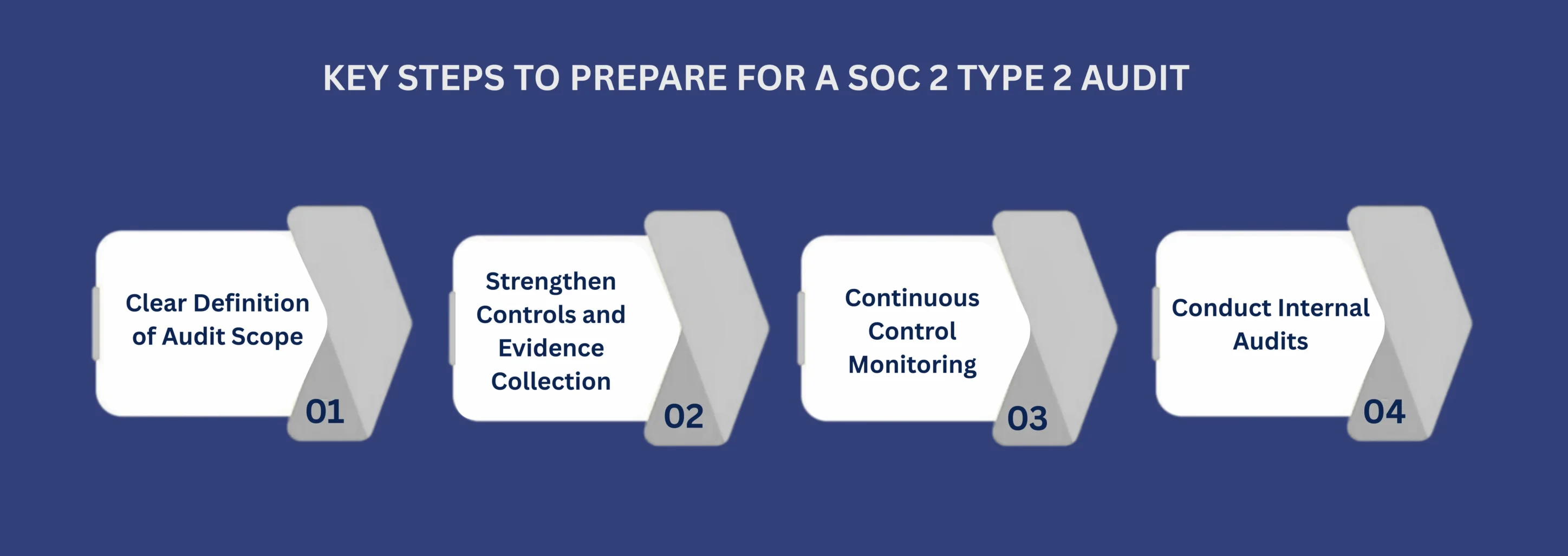
The SOC 2 audit process conducted by CertPro follows a structured, AICPA-aligned examination methodology. Each stage of the SOC 2 engagement is executed with declarative evaluation procedures that produce verifiable findings. The following steps describe the formal examination sequence for organizations pursuing SOC 2 Certification in Houston.
- Scope Definition: The Licensed CPA Firm and the organization define the system boundaries, applicable Trust Services Criteria categories, and the services included within the SOC 2 examination scope. System boundaries encompass the infrastructure, software, data, people, and procedures relevant to the services being examined.
- Audit Program Determination: The examination team develops the audit program, specifying the control objectives, control activities to be evaluated, and the evidence collection procedures applicable to each selected Trust Services Criteria category.
- Stage 1 Audit (Readiness Evaluation): The Licensed CPA Firm reviews the organization’s system description, evaluates existing documentation, and identifies the control environment as documented by the organization. This stage determines the completeness of the system description and the logical structure of the control framework.
- Type 1 or Type 2 Assessment Initiation: For Type 1 engagements, the examination proceeds to control design evaluation at the specified point-in-time date. For Type 2 engagements, the observation period commences, during which the organization operates its controls and collects evidence of control operation.
- Control Testing and Evidence Evaluation: The Licensed CPA Firm selects samples of control evidence and applies examination procedures to evaluate whether controls operated as designed. Evidence types include system-generated logs, configuration screenshots, access review records, incident reports, and change management documentation.
- Nonconformity Review: Identified exceptions or control deficiencies are evaluated for materiality and communicated to the organization. The examination report describes any noted exceptions and their potential impact on the auditor’s opinion.
- Certification Decision and Audit Opinion: The Licensed CPA Firm issues a formal audit opinion based on the examination findings. The opinion may be unqualified (clean), qualified, adverse, or a disclaimer, depending on the examination results.
- Issuance of the SOC 2 Examination Report: The completed SOC 2 report — including the service auditor’s opinion, system description, description of tests performed, and results of tests (for Type 2) — is issued to the organization for distribution to relying parties.
- Annual Surveillance and Recertification: SOC 2 certification requires annual renewal. Organizations must complete annual audit cycles to maintain a current report status and meet ongoing customer and regulatory expectations.
Evidence collection is a critical operational requirement throughout the SOC 2 engagement, particularly for Type 2 examinations where the Licensed CPA Firm evaluates control operation over the full observation period. Organizations must establish systematic evidence collection processes at the same time controls are implemented — not after the observation period ends.
Common evidence collection failures include missing log retention records, incomplete access review documentation, undocumented change management approvals, and gaps in security awareness training records. For Houston technology companies undergoing their first SOC 2 Type 2 audit, establishing automated evidence collection workflows from the start of the observation period significantly reduces audit burden and examination risk.
The SOC 2 audit evidence framework requires that organizations maintain contemporaneous records of control activities rather than reconstructing evidence at the end of the observation period. Auditors reviewing evidence over time examine timestamps, system-generated records, approval workflows, and change history to verify that controls operated continuously and consistently.
Organizations should implement documented evidence repositories, assign control ownership to specific personnel, and establish regular internal evidence review cycles on at minimum a monthly basis. This approach ensures that evidence is organized, complete, and readily available when the Licensed CPA Firm initiates fieldwork — reducing the elapsed time between evidence request and delivery and supporting an efficient examination timeline.
- ✓Evidence Collection During the SOC 2 Engagement
SOC 2 Certification Requirements for Houston Businesses
SOC 2 Certification in Houston requires organizations to satisfy a defined set of documentation, technical, operational, and governance requirements aligned to the selected Trust Services Criteria. The following requirements apply to organizations pursuing a SOC 2 audit conducted by a Licensed CPA Firm under AICPA attestation standards.
Documentation requirements for SOC 2 compliance include a formally written system description that accurately represents the boundaries, components, and services within scope of the examination. The system description must describe the infrastructure, software, data, people, and procedures relevant to the services provided.
Organizations must maintain written information security policies addressing each control domain relevant to the selected Trust Services Criteria. Required policies include access control, incident response, change management, vendor management, and acceptable use. These policies must be approved by management, communicated to relevant personnel, and reviewed at defined intervals — typically annually.
Procedure documentation must accompany policy documentation to demonstrate that organizational guidance is operationalized at the process level. Procedures describe how policies are executed in practice — for example, the specific steps followed when onboarding a new employee and provisioning access to systems, or the documented workflow for reviewing and approving software changes before deployment to production.
Houston organizations with distributed teams, remote workforce arrangements, or multi-cloud environments face particular documentation requirements around access provisioning consistency and the enforcement of security controls across geographically distributed infrastructure. The Licensed CPA Firm evaluates the completeness and accuracy of documentation as a foundational step in the examination before proceeding to control testing.
Technical requirements for a SOC 2 audit encompass the implementation and operation of security controls across the organization’s infrastructure, applications, and data environments. Key technical requirements include multi-factor authentication enforcement for privileged and remote access, encryption of data in transit and at rest, network segmentation and firewall configuration management, vulnerability management including regular scanning and timely remediation, and comprehensive audit logging covering system access, administrative actions, and security events.
Houston organizations operating in cloud environments such as AWS, Microsoft Azure, or Google Cloud Platform must demonstrate that inherited cloud provider controls are supplemented by organization-specific controls within the shared responsibility model.
- ✓Multi-factor authentication enforced for all privileged, administrative, and remote access accounts
- ✓Encryption of data in transit using TLS 1.2 or higher; encryption of data at rest using AES-256 or equivalent
- ✓Formal access provisioning and de-provisioning procedures with documented approval workflows
- ✓Periodic access reviews (at minimum quarterly for privileged accounts, semi-annually for standard accounts)
- ✓Vulnerability scanning conducted at minimum quarterly; critical vulnerabilities remediated within defined SLAs
- ✓Comprehensive audit logging with tamper-evident log retention meeting defined retention periods
- ✓Documented incident response plan with defined roles, escalation paths, and post-incident review procedures
- ✓Change management process with documented approval, testing, and rollback procedures for all production changes
- ✓Vendor and third-party risk management program with documented vendor assessments for critical suppliers
- ✓Business continuity and disaster recovery plans with documented recovery time and recovery point objectives
Governance requirements for SOC 2 compliance that Houston organizations must satisfy include formal management oversight of the information security program, defined risk assessment processes, and established mechanisms for communicating security responsibilities across the organization. The AICPA’s Common Criteria include specific requirements related to the control environment — organizational commitment to integrity and ethical values, management oversight structures, organizational structure, assignment of authority and responsibility, and human resources processes relevant to security.
These governance elements form the foundation of the control environment evaluated during the SOC 2 examination. They are assessed through documentation review, inquiry procedures, and evaluation of organizational structures.
- ✓Documentation Requirements
- ✓Technical Requirements
- ✓Governance and Operational Requirements
Benefits of SOC 2 Certification for Houston Organizations
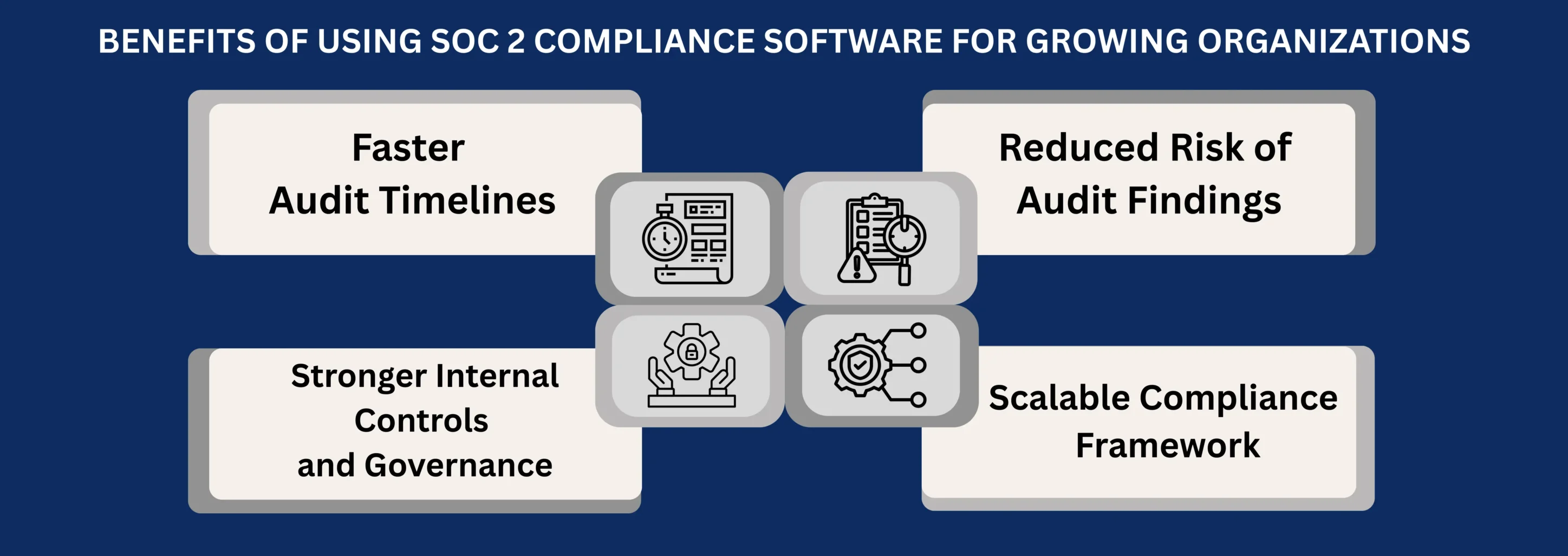
SOC 2 Certification in Houston delivers measurable, documented benefits to organizations operating in competitive B2B markets where independent attestation of security controls is a standard procurement requirement. The following benefits reflect the verified outcomes of formal SOC 2 examination for Houston-based service organizations across multiple industries.
SOC 2 Certification is a prerequisite for vendor qualification in enterprise sales processes across Houston’s major industry segments. Organizations in the oil and gas sector, healthcare systems affiliated with the Texas Medical Center, major financial institutions in the Houston market, and large technology companies all include SOC 2 report requirements in their vendor qualification and third-party risk management programs.
A Houston-based SaaS company without a current SOC 2 examination report will frequently be disqualified from enterprise procurement processes before reaching the technical evaluation stage — regardless of the quality of the underlying product. A current SOC 2 Type 2 report eliminates this disqualification risk and enables progression through enterprise sales cycles that were previously inaccessible.
SOC 2 Certification in Houston also strengthens negotiating position in customer contract discussions by providing independently verified documentation of security control effectiveness. Enterprise procurement teams that have reviewed and accepted a SOC 2 Type 2 report can reduce or eliminate the need for on-site security assessments, questionnaire-based vendor reviews, and customer-conducted audits — each of which consumes significant organizational resources.
The SOC 2 report functions as a standardized, widely recognized document that replaces multiple ad hoc customer security reviews with a single, authoritative third-party attestation.
In Houston’s competitive technology and services market, SOC 2 Certification signals organizational maturity and operational discipline to prospective customers, partners, and investors. The formal examination process conducted by a Licensed CPA Firm under AICPA standards carries a level of institutional credibility that self-assessments, questionnaire responses, and vendor-issued security white papers cannot replicate.
Customers who receive and review a SOC 2 examination report understand that an independent, qualified third party has evaluated the organization’s controls and issued a formal opinion on their effectiveness. This independent validation is the foundational differentiator between a self-certified security posture and a formally attested one.
The SOC 2 audit process produces internal operational improvements that extend well beyond the external trust signal of the examination report. Organizations that undergo a formal SOC 2 engagement develop structured, documented control frameworks, systematic evidence collection processes, and defined accountability structures for security responsibilities.
The examination process identifies control gaps and operational inconsistencies that may not have been apparent through internal review. The resulting improvements to access management, change control, vulnerability remediation, and incident response directly reduce organizational security risk — in addition to satisfying customer due diligence requirements. For Houston organizations that have not previously undergone a formal security attestation, the SOC 2 audit process frequently produces material improvements in security posture as a direct outcome of the examination methodology.
- ✓Formal entry into enterprise vendor qualification programs across Houston’s energy, healthcare, and technology sectors
- ✓Replacement of multiple customer security questionnaires with a single, authoritative SOC 2 examination report
- ✓Independent validation of security control effectiveness by a Licensed CPA Firm under AICPA attestation standards
- ✓Documented control framework that supports alignment with ISO 27001, HIPAA, NIST, and PCI DSS requirements
- ✓Accelerated enterprise sales cycles by eliminating SOC 2 report as a blocking procurement requirement
- ✓Demonstrated commitment to data security that supports customer retention and renewal negotiations
- ✓Internal operational improvements in access management, change control, and incident response practices
- ✓Annual certification cycle that enforces continuous improvement in security control design and operation
- ✓Investor and board-level confidence in the organization’s security governance and risk management maturity
- ✓Positioning as a trusted, audited vendor in Houston’s competitive B2B technology marketplace
- ✓Enterprise Market Access and Vendor Qualification
- ✓Competitive Differentiation and Customer Trust
- ✓Operational Security Improvement
Industries Served in Houston
CertPro conducts SOC 2 Certification in Houston across the city’s primary industry verticals. Each industry presents distinct data handling contexts, regulatory overlay requirements, and customer-driven attestation demands that shape the scope and criteria selection for SOC 2 engagements. The following industry profiles describe the specific SOC 2 examination relevance for Houston’s major sectors.
Energy and Oil and Gas Sector
The energy sector in Houston encompasses upstream exploration and production companies, midstream pipeline operators, downstream refining and distribution organizations, and an extensive ecosystem of technology vendors, software providers, and data management companies serving them. SOC 2 certification for Houston energy sector organizations most frequently covers Security and Availability criteria, reflecting the operational continuity requirements of energy production and distribution systems.
Vendors providing SCADA data integration, operational technology monitoring, energy trading platforms, and enterprise resource planning systems to Houston’s energy companies face increasing SOC 2 audit requirements as part of formal vendor risk management programs.
Healthcare and Life Sciences
Healthcare technology organizations serving Houston’s Texas Medical Center and affiliated hospital networks require SOC 2 Certification as a component of their HIPAA business associate relationship documentation and vendor risk management programs. Electronic health record integrators, telemedicine platforms, medical billing software providers, clinical data analytics companies, and health information exchange operators serving Houston’s healthcare ecosystem are routinely required to provide current SOC 2 Type 2 reports as a condition of vendor agreement execution.
The Security and Confidentiality criteria are most commonly selected for healthcare technology SOC 2 engagements, with Availability criteria added for platforms supporting clinical workflow continuity. SOC 2 compliance that Houston healthcare technology organizations achieve through formal examination directly supports their HIPAA Security Rule compliance documentation.
Financial Services and Fintech
Houston’s financial services sector includes regional and national banks, insurance companies, investment management firms, and a growing community of fintech startups and payment technology companies. SOC 2 certification for Houston financial services organizations addresses the intersection of financial data sensitivity, regulatory oversight, and customer data protection obligations.
Fintech companies processing payment transactions, managing financial accounts, or providing financial data analytics are subject to PCI DSS requirements in addition to SOC 2 examination demands from enterprise clients. The Processing Integrity criteria category is particularly relevant for fintech organizations where the accuracy and completeness of financial data processing is a core service commitment that customers require independent attestation of.
Technology, SaaS, and Cloud Services
SOC 2 compliance that Houston technology companies pursue is driven primarily by enterprise customer requirements and investor due diligence expectations. SaaS companies providing business workflow automation, data management platforms, cybersecurity services, HR technology, and enterprise communication tools to Houston’s corporate market face SOC 2 certification demands from their largest customers as a standard vendor qualification requirement.
Cloud infrastructure providers and managed service organizations operating data centers in the Houston metro area use SOC 2 Type 2 reports as the primary mechanism for demonstrating the security of their shared infrastructure to hosted customers. Houston’s growing cluster of cybersecurity companies frequently pursues SOC 2 Certification as a demonstration of their own security operational discipline, supporting their credibility as security service providers.
Why Choose CertPro for SOC 2 Audit in Houston
CertPro is a Licensed CPA Firm authorized to conduct and issue SOC 2 examination reports under AICPA attestation standards. The following attributes distinguish CertPro’s SOC 2 audit practice for Houston organizations seeking a qualified, experienced examination partner with deep knowledge of Houston’s industry landscape.
Licensed CPA Firm with AICPA-Aligned Methodology
Only a Licensed CPA Firm can issue a SOC 2 examination report recognized under AICPA attestation standards. CertPro’s examination methodology is developed in conformity with AT-C Section 205 and the AICPA’s guidance on SOC 2 examinations, ensuring that reports issued by CertPro carry the institutional credibility and technical rigor that enterprise customers and regulated industry procurement teams require.
CertPro’s Licensed CPA examination teams apply structured audit programs calibrated to the specific Trust Services Criteria categories included in each engagement, with examination procedures that reflect the current state of the AICPA’s Trust Services Criteria framework and guidance.
The formal attestation authority of a Licensed CPA Firm is the distinguishing factor that separates a SOC 2 examination report from other forms of security assessments. Penetration test reports, vendor security questionnaire responses, security certifications issued by non-CPA entities, and self-attestation documents do not carry the same evidentiary weight as a formal SOC 2 examination report issued by a Licensed CPA Firm.
Enterprise customers, regulated industry procurement teams, and institutional investors specifically request SOC 2 reports because they represent independent, formal attestation by a qualified professional body. CertPro’s status as a Licensed CPA Firm is the primary trust foundation of its SOC 2 audit services in Houston.
Fixed, Transparent Pricing Structure
CertPro offers SOC 2 certification services that Houston organizations can budget with confidence through a fixed, transparent pricing structure. The cost of a SOC 2 examination is defined at engagement initiation based on the scope of the system under examination, the number of Trust Services Criteria categories selected, the organization’s size and infrastructure complexity, and the report type (Type 1 or Type 2).
Fixed pricing eliminates the uncertainty of variable hourly billing models and allows Houston organizations to plan certification expenditure accurately within their fiscal year budgets. CertPro’s pricing model is calibrated to provide accessible SOC 2 audit services for organizations ranging from early-stage startups to established enterprise vendors across Houston’s key industry sectors.
Industry Experience Across Houston’s Key Sectors
CertPro’s SOC 2 examination teams have conducted audits for organizations operating across Houston’s energy, healthcare, financial services, and technology sectors. This cross-industry experience equips CertPro’s Licensed CPA examiners with the contextual knowledge required to evaluate system descriptions, control environments, and evidence packages that reflect the specific operational realities of Houston’s dominant industries.
An examination team that understands the vendor management structures of Houston’s oil and gas majors, the data sharing complexities of Texas Medical Center-affiliated platforms, and the transaction processing environments of Houston fintech organizations brings relevant domain knowledge to the examination process — informing the precision and efficiency of the SOC 2 audit from start to finish.
SOC 2 Certification Cost and Timeline
The cost of SOC 2 Certification in Houston varies based on several determinant factors: the organization’s size and infrastructure complexity, the number of Trust Services Criteria categories selected, the report type pursued (Type 1 or Type 2), and the duration of the observation period for Type 2 engagements. Understanding these cost components and timeline parameters enables Houston organizations to plan SOC 2 certification expenditure accurately and align the certification timeline with customer commitments and business development objectives.
SOC 2 Certification Cost Factors
The primary cost drivers for a SOC 2 audit conducted by a Licensed CPA Firm include the scope of the system under examination, the number and complexity of controls to be tested, and the number of Trust Services Criteria categories included in the engagement. Larger organizations with complex multi-cloud environments, numerous production systems, and large user populations require more extensive control testing and consequently higher examination fees.
Organizations selecting multiple Trust Services Criteria categories incur additional audit scope compared to Security-only engagements. Type 2 engagements are more expensive than Type 1 engagements due to the extended observation period and the volume of control evidence tested across the full audit cycle. CertPro’s fixed pricing model provides Houston organizations with a defined cost estimate at engagement initiation, enabling accurate budget planning.
| SOC 2 Report Type | Typical Timeline | Estimated Cost Range | Key Variable |
|---|---|---|---|
| SOC 2 Type 1 | 8–12 weeks from engagement start | Lower cost tier | Scope complexity and criteria count |
| SOC 2 Type 2 (6-month period) | 6–9 months total | Mid cost tier | Control volume and infrastructure size |
| SOC 2 Type 2 (12-month period) | 12–15 months total | Higher cost tier | Evidence volume and multi-criteria scope |
| Annual Recertification | 12-month cycle, fieldwork 6–8 weeks | Reduced rate from initial audit | Changes to system scope since prior audit |
SOC 2 Certification Timeline
The SOC 2 certification timeline begins with engagement initiation and scope definition, which typically requires two to four weeks for system description development and audit program determination. For Type 1 engagements, the examination proceeds directly to control documentation review and testing, with report issuance typically occurring within eight to twelve weeks of engagement start.
For Type 2 engagements, the observation period must elapse before fieldwork can be completed. Organizations pursuing an initial Type 2 certification with a six-month observation period should plan for a total timeline of approximately nine to twelve months from engagement initiation to report issuance. Organizations that have previously completed a Type 1 audit and are transitioning to a Type 2 engagement may be able to leverage their existing documentation and control framework to reduce pre-fieldwork preparation time.
Houston organizations with customer-driven SOC 2 deadlines should initiate the audit engagement well in advance of the required delivery date. Enterprise procurement timelines, contract execution schedules, and investor due diligence processes that reference SOC 2 report availability should be communicated to CertPro at engagement initiation so that the examination timeline can be structured to align with the organization’s business requirements.
Annual recertification engagements — required to maintain a current SOC 2 report status — are typically more efficient than initial certification engagements because the organizational control framework is already established and documented. Organizations must complete annual audit cycles to maintain current certified status and meet the continuous compliance expectations of enterprise customers and regulated procurement programs.
SOC 2 Compliance in Houston: Regulatory and Framework Context
SOC 2 compliance in Houston operates within a broader regulatory and framework landscape that includes U.S. federal and state data protection requirements, industry-specific regulatory standards, and voluntary security frameworks. Houston organizations pursuing SOC 2 Certification benefit from understanding how SOC 2 compliance relates to and intersects with the other compliance obligations they carry — enabling a coordinated and efficient approach to the organization’s overall security and compliance program.
SOC 2 and HIPAA Alignment
HIPAA’s Security Rule establishes required and addressable implementation specifications for the protection of electronic protected health information (ePHI). SOC 2 Trust Services Criteria — specifically the Security and Confidentiality categories — share significant control domain overlap with HIPAA Security Rule requirements in areas including access controls, audit controls, integrity controls, and transmission security.
Houston healthcare technology organizations that have implemented HIPAA-required administrative, physical, and technical safeguards can map those existing controls to SOC 2 Trust Services Criteria requirements, identifying areas of alignment and areas where additional controls may be required. A coordinated HIPAA and SOC 2 compliance program reduces duplication of control implementation effort and creates a unified evidence base that supports both HIPAA compliance documentation and SOC 2 examination evidence requirements.
SOC 2 and ISO 27001 Relationship
SOC 2 and ISO 27001 are complementary but distinct frameworks with different geographic recognition profiles and different assessment methodologies. ISO 27001 is an internationally recognized standard for information security management systems, widely required in European, Asian, and global enterprise markets. SOC 2 is an AICPA-originated attestation standard primarily demanded in North American markets, particularly for U.S.-based technology and cloud service vendors.
Houston organizations serving both North American and international enterprise customers frequently pursue both SOC 2 certification and ISO 27001 certification to satisfy the requirements of their full customer base. The control frameworks share significant overlap: organizations with ISO 27001-aligned information security management systems will find that their existing control library addresses a substantial portion of SOC 2 Trust Services Criteria requirements, enabling a more efficient SOC 2 engagement process.
The key distinction between ISO 27001 and SOC 2 lies in the assessment methodology and the resulting documentation. ISO 27001 certification is issued following an audit conducted by an accredited certification body and results in a certificate of conformance. SOC 2 is issued as a formal examination report by a Licensed CPA Firm under AICPA attestation standards, resulting in an auditor’s opinion report rather than a certificate.
Enterprise customers requesting SOC 2 reports are seeking the detailed examination report that describes the organization’s controls and the auditor’s test results — providing a level of specificity and transparency that ISO 27001 certificates alone do not convey. SOC 2 Certification in Houston maintained alongside ISO 27001 addresses both the North American and global market requirements simultaneously.
FAQ
▶
What is SOC 2 Certification and who issues it?
▶
How long does a SOC 2 audit take for a Houston company?
▶
What is the difference between SOC 2 compliance and SOC 2 certification?
▶
Which Trust Services Criteria should a Houston technology company select?
▶
Does SOC 2 certification satisfy HIPAA compliance requirements for Houston healthcare technology companies?
▶
Is SOC 2 certification required annually in Houston?
▶
What industries in Houston most commonly require SOC 2 certification?
▶
Can a Houston startup obtain SOC 2 certification?

SOC 1 VS SOC 2: WHICH REPORT YOUR CUSTOMERS ACTUALLY ASK FOR
If you sell SaaS or provide outsourced services, you have likely been asked for a SOC report. However, the follow-up question is rarely easy to answer…

Secure Email Platform Exclaimer Renews ISO, SOC 2
Excerpt from The Manila Times Article, Published on February 26, 2026 Secure email solutions provider Exclaimer has renewed its ISO and SOC 2 certific…
SOC 2 FRAMEWORK REQUIREMENTS IN 2026. WHAT HAS CHANGED?
Security reviews used to happen at the tail end of a deal. Today, they happen in the first conversation. Enterprise buyers come prepared. They ask abo…
Get In Touch
have a question? let us get back to you.