
SOC 2 Certification in Hyderabad
CertPro, a Licensed CPA Firm, conducts SOC 2 audits in Hyderabad against the AICPA Trust Services Criteria. Audit scope covers security, availability, processing integrity, confidentiality, and privacy controls for technology organizations, SaaS providers, GCCs, and data-driven enterprises operating within Hyderabad’s HITEC City and broader IT ecosystem.
OUR CLIENTS









Introduction to SOC 2 Certification in Hyderabad
SOC 2 Certification in Hyderabad has become a foundational compliance requirement for technology companies, SaaS providers, fintech firms, and Global Capability Centers (GCCs) operating within the city’s rapidly expanding IT ecosystem. As Hyderabad has emerged as one of India’s premier technology hubs — anchored by HITEC City, Cyberabad, and Genome Valley — demand for internationally recognized data security attestations has grown substantially. Enterprises managing sensitive customer data across global markets now treat SOC 2 compliance as a baseline expectation rather than a differentiator.
Service Organization Control 2 (SOC 2) is a rigorous auditing standard developed by the American Institute of Certified Public Accountants (AICPA). It evaluates whether a service organization’s information systems and controls meet the Trust Services Criteria (TSC) across five categories: Security, Availability, Processing Integrity, Confidentiality, and Privacy. The Security category — also known as the Common Criteria — is mandatory for all SOC 2 engagements. The remaining four criteria are included based on the specific nature of services the organization provides.
For Hyderabad-based organizations delivering technology services to clients in the United States, United Kingdom, European Union, and other regulated markets, SOC 2 attestation serves as a critical trust signal. Enterprise procurement teams, legal departments, and compliance officers at global client organizations routinely require SOC 2 reports as a prerequisite for vendor onboarding. Without a valid SOC 2 report, Hyderabad IT companies risk disqualification from high-value contracts and enterprise-level partnerships.
What Is SOC 2 and Who Developed It
SOC 2 is a voluntary compliance framework established by the AICPA under Statement on Standards for Attestation Engagements No. 18 (SSAE 18). Unlike prescriptive frameworks such as PCI-DSS, SOC 2 does not mandate specific technical controls. Instead, it requires organizations to design, implement, and operate controls that satisfy the Trust Services Criteria relevant to their service commitments and system requirements. This principles-based approach allows SOC 2 to apply across diverse technology verticals — from cloud infrastructure providers and managed security services to healthcare IT platforms and financial data processors.
The AICPA periodically updates the Trust Services Criteria to address evolving cybersecurity threats and regulatory developments. The most recent iteration — the 2017 Trust Services Criteria (updated in 2022) — introduced enhanced requirements around risk management, vendor oversight, logical and physical access controls, change management, and incident response. Hyderabad organizations pursuing SOC 2 Certification must demonstrate compliance with these updated criteria through documented evidence reviewed by a Licensed CPA Firm conducting the audit.
SOC 2 Type 1 Certification Hyderabad vs. SOC 2 Type 2 Certification Hyderabad
SOC 2 engagements are categorized into two distinct report types: Type 1 and Type 2. SOC 2 Type 1 certification in Hyderabad assesses whether an organization’s controls are suitably designed to meet the Trust Services Criteria as of a specific point in time — typically a single audit date. A Type 1 report provides stakeholders with assurance that appropriate controls exist and are correctly described, but does not evaluate operational effectiveness over time. Type 1 audits are commonly pursued by organizations that are new to SOC 2 compliance or initiating their first formal attestation engagement.
SOC 2 Type 2 certification in Hyderabad evaluates both the design and the operating effectiveness of controls over a defined review period — typically six to twelve months. Type 2 reports carry significantly greater weight in enterprise procurement and vendor risk assessments because they demonstrate that controls functioned consistently over time, not merely that they existed at a single moment. Most global enterprises, financial institutions, and regulated-industry clients specifically request SOC 2 Type 2 reports as a condition of vendor approval. For Hyderabad IT companies targeting U.S. and European markets, achieving SOC 2 Type 2 certification is the recognized industry standard.
| Attribute | SOC 2 Type 1 | SOC 2 Type 2 |
|---|---|---|
| Assessment Scope | Design of controls at a point in time | Design and operating effectiveness over a period |
| Review Period | Single date | Typically 6–12 months |
| Audit Evidence | Control documentation and descriptions | Evidence of consistent control operation |
| Market Acceptance | Foundational — often a stepping stone | Preferred by enterprise clients globally |
| Typical Timeline | 8–12 weeks | 6–14 months (including observation period) |
Relevance of SOC 2 to Hyderabad’s Technology Sector
Hyderabad’s IT and technology sector represents one of the largest concentrations of software services, cloud infrastructure, and data processing organizations in Asia. With more than 1,500 technology companies — including major GCCs operated by Microsoft, Google, Amazon, Apple, and JPMorgan Chase — and a growing base of homegrown SaaS providers and fintech startups, the city generates substantial volumes of sensitive customer and transactional data daily. SOC 2 compliance in Hyderabad has therefore become a practical necessity rather than an optional credential for companies operating within this ecosystem.
India’s Digital Personal Data Protection Act (DPDPA), enacted in 2023, further elevates the strategic importance of SOC 2 for Hyderabad organizations. Although SOC 2 is not a statutory requirement under Indian law, its controls framework directly supports compliance with data protection obligations under the DPDPA — particularly those relating to data fiduciaries, consent management, data minimization, and breach notification. Organizations that have invested in SOC 2 compliance in Hyderabad are significantly better positioned to satisfy regulatory expectations under India’s evolving data protection regime.

Why SOC 2 Certification Is Required for Hyderabad Companies
SOC 2 Certification for Hyderabad companies addresses a specific and growing market need: the requirement to demonstrate verifiable data security and operational control assurance to clients, partners, and regulators operating under global compliance frameworks. As Hyderabad’s technology companies increasingly serve enterprise clients in North America, Europe, and the Middle East, their contractual obligations routinely include provisions for third-party security attestation. SOC 2 Certification fulfills these obligations through an independent audit conducted by a Licensed CPA Firm, producing a report that meets internationally recognized assurance standards.
Enterprise Vendor Risk Management Requirements
Enterprise organizations in regulated industries — including financial services, healthcare, insurance, and government contracting — operate formal vendor risk management (VRM) programs that evaluate third-party service providers before contract execution and throughout the vendor relationship. These programs typically require SOC 2 attestation as a minimum baseline for technology vendors handling sensitive data. For Hyderabad IT companies and GCCs providing services to Fortune 500 enterprises, government agencies, or regulated financial institutions, the absence of a SOC 2 report creates an immediate disqualification risk during the vendor onboarding process.
Beyond initial onboarding, enterprise clients often require annual SOC 2 report renewals as a condition of ongoing contract maintenance. This means that SOC 2 compliance in Hyderabad is not a one-time activity but a continuous operational commitment. Organizations that fail to maintain their SOC 2 attestation status risk contract termination, reputational damage, and loss of enterprise revenue. For Hyderabad’s rapidly growing SaaS sector — which increasingly competes for enterprise accounts against U.S. and European software providers — a current SOC 2 Type 2 report is often the critical differentiator in competitive procurement processes.
Regulatory Alignment for Hyderabad Fintech and Financial Services
Fintech organizations pursuing SOC 2 compliance in Hyderabad must navigate multiple regulatory frameworks simultaneously — including RBI guidelines on outsourcing and information security, SEBI cybersecurity circulars, and international financial regulatory requirements when serving overseas clients. SOC 2 Certification provides financial services firms with a structured approach to documenting security controls that can be referenced across multiple regulatory submissions. The Trust Services Criteria directly address key cybersecurity domains — including access management, encryption, network security, incident response, and change management — that are central to financial regulatory requirements.
Hyderabad’s fintech sector has experienced significant growth over the past five years. Companies offering payment processing, lending platforms, wealth management software, and insurance technology services are increasingly targeting global markets. For these organizations, SOC 2 attestation serves dual purposes: satisfying international client procurement requirements and demonstrating alignment with domestic regulatory expectations around data security and operational resilience. CertPro conducts SOC 2 audit engagements in Hyderabad specifically structured to address the overlapping compliance requirements faced by fintech and financial services organizations in the city.
GCC and Shared Services Centre Compliance Obligations
Global Capability Centers (GCCs) operating in Hyderabad face a unique compliance challenge: they must satisfy both the data security requirements of their parent organizations and the vendor risk management standards applied to the GCC as a distinct legal entity by external clients or regulators. Many GCCs in HITEC City provide technology development, data analytics, customer support, and financial processing services that involve access to parent company systems and customer data. SOC 2 audit engagements in Hyderabad for GCCs evaluate controls at the local entity level, producing documentation that satisfies both parent company governance requirements and external stakeholder assurance needs.
Trust Services Criteria: The Foundation of SOC 2 Compliance
The Trust Services Criteria (TSC) form the evaluative framework against which all SOC 2 audits are conducted. Established by the AICPA’s Assurance Services Executive Committee, the TSC define the control objectives and points of focus that auditors use to assess the design and operating effectiveness of an organization’s information security controls. Understanding the five Trust Services Categories is essential for Hyderabad organizations planning SOC 2 compliance programs, as the selection of applicable criteria directly determines audit scope, control requirements, and reporting outcomes.
The Security category is the only mandatory Trust Services Category in every SOC 2 engagement. Organized around seventeen Common Criteria (CC) control families — ranging from CC1 (Control Environment) through CC9 (Risk Mitigation) — the Security criteria evaluate an organization’s controls against unauthorized access, disclosure, modification, and destruction of system components and data. Key control areas assessed under the Security criteria include logical access controls, multi-factor authentication, encryption standards, network security architecture, vulnerability management, security monitoring, and incident response procedures.
For Hyderabad IT companies processing customer data on cloud platforms — AWS, Microsoft Azure, or Google Cloud — the Security criteria audit examines how the organization configures and monitors its cloud environment, manages privileged access, enforces data encryption in transit and at rest, and responds to security incidents. Evidence collection for the Security criteria typically involves reviewing access control logs, configuration documentation, patch management records, security awareness training completion records, and incident response runbooks. SOC 2 audit engagements conducted by CertPro in Hyderabad evaluate all seventeen Common Criteria points of focus applicable to the organization’s defined system boundaries.
The Availability criteria (A1) assess whether systems are operational and accessible as committed in service level agreements. For Hyderabad SaaS providers and cloud infrastructure companies, availability controls include business continuity planning, disaster recovery procedures, infrastructure redundancy, and performance monitoring. The Processing Integrity criteria (PI1) evaluate whether system processing is complete, accurate, timely, and authorized — particularly relevant for organizations in payment processing, data analytics, and automated decision-making services.
The Confidentiality criteria (C1) focus on how organizations identify, handle, protect, and dispose of confidential information throughout its lifecycle. This category is frequently selected by Hyderabad IT companies handling proprietary client data, trade secrets, or non-public business information under non-disclosure agreements. The Privacy criteria (P1–P8) address the collection, use, retention, disclosure, and disposal of personal information, aligning closely with requirements under GDPR, CCPA, and India’s Digital Personal Data Protection Act. Organizations handling personal data from EU or U.S. data subjects routinely include the Privacy criteria in their SOC 2 compliance scope.

- ✓Security — The Common Criteria (Mandatory)
- ✓Availability, Processing Integrity, Confidentiality, and Privacy Criteria
SOC 2 Audit Process in Hyderabad: Stage-by-Stage Structure
The SOC 2 audit process follows a structured sequence of evaluation stages defined by AICPA attestation standards and executed by a Licensed CPA Firm. Each stage produces documented outputs that collectively form the basis of the final attestation report. Understanding this process allows Hyderabad organizations to organize their documentation, configure their systems, and allocate internal resources appropriately before and during the audit engagement.
Scope Definition is the foundational stage of every SOC 2 audit. The auditor and organization jointly identify the boundaries of the system under review — including the infrastructure components, software applications, data flows, personnel, and procedures that are in scope for the engagement. For Hyderabad organizations, scope definition must address which specific services are covered, which Trust Services Criteria apply to those services, and which physical and logical boundaries delineate the in-scope environment from out-of-scope systems.
The System Description is a management-authored document that describes the in-scope system’s infrastructure, software, people, data, and procedures. It also outlines the applicable Trust Services Criteria and the controls management has implemented to address those criteria. Auditors evaluate the System Description for completeness and accuracy against the actual control environment. An incomplete or inaccurate System Description is a common source of audit findings and can result in qualified opinions in the final SOC 2 attestation report.
Following scope definition, the Licensed CPA Firm develops the audit program — a structured plan that maps each applicable Trust Services Criteria control point to specific audit procedures and evidence requirements. The audit program specifies the types of evidence the auditor will examine (such as configuration screenshots, access control reports, and training completion records), the testing methodology for each control, and the population of transactions or events subject to sample testing.
Control mapping is the process of aligning the organization’s existing controls — documented in policies, procedures, and technical configurations — with the specific criteria points in the audit program. Effective control mapping ensures that every applicable Trust Services Criteria point is addressed by at least one documented control, with no criteria points left unaddressed. For Hyderabad organizations with mature information security management systems (such as those holding ISO 27001 certification), control mapping often reveals substantial overlap, allowing existing documentation to be leveraged efficiently during the SOC 2 audit.
Evidence collection is the most operationally intensive phase of a SOC 2 audit. Auditors request documentary evidence — system-generated reports, configuration exports, policy documents, training records, change management tickets, vendor contracts, and access review logs — to substantiate that controls are in place and operating as described. For SOC 2 Type 2 engagements, evidence must span the entire review period, demonstrating consistent control operation rather than a one-time state. The quality, completeness, and integrity of submitted evidence directly determines the auditor’s ability to form a conclusion on control effectiveness.
Control testing involves the auditor performing independent procedures to verify that controls function as described. Testing methodologies include inquiry (interviews with personnel), observation (direct observation of procedures), inspection (review of documentary evidence), and re-performance (independent execution of a control procedure). For automated controls — such as system-enforced access restrictions or automated logging — auditors typically inspect configuration settings and review system-generated outputs. Nonconformity review follows testing: auditors document instances where controls did not operate effectively, classifying findings by severity and determining their impact on the overall audit conclusion.
Upon completion of control testing and nonconformity review, the Licensed CPA Firm issues the SOC 2 attestation report. The report contains four components: the independent auditor’s opinion, management’s assertion regarding the System Description and control effectiveness, the System Description itself, and a detailed description of the auditor’s tests and results. The auditor’s opinion is classified as unqualified (controls are suitably designed and operating effectively), qualified (material exceptions exist for specific criteria), or adverse (controls are not suitably designed or not operating effectively for significant criteria).
The SOC 2 attestation report is a restricted-use document intended for distribution only to specified parties — typically the organization’s existing and prospective clients who have a sufficient understanding of the organization’s services and controls. Organizations commonly distribute SOC 2 reports under non-disclosure agreements as part of vendor security review processes. Surveillance and recertification requirements apply on an annual basis for organizations maintaining continuous SOC 2 compliance status, with each annual engagement producing an updated Type 2 report covering the new review period.
- Scope Definition — Identify system boundaries, applicable Trust Services Criteria, and in-scope infrastructure components
- System Description Preparation — Management authors a complete description of the in-scope system and controls
- Audit Program Determination — Licensed CPA Firm maps criteria to audit procedures and evidence requirements
- Control Mapping — Align existing organizational controls to applicable Trust Services Criteria points
- Evidence Collection — Gather documentary, system-generated, and procedural evidence across the review period
- Control Testing — Auditor performs inquiry, inspection, observation, and re-performance procedures
- Nonconformity Review — Auditor documents and classifies control deficiencies by severity and impact
- Draft Report Review — Organization reviews draft findings and provides management responses
- Certification Decision — Licensed CPA Firm forms the audit opinion based on testing results
- SOC 2 Attestation Report Issuance — Final report distributed to authorized recipients under restricted-use provisions
- Annual Surveillance and Recertification — Ongoing Type 2 audit cycles maintain continuous compliance status
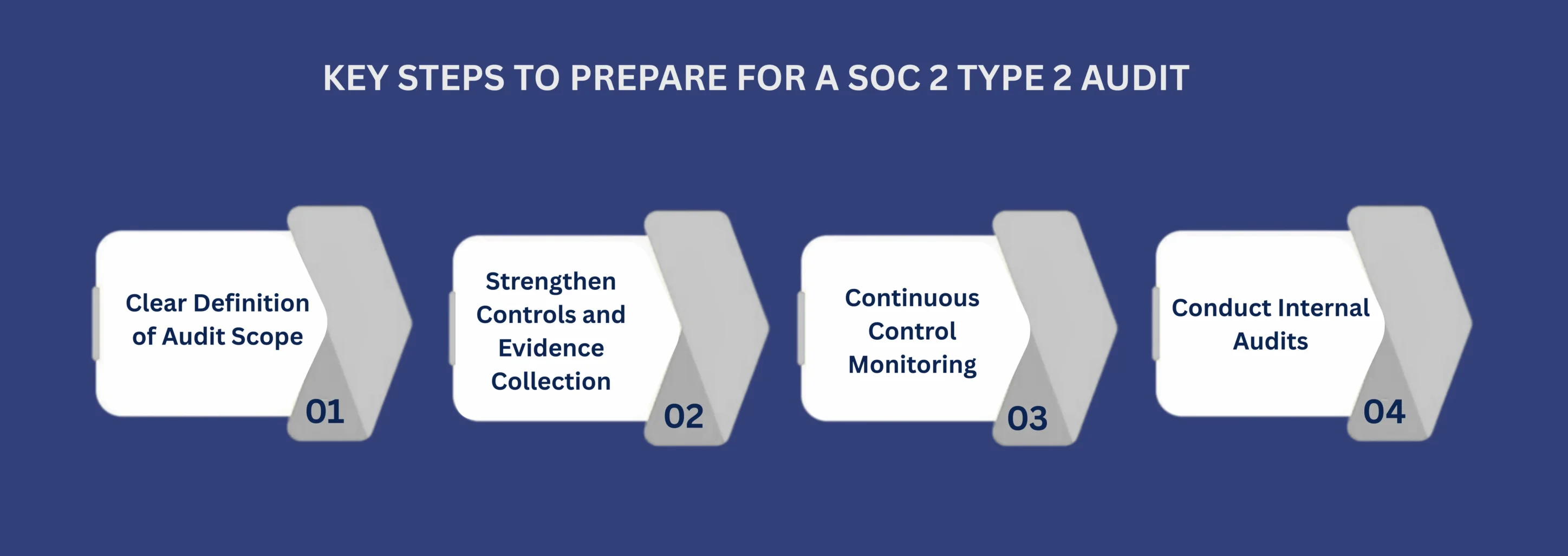
- ✓Stage 1: Scope Definition and System Description
- ✓Stage 2: Audit Program Determination and Control Mapping
- ✓Stage 3: Evidence Collection, Control Testing, and Nonconformity Review
- ✓Stage 4: Attestation Report Issuance and Certification Decision
Requirements for SOC 2 Certification in Hyderabad
SOC 2 Certification in Hyderabad requires organizations to satisfy a defined set of documentation, technical, operational, and governance requirements before and during the audit engagement. These requirements are not prescriptive checklists but outcomes-based standards: organizations must demonstrate that their controls achieve the objectives defined by the applicable Trust Services Criteria. The specific requirements vary by organization type, system scope, and which criteria categories apply to the engagement.
Comprehensive, current, and board-approved information security policies are a foundational requirement for SOC 2 Certification. The policy framework must address all control domains relevant to the applicable Trust Services Criteria — including information security governance, access management, data classification, encryption standards, incident response, business continuity, vendor management, and change management. Policies must be formally approved by management, communicated to all relevant personnel, and reviewed at least annually. Auditors examine policy documents as primary evidence that the organization’s control environment is formally defined and governed at the management level.
Beyond high-level policies, SOC 2 compliance requires documented procedures that translate policy objectives into specific operational instructions. Procedures must be sufficiently detailed that personnel can follow them consistently and that auditors can verify their execution through documentary evidence. For Hyderabad organizations with distributed teams or offshore development centers, procedure documentation must address how controls are enforced consistently across geographically separated work locations — a particularly relevant consideration for GCCs with personnel in both Hyderabad and parent-company locations.
Technical control requirements for SOC 2 audit engagements in Hyderabad span the full technology stack of the in-scope system. Access management controls must implement the principle of least privilege, with role-based access controls (RBAC) enforced through identity and access management (IAM) systems. Multi-factor authentication (MFA) must be enabled for all privileged access and remote access connections. Encryption must be applied to data in transit using TLS 1.2 or higher, and data at rest using AES-256 or equivalent standards. Comprehensive audit logging must be configured across all system components, with log integrity protections and defined retention periods.
Vulnerability management programs must include formal processes for identifying, prioritizing, and remediating security vulnerabilities within defined timeframes based on severity. Organizations must conduct penetration testing at least annually and maintain documented remediation records. Network security architecture must incorporate segmentation between production and non-production environments, with firewalls, intrusion detection/prevention systems, and security information and event management (SIEM) tools deployed and actively monitored. These technical requirements represent the operational foundation of SOC 2 compliance for Hyderabad IT companies operating cloud-based or on-premises technology platforms.
Organizational governance requirements for SOC 2 Certification include formal risk assessment processes, defined security roles and responsibilities, security awareness training programs, and board-level or senior management oversight of information security. The Control Environment — assessed under CC1 in the Common Criteria — evaluates the organization’s commitment to integrity and ethical values, the board’s independence from management, organizational structure, and accountability mechanisms. For Hyderabad companies, demonstrating robust governance structures is particularly important when pursuing SOC 2 Certification for clients in highly regulated industries.
- ✓Formally documented and board-approved information security policy framework covering all applicable Trust Services Criteria domains
- ✓Implemented access management controls with least-privilege enforcement, RBAC, and MFA for privileged and remote access
- ✓Data encryption standards: TLS 1.2+ for data in transit and AES-256 for data at rest across all in-scope systems
- ✓Comprehensive audit logging with integrity protection and defined retention periods across all system components
- ✓Formal vulnerability management program with documented scan results, risk ratings, and remediation records
- ✓Annual penetration testing by qualified personnel with documented findings and remediation tracking
- ✓Network segmentation between production and non-production environments with firewall and IDS/IPS controls
- ✓Incident response plan with defined roles, escalation procedures, notification timelines, and post-incident review requirements
- ✓Business continuity and disaster recovery plans with documented recovery time objectives (RTOs) and recovery point objectives (RPOs)
- ✓Vendor management program with security assessments for third-party service providers handling in-scope data
- ✓Security awareness training program with completion tracking and annual refresher requirements for all personnel
- ✓Formal change management process with documented approvals, testing requirements, and rollback procedures
- ✓Documentation and Policy Requirements
- ✓Technical and Infrastructure Requirements
- ✓Governance and Organizational Requirements
Benefits of SOC 2 Certification for Hyderabad Organizations
SOC 2 Certification delivers measurable operational, commercial, and strategic value for Hyderabad-based technology organizations. The benefits extend beyond the attestation report itself — the process of building and maintaining SOC 2-compliant controls fundamentally strengthens an organization’s information security posture, operational resilience, and governance maturity. Organizations that have achieved SOC 2 attestation in Hyderabad consistently report improved client acquisition rates, reduced due diligence cycles, and stronger competitive positioning in international markets.
SOC 2 Certification directly enables Hyderabad IT companies to compete for enterprise contracts in the U.S., UK, EU, and other markets where SOC 2 attestation is a standard procurement requirement. Enterprise technology buyers — particularly those in financial services, healthcare, insurance, and government sectors — require SOC 2 reports as a minimum security baseline before approving vendors for access to their systems or data. Without a current SOC 2 report, Hyderabad companies are systematically excluded from these procurement processes regardless of their technical capabilities or service quality.
The commercial value of SOC 2 Certification for Hyderabad companies is directly quantifiable in terms of contract values and market segments unlocked. SaaS providers with SOC 2 Type 2 reports can engage enterprise accounts with annual contract values measured in hundreds of thousands to millions of dollars — deals that are simply inaccessible to non-certified competitors. For managed security service providers, cloud hosting companies, and data analytics firms in Hyderabad, SOC 2 Certification is the commercial gateway to the enterprise tier of the global technology market.
The process of achieving SOC 2 compliance in Hyderabad requires organizations to systematically identify, assess, and address control gaps across their information security environment. This structured approach to security control implementation produces tangible reductions in security incident rates, data breach exposure, and operational disruption risk. Organizations that have completed SOC 2 audits report improved visibility into their security posture through enhanced logging, monitoring, and alerting — capabilities that directly support faster detection and containment of security events.
SOC 2 Certification creates a documented control framework that overlaps substantially with other compliance requirements relevant to Hyderabad organizations. The Trust Services Criteria share significant common ground with ISO 27001 control requirements, GDPR technical and organizational measures, HIPAA Security Rule safeguards, and RBI cybersecurity guidelines. Organizations that have achieved SOC 2 compliance can leverage their existing control documentation and evidence libraries to accelerate subsequent compliance efforts, reducing the time and cost of pursuing multiple frameworks simultaneously.
- ✓Unlocks enterprise market segments in the U.S., UK, EU, and regulated international markets requiring SOC 2 attestation
- ✓Reduces vendor onboarding timelines by eliminating lengthy security questionnaire cycles through pre-validated attestation
- ✓Strengthens organizational security posture through systematic control implementation across all Trust Services Criteria domains
- ✓Supports compliance with India’s Digital Personal Data Protection Act (DPDPA) obligations for data fiduciaries
- ✓Enables alignment with ISO 27001, GDPR, HIPAA, and RBI cybersecurity guidelines through overlapping control frameworks
- ✓Demonstrates corporate governance maturity to investors, board members, and regulatory bodies
- ✓Provides competitive differentiation in contract negotiations where security assurance is a procurement criterion
- ✓Establishes continuous monitoring and audit evidence collection practices that reduce annual recertification effort
- ✓Reduces cyber insurance premiums through documented security control evidence provided to underwriters
- ✓Supports M&A due diligence processes by providing independently verified security control documentation
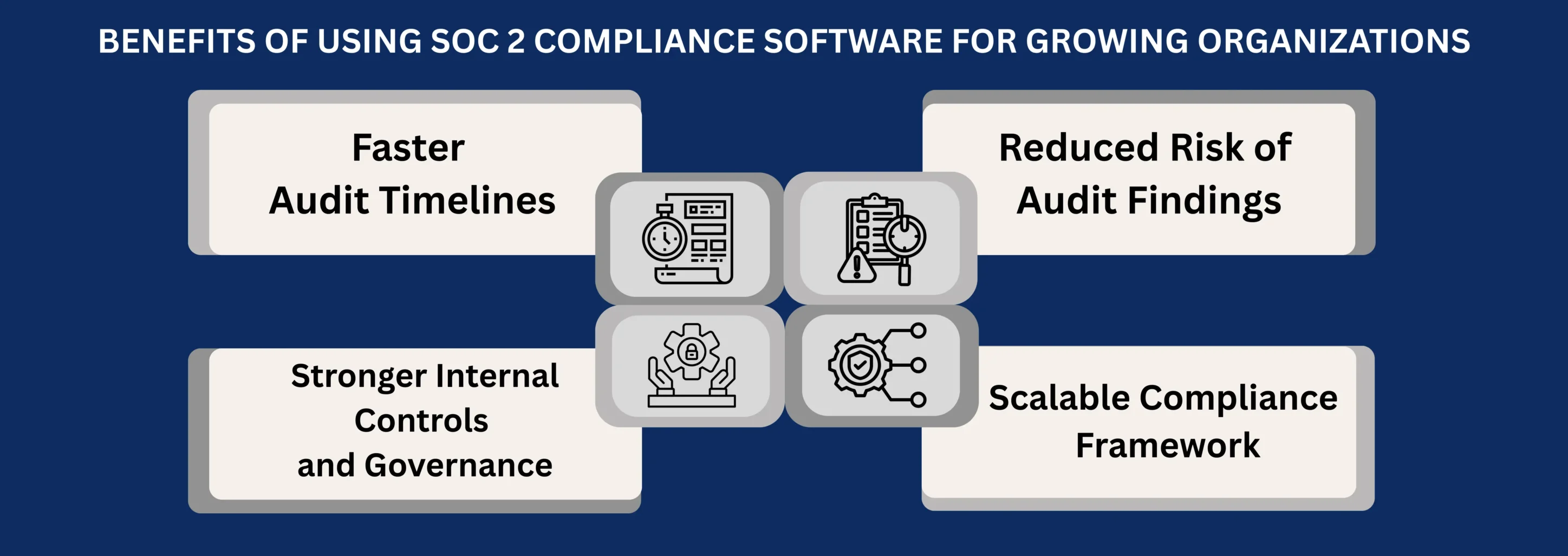
- ✓Market Access and Enterprise Client Acquisition
- ✓Reduced Security Incidents and Operational Risk
- ✓Regulatory Alignment and Multi-Framework Efficiency
SOC 2 Certification Cost in Hyderabad
SOC 2 Certification cost in Hyderabad varies based on the specific characteristics of the organization and the engagement. Unlike prescriptive compliance frameworks with standardized assessment fees, SOC 2 audit costs are determined by multiple factors — including organizational size and complexity, the number of applicable Trust Services Criteria, the scope of in-scope systems, the type of engagement (Type 1 vs. Type 2), and the review period duration. CertPro applies fixed pricing for defined SOC 2 audit engagements, providing cost certainty for Hyderabad organizations managing compliance budgets.
Key Factors Influencing SOC 2 Audit Cost
Organizational complexity is the primary driver of SOC 2 audit cost. Larger organizations with more complex technology environments — multiple cloud platforms, microservices architectures, distributed development teams, and extensive vendor ecosystems — require broader audit scope and more extensive evidence collection, increasing the audit effort and associated cost. Conversely, focused SaaS startups with well-defined system boundaries and mature documentation may achieve SOC 2 Certification in Hyderabad at substantially lower cost through appropriately scoped engagements.
The number of Trust Services Criteria included in scope directly affects audit cost. Security-only engagements covering only the Common Criteria represent the minimum scope option. Each additional category — Availability, Processing Integrity, Confidentiality, Privacy — adds criteria points, audit procedures, and evidence requirements, increasing the overall engagement cost. Hyderabad organizations should select applicable criteria based on their actual service commitments and client requirements rather than defaulting to maximum scope, as unnecessary criteria inclusions increase both audit cost and ongoing compliance maintenance burden.
| Cost Factor | Lower Cost Scenario | Higher Cost Scenario |
|---|---|---|
| Organization Size | Small SaaS startup (50–100 employees) | Large enterprise or GCC (500+ employees) |
| Criteria Scope | Security (Common Criteria) only | All five Trust Services Criteria included |
| System Complexity | Single cloud platform, limited integrations | Multi-cloud, microservices, complex integrations |
| Report Type | SOC 2 Type 1 (point-in-time) | SOC 2 Type 2 (12-month review period) |
| Documentation Maturity | Existing ISO 27001 or mature policy framework | New organization with limited existing documentation |
Total Cost of Ownership: Audit Fees and Ongoing Compliance
The total cost of SOC 2 compliance that Hyderabad organizations must budget for includes not only the direct audit fee paid to the Licensed CPA Firm, but also internal personnel time for evidence collection and documentation, technology investments for control implementation (such as SIEM, endpoint detection, and privileged access management tools), and the ongoing operational cost of maintaining controls between annual audit cycles. Organizations that invest in automation tools for continuous control monitoring and evidence collection typically reduce their annual recertification costs significantly compared to manual evidence collection approaches.
SOC 2 Certification for Hyderabad IT Companies: Sector-Specific Considerations
Hyderabad’s technology sector encompasses a diverse range of business models and service types, each with distinct SOC 2 audit considerations. The city’s IT ecosystem includes pure-play SaaS providers, cloud infrastructure and hosting companies, IT services and outsourcing firms, healthcare IT platforms, fintech companies, and GCCs spanning virtually every industry vertical. SOC 2 Certification that Hyderabad IT companies pursue must be appropriately scoped and structured to reflect the specific data types, service commitments, and client obligations relevant to each organization’s business model.
SaaS Providers and Cloud Platform Companies
SaaS providers based in Hyderabad represent the largest single category of organizations pursuing SOC 2 Certification in Hyderabad. These companies deliver software applications over the internet to business customers who depend on the SaaS platform’s availability, security, and data integrity for their own operations. SOC 2 audit engagements for SaaS providers typically include the Security and Availability criteria as a minimum, with many also including Confidentiality for platforms handling sensitive business data. The audit focuses on the production environment supporting the SaaS application, including cloud infrastructure configuration, application security controls, and data management practices.
For Hyderabad SaaS companies serving enterprise clients in the U.S. and Europe, SOC 2 Type 2 reports are the de facto market requirement. Enterprise security teams specifically evaluate the Type 2 report’s description of tests and results to identify any control exceptions and assess their significance. SaaS companies with clean Type 2 opinions — no exceptions noted — achieve the strongest competitive positioning. Companies with qualified opinions may need to provide additional management responses and remediation documentation to satisfy enterprise security reviewers.
IT Outsourcing and Managed Service Providers
IT services and outsourcing companies in Hyderabad — including application development firms, managed security service providers, business process outsourcing organizations, and IT infrastructure management companies — face SOC 2 audit requirements that reflect their role as third-party processors of client data and operators of client systems. For these organizations, the SOC 2 audit scope must carefully delineate the boundary between services performed by the Hyderabad entity and controls that remain the responsibility of client organizations (referred to as complementary user entity controls, or CUECs) in the final report.
Healthcare IT and Life Sciences Technology Platforms
Hyderabad has a significant and growing healthcare IT sector, including companies providing electronic health record (EHR) systems, clinical data management platforms, pharmaceutical research data services, and telemedicine infrastructure. Organizations in this sector handling U.S. patient health information are subject to HIPAA requirements in addition to SOC 2 obligations. SOC 2 audit engagements in Hyderabad for healthcare IT companies typically include the Privacy criteria given the sensitivity of personal health information. The resulting SOC 2 attestation report may be used alongside HIPAA compliance documentation to satisfy business associate agreement (BAA) requirements from U.S. healthcare clients.
CertPro’s SOC 2 Audit Services in Hyderabad
CertPro is a Licensed CPA Firm conducting SOC 2 audits in Hyderabad under AICPA attestation standards. As a qualified attestation firm, CertPro issues SOC 2 reports that meet the professional standards required by enterprise clients, financial institutions, and regulatory bodies that accept SOC 2 attestations as third-party assurance. CertPro’s audit engagements are executed by certified information security professionals and licensed CPAs with direct experience in the technology sectors prevalent in Hyderabad’s IT ecosystem.
Why CertPro for SOC 2 Audit Hyderabad
CertPro’s audit methodology is structured around the complete AICPA attestation framework, ensuring that every SOC 2 report issued meets the technical and professional standards required for acceptance by enterprise procurement teams worldwide. The audit team’s deep familiarity with Hyderabad’s technology landscape — including the GCC operating model, HITEC City’s infrastructure environment, and the compliance requirements of Hyderabad’s major industry verticals — enables efficient scoping and precise evidence evaluation. CertPro has conducted SOC 2 attestation engagements in Hyderabad across SaaS, fintech, IT services, healthcare IT, and cloud infrastructure sectors.
Fixed pricing for defined SOC 2 audit engagements provides Hyderabad organizations with budget certainty — a critical consideration for startups and growth-stage companies managing compliance expenditures alongside product development investments. CertPro’s pricing structure reflects the actual scope of the engagement, with clearly defined deliverables for each audit stage. Organizations receive a fully compliant SOC 2 attestation report suitable for distribution to clients and prospective customers upon successful completion of the audit process.
CertPro’s Audit Methodology and Quality Standards
CertPro’s SOC 2 audit methodology adheres to SSAE 18 attestation standards and AICPA professional ethics requirements. Every audit engagement is subject to internal quality review procedures that verify the completeness of evidence evaluation, the accuracy of the System Description assessment, and the consistency of the auditor’s opinion with the documented test results. CertPro maintains peer review compliance as required for licensed CPA firms issuing attest reports, ensuring that the audit quality standards applied in Hyderabad engagements meet the same professional benchmarks as those applied by major U.S. audit firms.
For organizations with existing compliance frameworks — such as ISO 27001 certified Hyderabad companies — CertPro’s audit approach is structured to recognize and leverage existing evidence libraries, reducing duplication of effort while ensuring full coverage of SOC 2-specific requirements. The audit team identifies areas where ISO 27001 documentation directly satisfies SOC 2 criteria and focuses additional evidence collection on gaps specific to the Trust Services Criteria not covered by existing frameworks. This integrated approach makes SOC 2 audit engagements in Hyderabad more efficient for organizations with established security management systems.
Service Delivery Model for Hyderabad Organizations
CertPro delivers SOC 2 audit services to Hyderabad organizations through a combination of on-site and remote audit procedures. On-site procedures — including observation of physical security controls, interviews with key personnel, and inspection of data center environments — are conducted at the organization’s Hyderabad facilities. Remote audit procedures leverage secure document sharing platforms and virtual interview sessions to facilitate evidence collection and review without requiring unnecessary travel. This hybrid delivery model ensures thorough audit coverage while respecting organizational productivity constraints.
SOC 2 Compliance in Hyderabad’s Regulatory and Business Context
Hyderabad operates within a complex and evolving regulatory environment that increasingly intersects with global data security and privacy frameworks. Organizations pursuing SOC 2 compliance in Hyderabad must navigate not only AICPA Trust Services Criteria requirements but also applicable Indian regulations, international data protection laws affecting their client base, and industry-specific security standards. Understanding these regulatory intersections allows Hyderabad companies to maximize the compliance value of SOC 2 attestation across multiple frameworks simultaneously.
India’s Digital Personal Data Protection Act and SOC 2 Alignment
India’s Digital Personal Data Protection Act (DPDPA) 2023 establishes a comprehensive data protection framework for personal data processed within India and for personal data of Indian residents processed internationally. For Hyderabad organizations classified as data fiduciaries under the DPDPA, SOC 2 Privacy criteria controls provide a documented evidence base for satisfying key DPDPA obligations — including purpose limitation, data minimization, accuracy, storage limitation, and security safeguards. While SOC 2 attestation does not constitute legal compliance with the DPDPA, the control environment documented through SOC 2 directly supports regulatory defense in the event of data protection investigations.
The DPDPA’s security safeguard requirements for data fiduciaries align closely with the SOC 2 Security criteria, particularly the Common Criteria addressing access management, encryption, monitoring, and incident response. Hyderabad organizations that have achieved SOC 2 Certification can demonstrate to the Data Protection Board of India that they have implemented independently audited security controls — a position significantly stronger than self-assessed compliance declarations. This regulatory benefit adds substantial value to the SOC 2 investment for Hyderabad companies handling large volumes of Indian personal data.
GDPR and International Privacy Requirements
Hyderabad organizations processing personal data of European Union residents are subject to GDPR data processor obligations, including requirements to implement appropriate technical and organizational security measures and to make information available to data controllers demonstrating compliance. SOC 2 attestation that Hyderabad organizations provide to EU-based data controller clients serves as documented evidence of technical and organizational measures under Article 32 of the GDPR. Many GDPR-compliant data processing agreements reference SOC 2 reports as acceptable security assurance documentation, making SOC 2 a practical component of GDPR third-party due diligence programs.
FAQ
▶
What is SOC 2 certification and why does it matter for Hyderabad companies?
▶
What is the difference between SOC 2 Type 1 and SOC 2 Type 2?
▶
How long does a SOC 2 audit take for Hyderabad organizations?
▶
Which Trust Services Criteria should Hyderabad organizations include in their SOC 2 scope?
▶
Can a Hyderabad company achieve SOC 2 certification if it uses AWS, Azure, or Google Cloud?
▶
What is the relationship between ISO 27001 and SOC 2 for Hyderabad companies?
▶
Does SOC 2 certification guarantee that a Hyderabad organization will not experience a data breach?
▶
How frequently must SOC 2 certification be renewed for Hyderabad organizations?

SOC 1 VS SOC 2: WHICH REPORT YOUR CUSTOMERS ACTUALLY ASK FOR
If you sell SaaS or provide outsourced services, you have likely been asked for a SOC report. However, the follow-up question is rarely easy to answer…
SOC 2 Certified: What Does It Mean for Your Business
For companies that handle sensitive data or run cloud-based services, the question “Can you provide your SOC 2 report?” carries enormous weight. Yet, …

Secure Email Platform Exclaimer Renews ISO, SOC 2
Excerpt from The Manila Times Article, Published on February 26, 2026 Secure email solutions provider Exclaimer has renewed its ISO and SOC 2 certific…
Get In Touch
have a question? let us get back to you.