
SOC 2 Certification in Los Angeles
CertPro is a Licensed CPA Firm delivering SOC 2 Certification in Los Angeles under AICPA Trust Services Criteria. Our SOC 2 attestation engagements serve organizations operating cloud, SaaS, and data-intensive service environments throughout the Los Angeles region. Engagements cover all five Trust Services Criteria categories: Security, Availability, Confidentiality, Processing Integrity, and Privacy.
OUR CLIENTS









What Is SOC 2 Certification?
SOC 2 Certification in Los Angeles refers to a formal attestation engagement conducted by a Licensed CPA Firm under standards established by the American Institute of Certified Public Accountants (AICPA). The certification evaluates whether a service organization’s information systems and controls conform to the Trust Services Criteria (TSC) across five defined categories: Security, Availability, Processing Integrity, Confidentiality, and Privacy.
SOC 2 is not a product certification or a regulatory mandate. It is an independent auditor’s attestation confirming that a service organization has designed — and, in the case of Type 2, operated — effective controls over a defined period. For Los Angeles-based organizations, SOC 2 Certification has become an essential credential for competing in enterprise technology markets.
SOC 2 compliance is governed by AT-C Section 205 and the AICPA’s SOC 2 Guide, which together define engagement scope, auditor responsibilities, reporting format, and applicable criteria. A SOC 2 report is issued by a Certified Public Accountant and is entirely distinct from self-attestation, vendor questionnaire responses, or internal policy documents.
The report provides third-party assurance that an organization’s controls have been independently tested and evaluated against standardized, publicly documented criteria — making SOC2 Certification a trusted signal for enterprise customers and procurement teams alike.
SOC 2 Defined: Attestation vs. Certification
SOC 2 attestation refers to the formal examination or review performed by a Licensed CPA Firm, resulting in an auditor’s opinion on the design and operating effectiveness of an organization’s controls. SOC 2 attestation differs from certification in that no certifying body issues a pass/fail certificate in the traditional sense. Instead, a Licensed CPA issues a written opinion as part of a restricted-use report.
The SOC 2 report itself constitutes the attestation artifact that organizations share with customers, enterprise procurement teams, and regulators as evidence of conformance. This distinction is important for Los Angeles organizations communicating the value of their SOC 2 audit results to stakeholders unfamiliar with AICPA attestation standards.
SOC 2 compliance describes the ongoing organizational state of maintaining controls that satisfy Trust Services Criteria requirements. Compliance means that controls are documented, implemented, monitored, and tested on a continuous basis.
SOC 2 compliance is not a one-time event. Organizations must sustain their control environment between audit cycles and undergo annual or periodic reassessment to maintain current attestation status and meet enterprise customer expectations. For Los Angeles-based organizations managing sensitive customer data, SOC 2 compliance represents a foundational operational security posture.
The Five Trust Services Criteria Categories
The AICPA Trust Services Criteria define five categories against which SOC 2 engagements are scoped. Security (CC series) is the only mandatory category; it addresses logical and physical access controls, risk assessment, change management, and incident response. Availability addresses system uptime, performance monitoring, and disaster recovery capabilities. Processing Integrity covers whether systems process data completely, accurately, and in a timely manner.
Confidentiality addresses how an organization protects information designated as confidential. Privacy covers the collection, use, retention, disclosure, and disposal of personal information in conformance with applicable privacy frameworks — including the California Consumer Privacy Act (CCPA) for Los Angeles-based entities pursuing SOC 2 Certification in Los Angeles with Privacy in scope.
- ✓Security (CC series) — Mandatory: Logical access, physical access, risk management, change management, incident response
- ✓Availability — System uptime, performance monitoring, backup and disaster recovery
- ✓Processing Integrity — Completeness, accuracy, timeliness, and authorization of system processing
- ✓Confidentiality — Identification, protection, and disposal of confidential information
- ✓Privacy — Collection, use, retention, disclosure, and disposal of personal information in line with CCPA and applicable frameworks
Who Requires SOC 2 in Los Angeles
SOC 2 Certification in Los Angeles is most commonly required by cloud service providers, SaaS platforms, managed service providers (MSPs), healthcare technology firms, financial technology organizations, data analytics companies, and any organization that stores, processes, or transmits customer data on behalf of another entity.
Enterprise customers in regulated industries routinely include SOC 2 report requirements in vendor contracts and procurement questionnaires. In Los Angeles specifically, the intersection of entertainment technology, fintech, healthcare IT, and defense contracting creates a broad base of organizations for which SOC 2 attestation has become a commercial prerequisite rather than a discretionary investment.

SOC 2 Type 1 vs. SOC 2 Type 2 in Los Angeles
SOC 2 engagements are structured as either Type 1 or Type 2 assessments, and understanding the distinction is essential for Los Angeles organizations planning their SOC 2 audit. The choice between Type 1 and Type 2 is determined by the scope of the auditor’s opinion, the period under review, and the requirements of the intended report recipients.
Both report types are issued by a Licensed CPA Firm under AICPA standards, and both result in a formal attestation document. However, they differ significantly in depth, duration, and the level of assurance they provide to enterprise customers evaluating vendor security posture.
SOC 2 Type 1: Point-in-Time Design Evaluation
A SOC 2 Type 1 report evaluates whether an organization’s controls are suitably designed to meet the applicable Trust Services Criteria as of a specific date. The auditor’s opinion in a Type 1 engagement is limited to design suitability — it does not assess whether controls have functioned effectively over time. Type 1 audits are scoped to a single point in time and typically require less extensive evidence than Type 2 engagements.
For Los Angeles organizations that have recently implemented formal controls and need to demonstrate design conformance to new customers, a SOC 2 Type 1 audit in Los Angeles provides an initial attestation artifact. This report can be shared with prospects while an operating period is accumulated toward a full SOC 2 Type 2 report.
SOC 2 Type 1 reports are useful for organizations entering new enterprise markets, responding to urgent vendor security questionnaires, or establishing a baseline attestation ahead of a full Type 2 engagement. Many Los Angeles-based SaaS companies and managed service providers use Type 1 attestation as an interim credential while building toward a complete SOC 2 audit.
Type 1 does not, however, satisfy the requirements of customers who specifically need evidence of operating effectiveness over time. That higher standard of assurance is the domain of the SOC 2 Type 2 report.
SOC 2 Type 2: Operating Effectiveness Over a Review Period
A SOC 2 Type 2 audit in Los Angeles evaluates both the design and operating effectiveness of an organization’s controls over a defined review period, typically six to twelve months. The auditor tests whether controls were consistently applied throughout the period, examining evidence such as access logs, change management tickets, incident records, vendor assessments, and backup test results.
The resulting Type 2 report carries substantially greater assurance weight than a Type 1 report. It is the standard format requested by enterprise customers, regulated-industry procurement teams, and financial institutions operating in Los Angeles.
SOC 2 Type 2 reports include a description of the service organization’s system, the auditor’s opinion on control design and operating effectiveness, a description of tests performed, and any exceptions noted — providing report recipients with complete transparency about control testing outcomes.
For Los Angeles organizations serving healthcare, financial services, entertainment, or government clients, the Type 2 report is the definitive SOC 2 attestation artifact. Annual renewal of a SOC 2 Type 2 audit in Los Angeles maintains continuous attestation status, which enterprise customers frequently require as an ongoing vendor qualification condition.
Choosing Between Type 1 and Type 2
| Dimension | SOC 2 Type 1 | SOC 2 Type 2 |
|---|---|---|
| Evaluation Scope | Design suitability as of a point in time | Design and operating effectiveness over a defined period |
| Review Period | Single date (point-in-time) | Minimum 6 months, typically 12 months |
| Auditor Opinion | Controls are suitably designed | Controls are suitably designed and operating effectively |
| Evidence Volume | Lower — design documentation | Higher — operating evidence over the full period |
| Enterprise Acceptance | Interim or initial credential | Standard enterprise and regulated-industry requirement |
SOC 2 Certification Requirements
SOC 2 Certification requirements are defined by the AICPA Trust Services Criteria and the scope of the engagement agreed upon between the service organization and the Licensed CPA Firm. Unlike prescriptive frameworks such as PCI DSS, SOC 2 does not mandate specific controls. Instead, it requires that an organization demonstrate its controls are designed and operating effectively to meet the applicable criteria.
This principles-based approach means that control design is contextual. It must be tailored to the organization’s system description, service commitments, and contractual obligations — making SOC 2 compliance a genuinely organization-specific exercise rather than a checklist exercise.
SOC 2 documentation requirements encompass a formal system description that accurately depicts the service organization’s infrastructure, software, people, procedures, and data. The system description must cover the boundaries of the system, the applicable Trust Services Criteria, and the controls in place to meet each criterion.
Documentation also includes information security policies, access control procedures, change management records, business continuity and disaster recovery plans, vendor management documentation, and incident response procedures. For Los Angeles organizations, documentation must also address obligations under the California Consumer Privacy Act (CCPA) where the Privacy TSC category is included in the SOC 2 audit scope.
The auditor uses the system description as the primary reference document during fieldwork. Inaccurate, incomplete, or overly broad system descriptions are among the most common causes of qualification in SOC 2 reports. Organizations preparing for a SOC 2 audit must ensure their system description reflects actual operations — not aspirational states — and that all controls referenced are verifiably implemented and traceable to evidence.
Effective documentation management is a continuous operational discipline, not a pre-audit preparation activity. Organizations that treat it as such consistently produce cleaner SOC 2 compliance outcomes with fewer exceptions.
Technical control requirements for SOC 2 compliance span logical access management, network security, encryption, vulnerability management, and monitoring. Logical access controls must demonstrate role-based access assignment, periodic access reviews, multi-factor authentication for critical systems, and prompt deprovisioning of terminated user accounts. Network security controls must address perimeter protection, intrusion detection, and network segmentation.
Encryption requirements apply to data at rest and in transit, with key management procedures documented and tested. Vulnerability management programs must include scheduled scanning, patch management timelines, and remediation tracking — all of which generate the evidence population an auditor will sample during a SOC 2 audit engagement.
Operational controls address the human and procedural dimensions of SOC 2 compliance. These include background screening for personnel with access to sensitive systems, security awareness training programs, vendor and subprocessor risk assessments, change management approval workflows, and incident detection and response procedures.
For Los Angeles organizations operating in cloud environments, operational controls must also address shared responsibility boundaries with cloud infrastructure providers such as AWS, Google Cloud, or Microsoft Azure. This includes maintaining documented evidence of each service provider’s own security posture within the SOC 2 audit scope.
SOC 2 evidence requirements are the operational artifacts that demonstrate controls were in place and functioning during the audit period. Evidence types include system-generated logs, configuration screenshots, policy acknowledgment records, access review completion records, change management tickets, security training completion certificates, penetration test reports, disaster recovery test results, and vendor assessment documentation.
For a SOC 2 Type 2 audit, evidence must span the entire review period — not just the point of audit fieldwork. Auditors apply sampling methodologies to test evidence across the period and assess whether control exceptions exist. Organizations that maintain ongoing evidence collection practices are significantly better positioned for efficient SOC 2 audit execution.
- ✓Documented and approved information security policies and procedures
- ✓Access control logs demonstrating role-based access and periodic review
- ✓Multi-factor authentication configuration evidence for critical systems
- ✓Vulnerability scan reports and patch management records
- ✓Incident log and response documentation covering the audit period
- ✓Change management approval and implementation records
- ✓Vendor risk assessment records for key subprocessors
- ✓Business continuity and disaster recovery test results
- ✓Security awareness training completion records for all personnel
- ✓Encryption configuration documentation for data at rest and in transit

- ✓Documentation Requirements
- ✓Technical and Operational Control Requirements
- ✓Evidence Requirements for SOC 2 Audit
The SOC 2 Audit Process
The SOC 2 audit process is a structured sequence of evaluation activities conducted by a Licensed CPA Firm in accordance with AICPA attestation standards. Each stage has defined inputs, outputs, and auditor responsibilities. Understanding the full process enables Los Angeles organizations to coordinate internal resources effectively, manage evidence collection timelines, and engage constructively with the audit team throughout the engagement.
The following stages describe the complete SOC 2 audit lifecycle as executed by CertPro for SOC 2 Certification in Los Angeles — from initial scope definition through annual recertification.
Scope definition is the initial stage of every SOC 2 audit engagement. The Licensed CPA Firm and the service organization agree on the boundaries of the system under audit, the applicable Trust Services Criteria categories, the review period (for Type 2 engagements), and the intended users of the report. Scope definition determines which infrastructure components, applications, data flows, and organizational units fall within the audit boundary.
For Los Angeles organizations with multi-tenant cloud architectures, scope definition must clearly delineate which services, environments, and geographies are included and excluded from the system description used in the SOC 2 audit.
The scope definition stage produces a formal engagement letter documenting the agreed scope, criteria, period, and responsibilities of both parties. Overly narrow scoping can undermine the report’s commercial utility if key services are excluded. Conversely, overly broad scoping can introduce unnecessary audit complexity and cost.
CertPro’s SOC 2 audit scoping process for Los Angeles organizations incorporates analysis of service commitments, contractual obligations, and customer reporting requirements to arrive at a scope that is both defensible and commercially relevant.
Following scope definition, the Licensed CPA Firm develops the audit program — the structured set of audit procedures, test methodologies, sampling parameters, and evidence requirements that will govern fieldwork. The audit program is derived from the applicable Trust Services Criteria and calibrated to the organization’s specific control environment, system complexity, and identified risk areas.
For Los Angeles organizations with large user populations, complex cloud architectures, or significant subprocessor reliance, the SOC 2 audit program will reflect corresponding depth in access control testing, vendor assessment review, and infrastructure configuration verification.
Fieldwork is the stage at which the SOC 2 audit’s substantive testing occurs. Auditors execute the audit program by requesting, reviewing, and evaluating evidence against each applicable Trust Services Criterion. Control testing methodologies include inquiry (interviews with personnel), observation (direct observation of processes and system configurations), inspection (review of documents and records), and re-performance (independent execution of a control to verify its function).
For a SOC 2 Type 2 audit in Los Angeles, testing covers the full review period. Statistical or judgmental sampling is applied to populations of control occurrences such as access reviews, change approvals, and incident records to support the auditor’s opinion.
During fieldwork, the audit team identifies any control deficiencies — instances where a control is absent, improperly designed, or did not operate as intended during the review period. Deficiencies are classified by severity and communicated to management through formal audit findings.
The service organization has the opportunity to respond to findings and provide additional evidence or context before the SOC 2 audit opinion is finalized. The rigor and completeness of fieldwork directly determines the quality and depth of the resulting SOC 2 attestation report.
The nonconformity review stage addresses any control exceptions or deviations identified during fieldwork. The Licensed CPA Firm evaluates whether identified exceptions are isolated incidents or systemic failures, and assesses their potential impact on the overall control environment. Management responses to findings are incorporated into the report, along with the auditor’s independent assessment of each exception’s nature and effect.
The final SOC 2 report includes a description of every test performed and its result — including any exceptions noted — providing report recipients with complete transparency about the control testing outcomes from the SOC 2 audit.
Following the completion of fieldwork and nonconformity review, the Licensed CPA Firm issues a formal auditor’s opinion. The opinion states whether, in the auditor’s judgment, the service organization’s controls were suitably designed (Type 1) or suitably designed and operating effectively (Type 2) to meet the applicable Trust Services Criteria.
The opinion may be unqualified (no material exceptions), qualified (exceptions noted that do not undermine the overall control environment), or adverse (exceptions so significant that the overall control environment cannot be relied upon). The SOC 2 attestation report is then issued as a restricted-use document for distribution to specified parties — completing the formal SOC2 Certification process.
SOC 2 attestation requires annual renewal to maintain current status. Following the issuance of an initial SOC 2 Type 2 report, organizations initiate a new review period immediately, with the next audit covering the subsequent twelve-month cycle. Annual recertification ensures that the control environment remains effective as organizational systems, personnel, and risk profiles evolve.
For Los Angeles organizations that must satisfy enterprise customer requirements on a continuous basis, maintaining an uninterrupted chain of annual SOC 2 Type 2 reports is a critical commercial and operational objective. CertPro structures recertification engagements to minimize disruption to ongoing operations while maintaining full SOC 2 audit rigor.
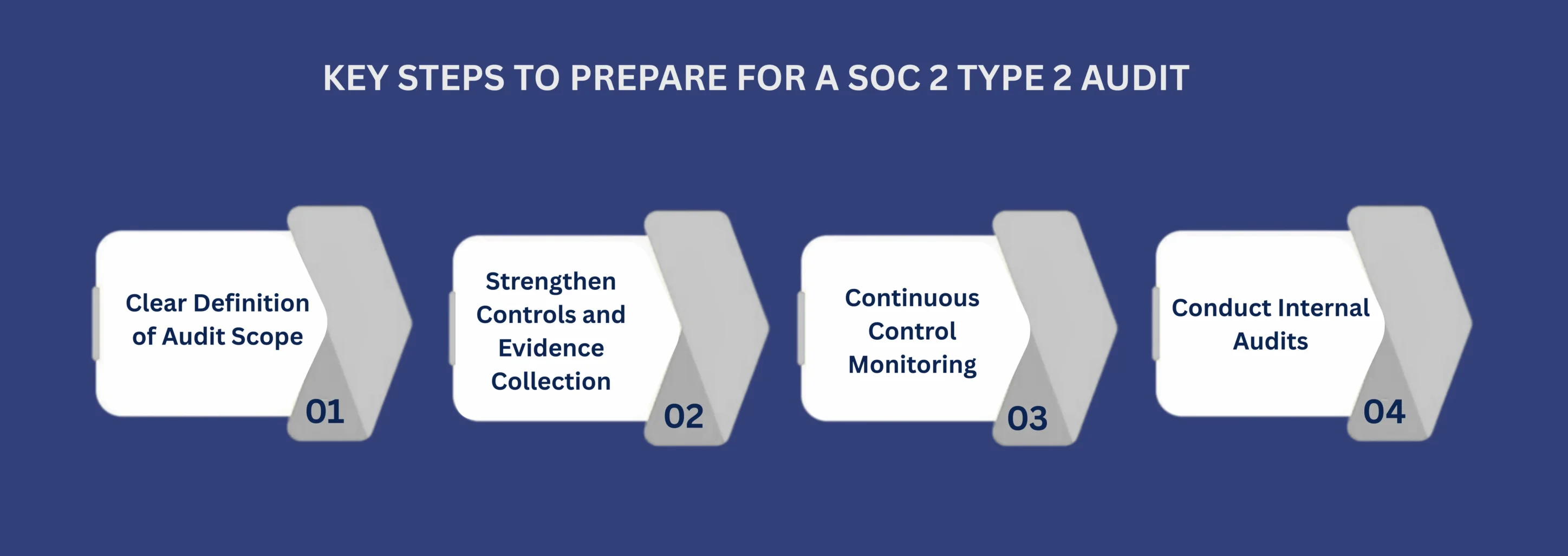
- ✓Stage 1: Scope Definition
- ✓Stage 2: Audit Program Determination
- ✓Stage 3: Fieldwork and Control Testing
- ✓Stage 4: Nonconformity Review and Reporting
- ✓Stage 5: Certification Decision and Attestation Issuance
- ✓Stage 6: Surveillance and Recertification
Benefits of SOC 2 Certification for Los Angeles Businesses
SOC 2 Certification in Los Angeles delivers measurable operational, commercial, and risk management benefits for service organizations. In a competitive technology and financial services market, the SOC 2 report functions as a vendor qualification credential. It enables organizations to pass enterprise procurement reviews, satisfy regulatory due diligence requirements, and differentiate their security posture during sales processes.
The benefits of SOC 2 Certification extend across the organization, affecting sales cycles, operational discipline, risk visibility, and customer relationship management — making it one of the highest-ROI compliance investments available to Los Angeles-based service organizations.
SOC 2 Certification in Los Angeles enables technology companies to access enterprise customer segments that require independent security attestation as a condition of vendor onboarding. Large enterprises, healthcare systems, financial institutions, and government-adjacent contractors in Los Angeles routinely include SOC 2 Type 2 report requirements in their vendor contracts and RFP qualification criteria.
Organizations without a current SOC 2 report are disqualified from these opportunities before the evaluation process begins. SOC2 Certification converts security posture from a narrative into a verifiable, auditor-issued credential that procurement teams can evaluate and accept without conducting independent security assessments of their own.
SOC 2 Certification also shortens enterprise sales cycles by replacing lengthy security questionnaire processes with a structured, standardized report. Rather than completing hundreds of individual vendor questionnaire items, a SOC 2-certified organization can distribute its report to prospects as comprehensive documentation of its security controls.
This reduces the time from initial vendor evaluation to contract execution, accelerates revenue recognition, and reduces the internal resource burden associated with responding to repeated security inquiries from prospective customers — delivering tangible commercial value alongside the assurance benefits of SOC 2 compliance.
The process of achieving and maintaining SOC 2 compliance in Los Angeles drives material improvements in an organization’s internal control environment. The requirement to document, implement, and test controls across the Trust Services Criteria compels organizations to formalize processes that may have previously been informal or inconsistently applied.
Access control reviews, change management approvals, incident response procedures, and vendor risk assessments — all required by SOC 2 — represent operational risk management disciplines that independently reduce the probability and impact of security incidents, data breaches, and system failures.
SOC 2 audit findings, including exceptions and deficiencies, provide organizational leadership with objective insight into control gaps that might not surface through internal review processes. The auditor’s independent perspective and testing methodology frequently identifies control weaknesses that internal teams have normalized or overlooked.
For Los Angeles organizations operating at scale, SOC 2-driven control improvements can reduce cyber insurance premiums, strengthen board-level risk reporting, and improve overall security posture in ways that directly protect both revenue and customer data.
SOC 2 Certification in Los Angeles demonstrates to customers that their sensitive financial, health, or personal data is protected by independently verified controls. In industries where data breaches carry significant regulatory, reputational, and financial consequences, SOC 2 attestation provides customers with documented assurance that their service provider has been evaluated by a Licensed CPA Firm against recognized security criteria.
This assurance is particularly significant in Los Angeles, where high-profile data incidents in the entertainment, healthcare, and financial sectors have elevated customer and regulatory sensitivity to vendor data security practices — making SOC 2 compliance a meaningful trust signal in customer relationships.
- ✓Enables access to enterprise customer segments requiring vendor security attestation
- ✓Shortens sales cycles by replacing security questionnaire processes with a standardized SOC 2 report
- ✓Demonstrates independently verified security controls to customers and partners
- ✓Drives formalization of internal controls and operational risk management disciplines
- ✓Provides auditor-identified insight into control gaps and deficiencies
- ✓Supports cyber insurance underwriting with documented security posture evidence
- ✓Satisfies regulatory and contractual due diligence requirements for vendor onboarding
- ✓Supports board-level risk reporting and governance accountability
- ✓Strengthens competitive differentiation in enterprise procurement evaluations
- ✓Establishes a documented foundation for annual control improvement and recertification
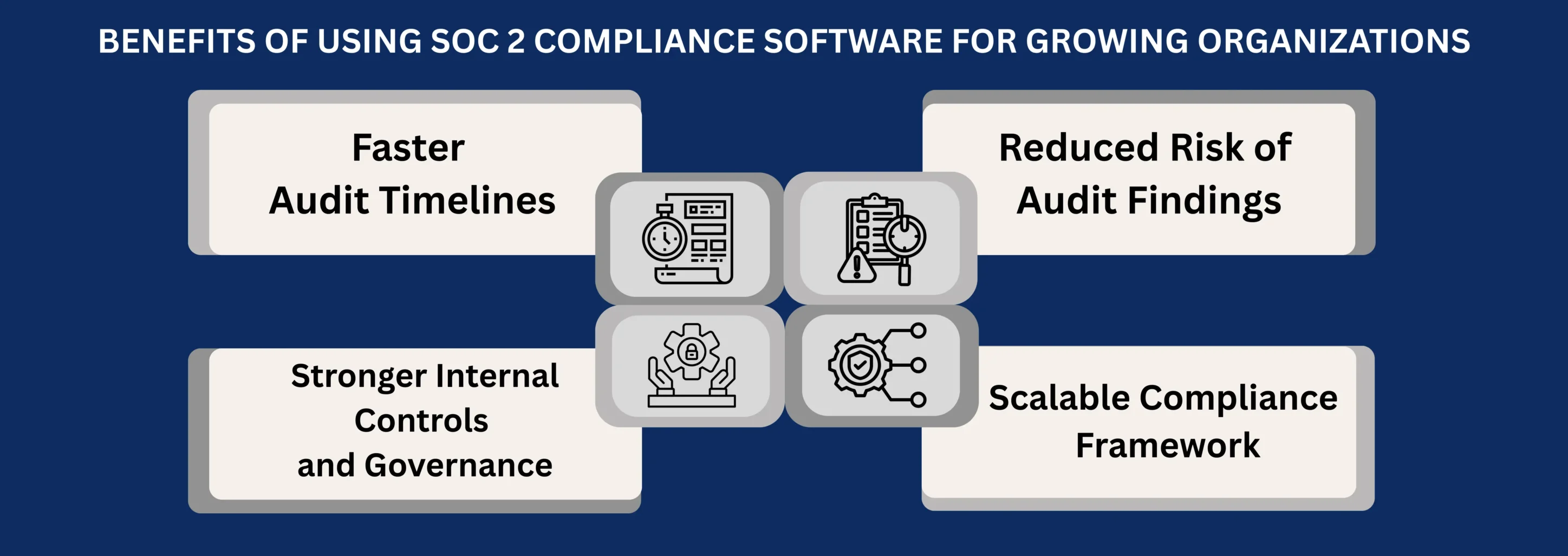
- ✓Commercial and Market Access Benefits
- ✓Operational Risk Management and Internal Control Benefits
- ✓Customer Trust and Data Protection Assurance
Industries Requiring SOC 2 Compliance in Los Angeles
Los Angeles is one of the most economically and industrially diverse metropolitan regions in the United States, hosting major concentrations of technology, financial services, healthcare, entertainment, defense, and logistics organizations. Across these sectors, SOC 2 compliance in Los Angeles has become a standard expectation for any organization that manages, processes, or stores sensitive data on behalf of enterprise customers.
The industries most actively requiring SOC 2 attestation in the Los Angeles market reflect both the city’s economic profile and the sensitivity of the data handled by organizations operating within it. Understanding which sectors drive SOC 2 demand helps organizations benchmark their compliance timelines against peer expectations.
Financial Technology and Financial Services
SOC 2 compliance for Los Angeles fintech organizations is a near-universal requirement driven by enterprise banking customers, payment network participants, and regulatory expectations. Los Angeles hosts a significant and growing fintech ecosystem, including payment processors, digital lending platforms, investment technology firms, and insurance technology organizations.
These entities handle sensitive financial data, payment card information, and personally identifiable information subject to multiple overlapping regulatory frameworks. SOC 2 Certification provides a recognized attestation of security controls that satisfies due diligence requirements from banking partners, institutional investors, and regulated financial institution customers.
Los Angeles financial services organizations pursuing SOC 2 Certification must typically include both the Security and Availability Trust Services Criteria, given the continuous uptime requirements of financial system platforms and the sensitivity of financial data. For organizations that also process personal financial information, the Confidentiality and Privacy categories are frequently added to the SOC 2 audit scope.
Banking as a service (BaaS) providers, trading platforms, and financial data aggregators operating in Los Angeles are among the most frequent recipients of enterprise customer SOC 2 Type 2 report requirements.
Healthcare Technology and Health Information Management
Healthcare technology organizations in Los Angeles — including electronic health record (EHR) vendors, telehealth platforms, healthcare data analytics firms, and medical device software providers — operate under layered compliance obligations that include HIPAA, HITECH, and California-specific health data protection regulations.
SOC 2 attestation complements HIPAA compliance by providing independent verification of security controls that protect electronic protected health information (ePHI). Health system procurement teams in Los Angeles increasingly require SOC 2 Type 2 reports from technology vendors as part of Business Associate Agreement (BAA) due diligence, making SOC 2 Certification a practical necessity for healthcare technology market access.
SaaS, Cloud Services, and Managed Service Providers
The Los Angeles technology ecosystem includes a large and active SaaS sector spanning enterprise software, marketing technology, human resources platforms, collaboration tools, and vertical-specific applications. SaaS organizations and cloud service providers are the most frequent subjects of SOC 2 attestation engagements because they directly process customer data in shared infrastructure environments.
Managed service providers (MSPs) operating in the Los Angeles market — including those supporting entertainment studios, law firms, accounting firms, and healthcare organizations — are routinely required to demonstrate SOC 2 compliance as a condition of service agreement execution. For these organizations, SOC2 Certification is often the single most impactful compliance investment available.
Entertainment Technology, Defense, and Other Sectors
Los Angeles is home to the global entertainment industry, which increasingly relies on cloud-based content management, digital rights management, post-production platforms, and streaming infrastructure. Entertainment technology vendors serving major studios must demonstrate security controls that protect unreleased content, intellectual property, and audience data. SOC 2 Certification is increasingly specified in studio vendor agreements and technology partner contracts.
Additionally, Los Angeles-based defense technology organizations and contractors handling sensitive but unclassified government data may face overlapping requirements under CMMC and NIST SP 800-171. In these cases, SOC 2 attestation provides a complementary security control verification layer that supports multi-framework compliance strategies.
Los Angeles Regulatory and Data Protection Context
Los Angeles organizations operating in data-intensive environments navigate a complex regulatory landscape that intersects federal, state, and international data protection requirements. SOC 2 compliance does not replace these regulatory obligations, but it provides a documented, independently verified security control framework that supports compliance with applicable regulations.
Understanding the regulatory context in which SOC 2 audit engagements in Los Angeles operate is essential for scoping decisions and for communicating the value of SOC 2 attestation to internal stakeholders, customers, and regulators.
California Consumer Privacy Act (CCPA) and SOC 2
The California Consumer Privacy Act (CCPA), as amended by the California Privacy Rights Act (CPRA), establishes data privacy rights for California residents and imposes obligations on businesses that collect, process, or sell personal information. For Los Angeles organizations subject to CCPA, the Privacy Trust Services Criterion in a SOC 2 engagement provides a structured framework for evaluating privacy controls against CCPA-relevant requirements.
These requirements include data collection disclosures, consumer rights management, data retention limitations, and third-party data sharing controls. Including the Privacy TSC in a SOC 2 audit scope positions the organization to demonstrate alignment between its security controls and its CCPA obligations — a compelling capability in California’s active enforcement environment.
CCPA enforcement by the California Privacy Protection Agency (CPPA) has accelerated in recent years, with significant enforcement actions in industries including advertising technology, retail, and financial services. Los Angeles organizations that process large volumes of California resident personal information face material enforcement exposure.
SOC 2 attestation — particularly with the Privacy category in scope — provides documented evidence of a structured privacy control program. This evidence can be presented in regulatory investigations as proof of a good-faith SOC 2 compliance posture, potentially mitigating enforcement outcomes.
GDPR Applicability for Los Angeles Organizations
Los Angeles-based organizations that process personal data of European Union residents are subject to the General Data Protection Regulation (GDPR) regardless of their physical location. For Los Angeles organizations with European customers, partners, or employees, GDPR compliance obligations include data processing agreements, data subject rights management, breach notification, and data protection impact assessments.
SOC 2 attestation supports GDPR accountability obligations by providing independent verification of the security measures applied to personal data processing. SOC 2 audit engagements in Los Angeles that include the Privacy TSC are particularly relevant for organizations mapping their SOC 2 controls to GDPR Article 32 technical and organizational measure requirements.
HIPAA, HITECH, and Sector-Specific Regulatory Intersections
Los Angeles healthcare technology organizations must navigate HIPAA Security Rule, HIPAA Privacy Rule, and HITECH Act requirements in addition to CCPA obligations. SOC 2 does not constitute HIPAA compliance, but the security controls evaluated in a SOC 2 audit — including access controls, audit logging, encryption, and incident response — correspond directly to HIPAA Security Rule technical safeguard requirements.
Many Los Angeles healthcare technology organizations pursue SOC 2 attestation as part of a broader compliance portfolio that also includes HIPAA Security Rule verification. The two frameworks address overlapping security control domains from different attestation perspectives, and pursuing them together delivers compounded compliance value relative to the combined investment.
SOC 2 vs. ISO 27001: Choosing the Right Framework for Los Angeles Organizations
Los Angeles organizations frequently evaluate whether to pursue SOC 2 attestation, ISO 27001 certification, or both. The choice depends on customer requirements, target markets, the organization’s operating model, and the nature of the data processed. SOC 2 and ISO 27001 are complementary but structurally distinct frameworks.
SOC 2 is a US-market-oriented attestation standard governed by the AICPA, while ISO 27001 is an internationally recognized information security management system (ISMS) standard governed by the International Organization for Standardization. Understanding the differences enables Los Angeles organizations to make informed decisions about which framework — or combination of frameworks — best serves their commercial and compliance objectives.
Structural and Scope Differences
SOC 2 evaluates controls against the AICPA Trust Services Criteria based on the specific system and service commitments of the organization. The SOC 2 audit results in a report that describes the system, the controls tested, and the auditor’s opinion — a restricted-use document shared with specific recipients. ISO 27001 evaluates the design and implementation of an ISMS against Annex A control requirements, resulting in a certificate issued by an accredited certification body that can be publicly displayed.
SOC 2 tests specific controls based on service commitments and contractual requirements. ISO 27001 evaluates the overall management system approach to information security, including risk assessment, risk treatment, and management review processes. The two frameworks are structurally complementary rather than redundant.
For Los Angeles organizations serving primarily US enterprise customers, SOC 2 attestation is the dominant market expectation and should generally be prioritized. For organizations with significant European or global customer bases, ISO 27001 certification provides broader international recognition. Many Los Angeles technology organizations pursue both frameworks — SOC 2 for US enterprise sales and ISO 27001 for international market access — recognizing that the control overlaps between the two frameworks enable efficient parallel compliance.
CertPro, as a Licensed CPA Firm, conducts SOC 2 audit engagements. ISO 27001 certifications are issued by accredited certification bodies operating under separate accreditation frameworks. Organizations pursuing both can often leverage shared control documentation to reduce the total compliance overhead.
| Dimension | SOC 2 | ISO 27001 |
|---|---|---|
| Governing Body | AICPA (American Institute of CPAs) | ISO/IEC (International Organization for Standardization) |
| Geographic Acceptance | Primarily US market; growing international recognition | Global recognition across all markets |
| Output Artifact | Restricted-use attestation report (auditor’s opinion) | Public certificate issued by accredited body |
| Framework Basis | Trust Services Criteria (principles-based, control-specific) | ISMS standard (management system approach, Annex A controls) |
| Review Cycle | Annual attestation; Type 2 covers ongoing period | 3-year certificate with annual surveillance audits |
SOC 2 Audit Firms in Los Angeles: Why CertPro
SOC 2 audit firms in Los Angeles range from large national accounting firms to specialized boutique CPA practices. The selection of an audit firm directly affects the quality, rigor, and commercial credibility of the resulting SOC 2 report. CertPro is a Licensed CPA Firm and AICPA-registered attestation practice conducting SOC 2 Certification in Los Angeles across technology, financial services, healthcare, and data services sectors.
CertPro’s SOC 2 engagements are structured to meet enterprise customer expectations, deliver technically rigorous audit opinions, and produce reports that satisfy the due diligence requirements of sophisticated report users — from procurement counsel to board-level risk committees.
Licensed CPA Firm and AICPA Registration
SOC 2 attestation engagements must be conducted by a Licensed CPA Firm in accordance with AICPA attestation standards. CertPro operates as a Licensed CPA Firm and AICPA-registered practice, satisfying the mandatory qualification requirements for conducting SOC 2 audits. This institutional positioning distinguishes CertPro from technology vendors, security consulting firms, and non-CPA organizations that offer SOC 2-related services without the authority to issue an auditor’s attestation opinion.
The CertPro SOC 2 report carries the authority of an independently issued CPA attestation, meeting the requirements of enterprise customers, regulated-industry procurement processes, and formal due diligence reviews — wherever in the United States those reviews occur.
CertPro’s AICPA registration and licensing status ensures that all SOC 2 engagements are conducted under the quality control standards required by the profession, including independence requirements, documentation standards, and peer review obligations. Enterprise customers and their legal and procurement teams recognize the significance of receiving a SOC 2 report issued by a properly licensed and registered CPA firm.
This distinction from attestation-adjacent documents produced by unlicensed providers is material. CertPro’s institutional credentials provide Los Angeles organizations with confidence that their SOC 2 Certification in Los Angeles will be accepted by enterprise customers without challenge on credentialing grounds.
Sector-Specific Audit Experience in Los Angeles
CertPro’s SOC 2 audit practice encompasses experience across the industries most active in the Los Angeles market, including SaaS, cloud infrastructure, financial technology, healthcare technology, entertainment technology, and managed services. Sector-specific experience is material to SOC 2 audit quality because the relevance and appropriate design of controls vary significantly by industry and operating model.
An auditor with experience in Los Angeles fintech SOC 2 engagements understands the specific control expectations of banking and financial institution customers. Experience in healthcare technology SOC 2 audits informs evaluation of HIPAA-adjacent control requirements and health system procurement standards — reducing friction and improving report quality for organizations in these sectors.
Audit Efficiency and Report Quality
SOC 2 Certification engagements conducted by CertPro are structured to maximize audit efficiency while maintaining the rigor required to produce a credible, enterprise-acceptable report. Efficient audit processes reduce the internal resource burden on Los Angeles organizations during fieldwork, minimize disruption to ongoing operations, and produce completed reports on timelines that meet commercial needs.
CertPro’s structured evidence collection methodology, standardized audit programs calibrated to Trust Services Criteria, and experienced audit personnel enable SOC 2 audit engagements that proceed with clarity and predictability from scope definition through attestation issuance.
The quality of a SOC 2 report is assessed by its recipients — enterprise procurement teams, legal counsel, and compliance officers who review the system description, control descriptions, test results, and exceptions for completeness, accuracy, and depth. CertPro’s reports are written to meet the standards expected by sophisticated enterprise customers, providing clear system descriptions, detailed test descriptions, and transparent exception reporting.
Los Angeles organizations seeking SOC 2 Certification in Los Angeles benefit from a report that will pass enterprise scrutiny and support vendor qualification processes without requiring supplemental documentation or clarification after delivery.
SOC 2 Certification Cost in Los Angeles
The cost of a SOC 2 audit in Los Angeles varies based on a set of organizational and scope factors that determine the depth and duration of audit fieldwork. SOC 2 Certification is not a fixed-price commodity; engagement fees reflect the specific characteristics of the organization’s control environment, system complexity, audit scope, and report type.
Los Angeles organizations should understand the primary cost drivers to set realistic expectations and plan internal resources appropriately for the full engagement cycle — from initial scope definition through report issuance.
Primary Cost Drivers for SOC 2 Audits
The primary cost drivers for SOC 2 Certification in Los Angeles include the number of Trust Services Criteria categories in scope, the complexity of the system under audit, the size of the user population, the extent of subprocessor reliance, the review period length (for Type 2), and whether the organization is pursuing an initial certification or annual recertification.
Organizations with complex multi-cloud architectures, large user populations, and extensive third-party integrations will require more extensive SOC 2 audit programs than organizations with simpler, more contained system environments. Type 2 engagements are more resource-intensive than Type 1 because of the operating period evidence requirements and associated sampling depth.
Internal resource costs associated with SOC 2 compliance — including personnel time for evidence collection, control documentation, and auditor coordination — represent a significant component of the total cost of SOC 2 Certification in Los Angeles. Organizations that invest in structured evidence management processes and compliance automation tooling can meaningfully reduce internal labor costs over successive audit cycles.
Annual recertification engagements typically require less internal effort than initial certifications, as control frameworks are already documented and evidence collection processes are established from prior cycles. This cost reduction compounds over time for organizations that maintain disciplined SOC 2 compliance programs.
Cost Factors Specific to Los Angeles Organizations
Los Angeles organizations may face specific cost considerations related to the regulatory complexity of the California market, including the need to include Privacy TSC scope for CCPA-aligned controls and the potential for multi-framework compliance requirements. Organizations subject to both SOC 2 and HIPAA, or both SOC 2 and CMMC, may realize efficiency gains by aligning control frameworks across requirements — reducing the total documentation and evidence overhead for multiple compliance programs.
CertPro’s SOC 2 audit methodology for Los Angeles organizations is calibrated to identify these framework overlaps and structure engagements that deliver maximum audit value relative to engagement scope, helping organizations optimize the total cost of their SOC 2 compliance investment.
FAQ
▶
What is SOC 2 Certification and who issues it?
▶
How long does a SOC 2 audit take in Los Angeles?
▶
What is the difference between SOC 2 Type 1 and Type 2?
▶
Is SOC 2 compliance the same as SOC 2 certification?
▶
Which Trust Services Criteria categories are required for SOC 2?
▶
How does CCPA interact with SOC 2 compliance in Los Angeles?
▶
How often must SOC 2 attestation be renewed?
▶
What makes CertPro qualified to issue SOC 2 reports in Los Angeles?

SOC 1 VS SOC 2: WHICH REPORT YOUR CUSTOMERS ACTUALLY ASK FOR
If you sell SaaS or provide outsourced services, you have likely been asked for a SOC report. However, the follow-up question is rarely easy to answer…
SOC 2 Certified: What Does It Mean for Your Business
For companies that handle sensitive data or run cloud-based services, the question “Can you provide your SOC 2 report?” carries enormous weight. Yet, …

Secure Email Platform Exclaimer Renews ISO, SOC 2
Excerpt from The Manila Times Article, Published on February 26, 2026 Secure email solutions provider Exclaimer has renewed its ISO and SOC 2 certific…
Get In Touch
have a question? let us get back to you.