
SOC 2 Certification in Manchester
CertPro is a Licensed CPA Firm conducting SOC 2 certification audits in Manchester under the AICPA Trust Services Criteria. Engagements cover Type I and Type II assessments across security, availability, confidentiality, processing integrity, and privacy. Audit scope applies to service organizations operating across Manchester’s technology, SaaS, fintech, and digital media sectors.
OUR CLIENTS










Introduction to SOC 2 Certification in Manchester
SOC 2 Certification in Manchester is a formally recognized attestation standard established by the American Institute of Certified Public Accountants (AICPA) under Statement on Standards for Attestation Engagements No. 18 (SSAE 18). The framework evaluates whether a service organization’s information systems and controls meet the Trust Services Criteria (TSC) across five principal categories: security, availability, processing integrity, confidentiality, and privacy.
Manchester-based organizations that handle client data, deliver cloud-based services, or process sensitive information on behalf of enterprise customers are increasingly required to demonstrate SOC 2 compliance as a condition of doing business. This requirement is especially common when working with regulated industries, multinational corporations, and public sector entities.
Manchester occupies a strategically significant position within the United Kingdom’s digital economy. As the UK’s second-largest city economy, Manchester hosts a dense concentration of technology companies, financial services firms, SaaS providers, healthtech startups, and digital media enterprises.
The city’s MediaCityUK development in Salford has attracted major broadcasters and technology vendors, while the Northern Quarter and Spinningfields districts are home to hundreds of fintech and SaaS companies. This concentration of data-intensive businesses creates substantial demand for SOC 2 attestation, as enterprise clients and institutional investors require verifiable evidence of security control effectiveness before entering service agreements.
The regulatory environment in which Manchester organizations operate further elevates the importance of SOC 2 compliance. UK GDPR, enforced by the Information Commissioner’s Office (ICO), imposes strict obligations on data processors and controllers regarding data security, breach notification, and accountability.
While SOC 2 is a US-origin framework, its Trust Services Criteria align substantially with the technical and organizational measures required under UK GDPR Article 32. Many Manchester companies use SOC 2 attestation as part of a layered compliance posture that also addresses ICO expectations and contractual obligations to US-headquartered clients who mandatorily require AICPA-standard reporting.
What SOC 2 Certification Means for Manchester Organizations
SOC 2 Certification is the outcome of a rigorous third-party audit conducted by a Licensed CPA Firm. It results in an attestation report that formally documents the design and operating effectiveness of a service organization’s controls. Unlike self-assessments or questionnaire-based compliance programs, SOC 2 certification requires an independent auditor to examine evidence, test control execution, and issue a professional opinion under AICPA standards.
For Manchester organizations, achieving SOC 2 certification signals to clients, partners, and regulators that controls governing data protection, system availability, and information security have been independently verified — not simply self-declared.
The distinction between SOC 2 compliance and SOC 2 certification is material. SOC 2 compliance refers to an organization’s internal adherence to security policies and procedures, which may not have been independently validated. SOC 2 certification, by contrast, results from a completed SOC 2 audit conducted by a qualified CPA firm, producing an attestation report that third parties can rely upon.
Manchester companies serving enterprise, healthcare, or financial services clients are typically required to produce a SOC 2 Type I or Type II audit report rather than simply asserting internal compliance. The report provides independently verified assurance that controls are properly designed and functioning — a standard self-declarations cannot meet.
Manchester’s Technology Ecosystem and SOC 2 Demand
Manchester’s technology sector employs over 100,000 digital workers and generates approximately £5 billion annually in digital economy output, according to Manchester Digital’s most recent industry surveys. The city is home to more than 4,000 digital and tech businesses, ranging from early-stage startups in the Manchester Science Park to established SaaS vendors serving global enterprise clients from the city centre.
This breadth of digital activity generates consistent demand for SOC 2 audit services in Manchester, particularly as local companies scale into US and European markets where SOC 2 attestation is a standard contractual requirement for enterprise procurement processes.
The fintech sector in Manchester has grown substantially, with companies operating across payments processing, lending platforms, insurance technology, and regulatory technology (RegTech). SOC 2 certification for Manchester’s fintech companies addresses the dual requirements of US enterprise clients demanding AICPA-standard assurance and UK regulatory bodies expecting robust technical and organizational security measures.
Similarly, Manchester’s SaaS companies — particularly those serving legal, healthcare, and financial services sectors — face increasing vendor due diligence requirements that specify SOC 2 Type II reports as the accepted evidence of security control maturity.
SOC 2 Framework: Trust Services Criteria Explained
The AICPA Trust Services Criteria provide the evaluative framework against which SOC 2 audits are conducted. The Security criterion — also known as the Common Criteria — is mandatory for all SOC 2 engagements. It addresses logical and physical access controls, system operations, change management, and risk mitigation.
The remaining four criteria — Availability, Processing Integrity, Confidentiality, and Privacy — are selected based on the nature of services provided and commitments made to customers. Manchester organizations in SaaS and cloud hosting typically include Availability, while those handling personal data under contractual privacy terms frequently include the Privacy criterion to address obligations aligned with UK GDPR and contractual data processing agreements.
| Trust Services Criterion | Scope of Evaluation | Applicable Manchester Sectors |
|---|---|---|
| Security (Common Criteria) | Logical access, change management, risk controls, system operations | All sectors — mandatory for every SOC 2 engagement |
| Availability | System uptime, incident response, capacity planning, business continuity | SaaS providers, cloud hosting, managed services |
| Confidentiality | Data classification, encryption, retention, disposal of confidential data | Legal tech, fintech, healthcare technology |
| Processing Integrity | Accuracy, completeness, and timeliness of data processing | Payments processing, financial data platforms |
| Privacy | Personal data collection, use, retention, and disposal aligned with privacy commitments | Healthtech, HR platforms, consumer data firms |

SOC 2 Type I and Type II Audit: Key Differences
SOC 2 audits are conducted in two distinct forms — Type I and Type II — each serving different assurance purposes and covering different evaluation periods. Understanding the difference between a SOC 2 Type I audit in Manchester and a SOC 2 Type II audit in Manchester is essential for organizations determining which report is required by their clients or appropriate for their current stage of control maturity.
CertPro conducts both engagement types under AICPA standards. Audit scope and report structure are determined during the initial planning phase of each engagement to ensure the right fit for every organization.
SOC 2 Type I Audit: Point-in-Time Assessment
A SOC 2 Type I audit evaluates whether a service organization’s controls are suitably designed to meet the applicable Trust Services Criteria as of a specific point in time. The Type I audit does not assess whether controls operated effectively over a period — it renders an opinion solely on design adequacy at the audit date.
Manchester organizations that have recently implemented security controls, or those seeking to establish an initial baseline of attestation before undertaking a longer observation period, typically begin with a Type I engagement. The Type I report is produced more rapidly than a Type II, typically within eight to twelve weeks from commencement of audit fieldwork.
The SOC 2 Type I audit process in Manchester involves the auditor reviewing documentation of control objectives, examining system descriptions prepared by management, and evaluating whether the controls described are logically and structurally capable of achieving the stated Trust Services Criteria. The auditor issues a management assertion and an independent auditor’s report that together constitute the SOC 2 Type I attestation report.
While some enterprise clients accept Type I reports as initial evidence of control maturity, most require a Type II report for ongoing vendor qualification. This makes a Type I engagement a common first step on the path to full SOC 2 Type II certification in Manchester.
SOC 2 Type II Audit: Operating Effectiveness Over Time
A SOC 2 Type II audit evaluates both the design adequacy and the operating effectiveness of controls across a defined observation period — typically a minimum of six months and most commonly twelve months. During the audit period, the CPA firm tests whether controls functioned as designed on a consistent basis. Auditors sample transactions, log entries, access reviews, incident records, and change management approvals to verify that controls were executed in practice, not merely documented in policy.
SOC 2 Type II certification in Manchester is the standard most commonly required by enterprise clients, US-based SaaS buyers, regulated financial institutions, and NHS-aligned healthcare organizations engaged in vendor qualification.
The SOC 2 Type II attestation report includes a detailed description of the service organization’s system, management’s assertion regarding control effectiveness, the independent auditor’s opinion, a description of tests performed, and the results of those tests. Any identified control exceptions or deviations are documented in the report, allowing report recipients to assess residual risk.
Manchester companies that achieve a SOC 2 Type II report with no exceptions — or minimal exceptions noted — demonstrate the highest level of independently verified security control performance. This directly supports enterprise sales cycles, procurement approvals, and regulatory due diligence requirements.
Selecting the Appropriate Audit Type for Your Organisation
The selection between Type I and Type II engagements is driven by client requirements, contractual obligations, and the organization’s existing control environment maturity. Manchester organizations in early growth stages with recently deployed security programs typically initiate a Type I audit to obtain initial attestation, then use the subsequent period to demonstrate consistent control operation before transitioning to a Type II engagement.
Organizations with established controls that have operated consistently for at least six months are eligible for a Type II audit, which delivers stronger assurance and broader market acceptance. CertPro assesses each organization’s control landscape during the scoping phase to determine the most appropriate engagement type and audit period.
SOC 2 Certification Requirements in Manchester
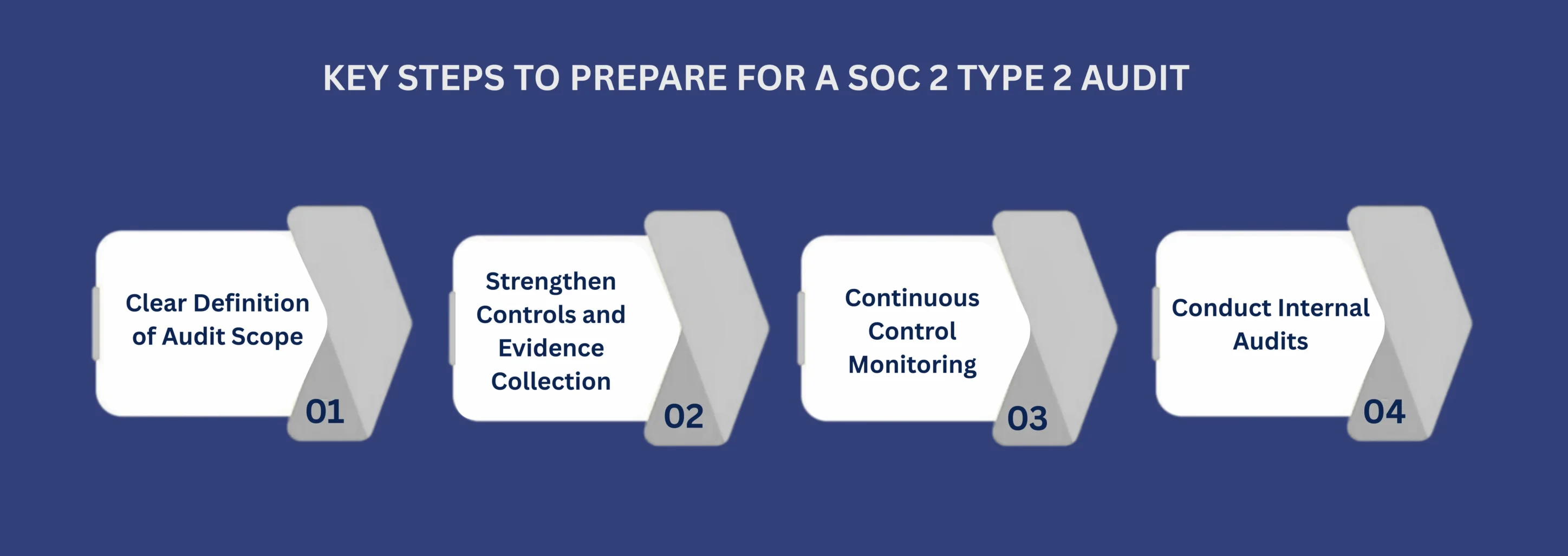
SOC 2 certification in Manchester requires service organizations to meet specific structural, documentary, and technical prerequisites before and during the audit engagement. The requirements are derived from the AICPA Trust Services Criteria and are applied by the auditor to evaluate whether the organization’s controls are appropriately designed and operating effectively.
Meeting these requirements is not a self-certification process. It requires the production of evidence, management documentation, and system records that a Licensed CPA Firm can independently examine, test, and evaluate.
Every SOC 2 engagement requires management to prepare a formal System Description that accurately describes the boundaries of the system under audit. This includes the infrastructure components, software, people, procedures, and data involved in delivering the in-scope service. The system description must meet AICPA criteria for completeness and accuracy — it must not omit significant aspects of the system that are relevant to user entities.
For Manchester organizations, the system description typically covers cloud infrastructure (AWS, Azure, GCP), application architecture, data flows, third-party subservice organizations, and organizational structure. Auditors evaluate whether the system description accurately represents the actual operating environment before proceeding to control testing.
The system description also includes management’s assertion — a formal written statement confirming that the description is accurate and that the controls included are suitably designed (for Type I) or suitably designed and operating effectively (for Type II). This assertion carries legal and professional weight, as it constitutes management’s formal representation to the auditor and to report recipients.
Manchester organizations must ensure their system description is reviewed by qualified personnel before submission. Inaccuracies discovered during the audit process can require remediation and delay report issuance.
SOC 2 compliance requires that controls be documented in formal policies, procedures, and operational records that auditors can examine as evidence. Documentation requirements span multiple control domains including access management, encryption standards, incident response, business continuity, vendor management, and change control.
Each control must be documented with sufficient specificity to allow the auditor to determine what the control does, who is responsible for executing it, how frequently it is performed, and what evidence is generated when it operates. Manchester organizations frequently need to formalize existing informal practices into documented procedures as part of audit preparation.
Technical controls represent the most evidence-intensive component of a SOC 2 audit. Auditors examine configuration settings, access logs, encryption implementations, vulnerability scan results, penetration test reports, system monitoring alerts, and backup verification records.
Specific technical requirements include multi-factor authentication for privileged access, encryption of data in transit and at rest, formal access provisioning and deprovisioning processes with documented approvals, system monitoring with defined escalation procedures, and vulnerability management programs with evidence of remediation activity. Manchester technology companies operating on cloud infrastructure are typically well-positioned technically — but must ensure that control execution is consistently logged and that logs are retained for the full audit period.
- ✓Formal System Description accurately reflecting infrastructure, data flows, and service boundaries
- ✓Management assertion signed by authorized executives prior to audit completion
- ✓Information security policies covering access control, encryption, incident response, and change management
- ✓Multi-factor authentication implemented for privileged and remote access
- ✓Encryption of data in transit (TLS 1.2 or higher) and at rest (AES-256 or equivalent)
- ✓Documented access provisioning, periodic access reviews, and timely deprovisioning with evidence
- ✓Vulnerability management program with evidence of scanning, triage, and remediation
- ✓Incident response plan with documented testing and evidence of tabletop exercises or real incident handling
- ✓Business continuity and disaster recovery plans with evidence of testing and recovery time objective (RTO) validation
- ✓Vendor and subservice organization management program with risk assessments and contract reviews

- ✓System Description Requirements
- ✓Control Documentation Requirements
- ✓Technical Control Requirements
SOC 2 Audit Process: Stage-by-Stage Overview
The SOC 2 audit process conducted by CertPro follows a structured, stage-by-stage methodology aligned with AICPA attestation standards and the AT-C Section 205 framework governing examination engagements. Each stage of the SOC 2 audit serves a defined evaluative function, and the sequence is designed to ensure that the auditor obtains sufficient, appropriate evidence to support the professional opinion issued in the final attestation report.
Manchester organizations engaging in a SOC 2 audit should expect active participation from IT, security, legal, and executive teams throughout the engagement.
Scope definition is the foundational stage of every SOC 2 engagement. During this stage, the auditor works with management to identify the specific services, systems, infrastructure components, and organizational units that fall within the audit boundary. The scope determination directly affects which Trust Services Criteria are applicable, the volume of evidence required, and the overall cost of the engagement.
Manchester organizations with complex multi-cloud architectures or multiple product lines must define scope carefully. This ensures the audit report accurately reflects the systems relied upon by user entities while remaining manageable in terms of complexity and evidence volume.
Once scope is defined, the audit program is determined. The audit program specifies the procedures the auditor will perform, the evidence types to be examined, the sampling methodology, and the criteria against which controls will be evaluated. The audit program is tailored to the organization’s specific control environment — a Manchester SaaS company using AWS will have a different set of infrastructure-level test procedures than a managed service provider using on-premises infrastructure.
The audit program is finalized before fieldwork begins and serves as the governing document for the entire SOC 2 engagement.
Evidence collection is the most time-intensive phase of the SOC 2 audit. For a Type II engagement covering a twelve-month observation period, the auditor collects and evaluates evidence across all control domains included in scope. Evidence types include policy documents, system configuration exports, access provisioning tickets, change management records, vulnerability scan outputs, penetration test reports, incident logs, backup verification records, and HR termination records demonstrating timely access revocation.
The auditor applies sampling procedures defined in the audit program to test whether controls operated as documented throughout the observation period — not merely at the time of audit fieldwork.
Control testing for Manchester-based organizations frequently involves examination of cloud provider configurations (AWS CloudTrail logs, Azure Policy compliance reports, GCP audit logs), identity and access management systems (Okta, Azure Active Directory, Google Workspace), and vulnerability management platforms (Qualys, Tenable, Rapid7).
Service desk and ticketing systems such as Jira, ServiceNow, and Zendesk are also reviewed for records of change approvals, incident handling, and access management activity. The auditor evaluates whether the evidence produced by these systems is consistent with management’s assertions in the system description and whether deviations or exceptions exist.
Following control testing, the auditor communicates identified exceptions or control deviations to management before finalizing the report. This nonconformity review phase allows management to review the auditor’s findings, clarify factual matters, and provide context for exceptions identified.
Exceptions do not automatically result in an adverse opinion. The auditor evaluates the nature, frequency, and potential impact of each exception before determining its effect on the overall audit opinion. Minor exceptions with limited impact and evidence of corrective action may be noted in the report without affecting the overall opinion. Significant or pervasive exceptions may result in a qualified or adverse opinion.
The certification decision is the auditor’s formal professional judgment on whether the organization’s controls meet the applicable Trust Services Criteria. For a Type II engagement, the auditor renders an opinion on both the fairness of the system description and the operating effectiveness of controls. A clean (unqualified) opinion confirms that controls were suitably designed and operated effectively throughout the observation period without material exceptions.
The completed SOC 2 attestation report is then issued to the organization, comprising the system description, management assertion, auditor’s report, description of tests and results, and any supplemental information. Manchester organizations typically distribute the report under a non-disclosure agreement to clients, prospects, and regulators who require evidence of security control effectiveness.
SOC 2 attestation does not confer indefinite certified status. Organizations must complete annual audit cycles to maintain current SOC 2 certification and meet the ongoing expectations of enterprise clients who conduct periodic vendor reviews.
Annual SOC 2 Type II audits are the standard cadence for mature Manchester organizations, with each new engagement covering the twelve-month period following the close of the prior audit observation period. Organizations that allow SOC 2 reports to lapse typically face procurement delays, client escalations, and renegotiation of service agreements when clients discover that no current attestation report is available for review.
- ✓Stage 1: Scope Definition and Audit Program Determination
- ✓Stage 2: Evidence Collection and Control Testing
- ✓Stage 3: Nonconformity Review and Management Response
- ✓Stage 4: Certification Decision and Attestation Issuance
- ✓Stage 5: Surveillance and Recertification
Benefits of SOC 2 Certification for Manchester Businesses
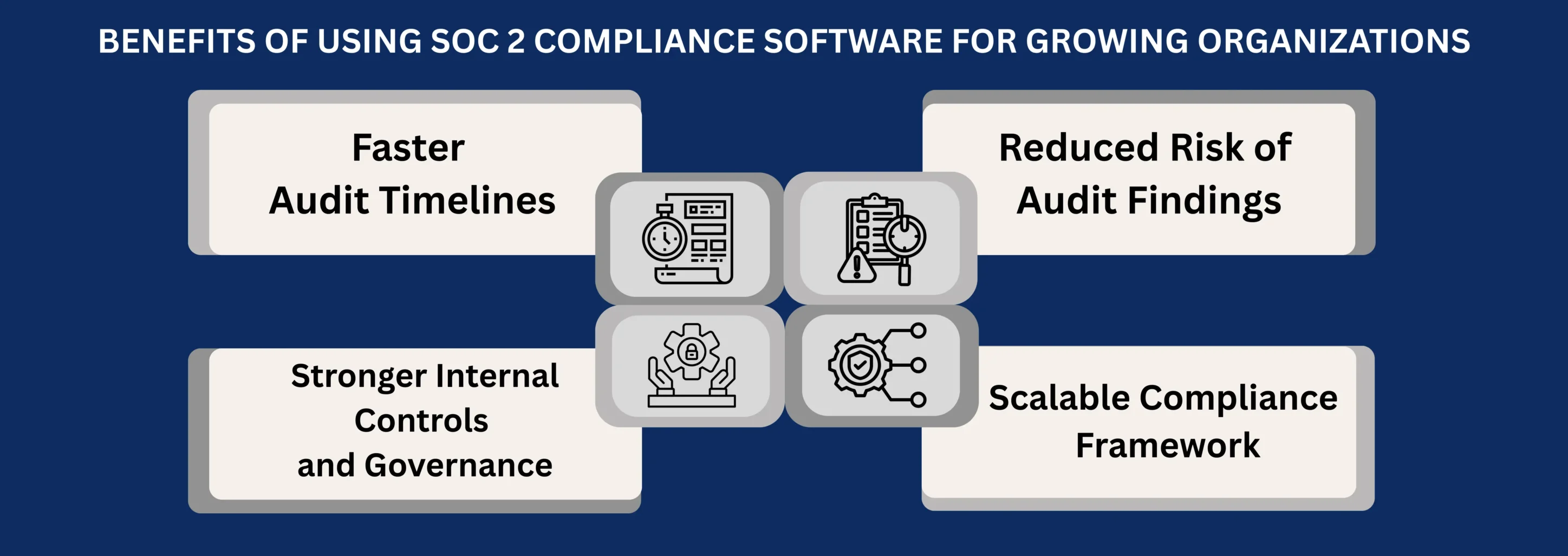
The benefits of SOC 2 certification in Manchester extend well beyond regulatory compliance. For organizations competing in Manchester’s technology, SaaS, and financial services markets, SOC 2 attestation delivers measurable commercial, operational, and reputational advantages that directly affect revenue generation, client retention, and competitive positioning.
SOC 2 compliance in Manchester demonstrates that an organization’s security controls have been independently verified — which carries substantially greater credibility with enterprise buyers, institutional partners, and regulatory bodies than self-attestation or internal compliance programs alone.
SOC 2 certification for Manchester companies directly accelerates enterprise sales cycles by eliminating extended security questionnaire processes. Enterprise procurement teams at large corporations, regulated financial institutions, and NHS-aligned healthcare organizations frequently mandate production of a SOC 2 Type II report before approving vendor contracts.
Manchester SaaS companies and technology service providers that hold a current SOC 2 attestation can bypass weeks or months of back-and-forth vendor due diligence exchanges, shortening time-to-revenue and improving close rates on enterprise deals. In competitive tender processes, SOC 2 certification provides a documented differentiator that competitors without attestation cannot replicate without completing the same independent audit process.
The US market access implications of SOC 2 attestation are particularly significant for Manchester’s technology export sector. US enterprise buyers routinely require SOC 2 Type II reports from service providers regardless of geography. Manchester fintech companies, managed service providers, and SaaS vendors targeting US clients must produce AICPA-standard attestation reports to qualify for vendor lists maintained by US financial institutions, healthcare organizations, and technology companies.
SOC 2 certification for Manchester financial services organizations enables them to compete directly in the US market, where the certification is effectively a baseline procurement requirement rather than a differentiating factor.
The SOC 2 audit process itself drives improvements in internal control design and operational discipline that deliver tangible risk reduction benefits, independent of the attestation report. Organizations that undergo a SOC 2 audit typically identify and remediate previously undetected control weaknesses, undocumented procedures, and inconsistently applied security practices.
The process of collecting and organizing evidence for the audit creates systematic operational habits — logging, documentation, periodic review, and escalation — that reduce the likelihood of security incidents and improve the organization’s ability to detect and respond to events when they occur. Manchester technology companies frequently report measurable improvements in incident response time, access control consistency, and change management discipline following their first SOC 2 engagement.
SOC 2 attestation in Manchester communicates to existing and prospective clients that their data is protected by controls that have been independently evaluated and found to be effective. This is particularly valuable in client relationships where data sensitivity is high — such as personal health records, financial transaction data, legal documents, or HR records.
Manchester organizations in healthtech, legaltech, and fintech sectors find that SOC 2 certification significantly reduces client objections during contract negotiation and annual vendor review processes. The report provides independently verified assurance that addresses the most common data security concerns raised by procurement and legal teams.
- ✓Accelerates enterprise sales cycles by satisfying vendor due diligence requirements with a single attestation report
- ✓Enables access to US enterprise markets where SOC 2 Type II reports are standard procurement requirements
- ✓Reduces reliance on security questionnaires by providing independently verified documentation of control effectiveness
- ✓Demonstrates alignment with UK GDPR technical and organizational security measure requirements to ICO-regulated clients
- ✓Improves internal control consistency, documentation discipline, and operational security practices
- ✓Supports contract retention when existing clients conduct periodic vendor security reviews
- ✓Provides documented evidence of security maturity to institutional investors and acquirers during due diligence
- ✓Reduces cyber insurance premium costs for organizations that can demonstrate independently verified security controls
- ✓Differentiates Manchester technology companies in competitive procurement processes against non-certified competitors
- ✓Establishes credibility with regulated industry clients including financial services, healthcare, and public sector organizations
- ✓Commercial and Competitive Advantages
- ✓Risk Management and Internal Control Improvement
- ✓Client Confidence and Data Trust
SOC 2 Certification Cost in Manchester
The cost of SOC 2 certification in Manchester varies based on several factors unique to each organization’s specific circumstances. Unlike commodity compliance exercises, SOC 2 audit fees reflect the complexity of the system under audit, the number of Trust Services Criteria included in scope, the audit period length, the volume of in-scope controls, and the maturity of the organization’s existing documentation.
CertPro applies transparent, fixed-fee pricing for SOC 2 engagements, with costs determined during the scoping phase based on a structured assessment of the organization’s technical environment and control landscape.
Primary Cost Determinants
Organizational size and control volume are the primary determinants of SOC 2 audit cost. A Manchester startup with twenty employees, a single cloud-hosted SaaS application, and a relatively straightforward control environment will incur substantially lower audit fees than an established managed service provider with two hundred employees, multiple product lines, complex hybrid infrastructure, and subservice organization dependencies.
The number of Trust Services Criteria included in scope also affects cost. Each additional criterion beyond the mandatory Security criterion requires incremental audit procedures, evidence collection, and testing. Manchester organizations adding Availability and Confidentiality to the Security criterion will incur higher fees than those limited to Security alone.
The audit period length for Type II engagements is another significant cost variable. A six-month observation period requires less evidence collection and testing than a twelve-month period, though many enterprise clients require reports covering at least twelve months.
Third-party service organization dependencies also affect cost. When an organization relies on subservice providers — such as cloud infrastructure vendors, data center operators, or payment processors — the auditor must evaluate the controls at those subservice organizations or rely on existing SOC reports they have produced, adding complexity to the evidence-gathering process.
SOC 2 Certification Cost Ranges by Organisation Type
| Organisation Profile | Audit Type | Typical Cost Range (USD) | Estimated Timeline |
|---|---|---|---|
| Early-stage SaaS startup (1-50 employees, single criterion) | Type I | $15,000 – $25,000 | 8–12 weeks |
| Growing SaaS or fintech (50-150 employees, 2-3 criteria) | Type II (6-month period) | $30,000 – $55,000 | 16–24 weeks |
| Established tech firm (150-300 employees, 3-5 criteria) | Type II (12-month period) | $55,000 – $90,000 | 20–30 weeks |
| Managed service provider (complex infrastructure, multiple products) | Type II (12-month period) | $80,000 – $150,000+ | 24–36 weeks |
Understanding Total Cost of Compliance
The total cost of SOC 2 compliance in Manchester encompasses not only the audit fee paid to the CPA firm but also internal resources dedicated to evidence collection, documentation development, and system configuration. Manchester organizations should account for the time investment of IT, security, legal, and operations personnel in supporting the audit process, which may represent significant internal labour costs depending on organisational capacity.
Additionally, organizations may need to invest in tooling — such as security information and event management (SIEM) platforms, privileged access management (PAM) solutions, or vulnerability scanning tools — to generate the evidence types auditors require. These internal costs are separate from and in addition to the audit fee.
SOC 2 Compliance Manchester: Regulatory Context and UK GDPR Alignment
SOC 2 compliance that Manchester organizations pursue operates within a regulatory environment shaped by both US-origin attestation standards and UK domestic data protection law. Understanding how SOC 2 interacts with UK GDPR, ICO enforcement priorities, and sector-specific regulatory requirements is essential for Manchester organizations designing compliance programs that address multiple obligations simultaneously.
SOC 2 attestation does not constitute compliance with UK GDPR, but the two frameworks share substantial overlap in the technical and organizational security measures they require.
SOC 2 and UK GDPR: Control Overlap and Complementarity
UK GDPR Article 32 requires data controllers and processors to implement appropriate technical and organizational measures to ensure a level of security appropriate to the risk of data processing. The measures specified — encryption, ongoing confidentiality, integrity, availability, resilience, and the ability to restore systems following incidents — map directly to controls evaluated under the SOC 2 Trust Services Criteria for Security, Availability, and Confidentiality.
Manchester organizations that have completed a SOC 2 audit can use the resulting attestation report as documented evidence of compliance with many of the technical and organizational measure requirements under UK GDPR, reducing duplication of compliance effort across the two frameworks.
The ICO’s accountability framework requires organizations to demonstrate compliance proactively rather than reactively. SOC 2 attestation obtained by Manchester organizations provides independently produced documentation of control effectiveness that satisfies accountability requirements more robustly than internal policies alone.
In the event of an ICO investigation following a data breach or complaint, a current SOC 2 Type II report documenting effective security controls provides material evidence of the organization’s security posture at the time of the incident. This can affect the ICO’s determination of culpability and the quantum of any civil monetary penalty.
SOC 2 Versus ISO 27001 for Manchester Organisations
Manchester organizations frequently evaluate SOC 2 certification against ISO 27001 certification when determining which standard to pursue. The two frameworks address related but distinct objectives. SOC 2 is a US-origin attestation standard that tests specific controls based on Trust Services Criteria and service commitments, producing a report intended for use by user entities evaluating a service provider’s security controls. ISO 27001 is a globally recognized information security management system standard that certifies an organization’s overall information security management framework.
SOC 2 carries greater weight in North American enterprise markets, while ISO 27001 is more widely recognized in European and Asia-Pacific markets.
For Manchester companies pursuing US market expansion, SOC 2 certification is typically the more commercially impactful investment. For organizations serving primarily European or UK public sector clients, ISO 27001 may carry greater relevance. Many Manchester technology companies pursue both certifications in sequence or simultaneously to satisfy diverse client requirements across geographies.
Customer requirements and target markets should be the primary driver of the certification decision. Organizations should evaluate which certification their most important current and prospective clients explicitly require in vendor agreements before committing to an engagement.
SOC 2 for Manchester Fintech and Financial Services
SOC 2 certification that Manchester financial services and fintech organizations pursue addresses a specific set of regulatory and commercial pressures distinct from those facing general technology companies. The Financial Conduct Authority (FCA) does not mandate SOC 2 certification for regulated firms, but FCA-regulated entities acting as outsourcers or technology providers to regulated firms are frequently required by their clients to maintain SOC 2 attestation as evidence of third-party risk management.
SOC 2 compliance demonstrated by Manchester fintech companies positions them to satisfy vendor due diligence requirements imposed by UK banks, investment managers, insurance companies, and payment institutions governed by FCA and PRA oversight.
Industries Requiring SOC 2 Certification in Manchester
SOC 2 certification in Manchester is relevant across a wide range of industry sectors, though demand is concentrated in sectors where data sensitivity is high, regulatory scrutiny is significant, or enterprise client procurement processes explicitly require attestation documentation. The following sectors represent the primary areas of SOC 2 audit demand in Manchester’s business community.
Technology and SaaS Companies
SOC 2 certification that Manchester SaaS companies obtain is the most common enterprise security attestation requirement in the software industry. SaaS vendors hosting client data in cloud environments are universally subject to vendor security assessments, and the SOC 2 Type II report is the standard mechanism through which cloud software providers demonstrate control effectiveness.
Manchester’s SaaS ecosystem spans sectors including HR technology, project management, customer relationship management, legal practice management, and revenue management platforms. Each of these product categories involves access to sensitive client data, making SOC 2 attestation a commercial necessity for companies pursuing mid-market and enterprise customer segments.
SOC 2 audit services that Manchester technology hub organizations access through CertPro are designed to accommodate the particular characteristics of cloud-native architectures, DevOps delivery models, and continuous deployment environments common in Manchester’s technology sector. Auditors evaluate controls within these dynamic environments by assessing change management processes, infrastructure-as-code security configurations, container security practices, and CI/CD pipeline controls specific to modern software development and delivery organizations.
Financial Services and Fintech
Manchester’s fintech sector encompasses payment processing companies, lending platforms, insurance technology providers, wealth management software vendors, and regulatory technology firms. Companies in these categories frequently process large volumes of personal financial data and are subject to contractual obligations from banking clients, institutional investors, and regulated entities that require independently verified security assurance.
SOC 2 attestation is widely used in the fintech sector as the primary mechanism for satisfying third-party risk management requirements imposed by FCA-regulated clients and US financial institutions operating in the UK market.
Healthcare Technology and Life Sciences
Manchester’s healthtech sector includes electronic health record providers, patient engagement platforms, clinical trial data management companies, and health analytics firms. These organizations process data subject to NHS Digital standards, UK GDPR health data provisions, and contractual requirements from NHS trusts and private healthcare providers.
SOC 2 certification — particularly with the Privacy criterion included in scope — provides an independently verified attestation of security and privacy controls. This complements NHS Digital’s Data Security and Protection Toolkit requirements and supports procurement approvals from NHS bodies undertaking data processing agreement reviews.
Managed Service Providers and Cloud Infrastructure
Managed service providers (MSPs) and cloud infrastructure companies operating in Manchester face particularly intensive demand for SOC 2 attestation because they serve as subservice organizations for their clients’ own compliance programs. When a client organization undergoes its own SOC 2 audit, the auditor evaluates the controls at subservice organizations — including MSPs and cloud providers — that are relevant to the client’s system.
MSPs that maintain a current SOC 2 Type II report enable their clients to rely on that report rather than requiring a separate assessment of MSP controls, making SOC 2 attestation a commercially significant capability for Manchester’s managed service sector.
Why Choose CertPro for SOC 2 Certification in Manchester
CertPro is a Licensed CPA Firm with specialized expertise in SOC 2 certification in Manchester and across the United Kingdom. The firm’s practice is dedicated to attestation engagements conducted under AICPA standards, with audit teams composed of qualified CPAs and information security professionals experienced in evaluating control environments across a range of technology sectors and business models.
CertPro’s institutional positioning as a CPA firm — rather than a consulting or advisory practice — ensures that the attestation reports it produces carry the professional authority and independence required by enterprise clients and regulators.
Licensed CPA Firm Authority and Independence
SOC 2 attestation reports are only valid when issued by a Licensed CPA Firm. CPA licensure is a legal prerequisite for conducting AICPA-standard attestation engagements — no other category of auditor, assessor, or security professional is authorised to issue a SOC 2 attestation report under AICPA standards.
CertPro’s status as a Licensed CPA Firm ensures that SOC 2 reports issued by the firm satisfy the professional standards requirements that enterprise clients, legal counsel, and regulators apply when evaluating attestation documentation. Manchester organizations that engage non-CPA firms or consulting organisations for SOC 2 activities do not receive valid SOC 2 attestation reports, regardless of the quality of the security work performed.
Sector-Specific Audit Expertise
CertPro’s audit professionals bring direct experience in evaluating control environments across the technology sectors prevalent in Manchester’s economy. Audit teams understand the specific architectural, operational, and organizational characteristics of cloud-native SaaS companies, fintech platforms, managed service providers, and healthtech organizations.
This sector-specific knowledge enables more efficient evidence collection and more precise control evaluation than generalist audit firms. It also reduces the time burden on client organizations during the SOC 2 audit process and improves the quality and relevance of findings communicated in the attestation report.
Fixed-Fee Pricing and Transparent Engagement
CertPro provides fixed-fee pricing for all SOC 2 audit engagements, with fees determined during the scoping phase and documented in a formal engagement letter before audit work commences. Fixed-fee pricing eliminates the uncertainty associated with hourly billing models, enabling Manchester organizations to budget accurately for their SOC 2 engagement from the outset.
The engagement letter specifies the audit scope, Trust Services Criteria included, observation period, deliverables, timeline milestones, and total engagement fee — providing a contractually clear framework that aligns the auditor and client organization throughout the entire engagement.
SOC 2 Evidence Collection: Best Practices for Manchester Organisations
Effective SOC 2 evidence collection is one of the most critical determinants of audit success. Poor evidence collection — characterized by incomplete records, inconsistent documentation, or evidence that does not align with the control descriptions in the system description — is the most common reason SOC 2 audits identify exceptions that could have been avoided.
Manchester organizations preparing for a SOC 2 audit should establish systematic evidence collection practices well in advance of the audit commencement date, ensuring that the evidence trail for the full observation period is complete, accurate, and retrievable.
Establishing an Evidence Repository
A structured evidence repository — organized by control domain and control identifier — enables efficient evidence production when auditors request documentation. Manchester organizations conducting a SOC 2 Type II audit over a twelve-month period should maintain ongoing documentation of control execution throughout the observation period, rather than attempting to reconstruct evidence retrospectively at the time of audit.
Effective evidence repositories contain timestamped records of access reviews, change approvals, security training completions, vulnerability scan results, and incident handling activity. These records should be organized so that any specific period can be evidenced on request from the auditor.
Audit Log Management and Retention
Audit log management is a specific area of evidence collection where Manchester technology organizations frequently face challenges. SOC 2 auditors examine logs from infrastructure systems, applications, identity platforms, and network devices to verify that monitoring controls are operating and that security-relevant events are being captured and reviewed.
Logs must be retained for the full audit observation period and must be tamper-evident to provide reliable evidence. Organizations should verify that log retention policies are configured correctly across all in-scope systems at the outset of the observation period, as retroactive log retrieval is often impossible for systems not configured with adequate retention from the start of the period.
SOC 2 Certification Services in Manchester from CertPro
CertPro delivers SOC 2 certification in Manchester through a structured, evidence-based audit methodology conducted by qualified CPA professionals. Engagements are scoped to reflect the specific services, systems, and Trust Services Criteria applicable to each organization, with audit programs tailored to the technical architecture and operational model of Manchester’s diverse technology and financial services sectors.
The firm’s institutional mandate is the delivery of independent attestation reports that meet AICPA professional standards and satisfy the assurance requirements of enterprise clients, regulated industries, and institutional counterparties worldwide.
Organizations seeking SOC 2 certification in Manchester are encouraged to engage CertPro for an initial scoping discussion. During this discussion, audit scope, applicable Trust Services Criteria, observation period, timeline, and fixed-fee pricing are determined. The scoping process is the foundation of every successful SOC 2 engagement — ensuring that the audit program accurately reflects the organization’s systems and service commitments and that the resulting attestation report provides the level of assurance required by the organization’s clients and commercial objectives.
SOC 2 attestation issued by CertPro reflects the professional authority of a Licensed CPA Firm and meets the international standards relied upon by enterprise buyers, regulators, and institutional investors evaluating Manchester-based service organizations.
Manchester’s position as a leading UK technology and financial services hub creates a dynamic and demanding environment for organizations managing client data and delivering cloud-based services. SOC 2 certification in Manchester provides the independently verified evidence of security control effectiveness that enables technology companies, fintech firms, SaaS providers, and managed service organizations to compete for enterprise clients, satisfy regulatory expectations, access international markets, and demonstrate the institutional security maturity that modern business relationships require.
CertPro’s SOC 2 audit practice is structured to serve Manchester organizations at every stage of growth — from early-stage startups seeking initial Type I attestation to established enterprises maintaining annual Type II certification cycles.
FAQ
▶
What is SOC 2 certification and why is it required in Manchester?
▶
How long does a SOC 2 audit take in Manchester?
▶
What is the difference between SOC 2 Type I and Type II for Manchester organisations?
▶
Which Trust Services Criteria should Manchester businesses include in their SOC 2 scope?
▶
Does SOC 2 certification satisfy UK GDPR requirements?
▶
How often must SOC 2 certification be renewed in Manchester?
▶
Who can legally issue a SOC 2 attestation report for Manchester businesses?
▶
What is the difference between SOC 2 compliance and SOC 2 certification?

SOC 1 VS SOC 2: WHICH REPORT YOUR CUSTOMERS ACTUALLY ASK FOR
If you sell SaaS or provide outsourced services, you have likely been asked for a SOC report. However, the follow-up question is rarely easy to answer…

Secure Email Platform Exclaimer Renews ISO, SOC 2
Excerpt from The Manila Times Article, Published on February 26, 2026 Secure email solutions provider Exclaimer has renewed its ISO and SOC 2 certific…
SOC 2 FRAMEWORK REQUIREMENTS IN 2026. WHAT HAS CHANGED?
Security reviews used to happen at the tail end of a deal. Today, they happen in the first conversation. Enterprise buyers come prepared. They ask abo…
Get In Touch
have a question? let us get back to you.