
SOC 2 Certification in Mumbai
Executive Summary: CertPro is a Licensed CPA Firm authorized by the AICPA to conduct SOC 2 engagements and issue attestation reports for service organizations. SOC 2 Certification in Mumbai is delivered against the Trust Services Criteria, covering security, availability, processing integrity, confidentiality, and privacy. CertPro serves Mumbai-based IT, fintech, BFSI, and cloud service organizations with fixed-price SOC 2 audit programs designed for transparency and efficiency.
OUR CLIENTS










What Is SOC 2 Certification?
SOC 2, which stands for System and Organization Controls 2, is an attestation framework developed and governed by the American Institute of Certified Public Accountants (AICPA). Unlike ISO certifications issued by accreditation bodies, SOC 2 is an attestation report issued by a Licensed CPA Firm following a structured audit of a service organization’s internal controls. SOC 2 Certification in Mumbai is formally referred to as a SOC 2 attestation. The resulting report provides documented evidence that an organization’s systems and controls meet defined Trust Services Criteria. The framework is specifically designed for technology and cloud-based service organizations that store, process, or transmit customer data on behalf of clients.
Definition of SOC 2 and AICPA Governance Authority
The AICPA established SOC 2 as part of its broader System and Organization Controls reporting framework, which also includes SOC 1 and SOC 3 reports. The SOC 2 standard is governed by SSAE 18 (Statement on Standards for Attestation Engagements No. 18), which defines how a Licensed CPA Firm must conduct and report on a SOC 2 engagement. Only CPA firms that are AICPA members and comply with its peer review requirements are authorized to issue SOC 2 attestation reports. This governance structure ensures that every SOC 2 audit is conducted with professional independence, technical rigor, and consistent methodology — regardless of the service organization’s geography or sector.
For Mumbai-based organizations, working with a Licensed CPA Firm for SOC 2 compliance Mumbai is not simply a procedural requirement — it is a fundamental assurance of the report’s credibility and market acceptance. A SOC 2 attestation issued by an AICPA-authorized firm carries institutional weight recognized by enterprise clients, global regulators, and international business partners. SOC 2 reports are widely accepted across the United States, Europe, and Asia-Pacific markets, making them a critical credential for Mumbai organizations pursuing cross-border contracts or serving regulated industries.
Trust Services Criteria: The Five Pillars of SOC 2
The Trust Services Criteria (TSC) form the evaluative backbone of every SOC 2 engagement. The AICPA defines five TSC categories against which an organization’s controls are assessed during a SOC 2 audit. Security — formally designated as the Common Criteria (CC) — is the only mandatory category and must appear in every SOC 2 report. The remaining four categories (Availability, Processing Integrity, Confidentiality, and Privacy) are selected based on the nature of services provided and the commitments made to customers. During scoping, the Licensed CPA Firm and the service organization determine which TSC categories apply to the engagement.
| Trust Services Criteria | Category Code | Description | Mandatory |
|---|---|---|---|
| Security | CC (Common Criteria) | Controls protecting against unauthorized access, disclosure, and system damage | Yes |
| Availability | A | Controls ensuring system availability per commitments and agreements | No |
| Processing Integrity | PI | Controls ensuring complete, valid, accurate, and authorized processing | No |
| Confidentiality | C | Controls protecting confidential information from unauthorized disclosure | No |
| Privacy | P | Controls addressing personal information collection, use, and disposal | No |
SOC 2 Attestation vs. ISO Certification: Key Distinctions
A SOC 2 attestation differs fundamentally from an ISO certification in governance structure, output format, and market purpose. An ISO certification (such as ISO 27001) is issued by an accredited certification body and results in a publicly sharable certificate. A SOC 2 attestation, by contrast, is issued by a Licensed CPA Firm and produces a detailed audit report shared on a restricted basis with clients and stakeholders under a non-disclosure obligation. The SOC 2 report contains the auditor’s opinion, management’s assertion, a description of the system under review, and the test results for each control — offering granular transparency that an ISO certificate cannot replicate.
For Mumbai-based service organizations, the SOC 2 attestation is the preferred credential in sectors such as SaaS, cloud infrastructure, managed IT services, and financial technology — where US and European clients routinely require SOC 2 reports as a condition of vendor onboarding. The depth of the SOC 2 audit report allows enterprise clients to evaluate a vendor’s control environment in detail, something a one-page certificate cannot provide. This distinction positions the SOC 2 attestation as a trust instrument rather than a simple compliance badge.
SOC 2 Type 1 and SOC 2 Type 2 Reports Explained
SOC 2 reports are issued in two formats: Type 1 and Type 2. A SOC 2 Type 1 report evaluates the design and implementation of controls at a specific point in time — it answers whether the controls described in the system description were suitably designed as of a defined date. A SOC 2 Type 2 report, by contrast, evaluates both the design and the operating effectiveness of controls over a defined observation period, typically six to twelve months. The Type 2 report is the more rigorous and widely accepted format because it provides evidence that controls functioned consistently throughout the review period, not merely that they existed on a single day.
For organizations new to SOC 2 Certification in Mumbai, a Type 1 report may serve as an appropriate starting point, establishing a documented baseline of the control environment before progressing to the more comprehensive Type 2 report. Enterprise clients, however, typically require a Type 2 report for ongoing vendor qualification — making the Type 2 audit the standard endpoint for most service organizations pursuing sustained market credibility.

Why SOC 2 Compliance Matters for Mumbai-Based Organizations
Mumbai is India’s financial capital and one of Asia’s most significant commercial hubs, hosting the headquarters of major BFSI institutions, multinational corporations, technology firms, and the country’s largest stock exchanges. The density of regulated industries and the volume of cross-border data flows that characterize Mumbai’s business environment create a distinct compliance context. SOC 2 compliance Mumbai is not a voluntary credential for many organizations in this ecosystem — it is an operational requirement driven by client contracts, regulatory expectations, and international business standards.
Mumbai’s BFSI Sector and Data Security Obligations
The Banking, Financial Services, and Insurance (BFSI) sector is the dominant industry in Mumbai, encompassing commercial banks, insurance companies, non-banking financial companies (NBFCs), asset management firms, and payment service providers. These organizations operate under the oversight of the Reserve Bank of India (RBI), the Securities and Exchange Board of India (SEBI), and the Insurance Regulatory and Development Authority of India (IRDAI). Each regulator has issued guidance requiring robust information security controls and third-party risk management frameworks — requirements that align directly with the control categories addressed in a SOC 2 audit.
For technology vendors and service providers supplying platforms, cloud infrastructure, or data processing services to Mumbai’s BFSI institutions, SOC 2 Certification in Mumbai is frequently a contractual prerequisite. RBI’s guidelines on outsourcing, cloud adoption, and cybersecurity frameworks explicitly require that regulated entities conduct due diligence on third-party service providers. A SOC 2 Type 2 report is the most widely accepted instrument for demonstrating control effectiveness in this context. SOC 2 compliance Mumbai therefore functions as a critical vendor qualification mechanism within the BFSI supply chain.
Fintech and Startup Ecosystem: SOC 2 as Market Access
Mumbai’s fintech ecosystem has grown substantially over the past decade, with the city emerging as a primary hub for payment technology companies, lending platforms, wealth management applications, and insurtech providers. SOC 2 Certification in Mumbai for fintech organizations is driven by the need to qualify as vendors to global financial institutions, pass enterprise security reviews from US and European clients, and demonstrate data governance maturity to investors. For Mumbai startups, the attestation serves a dual function: it validates the organization’s security controls and reduces friction in enterprise sales cycles.
Venture-backed technology companies and SaaS platforms headquartered in Mumbai increasingly encounter SOC 2 requirements at early growth stages — particularly when their sales pipeline includes US-based enterprise accounts. The SOC 2 audit report provides prospective clients with the assurance needed to approve a vendor through their own security review processes, often replacing lengthy and resource-intensive custom security questionnaires. In this context, SOC 2 certification for Mumbai IT companies directly translates to accelerated revenue generation and expanded market access.
DPDP Act Alignment and Cross-Border Compliance
India’s Digital Personal Data Protection (DPDP) Act, enacted in 2023, establishes a formal legal framework for processing personal data within India. Mumbai-based organizations that process personal data as data fiduciaries or data processors under the DPDP Act face obligations regarding data security, breach notification, and third-party data processing agreements. The Privacy TSC category within the SOC 2 framework addresses many of the same control requirements — including data minimization, consent mechanisms, data retention policies, and security safeguards — creating a natural alignment between SOC 2 attestation and DPDP Act compliance.
For organizations operating across borders, SOC 2 Certification in Mumbai also supports alignment with the EU’s General Data Protection Regulation (GDPR) through the Privacy TSC, and with international information security standards such as ISO 27001 through the Security (Common Criteria) category. This cross-framework compatibility makes SOC 2 compliance Mumbai a strategically efficient investment for organizations managing multi-jurisdictional compliance obligations.
SOC 2 Certification Requirements in Mumbai
SOC 2 Certification in Mumbai requires a service organization to establish, document, and operate a control environment that meets the applicable Trust Services Criteria. The requirements for a SOC 2 audit are not prescribed as a fixed checklist — they are determined through a scoping process that aligns the organization’s service commitments, system boundaries, and risk profile with the relevant TSC categories. The following outlines the core requirements across documentation, technical controls, operational practices, and organizational governance that a service organization must address to complete a successful SOC 2 engagement.
Documentation forms the evidentiary foundation of a SOC 2 audit. The organization must maintain a formal system description that accurately describes the boundaries of the system under review, the services provided, the infrastructure components, the software stack, the data flows, and the personnel involved in operating and managing the system. This system description is included in the final SOC 2 attestation report and is evaluated by the auditor for completeness and accuracy. Incomplete or inaccurate system descriptions can result in qualified audit opinions or require remediation before the report is issued.
Policy documentation must cover all control domains relevant to the selected TSC categories. For the Security (CC) category, this includes information security policies, access control policies, change management procedures, incident response plans, risk assessment documentation, and vendor management policies. For the Availability category, business continuity and disaster recovery plans are required. For the Privacy category, privacy notices, data processing agreements, and data subject rights procedures must be documented and current. All policies must be formally approved, version-controlled, and communicated to relevant personnel.
The technical control requirements for SOC 2 Certification in Mumbai are derived from the Common Criteria (CC) series within the Trust Services Criteria. These criteria address logical access controls, network security architecture, encryption standards, system monitoring, vulnerability management, and secure development practices. Specifically, organizations must implement multi-factor authentication for privileged access, role-based access control with periodic access reviews, encryption of data in transit and at rest, intrusion detection and logging systems, and a formal patch management program with defined remediation timelines.
For cloud-native organizations and SaaS providers, technical controls must extend to the cloud infrastructure layer, including configuration management, cloud security posture management, and infrastructure-as-code security practices. The SOC 2 audit will assess evidence of these technical controls through configuration exports, log samples, access review records, vulnerability scan reports, and penetration testing results. Maintaining a well-organized, audit-ready evidence repository significantly reduces the effort required during the SOC 2 engagement fieldwork phase.
SOC 2 compliance Mumbai requires organizational governance structures that demonstrate management’s commitment to information security and risk management. This includes a formally designated security function or information security officer, a documented risk management program, a vendor risk management process for evaluating third-party service providers, and a security awareness training program for all personnel. The organization must also maintain a formal incident response capability — including defined roles, response procedures, and post-incident review processes — that can be validated during the SOC 2 audit.
- ✓Formal system description covering infrastructure, software, data flows, and personnel
- ✓Information security policy framework covering all applicable TSC domains
- ✓Multi-factor authentication and role-based access control implementation
- ✓Encryption of customer data in transit (TLS 1.2 or higher) and at rest (AES-256)
- ✓Continuous system monitoring with security information and event management (SIEM)
- ✓Formal vulnerability management program with defined remediation SLAs
- ✓Business continuity and disaster recovery plans with tested recovery objectives
- ✓Vendor risk management process including third-party security assessments
- ✓Security awareness training program with documented completion records
- ✓Incident response plan with defined escalation paths and post-incident review procedures
- ✓Annual penetration testing by qualified security professionals

- ✓Documentation Requirements
- ✓Technical Control Requirements
- ✓Organizational and Governance Requirements
The SOC 2 Audit Process: Step-by-Step
The SOC 2 audit process is a structured attestation engagement conducted by a Licensed CPA Firm in accordance with AICPA standards. Each SOC 2 engagement follows a defined sequence of stages, from initial scoping through final report issuance. Understanding the audit process enables Mumbai-based service organizations to plan effectively, allocate internal resources appropriately, and engage productively with the auditing firm. The following stages define the SOC 2 audit process as conducted under CertPro’s engagement methodology for SOC 2 audit Mumbai engagements.
The first stage of a SOC 2 engagement involves defining the scope of the audit. The Licensed CPA Firm works with the service organization to identify the system boundaries, the services included in the audit scope, the infrastructure components and data centers relevant to the engagement, and the Trust Services Criteria categories applicable to the organization’s service commitments. Scope definition is a critical determinant of audit complexity, timeline, and cost. An overly broad scope increases audit effort without proportionate benefit, while an overly narrow scope may fail to satisfy client expectations or regulatory requirements.
For SOC 2 Certification in Mumbai across organizations operating multiple service lines or cloud environments, scope definition requires careful analysis of which systems and services process, store, or transmit customer data. The system description produced at this stage must accurately reflect the in-scope environment and will be reviewed and validated by the auditor before testing commences. Inaccuracies in the system description identified during the SOC 2 audit can require scope renegotiation and delay the engagement timeline.
Following scope definition, the Licensed CPA Firm develops the audit program — a structured plan that maps each applicable Trust Services Criterion to the organization’s stated controls, defines the testing procedures to be applied, and establishes the evidence requirements for each control. The audit program determines whether the SOC 2 engagement will be conducted as a Type 1 point-in-time assessment or a Type 2 operating effectiveness evaluation. For Type 2 engagements, the observation period is typically six to twelve months, and the audit program must be designed to obtain sufficient evidence across the full period.
The control testing phase is the core of the SOC 2 audit. The auditor applies the procedures defined in the audit program to evaluate whether the organization’s controls are suitably designed (for Type 1) and operating effectively (for Type 2). Testing procedures include inquiry of relevant personnel, inspection of policy documents and configuration records, observation of control activities, and re-performance of control procedures using sample populations. For each control tested, the auditor documents the testing procedure applied, the evidence examined, and the conclusion reached.
SOC 2 audit firms in Mumbai conducting Type 2 engagements will select samples from across the observation period to assess whether controls operated consistently. Sample sizes are determined using statistical or risk-based approaches and vary by control frequency — daily automated controls require larger samples than annual management reviews. The auditor’s testing conclusions form the basis for the description of tests and results section of the SOC 2 attestation report, which is the most technically substantive component of the final deliverable.
Where control testing identifies deviations — instances where a control did not operate as designed or where evidence of operation was insufficient — the auditor documents these as exceptions or deviations in the SOC 2 report. The service organization’s management has the opportunity to review draft findings and provide context or supplementary evidence where available. Exceptions identified in a SOC 2 audit do not automatically result in a qualified opinion; the auditor considers the nature, frequency, and potential impact of each deviation when forming the overall audit conclusion.
The final stage of a SOC 2 engagement is the issuance of the attestation report. The report consists of the independent service auditor’s report (containing the auditor’s opinion), management’s assertion regarding the accuracy of the system description and the effectiveness of controls, the description of the system, and — for Type 2 reports — the detailed description of tests of controls and results. The SOC 2 attestation report for Mumbai organizations is signed by the Licensed CPA Firm and delivered to the service organization for distribution to authorized user entities. The report is typically shared under a non-disclosure agreement; a SOC 3 summary report may be produced for broader distribution if required.
- Scope definition: Identify system boundaries, applicable TSC categories, and in-scope infrastructure
- Audit program determination: Develop control mapping, testing procedures, and evidence requirements
- System description review: Validate accuracy of the organization’s system description document
- Stage 1 assessment: Evaluate suitability of control design against Trust Services Criteria
- Observation period monitoring: For Type 2, document evidence of control operation across the review period
- Control testing: Apply inquiry, inspection, observation, and re-performance testing procedures
- Exception documentation: Record and communicate control deviations identified during testing
- Management response: Incorporate management assertions and contextual information
- Draft report review: Provide service organization with opportunity to review draft findings
- Final attestation issuance: Issue signed SOC 2 report for distribution to authorized user entities
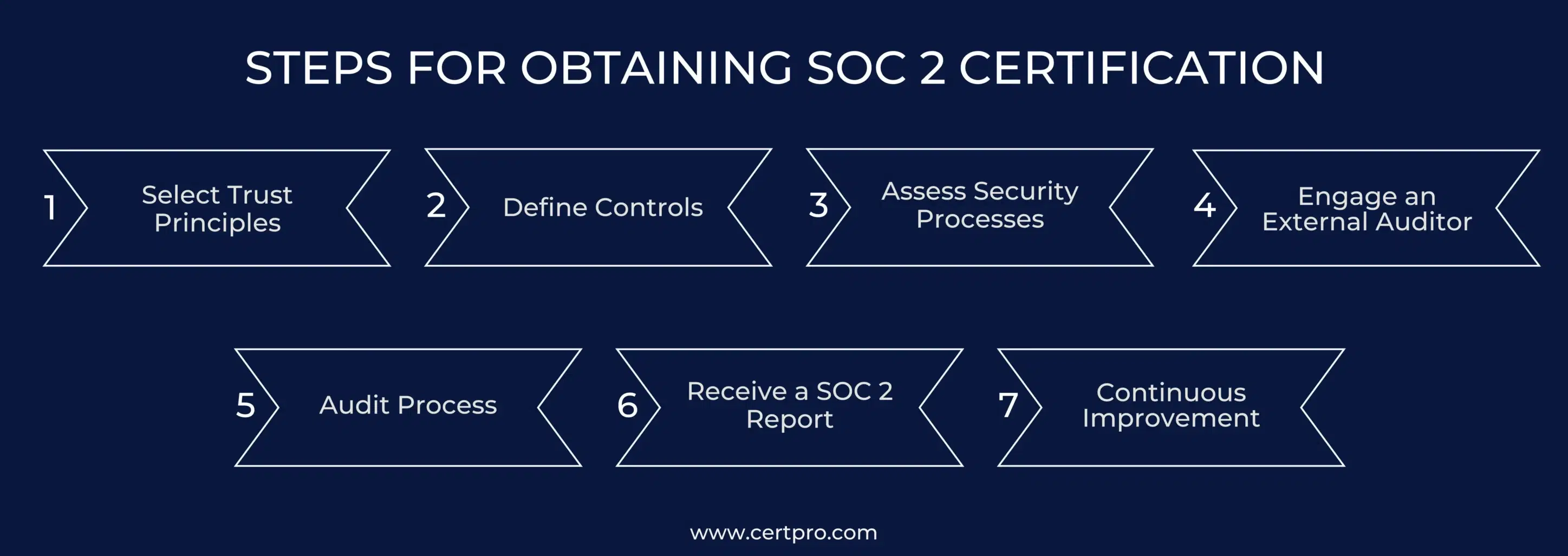
- ✓Stage 1: Scope Definition and System Boundary Determination
- ✓Stage 2: Audit Program Determination and Control Mapping
- ✓Stage 3: Type 1 or Type 2 Assessment and Control Testing
- ✓Stage 4: Nonconformity Review and Management Response
- ✓Stage 5: Report Issuance and Attestation Delivery
Benefits of SOC 2 Certification in Mumbai
SOC 2 Certification in Mumbai delivers measurable organizational benefits that span commercial, operational, and regulatory dimensions. For service organizations in Mumbai’s competitive technology and financial services markets, the SOC 2 attestation report functions as a credentialing instrument that validates control effectiveness to clients, reduces due diligence burden during enterprise sales, and establishes a documented baseline for ongoing security governance. The benefits outlined below represent consistent outcomes that organizations with completed SOC 2 attestation reports have demonstrated across sectors.
The most immediate commercial benefit of SOC 2 Certification in Mumbai is the acceleration of enterprise client onboarding. Large organizations in the US, UK, Australia, and the EU maintain formal vendor security review processes requiring third-party service providers to submit documented evidence of information security controls. A SOC 2 Type 2 report satisfies these review requirements in a standardized format that security teams can evaluate efficiently — reducing the need for lengthy security questionnaires, custom audit requests, or on-site assessments. Mumbai-based SaaS companies and managed service providers holding a current SOC 2 attestation consistently report shorter sales cycles and higher win rates in enterprise procurement processes.
Beyond new client acquisition, SOC 2 compliance Mumbai supports client retention through annual renewal of the attestation, demonstrating a continuous commitment to control effectiveness over time. Clients that have integrated a service provider’s SOC 2 report into their own vendor risk management programs expect ongoing access to updated reports as a condition of contract renewal. Organizations that allow their SOC 2 attestation to lapse face renegotiation friction and potential contract termination with clients for whom the report is a contractual requirement.
SOC 2 Certification in Mumbai supports regulatory compliance across multiple frameworks by establishing a documented control environment that satisfies overlapping requirements. For organizations subject to RBI’s information security and outsourcing guidelines, the Security (CC) controls evaluated in a SOC 2 audit directly address many of the control objectives specified in RBI’s guidelines on IT governance and cybersecurity. For organizations processing personal data under India’s DPDP Act, the Privacy TSC category provides a structured mechanism for documenting and validating personal data protection controls.
From an organizational risk management perspective, the SOC 2 audit process produces a detailed mapping of control gaps and deviations that management can use to prioritize security investments. The discipline of maintaining an audit-ready control environment — with current policies, complete evidence logs, and regular access reviews — reduces the likelihood of security incidents, data breaches, and operational disruptions. Cyber liability insurers also increasingly reference SOC 2 attestation as a factor in premium calculations, with attested organizations qualifying for more favorable terms.
The discipline of preparing for and sustaining a SOC 2 engagement establishes structured operational governance practices that benefit the organization well beyond the audit itself. Formalizing policies, implementing access reviews, documenting change management procedures, and maintaining evidence logs create operational clarity and consistency that reduces internal errors and unauthorized activities. For Mumbai-based technology companies scaling their operations, the SOC 2 control framework provides a governance architecture that can accommodate growth without proportionate increases in security risk.
- ✓Accelerated enterprise client onboarding through standardized security assurance documentation
- ✓Reduced sales cycle friction by satisfying vendor security questionnaire requirements
- ✓Demonstrated compliance with RBI outsourcing guidelines and SEBI cybersecurity frameworks
- ✓Alignment with DPDP Act data protection obligations through Privacy TSC controls
- ✓Support for GDPR and cross-border data transfer compliance requirements
- ✓Reduced cyber liability insurance premiums through documented control effectiveness
- ✓Structured internal governance architecture supporting organizational scalability
- ✓Documented incident response capability and business continuity controls
- ✓Competitive differentiation in enterprise RFP and vendor qualification processes
- ✓Investor confidence through independently attested security and operational controls

- ✓Commercial and Client Trust Benefits
- ✓Regulatory and Risk Management Benefits
- ✓Operational and Internal Governance Benefits
SOC 2 Certification Cost in Mumbai
The cost of SOC 2 Certification in Mumbai is determined by several factors including the scope of the engagement, the number of TSC categories included, the size and complexity of the organization’s infrastructure, and whether the engagement is a Type 1 or Type 2 audit. CertPro offers fixed-price SOC 2 audit engagements, providing Mumbai-based organizations with cost certainty from the outset. Fixed pricing eliminates the risk of scope creep billing and allows organizations to budget accurately for the certification process as part of their annual compliance planning.
Factors Influencing SOC 2 Audit Cost
The primary cost drivers for a SOC 2 audit in Mumbai include the number of TSC categories in scope, the complexity of the organization’s technical environment, the number of in-scope personnel and systems, and the duration of the Type 2 observation period. Organizations with a single TSC category (Security only) and a well-documented, cloud-native infrastructure typically incur lower audit costs than those with multiple TSC categories, on-premises data centers, and complex vendor relationships. The maturity of the organization’s existing control environment also influences audit effort — organizations with established policies and evidence management practices require less auditor time than those building controls from the ground up.
| Engagement Type | TSC Categories | Typical Scope | Relative Cost |
|---|---|---|---|
| SOC 2 Type 1 | Security (CC) only | Point-in-time design assessment | Lower |
| SOC 2 Type 1 | Security + Availability + Confidentiality | Multi-criteria design assessment | Moderate |
| SOC 2 Type 2 | Security (CC) only | 6-12 month operating effectiveness | Moderate |
| SOC 2 Type 2 | All 5 TSC categories | Comprehensive 12-month engagement | Higher |
| SOC 2 Type 2 (Enterprise) | Security + Availability + Privacy | Complex multi-system environment | Variable — fixed quote required |
CertPro’s fixed-price model for SOC 2 certification services in Mumbai is structured to provide transparent cost commitments based on a documented scope of work agreed at the engagement outset. This approach reflects CertPro’s position as a Licensed CPA Firm that conducts structured attestation engagements rather than open-ended advisory projects. All cost components — including planning, fieldwork, report drafting, and final issuance — are included in the fixed engagement fee. Contact CertPro directly for a scope-specific fixed-price quotation for your SOC 2 audit Mumbai engagement.
SOC 2 Certification for Mumbai’s Key Industry Sectors
SOC 2 Certification in Mumbai is relevant across a broad spectrum of industry sectors, reflecting the city’s diverse commercial economy and the range of data-intensive services its organizations provide. While the SOC 2 framework was initially designed for US-based technology service providers, its adoption among Mumbai’s globally facing organizations has grown substantially as international clients, regulators, and institutional investors standardize on SOC 2 attestation as a vendor qualification mechanism. The following sectors represent the primary demand clusters for SOC 2 audit Mumbai engagements.
Information Technology and SaaS Providers
Software-as-a-Service companies and IT service providers are the most frequent recipients of SOC 2 Certification in Mumbai. These organizations process customer data on cloud infrastructure and are contractually obligated by their enterprise clients to demonstrate control effectiveness through independent attestation. The Security and Availability TSC categories are most commonly included in SOC 2 engagements for SaaS providers, reflecting the dual requirement of protecting customer data and maintaining system uptime per service level agreements. For SaaS companies targeting the US market, a SOC 2 Type 2 report is effectively a market access requirement.
Managed Service Providers and Cloud Infrastructure
Managed service providers (MSPs) and cloud infrastructure companies operating from Mumbai serve as critical third-party processors for regulated industries across India and internationally. These organizations are frequently required by their clients to maintain a SOC 2 Type 2 report covering Security and Availability TSC categories as a condition of their managed services contracts. Mumbai’s data center ecosystem — including Tier III and Tier IV facilities housing co-location services for BFSI institutions and multinational corporations — also participates in SOC 2 engagements to demonstrate the physical and logical security controls of their facilities to hosted clients.
Healthcare Technology and Medical Data Processors
Healthcare technology companies and medical data processors based in Mumbai that serve international clients — particularly US-based healthcare organizations — face SOC 2 attestation requirements stemming from HIPAA Business Associate Agreement (BAA) obligations. While HIPAA is a US regulatory requirement, US healthcare organizations routinely require their Indian technology vendors to hold a SOC 2 report as evidence that the vendor’s control environment meets the security and confidentiality standards required for protected health information (PHI) processing. For Mumbai-based healthtech companies, SOC 2 compliance Mumbai is a prerequisite for accessing the US healthcare market.
BPO, KPO, and Legal Process Outsourcing
Business process outsourcing (BPO), knowledge process outsourcing (KPO), and legal process outsourcing (LPO) firms in Mumbai process confidential client data — including financial records, legal documents, and personal information — on behalf of US and European organizations. These clients routinely require their Mumbai-based service providers to maintain a SOC 2 attestation covering the Confidentiality and Security TSC categories, ensuring that controls adequately protect the sensitive data entrusted to them. The SOC 2 engagement for BPO and KPO organizations typically focuses on logical access controls, data segregation, and employee security awareness.
CertPro: Licensed CPA Firm for SOC 2 Certification in Mumbai
CertPro is a Licensed CPA Firm registered under the AICPA and is one of a limited number of firms in India authorized to issue SOC 2 attestation reports under SSAE 18. CertPro’s authorization as a Licensed CPA Firm is the foundational distinction between CertPro’s SOC 2 services and those offered by non-CPA consulting firms or IT auditors who lack the legal authority to issue AICPA-compliant attestation reports. The SOC 2 attestation that Mumbai organizations receive from CertPro carries the institutional credibility of an AICPA-authorized engagement, making the report acceptable to US enterprise clients, financial regulators, and international procurement teams.
Why a Licensed CPA Firm Is Required for SOC 2
The AICPA’s attestation standards explicitly require that SOC 2 reports be issued by a CPA firm subject to professional standards, peer review, and independence requirements. A SOC 2 report issued by a non-CPA firm or IT auditing organization does not comply with SSAE 18 and is not accepted as a valid SOC 2 attestation by informed clients or regulators. This distinction is critically important for Mumbai-based organizations selecting an audit provider: only a Licensed CPA Firm can conduct a legitimate SOC 2 engagement that produces a report accepted in regulated procurement and vendor qualification processes.
CertPro’s team includes AICPA-credentialed professionals with direct experience in SOC 2 audit engagements across technology, financial services, healthcare, and outsourcing sectors. CertPro conducts SOC 2 engagements in compliance with AT-C Section 205 (Examination Engagements) and AT-C Section 320 (Reporting on an Examination of Controls at a Service Organization) — the specific attestation standards applicable to SOC 2 reports. This technical expertise ensures that every SOC 2 engagement produces reports capable of withstanding scrutiny from sophisticated enterprise clients and regulatory reviewers.
CertPro’s SOC 2 Engagement Methodology
CertPro’s SOC 2 engagement methodology is structured around the AICPA’s SOC 2 examination standards and incorporates industry-specific control benchmarks relevant to Mumbai’s primary sectors. The engagement begins with a formal scope definition meeting, followed by audit program development, evidence collection scheduling, and structured fieldwork. CertPro applies a risk-based approach to control testing, prioritizing high-impact controls and critical system components while ensuring comprehensive coverage of all applicable Trust Services Criteria. Engagement timelines and deliverables are defined in the fixed-price engagement letter, providing the service organization with clear expectations from the outset of the SOC 2 audit.
CertPro issues SOC 2 attestation reports that include the full component structure required by AICPA standards: the independent service auditor’s report, management’s assertion, the description of the system, and — for Type 2 reports — the description of tests and results. CertPro’s reports are formatted to meet the expectations of US enterprise client security teams, legal counsel, and institutional procurement offices, ensuring the attestation document functions effectively as a trust instrument in client relationships and vendor qualification processes. As a recognized provider of SOC 2 certification services in Mumbai, CertPro maintains ongoing engagement support for clients through annual re-attestation cycles.
Fixed Pricing and Engagement Transparency
CertPro’s fixed-price model for SOC 2 Certification in Mumbai is a deliberate positioning differentiator that reflects the firm’s commitment to engagement transparency and client budget certainty. Fixed pricing requires CertPro to conduct a thorough scope assessment prior to engagement commencement, ensuring that all variables affecting audit effort — including system complexity, TSC category count, observation period length, and evidence availability — are accounted for in the engagement fee. This approach eliminates mid-engagement billing surprises and ensures the scope of the SOC 2 audit is clearly defined and mutually agreed before work begins.
SOC 2 Type 1 vs SOC 2 Type 2: Choosing the Right Engagement
The decision between a SOC 2 Type 1 audit and a SOC 2 Type 2 audit in Mumbai is one of the first and most consequential choices a service organization makes when initiating a SOC 2 program. The two report types serve different purposes, satisfy different client requirements, and require different levels of organizational readiness. Understanding these distinctions is essential for planning an effective SOC 2 certification program that meets both immediate client demands and long-term compliance objectives.
SOC 2 Type 1: Design Assessment at a Point in Time
A SOC 2 Type 1 engagement evaluates whether the controls described in the system description were suitably designed and implemented as of a specific date. The auditor’s procedures focus on design adequacy — determining whether each control, as designed, would prevent or detect a material misstatement or control failure relevant to the applicable Trust Services Criteria. The Type 1 report does not include an assessment of whether controls operated effectively over time, making it a snapshot assessment rather than an evidence-based evaluation of sustained control performance.
A SOC 2 Type 1 report in Mumbai is appropriate for organizations new to the SOC 2 framework that have recently implemented their control environment. It can serve as a documented milestone demonstrating that the organization has established a compliant control design, which may satisfy client security questionnaire requirements in the short term while the organization accumulates the observation period evidence required for a Type 2 report. However, the majority of enterprise clients and regulated industry procurement processes require a Type 2 report for sustained vendor qualification.
SOC 2 Type 2: Operating Effectiveness Over Time
A SOC 2 Type 2 engagement evaluates both the design and operating effectiveness of controls over a defined observation period, typically ranging from six to twelve months. The auditor tests samples of control evidence from across the observation period to determine whether each control consistently operated as designed. For automated controls, the auditor may test a larger sample of system-generated evidence. For manual controls — such as periodic access reviews or change advisory board approvals — the auditor selects samples representative of the full observation period and evaluates whether each instance met the control description criteria.
SOC 2 Type 2 certification in Mumbai is the standard required by enterprise clients in regulated industries, US government contractors, financial institutions, and healthcare organizations. The Type 2 report’s demonstration of sustained control effectiveness over time — rather than a single-day snapshot — provides the level of assurance that sophisticated client security teams and regulatory reviewers require. For Mumbai-based organizations with established client relationships requiring annual SOC 2 report delivery, the Type 2 engagement is the appropriate ongoing attestation format, with annual renewal of the observation period and report issuance.
| Characteristic | SOC 2 Type 1 | SOC 2 Type 2 |
|---|---|---|
| Assessment Scope | Control design at a point in time | Control design and operating effectiveness over a period |
| Observation Period | None — single date assessment | Typically 6 to 12 months |
| Audit Evidence | Design documentation and implementation evidence | Operational samples across the full observation period |
| Client Acceptance | Accepted for initial qualification in some contexts | Required by most enterprise and regulated clients |
| Typical Use Case | New SOC 2 programs; initial client qualification | Ongoing vendor qualification; regulated client requirements |
How to Obtain SOC 2 Certification in Mumbai: Organizational Preparation
Obtaining SOC 2 Certification in Mumbai requires organizational preparation across policy, technical controls, and evidence management before the formal audit commences. While the Licensed CPA Firm conducts the attestation engagement, the service organization is responsible for establishing and operating the controls being audited. The following describes the organizational preparation activities that Mumbai-based organizations should address prior to engaging CertPro for a SOC 2 audit. These are internal organizational activities, distinct from the audit procedures conducted by the Licensed CPA Firm.
Establishing Scope and Identifying Applicable TSC Categories
The organization’s first internal preparation activity is to determine which TSC categories are relevant to its service commitments and client expectations. This determination is made by reviewing the organization’s service agreements, client contract terms, regulatory obligations, and risk profile. The Security (CC) category is mandatory for all SOC 2 engagements. Additional categories — Availability, Processing Integrity, Confidentiality, and Privacy — are included based on whether the organization makes commitments to clients in those domains and whether the associated risks are material to the service being provided.
Policy and Procedure Development
Policy and procedure documentation must be completed, approved, and communicated to relevant personnel before the SOC 2 audit commences. For a Security-only engagement, the minimum policy framework includes an information security policy, an acceptable use policy, an access control policy, a change management procedure, an incident response plan, a business continuity plan, and a vendor management policy. Each policy must define roles and responsibilities, review cycles, and escalation procedures. Policies that exist but have not been formally approved, communicated, or operationalized will not satisfy the auditor’s requirements for control design.
Technical Control Implementation and Evidence Collection
Technical controls must be implemented and configured before the SOC 2 observation period begins for a Type 2 engagement. Key technical implementation activities include configuring multi-factor authentication across all administrative and production systems, establishing role-based access control with documented approval workflows, deploying centralized log management and security monitoring, implementing vulnerability scanning with defined remediation SLAs, and configuring encryption for all data stores and transmission channels handling customer data. For cloud-native organizations, these controls must be implemented and documented at the infrastructure-as-code level to enable automated evidence collection.
Evidence collection is an ongoing operational discipline that must be maintained throughout the Type 2 observation period. This includes retaining records of access reviews, change advisory board approvals, security training completions, vulnerability scan results, incident response activities, and backup restoration tests. Organizations that maintain a structured evidence repository — with timestamped records organized by control activity — significantly reduce the effort required during the SOC 2 audit fieldwork phase and minimize the risk of control exceptions due to missing documentation. CertPro provides detailed evidence request lists at the commencement of each SOC 2 engagement to guide the organization’s evidence collection activities.
FAQ
▶
What is SOC 2 Certification and who issues it?
▶
How long does a SOC 2 audit take for a Mumbai organization?
▶
Which TSC categories should a Mumbai fintech company include?
▶
Is a SOC 2 Type 1 report sufficient for enterprise clients?
▶
Can a non-CPA firm conduct a SOC 2 audit in Mumbai?
▶
How does SOC 2 compliance relate to the DPDP Act in India?
▶
What is the SOC 2 audit observation period?
▶
Does SOC 2 certification need to be renewed annually?

SOC 2 CERTIFICATION IN INDIA: STRATEGIES FOR TECH SECTOR COMPLIANCE IN 2026
The AICPA developed SOC 2 certification in India as a collection of guidelines to assist IT businesses in protecting client data. With the rapid growt…

THE IMPACT OF SOC 2 CERTIFICATION ON CUSTOMER RETENTION AND ACQUISITION
The world and businesses are changing together. Now, companies have transformed into online operations and transmitted data electronically. Therefore,…
HOW SOC 2 COMPLIANCE SOFTWARE CHANGES AUDIT READINESS
There’s a version of SOC 2 preparation that most security teams know too well. The audit date is approaching. Someone sends a spreadsheet asking for a…
Get In Touch
have a question? let us get back to you.
–>