
SOC 2 Certification in New York
Executive Summary: CertPro is a Licensed CPA firm conducting independent third-party SOC 2 examinations under AICPA Trust Services Criteria for organizations across New York. SOC 2 Certification in New York applies to technology, fintech, financial services, healthcare, and cloud-services sectors requiring formal attestation of security and operational controls. Organizations seeking SOC 2 Certification benefit from CertPro’s structured audit methodology, fixed pricing, and deep familiarity with New York’s regulatory and enterprise procurement environment.
OUR CLIENTS










What Is SOC 2 Certification?
SOC 2 Certification is a formal attestation issued by a Licensed CPA firm confirming that an organization’s information security controls meet the AICPA’s Trust Services Criteria. The term “SOC” stands for System and Organization Controls. The SOC 2 framework specifically addresses how service organizations manage and protect customer data across five defined criteria domains. SOC 2 Certification in New York is widely recognized as the authoritative benchmark for third-party security validation among technology companies, SaaS providers, financial institutions, and cloud service organizations. This recognition is especially significant in one of the world’s most demanding regulatory and commercial environments.
SOC 2 compliance is not a self-certification program. It requires independent examination by a Licensed CPA firm operating under AICPA standards — specifically the AT-C Section 205 attestation standards — to formally evaluate whether an organization’s controls are suitably designed. In the case of a Type 2 report, auditors also determine whether those controls operated effectively across a defined observation period. The distinction between internal compliance claims and externally attested SOC 2 reports is significant: only an independent CPA firm’s attestation carries the evidentiary weight required by enterprise clients, regulators, and institutional procurement processes.
AICPA Framework and Governing Standards
The SOC 2 examination framework is governed by the American Institute of Certified Public Accountants (AICPA) and its Trust Services Criteria, published under TSP section 100. These criteria establish the specific control objectives and related control activities that auditors evaluate during a SOC 2 engagement. The AICPA framework distinguishes SOC 2 from other cybersecurity frameworks by grounding it in professional attestation standards rather than self-regulatory checklists. CertPro, as a Licensed CPA firm, conducts SOC 2 audits in accordance with these attestation standards. This ensures that every examination meets the evidentiary and professional requirements set by the accounting profession’s governing body.
The AICPA periodically issues updated guidance for SOC 2 engagements. In recent years, the AICPA has released new guidance for peer reviewers evaluating SOC 2 engagements, specifically addressing quality risks associated with compliance automation platforms and technology-enabled audit workflows. This guidance reinforces the professional obligation of CPA firms to exercise independent judgment in control testing, rather than relying solely on automated evidence collection tools. For organizations seeking SOC 2 Certification in New York, engaging a CPA firm that actively monitors and applies current AICPA guidance is a material factor in the quality and defensibility of the resulting attestation report.
SOC 2 Defined: Key Concepts and Terminology
SOC 2 attestation refers specifically to the formal opinion issued by a Licensed CPA firm at the conclusion of a SOC 2 examination. The attestation is documented in a SOC 2 report, which contains the service auditor’s opinion, a description of the service organization’s system, the criteria against which controls were evaluated, and the results of control testing. The word “certification” is used broadly in market contexts to describe an organization that has received a clean SOC 2 attestation opinion. Technically, however, the AICPA framework uses the term “attestation” rather than “certification” to describe the formal output.
SOC 2 compliance refers to an organization’s ongoing state of maintaining controls that satisfy the Trust Services Criteria applicable to its service commitments and system requirements. SOC 2 compliance is not a one-time event. It requires continuous operation of controls over time, periodic re-examination by an independent CPA firm, and active remediation of any control deficiencies identified during audit cycles. For New York organizations operating in competitive markets where enterprise clients demand current SOC 2 reports, maintaining active SOC 2 compliance through annual audit cycles is a business necessity rather than an optional activity.
What SOC 2 Certification Confirms
When an organization achieves SOC 2 Certification, it means a Licensed CPA firm has independently examined the organization’s security controls, tested their design and operational effectiveness, and issued a formal attestation confirming those controls meet applicable Trust Services Criteria. This confirmation goes beyond internal documentation or vendor questionnaire responses. It provides independent, professionally accountable evidence that security controls have been tested and confirmed to work over time — not just implemented and left unmonitored. For New York technology and financial services organizations, this distinction is commercially significant. Enterprise procurement teams and institutional clients specifically require the independent attestation that SOC 2 Certification provides.
- ✓SOC 2 is an AICPA-governed attestation framework, not a self-certification program
- ✓Only Licensed CPA firms may issue SOC 2 attestation reports
- ✓SOC 2 examinations are conducted under AT-C Section 205 attestation standards
- ✓SOC 2 compliance covers security, availability, processing integrity, confidentiality, and privacy
- ✓SOC 2 Certification in New York applies to both Type 1 and Type 2 report formats
- ✓SOC 2 attestation provides independent verification that controls were tested and confirmed effective
- ✓Annual re-examination is required to maintain current SOC 2 certified status
- ✓SOC 2 reports are confidential documents shared under NDA with authorized parties

Trust Services Criteria: The Framework Behind SOC 2 Compliance
The Trust Services Criteria (TSC) are the AICPA-defined control objectives that form the evaluative foundation of every SOC 2 examination. The TSC consist of five distinct categories: Security, Availability, Processing Integrity, Confidentiality, and Privacy. Security — also referred to as the Common Criteria — is mandatory for every SOC 2 engagement. The remaining four criteria are selected based on the nature of the service organization’s operations, its contractual commitments to customers, and the specific risks relevant to its system. SOC 2 compliance in New York is evaluated against whichever combination of criteria applies to each organization’s defined scope.
The Security criterion — formally designated as the Common Criteria (CC) — is the mandatory baseline for all SOC 2 examinations. It evaluates whether the service organization’s system is protected against unauthorized access, both physical and logical. The Common Criteria cover a broad range of control domains, including logical access controls, network security, change management, risk assessment, monitoring activities, and incident response. For New York technology companies and SaaS providers, the Security criterion typically represents the largest portion of the SOC 2 audit scope. It encompasses the foundational control environment that underpins all other aspects of the organization’s security posture.
Within the Security criterion, auditors evaluate controls across several sub-domains: the control environment and risk assessment processes, communication and information systems, monitoring activities, logical and physical access controls, system operations, and change management procedures. Each sub-domain contains specific control activities that auditors test through inquiry, observation, inspection of documentation, and re-performance where applicable. For organizations pursuing SOC 2 Certification in New York, the breadth of the Security criterion means that a thorough readiness evaluation of existing controls is essential before formal audit procedures begin.
The Availability criterion evaluates whether the service organization’s system is available for operation and use as committed or agreed upon in service level agreements and customer contracts. This criterion is particularly relevant for cloud infrastructure providers, managed service organizations, and SaaS platforms where uptime commitments are contractually defined. Auditors examine monitoring controls, incident management procedures, backup and recovery capabilities, and capacity planning processes when evaluating the Availability criterion during a SOC 2 audit New York engagement.
The Processing Integrity criterion addresses whether system processing is complete, valid, accurate, timely, and authorized. This criterion applies primarily to organizations that process transactions on behalf of customers — such as payment processors, financial data platforms, and transaction management systems. The Confidentiality criterion evaluates whether information designated as confidential is protected as committed or agreed. For New York financial services firms and healthcare organizations handling confidential client data, the Confidentiality criterion directly maps to client data protection obligations embedded in service agreements and regulatory requirements. Auditors assess encryption controls, access restrictions, data classification policies, and disposal procedures under this criterion.
The Privacy criterion evaluates whether the service organization collects, uses, retains, discloses, and disposes of personal information in conformity with its privacy notice commitments and the AICPA’s generally accepted privacy principles. This criterion is particularly relevant for organizations that collect, store, or process personal information belonging to consumers or employees. For New York-based technology companies, healthcare organizations, and firms subject to state privacy regulations, the Privacy criterion provides a structured framework for demonstrating that personal information handling practices meet professional standards — further reinforcing the value of SOC 2 attestation in regulated markets.
| Trust Services Criterion | Scope Focus | Applicable Organization Types |
|---|---|---|
| Security (Common Criteria) | Unauthorized access protection, logical and physical controls | All SOC 2 engagements — mandatory |
| Availability | System uptime, incident management, capacity planning | Cloud providers, SaaS platforms, managed services |
| Processing Integrity | Transaction completeness, accuracy, timeliness, authorization | Payment processors, financial data platforms |
| Confidentiality | Protection of designated confidential information | Financial services, legal, healthcare, professional services |
| Privacy | Personal information collection, use, retention, disposal | Consumer-facing platforms, healthcare, HR technology |
- ✓Security Criteria: The Mandatory Foundation
- ✓Availability, Processing Integrity, and Confidentiality Criteria
- ✓Privacy Criterion and Personal Information Protection
SOC 2 Type 1 vs. Type 2 Reports: Definitions and Differences
SOC 2 examinations produce one of two report types: a Type 1 report or a Type 2 report. The fundamental difference between these report types lies in the time dimension of the audit scope. A Type 1 report evaluates the design of controls at a single point in time, confirming that controls are suitably designed to meet applicable Trust Services Criteria as of a specific date. A Type 2 report evaluates both the design and the operating effectiveness of controls across a defined observation period — typically spanning a minimum of six months and commonly covering twelve months. For organizations seeking SOC 2 Certification in New York, the choice between Type 1 and Type 2 reports has significant implications for audit scope, timeline, and the evidentiary weight of the resulting attestation.
SOC 2 Type 1 Report: Point-in-Time Design Assessment
A SOC 2 Type 1 audit New York engagement evaluates whether the service organization’s controls are suitably designed and implemented as of a specific date. The Type 1 report does not assess whether controls operated consistently over time; it confirms that the control architecture was appropriately structured at the point of examination. Type 1 reports are commonly used by organizations that are new to formal SOC 2 attestation and need to establish an initial baseline of control design adequacy. This baseline is typically established before undertaking the more extensive observation period required for a Type 2 engagement. Organizations with simpler environments often begin with a Type 1 engagement to establish control documentation and demonstrate initial commitment to security standards.
The Type 1 report is also strategically useful for organizations that need to demonstrate SOC 2 attestation to a prospect or client within a compressed timeframe, where the twelve-month observation period required for a comprehensive Type 2 report is not feasible. While Type 1 reports carry less evidentiary weight than Type 2 reports in enterprise procurement evaluations, they represent a legitimate and recognized form of SOC 2 attestation under AICPA standards. Many New York organizations use a Type 1 engagement as the first phase of a structured SOC 2 program, with a Type 2 examination commencing immediately following Type 1 report issuance.
SOC 2 Type 2 Report: Operating Effectiveness Over Time
A SOC 2 Type 2 certification New York engagement evaluates both the design and the operating effectiveness of controls across a defined observation period. The Type 2 report demonstrates that controls not only existed at a single point in time but functioned consistently throughout the audit period — typically six to twelve months. This is the more demanding and more commercially significant form of SOC 2 attestation. Enterprise clients, financial institutions, and regulated organizations in New York specifically require Type 2 reports because they demonstrate sustained control operation rather than a one-time assessment. Maintaining consistent, documented, and auditable control operations across many months reflects a fundamentally higher level of security program maturity.
During a Type 2 SOC 2 audit, auditors conduct control testing across the full observation period. This includes reviewing logs, system-generated reports, change management records, access reviews, incident reports, and other evidence demonstrating that controls operated as designed throughout the period under review. Exception testing — evaluating instances where controls may not have operated as intended — is a core component of Type 2 fieldwork. The Type 2 report documents the results of these tests, including any exceptions identified and corrective actions taken by management. For organizations pursuing SOC 2 compliance in New York under enterprise procurement requirements, the Type 2 report is the standard expected deliverable.
Choosing Between Type 1 and Type 2: Strategic Considerations
The decision between SOC 2 Type 1 and Type 2 engagements depends on several factors: current control maturity, customer contractual requirements, competitive market positioning, and timeline constraints. Organizations with mature control environments and a history of documented security operations may proceed directly to a Type 2 engagement. Organizations with recently implemented controls — or those new to formal attestation — typically benefit from beginning with Type 1 to confirm design adequacy before committing to the longer observation period required for Type 2. New York-based SaaS companies responding to enterprise RFPs often face explicit customer requirements for Type 2 reports, making the accelerated path to SOC 2 Type 2 attestation a direct business priority.
| Characteristic | SOC 2 Type 1 | SOC 2 Type 2 |
|---|---|---|
| Assessment scope | Control design at a specific date | Control design and operating effectiveness over a period |
| Observation period | Point-in-time (no observation period) | Minimum 6 months, typically 12 months |
| Primary use case | Initial attestation, design confirmation | Enterprise procurement, ongoing vendor assurance |
| Evidentiary weight | Moderate — confirms design only | High — confirms sustained operation over time |
| Annual renewal | Recommended; full audit cycle required | Required annually to maintain current certified status |
SOC 2 Certification Audit Process in New York
The SOC 2 audit process follows a structured engagement methodology governed by AICPA attestation standards. CertPro conducts SOC 2 examinations in New York through a defined sequence of phases that ensure systematic evaluation of the service organization’s control environment. Each phase produces specific deliverables and requires active engagement between the CPA firm’s audit team and the organization’s management, control owners, and technical personnel. The following structured process describes how a SOC 2 audit New York engagement proceeds from initial scope definition through attestation issuance.
Scope definition is the first formal phase of a SOC 2 engagement. During this phase, the Licensed CPA firm works with the service organization’s management to define the boundaries of the system under examination, identify applicable Trust Services Criteria, determine the report type (Type 1 or Type 2), and establish the observation period for Type 2 engagements. The system description — a formal narrative of the service organization’s infrastructure, software, people, procedures, and data — is drafted during this phase. The accuracy and completeness of the system description is critical because it defines the scope boundary within which all control testing will occur.
Applicable Trust Services Criteria are selected based on the nature of the organization’s service commitments, the types of data processed, and customer contractual obligations. For New York financial services technology firms, the Security and Confidentiality criteria are typically mandatory due to the sensitivity of financial data processed. Cloud infrastructure providers commonly include Availability. Organizations handling personal consumer data frequently include Privacy. The scope definition phase produces a formal engagement letter documenting the agreed scope, criteria, report type, observation period, and engagement responsibilities — all established before fieldwork commences.
Following scope definition, the CPA firm develops a detailed audit program that maps specific controls to each applicable Trust Services Criterion. The audit program identifies which controls will be tested, what evidence will be requested, how testing will be performed, and what sample sizes will be applied for each control category. For Type 2 engagements, the audit program accounts for the distribution of testing across the full observation period. This ensures that evidence reflects control operation throughout the entire audit window, not only at period end. The audit program is a professional judgment document developed by the engagement team based on the specific characteristics of the organization’s control environment.
Fieldwork is the core execution phase of the SOC 2 audit. During fieldwork, auditors apply four primary testing techniques: inquiry (interviews with control owners and management), observation (direct observation of control activities), inspection (review of documentation, logs, configurations, and records), and re-performance (independent re-execution of control procedures to confirm accuracy). For Type 2 engagements, auditors examine evidence spanning the full observation period, applying statistical sampling methodologies appropriate to the volume and frequency of control activities. Evidence reviewed during SOC 2 fieldwork includes access provisioning and de-provisioning records, change management tickets, security monitoring logs, vulnerability scan results, background check records, training completion logs, and vendor management documentation.
Control testing for a SOC 2 compliance New York fintech engagement may involve evaluating automated controls embedded in financial processing systems, logical access controls governing access to trading or payment platforms, encryption controls protecting transaction data, and incident response procedures for security events affecting financial operations. Each control tested produces a documented test result — either a pass (control operated as designed) or an exception (deviation from expected control operation). Exceptions identified during fieldwork are evaluated for severity and pattern, and are formally reported in the attestation report alongside management’s responses.
Following fieldwork, the engagement team compiles all identified exceptions and control deficiencies for formal review. The CPA firm evaluates each exception for its impact on the overall opinion — determining whether individual exceptions or patterns of exceptions constitute material weaknesses in the control environment. Management is provided with a formal list of findings and has the opportunity to submit written responses, context, and documentation of any corrective actions taken. The nonconformity review phase ensures that the final attestation report accurately and completely reflects the control environment as it existed during the observation period, including both effective controls and identified deficiencies.
The final phase of the SOC 2 audit process is the issuance of the formal attestation report. The report is prepared by the Licensed CPA firm and includes the service auditor’s opinion, the description of the service organization’s system, the applicable Trust Services Criteria, the results of control testing, and any identified exceptions with management’s responses. The SOC 2 attestation report is a confidential professional document delivered to the service organization’s management. Distribution to customers, prospects, and business partners is controlled by the service organization, typically under non-disclosure agreements. Issuance of the report completes the formal SOC 2 audit cycle; annual re-examination is required to maintain current certified status.
- Scope Definition: Establish system boundaries, applicable Trust Services Criteria, and report type
- Engagement Planning: Develop audit program, identify controls to be tested, determine evidence requirements
- System Description Review: Evaluate completeness and accuracy of the organization’s system description
- Stage 1 Assessment: Confirm control design adequacy and documentation completeness
- Type 1 or Type 2 Determination: Confirm observation period for Type 2 or point-in-time date for Type 1
- Fieldwork and Control Testing: Apply inquiry, observation, inspection, and re-performance across all in-scope controls
- Exception Identification: Document and evaluate all control deviations identified during testing
- Nonconformity Review: Assess exception severity and provide management with findings for formal response
- Report Drafting: Prepare attestation report including opinion, system description, criteria, and test results
- Attestation Issuance: Issue final SOC 2 report with formal CPA firm opinion and management’s assertion
- ✓Phase 1: Scope Definition and System Boundary Establishment
- ✓Phase 2: Control Identification and Audit Program Development
- ✓Phase 3: Fieldwork and Control Testing
- ✓Phase 4: Nonconformity Review and Management Response
- ✓Phase 5: Attestation Issuance and Report Delivery
SOC 2 Requirements: Control Standards and Documentation
SOC 2 requirements are defined by the AICPA’s Trust Services Criteria and operationalized through the specific controls that organizations must design, implement, and maintain. Understanding what auditors evaluate during a SOC 2 examination is essential for organizations preparing for formal attestation. The requirements span both technical controls — the security mechanisms embedded in systems and infrastructure — and organizational controls — the policies, procedures, governance structures, and human capital practices that govern how technical controls are managed and operated.
Technical controls evaluated during a SOC 2 audit cover the full spectrum of information security mechanisms used to protect the service organization’s system. Logical access controls are among the most intensively tested areas. Auditors evaluate user provisioning and de-provisioning procedures, multi-factor authentication requirements, privileged access management, access review frequency, and the principle of least privilege as applied across system components. For New York technology companies operating cloud infrastructure, auditors review cloud access management configurations, identity and access management (IAM) policies, and the controls governing access to production environments.
Network security controls are also evaluated extensively, including firewall configurations, intrusion detection and prevention systems, network segmentation, and vulnerability scanning and penetration testing programs. Encryption controls — covering data in transit and data at rest — are reviewed for both implementation adequacy and key management practices. Change management controls, including the procedures governing how changes to systems and applications are tested, approved, and deployed, are evaluated for design adequacy and consistent application. Monitoring and logging controls that detect and alert on anomalous activity are assessed for coverage, retention, and operational effectiveness during the Type 2 observation period.
Organizational requirements for SOC 2 compliance extend beyond technical controls to encompass the governance and management practices that ensure controls are consistently operated and maintained. Information security policies — including an overarching information security policy, acceptable use policy, data classification policy, and incident response policy — must be formally documented, approved by management, and communicated to relevant personnel. Background screening procedures for employees with access to sensitive systems, security awareness training programs, and vendor management processes are all evaluated as part of the organizational control environment.
Risk assessment is a foundational documentation requirement for SOC 2 compliance. Organizations must demonstrate a formal process for identifying, analyzing, and responding to risks that could affect the security, availability, processing integrity, confidentiality, or privacy of the system. Business continuity and disaster recovery plans — including documented recovery time objectives (RTOs) and recovery point objectives (RPOs), tested recovery procedures, and evidence of periodic BCP/DR testing — are required elements of the documentation package reviewed during a SOC 2 audit New York engagement. The completeness and currency of documentation is itself a tested control, as outdated or undocumented procedures indicate control gaps that auditors will flag.
Most modern service organizations rely on subservice organizations — cloud infrastructure providers, data centers, payment processors, and other third-party vendors — to deliver components of their services. SOC 2 requirements extend to the management of these vendor relationships. Organizations must demonstrate formal vendor risk management programs that include security assessments of critical subservice organizations, contractual security obligations, and ongoing monitoring of vendor compliance posture. Where subservice organizations hold their own SOC 2 reports, those reports must be reviewed and incorporated into the service organization’s overall risk assessment. Auditors evaluate vendor management controls as part of organizational control testing in every SOC 2 examination.
- ✓Technical Control Requirements
- ✓Organizational and Documentation Requirements
- ✓Vendor and Subservice Organization Requirements
SOC 2 Compliance in New York: Industry Context and Demand Drivers
New York occupies a unique position in the global economy as a hub for financial services, technology, media, healthcare, and professional services. This concentration of regulated industries and enterprise clients creates one of the most demanding environments for third-party security validation in the United States. SOC 2 compliance in New York is not simply a market preference — for many organizations operating in or selling into New York’s enterprise and institutional markets, it is a contractual prerequisite that determines access to major revenue opportunities. The regulatory and commercial environment in New York drives SOC 2 attestation demand across multiple dimensions that differ materially from less concentrated markets.
Financial Services and Fintech: SOC 2 as a Market Requirement
SOC 2 Certification in New York is among the most rigorously demanded across the financial services sector. New York’s concentration of global banks, investment management firms, insurance companies, and broker-dealers creates an institutional procurement environment where vendor risk management programs routinely require current SOC 2 Type 2 reports as a condition of engagement. The New York State Department of Financial Services (NYDFS) Cybersecurity Regulation (23 NYCRR 500) imposes specific cybersecurity requirements on covered financial services entities. SOC 2 attestation from technology vendors provides documented evidence that third-party service providers meet applicable security standards under this regulation.
SOC 2 compliance New York fintech companies must demonstrate is particularly critical given the rapid growth of financial technology in New York and the institutional clients these companies serve. Fintech firms providing payment infrastructure, lending platforms, trading technology, compliance automation, and regulatory reporting services to New York financial institutions face explicit customer requirements for SOC 2 attestation. Without a current SOC 2 Type 2 report, fintech companies may be excluded from procurement processes at major financial institutions that maintain formal vendor risk management programs. SOC 2 Certification in New York is therefore a direct commercial enabler for fintech companies seeking to capture enterprise financial services revenue.
Technology and SaaS: Competitive Differentiation Through Attestation
New York’s dense concentration of SaaS providers and technology companies creates a competitive environment where SOC 2 attestation has shifted from a differentiator to a baseline expectation. Enterprise software buyers in New York — particularly those in regulated industries — include SOC 2 report requirements in standard vendor questionnaires and procurement checklists. SaaS companies without current SOC 2 attestation are frequently disqualified from enterprise sales processes before reaching a product evaluation stage. For New York technology companies targeting mid-market and enterprise buyers, SOC 2 Certification in New York directly influences win rates, sales cycle lengths, and access to regulated-industry customer segments.
Cloud service providers operating in New York face particularly intense scrutiny from enterprise clients who rely on third-party infrastructure for critical business operations. These clients require assurance that their cloud providers maintain robust security, availability, and confidentiality controls. SOC 2 audit New York cloud engagements frequently include the Availability criterion in addition to the mandatory Security criterion, reflecting customer expectations for documented uptime commitments and incident response capabilities. In the competitive cloud services landscape, providers without current SOC 2 attestation are at a material disadvantage relative to certified competitors.
Healthcare and Professional Services: Data Protection Obligations
Healthcare technology organizations in New York operate at the intersection of HIPAA requirements and customer-driven security expectations. While HIPAA establishes federal minimum standards for protected health information (PHI) security, SOC 2 attestation provides a more comprehensive and independently verified demonstration of information security program effectiveness. Healthcare technology firms serving New York hospital systems, insurance carriers, and healthcare networks face combined regulatory and contractual pressures that make SOC 2 attestation a practical necessity. The Privacy criterion is frequently included in SOC 2 engagements for healthcare technology companies to demonstrate personal information handling practices aligned with professional standards.
Who Needs SOC 2 Attestation in New York?
SOC 2 attestation applies to any service organization that stores, processes, or transmits customer data and makes commitments regarding the security, availability, processing integrity, confidentiality, or privacy of that data. In the New York market, the breadth of industries requiring SOC 2 Certification reflects the city’s role as a global center for data-intensive service businesses. The following categories represent the primary organization types for which SOC 2 certification for New York companies is commercially necessary or strategically important.
- ✓SaaS providers serving enterprise, financial services, healthcare, or government clients in New York
- ✓Cloud infrastructure and managed cloud service providers operating New York data centers or serving New York clients
- ✓Financial technology companies providing payment processing, lending, trading, or compliance platforms
- ✓Financial institutions and investment management firms evaluating third-party vendor security posture
- ✓Healthcare technology organizations handling protected health information or connected medical systems
- ✓Data analytics, business intelligence, and AI/ML platform providers processing sensitive client data
- ✓Managed security service providers (MSSPs) and IT managed service providers (MSPs)
- ✓Professional services firms handling confidential client data in legal, consulting, or accounting contexts
- ✓Media technology and content distribution platforms serving enterprise or regulated-industry clients
- ✓HR technology and workforce management platforms processing employee personal information
Vendor Risk Management and Enterprise Procurement Requirements
Enterprise organizations in New York maintain formal vendor risk management programs that systematically evaluate the security posture of third-party service providers. These programs typically require SOC 2 Type 2 reports as part of the vendor onboarding process and on an annual renewal basis. For technology vendors seeking to supply services to New York-based enterprises, the absence of a current SOC 2 attestation report creates a material obstacle in the vendor qualification process. Procurement teams at large New York enterprises treat SOC 2 Certification as a baseline threshold requirement — a necessary but not sufficient condition for vendor approval — meaning organizations without current attestation are disqualified before substantive commercial evaluation begins.
The vendor risk management context for SOC 2 attestation in New York extends beyond initial procurement to ongoing vendor oversight. Enterprise clients frequently require annual attestation renewal, notification of material changes to the control environment, and access to bridge letters when the most recent SOC 2 report has expired but a new audit cycle has not yet been completed. Organizations that maintain continuous SOC 2 compliance through regular annual audit cycles are better positioned to retain enterprise clients and respond to vendor security questionnaires efficiently, reducing friction in both sales and account management processes.
SOC 2 Report Structure and Attestation Output
Understanding what a completed SOC 2 attestation report contains is important both for organizations evaluating the value of the report and for clients reviewing it as part of vendor risk assessments. A SOC 2 report is a structured professional document with defined sections that follow AICPA guidance for report presentation. The report is a confidential document — unlike a SOC 3 report, which is a public-facing summary — and is shared with customers and business partners under non-disclosure agreements. The confidentiality of the SOC 2 report reflects the sensitivity of the detailed control testing information it contains, which could be exploited by adversaries if publicly disclosed.
Components of the SOC 2 Attestation Report
A complete SOC 2 attestation report contains five primary components. The Independent Service Auditor’s Report is the formal opinion section where the Licensed CPA firm states its conclusion regarding whether the service organization’s controls met applicable Trust Services Criteria. This opinion may be unmodified (clean), qualified, adverse, or a disclaimer of opinion, depending on the findings. The Management’s Assertion is management’s formal representation that the system description is fairly presented and that controls were suitably designed — and, for Type 2, operating effectively. The System Description provides a detailed narrative of the service organization’s infrastructure, software, data flows, people, and procedures within the defined system boundary.
The Description of Controls and Tests of Controls section contains the heart of the SOC 2 report’s evidentiary value. This section lists each control tested, the testing procedures applied, sample sizes evaluated, and the results of each test — including any exceptions identified. Clients reviewing a SOC 2 report in the context of vendor risk management focus heavily on this section to evaluate the specific controls in place, the rigor of testing performed, and the nature of any exceptions. The final component, Other Information, may include management’s responses to exceptions and any additional context management wishes to provide. Together, these components create a comprehensive, independently verified picture of the service organization’s control environment.
How Organizations Use SOC 2 Reports
Organizations use SOC 2 attestation reports across multiple business contexts. In sales and procurement, SOC 2 reports are provided to enterprise prospects and customers as part of vendor qualification processes, replacing or supplementing lengthy security questionnaires with an independently verified control assessment. In contract negotiations, current SOC 2 attestation demonstrates compliance with data security representations made in customer agreements and data processing addenda. In regulatory contexts, SOC 2 reports provide documented evidence of third-party security program effectiveness that can be referenced in regulatory examinations or audits. For New York financial services firms subject to NYDFS oversight, current SOC 2 attestation from technology vendors supports documentation of vendor due diligence obligations under 23 NYCRR 500.
Ongoing SOC 2 Compliance: Surveillance and Annual Re-Examination
SOC 2 Certification is not a permanent status. Organizations must complete annual audit cycles to maintain current certified status and meet customer expectations for up-to-date attestation. The annual nature of SOC 2 re-examination reflects a fundamental premise of the framework: security controls must be demonstrated to operate effectively over time, not merely confirmed at a single point. Each annual Type 2 engagement covers a new observation period, typically beginning immediately after the close of the prior audit period to ensure continuous coverage without gaps in attestation history.
Continuous Control Monitoring Between Audit Cycles
Maintaining SOC 2 compliance in New York between formal audit cycles requires continuous operation of all in-scope controls throughout the year. Organizations should not treat control operation as an activity that intensifies only when an audit is approaching. Auditors evaluate control operation across the entire observation period — not just the period immediately preceding audit fieldwork — and evidence of controls that were inconsistently applied or temporarily suspended will be identified and reported as exceptions. Continuous control monitoring programs, including automated security monitoring, periodic access reviews, regular vulnerability scanning, and ongoing security awareness training, create the evidentiary foundation for a clean Type 2 attestation.
Material changes to the control environment — including significant infrastructure changes, new product launches, acquisitions, or changes to subservice organization relationships — should be evaluated for their impact on the current SOC 2 scope. When material changes occur mid-audit period, the service organization should engage with its CPA firm to assess whether scope adjustments are warranted, whether a bridge letter is appropriate, or whether the changes affect the ongoing control testing program. Proactive communication with the audit team regarding material changes supports the accuracy and completeness of the final attestation report and avoids surprises during the report drafting phase.
Annual Recertification: Maintaining Institutional Trust
Annual SOC 2 recertification demonstrates to customers that security controls have been continuously maintained and independently re-examined. Enterprise clients and financial institutions that rely on vendor SOC 2 reports for their own vendor risk management programs track report expiration dates and require renewal attestations within defined timeframes. Organizations that allow SOC 2 reports to lapse — even temporarily — may face customer escalations, contract compliance concerns, or exclusion from procurement processes while a new audit cycle is underway. Maintaining a consistent annual audit schedule, with audit periods aligned to customer contract renewal cycles where possible, minimizes disruption and demonstrates the sustained commitment to SOC 2 compliance that enterprise clients expect.
Benefits of SOC 2 Certification for New York Organizations
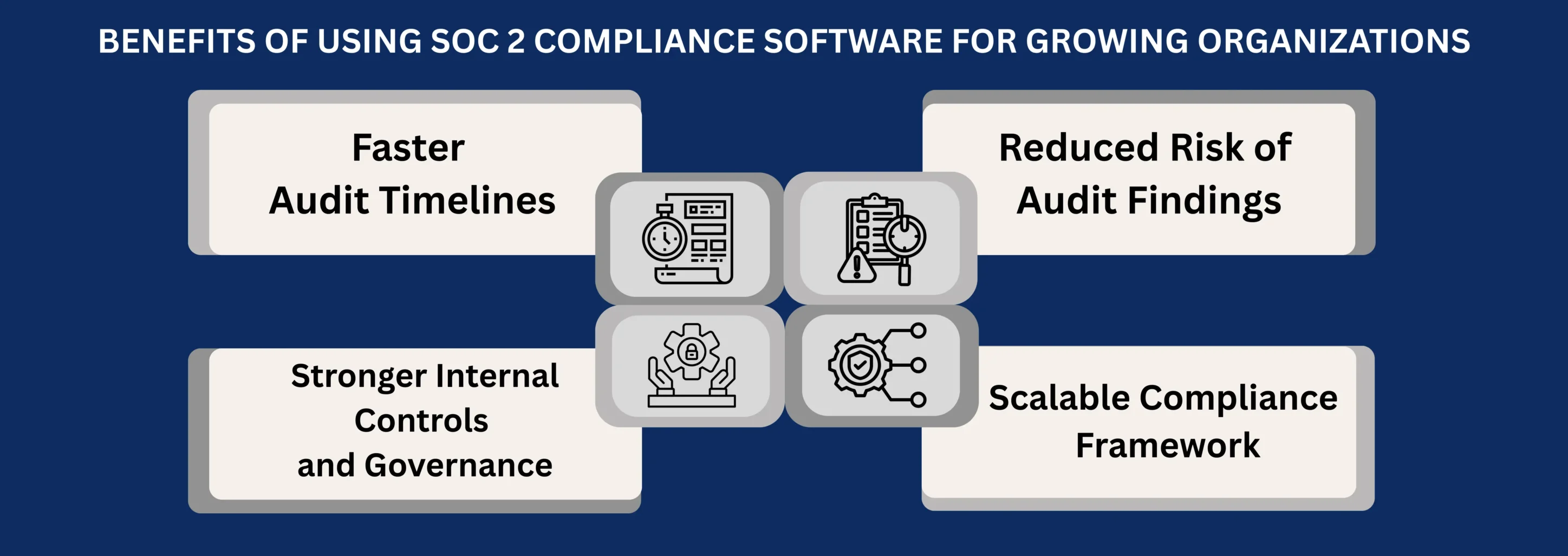
The benefits of SOC 2 Certification for New York-based organizations extend across commercial, operational, and risk management dimensions. SOC 2 attestation creates independently verified assurance that directly translates into business value: accelerated enterprise sales cycles, reduced friction in vendor qualification processes, stronger contract positions, and demonstrable compliance with customer data protection obligations. For organizations operating in New York’s competitive, regulation-dense environment, these benefits represent material competitive and operational advantages.
SOC 2 Certification directly accelerates enterprise sales processes by eliminating security questionnaire bottlenecks. Organizations without SOC 2 attestation spend significant time and resources responding to individual customer security questionnaires — each requiring custom responses, documentation gathering, and internal coordination. A current SOC 2 Type 2 report replaces or substantially reduces the need for these questionnaires, shortening the vendor qualification phase of enterprise sales cycles. For New York SaaS companies and technology vendors with high-volume enterprise sales pipelines, the operational efficiency gained by providing a SOC 2 report in lieu of individual questionnaire responses represents a meaningful commercial advantage.
Market access is another critical commercial benefit of SOC 2 Certification in New York. Certain customer segments — large financial institutions, healthcare organizations, government-adjacent entities, and Fortune 500 enterprises — have formal procurement requirements that include SOC 2 attestation as a threshold condition. Without current SOC 2 Certification, these market segments are effectively inaccessible. Organizations that achieve and maintain SOC 2 attestation unlock these enterprise customer segments, creating revenue opportunities that were previously closed. For growth-stage New York technology companies, SOC 2 Certification is often the key that opens the enterprise market door.
The SOC 2 audit process itself creates significant operational benefits beyond the attestation report. Preparing for and undergoing a SOC 2 examination requires organizations to document, formalize, and consistently operate security controls that may have previously existed only informally. This process of control formalization reduces the operational risk of security incidents, access control failures, and data breaches. Organizations that have completed SOC 2 audits consistently report that the process identified previously unrecognized control gaps, prompted remediation of access control weaknesses, improved documentation practices, and strengthened incident response preparedness — benefits that persist long after the audit report is issued.
SOC 2 attestation provides a foundation of independently verified trust that supports customer relationships at every stage of the commercial lifecycle. During pre-sales evaluation, SOC 2 Certification signals institutional security maturity. During contract negotiation, SOC 2 attestation provides documented evidence supporting data security representations in customer agreements. During ongoing account management, annual SOC 2 renewal demonstrates continuous commitment to control effectiveness. For New York organizations competing for enterprise business, SOC 2 Certification creates a competitive differentiation advantage relative to competitors who rely on self-assessment or unverified security claims — precisely because independent attestation by a Licensed CPA firm cannot be replicated through internal documentation alone.
- ✓Eliminates or reduces individual customer security questionnaire burden through a single independent attestation
- ✓Accelerates enterprise sales cycles by satisfying vendor qualification requirements at the procurement stage
- ✓Unlocks regulated-industry customer segments requiring SOC 2 attestation as a procurement threshold
- ✓Provides independently verified evidence supporting data security representations in customer contracts
- ✓Demonstrates organizational security maturity to institutional investors, partners, and regulatory bodies
- ✓Supports vendor risk management program compliance for customers subject to NYDFS and other regulations
- ✓Identifies and drives remediation of control gaps through the SOC 2 audit process itself
- ✓Creates a structured framework for annual control monitoring and continuous security improvement
- ✓Differentiates the organization from competitors relying on self-assessment or unverified security claims
- ✓Builds institutional customer trust that supports contract renewals and account expansion
- ✓Commercial Benefits: Sales Acceleration and Market Access
- ✓Risk Management and Operational Benefits
- ✓Customer Trust and Competitive Differentiation
SOC 2 vs. Other Security Frameworks: Positioning for New York Organizations
New York organizations frequently evaluate SOC 2 in the context of other security frameworks and certification standards, including ISO 27001, HIPAA, PCI DSS, and NIST CSF. Understanding how SOC 2 relates to these frameworks is important for making informed decisions about certification strategy and for accurately positioning SOC 2 attestation with enterprise clients who may have questions about framework equivalence or overlap. Each framework serves a distinct purpose, and for many New York organizations, multiple frameworks apply simultaneously to different aspects of their operations.
SOC 2 vs. ISO 27001
SOC 2 and ISO 27001 are both information security frameworks that involve third-party assessment, but they differ fundamentally in their structure, geographic recognition, and attestation model. SOC 2 is a U.S.-centric framework governed by the AICPA, specifically designed for service organizations and evaluated through a CPA-firm attestation engagement. ISO 27001 is a globally recognized standard governed by the International Organization for Standardization, structured around a formal Information Security Management System (ISMS), and certified through accredited certification bodies. For New York organizations serving primarily U.S. enterprise clients, SOC 2 is typically the preferred framework because it aligns with the standard U.S. enterprise procurement processes expect. Organizations serving international clients may pursue both, as ISO 27001 provides global recognition that SOC 2 does not.
The control testing detail in SOC 2 reports is significantly more granular than in ISO 27001 certification. SOC 2 reports include specific control descriptions, testing procedures, sample sizes, and test results — information that allows reviewers to evaluate the depth and quality of the audit. ISO 27001 certification confirms that an ISMS exists and meets the standard’s requirements but does not produce the same level of detailed control testing documentation. For U.S. enterprise clients conducting vendor risk assessments, the detailed control testing in a SOC 2 Type 2 report provides more actionable assurance than an ISO 27001 certificate alone. New York financial institutions specifically prefer SOC 2 reports for vendor risk assessments because of this testing detail.
SOC 2 and HIPAA: Complementary Frameworks for Healthcare Technology
HIPAA and SOC 2 address overlapping but distinct security requirements for healthcare technology organizations. HIPAA imposes federally mandated minimum security standards for the protection of protected health information (PHI), enforced by the U.S. Department of Health and Human Services. SOC 2 is a voluntary attestation framework whose scope is defined by the service organization’s commitments to its customers — not by regulatory mandate. For healthcare technology companies in New York, HIPAA compliance is legally required, while SOC 2 attestation is commercially driven by customer expectations. Many healthcare technology organizations pursue SOC 2 Certification because it provides a more comprehensive and independently verified demonstration of security program effectiveness than HIPAA’s self-assessment model alone.
| Framework | Governing Body | Geographic Focus | Report Type | Primary Audience |
|---|---|---|---|---|
| SOC 2 | AICPA | U.S.-centric | Detailed attestation report (confidential) | Enterprise clients, vendor risk management |
| ISO 27001 | ISO/IEC | Global | Certification statement | International clients, global procurement |
| HIPAA Security Rule | HHS/OCR | U.S. | Compliance self-assessment | Regulatory bodies, covered entities |
| PCI DSS | PCI SSC | Global | Assessment report (QSA) | Payment brands, acquiring banks |
| NIST CSF | NIST | U.S. | Self-assessment framework | Federal agencies, critical infrastructure |
CertPro SOC 2 Audit Services in New York
CertPro is a Licensed CPA firm conducting independent third-party SOC 2 examinations under AICPA attestation standards for organizations operating in New York and across the United States. CertPro’s SOC 2 audit engagements are performed exclusively as independent attestation services — not advisory, consulting, or implementation engagements. This independence is fundamental to the professional integrity and evidentiary value of the SOC 2 reports CertPro issues. The Licensed CPA firm designation reflects CertPro’s authorization to issue formal attestation opinions under AICPA standards, a qualification that distinguishes CPA-firm attestation from assessments conducted by non-CPA security consulting firms.
Independence and AICPA Standards Compliance
CertPro’s independence as a Licensed CPA firm is maintained through strict adherence to AICPA independence standards governing attestation engagements. Independence — both in fact and in appearance — is a foundational requirement for issuing a valid SOC 2 attestation opinion. CertPro’s engagement model is structured exclusively around audit and attestation activities, ensuring that the firm’s professional independence is not compromised by advisory relationships or other engagements that could impair objectivity. All SOC 2 audit firms operating in New York must maintain this independence standard, and CertPro’s engagement protocols are designed to satisfy AICPA independence requirements at every phase of the audit cycle.
CertPro conducts SOC 2 audits using a structured, evidence-based methodology aligned with current AICPA guidance, including updated peer review guidance that addresses quality risks associated with technology-enabled audit workflows. The firm’s engagement teams apply professional judgment to control testing rather than relying solely on automated evidence collection tools. This ensures that the resulting attestation reflects genuine independent evaluation of control design and operating effectiveness. For organizations seeking SOC 2 attestation in New York with report quality that will withstand scrutiny in enterprise vendor risk assessments and regulatory examinations, CertPro’s methodology provides the professional rigor that distinguishes a high-quality SOC 2 report.
Fixed Pricing and Engagement Transparency
CertPro’s SOC 2 audit engagements in New York are structured with fixed pricing, providing organizations with cost certainty from scope definition through attestation issuance. Fixed pricing eliminates the budget uncertainty associated with time-and-materials engagements, where scope creep and extended fieldwork can result in costs significantly above initial estimates. For New York organizations managing compliance budgets across multiple certification and regulatory requirements simultaneously, fixed pricing enables accurate annual compliance cost planning. CertPro’s pricing structure reflects the defined scope of each engagement — including applicable Trust Services Criteria, report type, and observation period — with clearly documented scope boundaries that protect against cost overruns.
SOC 2 Readiness Assessment in New York
For organizations approaching their first SOC 2 examination, CertPro offers a structured SOC 2 readiness assessment New York service that evaluates existing controls against applicable Trust Services Criteria before the formal audit commences. The readiness assessment identifies control gaps, documentation deficiencies, and areas where additional evidence will be required during the formal audit engagement. This pre-engagement evaluation allows organizations to address identified gaps before the formal observation period begins, supporting a cleaner initial attestation. The readiness assessment is conducted as a separate, bounded engagement distinct from the formal SOC 2 audit, maintaining the independence of the attestation engagement.
CertPro serves organizations across New York’s full industry spectrum, with particular depth of experience in financial services technology, SaaS, cloud infrastructure, healthcare technology, and professional services. The firm’s knowledge of New York’s regulatory environment — including NYDFS cybersecurity requirements, enterprise vendor risk management expectations, and sector-specific security standards — informs the SOC 2 audit methodology applied to each engagement. Organizations seeking SOC 2 Certification in New York benefit from working with a CPA firm that understands both the technical requirements of the AICPA framework and the commercial and regulatory context in which the resulting attestation will be evaluated by New York enterprise clients and regulators.
SOC 2 Audit Scope and Criteria Selection
CertPro’s engagement approach begins with a thorough scope definition process that identifies the appropriate Trust Services Criteria for each organization’s specific service commitments and operational profile. The scope determination is informed by the organization’s system description, customer contractual obligations, the types of data processed, and the risks most relevant to the organization’s service model. For New York-based organizations with complex, multi-tenant cloud environments, the scope definition process carefully delineates system boundaries to ensure comprehensive but appropriately focused coverage. The scope determination directly affects the depth and duration of the audit engagement, and CertPro’s structured approach ensures that the audit program addresses the controls most material to the organization’s Trust Services Criteria commitments.
FAQ
▶
What is SOC 2 certification?
▶
What is the difference between SOC 2 certified and SOC 2 compliant?
▶
How long does a SOC 2 audit take for a New York organization?
▶
Which Trust Services Criteria apply to my organization?
▶
Can a non-CPA firm issue a SOC 2 report?
▶
How often must SOC 2 certification be renewed?
▶
What is a SOC 2 readiness assessment and who needs one?
▶
What is the difference between SOC 2 and SOC 3?

AICPA Issues New Guidance for Peer Reviewers Evaluating SOC 2 Engagements
AICPA SOC 2 guidance has been issued to help peer reviewers identify quality risks associated with SOC 2 engagements as the use of compliance automati…

Rippling Launches Automated Compliance Platform for SOC 2 Audits
Excerpt from Rippling Blog Article, Published on April 28, 2026 Rippling has announced the launch of Rippling Automated Compliance, a new compliance a…

Rippling Enters the Compliance Automation Market with SOC 2 Solution
Rippling has officially entered the compliance automation market with the launch of its Automated Compliance platform, starting with support for SOC 2…
Get In Touch
have a question? let us get back to you.