
SOC 2 Certification in Newcastle
The Trust Services Criteria (TSC) form the evaluative foundation of every SOC 2 examination. Developed and maintained by the AICPA, the TSC define the specific control requirements against which a service organization’s environment is assessed. Understanding each criterion category is essential for determining SOC 2 audit scope and structuring an organization’s control environment for examination.
OUR CLIENTS










What Is SOC 2 Certification and What Does It Mean for Newcastle Organizations
SOC 2 Certification in Newcastle is conducted by a Licensed CPA Firm as an independent third-party examination under AICPA attestation standards AT-C Section 105 and AT-C Section 205. The process produces an independently issued attestation report confirming that a service organization’s controls have been evaluated against the applicable Trust Services Criteria — not merely implemented, but independently tested and confirmed to operate effectively. CertPro is a Licensed CPA Firm performing SOC 2 audit and attestation services exclusively, with no consulting, advisory, or implementation activities conducted alongside or in connection with certification engagements.
SOC 2 as an Attestation Standard — Not a Product Certification
SOC 2 is a formal attestation standard governed by the American Institute of Certified Public Accountants (AICPA). A SOC 2 report is issued by a licensed CPA firm following an independent evaluation of whether an organization’s controls meet the applicable Trust Services Criteria. Unlike product certifications or government-mandated regulations, SOC 2 attestation is a voluntary but commercially essential independent evaluation.
The governing attestation standard is AT-C Section 205, which defines the procedures, responsibilities, and reporting obligations of the examining CPA firm. The examination is structured to evaluate whether controls are designed appropriately and, in the case of a Type 2 examination, whether those controls operated effectively throughout a defined observation period. SOC 2 compliance is not achieved by self-declaration — it requires the issuance of an independent attestation report by a licensed CPA firm qualified to perform attestation engagements under AICPA professional standards.
Newcastle’s Position as a Supplier to U.S. and International Regulated Markets
Newcastle occupies an increasingly significant role as a supplier of technology, data management, and managed services to U.S. enterprises and regulated international clients. Organizations across the Hunter Valley and Greater Newcastle region — spanning mining technology, port logistics systems, advanced manufacturing software, renewable energy platforms, and SaaS providers — frequently encounter SOC 2 attestation requirements embedded in enterprise procurement frameworks, contractual due diligence obligations, and vendor security assessment processes.
U.S. clients in regulated industries, including financial services, healthcare, and federal contracting, routinely require independent SOC 2 reports before onboarding Australian technology and data service providers. SOC 2 Certification in Newcastle therefore represents a commercially and operationally essential credential for organizations seeking access to these markets. Having security controls in place is not sufficient — when a company holds a current SOC 2 attestation, it means those controls have been independently tested and confirmed to work over time, not merely configured and left unverified.
The AICPA Framework and the Role of the Licensed CPA Firm
The AICPA Trust Services Criteria (TSC) define the control objectives and criteria points against which service organizations are evaluated during a SOC 2 examination. The TSC framework encompasses five categories: Security, Availability, Processing Integrity, Confidentiality, and Privacy. Security — also referred to as the Common Criteria — is mandatory for all SOC 2 engagements. The remaining four categories are included in scope based on the nature of the services provided and the commitments made to user entities.
The examining CPA firm determines, in accordance with AT-C Section 205, which criteria are applicable to the engagement scope. The CPA firm then designs and executes audit procedures to gather sufficient, appropriate evidence to form an opinion on the organization’s controls. This independent evaluation framework is what distinguishes SOC 2 attestation from internal compliance assessments, self-assessments, or questionnaire-based security evaluations. SOC 2 Certification in Newcastle, when issued by a qualified Licensed CPA Firm, carries institutional weight recognized across U.S. and international procurement and vendor assurance processes.

Trust Services Criteria: The Evaluation Framework for SOC 2 Certification
The Trust Services Criteria (TSC) form the evaluative foundation of every SOC 2 examination. Developed and maintained by the AICPA, the TSC define the specific control requirements against which a service organization’s environment is assessed. Understanding each criterion category is essential for determining SOC 2 audit scope and structuring an organization’s control environment for examination.
The Security criterion — formally designated as the Common Criteria (CC) — is required in every SOC 2 engagement regardless of service type or industry. The Common Criteria evaluate whether the organization’s system is protected against unauthorized access, both physical and logical. This includes controls over access management, change management, risk assessment, monitoring, and incident response.
For Newcastle technology organizations, the Common Criteria typically encompass controls governing cloud infrastructure access, network boundary protection, endpoint security, and privileged account management. The AICPA Common Criteria are further organized across logical groupings including the Control Environment, Communication and Information, Risk Assessment, Monitoring Activities, and Control Activities. An auditor conducting a SOC 2 examination evaluates each applicable criterion point through inspection of documentation, configuration evidence, system-generated logs, and management representations. The Security criterion is the minimum scope requirement and serves as the baseline for all SOC 2 attestation reports.
Beyond Security, four additional TSC categories may be included in a SOC 2 examination scope depending on the service organization’s commitments and the nature of data processed. Availability evaluates whether the system is available for operation and use as committed or agreed — a critical criterion for cloud hosting providers, SaaS platforms, and managed service providers in Newcastle serving clients with defined uptime obligations.
Processing Integrity assesses whether system processing is complete, valid, accurate, timely, and authorized — relevant to Newcastle organizations in financial data processing, logistics platforms, or automated manufacturing systems. Confidentiality evaluates whether information designated as confidential is protected as committed or agreed, which is particularly relevant for organizations handling proprietary client data, legal information, or commercially sensitive datasets. Privacy addresses the collection, use, retention, disclosure, and disposal of personal information in conformity with the organization’s privacy notice and applicable privacy regulations. Newcastle organizations processing personal data subject to Australian Privacy Act obligations or U.S. privacy frameworks may find Privacy criterion inclusion directly relevant to their compliance obligations and client contractual requirements.
| Trust Services Criterion | Evaluation Focus | Typical Newcastle Applicability |
|---|---|---|
| Security (Common Criteria) | Protection against unauthorized access — logical and physical | All service organizations — mandatory for every SOC 2 engagement |
| Availability | System availability per commitments and agreements | SaaS providers, cloud hosting, managed service providers |
| Processing Integrity | Complete, accurate, timely, and authorized processing | Fintech, logistics platforms, manufacturing systems |
| Confidentiality | Protection of designated confidential information | Data processors, legal tech, enterprise SaaS |
| Privacy | Collection, use, and disposal of personal information | Organizations processing consumer or employee personal data |
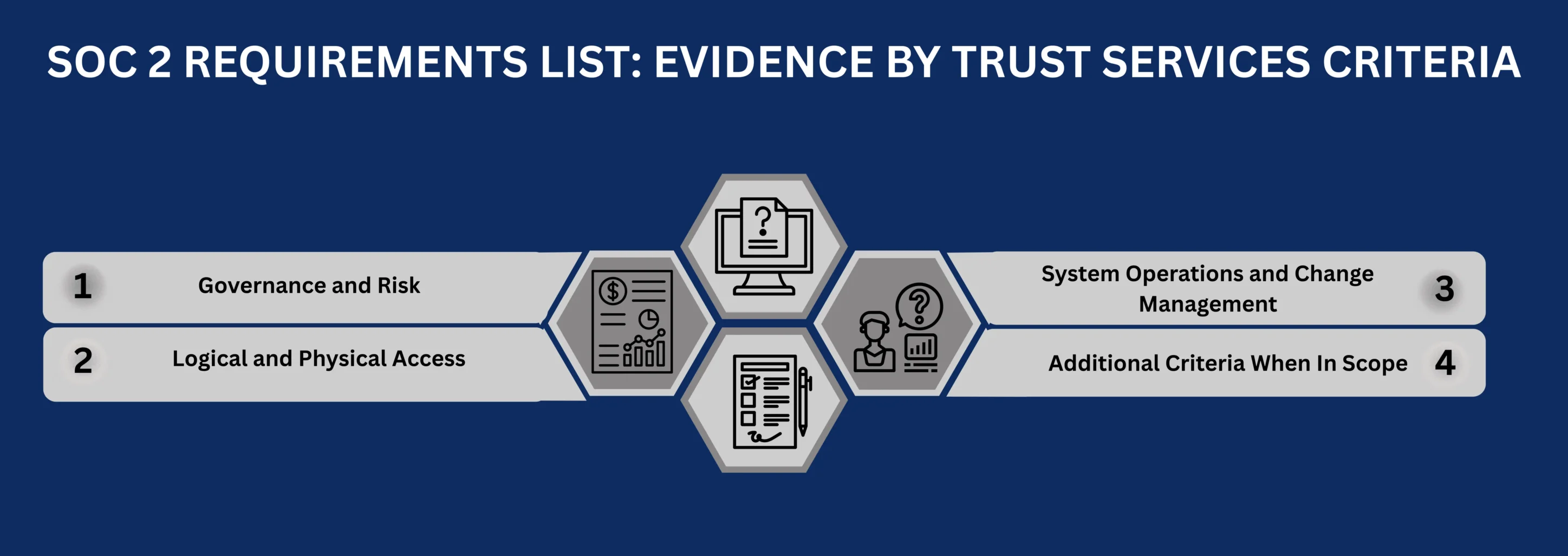
- ✓Security and the Common Criteria — Mandatory for All SOC 2 Engagements
- ✓Availability, Processing Integrity, Confidentiality, and Privacy
SOC 2 Type 1 and SOC 2 Type 2 Reports — Definitions and Differences
SOC 2 examinations produce two distinct report types: Type 1 and Type 2. Each serves a different audit objective and carries different evidentiary weight in enterprise procurement and vendor assurance contexts. Newcastle organizations evaluating which report type to pursue should understand the structural and evidential distinctions between the two before determining SOC 2 audit scope.
SOC 2 Type 1 — Design of Controls at a Point in Time
A SOC 2 Type 1 report evaluates the design and implementation of an organization’s controls at a specific point in time — the report date. The examining CPA firm assesses whether the controls described in management’s system description are suitably designed to meet the applicable Trust Services Criteria as of that date. A Type 1 examination does not assess whether controls operated effectively over a period of time; it establishes that, as of the report date, appropriate controls were in place and suitably designed.
SOC 2 Type 1 reports are frequently pursued by Newcastle organizations entering the SOC 2 attestation process for the first time and needing to demonstrate an established control environment to clients before completing a full observation period. A Type 1 report provides independent confirmation of control design and is recognized in many procurement processes as an initial indicator of security posture. However, enterprise clients — particularly U.S. financial institutions and federal contractors — commonly require a SOC 2 Type 2 report before extending full vendor approval.
SOC 2 Type 2 — Operating Effectiveness Over an Observation Period
A SOC 2 Type 2 report evaluates both the design and the operating effectiveness of an organization’s controls across a defined observation period — typically a minimum of six months, with twelve-month periods representing the standard for mature organizations and most enterprise client requirements. During the observation period, the examining CPA firm applies audit procedures including inquiry, observation, inspection of documentary evidence, and re-performance to test whether each applicable control operated consistently and effectively throughout the period.
Sampling methodologies are applied to test populations of control executions, with sample sizes determined in accordance with the auditor’s risk assessment and professional judgment. The SOC 2 Type 2 report provides substantially greater assurance than a Type 1 report because it demonstrates sustained operational effectiveness rather than point-in-time design. For Newcastle organizations supplying technology or data services to U.S. enterprises, a SOC 2 Type 2 attestation is the evidentiary standard most commonly required in vendor security reviews, enterprise contract negotiations, and regulated supply chain assessments. SOC 2 compliance, as demonstrated through a Type 2 attestation, signals to prospective clients that controls function reliably under real operational conditions.
| Attribute | SOC 2 Type 1 | SOC 2 Type 2 |
|---|---|---|
| Evaluation focus | Control design at a specific point in time | Control design and operating effectiveness over a defined period |
| Observation period | None — single report date | Minimum 6 months; typically 12 months |
| Evidence basis | Inspection and inquiry at report date | Sampling and testing throughout the full observation period |
| Assurance level | Design adequacy confirmed | Design and sustained effectiveness confirmed |
| Common requirement | Initial vendor onboarding contexts | Enterprise procurement, regulated industry contracts |
SOC 2 Certification Audit Process for Organizations in Newcastle
The SOC 2 audit process in Newcastle follows a structured sequence governed by AICPA attestation standards AT-C 105 and AT-C 205. Each stage of the examination is executed independently by the Licensed CPA Firm, with no consulting or implementation activities conducted in connection with the audit engagement. The following stages describe the standard SOC 2 examination process as conducted for Newcastle-based service organizations.
The first stage of a SOC 2 examination involves establishing the boundaries of the system under review and determining which Trust Services Criteria apply to the engagement. The auditor reviews the service organization’s system description — a management-prepared document defining the services provided, the system components in scope (infrastructure, software, people, procedures, and data), and the controls the organization has implemented to meet its service commitments.
The applicable TSC categories are determined based on the nature of services rendered and the commitments made to user entities. For a Newcastle SaaS provider serving U.S. financial institutions, the scope may include Security (mandatory), Availability (uptime commitments), and Confidentiality (client data protection obligations). The auditor then designs an audit program specifying the procedures, evidence requirements, and testing approach applicable to each criterion point in scope. Scope determination is a critical phase that directly shapes the evidence collection procedures and the final SOC 2 report structure.
During the examination fieldwork phase, the auditor collects evidence through inquiry, observation, inspection of documentation, and re-performance of control procedures. For a SOC 2 Type 2 audit Newcastle engagement, the auditor applies sampling to test populations of control executions across the full observation period. Evidence collected may include access provisioning and deprovisioning records, change management approval logs, security incident response records, encryption configuration documentation, backup test results, and business continuity exercise outcomes.
Each piece of evidence is evaluated against the applicable Trust Services Criterion point to assess design suitability and, for Type 2 engagements, operating effectiveness. Where control deviations are identified during testing, the auditor documents nonconformities and assesses whether they constitute exceptions affecting the overall opinion. The attestation report includes a description of each test performed, the results of that test, and any identified exceptions — providing user entities with the information needed to evaluate the significance of any deviations within their own risk assessments.
Upon completion of examination fieldwork and nonconformity review, the Licensed CPA Firm issues the SOC 2 attestation report. The report includes management’s system description, management’s assertion regarding the fairness of the description and the suitability of control design (and operating effectiveness for Type 2 engagements), and the auditor’s independent opinion.
SOC 2 reports do not carry a fixed expiration date in the same manner as product certifications. However, a SOC 2 report covers a defined period and becomes stale as time passes. Enterprise clients and regulated procurement processes commonly treat a SOC 2 report as current for twelve months from the end of the covered period. To maintain continuous SOC 2 attestation status, organizations conduct annual audit cycles — each successive examination covering the following twelve-month observation period. This recurring audit cycle is the mechanism through which ongoing SOC 2 compliance is demonstrated, not a separate monitoring service, but a structured, annually recurring independent SOC 2 examination conducted by the Licensed CPA Firm.
| Audit Stage | Key Activities | Output |
|---|---|---|
| Scope Definition | System description review; TSC applicability determination; audit program design | Defined scope and audit procedures |
| Stage 1 — Documentation Review | Review of system description, control documentation, and policy evidence | Documentation assessment findings |
| Stage 2 — Control Testing | Inquiry, observation, inspection, and re-performance across the observation period | Evidence file and test results |
| Nonconformity Review | Assessment of control deviations; exception documentation | Exception schedule and impact assessment |
| Report Issuance | Auditor opinion formation; attestation report issuance | SOC 2 Type 1 or Type 2 attestation report |
- ✓Scope Definition and Audit Program Determination
- ✓Evidence Collection, Control Testing, and Nonconformity Review
- ✓Report Issuance, Validity, and Renewal Cycle
Why Organizations in Newcastle Pursue SOC 2 Certification
Demand for SOC 2 Certification in Newcastle is driven by a convergence of client contractual requirements, enterprise vendor security assessment processes, regulated supply chain expectations, and competitive positioning in technology-intensive markets. The following demand drivers reflect conditions specific to Newcastle’s technology and services ecosystem.
Enterprise Vendor Security Reviews and U.S. Client Procurement Requirements
U.S. enterprises and regulated institutions maintain formal vendor security assessment programs that evaluate third-party risk before and during supplier engagement. Within these programs, SOC 2 attestation reports serve as the standard evidence format for evaluating the security posture of technology and data service providers. A Newcastle cloud provider, managed service organization, or SaaS vendor supplying services to a U.S. financial institution, healthcare organization, or federal contractor will routinely encounter a contractual requirement to provide a current SOC 2 Type 2 report as a condition of vendor approval or contract renewal.
Without SOC 2 attestation, Newcastle organizations may be excluded from procurement processes entirely, or required to complete extensive questionnaire-based assessments that are less efficient and carry less evidentiary weight than an independently issued attestation report. SOC 2 audit Newcastle engagements conducted by a Licensed CPA Firm produce reports directly usable in these procurement contexts without additional interpretation or attestation by the prospective client.
Mining Technology, Port Logistics, and Advanced Manufacturing Supply Chains
Newcastle’s established base of mining technology providers, port logistics system operators, and advanced manufacturing technology companies creates localized demand for SOC 2 attestation beyond the traditional SaaS and cloud sectors. Mining technology vendors supplying operational control systems, sensor data platforms, or mine management software to multinational resource companies frequently encounter security attestation requirements as part of enterprise technology procurement processes.
Port logistics operators managing digitized cargo tracking, customs integration, and vessel scheduling systems process commercially sensitive data subject to confidentiality commitments, where SOC 2 attestation substantiates independent control verification. Advanced manufacturing technology providers delivering industrial automation, quality management, or supply chain optimization software to export-oriented manufacturers increasingly face SOC 2 compliance requirements from international clients. SOC 2 Certification in Newcastle for companies in these sectors serves as a structured mechanism for demonstrating independent control verification to enterprise clients who cannot assess security environments directly and rely on third-party attestation to fulfill their own vendor risk management obligations.
Renewable Energy Platforms and Data-Intensive Service Providers
Newcastle’s growing renewable energy sector — encompassing solar, wind, and grid technology providers — increasingly interfaces with regulated energy markets, government contracts, and international investment frameworks that carry data security and compliance expectations. Renewable energy platform operators managing grid integration data, energy trading information, or environmental monitoring datasets may process information subject to confidentiality obligations that align directly with SOC 2 Confidentiality and Security criteria.
Additionally, Newcastle-based organizations providing data hosting, cloud infrastructure, or data analytics services to clients across regulated industries require independent verification of their security and availability controls to satisfy client due diligence requirements. The SOC 2 examination provides a structured, independent evaluation framework applicable across all data-intensive service categories, regardless of the specific industry vertical served. SOC 2 compliance Newcastle engagements are structured to reflect the actual service commitments and system boundaries of each organization, ensuring the resulting attestation report is accurate and relevant to the user entities relying upon it.
Certification Scope and the Independent Evaluation Framework
The scope and structure of a SOC 2 examination are defined through a framework of independent evaluation criteria, evidence assessment standards, and professional judgments exercised exclusively by the Licensed CPA Firm. The following elements describe the key components of the independent SOC 2 evaluation framework as applied in Newcastle engagements.
Control Environment Assessment and Evidence-Based Evaluation
The control environment encompasses the organizational structures, oversight mechanisms, policies, and management philosophies that form the foundation of an organization’s internal control system. During a SOC 2 examination, the auditor evaluates the control environment as a prerequisite to assessing individual control activities, because the tone and effectiveness of the overall environment directly influences the reliability of specific controls.
Evidence assessed during control environment evaluation includes governance documentation, risk assessment processes, management oversight activities, organizational structures defining roles and responsibilities, and communication mechanisms for control policies and procedures. For Newcastle organizations, the control environment evaluation considers whether management has established a culture of accountability around security and data protection — reflected in documented policies, training records, and active oversight activities. The auditor collects evidence supporting the assertion that the control environment is designed and operating consistently with the applicable Trust Services Criteria, rather than relying solely on management representations.
Subservice Organizations and Complementary User Entity Controls
Many Newcastle service organizations rely on subservice organizations — third-party providers such as cloud infrastructure vendors, data center operators, or payment processors — to deliver components of the services described in their SOC 2 system boundary. The SOC 2 examination framework provides two approaches for addressing subservice organization reliance: the inclusive method, which includes subservice organization controls within the scope of the primary examination, and the carve-out method, which excludes subservice organization controls from the examination scope while describing the nature of services provided and the controls expected from the subservice organization.
In practice, most Newcastle SOC 2 engagements apply the carve-out method, with the auditor describing the applicable Complementary Subservice Organization Controls (CSOCs) in the system description. Additionally, certain controls within the Trust Services Criteria may depend on actions taken by user entities — these are documented as Complementary User Entity Controls (CUECs) and are excluded from the scope of the service organization’s examination. Accurate identification of CSOCs and CUECs is a critical component of a well-scoped SOC 2 attestation.
Benefits of SOC 2 Certification for Newcastle-Based Organizations
SOC 2 attestation produces a range of commercially and operationally significant outcomes for Newcastle organizations operating in technology-intensive and data-sensitive service categories. The following benefits reflect the verifiable outcomes of independent SOC 2 examination — not projected or claimed improvements, but documented results recognized across enterprise and regulated procurement contexts.
- ✓Independent verification of control design and operating effectiveness against the AICPA Trust Services Criteria, accepted by U.S. and international enterprise procurement frameworks
- ✓Reduction of repetitive vendor security questionnaires: a current SOC 2 Type 2 report is accepted in lieu of extended security questionnaire processes by most enterprise procurement teams
- ✓Structured documentation of the organization’s control environment, system boundaries, and security commitments, providing evidentiary support for client contract negotiations
- ✓Demonstration of sustained control effectiveness over time through the annual audit cycle, distinguishing SOC 2 attestation Newcastle holders from organizations relying on self-assessments
- ✓Recognition in regulated supply chains serving U.S. financial services, healthcare, and federal contracting sectors where SOC 2 compliance Newcastle attestation is a standard vendor approval requirement
- ✓Independent identification of control deviations through the examination process, with exceptions documented transparently in the attestation report for user entity review
- ✓Competitive differentiation in enterprise technology markets where SOC 2 Certification in Newcastle serves as a baseline security credentialing requirement
In enterprise procurement contexts, the SOC 2 attestation report functions as a standardized evidence document that allows user entities to evaluate the security posture of a service organization without conducting on-site audits or investing in direct technical assessments. For Newcastle organizations pursuing contracts with U.S.-headquartered technology companies, financial institutions, or government contractors, a current SOC 2 Type 2 report substantially accelerates vendor approval timelines by providing a pre-existing, independently verified security assessment.
The report’s structure — including the system description, management’s assertion, the auditor’s opinion, and detailed test results — is specifically designed for use by user entities and their auditors in assessing vendor risk. SOC 2 attestation Newcastle reports issued by CertPro as a Licensed CPA Firm are structured in accordance with AICPA reporting standards, ensuring direct usability in U.S. enterprise procurement and third-party risk management programs. The recurring annual audit cycle further reinforces the credibility of the attestation by demonstrating continuous, not merely historical, control effectiveness.
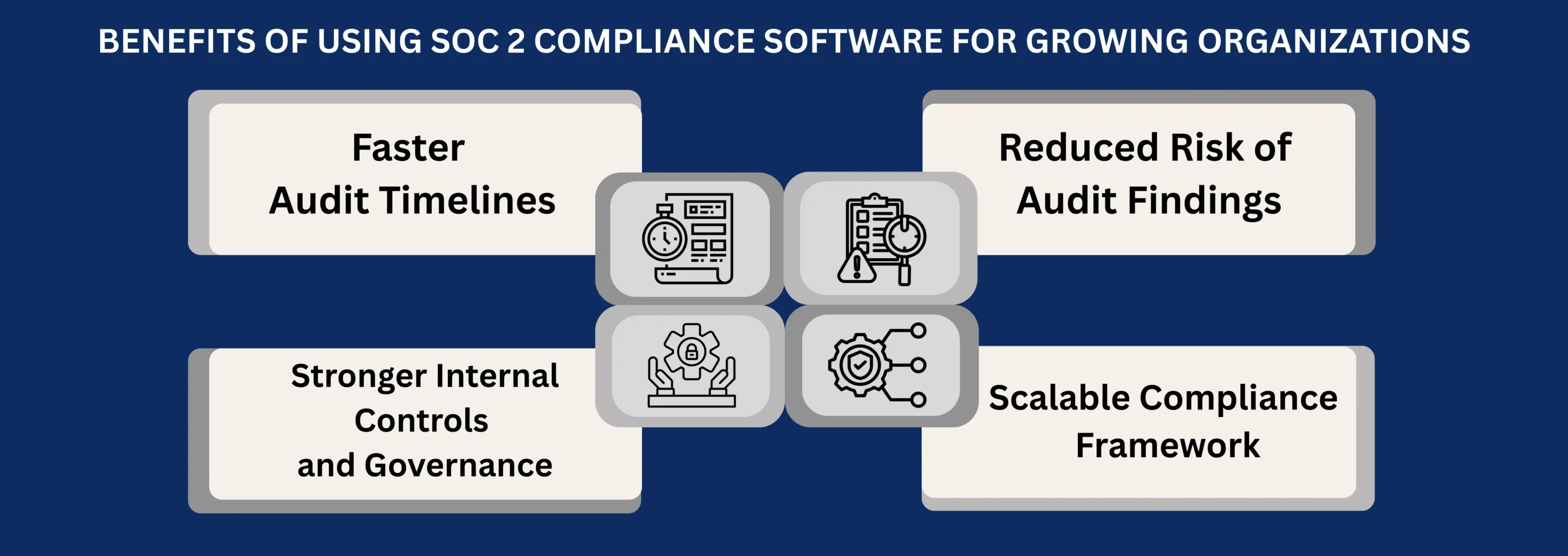
- ✓SOC 2 Attestation and Enterprise Procurement Outcomes
SOC 2 Certification for Newcastle Technology Sectors — Who Requires It
SOC 2 examination requirements are not uniform across all industries. They are driven by client contractual obligations, regulatory expectations within supply chains, and the nature of data processed. The following sectors in Newcastle most commonly encounter SOC 2 certification requirements in enterprise and regulated market contexts.
SaaS Providers, Cloud Companies, and Managed Service Providers
Newcastle’s technology startup and SaaS ecosystem includes organizations providing cloud-delivered software, infrastructure-as-a-service platforms, and managed IT and security services to enterprise clients in Australia and internationally. SOC 2 Certification in Newcastle for technology companies in these categories faces the most consistent and direct demand for attestation, as their service delivery model — processing client data within multi-tenant or dedicated cloud environments — creates explicit security and availability commitments requiring independent verification.
A Newcastle SaaS provider serving U.S. mid-market or enterprise clients will typically encounter a SOC 2 Type 2 requirement during contract negotiation or initial vendor onboarding. Managed security service providers and cloud infrastructure operators face similar requirements, with Availability and Confidentiality criteria frequently included alongside Security in the examination scope. For Newcastle technology companies in these sectors, SOC 2 certification is not discretionary in most enterprise contracting contexts — it is a baseline requirement for vendor approval.
Fintech, Financial Data Processing, and Professional Services
Newcastle’s financial services and fintech sector — including payment technology providers, financial data aggregators, accounting software vendors, and wealth management platform operators — encounters SOC 2 compliance requirements driven by banking regulation, financial institution vendor due diligence programs, and Australian Prudential Regulation Authority (APRA) expectations for technology service providers to regulated entities.
A SOC 2 audit Newcastle fintech engagement typically includes Security, Availability, and Processing Integrity criteria, reflecting the precision and completeness requirements associated with financial data processing. U.S. financial institutions subject to the Gramm-Leach-Bliley Act (GLBA) and OCC third-party risk management guidance require independent security attestations from technology vendors processing financial data, making SOC 2 Type 2 reports the standard evidentiary requirement for Newcastle fintech companies seeking U.S. market access. SOC 2 compliance Newcastle financial services engagements are similarly relevant for insurance technology providers, superannuation platform operators, and financial analytics firms processing sensitive financial data under contractual confidentiality obligations.
Why CertPro Conducts SOC 2 Audits in Newcastle
CertPro is a Licensed CPA Firm performing SOC 2 examination and attestation engagements exclusively under AICPA attestation standards AT-C Section 105 and AT-C Section 205. The following describes the institutional qualifications and examination approach that characterize CertPro’s SOC 2 audit Newcastle practice.
Licensed CPA Firm Status and AICPA Attestation Authority
Only a Licensed CPA Firm is authorized to issue SOC 2 attestation reports under AICPA professional standards. This requirement is not administrative — it reflects the professional accountability, independence standards, and technical competency requirements that the AICPA imposes on firms conducting attestation engagements under AT-C Section 205. CertPro holds Licensed CPA Firm status and performs SOC 2 examinations in strict accordance with AICPA attestation standards, including compliance with independence requirements under the AICPA Code of Professional Conduct.
No consulting, implementation, or advisory services are provided by CertPro in connection with SOC 2 engagements — a structural independence measure that preserves the objectivity of the examination and the credibility of the resulting attestation report. SOC 2 Certification in Newcastle conducted by CertPro produces reports accepted by U.S. and international enterprise clients, regulated institutions, and government contractors as evidence of independent third-party control verification.
Examination Methodology and Evidence Standards
CertPro’s SOC 2 examination methodology is designed to produce evidence-based attestation reports that accurately reflect an organization’s control environment and operating practices. The examination applies structured evidence collection procedures — inquiry, observation, inspection, and re-performance — calibrated to the specific Trust Services Criteria in scope and the nature of the service organization’s operating environment.
For Newcastle-based technology organizations with distributed infrastructure, cloud-native architectures, or multi-jurisdiction data processing environments, the audit program is structured to address the full system boundary as described in management’s system description. Evidence collection for SOC 2 Type 2 engagements encompasses the full observation period, with sampling applied to test populations in accordance with professional standards. The resulting attestation report reflects the auditor’s independent opinion formed on the basis of evidence collected — without reference to management’s representations as the sole source of assurance. The SOC 2 examination framework applied by CertPro ensures that every SOC 2 audit Newcastle engagement produces attestation carrying the institutional credibility required for enterprise procurement, regulatory review, and third-party risk management contexts.
FAQ
▶
What is SOC 2 Certification and why does it matter for Newcastle businesses?
▶
What are the Trust Services Criteria?
▶
What is the difference between SOC 2 Type 1 and SOC 2 Type 2?
▶
How long does the SOC 2 audit process take?
▶
What is the observation period for SOC 2 Type 2?
▶
How long is a SOC 2 report valid?
▶
Which Newcastle industries require SOC 2 attestation?
▶
Why do SaaS companies, cloud providers, and managed service providers in Newcastle need SOC 2?
SOC 1 VS SOC 2: WHICH REPORT YOUR CUSTOMERS ACTUALLY ASK FOR
If you sell SaaS or provide outsourced services, you have likely been asked for a SOC report. However, the follow-up question is rarely easy to answer…
SOC 2 Certified: What Does It Mean for Your Business
For companies that handle sensitive data or run cloud-based services, the question “Can you provide your SOC 2 report?” carries enormous weight. Yet, …
HOW SOC 2 AUDITORS REVIEW EVIDENCE OVER TIME
Most businesses pursuing a SOC 2 report spend months building security controls but overlook a fundamental reality: SOC 2 auditors do not just verify …
Get In Touch
have a question? let us get back to you.