
SOC 2 Certification in North Carolina
During a SOC 2 audit, the Licensed CPA Firm evaluates whether the organization’s controls satisfy each selected criterion. The criteria are not prescriptive checklists — they define what must be achieved, leaving the organization responsible for designing and operating controls that meet those objectives. This principles-based approach allows organizations of varying size and structure to demonstrate SOC 2 compliance without conforming to a single, rigid technical framework, making SOC 2 adaptable across a broad range of industries and business models.
OUR CLIENTS










What Is SOC 2 Certification?
SOC 2 Certification is a formal attestation standard developed and governed by the American Institute of Certified Public Accountants (AICPA). It provides an independent, third-party evaluation of an organization’s controls relevant to security, availability, processing integrity, confidentiality, and privacy — collectively defined as the Trust Services Criteria (TSC). SOC 2 is not a self-assessment or an internal compliance declaration. It is a structured examination conducted exclusively by a Licensed CPA Firm, which issues an attestation report upon completion of the audit engagement. This independent verification is what gives SOC2 Certification its credibility in the marketplace.
The SOC 2 framework is specifically designed for service organizations that store, process, or transmit customer data. This includes software-as-a-service (SaaS) providers, cloud infrastructure companies, data centers, managed service providers, healthcare technology vendors, and financial technology firms. In North Carolina, the rapid expansion of the technology sector — particularly across Research Triangle Park, Charlotte, and Raleigh — has increased demand for SOC 2 attestation as the primary mechanism for demonstrating security assurance to enterprise customers, regulators, and business partners. SOC 2 Certification in North Carolina has become a strategic business requirement for any service organization handling sensitive customer data.
The Trust Services Criteria Defined
The Trust Services Criteria (TSC) form the evaluative foundation of every SOC 2 audit. Established by the AICPA, the TSC defines the control categories against which a service organization’s systems and processes are assessed. Security — also called the Common Criteria — is mandatory for all SOC 2 engagements. The remaining four criteria (Availability, Processing Integrity, Confidentiality, and Privacy) are selected based on the nature of the services provided and the commitments made to customers. Selecting the right combination of criteria is an early and critical decision in any SOC 2 audit engagement.
| Trust Services Criterion | Primary Focus | Typical Applicability |
|---|---|---|
| Security (Common Criteria) | Protection against unauthorized access and disclosure | All SOC 2 engagements — mandatory for every audit |
| Availability | System uptime and performance commitments | Cloud platforms, SaaS providers, hosting, and managed service providers |
| Processing Integrity | Accuracy and completeness of data processing | Financial processing, payroll systems, and transaction platforms |
| Confidentiality | Protection of confidential information throughout its lifecycle | Legal, financial, and enterprise data service providers |
| Privacy | Collection, use, retention, and disposal of personal information | Healthcare, HR tech, and consumer-facing platforms |
During a SOC 2 audit, the Licensed CPA Firm evaluates whether the organization’s controls satisfy each selected criterion. The criteria are not prescriptive checklists — they define what must be achieved, leaving the organization responsible for designing and operating controls that meet those objectives. This principles-based approach allows organizations of varying size and structure to demonstrate SOC 2 compliance without conforming to a single, rigid technical framework, making SOC 2 adaptable across a broad range of industries and business models.
SOC 2 as an Attestation Standard — Not a Certification Mark
A critical distinction in understanding SOC 2 is that it produces an attestation report rather than a certification mark or badge. Unlike ISO 27001, which results in an accredited certificate issued by a certification body, SOC 2 produces a detailed written report — the SOC 2 attestation — prepared by the Licensed CPA Firm following the examination. This report is addressed to specific recipients (typically the organization’s customers or prospective clients) and communicates the auditor’s opinion on whether the described controls are suitably designed (Type I) or operating effectively over time (Type II). Understanding this distinction helps organizations set accurate expectations with stakeholders when pursuing SOC2 Certification.
The SOC 2 attestation report contains five primary components: management’s description of the system, management’s assertion, the independent auditor’s report, the description of controls, and the results of control testing. This structured format allows report users to evaluate the specific controls in place, understand the audit scope, and make informed risk decisions about engaging with the service organization. For organizations pursuing SOC 2 Certification in North Carolina, understanding that the deliverable is a detailed attestation report — not a pass/fail certificate — is essential to setting accurate expectations with customers and stakeholders from the outset.
Who Requires SOC 2 Certification?
SOC 2 Certification is required or strongly expected by enterprise customers, healthcare organizations, financial institutions, government contractors, and any entity that outsources data processing or system management to a third-party service provider. In practice, procurement teams and security officers at large enterprises routinely include SOC 2 report requests in vendor onboarding and annual vendor review processes. Organizations that cannot produce a current SOC 2 attestation report frequently encounter procurement blockers, extended contract negotiations, or outright disqualification from competitive vendor selections.
Within North Carolina specifically, the concentration of financial services firms in Charlotte, the dense technology and life sciences ecosystem in Research Triangle Park, and the growing cybersecurity sector statewide have created a business environment where SOC 2 compliance is increasingly treated as a baseline expectation rather than a differentiator. North Carolina-based SaaS providers, healthcare IT vendors, and data analytics companies are routinely asked to produce SOC 2 reports during enterprise sales cycles. This makes SOC 2 Certification in North Carolina a strategic operational requirement for companies seeking to scale their customer base and compete for enterprise accounts.

Independent SOC 2 Certification by a Licensed CPA Firm in North Carolina
SOC 2 examinations must be conducted exclusively by a Licensed CPA Firm authorized to perform attestation engagements under the AICPA’s Statements on Standards for Attestation Engagements (SSAE 18). This requirement is not merely procedural — it reflects the fundamental principle that SOC 2 attestation derives its credibility from independent, qualified evaluation. An organization cannot self-certify for SOC 2, nor can a non-CPA consulting firm issue a valid SOC 2 report. The examination must be performed by a Licensed CPA Firm with demonstrated competency in information technology auditing and AICPA attestation standards.
CertPro is a Licensed CPA Firm that conducts SOC 2 examinations for organizations across North Carolina. Operating under AICPA attestation standards, CertPro’s engagement methodology is governed by the professional requirements applicable to attestation engagements — including independence requirements, evidence sufficiency standards, and reporting obligations. The SOC 2 audit North Carolina organizations undergo through CertPro follows a structured examination framework that evaluates control design, implementation, and operational effectiveness against the applicable Trust Services Criteria, resulting in an attestation report that carries independent professional authority.
Independence Requirements in SOC 2 Auditing
The independence requirement is the cornerstone of SOC 2 attestation credibility. Under AICPA professional standards, the Licensed CPA Firm conducting the SOC 2 examination must be independent from the organization being examined. This means the firm cannot have designed the controls it is auditing, cannot have financial relationships that impair objectivity, and must maintain independence in both fact and appearance throughout the engagement. This structural independence is precisely what makes the resulting attestation report meaningful to report users — it represents an objective, third-party evaluation rather than a self-assessment or internal compliance declaration.
Organizations engaging a Licensed CPA Firm for SOC 2 Certification in North Carolina should verify that the firm maintains AICPA membership and undergoes peer review of its attestation practice. Peer review is an external quality control mechanism in which another CPA firm evaluates the auditing firm’s work papers, methodologies, and reporting practices. This oversight structure adds an additional layer of quality assurance to the SOC 2 attestation process and ensures that reports issued by the firm meet the professional standards required for acceptance by enterprise customers, investors, and regulators.
AICPA Standards Governing SOC 2 Examinations
SOC 2 examinations are governed by SSAE No. 18, Attestation Standards: Clarification and Recodification — specifically AT-C Section 205 (Examination Engagements). Under these standards, the Licensed CPA Firm is required to plan the engagement, assess risk, design and perform procedures sufficient to obtain reasonable assurance, and issue a written report expressing an opinion. The standards also prescribe the form and content of the SOC 2 report, including the required components of the system description, management’s assertion, and the auditor’s opinion.
The AICPA also publishes the SOC 2 Guide, which provides detailed implementation guidance for practitioners performing SOC 2 examinations. This guide addresses the evaluation of the system description’s completeness and accuracy, the mapping of controls to Trust Services Criteria, the selection and application of testing procedures, and the documentation requirements for each engagement. Licensed CPA Firms performing SOC 2 audits in North Carolina apply this guidance to ensure the examination is conducted consistently with AICPA professional standards — and that the resulting SOC 2 attestation report will be recognized as credible by its intended users.
SOC 2 Audit Process for North Carolina Organizations
The SOC 2 audit process for North Carolina organizations follows a structured sequence of evaluation stages defined by AICPA attestation standards. Each stage serves a specific purpose in the examination lifecycle and produces documentation that supports the auditor’s ultimate opinion. The process is not a single event — it is a systematic engagement that requires active participation from the organization being examined. This includes producing evidence, documenting system descriptions, and demonstrating consistent control operation throughout the review period. Organizations that understand each stage are better positioned to complete the SOC 2 audit efficiently and with minimal disruption to daily operations.
Scope definition is the foundational stage of every SOC 2 audit engagement. During this stage, the Licensed CPA Firm and the organization jointly identify the system or systems to be included in the examination. The system is defined as the infrastructure, software, people, procedures, and data that the service organization uses to provide its services to customers. Establishing an accurate and complete system boundary is critical — the SOC 2 report will cover only those components explicitly included within the defined scope.
During scope definition, the organization and auditor also determine which Trust Services Criteria are applicable. For most North Carolina technology companies, the Security criterion is mandatory, while Availability and Confidentiality are frequently added based on service commitments and customer contractual requirements. Scope definition also identifies relevant subservice organizations — third-party providers whose services are part of the system being described — and determines whether they will be addressed using the carve-out or inclusive method in the final SOC 2 attestation report.
Following scope definition, the Licensed CPA Firm develops a formal audit program — a detailed plan of the examination procedures to be performed. The audit program specifies the control objectives to be evaluated, the testing procedures to be applied to each control, the sample sizes for transactional testing, and the documentation requirements for each procedure. The audit program is tailored to the organization’s specific system, the selected Trust Services Criteria, and the risk profile identified during the planning phase. A well-constructed audit program is essential to an efficient and thorough SOC 2 audit.
Risk assessment is a required element of audit planning under AICPA attestation standards. The auditor evaluates the risk that the system description is materially misstated, that controls are not suitably designed to achieve the control objectives, or — in a Type II examination — that controls did not operate effectively during the review period. The results of the risk assessment directly influence the nature, timing, and extent of testing procedures in the audit program, ensuring that higher-risk areas receive more intensive examination attention and that the final SOC 2 attestation reflects a thorough, evidence-based evaluation.
The system description is management’s written narrative of the service organization’s system as it exists throughout the examination period. It must describe the nature of the services provided, the infrastructure components supporting those services, the software applications involved, relevant data flows, and the people and processes responsible for operating and managing the system. The Licensed CPA Firm evaluates the system description to determine whether it is fairly presented — meaning complete, accurate, and not misleading to report users who rely on it for risk decisions.
Management’s assertion is a separate written statement in which the organization’s responsible party asserts that the system description is fairly presented, that the controls are suitably designed (for Type I), and that the controls operated effectively (for Type II). This assertion is an essential component of the SOC 2 attestation report and establishes management’s direct accountability for the accuracy of the information presented. The auditor’s examination procedures are then designed to obtain sufficient, appropriate evidence to evaluate the validity of management’s assertion.
Control testing is the primary fieldwork stage of the SOC 2 audit. The Licensed CPA Firm applies inquiry, observation, inspection, and re-performance procedures to evaluate whether each control identified in the system description satisfies the applicable Trust Services Criteria. For Type I examinations, testing focuses on control design — evaluating whether the control, if operating as described, would achieve its objective. For Type II examinations, testing extends to operational effectiveness — evaluating whether the control operated as intended throughout the entire defined review period.
Evidence collection during a SOC 2 audit typically encompasses a broad range of documentation types. These include information security policies and procedures, access control logs, vulnerability scan reports, change management records, incident response documentation, vendor management records, backup verification reports, and user access reviews. The auditor evaluates the sufficiency and appropriateness of this evidence to support conclusions about control design and effectiveness. Organizations undergoing a SOC 2 audit in North Carolina should maintain organized, current documentation of all security controls prior to and throughout the examination period to streamline the evidence collection process.
During control testing, the Licensed CPA Firm identifies any control deficiencies — instances where a control does not achieve its stated objective, fails to operate as described, or is missing entirely. These findings are classified by severity, and the auditor evaluates whether they represent exceptions requiring disclosure in the final report. Material exceptions — those significant enough to affect report users’ decisions — must be included in the auditor’s opinion and described in the report’s control testing results section. This transparency is a defining feature of the SOC 2 audit process.
Before issuing the final report, the Licensed CPA Firm provides the organization with an opportunity to review the draft report and respond to any identified exceptions. Organizations may address exceptions by demonstrating compensating controls, providing additional evidence, or acknowledging the finding and documenting planned remediation. The final SOC 2 attestation report reflects the auditor’s objective findings regardless of the organization’s response to individual exceptions — preserving the integrity and independence that make the examination credible to enterprise customers and business partners.
The final stage of the SOC 2 audit process is the issuance of the formal attestation report. This report is issued by the Licensed CPA Firm and contains the auditor’s opinion on whether the system description is fairly presented and whether controls satisfy the applicable Trust Services Criteria. The opinion may be unqualified (no material exceptions), qualified (material exceptions identified but contained), or adverse (pervasive material exceptions). An unqualified opinion is the standard outcome for organizations with well-designed and effectively operating controls — and is the result that enterprise customers expect from vendors pursuing SOC2 Certification.
The SOC 2 attestation report is a restricted-use document. For SOC 2 Type II reports, distribution is generally limited to the service organization, its management, the user entities (customers) that rely on the system, and their auditors. The report does not formally expire, but the industry convention treats SOC 2 reports older than 12 months as stale. Customers typically require organizations to produce a current report — one covering a period ending within the past year — as part of ongoing vendor risk management processes. This convention makes annual audit cycles essential for organizations maintaining SOC 2 Certification in North Carolina.
- ✓Stage 1: Scope Definition and System Boundary Determination
- ✓Stage 2: Audit Program Determination and Planning
- ✓Stage 3: System Description Review and Management Assertion
- ✓Stage 4: Control Testing and Evidence Collection
- ✓Stage 5: Nonconformity Review and Auditor Reporting
- ✓Stage 6: Issuance of the SOC 2 Attestation Report
SOC 2 Certification Requirements and Evaluation Criteria
SOC 2 Certification in North Carolina requires organizations to demonstrate that their information systems and security controls satisfy the Trust Services Criteria applicable to their service commitments and system description. Unlike prescriptive compliance frameworks that mandate specific technical configurations, the TSC defines control objectives that organizations must achieve — with flexibility in the specific controls deployed to meet those objectives. This principles-based structure accommodates organizations of different sizes, technology stacks, and operational models, making SOC 2 compliance attainable for companies at various stages of security maturity.
Documentation is a foundational requirement of SOC 2 compliance. Organizations must maintain formal, written documentation of all security policies, procedures, and controls that will be evaluated during the audit. This documentation serves as primary evidence during the examination and must accurately reflect controls as they are actually implemented and operated — not as ideally designed but not yet deployed. The documentation requirement extends to version control, review cycles, and evidence that policies have been communicated to relevant personnel. Strong documentation practices significantly reduce the time and effort required during SOC 2 audit fieldwork.
- ✓Information security policy and acceptable use policy, formally approved and version-controlled
- ✓Risk assessment documentation, including identified risks, likelihood and impact ratings, and treatment decisions
- ✓Access control policies defining least privilege, role-based access, and access provisioning and deprovisioning procedures
- ✓Incident response plan with defined roles, escalation procedures, and post-incident review requirements
- ✓Change management procedures governing system and software modifications, including testing and approval workflows
- ✓Business continuity and disaster recovery plans with defined recovery time objectives and evidence of testing
- ✓Vendor management policies addressing third-party risk assessment, contractual security requirements, and ongoing monitoring
- ✓Vulnerability management program documentation, including scanning schedules, remediation timelines, and tracking records
- ✓Employee security awareness training program with attendance records and content documentation
- ✓Cryptography and data protection policies addressing encryption standards, key management, and data classification
The Security criterion — also referred to as the Common Criteria — is the mandatory component of every SOC 2 examination. It encompasses nine categories of control requirements: control environment, communication and information, risk assessment, monitoring of controls, logical and physical access controls, system operations, change management, risk mitigation, and additional criteria for specific trust service categories. Each category contains multiple point-of-focus statements that guide the auditor’s evaluation of whether the organization’s controls achieve the criterion’s objectives. For organizations pursuing SOC 2 Certification in North Carolina, addressing each of these categories thoroughly is essential to achieving an unqualified opinion.
Technical controls evaluated under the Common Criteria include multi-factor authentication for privileged and remote access, role-based access control with periodic access reviews, network segmentation and firewall configurations, encryption of data in transit and at rest, logging and monitoring of security events, intrusion detection and prevention mechanisms, patch management processes with defined timelines, and endpoint security controls including anti-malware protections. The Licensed CPA Firm tests each of these control areas through a combination of inquiry, observation, inspection of configuration settings, and review of system-generated logs — all of which become part of the SOC 2 audit evidence record.
For SOC 2 Type II examinations, the Licensed CPA Firm applies statistical or risk-based sampling to test the operating effectiveness of controls over the audit period — typically 6 to 12 months. Sample sizes are determined by the frequency of the control activity and the assessed risk level. For example, a daily automated control (such as a nightly backup verification) may require a sample of 25 instances, while a monthly control (such as a user access review) may be tested against all instances occurring during the period. Proper sampling methodology is a defining characteristic of a rigorous SOC 2 audit.
The auditor evaluates each sampled instance against the defined control criteria, documenting the evidence examined and the conclusion reached. If a sampled instance demonstrates a control failure — for example, a user account not deprovisioned within the required timeframe after employee termination — the auditor documents the exception, assesses whether it is isolated or systemic, and evaluates its significance in the context of the overall control environment. The results of this sampling procedure are disclosed in the control testing section of the SOC 2 attestation report, providing report users with full visibility into control performance over the review period.
- ✓Documentation Requirements for SOC 2 Examinations
- ✓Technical Control Requirements Under the Common Criteria
- ✓Evidence Collection and Sampling Methodology
SOC 2 Type I vs. SOC 2 Type II Reports — Key Distinctions
SOC 2 examinations produce two distinct report types — Type I and Type II — that differ fundamentally in their scope, temporal coverage, and the nature of the auditor’s opinion. Understanding the distinction between these report types is essential for North Carolina organizations determining which examination to pursue, and for customers evaluating the relative assurance value of each. Both types are produced by a Licensed CPA Firm and governed by the same AICPA attestation standards, but they answer different questions about an organization’s control environment. Choosing the right report type is one of the most important early decisions in any SOC 2 audit engagement.
| Dimension | SOC 2 Type I | SOC 2 Type II |
|---|---|---|
| Evaluation Focus | Control design and suitability at a point in time | Control design and operating effectiveness over a defined period |
| Time Coverage | Single date (point-in-time examination) | Minimum 6 months; typically 6–12 months |
| Auditor’s Opinion | Controls are suitably designed to achieve TSC objectives | Controls are suitably designed and operated effectively over the period |
| Customer Assurance Value | Lower — confirms intent but not operational proof | Higher — confirms controls consistently functioned as intended over time |
| Typical Use Case | First-time SOC 2 engagement or newly launched system | Ongoing annual certification; required by most enterprise customers |
When to Pursue a SOC 2 Type I Report
A SOC 2 Type I report is appropriate for organizations that have recently implemented their security control environment and are seeking an initial independent evaluation of control design. Because it evaluates controls at a single point in time rather than over an extended period, a Type I examination can typically be completed more quickly than a Type II engagement. This makes it suitable for organizations facing near-term customer requests for a SOC 2 report who have not yet accumulated sufficient operating history to support a Type II examination. For many North Carolina organizations, the Type I report serves as a valuable first step toward full SOC2 Certification.
It is important to recognize that enterprise customers — particularly large technology companies, financial institutions, and healthcare organizations — generally prefer or require a SOC 2 Type II report because it demonstrates that controls have operated consistently over time, not merely that they existed on the date of examination. A SOC 2 Type I report is therefore typically viewed as a transitional step toward Type II certification rather than a permanent substitute for it. Many North Carolina organizations completing their first SOC 2 audit use the Type I report as a bridge while accumulating the 6-to-12-month operating period required for a full Type II examination.
SOC 2 Type II — Demonstrating Operational Effectiveness
A SOC 2 Type II examination evaluates whether controls were not only suitably designed but also operating effectively throughout the defined review period. The minimum review period for a Type II report is six months, though many organizations elect a 12-month period to provide maximum assurance to customers and to align with annual audit cycle expectations. During this period, the organization must consistently operate its controls as documented in the system description. Any gaps in operation will be identified through the auditor’s sampling and testing procedures and disclosed in the final SOC 2 attestation report.
The operational effectiveness opinion in a SOC 2 Type II report provides substantially greater assurance to report users than a Type I examination. It demonstrates that the organization maintained its security controls consistently over time, responded appropriately to exceptions and incidents, and sustained its control environment through operational changes such as system upgrades, personnel transitions, or organizational restructuring. For North Carolina financial services firms, healthcare technology companies, and cloud providers, the SOC 2 Type II report is the standard deliverable expected by enterprise procurement and risk management teams — making it the target outcome for any serious SOC 2 compliance program.
Business Sectors in North Carolina Pursuing SOC 2 Certification
North Carolina’s diverse and rapidly growing economy encompasses a broad range of industries for which SOC 2 Certification in North Carolina has become a standard business requirement. The state’s technology sector — concentrated in Research Triangle Park and Charlotte — includes thousands of SaaS companies, cloud service providers, and managed service providers that routinely process customer data. The financial services industry in Charlotte, one of the largest banking centers in the United States, generates significant demand for SOC 2 attestation among technology vendors serving banks, insurance companies, and investment managers. Across every major industry vertical, SOC 2 compliance has become a baseline expectation for vendors handling sensitive data.
Technology and SaaS Providers
Software-as-a-service providers are among the most frequent pursuers of SOC 2 Certification in North Carolina. SaaS companies store and process customer data on behalf of their subscribers, making them directly subject to the security assurance expectations of enterprise customers. In North Carolina’s Research Triangle Park, dozens of established and emerging SaaS companies — spanning analytics, workforce management, legal technology, and marketing automation — have completed SOC 2 audits to satisfy enterprise customer requirements and accelerate sales cycles. For these organizations, SOC 2 compliance is both a competitive differentiator and a commercial necessity.
For SaaS providers, the Availability criterion is frequently included alongside Security in the SOC 2 scope, reflecting the contractual uptime commitments made to customers through service level agreements. The Confidentiality criterion is also commonly selected when the SaaS platform processes proprietary business data, trade secrets, or other information that customers have designated as confidential. SOC 2 compliance for North Carolina SaaS companies directly addresses the security assurance gap that exists when customers cannot independently verify the security practices of a cloud-based vendor — a gap that the SOC 2 attestation is specifically designed to close.
Financial Services and Fintech Organizations
North Carolina’s financial services sector — centered in Charlotte, home to Bank of America, Truist Financial, and numerous regional banks and investment firms — generates substantial demand for SOC 2 certification among technology vendors serving the financial industry. SOC 2 compliance for North Carolina fintech companies demonstrates that payment processing platforms, financial data aggregators, risk management software providers, and banking technology vendors maintain the security controls necessary to protect sensitive financial data and meet the vendor risk management standards imposed by regulated financial institutions.
Financial institution vendor management programs typically require SOC 2 Type II reports from technology service providers as a condition of vendor approval and ongoing contract maintenance. The Processing Integrity criterion is frequently included in SOC 2 scopes for financial technology organizations, as it addresses the completeness, accuracy, and timeliness of system processing — critical assurance attributes for platforms that process financial transactions, calculate investment returns, or generate regulatory reports. SOC 2 Certification in North Carolina for fintech companies directly enables access to the state’s large and economically significant financial services customer base.
Healthcare Technology and Life Sciences Organizations
North Carolina’s healthcare and life sciences sector is one of the largest in the southeastern United States, encompassing major health systems, academic medical centers, pharmaceutical companies, and medical device manufacturers concentrated in the Research Triangle, Charlotte, and Wilmington areas. Technology vendors serving healthcare organizations — including electronic health record systems, healthcare analytics platforms, telehealth providers, and clinical trial data management companies — are frequently required to demonstrate SOC 2 compliance as a component of vendor risk assessments conducted by their healthcare customers.
For healthcare technology organizations, SOC 2 attestation often coexists with HIPAA compliance obligations. SOC 2 and HIPAA address overlapping but distinct control domains: HIPAA prescribes specific requirements for the protection of protected health information (PHI), while SOC 2 provides a broader framework for evaluating security, availability, and privacy controls across the entire system. Healthcare IT vendors in North Carolina frequently pursue SOC 2 certification alongside HIPAA compliance documentation to provide comprehensive security assurance to prospective customers and to differentiate their security posture in competitive procurement processes.
Research Institutions and Universities
North Carolina is home to several major research universities — including Duke University, the University of North Carolina at Chapel Hill, and North Carolina State University — as well as numerous federally funded research institutions. Technology service providers supporting these institutions with data management, cloud computing, or research data analytics are increasingly required to demonstrate SOC 2 compliance as a condition of data sharing agreements, sponsored research contracts, and institutional vendor approval processes. The concentration of research institutions in the Research Triangle area creates a significant and growing market for SOC 2 audited technology vendors seeking long-term institutional partnerships.
SOC 2 Certification for Organizations in Charlotte, Raleigh, and the Research Triangle
North Carolina’s major metropolitan areas present distinct market conditions and SOC 2 demand drivers that reflect the economic composition of each region. SOC 2 Certification in North Carolina serves organizations across the state, but the geographic concentration of technology, financial services, and healthcare industries in specific cities creates localized clusters of SOC 2 audit activity. CertPro conducts SOC 2 audits for organizations headquartered across North Carolina — including Charlotte, Raleigh, Durham, Chapel Hill, Greensboro, and throughout Research Triangle Park — providing region-specific expertise alongside nationally recognized AICPA attestation standards.
SOC 2 Audit Charlotte NC — Financial Services Hub
Charlotte, North Carolina is the second-largest banking center in the United States by assets managed, hosting the headquarters of Bank of America and Truist Financial along with regional offices of JPMorgan Chase, Wells Fargo, and numerous other financial institutions. This financial services concentration makes SOC 2 audit Charlotte NC a significant practice area. Technology vendors serving Charlotte’s banking and investment management sector face rigorous vendor risk management requirements that typically mandate SOC 2 Type II reports as a condition of vendor approval and contract renewal.
Beyond banking, Charlotte’s technology sector has grown substantially over the past decade, with the city hosting a growing number of fintech startups, cybersecurity firms, and enterprise software companies. Many of these organizations also interact with the Research Triangle ecosystem — given the interconnected nature of North Carolina’s technology markets — and require audit firms capable of coordinating SOC 2 examinations across multiple operational locations. SOC 2 compliance for North Carolina financial technology firms operating in Charlotte is increasingly a prerequisite for accessing the city’s large institutional customer base and competing in enterprise procurement processes.
SOC 2 Certification Raleigh NC and the Research Triangle
The Research Triangle — encompassing Raleigh, Durham, and Chapel Hill — is one of the most significant technology and innovation ecosystems in the United States. Research Triangle Park (RTP), one of the world’s largest research parks, houses the regional operations of major technology companies including Cisco, IBM, Red Hat, Lenovo, and numerous biotechnology and pharmaceutical firms. The concentration of technology companies, research institutions, and life sciences organizations in this region creates a dense ecosystem of SOC 2 audit demand, where multiple industry verticals simultaneously seek and require security attestations from their technology partners.
SOC 2 certification for Research Triangle Park organizations frequently comes from multiple directions simultaneously — enterprise technology customers demanding vendor security assurance, research institution partners requiring data handling attestations, and federal funding agencies applying cybersecurity requirements to subcontractors. The multi-directional demand for SOC 2 compliance in the Research Triangle makes it one of the most active SOC 2 audit markets in the southeastern United States. Technology companies based in the Triangle frequently complete their first SOC 2 examination within 12 to 18 months of achieving product-market fit and beginning enterprise sales activity, making SOC 2 Certification in North Carolina a near-immediate priority for growth-stage companies in the region.
Benefits of SOC 2 Certification for North Carolina Organizations
SOC 2 Certification in North Carolina delivers measurable, concrete benefits to organizations that complete the examination and maintain an active attestation report. These benefits operate across multiple business dimensions — including sales acceleration, customer trust, regulatory positioning, and internal control quality — making SOC 2 attestation one of the most strategically significant investments available to service organizations that handle customer data. The following section describes the primary benefits of SOC 2 Certification for North Carolina companies across the technology, healthcare, financial services, and research sectors.
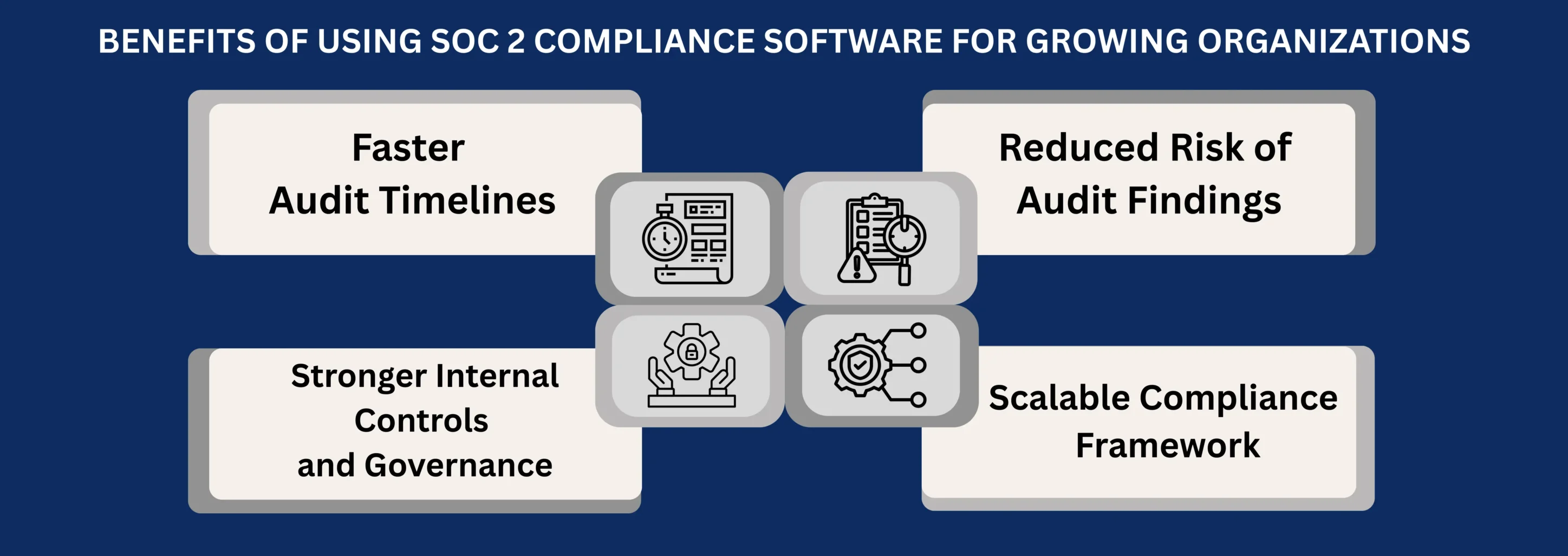
Enterprise customers routinely include security questionnaires and vendor risk assessment requirements as part of their procurement processes. Organizations without a current SOC 2 report must complete these questionnaires manually — a process that can require hundreds of hours of staff time and extend vendor evaluation timelines by weeks or months. Organizations with a current SOC 2 Type II report can reference the attestation in response to security questionnaires, often significantly reducing the length and complexity of the vendor approval process and enabling faster contract execution. This time savings translates directly into revenue acceleration for North Carolina technology companies competing for enterprise accounts.
For North Carolina technology companies competing for enterprise contracts, the ability to produce a SOC 2 Type II report on demand represents a decisive competitive advantage. Procurement security reviews that might otherwise require months of back-and-forth documentation exchange can be resolved quickly when the prospective vendor provides a comprehensive, independently audited attestation report. The SOC 2 audit North Carolina technology companies complete is therefore not merely a compliance exercise — it is a sales enablement asset that directly reduces time-to-close for enterprise opportunities and supports sustained revenue growth.
The SOC 2 attestation provides external, independent validation that an organization’s security controls are not merely documented on paper but have been evaluated by a qualified third party. This independent validation is fundamentally more credible to customers and business partners than any self-assessment or internal declaration of compliance. It reflects the professional judgment of a Licensed CPA Firm operating under AICPA attestation standards and independence requirements. For organizations pursuing SOC2 Certification, the credibility of this validation is directly tied to the independence and professional standing of the auditing firm conducting the examination.
- ✓Independent confirmation that security controls are suitably designed and operating effectively, reducing customer reliance on self-reported security claims
- ✓Objective identification of control deficiencies during the audit process, enabling targeted and prioritized remediation before exceptions become security incidents
- ✓Demonstration of security maturity to prospective customers, investors, and board members evaluating organizational risk management capabilities
- ✓Validation of vendor management practices, confirming that third-party risk is assessed and managed consistently with TSC requirements
- ✓Support for cyber insurance applications and renewals, with carriers increasingly using SOC 2 reports as evidence of insurable security practices
- ✓External audit findings that can inform and strengthen internal audit programs and security governance structures
- ✓Evidence base for responding to regulatory inquiries or customer due diligence requests without disclosing proprietary security implementation details
- ✓Annual audit cycle discipline that maintains security control quality and prevents control degradation over time
Many enterprise customer segments have effectively made SOC 2 certification a threshold requirement for vendor consideration — not merely a preference. Financial institutions regulated under the Gramm-Leach-Bliley Act, healthcare organizations subject to HIPAA, federal contractors subject to NIST cybersecurity standards, and publicly traded companies responding to audit committee vendor oversight requirements routinely reject vendors that cannot produce a current SOC 2 report. SOC 2 Certification in North Carolina therefore enables market access to customer segments that would otherwise be inaccessible to organizations without a completed attestation report.
Beyond threshold access, SOC 2 certification provides competitive differentiation in procurement processes where multiple vendors meet the basic technical and commercial requirements but differ in their demonstrated security posture. In competitive request-for-proposal environments — common among Charlotte’s financial services firms and Research Triangle Park’s technology companies — a current SOC 2 Type II report with an unqualified opinion signals organizational maturity and risk management discipline. This can be the differentiating factor in vendor selection decisions, giving certified organizations a meaningful advantage over competitors that rely on self-reported security assurances.
- ✓Accelerated Enterprise Sales and Vendor Approval Processes
- ✓Independent Validation of Security Controls
- ✓Market Access and Competitive Differentiation
SOC 2 vs. Other Information Security Frameworks — Positioning for North Carolina Organizations
North Carolina organizations evaluating information security certification options frequently consider SOC 2 alongside other frameworks including ISO 27001, NIST CSF, PCI DSS, and HIPAA. Each framework addresses information security from a different perspective, serves different stakeholder audiences, and produces different types of deliverables. Understanding how SOC 2 differs from these alternatives enables organizations to select the examination that best addresses their specific customer requirements, regulatory obligations, and business objectives — and to determine whether multiple frameworks should be pursued in parallel.
SOC 2 vs. ISO 27001
SOC 2 and ISO 27001 are the two most frequently compared information security frameworks for technology service organizations. SOC 2 is governed by the AICPA and is primarily a U.S.-centric standard, though it is recognized by enterprise customers globally. ISO 27001 is an international standard published by the International Organization for Standardization and recognized in jurisdictions worldwide. The key operational difference is that SOC 2 produces a detailed attestation report describing specific controls tested and the results of that testing, while ISO 27001 produces an accredited certificate confirming that the organization’s Information Security Management System (ISMS) conforms to the standard’s requirements.
For North Carolina organizations whose primary customer base is U.S.-based enterprises — particularly in financial services, healthcare, and technology — SOC 2 is typically the preferred first certification because it directly addresses the security assurance questions those customers ask. Organizations with significant international operations or European customers may pursue ISO 27001 in addition to SOC 2 to satisfy both U.S. and international market requirements. The decision of whether to pursue SOC 2 or ISO 27001 first should be driven primarily by customer requirements and the geographic distribution of the organization’s target markets.
| Dimension | SOC 2 | ISO 27001 |
|---|---|---|
| Governing Body | AICPA (American Institute of Certified Public Accountants) | ISO/IEC (International Organization for Standardization) |
| Report Type | Attestation report with detailed control testing results | Accredited certificate confirming ISMS conformance |
| Geographic Recognition | Primarily U.S. — accepted globally by enterprise customers | Recognized internationally across all major markets |
| Audit Frequency | Annual for Type II; point-in-time for Type I | Three-year certification cycle with annual surveillance audits |
| Customer Focus | Detail-oriented — report discloses specific controls tested and results | Certificate-focused — confirms system conformance at a standard level |
SOC 2 vs. NIST CSF and PCI DSS
The NIST Cybersecurity Framework (CSF) is a voluntary framework developed by the National Institute of Standards and Technology for managing cybersecurity risk. Unlike SOC 2, the NIST CSF does not produce an independent attestation report or certificate — it is a self-assessment and risk management tool. Organizations may align their security programs with the NIST CSF and document that alignment, but no formal third-party examination and attestation is produced under the NIST CSF alone. SOC 2 examinations may reference NIST CSF controls as implementation mechanisms for satisfying Trust Services Criteria, but they remain distinct frameworks with fundamentally different outputs and stakeholder audiences.
PCI DSS (Payment Card Industry Data Security Standard) is a prescriptive compliance framework specifically governing the protection of payment card data. Unlike SOC 2 — which is principles-based and broadly applicable to service organizations — PCI DSS applies specifically to organizations that store, process, or transmit cardholder data. North Carolina organizations in retail, hospitality, or payment processing that are subject to PCI DSS requirements may pursue SOC 2 certification in addition to PCI DSS compliance to address the broader security assurance needs of non-payment customers. The two frameworks address different stakeholder requirements and are not interchangeable.
SOC 2 Compliance vs. SOC 2 Certification — Understanding the Distinction
The terms SOC 2 compliance and SOC 2 certification are frequently used interchangeably in business contexts, but they carry distinct and important meanings under AICPA attestation standards. Understanding the precise difference between these terms is critical for organizations accurately representing their security posture to customers, investors, and regulators — and for customers accurately evaluating vendor security claims. The core distinction centers on whether independent, third-party verification has been completed and formally documented in a SOC 2 attestation report issued by a Licensed CPA Firm.
What SOC 2 Compliance Means Without Certification
SOC 2 compliance, in its most basic sense, refers to an organization’s internal alignment with the requirements of the Trust Services Criteria — meaning the organization has implemented and is operating security controls that satisfy the TSC’s objectives. However, SOC 2 compliance achieved through internal effort alone, without an independent examination by a Licensed CPA Firm, cannot be independently verified by customers or third parties. An organization may describe itself as SOC 2 compliant based on its own assessment, but this claim carries no independent validation and should not be treated as equivalent to a completed SOC 2 attestation from a Licensed CPA Firm.
The critical limitation of unverified SOC 2 compliance claims is that customers have no objective basis for evaluating whether the organization’s self-assessment is accurate. Security controls that an organization believes are effective may have design gaps, implementation failures, or operational inconsistencies that only an independent examination would identify. This is precisely why enterprise customers require formal SOC 2 attestation reports rather than self-completed security questionnaires — the attestation provides external validation that the compliance claim reflects an objectively evaluated reality, not merely an internal belief about the organization’s own security posture.
SOC 2 Attestation — The Formal Verification Standard
SOC 2 attestation is the formal outcome of a completed SOC 2 examination conducted by a Licensed CPA Firm. The attestation takes the form of the SOC 2 report — a comprehensive document containing the auditor’s opinion, the system description, management’s assertion, the description of controls, and the results of control testing. This report is the authoritative evidence of an organization’s SOC 2 status and is the document that customers, investors, and regulators request when evaluating an organization’s security posture. Without a completed SOC 2 attestation, an organization cannot credibly claim to have achieved SOC2 Certification.
The SOC 2 attestation North Carolina organizations receive from a Licensed CPA Firm is the only form of SOC 2 validation that carries independent professional authority. Organizations that have completed a formal SOC 2 examination can accurately represent that they have received a SOC 2 attestation from an independent Licensed CPA Firm — a statement that is both accurate and meaningful to informed customers. Organizations that have only performed internal compliance work cannot make this representation, regardless of the quality of their internal security controls or the sophistication of any compliance automation tools they may have used to prepare.
Maintaining SOC 2 Certification — Annual Audit Cycle and Continuous Monitoring
SOC 2 attestation is not a permanent status — it reflects an organization’s control environment during a specific examination period. Because SOC 2 Type II reports cover a defined review period (typically 12 months) and because security threats, system configurations, personnel, and organizational structures change continuously, enterprise customers expect organizations to maintain SOC 2 certification through annual audit cycles. Organizations that complete a single SOC 2 examination and do not renew their attestation will quickly find their report considered stale — creating procurement blockers that can disrupt enterprise sales and contract renewals.
The Annual SOC 2 Audit Cycle
The standard annual SOC 2 audit cycle begins immediately after the prior year’s examination period ends. Organizations that complete a 12-month Type II examination covering January 1 through December 31 will initiate the next examination covering January 1 of the following year. The Licensed CPA Firm and the organization coordinate the timing of fieldwork — typically occurring in the fourth quarter of the review period or immediately after its conclusion — to minimize the gap between the examination period end date and the report issuance date. A short gap between period end and report issuance maintains the report’s currency for customers evaluating vendor security status during procurement.
Annual SOC 2 audit cycles also provide organizations with a structured framework for continuous security improvement. Each year’s examination builds on the prior year’s findings, enabling organizations to address previously identified exceptions, test enhanced controls, and demonstrate progressive improvement in their security posture. The iterative nature of annual SOC 2 audits creates a discipline of continuous monitoring and control maintenance that benefits the organization’s internal security governance as well as its customer-facing assurance posture. Maintaining SOC 2 Certification in North Carolina through consistent annual audit cycles signals organizational commitment to sustained security governance — not one-time compliance activity.
Continuous Monitoring Requirements Between Annual Audits
Maintaining SOC 2 compliance between annual audit examinations requires organizations to operate their controls consistently throughout the entire review period — not merely at the time of the audit. This continuous operation requirement is verified through the sampling methodology applied during Type II examinations. If controls are only operated during audit-adjacent periods, the auditor’s sampling across the full 12-month review period will identify the operational gaps as exceptions. Organizations must therefore build durable, repeatable control processes that function independently of the audit calendar and consistently throughout the year.
Continuous monitoring programs support SOC 2 compliance maintenance by providing real-time or near-real-time visibility into control operation status. These programs typically include automated log monitoring and alerting for security events, scheduled vulnerability scanning and patch verification, periodic user access reviews conducted on defined schedules, regular backup verification testing, and vendor security monitoring for critical subservice organizations. The evidence generated by continuous monitoring programs also serves as audit-ready documentation that streamlines the evidence collection phase of the annual SOC 2 examination — reducing the administrative burden on the organization’s security and compliance teams during each audit cycle.
Managing Security Incidents During the SOC 2 Review Period
Security incidents occurring during the SOC 2 review period must be managed in accordance with the organization’s documented incident response procedures, and the incident response process itself is subject to audit evaluation. The Licensed CPA Firm evaluates whether the organization detected, responded to, and documented incidents in a manner consistent with its incident response plan and applicable Trust Services Criteria requirements. Incidents that are well-managed — detected promptly, contained effectively, investigated thoroughly, and documented completely — demonstrate the operational effectiveness of the incident response control and do not necessarily result in negative audit findings in the SOC 2 attestation report.
Conversely, incidents that are detected late, poorly contained, or inadequately documented may result in audit exceptions disclosed in the SOC 2 attestation report. Organizations pursuing SOC 2 Certification in North Carolina should treat their incident response procedures as live, operational processes — not static documents — and should conduct post-incident reviews after every significant security event to identify control improvements and update procedures accordingly. The maturity of incident response practices is one of the most closely scrutinized areas during SOC 2 control testing, as it reflects the organization’s actual response capability rather than its theoretical security design.
FAQ
▶
What is SOC 2 Certification in North Carolina?
▶
What is SOC 2 Certification and how does it differ from SOC 2 compliance?
▶
How long does a SOC 2 Type II audit take to complete?
▶
Which Trust Services Criteria should our organization include in its SOC 2 scope?
▶
Is SOC 2 certification required or is it voluntary?
▶
How long is a SOC 2 report valid?
▶
Can a non-CPA firm conduct a SOC 2 audit?
▶
What happens if our SOC 2 audit identifies control exceptions?
SOC 1 VS SOC 2: WHICH REPORT YOUR CUSTOMERS ACTUALLY ASK FOR
If you sell SaaS or provide outsourced services, you have likely been asked for a SOC report. However, the follow-up question is rarely easy to answer…

AICPA Issues New Guidance for Peer Reviewers Evaluating SOC 2 Engagements
AICPA SOC 2 guidance has been issued to help peer reviewers identify quality risks associated with SOC 2 engagements as the use of compliance automati…
SOC 2 Certified: What Does It Mean for Your Business
For companies that handle sensitive data or run cloud-based services, the question “Can you provide your SOC 2 report?” carries enormous weight. Yet, …
Get In Touch
have a question? let us get back to you.