
SOC 2 Certification in Pune
CertPro is a Licensed CPA Firm conducting SOC 2 audits for organizations operating in Pune under the AICPA Trust Services Criteria. The SOC 2 audit evaluates the design and operating effectiveness of security, availability, processing integrity, confidentiality, and privacy controls within a defined system scope. As a trusted provider of SOC2 Certification services, CertPro helps Pune-based organizations achieve independent, auditor-verified attestation that meets the expectations of global enterprise buyers.
OUR CLIENTS










Introduction to SOC 2 Certification in Pune
SOC 2 Certification in Pune has become a critical compliance milestone for technology companies, SaaS providers, fintech organizations, and data-driven enterprises operating in one of India’s fastest-growing commercial hubs. Developed by the American Institute of Certified Public Accountants (AICPA), the SOC 2 framework establishes a structured auditing standard that evaluates how service organizations manage and protect customer data through five Trust Services Criteria: Security, Availability, Processing Integrity, Confidentiality, and Privacy.
For Pune-based organizations serving global clients—particularly those in North America, Europe, and the Asia-Pacific region—SOC 2 attestation represents a formal, third-party verified commitment to data security governance. Achieving SOC2 Certification signals to enterprise buyers that an organization’s security controls have been independently evaluated and found to meet recognized international standards.
Pune’s technology ecosystem has expanded significantly over the past two decades, establishing itself as a major IT and BPO corridor alongside Bengaluru and Hyderabad. Companies operating from Pune’s key technology parks—including Hinjewadi IT Park, Magarpatta Cybercity, and EON IT Park—increasingly serve enterprise clients who mandate SOC 2 compliance as a contractual prerequisite.
The SOC 2 audit framework directly addresses the concerns these enterprise clients raise regarding vendor data handling, access management, and system availability. Achieving SOC 2 Certification in Pune therefore provides a measurable competitive advantage for organizations targeting regulated industries and global enterprise contracts.
What Is SOC 2 and Why Does It Matter for Pune Organizations
SOC 2 stands for System and Organization Controls 2, a reporting framework created by the AICPA to assess the controls a service organization has in place relative to the Trust Services Criteria. Unlike regulatory frameworks such as PCI DSS or HIPAA that prescribe specific technical mandates, SOC 2 provides an adaptable, principles-based evaluation structure.
This means that organizations pursuing SOC 2 compliance in Pune define the scope of their system, select the relevant Trust Services Criteria applicable to their services, and demonstrate that their implemented controls meet the stated criteria through independent audit evidence. The flexibility of the SOC 2 framework makes it particularly well-suited to the diverse range of technology and service organizations operating across Pune’s commercial districts.
The distinction between SOC 2 Type 1 and SOC 2 Type 2 is foundational to understanding the certification pathway. A SOC 2 Type 1 report assesses the design of controls at a specific point in time, confirming that appropriate safeguards are in place as of the audit date. A SOC 2 Type 2 report—which represents the more comprehensive attestation sought by most enterprise buyers—evaluates both the design and operating effectiveness of controls over a defined review period, typically six to twelve months.
Most organizations pursuing SOC 2 Certification in Pune begin with a Type 1 assessment to establish a controls baseline before progressing to a Type 2 audit. Understanding this pathway enables organizations to plan their SOC 2 audit timeline and resource allocation more effectively from the outset.
SOC 2 in the Context of Pune’s Technology and Financial Sectors
Pune’s commercial landscape encompasses a diverse range of industries where data security governance is not optional but essential. Fintech companies operating from Pune process high volumes of sensitive financial data for clients across multiple geographies, making SOC 2 certification a pressing regulatory and business requirement. Similarly, SaaS companies in Pune that deliver cloud-based platforms to North American and European enterprise customers routinely receive contractual demands for a current SOC 2 report.
These organizations must demonstrate continuous compliance rather than periodic box-checking, which reinforces the value of a rigorous SOC 2 audit conducted by a qualified, independent Licensed CPA Firm. SOC2 Certification obtained through a structured, evidence-based audit process carries far greater credibility with enterprise procurement teams than any form of self-attestation.
Beyond technology companies, Pune hosts a significant concentration of business process outsourcing (BPO) organizations, healthcare IT firms, and managed service providers that handle personally identifiable information (PII) and protected health information (PHI) on behalf of international clients. For these entities, SOC 2 attestation in Pune validates that client data is processed, stored, and transmitted under a defined and tested control environment.
The Trust Services Criteria framework is particularly well-suited for these multi-sector organizations because it allows the audit scope to be tailored to the specific nature of the services delivered and the data categories handled—making SOC 2 Certification in Pune relevant across virtually every segment of the city’s technology-driven economy.
Trust Services Criteria: The Foundation of SOC 2 Compliance
The AICPA’s Trust Services Criteria establish the evaluative framework within which the SOC 2 audit is conducted. The Security criterion—also known as the Common Criteria—is mandatory for all SOC 2 engagements. It covers logical and physical access controls, system monitoring, change management, risk assessment, and incident response.
Organizations pursuing SOC 2 compliance in Pune must demonstrate that their systems are protected against unauthorized access, both from external threats and internal misuse. The Security criterion alone covers over 30 individual control points that the auditor evaluates through documentation review, interviews, system demonstrations, and evidence inspection. Addressing each of these control points thoroughly is a prerequisite for a clean SOC 2 attestation report.
| Trust Services Criterion | Applicability | Primary Focus Area |
|---|---|---|
| Security (Common Criteria) | Mandatory for all SOC 2 audits | Access controls, monitoring, risk management |
| Availability | Optional – selected based on service commitments | System uptime, performance, disaster recovery |
| Processing Integrity | Optional – relevant for transaction processing | Complete, accurate, timely data processing |
| Confidentiality | Optional – for confidential information handling | Encryption, data classification, NDA controls |
| Privacy | Optional – for personal information processing | AICPA Privacy Framework, data subject rights |

Why SOC 2 Certification Matters for Pune IT Companies and SaaS Providers
The demand for SOC 2 certification among Pune IT companies has grown substantially as global procurement standards have tightened. Enterprise procurement teams in North America and Europe now routinely include SOC 2 Type 2 reports in their vendor assessment checklists, placing Pune-based IT service providers under increasing pressure to obtain and maintain current attestation.
Organizations without a valid SOC 2 report frequently encounter procurement delays, contract limitations, or outright disqualification from enterprise vendor panels—regardless of the technical quality of their services. SaaS companies pursuing SOC 2 Certification in Pune face similar dynamics, with software buyers requesting SOC 2 audit reports before authorizing production data access to cloud platforms.
The strategic importance of SOC 2 attestation extends well beyond contract procurement. Organizations that achieve and maintain SOC 2 compliance in Pune demonstrate to regulators, insurers, and business partners that their information security programs are designed, documented, and operating as intended.
This third-party verification is fundamentally different from self-attestation or internal security assessments. It represents an independent Licensed CPA Firm’s formal conclusion that the evaluated controls meet the applicable Trust Services Criteria. For organizations operating in regulated sectors such as healthcare, financial services, or government contracting, this independent verification often satisfies auditor inquiries from multiple regulatory bodies simultaneously.
Market Access and Enterprise Contract Requirements
SOC 2 Certification in Pune represents a direct enabler of market access to North American and European enterprise segments. Fortune 500 companies and regulated enterprises in the United States typically require vendor SOC 2 Type 2 reports as a condition of onboarding, making the SOC 2 audit a prerequisite for contract execution rather than a voluntary differentiator.
The SOC 2 report provides enterprise buyers with documented assurance that the service provider’s controls have been tested by an independent auditor over a sustained review period. This reduces the buyer’s own audit burden and accelerates vendor approval timelines—a compelling commercial argument for Pune organizations that compete for global enterprise accounts.
Beyond individual contracts, SOC 2 Certification in Pune positions organizations favorably in competitive RFP processes. When multiple vendors compete for an enterprise contract and one holds a current SOC 2 Type 2 attestation while others do not, the certified organization demonstrates a measurable security posture advantage.
This is particularly relevant for Pune-based managed service providers, cloud infrastructure companies, and data analytics firms that compete directly with established global vendors on enterprise accounts. The SOC 2 report effectively shifts the security conversation from self-reported claims to auditor-verified evidence—a distinction that matters significantly to enterprise risk and procurement teams.
Cyber Insurance and Risk Management Implications
The relationship between SOC 2 compliance and cyber insurance has strengthened considerably as insurers apply more rigorous underwriting criteria to technology organizations. Pune-based companies applying for cyber liability coverage increasingly find that insurers offer more favorable premium terms and coverage limits to organizations holding a current SOC 2 Type 2 report.
The SOC 2 audit demonstrates to underwriters that the organization has implemented and tested controls across access management, incident response, change management, and monitoring—precisely the control domains that cyber insurers assess when pricing coverage. For Pune technology companies where cyber liability is a growing exposure, SOC 2 attestation delivers direct financial value through improved insurance terms.
From a risk management perspective, the SOC 2 audit process itself generates significant organizational value beyond the attestation report. The structured evaluation of controls against the Trust Services Criteria surfaces control gaps, untested procedures, and documentation deficiencies that might otherwise remain undetected until a security incident or regulatory inquiry.
Organizations pursuing SOC 2 compliance services in Pune through CertPro benefit from a rigorous, evidence-based audit process that produces both the attestation report and a clear record of the control environment as evaluated at the audit date. This dual outcome—external assurance and internal improvement—is a defining characteristic of well-executed SOC 2 audit engagements.
SOC 2 vs. ISO 27001: Which Standard Applies to Pune Organizations
Organizations evaluating SOC 2 Certification in Pune alongside ISO 27001 certification face a strategic decision that depends primarily on their target markets and customer base. SOC 2 is the preferred standard for organizations serving North American enterprise buyers—particularly in the United States—where AICPA attestation reports are the recognized format for vendor security assurance. ISO 27001 carries stronger recognition in European, Middle Eastern, and Asia-Pacific markets.
Organizations with a customer base spanning both North America and Europe may ultimately pursue both certifications. However, the SOC 2 audit typically takes precedence for Pune companies with significant US-facing business, as enterprise buyers in that market specifically request the auditor-issued SOC 2 attestation report rather than an ISO certificate.
The structural difference between the two frameworks is also relevant. SOC 2 evaluates specific controls against defined Trust Services Criteria and produces an attestation report shared directly with customers. ISO 27001, by contrast, is a certification issued against a management system standard. SOC 2 tests operational effectiveness of controls over time, making it a more granular evaluation of how security controls actually function in practice.
For Pune fintech organizations and SaaS providers where customer-facing security assurance is the primary objective, SOC 2 attestation provides the most direct and widely recognized form of third-party verification available. This practical distinction often determines the prioritization decision for organizations with limited compliance budgets.
SOC 2 Certification Requirements for Pune Organizations
Meeting the requirements for SOC 2 Certification in Pune involves establishing a structured control environment that satisfies the applicable Trust Services Criteria across multiple organizational domains. The AICPA’s Trust Services Criteria are organized into control categories that collectively address governance, risk management, communication, monitoring, and logical access dimensions of the organization’s information systems.
Each criterion contains specific control points—referred to as Common Criteria or additional criteria—that the auditor evaluates through a combination of inquiry, observation, inspection of documentation, and re-performance of selected procedures. Understanding these requirements in advance allows Pune organizations to build audit-ready control environments rather than retroactively assembling evidence under time pressure.
The governance requirements for SOC 2 compliance in Pune begin with the organization’s formal commitment to the control environment through established policies, defined management accountability, and structured oversight processes. Organizations must maintain a current information security policy framework that addresses access management, data classification, acceptable use, incident response, business continuity, and vendor management.
These policies must be formally approved by senior management, communicated to all relevant personnel, and reviewed at defined intervals. The SOC 2 auditor evaluates not only the existence of these policies but their practical implementation through workforce awareness and documented training records—making policy communication as important as policy content.
Risk assessment is a foundational governance requirement for the SOC 2 audit in Pune. Organizations must demonstrate a formal, documented process for identifying threats and vulnerabilities to the systems within the audit scope, evaluating the likelihood and impact of identified risks, and determining the controls required to mitigate those risks to an acceptable level.
The risk assessment must be conducted at defined intervals—typically annually—and must address both internal and external threat sources. Critically, changes to the system environment—including new integrations, personnel changes, or technology upgrades—must trigger documented risk re-evaluation under the SOC 2 framework. This dynamic, ongoing approach to risk management is a key indicator of control environment maturity that SOC 2 auditors assess carefully.
Technical requirements for SOC 2 certification in Pune are among the most operationally intensive aspects of the audit. Access management controls must demonstrate that user access to systems within the audit scope is provisioned based on documented authorization, reviewed periodically, and promptly revoked upon personnel departure or role changes.
Multi-factor authentication (MFA) must be implemented for privileged access and remote connectivity. Audit logging must capture user authentication events, privileged actions, and system configuration changes. Logs must be retained for a defined period and reviewed on a regular schedule by designated personnel. These technical controls form the backbone of the SOC 2 compliance program and require sustained operational discipline to maintain audit-ready status throughout the year.
Encryption requirements under the SOC 2 framework address data at rest and data in transit within the system boundary. Organizations must demonstrate that sensitive data is encrypted using current, industry-accepted algorithms and that encryption key management procedures are formally documented and consistently followed.
Vulnerability management is another core technical requirement. Organizations must conduct regular vulnerability scans of systems within the audit scope, prioritize and remediate identified vulnerabilities within defined timeframes, and maintain evidence of scanning and remediation activities for auditor inspection. Together, encryption and vulnerability management controls represent two of the highest-risk areas that SOC 2 auditors focus on when evaluating an organization’s security posture.
SOC 2 evidence collection is a systematic process that requires organizations to maintain structured documentation across all control areas included in the audit scope. Evidence types include policy documents, procedure manuals, system configuration screenshots, access review records, training completion logs, incident tickets, change management records, and vendor contract documentation.
For a SOC 2 Type 2 audit—the most common form of SOC 2 attestation sought by enterprise clients—evidence must demonstrate that controls operated consistently throughout the entire review period, not merely at the audit date. This requires organizations to maintain continuous, organized evidence repositories rather than assembling documentation reactively prior to the audit. Proactive evidence management is one of the most impactful steps Pune organizations can take to improve audit efficiency and outcomes.
- ✓Formal information security policy framework approved by senior management
- ✓Documented risk assessment process with current risk register and treatment plans
- ✓Access provisioning and de-provisioning records with authorization documentation
- ✓Periodic user access review records covering all in-scope systems
- ✓Vulnerability scan reports and remediation tracking evidence
- ✓Security awareness training records for all personnel with system access
- ✓Incident response log with documented detection, response, and closure activities
- ✓Change management records covering all changes to in-scope systems
- ✓Business continuity and disaster recovery test results with documented outcomes
- ✓Vendor due diligence records covering sub-service organizations within the audit scope

- ✓Organizational and Governance Requirements
- ✓Technical and Logical Access Control Requirements
- ✓Documentation and Evidence Requirements
SOC 2 Audit Process: Steps to Achieve SOC 2 Certification in Pune
The SOC 2 audit process follows a structured sequence of evaluation stages that the Licensed CPA Firm conducts in accordance with AICPA attestation standards. Each stage serves a defined function in the overall certification process—from establishing the audit scope and criteria to issuing the final SOC 2 attestation report.
Understanding this process allows Pune organizations to align their internal resources and evidence collection activities with the auditor’s evaluation timeline. This alignment ensures that the audit proceeds efficiently and that the resulting report accurately reflects the organization’s control environment. Organizations that engage proactively with each stage of the SOC 2 audit process consistently achieve faster, cleaner outcomes than those that approach the engagement reactively.
Scope definition is the foundational stage of the SOC 2 audit and determines the boundaries of the system that will be evaluated. The organization and the Licensed CPA Firm jointly define the system scope to include the infrastructure, software, personnel, data, and procedures that are relevant to the delivery of the services covered by the Trust Services Criteria.
The system description—a management-prepared narrative document—describes the components of the system, the nature of the services provided, the boundaries of the system, and the controls in place. This document forms the basis of the audit and is included in the final SOC 2 attestation report as Section III. A well-constructed system description is essential to the credibility and utility of the resulting SOC2 Certification report.
Selecting the applicable Trust Services Criteria is a critical scoping decision for any SOC 2 audit. All SOC 2 audits include the Security (Common Criteria) category. Organizations then determine whether Availability, Processing Integrity, Confidentiality, or Privacy criteria are applicable based on their service commitments and the nature of data processed.
For Pune-based SaaS providers, Availability is frequently included due to uptime commitments. Fintech organizations typically include Confidentiality and Processing Integrity. Healthcare IT companies handling patient data commonly include Privacy. Each additional criterion adds evaluation scope and evidence requirements to the SOC 2 audit—making deliberate, informed criteria selection a key cost and efficiency lever for Pune organizations.
Following scope definition, the Licensed CPA Firm develops the audit program that specifies the testing procedures, sampling methodologies, and evidence requirements for each control within the audit scope. The audit program is aligned with the AICPA’s attestation standards and the applicable Trust Services Criteria points of focus.
The auditor determines which controls will be tested through inquiry only, which will require inspection of documentation, and which will be subjected to re-performance testing to verify operating effectiveness. For SOC 2 Type 2 engagements, the audit program must address the entire review period—requiring the selection of samples from across the full period rather than a single point in time. This planning stage is where the efficiency and rigor of the overall SOC 2 audit is established.
Control testing is the core evaluation phase of the SOC 2 audit. The auditor conducts interviews with key personnel responsible for operating controls, inspects policy and procedure documentation, reviews system configurations and access logs, and examines a sample of transactions or events to verify that controls operated as described throughout the review period.
For each control tested, the auditor documents the evidence examined, the testing procedure applied, and the conclusion regarding whether the control operated effectively. Any instances where a control did not operate as designed are documented as exceptions, which are then evaluated to determine their significance to the overall SOC 2 audit conclusion. The thoroughness of this stage directly determines the quality and reliability of the final attestation report.
Evidence quality and completeness are critical determinants of audit efficiency. Organizations that maintain continuous, well-organized evidence repositories enable the auditor to conduct testing more efficiently and reach conclusions with greater confidence. Evidence that is incomplete, inconsistently maintained, or difficult to locate extends audit timelines and increases the risk of exceptions.
CertPro’s SOC 2 audit process includes structured evidence request lists aligned to each control area, enabling Pune organizations to prepare and organize their evidence systematically prior to testing. This structured approach to evidence management is one of the most practical ways organizations can accelerate their path to SOC 2 Certification in Pune.
Where the auditor identifies exceptions during control testing, these are formally communicated to management for review and response. The organization has the opportunity to provide additional evidence, context, or clarification regarding each exception before the auditor reaches a final conclusion. This collaborative review stage is an important quality control mechanism in the SOC 2 audit process.
In cases where exceptions are confirmed, management may provide a written response describing the identified issue and any corrective actions taken or planned. These management responses are included in the final SOC 2 report, providing readers with a complete picture of both the auditor’s findings and the organization’s response—supporting transparency and trust with enterprise customers and prospects.
Upon completion of control testing and nonconformity review, the Licensed CPA Firm issues the SOC 2 attestation report. The report includes the auditor’s opinion on whether the system description is fairly presented, whether the controls are suitably designed to meet the Trust Services Criteria (Type 1), and whether the controls operated effectively throughout the review period (Type 2).
The report is a restricted-use document intended for the organization and its current and prospective customers, and is typically shared under NDA. CertPro issues SOC 2 attestation reports in the standard AICPA format, which is recognized by procurement teams and auditors across North American and global enterprise markets. This recognized format is what transforms SOC2 Certification from a compliance exercise into a commercially valuable business asset.
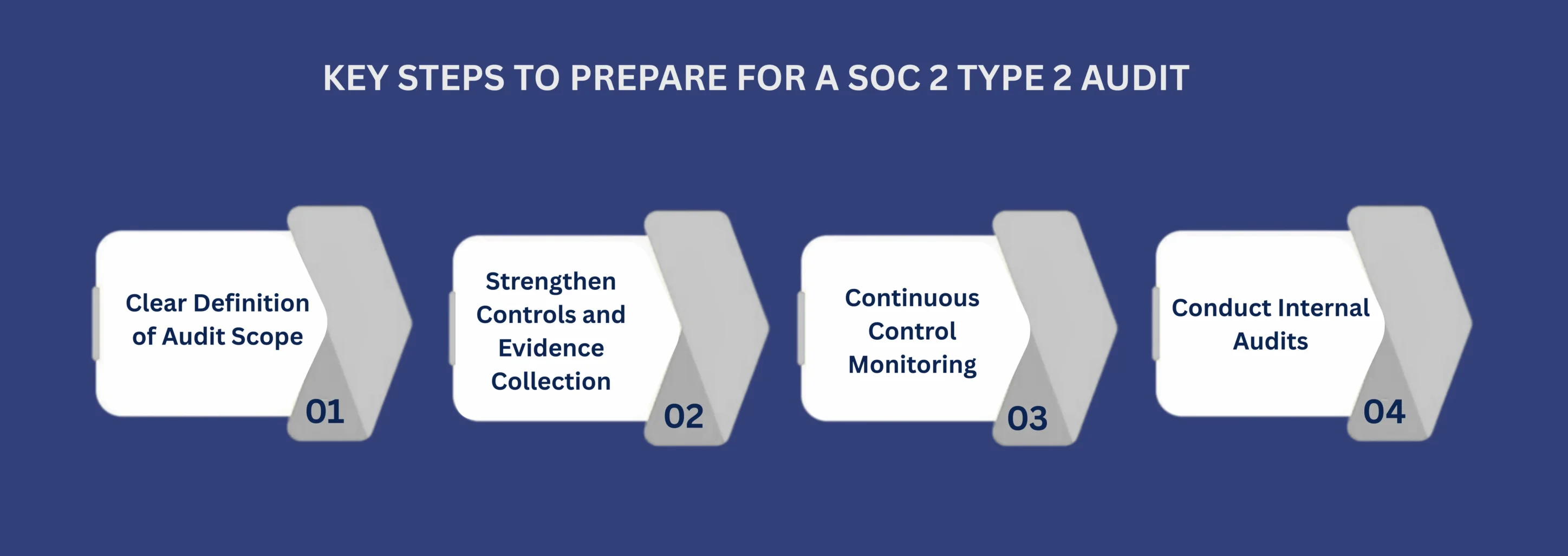
- ✓Stage 1: Scope Definition and System Description
- ✓Stage 2: Audit Program Determination and Planning
- ✓Stage 3: Control Testing and Evidence Evaluation
- ✓Stage 4: Nonconformity Review and Management Response
- ✓Stage 5: Attestation Report Issuance
SOC 2 Type 1 vs SOC 2 Type 2: Key Differences for Pune Businesses
The distinction between SOC 2 Type 1 and SOC 2 Type 2 is one of the most consequential decisions Pune organizations face when initiating their SOC 2 certification pathway. Both report types are issued by a Licensed CPA Firm following an independent audit, and both produce an AICPA-format attestation report. However, they differ fundamentally in what the audit evaluates, the timeline required, and the level of assurance they provide to customers and business partners.
Understanding these differences enables organizations to select the appropriate starting point and plan their SOC 2 audit timeline accordingly. For many Pune organizations, the choice between Type 1 and Type 2 is also shaped by the urgency of customer requirements and the current maturity of their control environment.
| Dimension | SOC 2 Type 1 | SOC 2 Type 2 |
|---|---|---|
| Evaluation scope | Design of controls at a point in time | Design and operating effectiveness over a review period |
| Review period | Single date (point-in-time) | Minimum 6 months; typically 12 months |
| Typical timeline | 2–4 months from scope definition | 6–14 months depending on review period and organization size |
| Customer assurance level | Controls are suitably designed | Controls are designed and operating effectively |
| Common use case | First-time certification; initial customer assurance | Ongoing enterprise vendor requirements; renewal cycle |
When SOC 2 Type 1 Certification Is the Right Starting Point
SOC 2 Type 1 Certification in Pune is the appropriate starting point for organizations that have recently implemented their control environment and do not yet have a sufficient operating history to support a Type 2 review period. Organizations facing immediate customer demands for SOC 2 documentation may obtain a Type 1 report in a shorter timeframe—typically two to four months from the commencement of the audit—while simultaneously accumulating the operational evidence needed for a subsequent Type 2 engagement.
Some enterprise buyers, particularly those onboarding new vendors, will accept a SOC 2 Type 1 report as an interim assurance measure while the vendor progresses toward Type 2. This staged approach allows Pune organizations to enter the SOC2 Certification pathway quickly without waiting for the longer Type 2 review period to elapse.
The SOC 2 Type 1 audit evaluates the system description for fair presentation and assesses whether the controls described are suitably designed to meet the applicable Trust Services Criteria as of the audit date. The auditor does not test operating effectiveness—that is, whether controls actually functioned as designed over a period of time.
This makes the Type 1 report a useful but limited form of assurance. Most enterprise procurement processes ultimately require progression to a SOC 2 Type 2 report within one to two years of initial certification, making the Type 1 engagement most valuable as a structured first step rather than a permanent compliance solution.
SOC 2 Type 2: The Standard for Enterprise Vendor Assurance
SOC 2 Type 2 certification represents the most comprehensive and widely recognized form of SOC 2 attestation. Enterprise buyers—particularly those in regulated US industries such as healthcare, financial services, and government contracting—specify SOC 2 Type 2 as their standard vendor security assurance requirement.
The Type 2 report demonstrates not only that controls were designed appropriately but that they functioned consistently throughout the review period—a distinction that carries substantial weight in enterprise risk assessments. For Pune-based organizations with established customer relationships and a mature control environment, progressing directly to a Type 2 SOC 2 audit may be the most commercially efficient path to meaningful enterprise certification. The multi-year audit history that Type 2 renewals build is a compounding competitive asset that strengthens over time.
Benefits of SOC 2 Certification for Pune Companies
The benefits of SOC 2 Certification in Pune extend across commercial, operational, regulatory, and reputational dimensions. For technology companies, SaaS providers, and data-intensive service organizations operating from Pune, the SOC 2 report serves as a universal credential that communicates security maturity to a global audience.
The benefits described below represent outcomes that accrue to organizations through the certification process itself and through the ongoing maintenance of SOC 2 compliance. This reinforces the value of treating SOC 2 as a continuous operational standard rather than a one-time certification exercise. Organizations that embed SOC 2 disciplines into their day-to-day operations consistently realize greater commercial and security outcomes than those that treat each audit as an isolated event.
- ✓Verified vendor qualification for enterprise procurement processes in North America and globally
- ✓Third-party validated evidence of security control design and operating effectiveness
- ✓Accelerated customer onboarding by satisfying security questionnaire requirements with an auditor-issued SOC 2 report
- ✓Strengthened competitive positioning in RFP processes against vendors without SOC 2 attestation
- ✓Improved cyber insurance terms through demonstrated security program maturity
- ✓Reduced risk of data breaches through systematic identification and remediation of control gaps
- ✓Enhanced regulatory compliance posture relevant to GDPR, India’s DPDP Act, and sector-specific requirements
- ✓Increased customer trust and confidence in data handling practices among Pune’s international client base
- ✓Structured internal governance improvement through the discipline of maintaining continuous audit evidence
- ✓Support for board-level and investor reporting on information security program effectiveness
The most immediately quantifiable benefit of SOC 2 Certification in Pune is the removal of the SOC 2 requirement as a barrier to enterprise contract execution. Organizations that can provide a current SOC 2 Type 2 report to prospective customers eliminate a common procurement delay that can extend vendor onboarding timelines by weeks or months.
In competitive bid situations, SOC 2 certification provides Pune IT companies with a documentable security assurance advantage that procurement evaluators can record and reference. This advantage can influence contract award decisions when competing vendors are otherwise comparable on price and capability—making SOC 2 compliance a direct commercial differentiator in enterprise sales cycles.
SOC 2 compliance also supports contract value protection. Organizations that maintain current SOC 2 attestation are better positioned to retain existing enterprise customers during contract renewal cycles, as the annual SOC 2 audit provides continuous evidence of security program investment.
Customers conducting periodic vendor security reviews find that SOC 2 certified vendors require less individual audit engagement, reducing the customer’s own security review costs and administrative burden. This practical benefit translates into stronger long-term vendor relationships for Pune-based service providers—creating a loyalty dynamic that benefits both parties throughout the contract lifecycle.
The operational benefits of pursuing SOC 2 compliance services in Pune are often underestimated by organizations focused primarily on the customer-facing report. The SOC 2 audit process requires organizations to formally document their control environment, establish repeatable procedures for access management, monitoring, incident response, and change management, and demonstrate consistent execution through maintained evidence.
This discipline produces a more operationally mature and resilient organization regardless of the audit outcome. Control gaps identified during the SOC 2 audit process represent genuine risk reduction opportunities, and the structured remediation of those gaps strengthens the organization’s security posture independent of its certification status. For Pune organizations building long-term security programs, the governance improvement generated by the SOC 2 audit cycle is often as valuable as the attestation report itself.
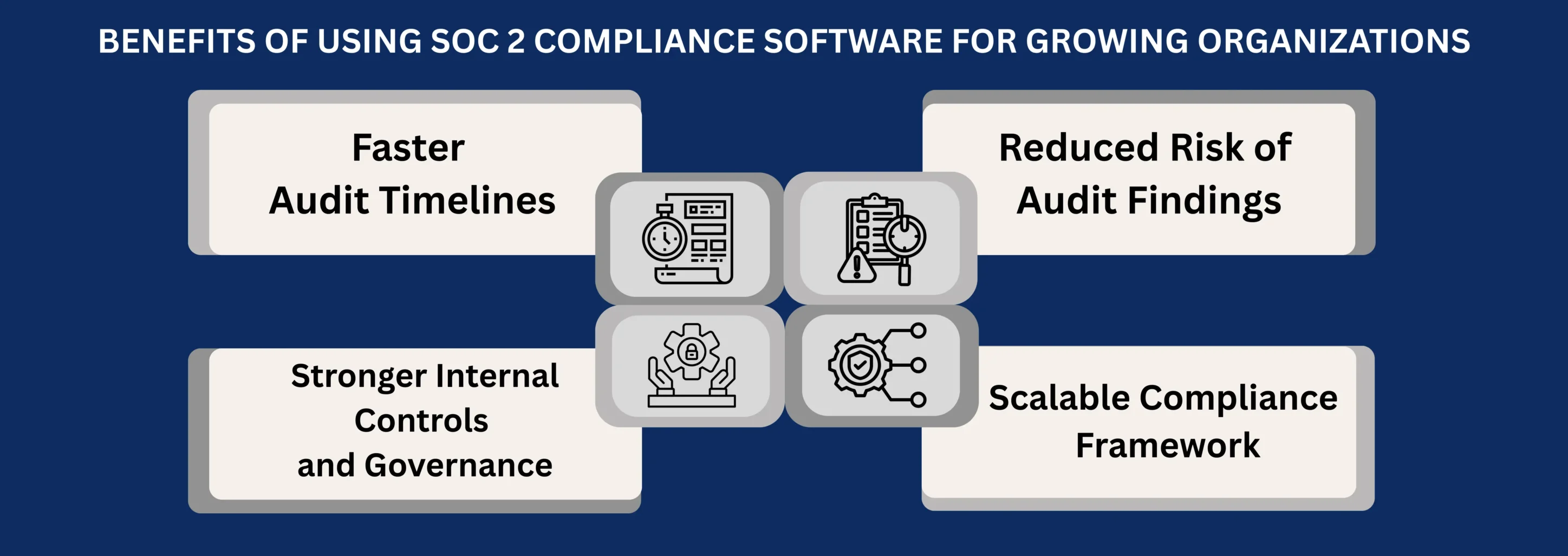
- ✓Commercial and Contractual Benefits
- ✓Operational and Internal Governance Benefits
SOC 2 Certification Cost in Pune
The cost of SOC 2 Certification in Pune is determined by several variables specific to the organization’s size, complexity, scope, and the type of attestation sought. Cost estimation requires a structured assessment of these factors, and organizations should approach cost discussions with a Licensed CPA Firm after establishing their preliminary scope parameters.
The following analysis covers the primary cost drivers and provides a framework for understanding the investment required for SOC 2 audit engagements in Pune at different organizational scales. Understanding these drivers in advance enables organizations to make informed scoping decisions that align their certification investment with their commercial objectives.
Primary Cost Drivers for SOC 2 Audit in Pune
The number of Trust Services Criteria included in the audit scope is one of the most significant cost drivers for SOC 2 compliance engagements in Pune. Each additional criterion beyond Security adds evaluation scope, evidence requirements, and auditor testing time to the engagement. Organizations selecting all five Trust Services Criteria will incur substantially higher audit costs than those limiting their scope to Security alone.
For most Pune-based SaaS companies and IT service providers, a scope covering Security and Availability—or Security and Confidentiality—represents the most cost-effective alignment with customer requirements. Starting with a focused scope and expanding criteria in subsequent audit cycles is a proven strategy for managing SOC 2 certification costs while maintaining commercial relevance.
The number and complexity of in-scope systems is a second major cost driver for the SOC 2 audit. Organizations operating complex, multi-cloud infrastructures with numerous integrated systems will require more extensive testing than those running simpler, single-cloud environments. The number of in-scope personnel, physical locations, and sub-service organizations—third-party vendors whose services are relevant to the system scope—also affects audit scope and cost.
For SOC 2 Type 2 engagements, the length of the review period influences cost, as longer periods require larger evidence samples and more extensive testing across the full timeframe. Organizations undergoing their first SOC 2 audit in Pune should factor these variables into their planning discussions with the Licensed CPA Firm to arrive at a realistic cost estimate before commencing the engagement.
| Organization Type | Estimated Audit Scope | Indicative Cost Range (INR) |
|---|---|---|
| Small SaaS / Startup (Security only, Type 1) | Limited scope, single cloud environment | ₹5,00,000 – ₹10,00,000 |
| Mid-size IT services (Security + Availability, Type 2) | Moderate complexity, multiple systems | ₹12,00,000 – ₹25,00,000 |
| Large enterprise (3+ criteria, Type 2, multi-location) | Complex scope, multiple sub-services | ₹25,00,000 – ₹50,00,000+ |
Cost Efficiency Through Structured Audit Scoping
Organizations can manage SOC 2 certification costs in Pune by approaching scope definition strategically. Limiting the initial audit scope to the systems and services most relevant to customer requirements, selecting the minimum set of applicable Trust Services Criteria, and beginning with a Type 1 engagement before expanding to Type 2 are all legitimate approaches to cost management—without compromising the integrity or commercial value of the resulting attestation report.
CertPro’s scoping process is designed to align the SOC 2 audit scope precisely with the organization’s service delivery model and customer requirements. This avoids the inclusion of systems or criteria that do not add commercial value to the certification, ensuring that every element of the audit investment is directed toward outcomes that matter to the organization’s enterprise clients.
The investment in SOC 2 certification should always be evaluated against the commercial returns it enables. For Pune organizations pursuing North American enterprise contracts where SOC 2 is a vendor qualification requirement, the certification cost is frequently recovered within a single contract cycle.
Organizations that treat SOC 2 compliance as a recurring operational investment—conducting annual audits to maintain current attestation—build a compounding commercial advantage over time. A multi-year audit history demonstrates consistent security program investment, which is a meaningful differentiator compared to organizations with only a single audit period on record. This compounding value makes the annual SOC 2 audit one of the highest-ROI compliance investments available to Pune technology organizations.
CertPro’s SOC 2 Audit Services in Pune
CertPro operates as a Licensed CPA Firm conducting SOC 2 audits under AICPA attestation standards, serving organizations across Pune and the broader Maharashtra technology corridor. As a qualified SOC 2 auditor, CertPro evaluates control environments against the applicable Trust Services Criteria and issues SOC 2 attestation reports that meet the format and quality standards required by enterprise buyers in North America and globally.
CertPro’s audit team brings specialized expertise in the technology, SaaS, fintech, and business process outsourcing sectors that constitute the core of Pune’s commercial technology landscape. This sector-specific knowledge enables CertPro to deliver SOC 2 Certification in Pune with the depth and precision that global enterprise buyers expect from a qualified, independent attestation provider.
Licensed CPA Firm Credentials and AICPA Standards
The SOC 2 framework specifies that attestation engagements must be performed by a licensed Certified Public Accountant (CPA) firm in accordance with the AICPA’s Statement on Standards for Attestation Engagements (SSAE 18). This requirement is not a formality—it is a substantive quality standard that ensures the independence, technical competence, and professional accountability of the audit function.
Only a Licensed CPA Firm can issue a SOC 2 report that is recognized as a valid AICPA attestation. Organizations evaluating SOC 2 compliance services in Pune should verify that their audit provider holds the required CPA license and conducts engagements under SSAE 18 standards. Reports issued by non-CPA entities do not constitute valid SOC 2 attestations and will not satisfy the requirements of enterprise procurement teams seeking credible, independently issued SOC2 Certification documentation.
CertPro maintains full compliance with AICPA independence requirements throughout the SOC 2 audit process. Independence is a foundational principle of attestation engagements—the auditor must not have financial, employment, or advisory relationships with the organization being audited that could impair the objectivity of the audit opinion.
CertPro’s engagement structure strictly separates audit activities from any advisory or management functions, ensuring that the SOC 2 attestation report reflects an independent, evidence-based evaluation of the organization’s control environment rather than a managed outcome. This independence is what gives the SOC 2 report its credibility and commercial value in enterprise procurement processes.
Sector-Specific Audit Expertise for Pune Industries
CertPro’s audit team has conducted SOC 2 engagements across the technology sectors most prevalent in Pune’s commercial ecosystem, including cloud infrastructure providers, SaaS application developers, fintech payment processors, healthcare IT organizations, and enterprise BPO operators. This sector-specific experience enables CertPro auditors to efficiently evaluate controls in the context of the organization’s actual service delivery model.
Rather than applying generic assessment templates, CertPro identifies control risks that are specific to the industry and technology stack involved. For SOC 2 Certification serving Pune’s SaaS companies and fintech organizations, this targeted expertise reduces audit friction, improves the relevance of auditor findings, and ultimately produces a more useful and credible attestation report for the organization’s enterprise clients.
Surveillance, Recertification, and Annual Audit Cycles
SOC 2 attestation does not carry an indefinite validity period. Enterprise buyers typically require a SOC 2 report dated within the preceding 12 months, making annual audit cycles the standard practice for organizations maintaining active SOC 2 compliance. CertPro structures its SOC 2 engagements to support efficient annual recertification by maintaining institutional knowledge of the organization’s control environment from one audit cycle to the next.
This continuity reduces the audit setup time for subsequent engagements and enables the auditor to focus on changes to the control environment—new systems, personnel changes, control modifications—rather than re-establishing the baseline from scratch each year. For Pune organizations with multiple enterprise clients requiring current SOC 2 Certification, this efficient renewal model is a meaningful operational and commercial advantage.
Annual SOC 2 audit cycles also support progressive improvement in the organization’s compliance posture. Organizations that conduct their first Type 2 audit may identify exceptions or control gaps that are remediated before the second audit cycle, resulting in a cleaner report and a stronger overall control environment.
Over multiple audit cycles, organizations build a documented history of consistent control operation that provides increasing confidence to enterprise buyers. This growing track record supports more favorable positions in security questionnaire processes and vendor risk assessments, compounding the commercial value of the initial SOC 2 Certification in Pune over time.
SOC 2 Compliance for Pune’s Fintech and SaaS Ecosystem
Pune has emerged as a significant center for fintech innovation and SaaS development, with a concentration of companies building payment platforms, lending technology, insurance technology, and enterprise software products that serve customers across multiple continents. The regulatory and commercial environment for these organizations creates a specific and pressing need for SOC 2 certification.
Both fintech and SaaS business models inherently involve handling sensitive customer data on behalf of enterprise clients who hold their vendors to high security standards. SOC 2 compliance provides these Pune-based organizations with the independently verified security assurance framework that their global enterprise clients require as a baseline condition of engagement.
SOC 2 for Pune Fintech: Payment Processors and Lending Platforms
Fintech organizations in Pune that process payment transactions, manage digital lending workflows, or operate insurance technology platforms handle some of the most sensitive categories of personal and financial data. SOC 2 certification for Pune fintech companies addresses the security, processing integrity, and availability dimensions of these platforms through an audit framework that evaluates whether transaction data is processed completely, accurately, and on time.
The audit also evaluates whether the systems supporting these transactions are protected against unauthorized access and available to users as committed. The Processing Integrity criterion is particularly relevant for fintech applications, as it directly addresses the accuracy and completeness of financial data processing—a concern that regulators and enterprise clients place at the top of their vendor risk assessments. SOC 2 attestation provides fintech organizations with auditor-verified evidence across all of these dimensions.
For fintech organizations subject to RBI guidelines, SEBI regulations, or international financial regulatory requirements, SOC 2 attestation in Pune provides a complementary layer of third-party assurance that strengthens their overall compliance posture. While SOC 2 is not a direct substitute for sector-specific regulatory compliance, the control framework it evaluates—access management, monitoring, change management, incident response, and risk assessment—aligns closely with the security governance requirements embedded in financial services regulations.
Organizations that maintain SOC 2 compliance are typically better positioned to satisfy regulatory examiners’ inquiries about their information security programs, making the SOC 2 audit a dual-purpose investment for Pune’s fintech sector.
SOC 2 for Pune SaaS Companies: Cloud Platform Security Assurance
SaaS companies in Pune delivering enterprise software platforms to North American and European customers operate in a market where SOC 2 Type 2 certification is effectively a table-stakes requirement for enterprise sales. Enterprise buyers evaluating SaaS vendors include SOC 2 reports in their standard security due diligence processes, and procurement teams at large organizations may decline to approve software purchases from vendors that cannot provide a current SOC 2 attestation.
This dynamic makes SOC 2 Certification in Pune not merely beneficial but commercially essential for SaaS organizations pursuing enterprise market growth. The SOC 2 report eliminates a common sales friction point and accelerates the procurement approval process for Pune-based SaaS vendors competing in global enterprise markets.
The multi-tenant nature of SaaS platforms creates specific control considerations in the SOC 2 framework. Data segregation between customer tenants, customer-specific access controls, and the management of subprocessors—cloud infrastructure providers, third-party integrations—are all areas that SOC 2 auditors evaluate carefully in SaaS platform audits.
Organizations must demonstrate that their platform architecture ensures no unauthorized cross-tenant data access, that customer administrators can manage their own access configurations, and that subprocessors are subject to appropriate contractual security requirements and periodic monitoring. Addressing these SaaS-specific control considerations thoroughly is essential to achieving a clean SOC 2 audit outcome and a credible attestation report for enterprise clients.
SOC 2 Compliance and India’s Data Protection Regulatory Landscape
Pune organizations pursuing SOC 2 compliance operate within an evolving Indian data protection regulatory environment that increasingly aligns with the security and privacy governance principles embedded in the SOC 2 framework. India’s Digital Personal Data Protection (DPDP) Act, enacted in 2023, establishes requirements for the processing of personal data of Indian residents—including consent management, data minimization, accuracy, and security safeguards.
The control areas evaluated in a SOC 2 audit—particularly the Privacy and Security Trust Services Criteria—address governance dimensions that overlap with DPDP Act obligations. This makes SOC 2 compliance a complementary foundation for DPDP Act compliance efforts, allowing Pune organizations to leverage a single audit investment across multiple regulatory requirements simultaneously.
DPDP Act Alignment with SOC 2 Privacy and Security Controls
The DPDP Act’s security safeguard requirements—which mandate that data fiduciaries implement reasonable security measures to prevent personal data breaches—are directly addressed by the SOC 2 Security criterion’s control requirements. Organizations that have implemented and tested controls across access management, monitoring, encryption, vulnerability management, and incident response in preparation for their SOC 2 audit have simultaneously established a documented security baseline that supports DPDP Act compliance.
The SOC 2 attestation report provides a formally audited record of these security controls, which may be relevant to regulatory inquiries under the DPDP Act. For Pune organizations navigating both international enterprise requirements and domestic regulatory obligations, SOC 2 certification offers an efficient mechanism for addressing both simultaneously.
For Pune organizations that process personal data of European Union residents in the course of serving European enterprise clients, the GDPR’s security and accountability requirements also intersect with SOC 2 compliance. GDPR Article 32 requires data processors to implement appropriate technical and organizational measures to ensure a level of security appropriate to the risk.
The SOC 2 audit framework evaluates precisely the types of controls that GDPR auditors and supervisory authorities assess when reviewing data processor security programs. Organizations holding a current SOC 2 Type 2 report are well-positioned to respond effectively to GDPR controller inquiries regarding processor security measures—making SOC 2 attestation a multi-jurisdictional compliance asset for internationally active Pune service organizations.
FAQ
▶
What is the difference between SOC 2 certified and SOC 2 compliant?
▶
How long does the SOC 2 audit process take for Pune organizations?
▶
Which Trust Services Criteria should Pune SaaS companies include in their SOC 2 scope?
▶
Does SOC 2 certification in Pune expire?
▶
What is the difference between SOC 1 and SOC 2 for Pune service organizations?
▶
Can Pune-based organizations use a sub-service organization carve-out in their SOC 2 scope?
▶
Is SOC 2 certification mandatory for Pune IT companies under Indian law?
▶
How does CertPro conduct SOC 2 audits for Pune organizations?
SOC 1 VS SOC 2: WHICH REPORT YOUR CUSTOMERS ACTUALLY ASK FOR
If you sell SaaS or provide outsourced services, you have likely been asked for a SOC report. However, the follow-up question is rarely easy to answer…

Secure Email Platform Exclaimer Renews ISO, SOC 2
Excerpt from The Manila Times Article, Published on February 26, 2026 Secure email solutions provider Exclaimer has renewed its ISO and SOC 2 certific…
SOC 2 FRAMEWORK REQUIREMENTS IN 2026. WHAT HAS CHANGED?
Security reviews used to happen at the tail end of a deal. Today, they happen in the first conversation. Enterprise buyers come prepared. They ask abo…
Get In Touch
have a question? let us get back to you.